440-496-7415
Google reviews that we have
Rating
4.8
583 reviews
Barbara Dees
1 week ago
arrived as scheduled, price quoted consistent, work excellent
Posted on

Google

Demetrius Booker
1 week ago
They were very professional and detailed in their work! They even cleaned up after themselves 👍🏽
Posted on

Google

channi zwick
1 week ago
Posted on

Google

Chris Olsen
2 weeks ago
Jay did an exceptional job and solved 2 thorny issues with an Andersen slider as both the screen and...
Jay did an exceptional job and solved 2 thorny issues with an Andersen slider as both the screen and the door both had issues and made it nearly impossible to use this expensive Andersen door. He fixed both issues quickly. He's a great guy, excellent communication skills, great personality and fantastic problem solving skills. Super impressed - thanks Jay and Apex Window Werks!
Read more Hide
Posted on

Google

Sue Hogan
3 weeks ago
Very timely and great work and value.
Posted on

Google

Patti Olszewski
3 weeks ago
We recently had 2 patio windows replaced, 2 new screens, and 2 windows that were hard to lift repair...
We recently had 2 patio windows replaced, 2 new screens, and 2 windows that were hard to lift repaired. Outstanding job from start to finish. Great communication, very professional, polite and tidy! I will be using Apex again for future business! Would highly recommend Apex if you're looking for any window repairs!
Read more Hide
Posted on

Google

Scott Himmel
3 weeks ago
High-quality work, reasonable price, respectful.
Posted on

Google

DW
1 month ago
We contacted the company after my wife got the number from one of their service vehicles. We had num...
We contacted the company after my wife got the number from one of their service vehicles. We had numerous fogged panes that needed attention. Once contacted, the estimate was provide quickly. Most of the glass was tempered and needed to be ordered special. This added about one week to the install date. We had 14 casement glass panes repaired in one visit. The windows were aluminum clad wood windows. I was concerned about having these 25 year old windows being dismantled to replace the panes. During the estimate Ben assured me this would not be an issue. The gentlemen that performed the work, were both polite and extremely efficient. The work was completed on all windows in just one visit. We did have a slight issue with one window. After contacting Apex the fix was handled quickly and with no issues. If you have fogged glass don't wait. The comfort level in the home was noticeable immediately. I would highly recommend Apex if you're in need of this kind of work. Having Apex replace the fogged glass saved me thousands of dollars over purchasing new windows. Thanks again for a job well done.
Read more Hide
Posted on

Google

Gayle Kostelec
1 month ago
High quality and excellent workmanship!
Posted on

Google

William Walls
1 month ago
The technician that installed our window was very qualified and attentive to the details. He made su...
The technician that installed our window was very qualified and attentive to the details. He made sure that the window was installed properly and met our expectations.
Read more Hide
Posted on

Google

Load more
4.8
Read our 583 reviews

WALK-INS ARE WELCOME, SAME DAY SERVICE!

Wood Window Repair in Northeast Ohio

Wood windows built before 1980 are almost always worth saving – the old-growth lumber they're milled from outperforms most of what's sold new today, and the failures that make them look replaceable are usually confined to a corner, a sill, or a few square inches of a much larger, structurally sound frame. Apex Window Werks restores rotted sashes, sticking frames, failed glazing and peeling finishes across the Cleveland–Akron area, keeping the original window instead of replacing it wherever repair holds up.

Virtual estimates
THE PROBLEM

Why It Happens: What Causes a Wood Window to Fail

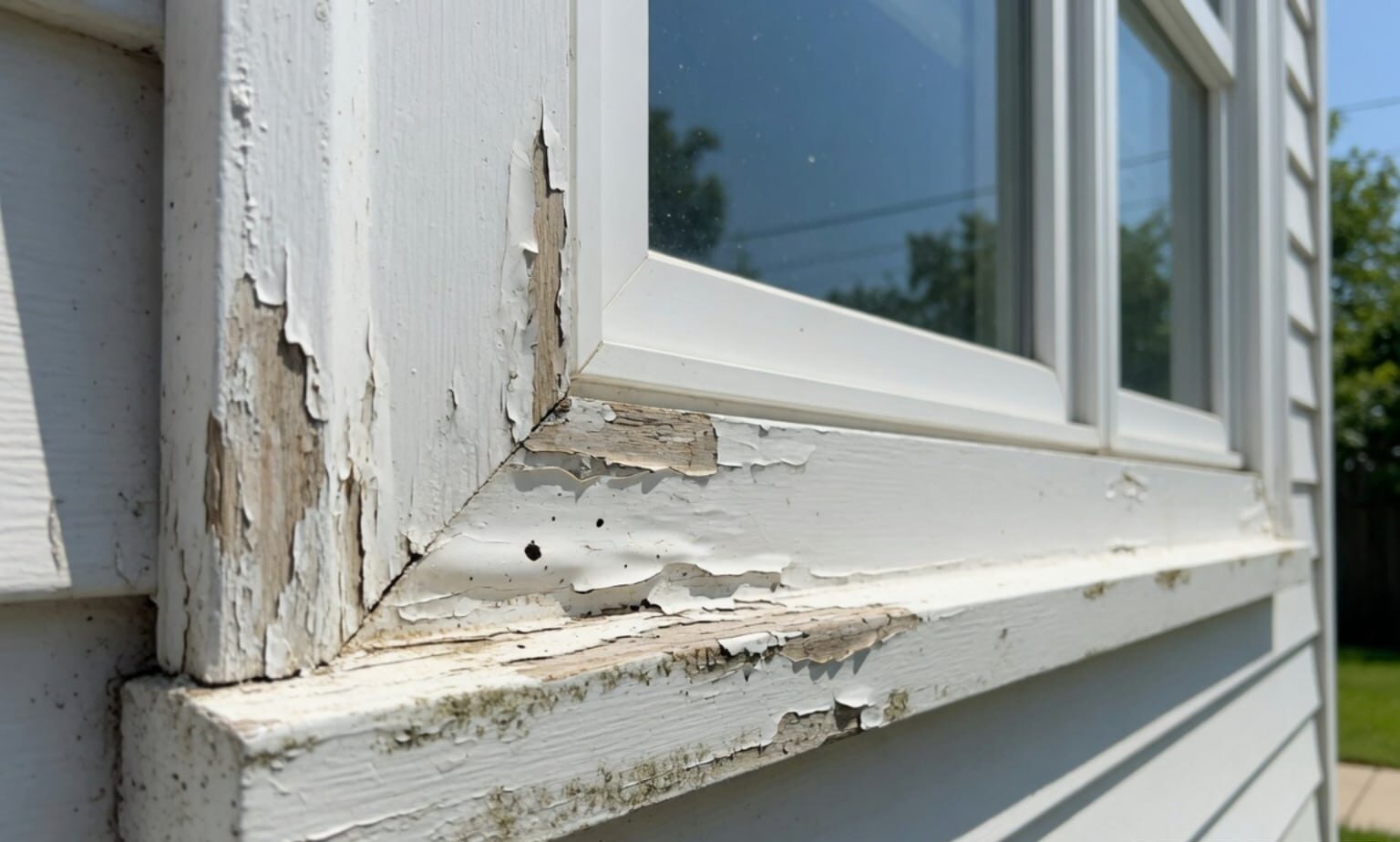
Wood fails for one reason above all others: sustained contact with water it can't shed. A window's exterior finish is its first line of defense, and once paint or stain cracks at a joint – most often where the bottom rail meets the sill, or where a sash corner meets the frame – water gets into the end grain, which absorbs moisture far faster than the flat face of a board.

From there, rot spreads along the grain, not across it, which is why a small dark spot at a corner often hides several inches of softened wood running back into the joint. Freeze-thaw winters mean any water that's worked into a joint expands as it freezes, physically widening the crack it entered through.

It then thaws and lets more water in on the next warm day – a single winter can do more damage than several summers of rain alone. Older, denser neighborhoods compound the problem: homes in communities like Cleveland Heights and Bay Village were largely built before 1940, when wood sash was standard, and many of those original windows have gone one or two paint cycles too long between maintenance.

The National Park Service's guidance on repairing historic wooden windows makes the same point after decades of field study: most wood window failures are localized and repairable, not a sign the whole unit needs to go.

SAME DAY EMERGENCY WINDOW REPAIR IN JUST 2 HOURS!

Bring your window to our workshop, and we'll have it repaired and ready for installation in just 2 hours! Our team, specialized in rapid response, is adept at providing quick and efficient service for emergency repairs.

OUR APPROACH

What We Do: Restoring Wood, Not Replacing Windows

Wood window repair covers a wider range of work than most homeowners expect, because "the window is broken" rarely means the whole unit has failed. It usually means one specific component has: a rotted sill, a cracked glazing bead, a snapped sash cord, hardware that's seized with old paint, or a joint that's opened up enough to let drafts through. Our approach starts with identifying exactly which components have failed and which are still sound.


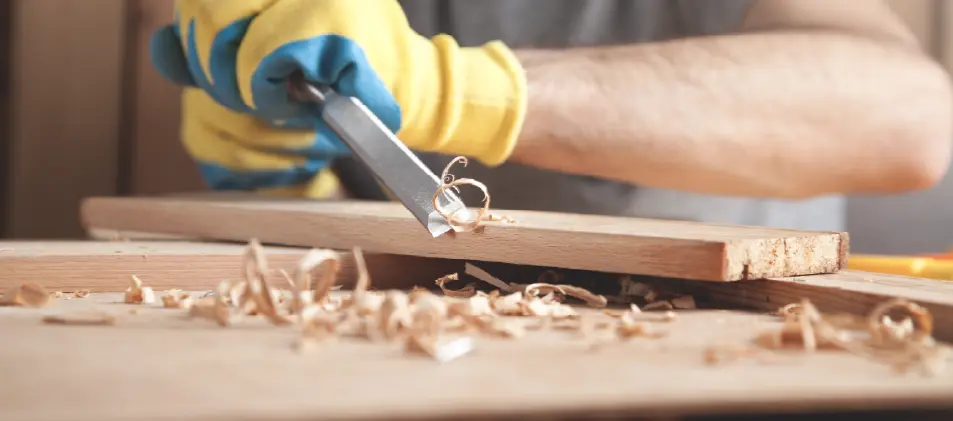
We use the same probe test preservation professionals rely on – pressing an awl or ice pick into suspected soft spots to distinguish decayed wood from wood that's simply weathered on the surface. Where rot is present, we remove only the compromised material and rebuild it with epoxy consolidation for shallow decay or a spliced wood section – sometimes called a Dutchman repair – for anything deeper, shaped to match the original profile exactly. Where the problem is glazing, hardware, or finish rather than structural rot, we address that directly without disturbing sound wood around it.

This selective approach is also the financial argument for repair: a targeted fix on one section of one window costs a fraction of a full replacement unit, and multiplied across a house with a dozen original windows, the gap compounds fast. Our own breakdown of what wood window restoration actually costs puts real numbers on that comparison – full-service restoration runs roughly $1,000 to $1,200 per window, and it's a labor-driven cost, with about 92 percent of that going to skilled craftsmanship rather than materials. A rotted windows repair assessment tells you upfront which category your window falls into before any work begins.

Rotted Sash Corners

Water trapped at a sash corner joint softens the wood from the inside out, often for months before any visible sign appears on the surface. By the time paint is bubbling or a dark stain shows through, decay has usually spread several inches along the grain in both directions.

We probe the area to find the true extent of the damage, then rebuild the corner to its original profile – the same process behind our rotted sash corner repair in Bay Village, OH, where older housing stock makes this one of our most common calls.

Sticking or Painted-Shut Sashes

A window that won't budge is rarely a single problem – it's usually some combination of paint buildup sealing the sash to the frame, wood that's swollen from humidity, and hardware that's stiffened from decades of disuse.

Forcing a stuck sash is how sashes crack and hardware snaps, so we free the paint seal first, then diagnose whether the remaining resistance is swelling, warping, or a frame that's shifted slightly out of square before applying force.

Broken Sash Cords or Weights

A snapped cord leaves a double-hung window unable to stay open on its own, and it's one of the most commonly misdiagnosed wood window problems – homeowners often assume the whole balance mechanism has failed when it's a single frayed cord.

We replace the cord, inspect the pulley for wear or paint buildup that could cause a repeat failure, and confirm the counterweight is still properly sized for the sash before closing everything back up.

Failed Glazing Putty

Cracked, chalking, or missing glazing compound is more than a cosmetic issue – it's an open path for water to reach both the glass edge and the wood beneath it, which is how a glazing problem quietly becomes a rot problem within a season or two.

We remove failed putty completely rather than glazing over it, since compound applied on top of old, cracked material fails again almost immediately, and reset the glass properly before applying a fresh, weather-tight bead.

Drafty Wood Frames

A draft with intact glass and no visible damage usually means the problem is at the seal, not the structure – worn weatherstripping, a warped sash no longer meeting the frame evenly, or settling that's opened a gap along one edge.

Each of those has a different fix, so we identify which one is actually happening with a smoke pencil or hand test before replacing parts that may not be the real cause.

Peeling or Failing Paint Finish

A failing exterior finish is the earliest visible warning sign a wood window gives before rot sets in, which makes it the cheapest possible moment to intervene.

Addressing peeling paint at this stage – proper scraping, priming, and repainting with attention to end-grain sealing at joints – costs a small fraction of the corner or sill rebuild that follows if the same window goes untreated through another two or three winters.
THE FACTORS

Which Northeast Ohio Homes Carry the Most Risk

Housing age is the strongest predictor of wood window repair needs. Homes built before roughly 1980 were typically fitted with wood sash as standard, often milled from old-growth lumber with a tighter grain structure than anything commercially available today – which is part of why these windows are worth restoring rather than discarding. Communities with a large share of pre-1940s housing, including North Olmsted and Olmsted Falls, tend to generate the highest volume of wood window repair calls in our service area simply because so much original wood sash is still in place.

A second risk factor is maintenance history rather than age alone. A well-maintained 100-year-old window with a fresh paint cycle every few years can outperform a 30-year-old window that's been neglected, since the finish – not the age of the wood – is what actually determines whether water gets in. If it's been more than five to seven years since a window's exterior was last painted or stained, that's worth an inspection regardless of how old the house is.

Get a free estimate

Repair or Replace? What the Numbers Actually Show

The honest comparison isn't close in most cases. A targeted repair on a single rotted or malfunctioning wood window typically costs a small fraction of a comparable new wood replacement unit, and that gap only widens when several windows in a house need attention at once – repairing five windows almost always costs less than replacing one from scratch. Full restoration, which addresses every component of a window rather than just the failed one, runs higher but still comes in well under replacement while extending the window's life by decades.

Replacement makes sense in a narrower set of cases: when rot has spread through most of the sash rather than a corner or section, or when the frame's underlying structure has failed rather than just its surface. A window sill, sash and frame repair assessment usually settles that question fast, since frame-level damage looks different under inspection than surface-level rot does. We see this judgment call often in Rocky River and Hudson, where original wood windows are common on higher-value homes – and we tell customers plainly which category their window falls into before any work begins.

Get a free estimate
Step 1
Step 2
Step 3
Step 4
Step 5
01
Our Wood Window Repair Process

Inspection and Assessment

Every job starts with a hands-on probe test on the suspected problem areas – an awl or ice pick pressed into the wood distinguishes sound material from rot with far more accuracy than a visual check alone. Wood that resists the point is structurally fine even if it's discolored or weathered on the surface; wood that gives way easily has lost its structural integrity and needs a proper rotten windows repair assessment rather than a cosmetic fix. We map exactly which sections need attention and which don't, since over-repairing sound wood wastes money without improving the outcome.

At the same time, we check hardware operation, glazing condition, and how the sash sits and moves within the frame, since a window can fail in more than one place at once. A full picture of the window's condition prevents a second visit for something that should have been caught the first time – and it also means the estimate you receive reflects the actual scope of work, not a guess based on what's visible from the outside.
02
Our Wood Window Repair Process

Wood Repair and Reconstruction

Shallow surface decay – typically anything within about a quarter-inch of solid wood – is treated with epoxy consolidation, which penetrates and hardens softened fibers, then is shaped and sanded flush to match the original profile once cured. This method preserves the maximum amount of original material and is often invisible once painted, which matters on windows where matching the surrounding trim and finish is part of the job.

Deeper rot calls for a spliced repair, sometimes called a Dutchman repair: the decayed section is cut out entirely along clean lines, and a new piece of matching wood is scarfed in and fastened to carry the same structural load the original joint did. Either method restores the original window rather than replacing the component with a generic substitute, and both cure to a strength that typically exceeds the wood immediately surrounding them – part of why a well-executed repair often outlasts the original material next to it.
03
Our Wood Window Repair Process

Reglazing and Glass Service

Where glazing putty has cracked, chalked, or fallen away entirely, we remove what remains down to bare wood and glass, since reglazing over old, failed compound just traps moisture beneath the new layer. The glass itself gets inspected for cracks or chips during this step, and reset properly in its bed before new glazing compound is applied and tooled to a clean, weather-tight bevel around the full perimeter.

If the window has been previously retrofitted with a double-pane unit that's since fogged, that glass work happens in the same visit rather than requiring a separate appointment – we coordinate directly with our insulated glass replacement process so a homeowner isn't scheduling two separate service calls for what is, from their perspective, one broken window.
04
Our Wood Window Repair Process

Hardware, Priming, and Painting

Sash cords, pulleys, locks, and lifts get inspected individually, since a window can have sound wood and glazing but still fail to open because of seized or broken hardware. Old cords are prone to snapping without warning, and pulleys clogged with decades of paint often bind long before they visibly break – both get replaced or freed as needed rather than left as a problem for later.

Once structural and glazing work is complete, repaired sections are primed with a stain-blocking primer suited to bare or epoxy-filled wood, then painted or stained to match the surrounding original finish. Matching sheen and color at the repair boundary is as much a part of the job as the structural fix itself, since a technically sound repair that's visually obvious undermines the whole point of restoring rather than replacing.
05
Our Wood Window Repair Process

Final Adjustment and Weatherproofing

The last step is operational: confirming the sash opens, closes, and locks smoothly across its full range of motion, not just at rest. A repair that looks perfect but binds halfway through the motion, or won't latch cleanly, hasn't actually solved the underlying problem – we test each window the way it's actually used, not just how it sits when closed. Weatherstripping gets checked and replaced where it's compressed, torn, or missing, since even a structurally perfect repair still lets drafts through a gap the weatherstripping should be sealing.

On double-hung windows, we also confirm the sash balance is holding the window at any open position without drifting shut on its own – a common complaint that often gets misdiagnosed as a hardware problem when it's actually a weatherstripping or counterweight issue. A structurally sound repair that still lets air through the gaps hasn't actually solved the problem, which is why this step doesn't get skipped even on jobs that look finished after painting.

Andersen Window Repair

Andersen's wood and composite window systems are common in mid-century and newer Northeast Ohio construction, particularly their 400 Series and similar clad lines found throughout the region's post-war housing.

Their frame profiles and glazing details are proprietary rather than universal, so we match hardware, sash cords, and glazing beads to Andersen's specific sizing standards rather than treating repairs as one-size-fits-all.

Pella Window Repair

Pella's aluminum-clad wood windows pair a traditional wood interior with a low-maintenance exterior cladding, which means two very different failure points to watch for: rot and hardware wear on the wood side, and cladding seams or fasteners working loose on the exterior side.

We service both halves of that system, including the transition points where cladding meets the wood frame, since a gap there is often what lets water reach the wood in the first place.

Marvin Window Repair

Marvin's wood and fiberglass-clad windows appear frequently in higher-end and custom-built homes, often with tighter sightlines and more architectural detail than standard production windows.
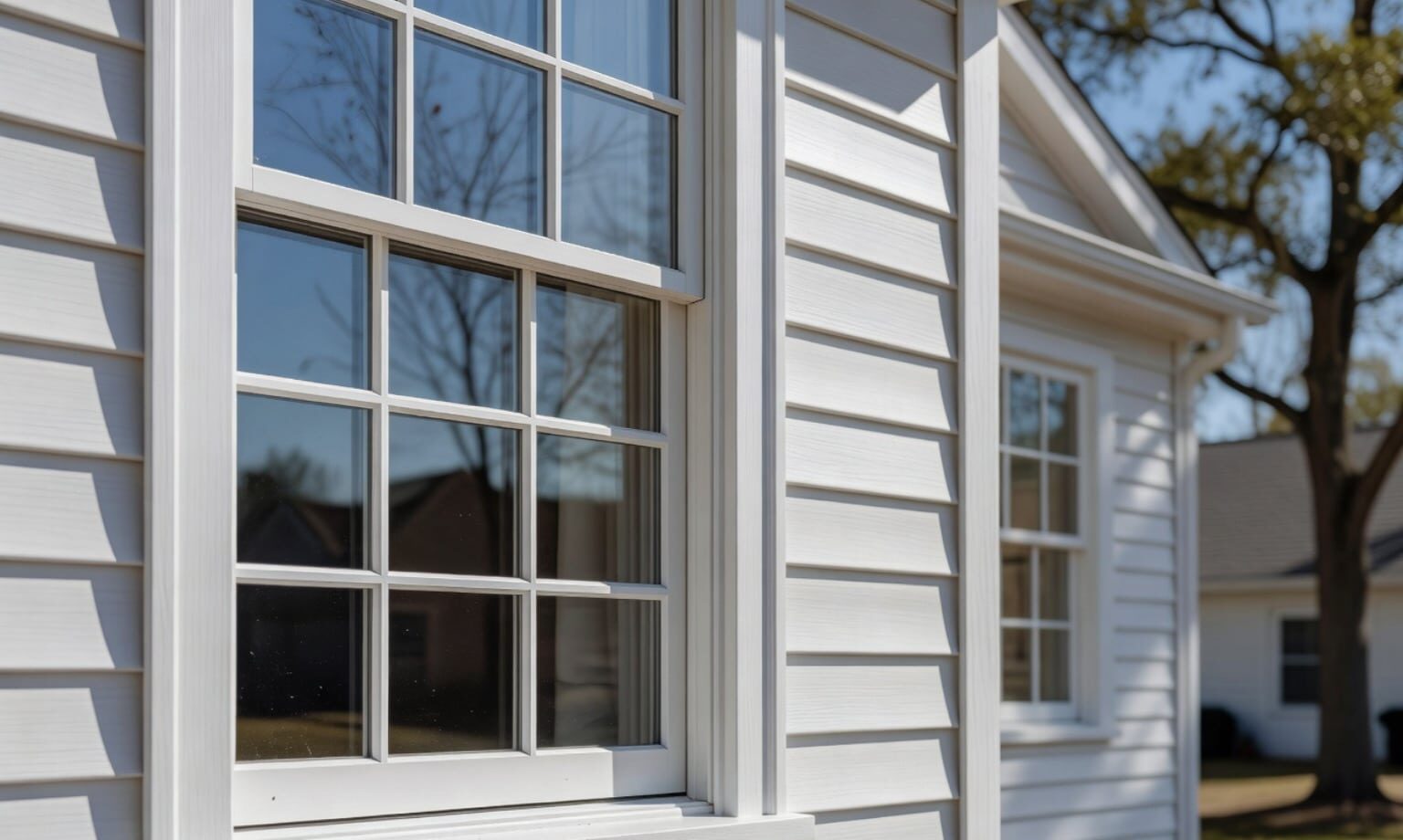
Preserving those original sightlines during a repair matters as much as the structural fix itself, since a repaired sash that doesn't sit flush the same way it originally did stands out immediately on a window built to this level of precision.

Windsor Window Repair

Windsor's wood and aluminum-clad systems are built to the same craftsmanship standard as Marvin and Andersen, with frame profiles that vary by product line and don't always interchange with generic replacement parts.

Our technicians identify the specific Windsor series before ordering hardware or glazing components, since fitting the wrong profile can create gaps that undo the repair's weather resistance.

Kolbe Window Repair

Kolbe's wood windows are known for custom and architectural configurations, including specialty shapes and larger-format units that aren't part of a standard product catalog.

Repairs on these windows often require matching a profile by hand rather than ordering an off-the-shelf part, which is why we assess Kolbe projects individually instead of applying a generic wood-repair approach.

Weather Shield Window Repair

Weather Shield's wood-framed windows were widely installed in Northeast Ohio homes built through the 1980s and 1990s, which puts a large share of that installed base squarely in the 30-to-45-year range where rot, hardware wear, and glazing failure become common.

We see these windows often enough to recognize the typical failure points before a full inspection even begins – usually starting at the sill and working up.

Can a Rotted Wood Window Really Be Saved?

More often than not, yes. Rot follows the grain rather than spreading uniformly, so a corner or sill that looks badly damaged frequently sits next to several feet of completely sound wood just inches away. The probe test – pressing a sharp tool into the suspect area – tells the real story faster than appearance alone.

Wood that resists the point is structurally fine even if it's discolored, while wood that gives way easily needs to come out. Full sash replacement only becomes the better option when decay runs through most of the frame rather than one section of it.

Lead Paint and Pre-1978 Wood Windows

Homes built before 1978 may have lead-based paint on their original wood windows, and federal rules govern how that paint can be disturbed during repair work. The EPA's lead-safe renovation guidance covers any repair or painting project disturbing painted surfaces in a pre-1978 home. Contractors performing this work are required to be lead-safe certified.

This is worth asking about directly – proper containment and cleanup during scraping or sanding old paint isn't optional, it's a genuine health protection, especially in homes with young children.

Keeping Historic Character Intact

For homes in a designated historic district, repairing original wood windows often sidesteps review processes that a full replacement would trigger. Cleveland Heights, for example, requires Landmark Commission review for exterior changes on designated properties.

Restoring the existing window in its original material and appearance generally avoids that process entirely, which is one more reason repair is frequently the faster path in these neighborhoods, not just the more affordable one.
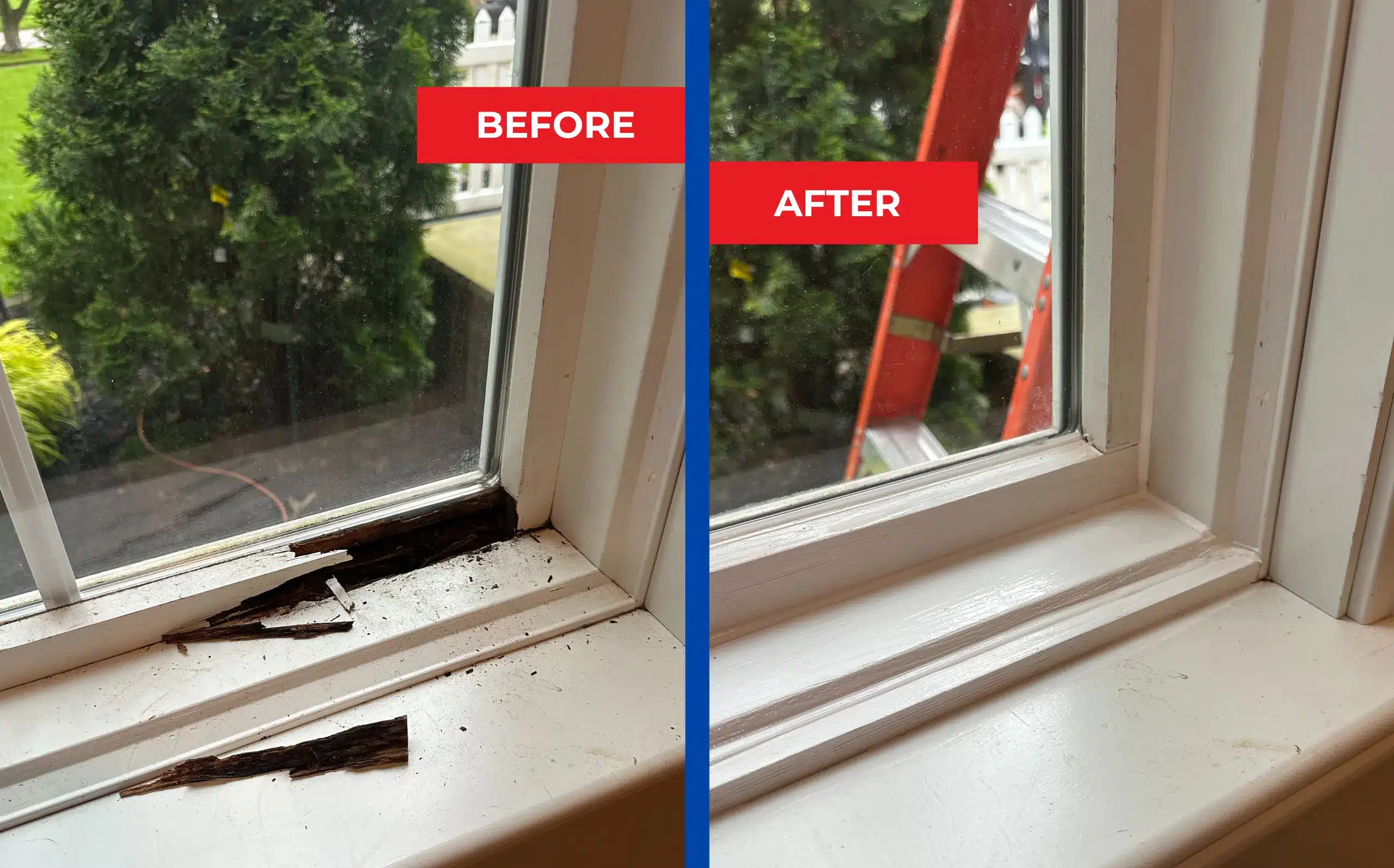
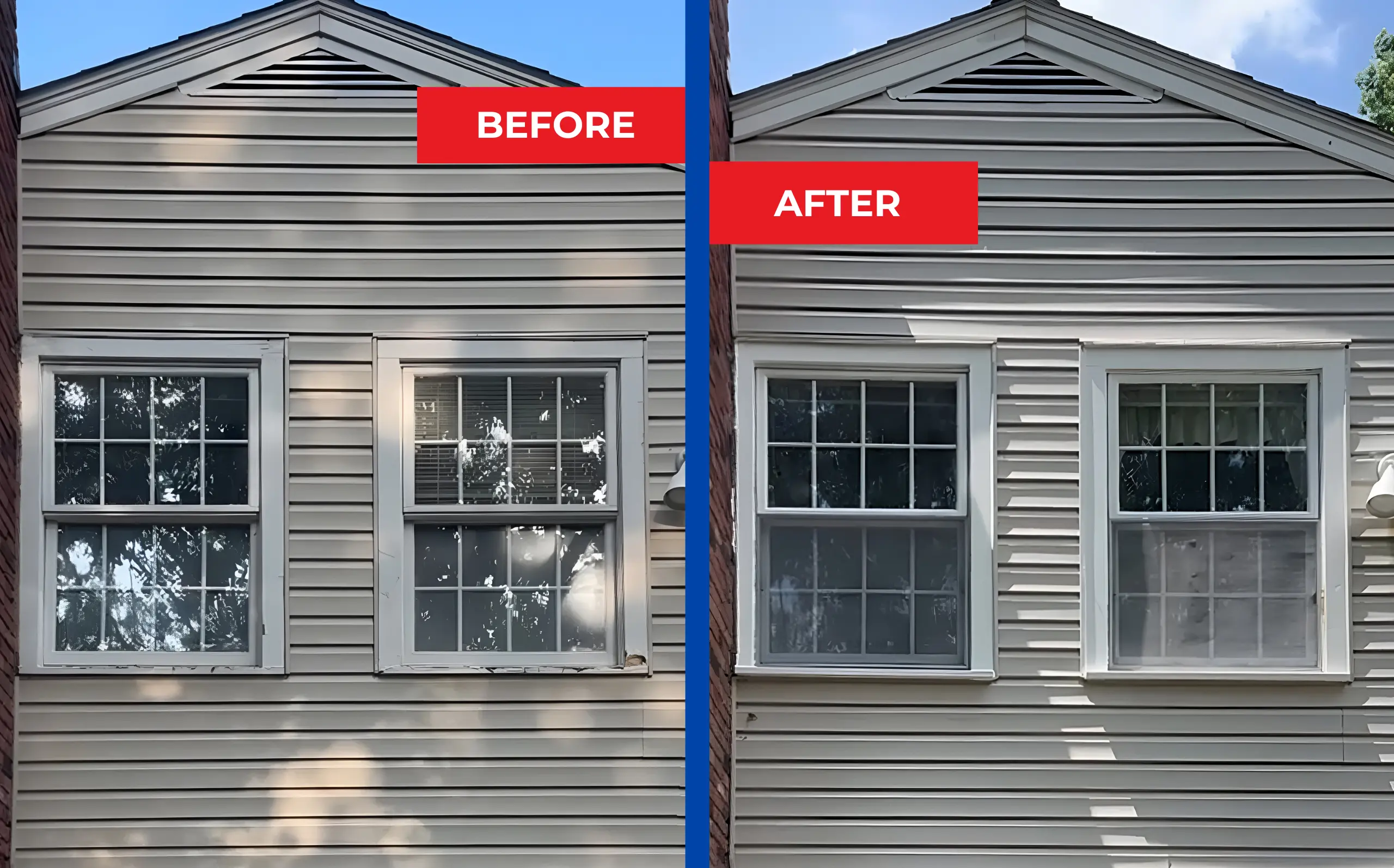
Recent Wood Window Repair Projects

Every wood window tells a different story of how it failed – a rotted sill in one home, a fogged retrofit pane paired with rotted framing in another.

See how we handled a wood window restoration in North Olmsted, and how a combined rot repair and glass replacement came together in our wood window repair and glass replacement project in Bedford.
BY WINDOW TYPE

Wood Window Repair for Every Style

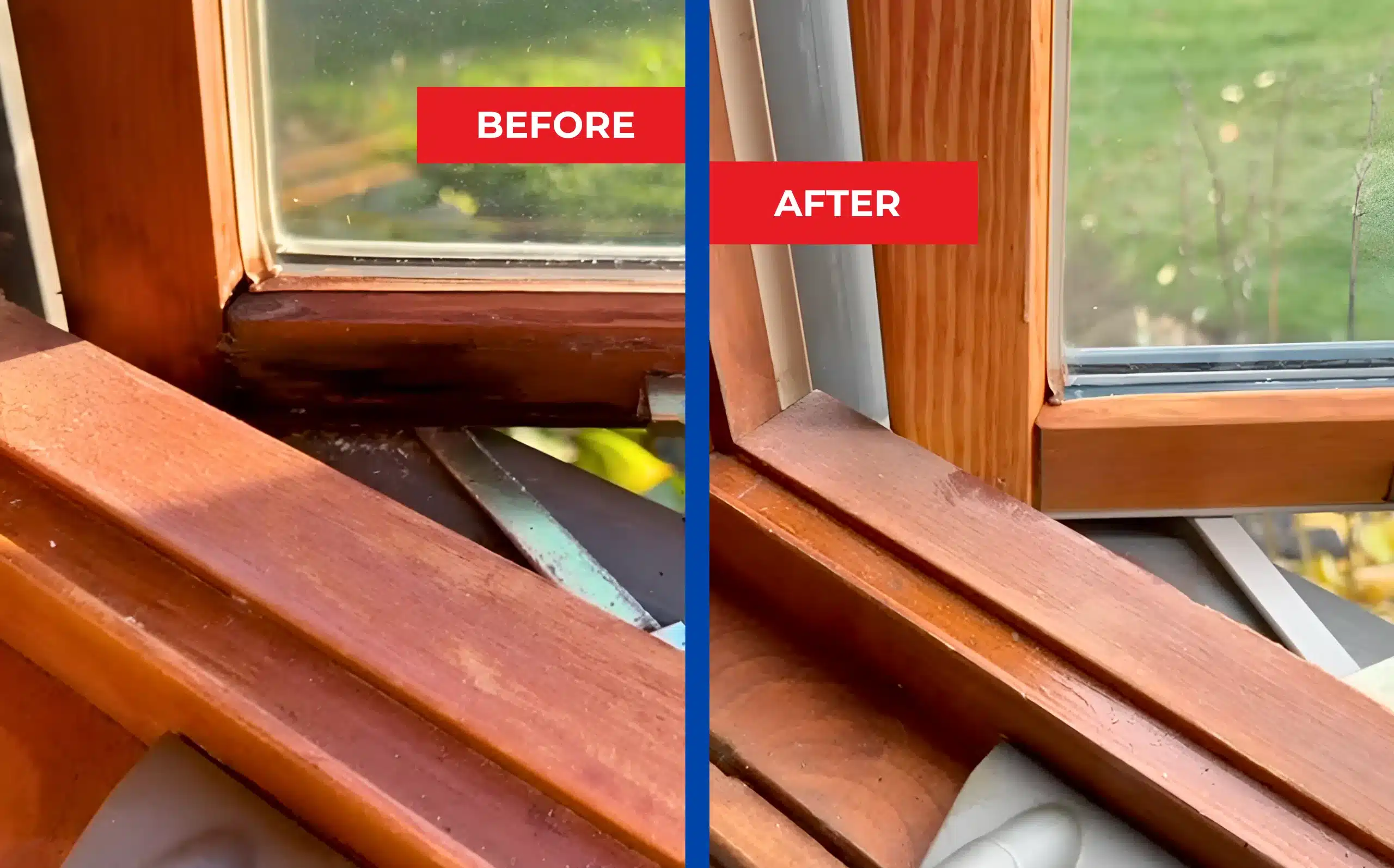
Wood windows come in several distinct operating styles, and each one fails and gets repaired differently. A double-hung window's most common problems center on its sash cord and weight system and the sill beneath it, while a casement window's issues usually trace back to its crank hardware and hinge points instead. Custom and architectural shapes add another layer of complexity, since a curved or angled profile can't simply be ordered from a catalog when a section needs rebuilding.

Matching the repair method to the window's actual construction matters more with wood than with most materials, since a technique that works on a straightforward double-hung sash can be entirely wrong for a shaped transom or an arched frame. We assess the specific window type and its original joinery before deciding whether epoxy consolidation, a spliced repair, or a hardware-only fix is the right call.


Get a free estimate

Double-Hung Sash Windows

The most common wood window style in older Northeast Ohio homes, with repairs typically centered on sash cords, sills, and glazing.

Casement Windows

Hinged wood casements often need crank and hinge hardware service alongside any wood repair, since operating hardware fails independently of the frame.

Custom and Arched Wood Windows

Shaped and architectural wood windows require repairs matched to their specific joinery and profile, since replacement parts are rarely available off the shelf.

What Our Wood Window Repair Service Covers

Homeowners with pre-war houses tend to assume their windows are past saving – in most cases, they're wrong.
We work on wood windows regardless of age, and age alone is almost never the reason a window gets replaced instead of repaired.
We provide wood window repair and restoration throughout the Cleveland–Akron area, with technicians experienced in the joinery, glazing, and hardware standards used across nearly a century of local home construction. From pre-war double-hung sash to mid-century casements, we've worked on nearly every wood window type this region's builders installed.

Our regular service area covers dozens of communities including Lakewood · Willoughby · Novelty · Cleveland Heights · Bay Village · North Olmsted · Olmsted Falls · Rocky River · Hudson, and the neighborhoods around each. Whether your home sits in a historic district with strict exterior guidelines or a newer development with a single original wood window left, our crews bring the same probe-and-repair approach to every job.

Don't see your town listed? We serve the full Cleveland–Akron region – call 440-496-7415 and we'll confirm coverage for your address, along with an honest first read on whether your windows are candidates for repair. Most estimates take under an hour and come with a clear breakdown of what can be saved versus what genuinely needs replacing.

FAQ

CAN A WOOD WINDOW WITH VISIBLE ROT ACTUALLY BE REPAIRED, OR DOES IT NEED FULL REPLACEMENT?

In most cases it can be repaired, since rot typically follows the wood grain and stays localized to one section rather than spreading evenly through the whole sash. We test suspect areas with a probe to confirm how far the decay actually extends before recommending repair or replacement, so the decision is based on the wood's real condition rather than its appearance.

IS LEAD PAINT A CONCERN WHEN REPAIRING WINDOWS IN AN OLDER NORTHEAST OHIO HOME?

It can be, if your home was built before 1978. Disturbing old paint during scraping, sanding, or repair work can create lead dust, so proper containment and lead-safe work practices matter for anyone in the home, especially young children. We can discuss the specific precautions relevant to your project during the estimate.

HOW LONG DOES WOOD WINDOW REPAIR TAKE?

A straightforward repair, like a sash cord replacement or minor reglazing, can often be completed in a single visit. A full restoration involving rot removal, epoxy work or a spliced repair, reglazing, and repainting typically takes longer per window due to material curing and drying time, and we'll give you a realistic timeline specific to your window's condition during the estimate.

DO REPAIRED WOOD WINDOWS PERFORM AS WELL AS NEW REPLACEMENT WINDOWS?

A properly repaired wood window with intact glazing, tight weatherstripping, and functioning hardware performs close to its original specification, though it won't match the insulating value of a brand-new double-pane or triple-pane unit unless the glass itself has also been upgraded. Many homeowners pair a wood repair with an insulated glass replacement to get both the character of the original window and modern energy performance.

DOES REPAIRING ORIGINAL WOOD WINDOWS AFFECT A HOME'S RESALE VALUE?

Generally it helps rather than hurts, particularly in neighborhoods where original architectural character is part of the home's appeal. Buyers and appraisers in historic districts increasingly recognize well-maintained original wood windows as a value-add rather than a deficiency, whereas mismatched vinyl replacements on an older home can sometimes work against curb appeal.
Still have a question?