Communication with company was excellent before and up to the window replacement day.
Vladimir was a...
Communication with company was excellent before and up to the window replacement day.
Vladimir was an excellent technician.
He was respectful and professional.
Definitely recommend Apex.
Amazing service. Dropped off a custom size window that needed repair and nobody else could fix. They...
Amazing service. Dropped off a custom size window that needed repair and nobody else could fix. They quoted three days, it was done in three hours. Fantastic experience. Highly recommended 👍 👍
Don’t Replace, Repair! Simple Solutions for Hazy Windows
Why Are My Windows Hazy?
Fix hazy windows by first identifying if the fog is on the surface or trapped between panes. Surface condensation can be wiped away and prevented with better ventilation and humidity control. However, if moisture is trapped between the glass panes, the window seal has failed—this requires professional repair like IGU (insulated glass unit) replacement to restore clarity and energy efficiency.
Quick Answer:
Surface fog (inside or outside) -> Clean with vinegar solution, improve ventilation, reduce indoor humidity
Fog between panes -> Broken seal, requires professional IGU replacement or defogging service
DIY defogging -> Temporary fix only, reduces energy efficiency, may void warranty
Best solution -> Replace the insulated glass unit to restore clarity and insulation
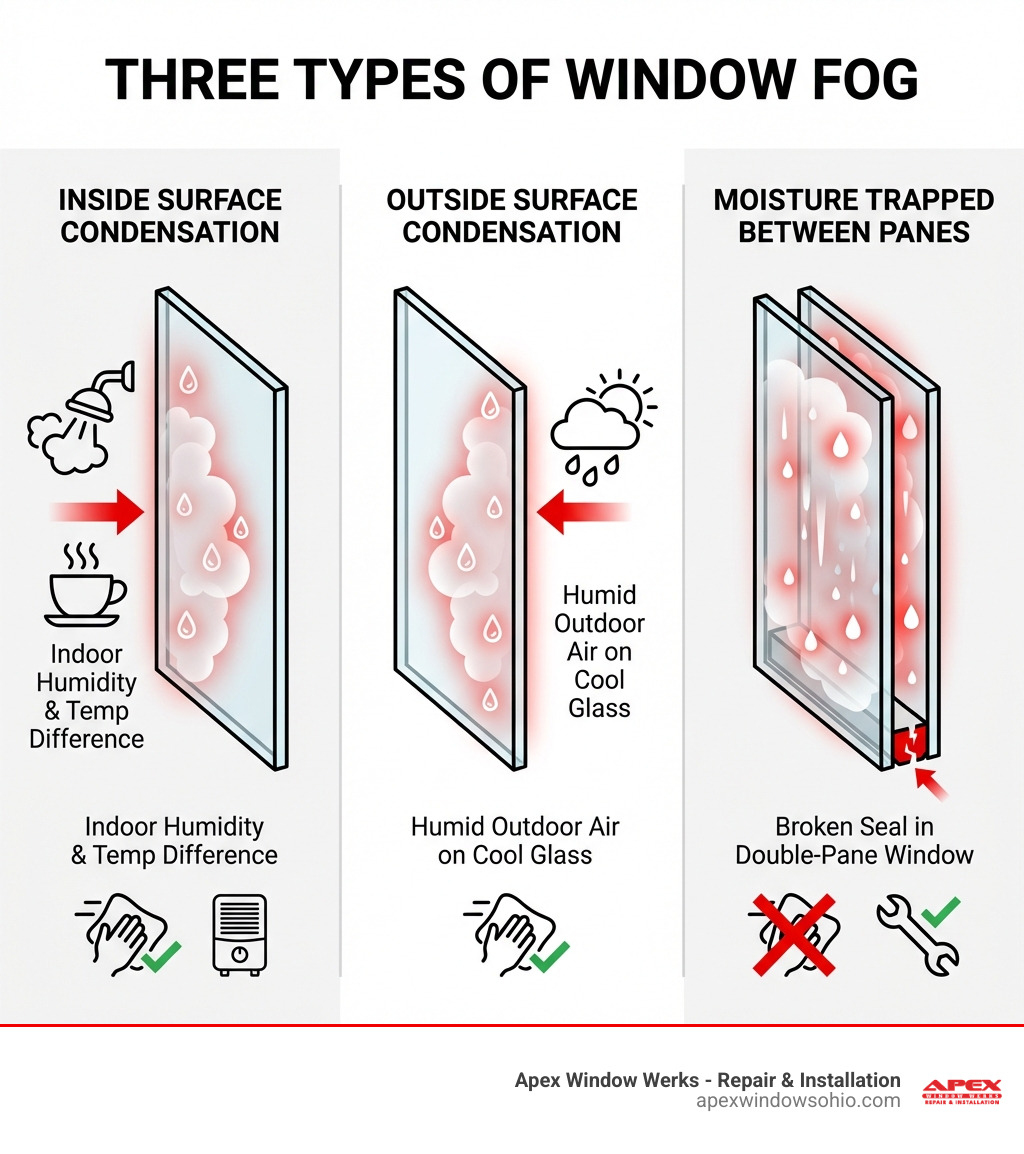
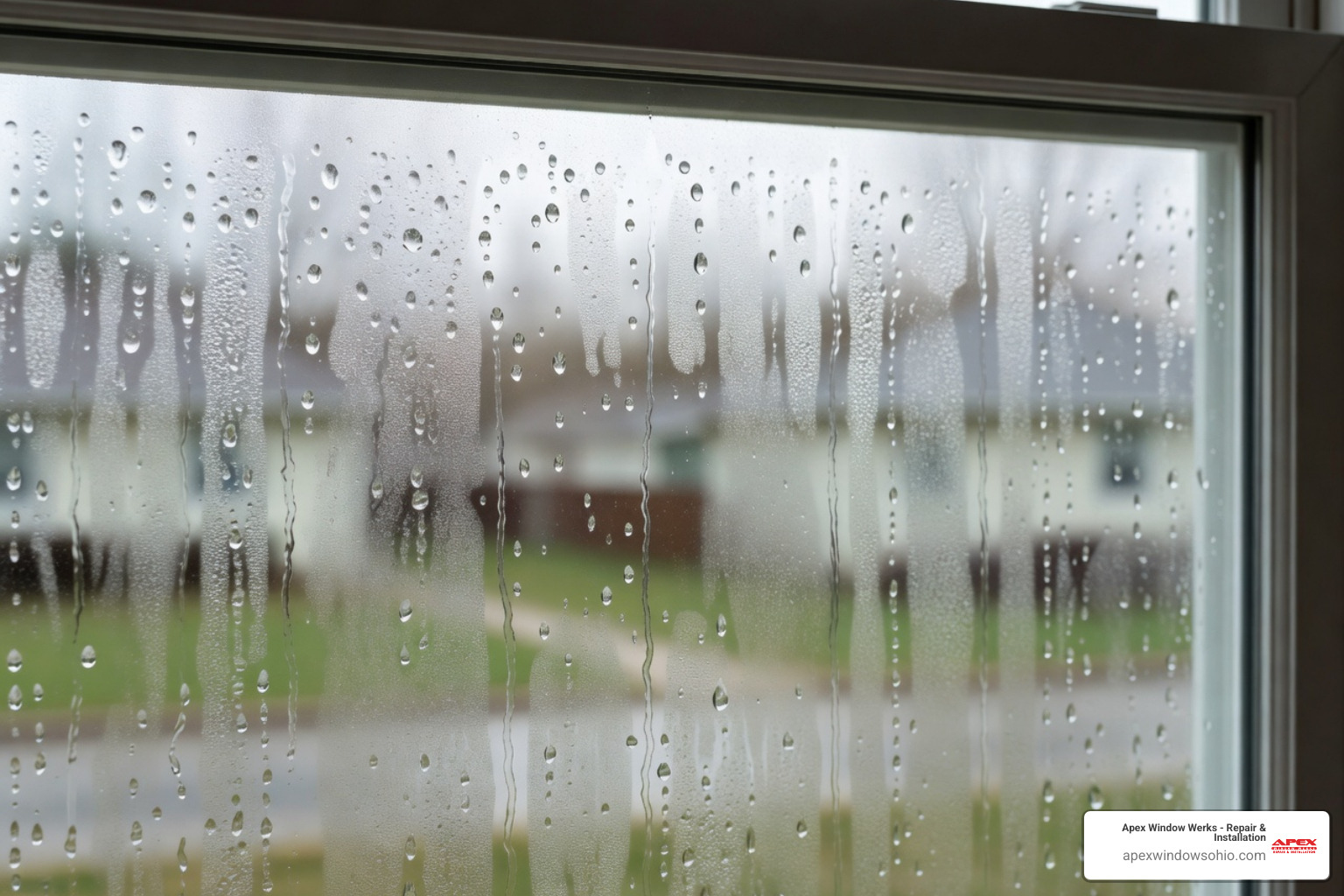
A cloudy, hazy film on your window that won’t wipe away is a frustrating problem for many homeowners across Northeast Ohio. This haze happens for two main reasons: temporary surface condensation from humidity, or permanent fogging between glass panes from a failed window seal. Understanding which type you have is the first step to fixing it.
Surface condensation is simple to address. It appears when warm, moist air hits cold glass, and it wipes away easily. But if the haze is trapped and won’t wipe off, you’re dealing with a broken seal. This occurs when the seal on a double-pane window fails, allowing moisture to seep between the panes. That’s when you see permanent fog that cleaning can’t touch.
The good news? You don’t always need full window replacement in Medina, OH. In most cases, replacing just the insulated glass unit (IGU) restores both clarity and energy efficiency at a fraction of the cost.
I’m Nataly Godes, General Manager at Apex Window Werks. We’ve helped hundreds of Cleveland-area homeowners fix hazy windows and replace foggy window panes in Medina, OH with precise IGU replacement. This guide will help you identify your window problem, understand your repair options, and prevent future fogging.
Understanding the Cause: Surface Condensation vs. A Broken Seal
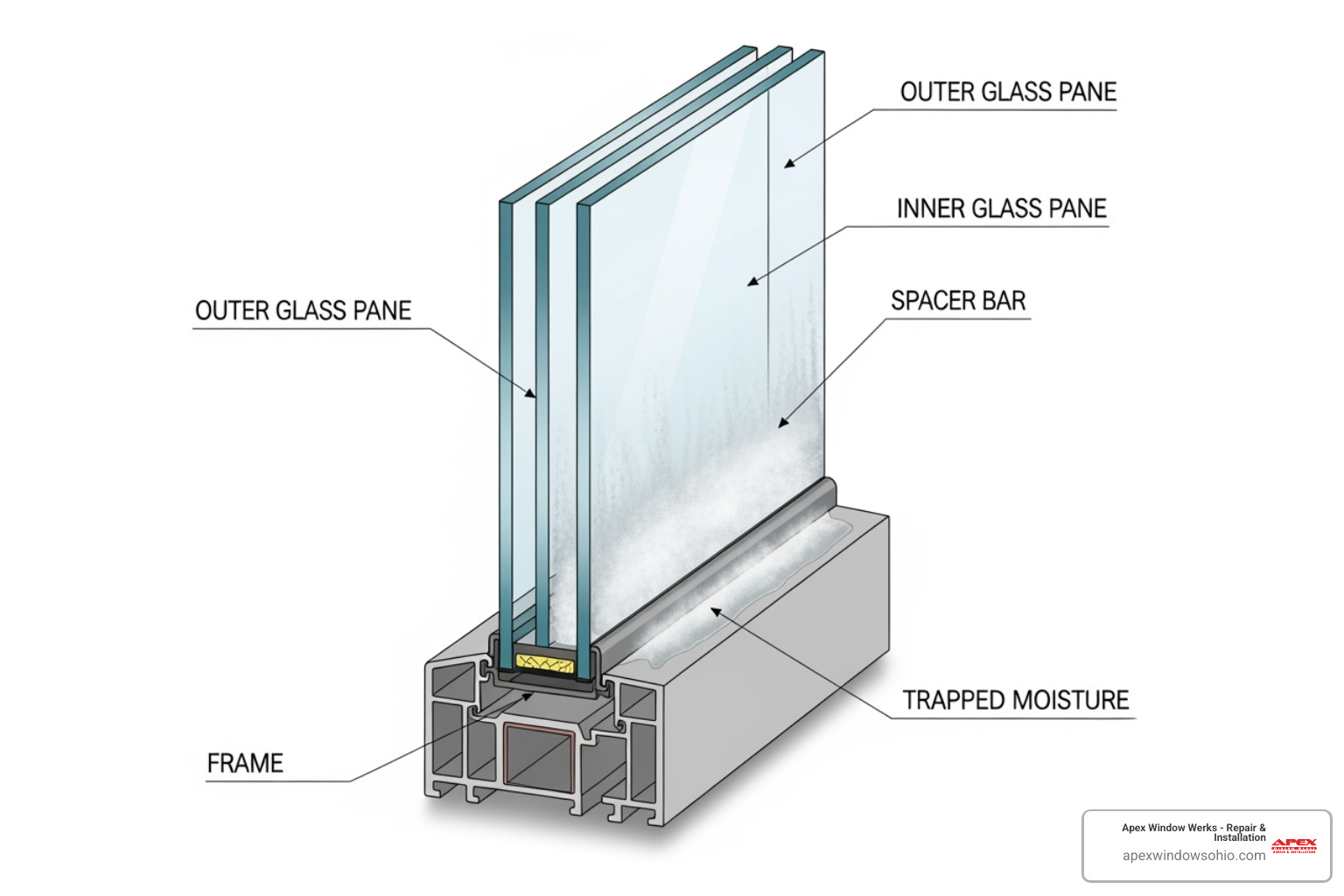
To understand why your windows become fogged, you need to know how modern windows work. Most are Insulated Glass Units (IGUs), which have two or three panes of glass separated by a sealed spacer. This space is often filled with an inert gas like argon to improve thermal performance. A desiccant within the spacer absorbs residual moisture to keep the unit dry.
The primary function of this sealed unit is to reduce heat transfer, keeping your home warmer in winter and cooler in summer. However, these seals have a lifespan of roughly 10 to 20 years. Over time, seals can deteriorate, leading to “seal failure.”
When a seal fails, the inert gas leaks out. The International Association of Certified Home Inspectors estimates that IGUs lose about 1% of their gas annually. Once the seal is compromised, outside air and moisture seep between the panes. This moisture condenses, forming the haze, streaks, or mineral deposits you see. This isn’t just an aesthetic problem; a failed seal significantly reduces your window’s insulating properties, leading to higher energy bills.
Is it Just Surface Condensation?
Sometimes, what looks like a problem is just a sign of a healthy, energy-efficient home! If you see fog on the inside or outside surface of your window that wipes away easily, you’re dealing with surface condensation.
This occurs when there’s a significant temperature difference between the glass and the air, combined with high humidity. For instance, on a cold day, warm, moist indoor air condenses on the cooler interior glass. This is common in kitchens and bathrooms, where activities like cooking and showering release moisture. The average family of four releases about 1.3 gallons of water into the air every day!
Condensation can also form on the outside of your windows, especially on cool mornings after a humid night. This is a good sign your windows are working well, preventing indoor heat from escaping. Both types of surface condensation are temporary and disappear as temperatures equalize.
Signs of a Failed Window Seal
If the haze is between the glass panes and doesn’t wipe away, you have a failed window seal. This is a more serious issue that requires a different approach to fix foggy windows in Medina, OH.
Here are the tell-tale signs:
Moisture trapped between panes: Visible water droplets, fog, or condensation inside the sealed unit.
Streaks or mineral deposits: As moisture repeatedly enters and evaporates, it leaves behind mineral deposits or dirt, creating a permanent cloudy appearance.
Distorted or wavy view: The buildup can distort the view through the window.
Permanent haze: Unlike surface condensation, this fog doesn’t disappear with changes in temperature or humidity.
Age-related deterioration: If your windows are 10-20 years old and show these symptoms, a failed seal is the likely cause, as research on Primary Seal Deformation in Multipane Glazing Units shows how seals degrade over time.
When these signs appear, the protective barrier of your IGU is breached, compromising both the clarity and the energy efficiency of your window.
Solutions for Surface-Level Haze and Condensation
For temporary, surface-level haze caused by humidity, the solutions are straightforward and often DIY-friendly. The key is to manage indoor humidity and ensure good ventilation, which also helps prevent dampness and mold growth.
How to Clean Cloudy Glass with Vinegar and Water
For minor surface cloudiness, a simple vinegar and water solution is very effective. It’s a natural, streak-free way to restore clarity.
Supplies:
White vinegar and warm water
Spray bottle
Microfiber cloths
Optional: Baking soda for tough stains
Cleaning Steps:
Mix solution: In a spray bottle, combine equal parts white vinegar and warm water.
Spray and wait: Liberally spray the solution onto the glass and let it sit for a few minutes to break down mineral deposits.
Wipe clean: Use a clean microfiber cloth to wipe the window in a circular motion.
Tackle stubborn spots: For tough mineral stains, apply a paste of baking soda and water with a soft sponge, rub gently, and rinse.
Rinse and dry: Rinse the window with clean water and buff dry with a clean microfiber cloth or use a squeegee for a professional finish.
For best results, use distilled water in your solution and clean on a cloudy day to prevent streaks from the sun drying the solution too quickly. This method is excellent for maintaining clear glass, as detailed in guides like Clearing the Haze: How to Clean Cloudy Glass Windows Like a Pro.
Temporary Fixes for Surface Condensation
Beyond cleaning, these strategies can help reduce surface condensation:
Use a dehumidifier: Actively removes excess moisture from the air, especially in basements or humid rooms.
Improve air circulation: Use ceiling fans and keep curtains open to allow air to circulate around windows.
Run exhaust fans: Use bathroom and kitchen exhaust fans during and after showers or cooking to pull moist air out of your home.
Wipe windows dry: As a quick fix, wipe away condensation to prevent water from damaging your sills.
Seal air leaks: Use weather stripping or caulk to seal drafts around windows, which can create cold spots that attract condensation.
How to Fix Hazy Windows When the Seal is Broken
When haze is trapped between the panes, it’s a clear sign of a broken seal. This means your window’s insulating properties are compromised, leading to energy loss. Simple cleaning won’t work; you need to address the seal failure itself.
There are three paths: DIY window glass defogging, professional Insulated Glass Unit (IGU) replacement, or full window replacement. The table below summarizes your options.
Solution
Cost
Effectiveness (Clarity)
Effectiveness (Energy Efficiency)
Difficulty
Risks/Limitations
DIY Defogging
Low
Temporary/Cosmetic
Negligible/Reduced
High
Voids warranty, potential for glass damage, re-fogging, doesn’t restore insulating gas or R-value.
IGU Replacement
Medium
Excellent
Excellent (restores original R-value)
Professional
Requires professional measurement/installation, cost depends on window size/type.
Full Window Replacement
High
Excellent
Excellent (potential upgrade)
Professional
Most expensive, necessary if frame is damaged, often chosen for major upgrades or very old windows.
DIY Window Defogging: A Temporary and Risky Fix
Online “hacks” suggest drilling holes into the glass to clean and dry the inside. While this can temporarily clear the fog, we strongly caution against it due to significant risks:
Glass Damage: Drilling into glass risks cracking or shattering the pane.
Voiding Warranty: This process will void any existing manufacturer’s warranty.
Loss of Insulating Gas: Any insulating argon or krypton gas will be released and replaced with air, permanently reducing energy efficiency.
Temporary Fix: The seal remains broken, so fog will likely return.
Our professional opinion is that DIY defogging is a gamble that rarely provides a long-term solution. For a lasting fix that restores both clarity and efficiency, we recommend professional options like More info about Insulated Glass Replacement.
The Professional Solution: Insulated Glass Unit (IGU) Replacement
For most homeowners with foggy windows, Insulated Glass Replacement in Medina, OH is the best balance of cost and effectiveness. This involves removing the failed glass unit from your existing frame and installing a new, factory-sealed one.
Pros of IGU Replacement:
Cost-Effective: Significantly cheaper than replacing the entire window if the frame is in good condition.
Restores Energy Efficiency: A new IGU restores the window’s original thermal performance and insulation.
Full Clarity: Your view is completely restored.
Less Invasive: The process is quicker and less disruptive, as the existing frame, trim, and siding remain.
This option is only viable if your window frames are sound. We specialize in IGU replacement, custom-fitting new glass units to fix foggy windows efficiently and affordably. Learn More info about Foggy Window Glass Replacement on our services page.
When is Full Window Replacement Necessary?
Sometimes, a full window replacement is the best long-term investment. This means replacing the entire unit, including the frame and sash.
You should consider full replacement if:
Damaged Window Frames: The frame has significant rot, warping, or cracks.
Multiple Failed Windows: If many windows are failing, a whole-house replacement can be a cost-effective long-term investment.
Outdated Technology: You want to upgrade very old, single-pane, or inefficient windows to modern Energy Star® standards.
Aesthetic Upgrade: You want to change the style or look of your windows.
While it’s a larger investment, full replacement can dramatically improve your home’s energy performance, comfort, and curb appeal. We can help assess if repair or replacement is right for you, and we also offer More info about Window Frame Repair if your frames are salvageable.
Preventing Future Window Fogging
Once you fix fogged windows in Medina, OH, the next step is prevention. This focuses on maintaining a healthy indoor environment and proper window care.
Maintain Healthy Indoor Humidity Levels
High indoor humidity is the main cause of surface condensation. Managing moisture can significantly reduce fogging:
Proper Ventilation: Use exhaust fans in bathrooms and kitchens. Ensure your clothes dryer vents to the outside.
Check for Leaks: Regularly inspect for plumbing leaks under sinks or in the basement.
Use Fans: Ceiling fans help circulate air, preventing moisture from settling on cold glass.
Consider a Dehumidifier: Use one in persistently humid areas like basements.
Seal Soil: Cover exposed soil in crawlspaces with a vapor barrier to reduce moisture.
Regular Window Inspection and Care
Regular care can help prevent seal failure and other issues:
Check Seals for Cracks: Periodically inspect the caulk and weatherstripping around your windows. Re-caulk or replace as needed to block moisture.
Gentle Cleaning: Use mild, non-abrasive cleaners to avoid damaging the glass or seals.
Avoid Pressure Washers: The intense force can damage seals and force water into the frame.
Keep Weep Holes Clear: Ensure the small drainage holes in the window frame are free of debris.
Address Frame Issues Promptly: Repair any rot or damage to window frames, especially wood, to prevent water intrusion that can compromise the glass seals. We can assist with More info about Wood Window Repair for our Cleveland-Akron clients.
Frequently Asked Questions about Fixing Hazy Windows
Here are answers to common questions we hear from homeowners in Northeast Ohio.
How long should a double-pane window seal last?
The typical lifespan is 10 to 20 years. Factors like manufacturing quality, sun exposure, climate, and installation quality can affect this. All seals eventually degrade over time as a natural process of wear and tear.
Can I just replace the glass in my foggy window?
Yes! This is called Insulated Glass Unit (IGU) replacement and is often the most practical and cost-effective way to fix hazy windows with a broken seal. If your window frame is in good condition, replacing just the glass unit restores both clarity and energy efficiency at a lower cost than a full window replacement.
What happens if I ignore my foggy windows?
Ignoring foggy windows can lead to significant long-term issues:
Worsening Visibility: The fog and mineral deposits will only get worse, further obscuring your view.
Reduced Energy Efficiency: A broken seal means your window is no longer insulating properly, leading to higher energy bills as your HVAC system works harder.
Potential Moisture Damage: The compromised seal can eventually allow water to damage the window sash and frame, leading to wood rot, mold, and more costly repairs.
Decreased Home Value: Hazy, inefficient windows are unattractive and can be a red flag for potential home buyers.
Addressing foggy windows sooner rather than later saves money and prevents further damage.
Get a Clear View Again: Your Next Steps
Hazy windows don’t have to be a permanent fixture in your Northeast Ohio home. Whether it’s a simple cleaning task or a more involved repair like an IGU replacement, a clear view is within reach. We hope this guide has empowered you with the knowledge to understand why your windows are foggy and what steps you can take to address the issue.
While surface condensation is a temporary inconvenience easily managed with humidity control and cleaning, fog trapped between panes signifies a broken seal. In most cases, repair is often a more economical and efficient choice than full replacement, especially when your window frames are still in good shape.
Don’t let foggy windows diminish your home’s comfort, efficiency, or beauty any longer. For a permanent solution to foggy windows and to restore your home’s energy efficiency, contact our experts at Apex Window Werks for Foggy Window Repair. We’re here to help our Cleveland-Akron community get a clear view again!