Communication with company was excellent before and up to the window replacement day.
Vladimir was a...
Communication with company was excellent before and up to the window replacement day.
Vladimir was an excellent technician.
He was respectful and professional.
Definitely recommend Apex.
Amazing service. Dropped off a custom size window that needed repair and nobody else could fix. They...
Amazing service. Dropped off a custom size window that needed repair and nobody else could fix. They quoted three days, it was done in three hours. Fantastic experience. Highly recommended 👍 👍
What to Do About a Cracked Window Pane (And When to Call a Pro)
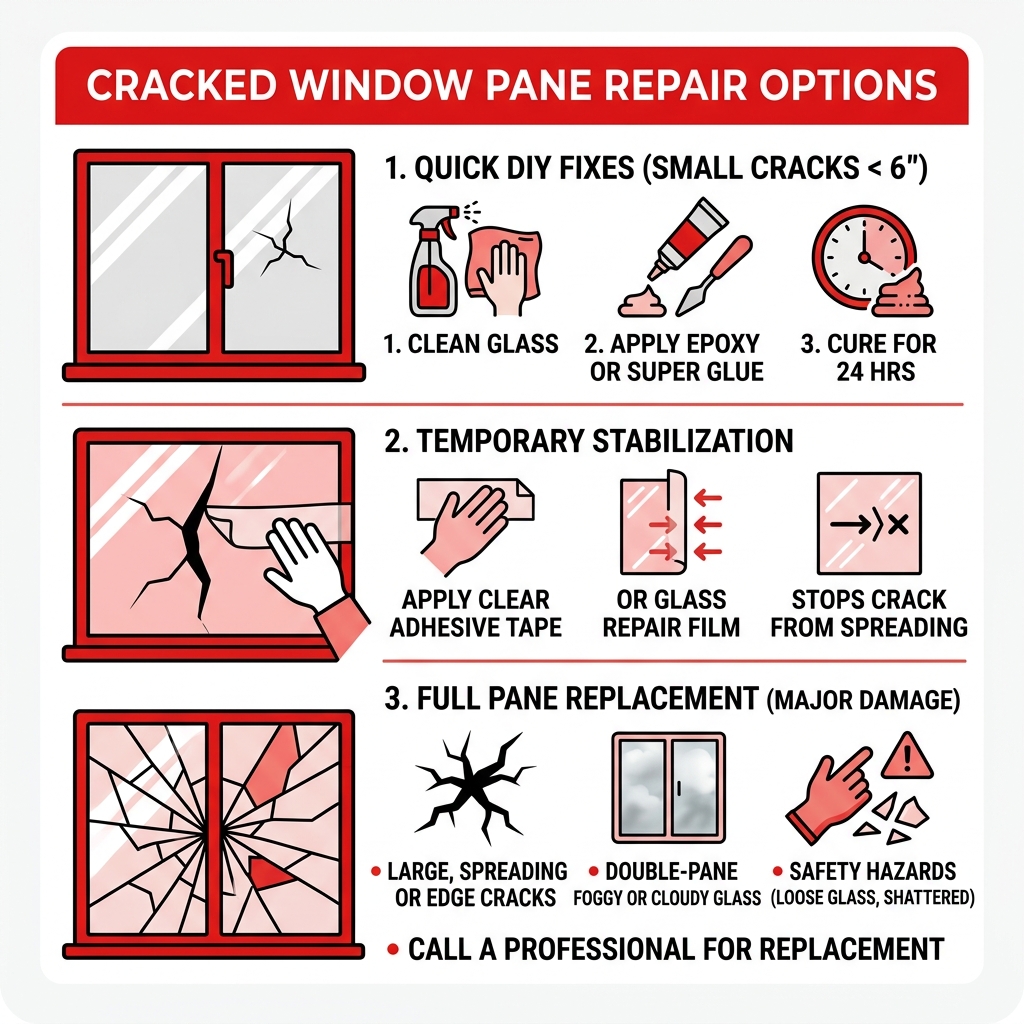
Cracked window pane repair is something most homeowners can handle themselves — if the damage is small. Here’s a quick overview of your options:
Hairline or small crack (under 6 inches): Clean the glass, apply two-part epoxy or super glue, let it cure for 24 hours. Done.
Temporary stabilization: Apply clear adhesive tape or glass repair film on both sides of the crack to stop it from spreading.
Large, spreading, or edge cracks: Skip the DIY fix. The pane likely needs full replacement.
Double-pane windows with foggy or cloudy glass: The seal has failed. Repair won’t help — replacement is the only real fix.
Safety hazard (glass loose in frame, shattered sections): Don’t touch it without cut-resistant gloves and goggles. Call a professional.
The short version: small cracks can be repaired, big ones usually can’t. How you got the crack — a stray rock, a temperature swing, or years of wear — also affects what you should do next.
Even the slightest crack can turn into a serious problem fast. A small chip from a lawnmower-thrown pebble, for example, can spread across an entire pane within days if left untreated. And in Northeast Ohio’s freeze-thaw climate, that timeline gets even shorter.
I’m Nataly Godes, General Manager at Apex Window Werks, where I’ve led teams specializing in cracked window pane repair, insulated glass replacement, and window restoration across Cleveland and Akron. In this guide, I’ll walk you through everything you need to know — from identifying your crack type to deciding whether a $30 DIY fix or a professional replacement is the right call.
Introduction and Identifying Window Crack Types
Before you grab the glue, we need to talk about what you’re actually looking at. Not all cracks are created equal, and understanding the “why” behind the break helps determine if cracked window pane repair is even possible. Windows generally last 15 to 30 years, but the glass itself often has a shorter functional lifespan of about 20 years. In our experience serving Northeast Ohio, from Lakewood to Mentor, we see three main culprits:
Impact Cracks
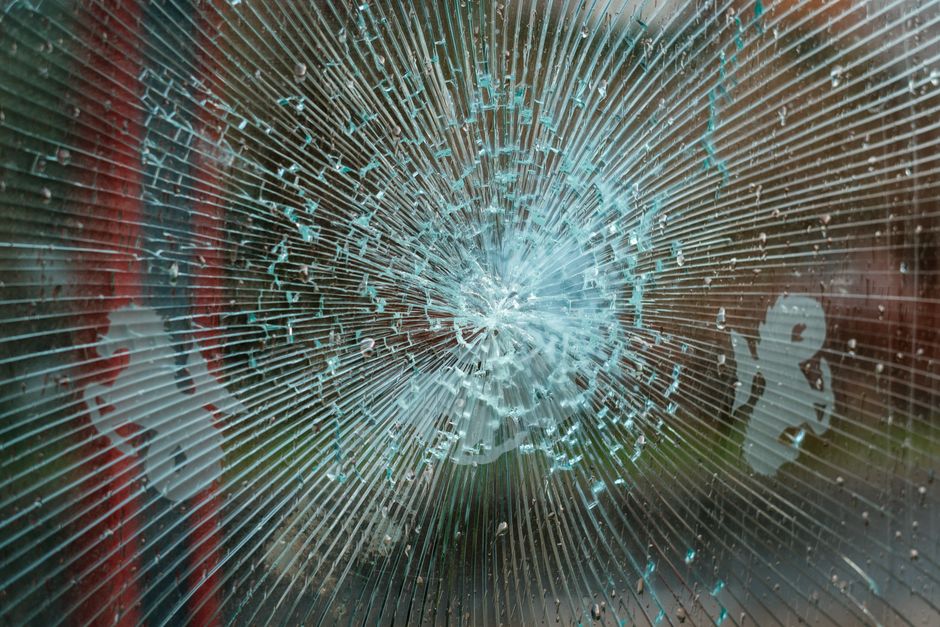
These are the most obvious. A stray baseball, a rogue tree branch during a windstorm, or a pebble kicked up by a lawnmower creates a distinct starburst pattern radiating from a central point. If the impact didn’t shatter the pane, you might be able to save it with epoxy.
Stress Cracks (Thermal Stress)
Have you ever seen a crack start at the edge of a window and slowly spider-web inward? That’s likely a thermal stress crack. These happen when extreme temperature fluctuations cause the glass to expand and contract unevenly. In Cleveland, where it can be 20 degrees in the morning and 55 by lunch, this is incredibly common. Large, tall, or narrow windows are especially prone to this because they distribute weight and stress less efficiently than square panes.
Pressure Cracks
These are the “ghost” cracks of the window world. They often appear as hourglass curves and are most common in double-pane or insulated glass units (IGUs). They are caused by drastic changes in barometric pressure or improper installation. When the pressure between the panes becomes too different from the outside air, the glass bows and snaps.
Safety First: Before inspecting any damage, put on your safety gear. We recommend cut-resistant gloves and wrap-around goggles. Even a “stable” crack can shift and release shards without warning.
Essential Tools and Materials for Cracked Window Pane Repair
If you’ve determined the crack is small enough for a DIY fix, you’ll need a specific kit. You can’t just use school glue and hope for the best. To achieve a repair that actually holds, gather the following:
Two-Part Epoxy: This is the gold standard for home glass repair. It consists of a resin and a hardener that, when mixed, create a chemical bond stronger than the glass itself.
Specialized Glass Glue: Products like Loctite Glass Glue or Gorilla Glue are formulated to bond with smooth, non-porous surfaces and withstand temperature shifts.
Putty Knife and Razor Blade: You’ll use the putty knife to apply the epoxy and the razor blade to scrape off the excess once it has partially cured.
Acetone (or Nail Polish Remover): Essential for cleaning the glass surface and removing oily residues that prevent adhesives from sticking.
Masking Tape: Used to stabilize the crack and protect the surrounding glass from messy epoxy spills.
Glass Cleaner and Microfiber Cloth: For the final polish.
Step-by-Step Guide to DIY Cracked Window Pane Repair
Ready to get to work? Follow this process to ensure your cracked window pane repair looks clean and lasts as long as possible. For more detailed insights, you can also check out our step-by-step repair handbook.
Using Epoxy for Small Cracked Window Pane Repair
Clean the Area: Wash the window with dish soap and water. Once dry, wipe the crack specifically with acetone. This removes any oils from your fingers or dirt that would weaken the bond.
Prepare the Epoxy: On a piece of cardboard or a paper plate, squeeze out equal parts of the resin and hardener. Use a toothpick or a small wooden stick to mix them thoroughly for at least 20 seconds. Work quickly—most epoxies begin to thicken within five to ten minutes.
Apply the Mixture: Use your putty knife to gently press the epoxy into the crack. Don’t just smear it on top; you want it to penetrate the fissure.
Let it Cure: Allow the epoxy to sit for about five minutes. It should be firm but not rock-hard.
Scrape the Excess: Hold a fresh razor blade at a low angle and carefully scrape away the epoxy that is sitting on the surface of the glass.
The 24-Hour Rule: While the epoxy feels dry quickly, it takes a full 24 hours to reach maximum strength. Avoid cleaning the window or opening/closing the sash during this time. For a deeper dive into whether you should tackle this yourself, read our guide on broken window pane repair: DIY or call a pro?.
Temporary Fixes to Stabilize a Cracked Window Pane Repair
Sometimes, you just need to buy time. Maybe it’s 10 PM on a Friday in Solon and a storm is rolling in. Here is how to avoid panicking and stabilize the glass:
Clear Packing Tape: Apply it to both sides of the glass. It’s the “easiest, dumbest way,” but it works to keep out drafts and stop the crack from vibrating and spreading.
Glass Repair Film: This is essentially tape on steroids. It’s thicker, more weather-resistant, and designed specifically to hold cracked panes together.
Clear Nail Polish: For very fine hairline cracks, a few layers of clear nail polish can act as a sealant. It won’t provide structural strength, but it can keep moisture out of the crack.
When to Replace the Glass Instead of Repairing
We love a good DIY project, but sometimes a repair is just a band-aid on a bullet wound. In many cases, especially with modern windows, replacement is the only safe and energy-efficient option.
Feature
Repair (Epoxy/Glue)
Replacement (New Pane)
Cost
$50 – $100
$200 – $400 (Single Pane)
Durability
Temporary/Medium
Long-term (20+ years)
Visibility
Crack remains visible
Crystal clear
Efficiency
Does not restore R-value
Restores insulation/gas fill
Safety
Structural integrity weakened
Fully restored
The Double-Pane Dilemma
If you have double-pane windows and you see fog or condensation between the glass, the seal has failed. A crack in even one pane allows the insulating argon gas to escape, replaced by moist air. No amount of epoxy can put that gas back in or clear the internal fogging. In this scenario, we recommend replacing the entire glass assembly (the IGU).
Structural Integrity
If the crack reaches from one edge of the frame to the other, or if pieces of glass are physically missing, the structural integrity of the window is gone. It is no longer a barrier against intruders or the Ohio winter. Replacing a single glass pane in an old wood sash is surprisingly affordable—often around $80 for professional service—which is much cheaper than a full window replacement costing $300 to $800.
Frequently Asked Questions about Window Cracks
Is resin repair effective for house windows like windshields?
This is a common question we get at our walk-in locations in Cleveland and Akron. The answer is: not really. Car windshields are made of “laminated glass”—two layers of glass with a plastic interlayer. When a windshield is injected with resin, the plastic layer helps hold the pressure and the resin fills the gap between the layers.
House windows (unless they are specifically laminated for soundproofing) are usually single-strength or double-strength glass with no middle layer. Injecting resin under pressure into a standard house window can actually cause the crack to shatter instantly. Surface dabbing helps with visibility, but it’s not the “magic fix” it is for cars.
How can I prevent future window cracks?
Maintain Your Frames: Wood rot can cause the frame to shift, putting uneven pressure on the glass. Keep your frames painted and sealed.
Avoid “Thermal Shock”: Don’t blast the AC directly onto a window that is baking in the afternoon sun.
Storm Windows: Installing storm windows provides an extra layer of protection against physical impacts and reduces the thermal stress on your primary panes.
Professional Installation: Many pressure cracks are caused by windows being nailed too tightly into the rough opening, leaving no room for the house to “breathe” or settle.
What safety precautions should I take with broken glass?
Handling broken glass is the most dangerous part of any home maintenance task.
The Tape ‘X’: Before removing a broken pane, use heavy-duty tape to mask a large “X” across the glass. This holds the shards together so they don’t rain down on your arms when you move the sash.
Clear the Area: Keep children and pets in another room until the area is vacuumed and the new glass is secure.
Safe Disposal: Wrap broken glass in several layers of newspaper or heavy cardboard and tape it shut before placing it in the trash. Label it “Broken Glass” for your waste collector. If you’re unsure about handling the shards, it’s best to find a professional window contractor in Cleveland to handle the cleanup and replacement safely.
Conclusion
Whether you’re dealing with a minor stress crack in Shaker Heights or a shattered pane in Westlake, acting fast is the key to saving money. A small cracked window pane repair today can prevent a full window replacement tomorrow.
At Apex Window Werks, we understand that a broken window is an emergency for your home’s security and comfort. That’s why we offer same-day service and 2-hour repairs for walk-in customers across Northeast Ohio. We specialize in everything from simple glass swaps to complex wood frame restoration.
Don’t let a small crack become a big “pane.” If the DIY route feels a bit too daunting, or if your double-pane windows have lost their seal, we’re here to help. Reach out to us for a professional assessment and let’s get your view back to crystal clear.