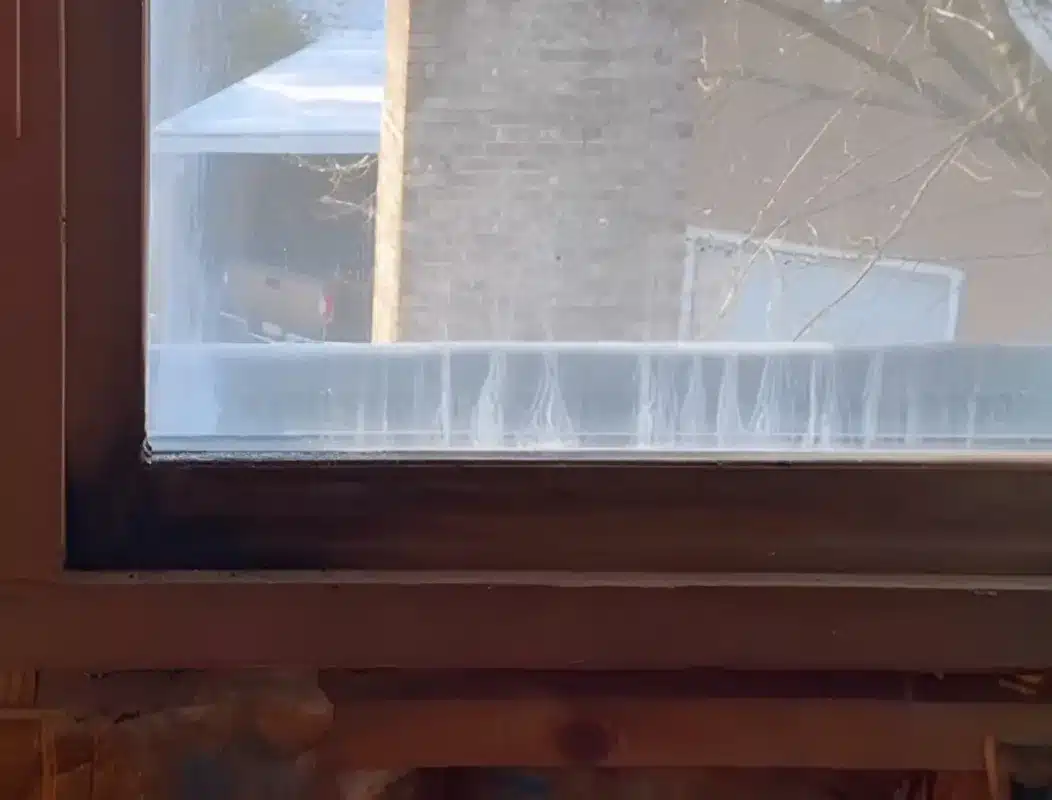
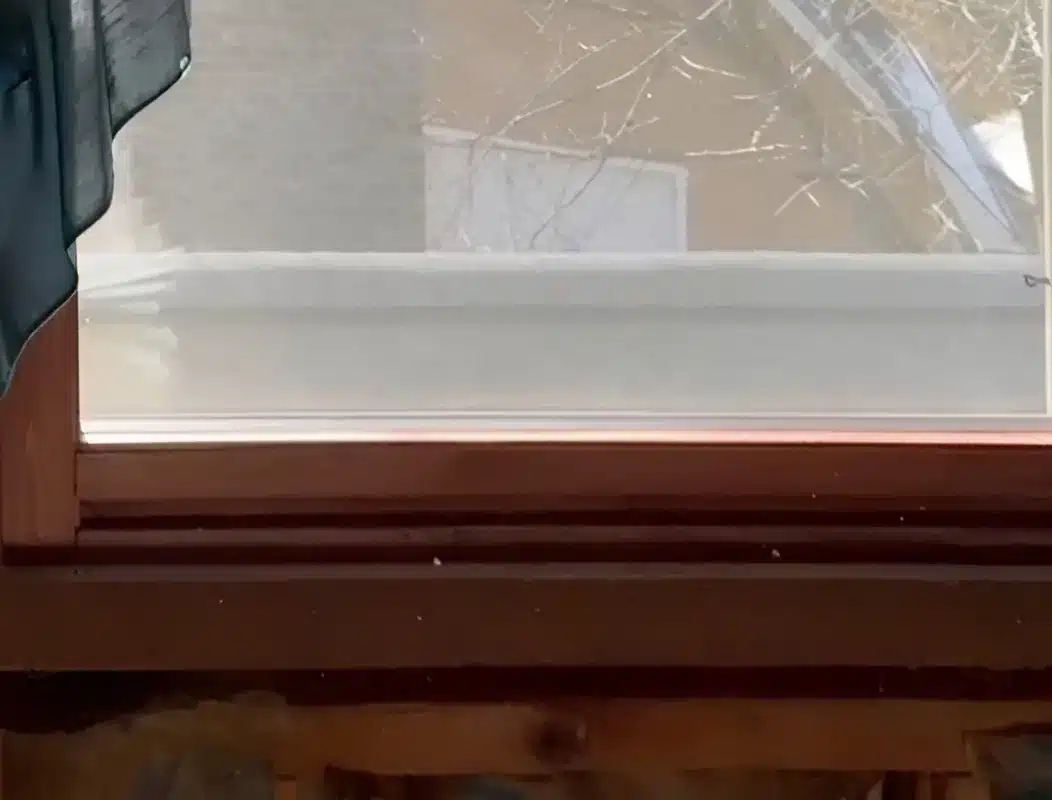
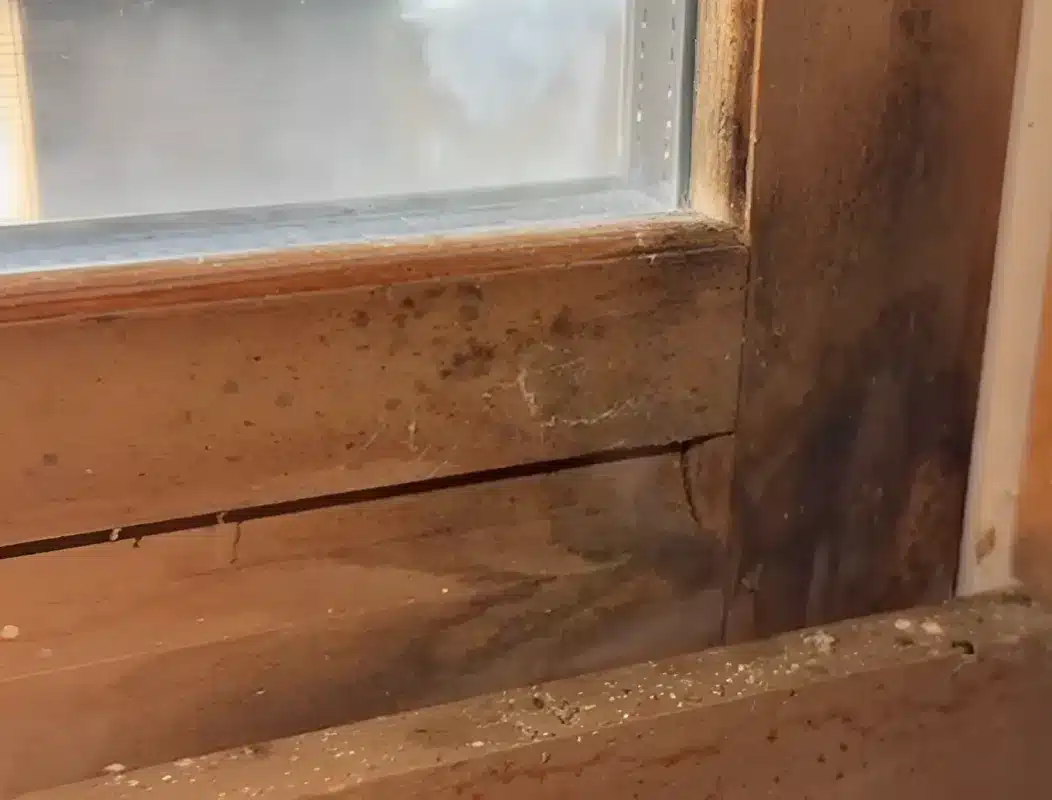
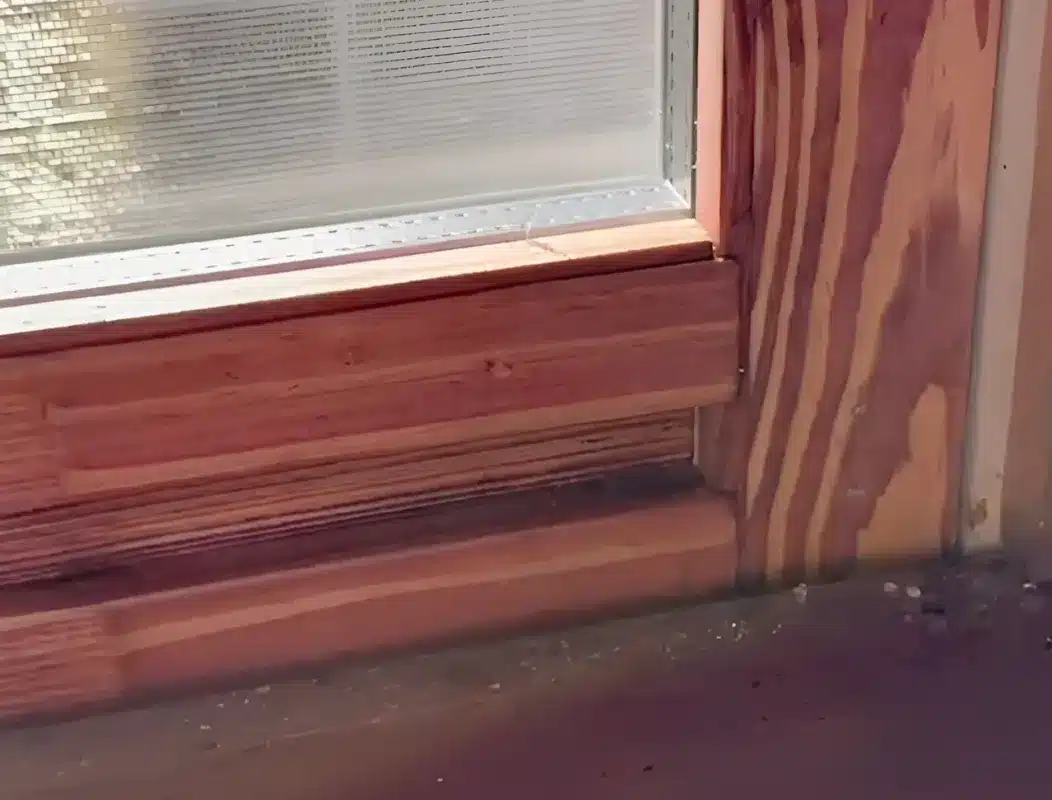
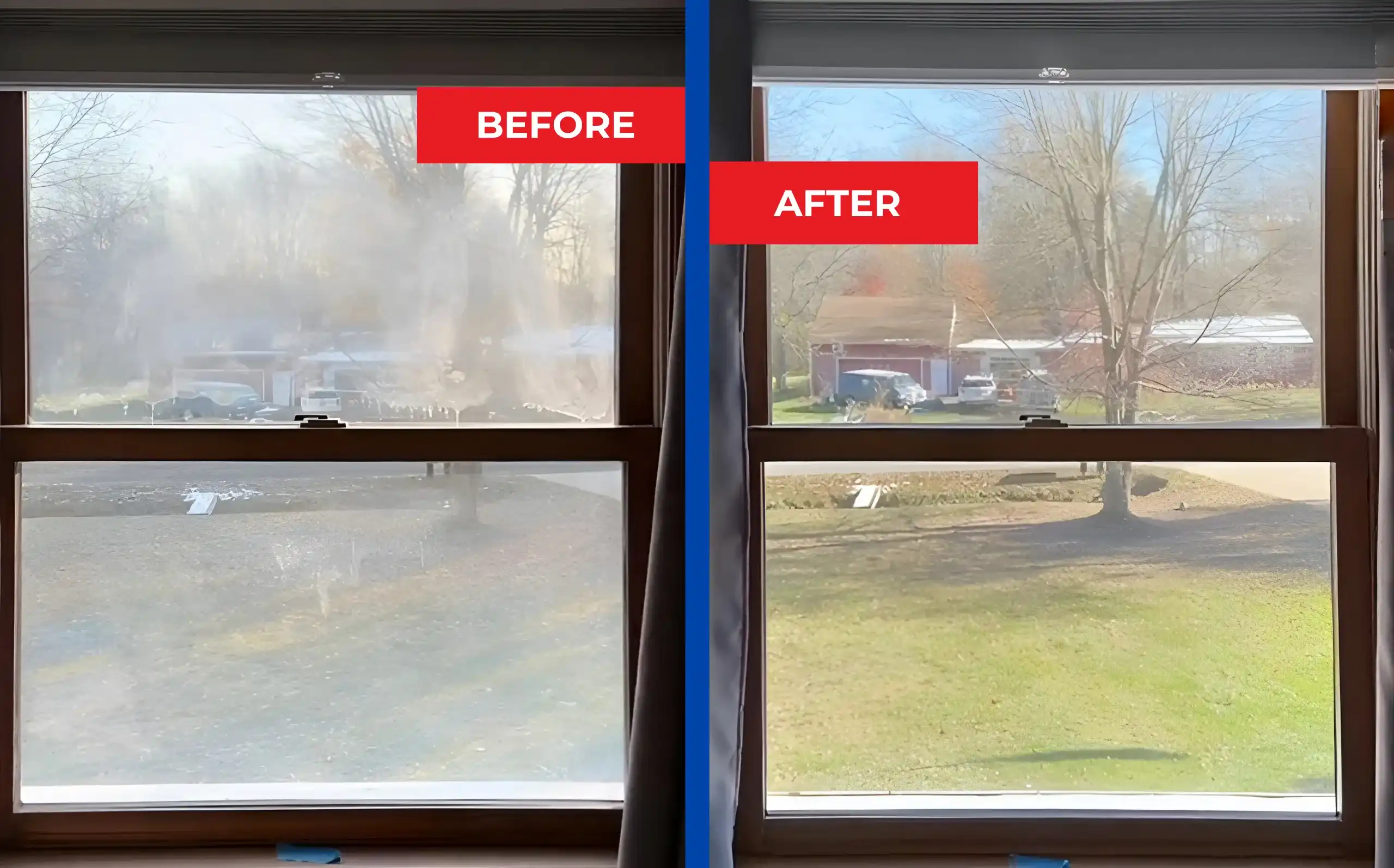
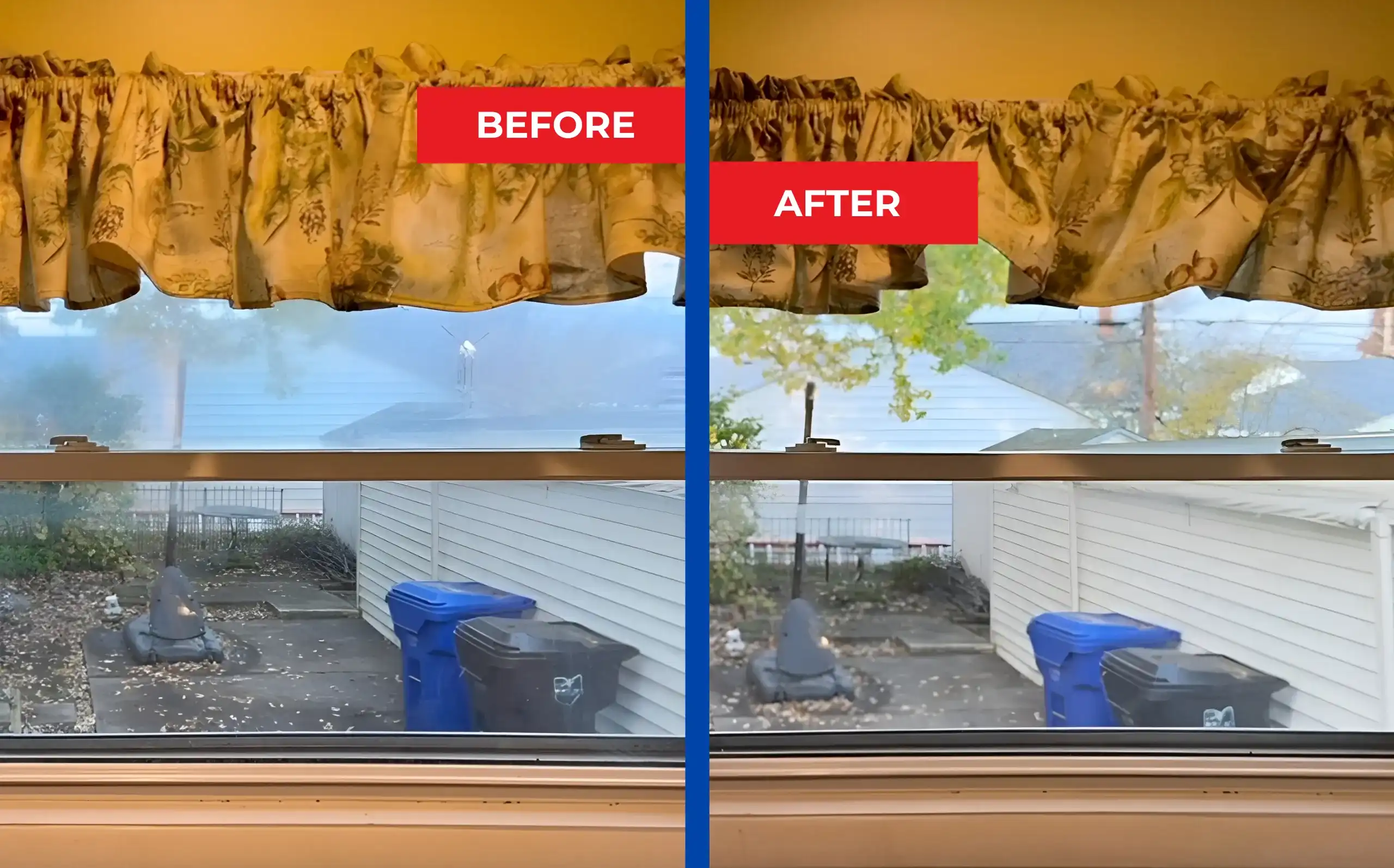
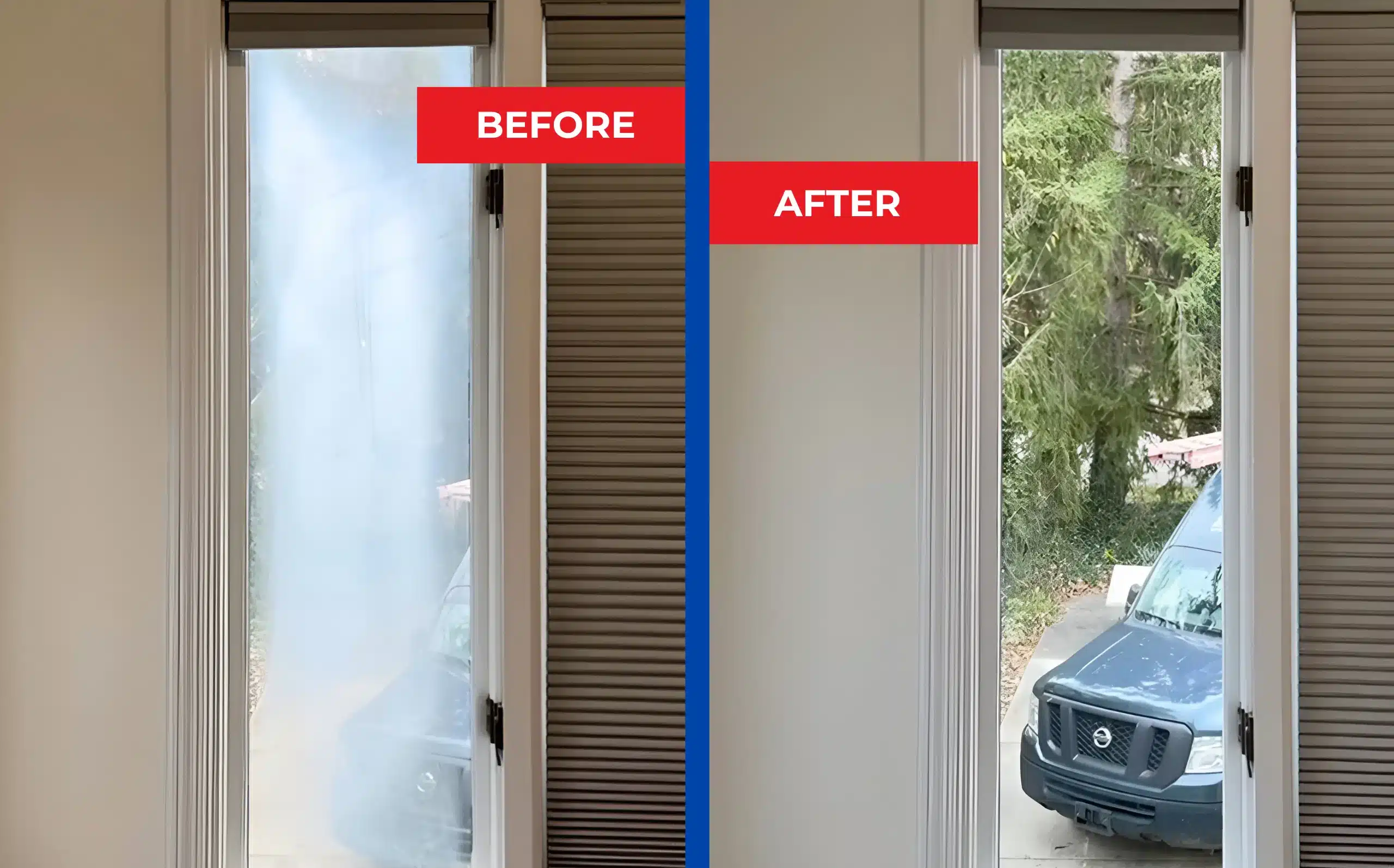
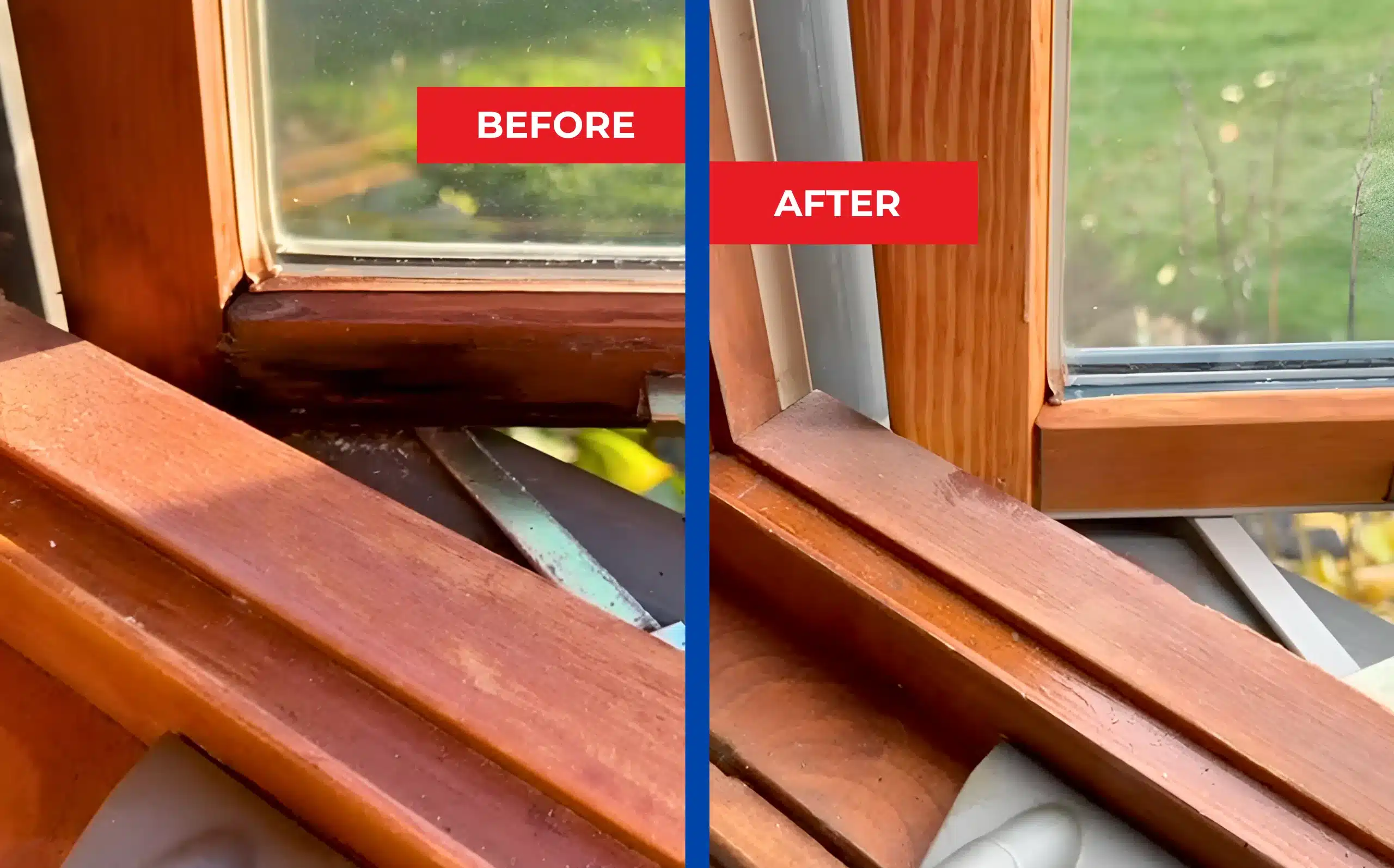
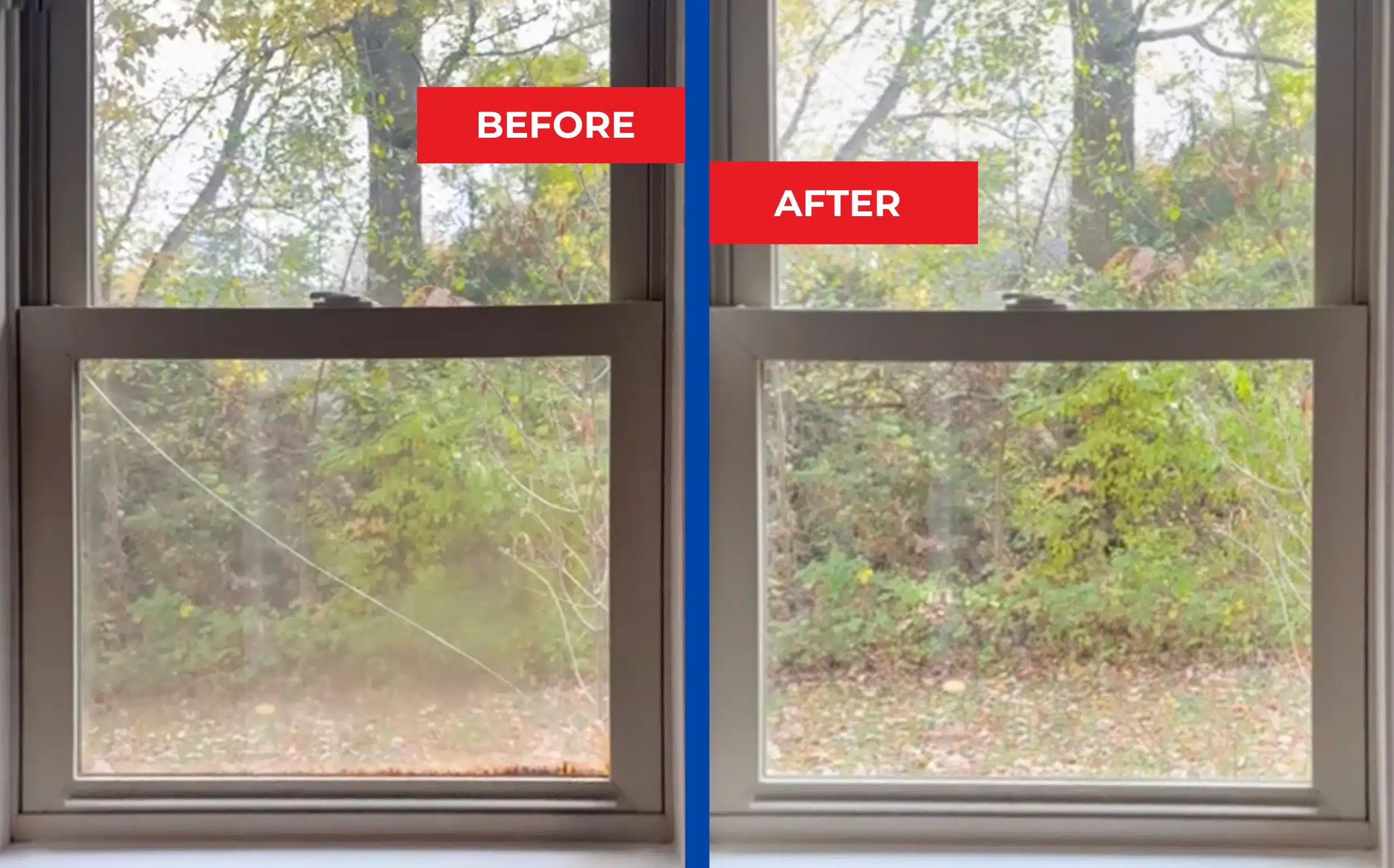
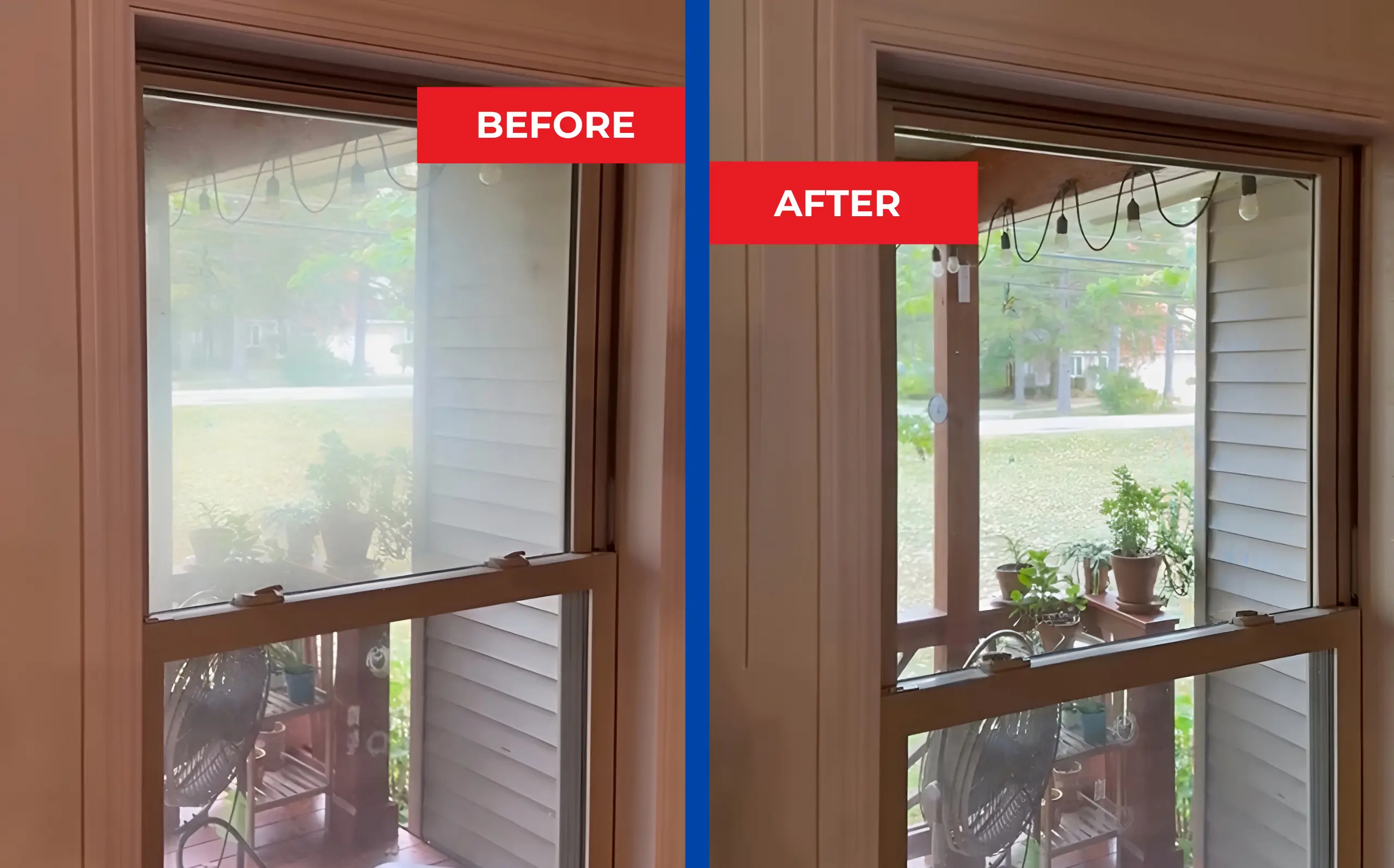
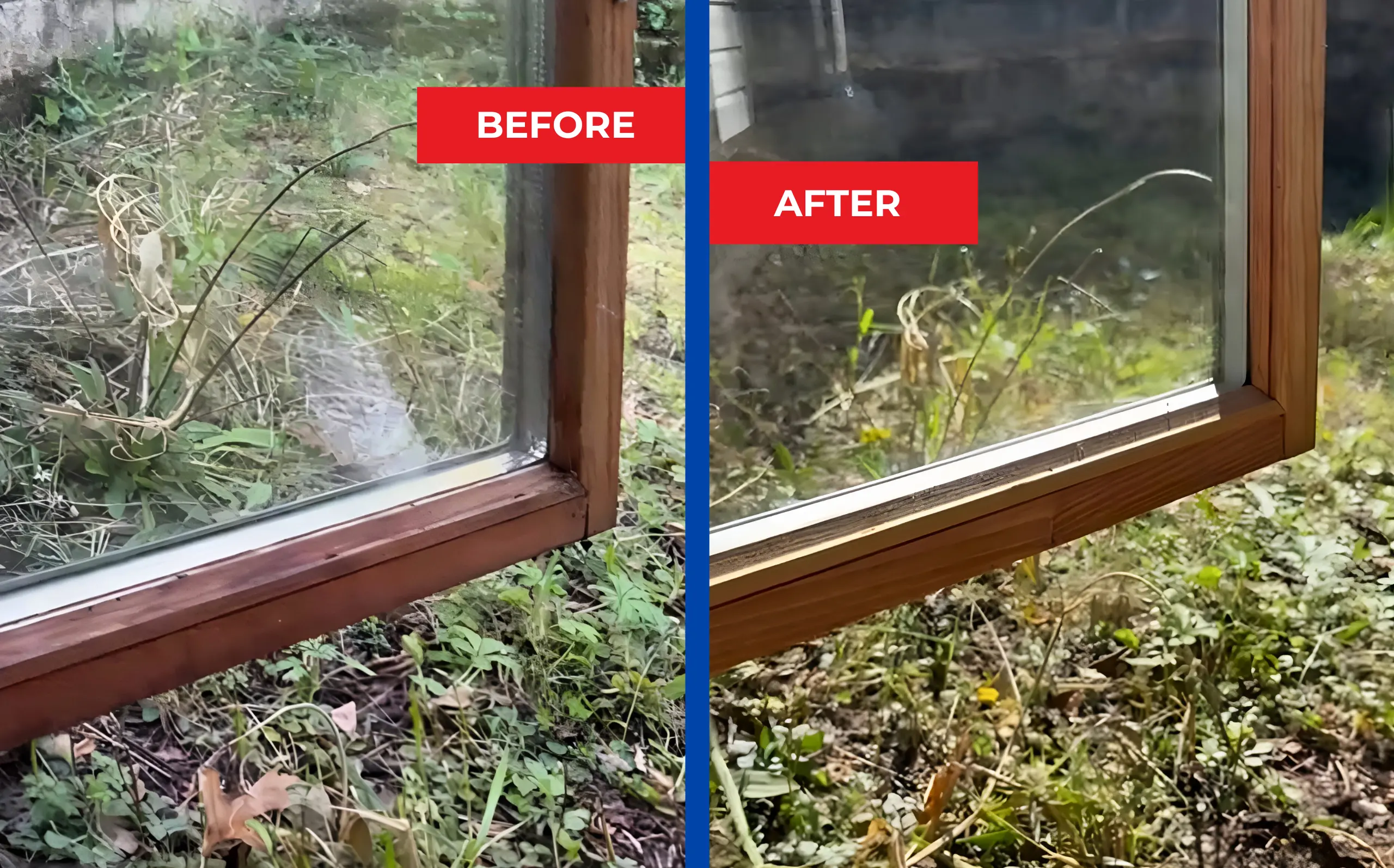
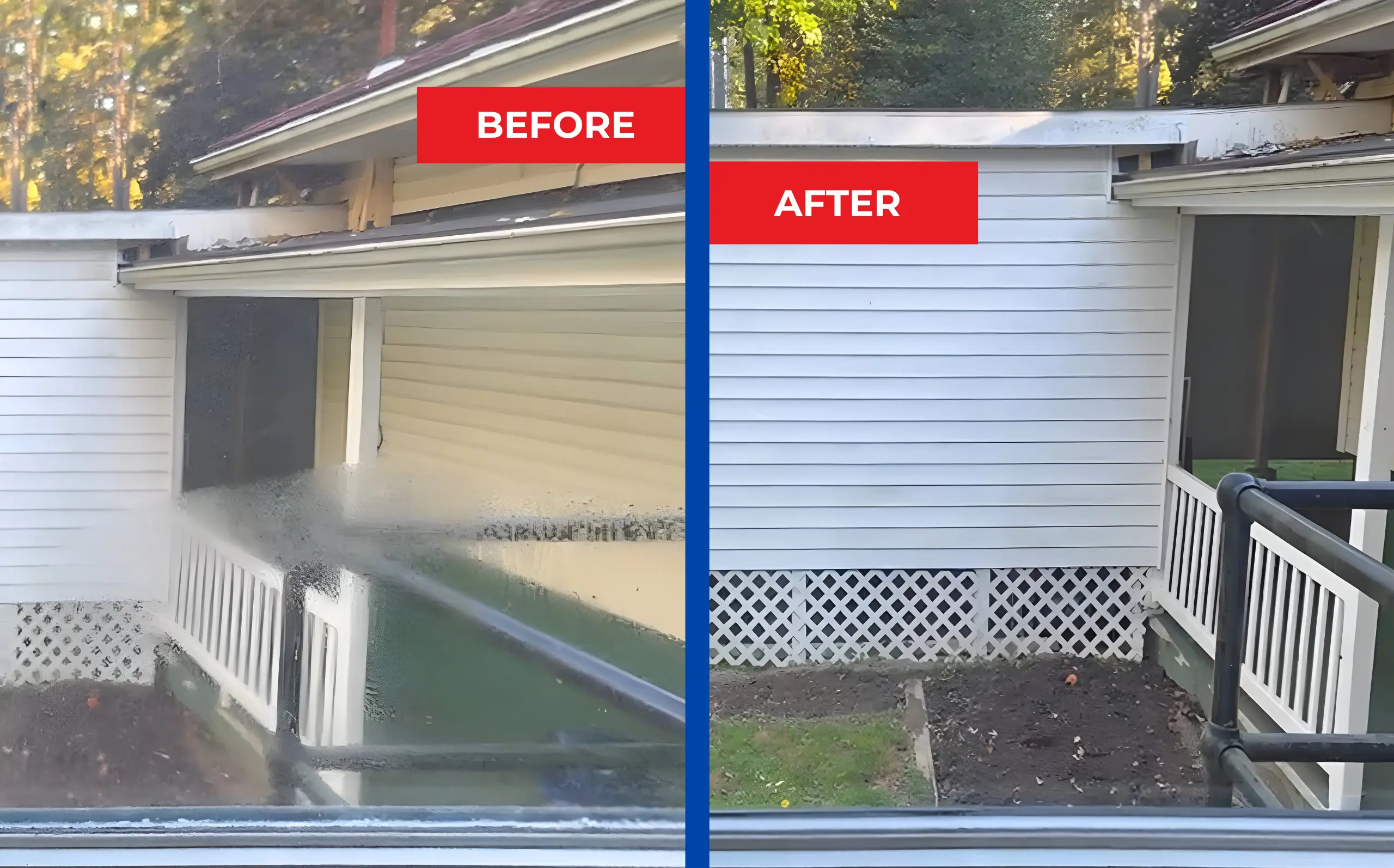
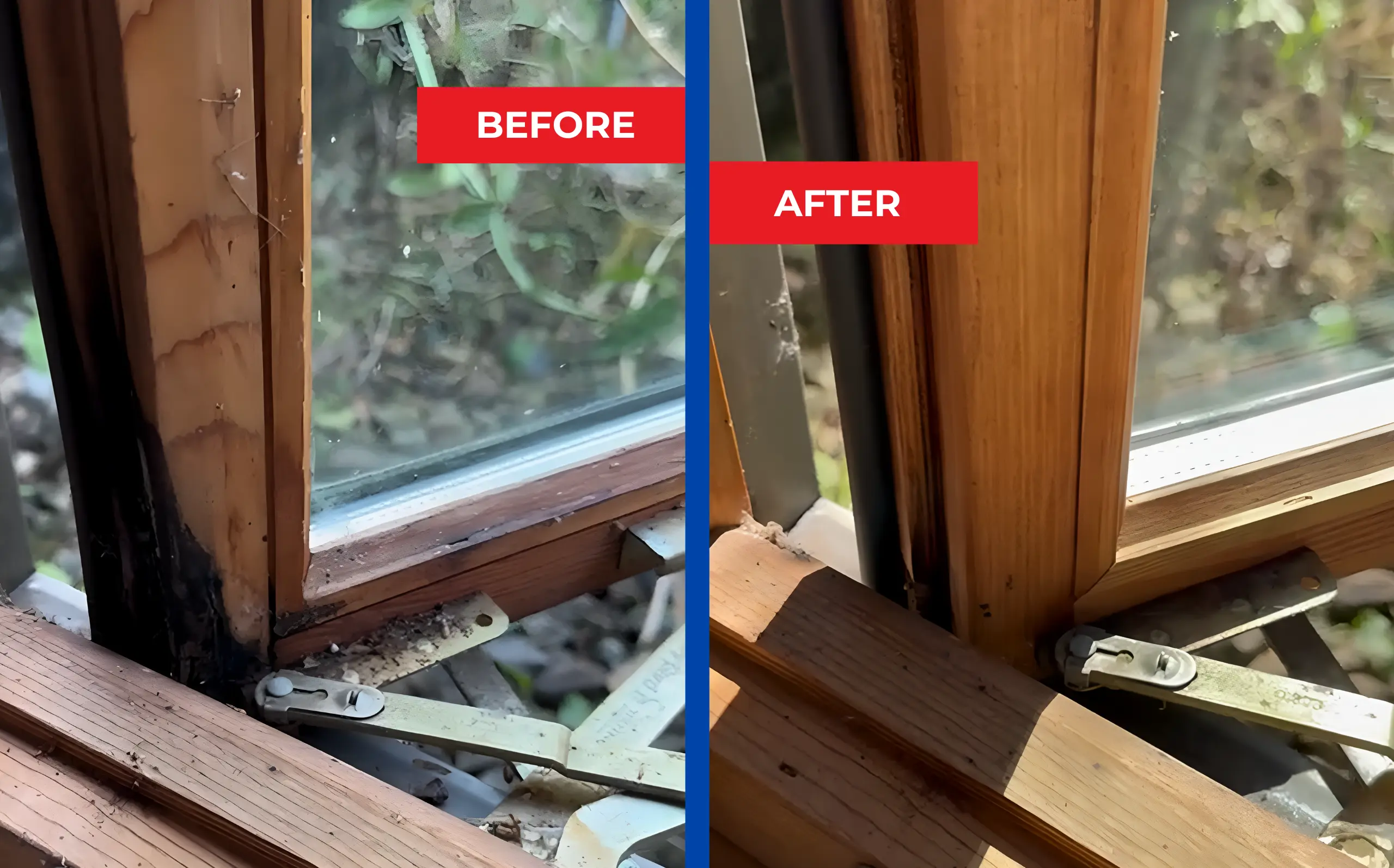
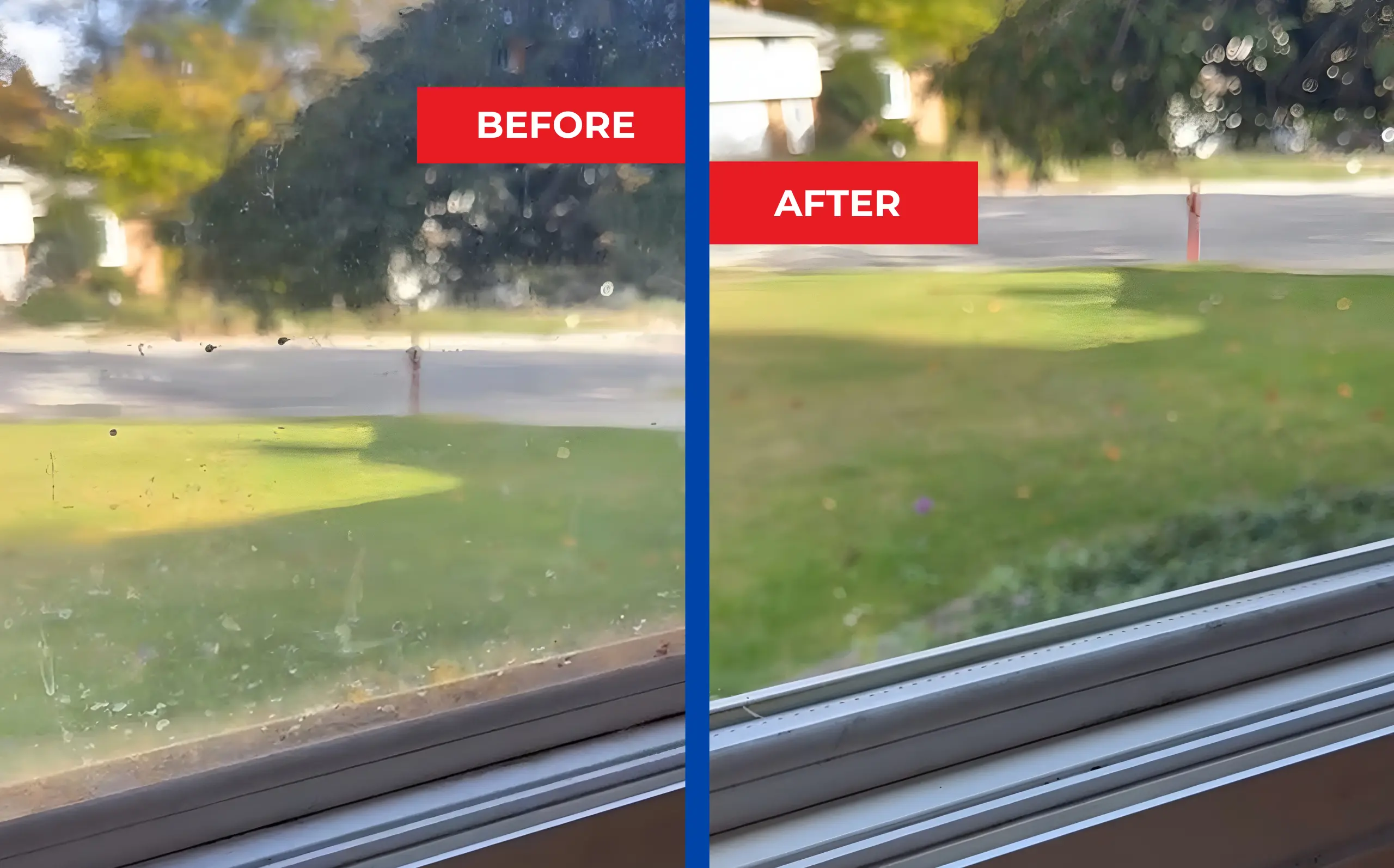
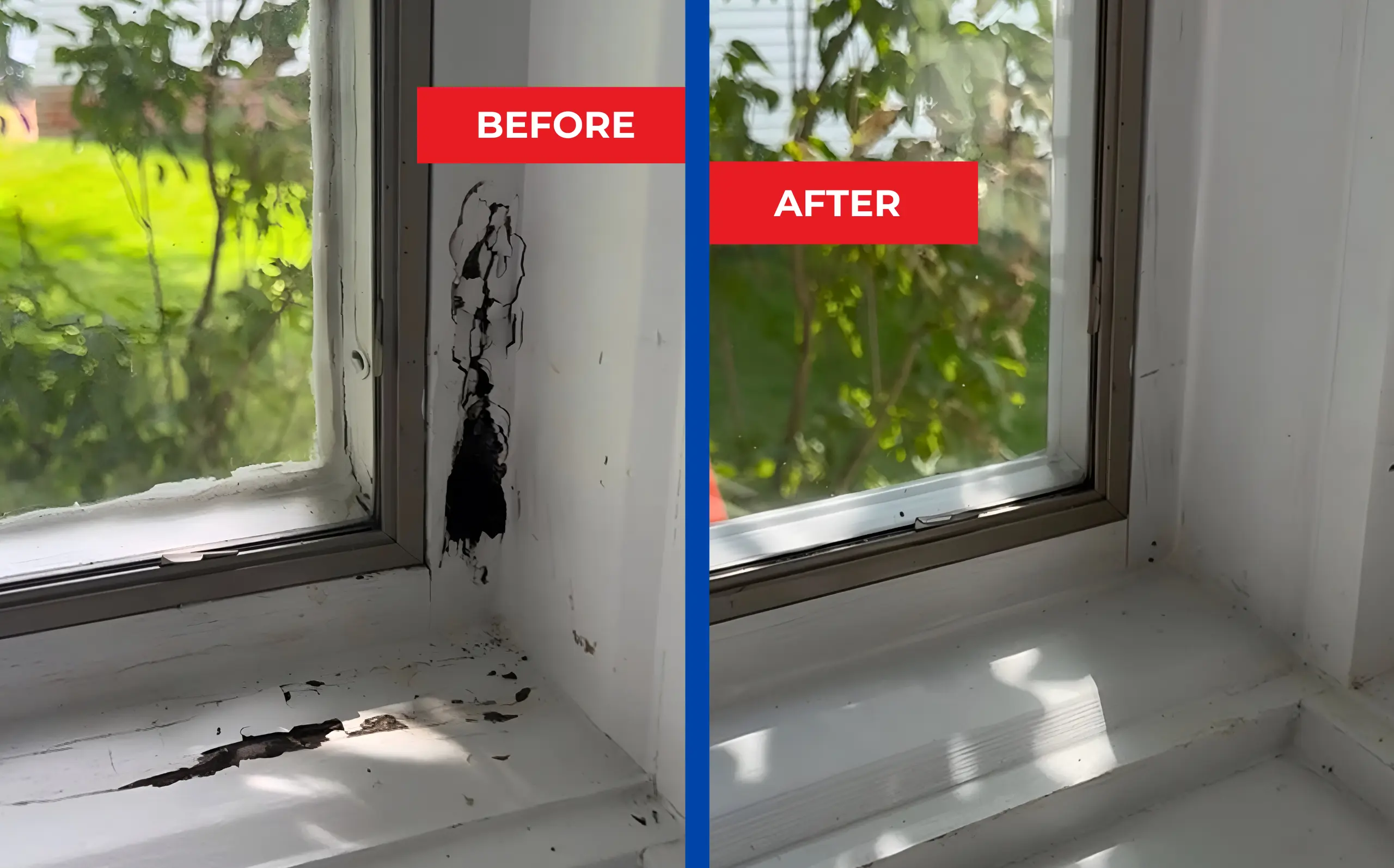
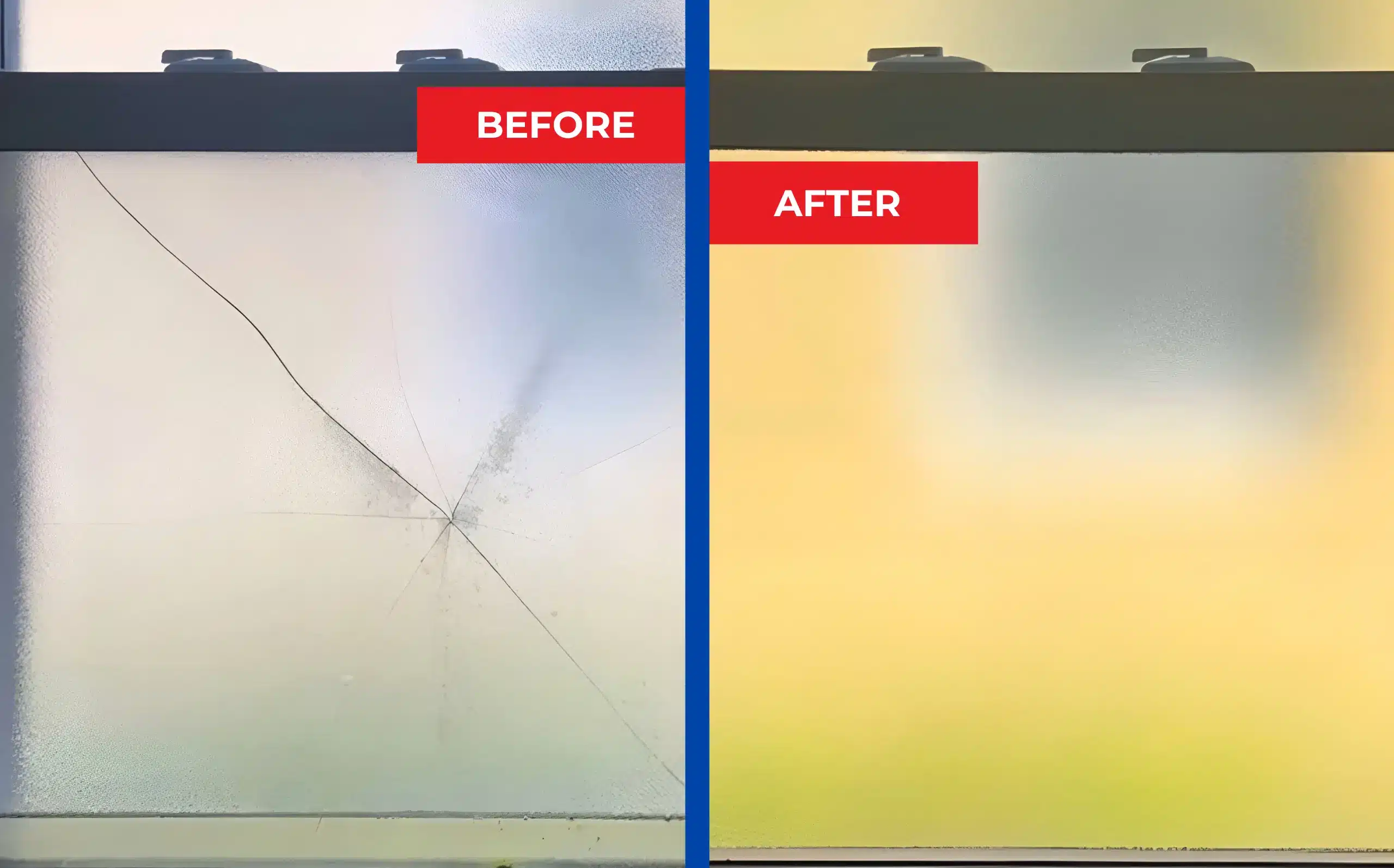
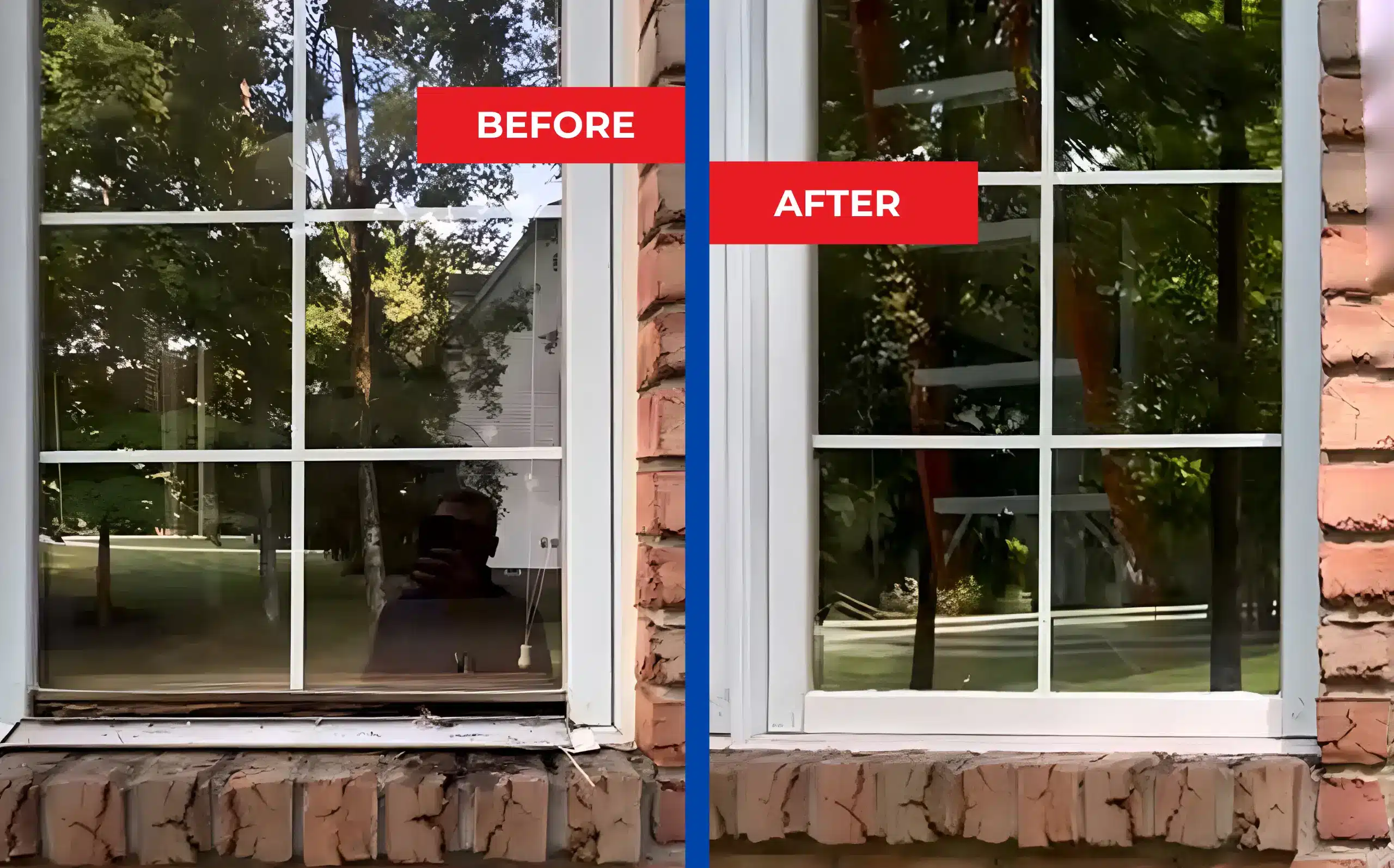
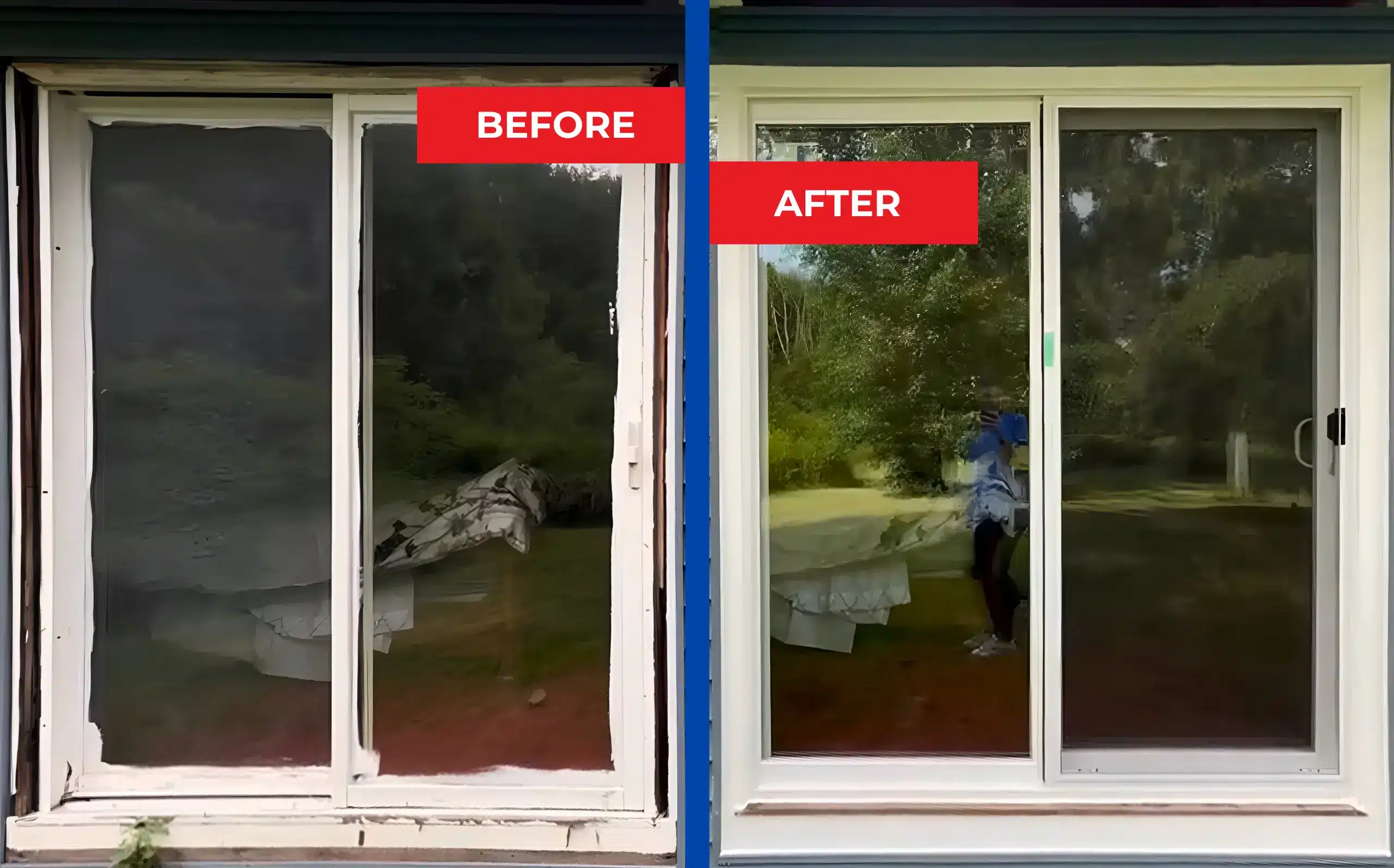
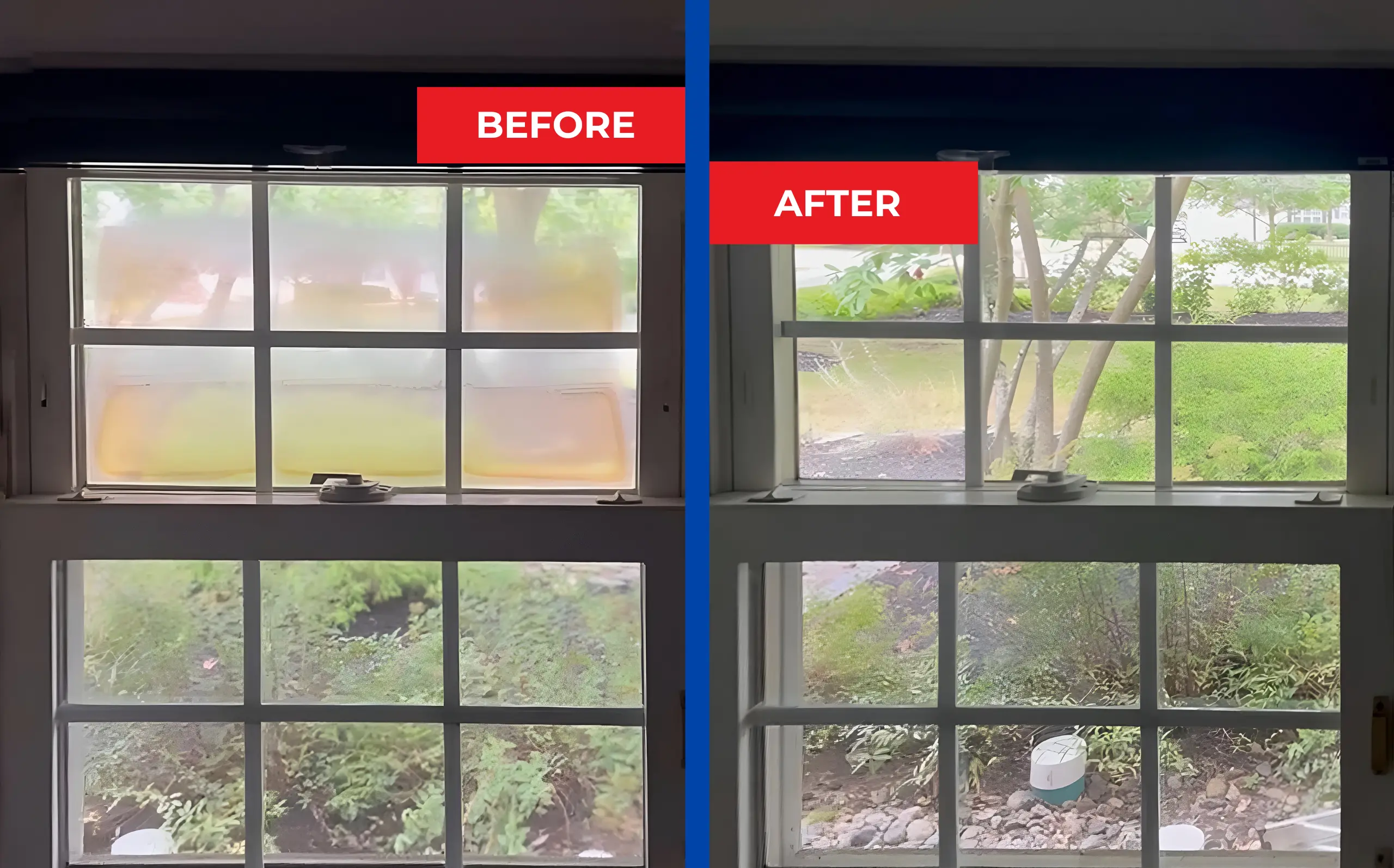
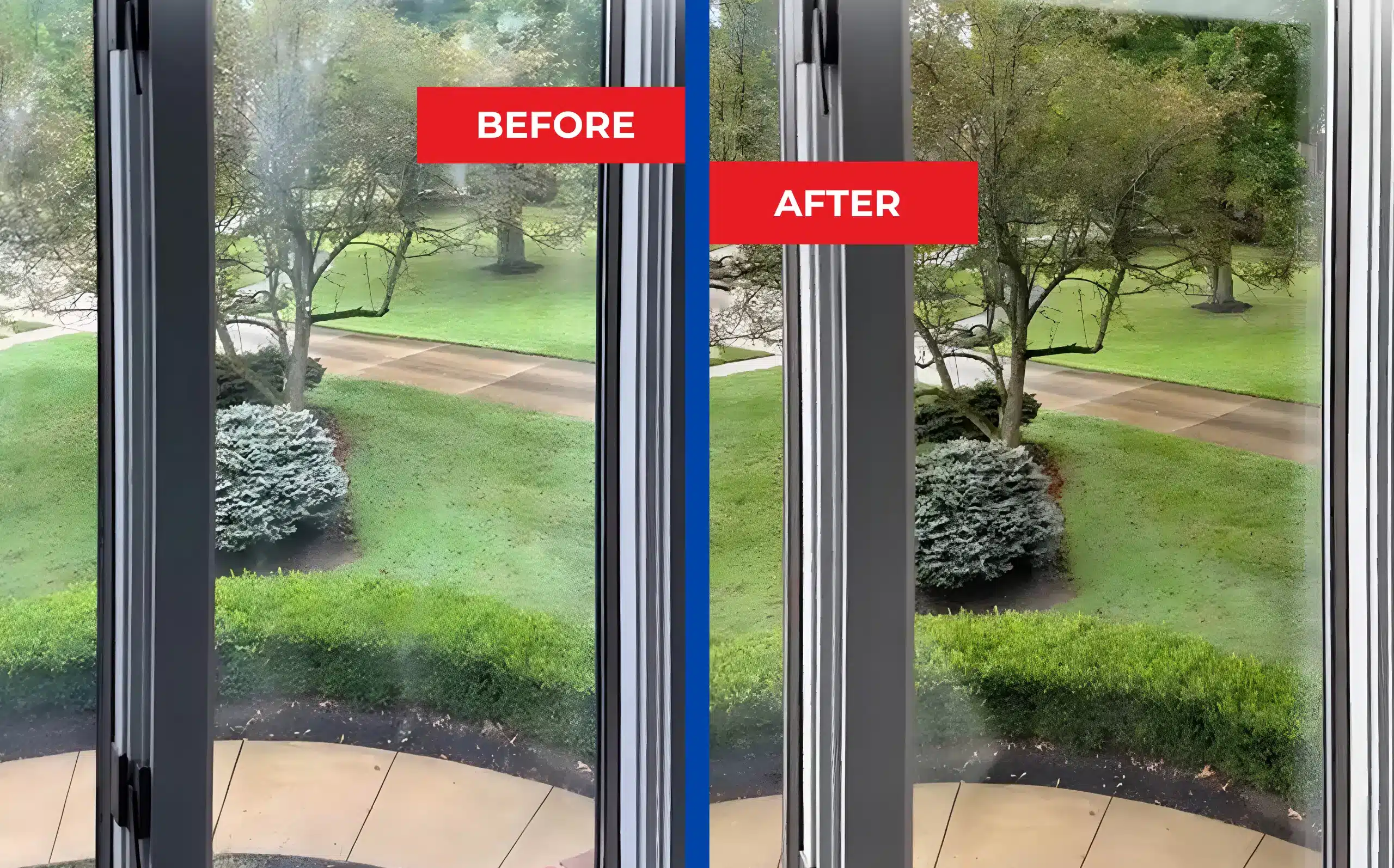
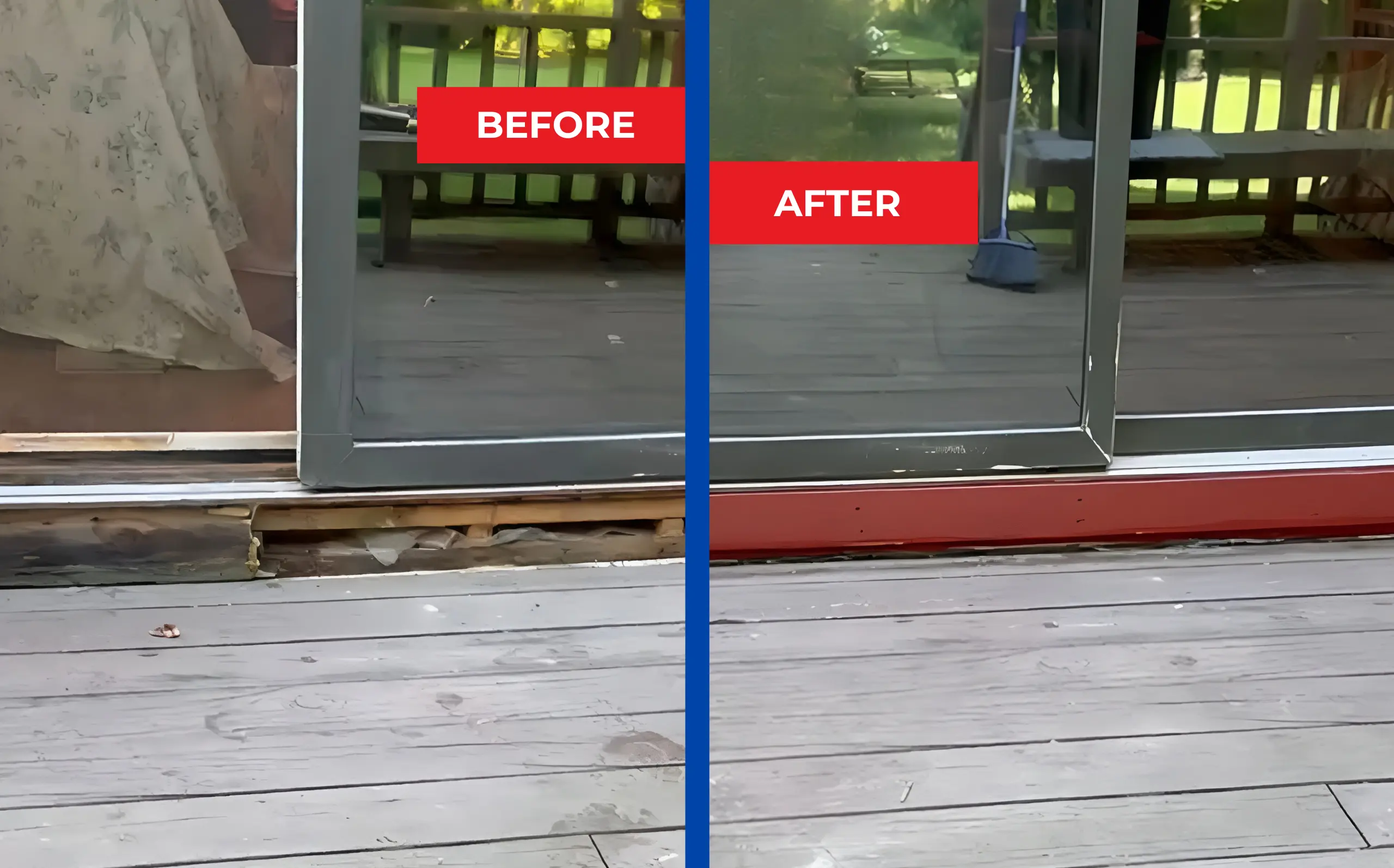
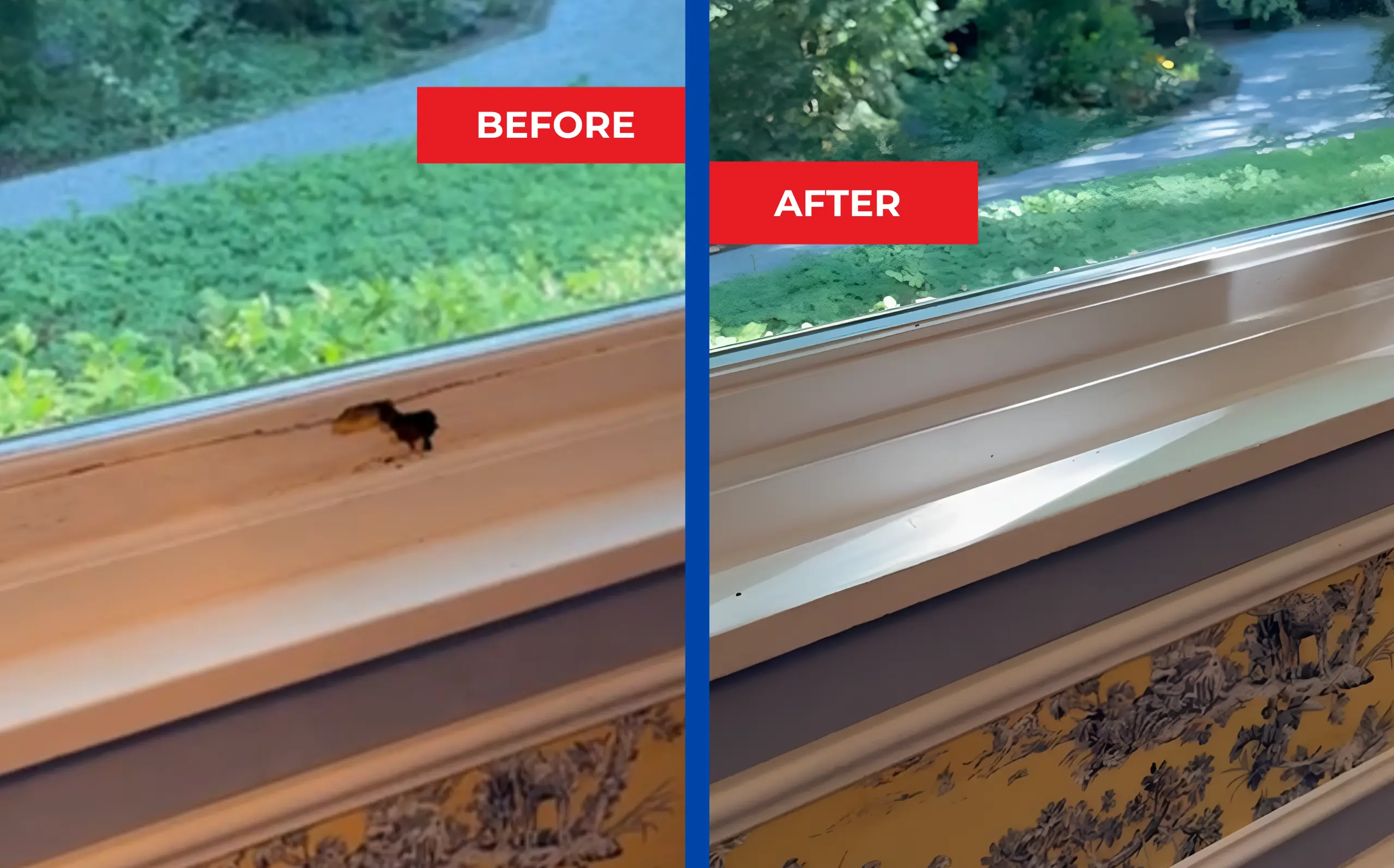
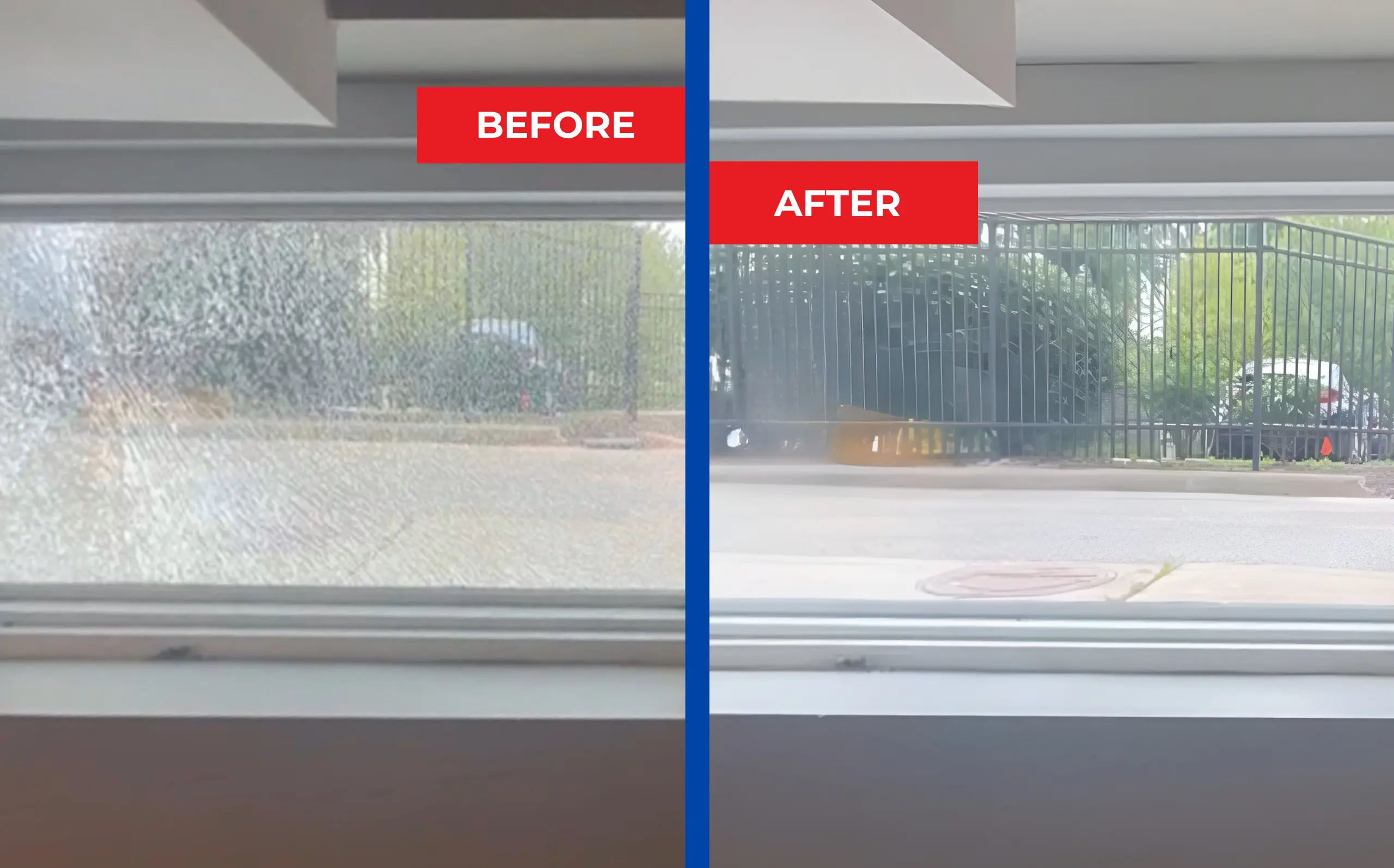
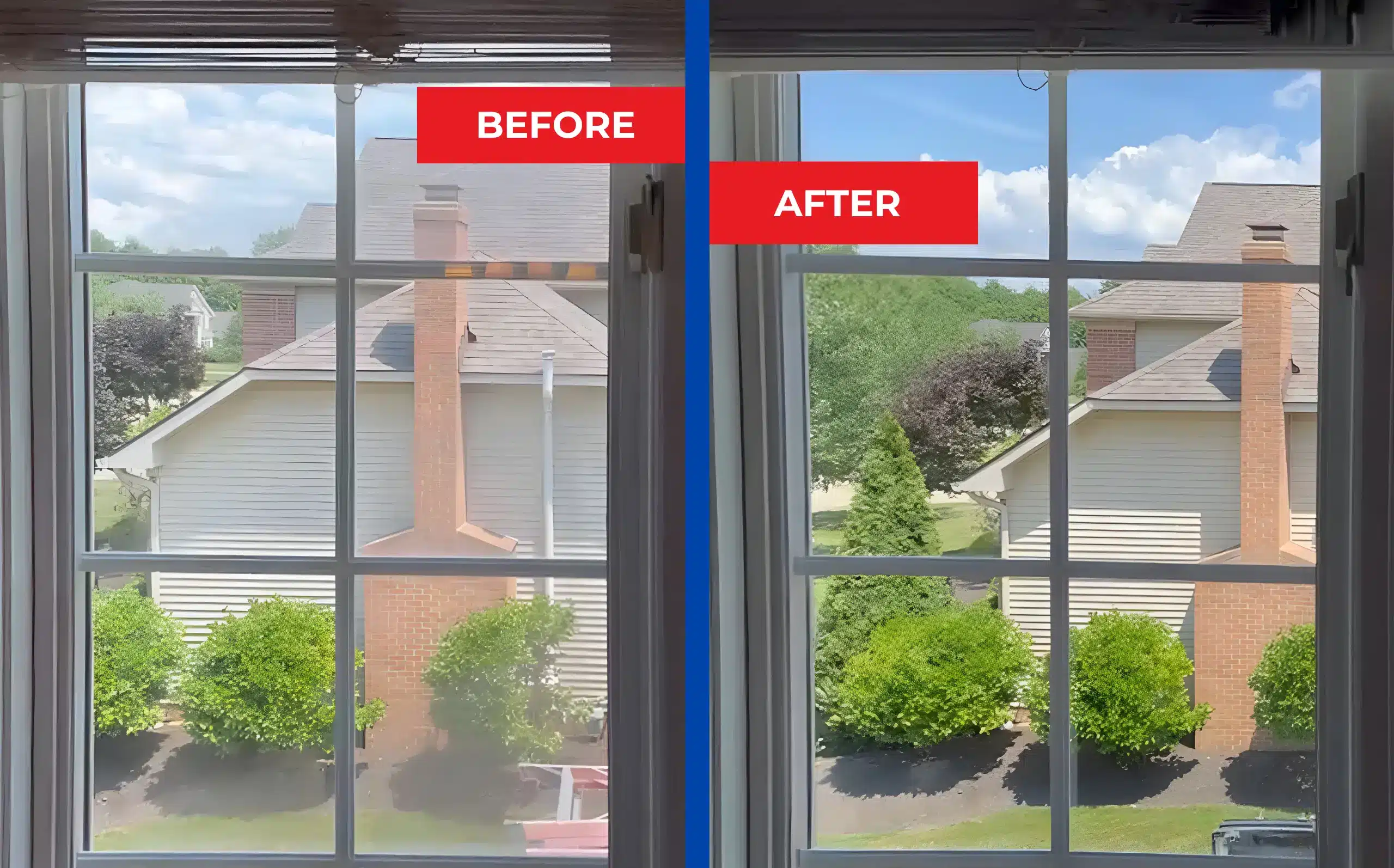
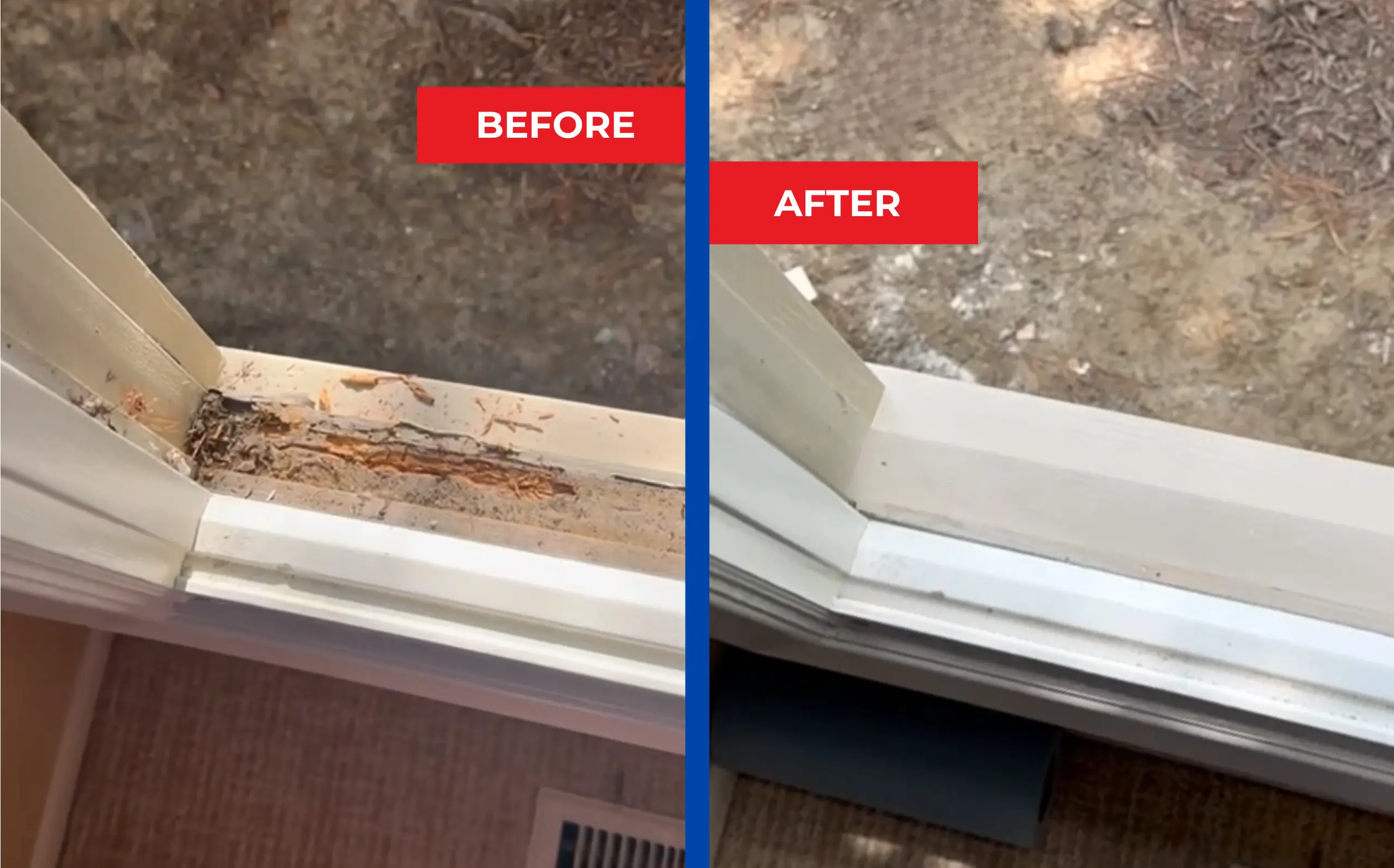
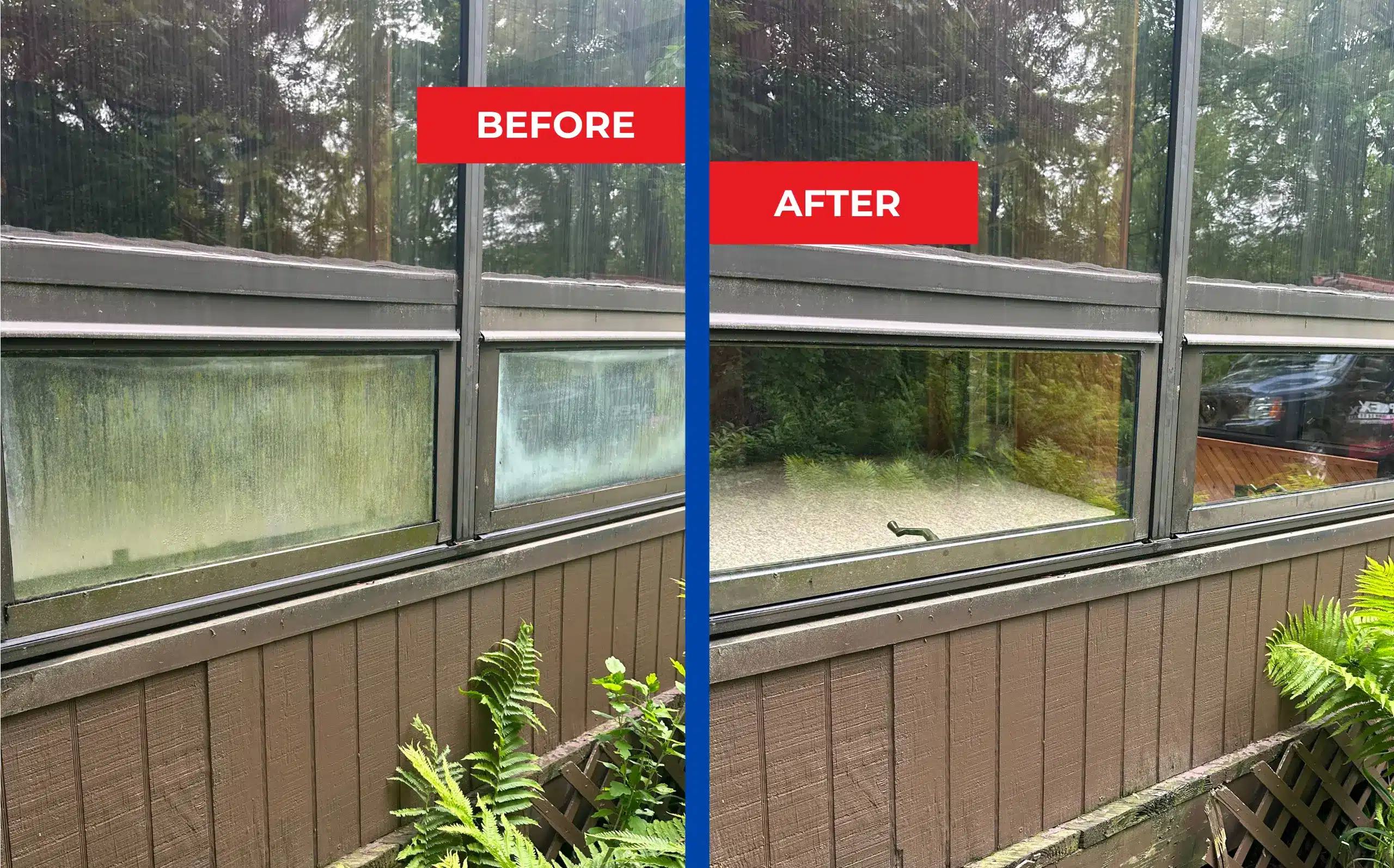
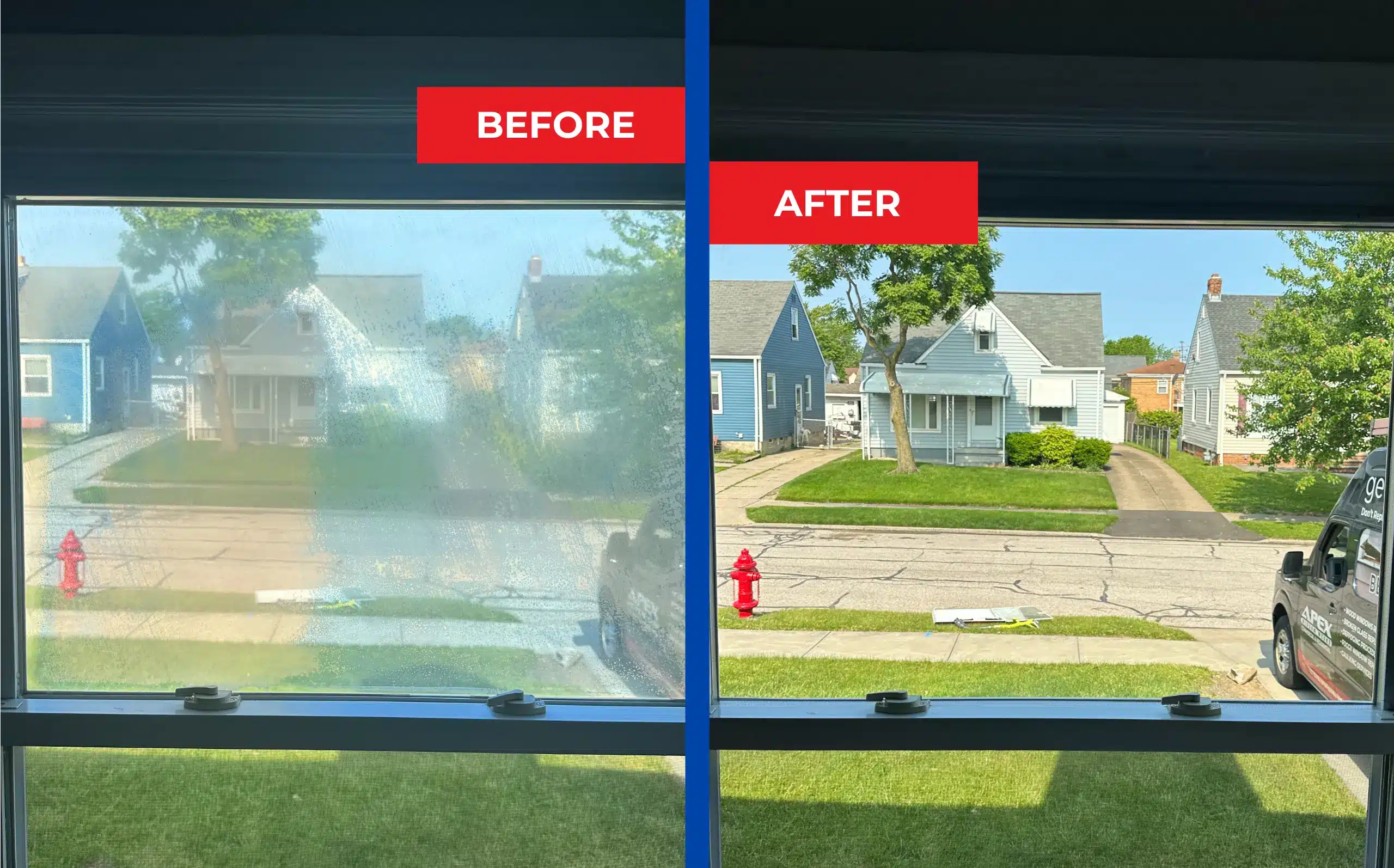
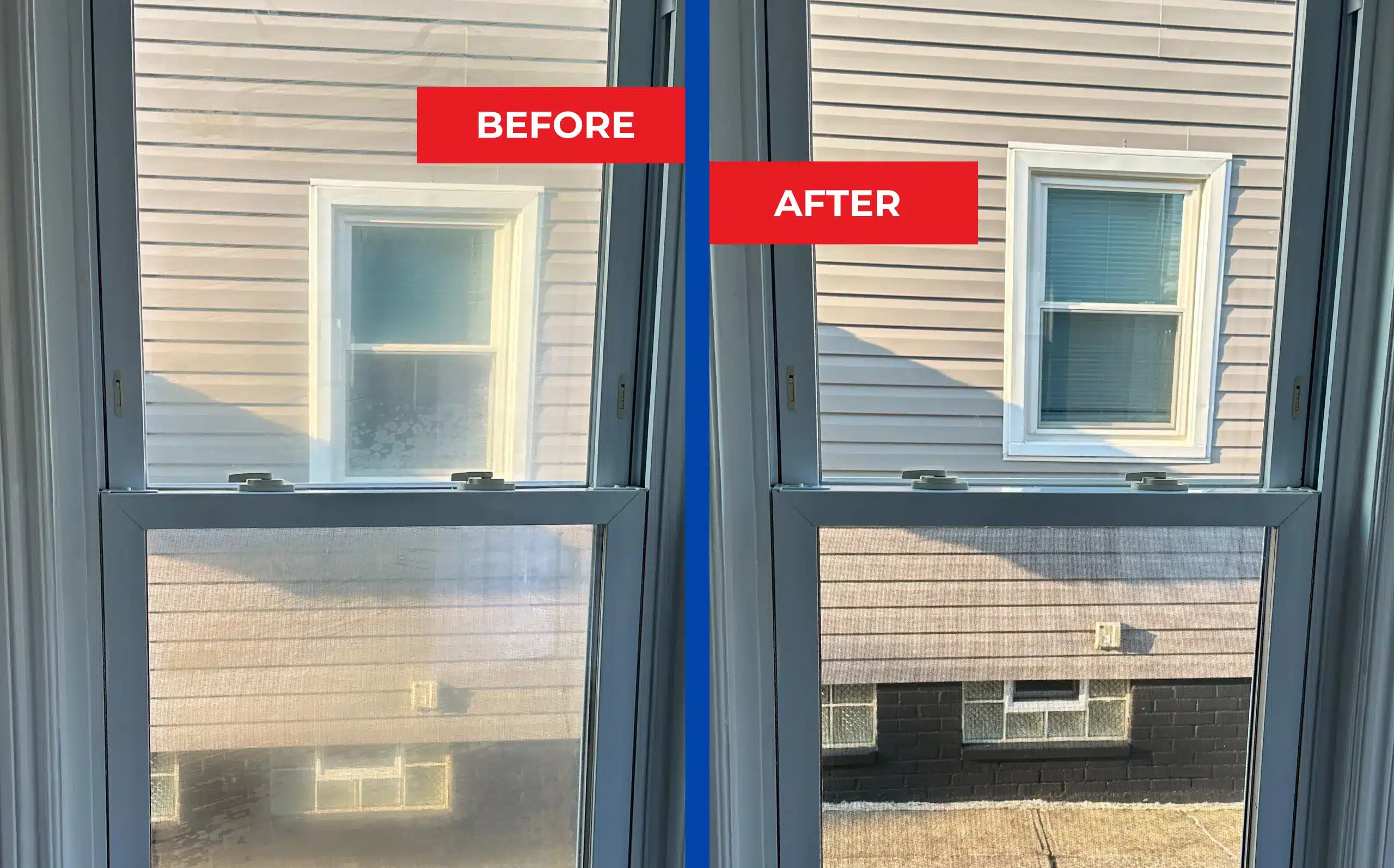
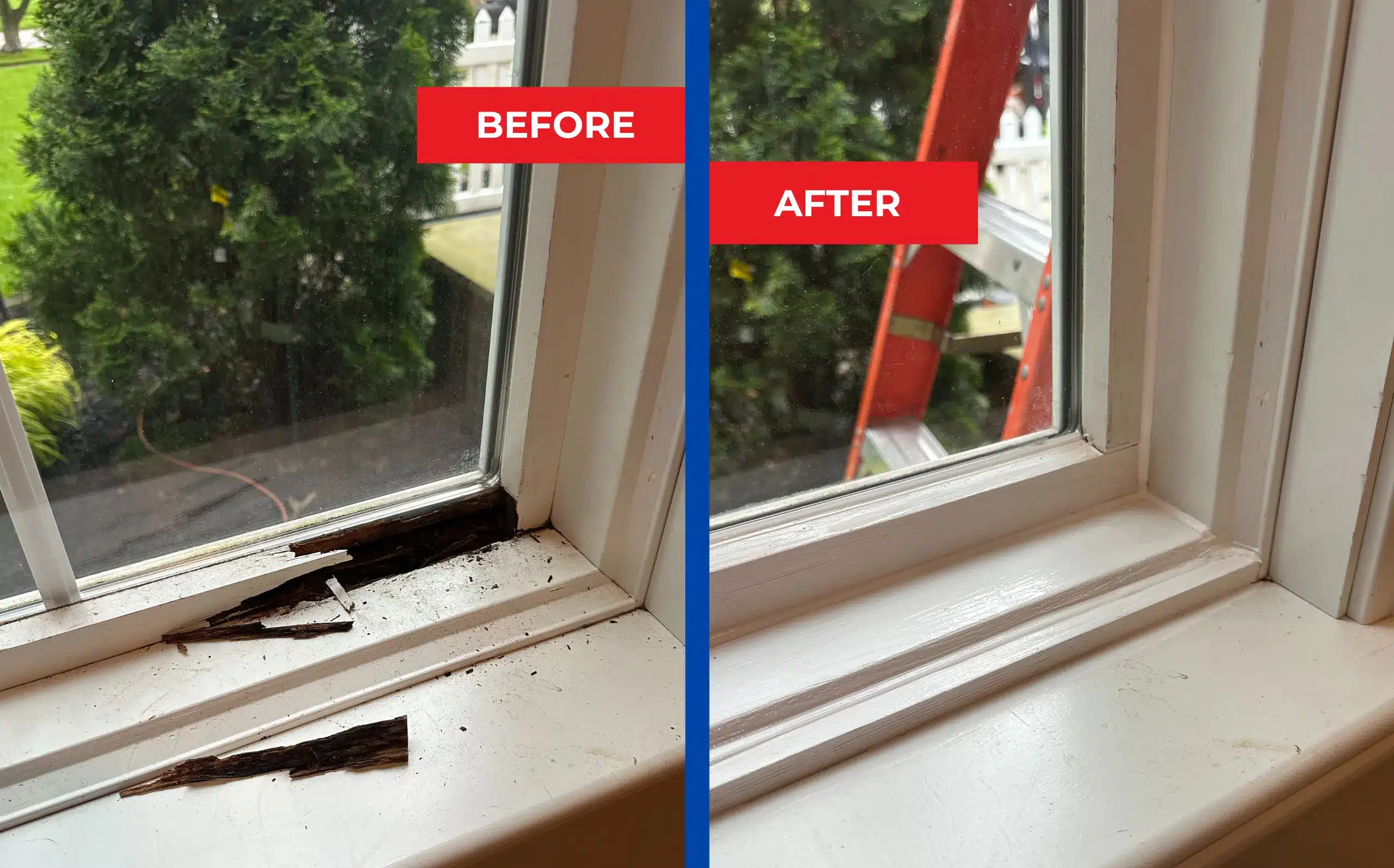
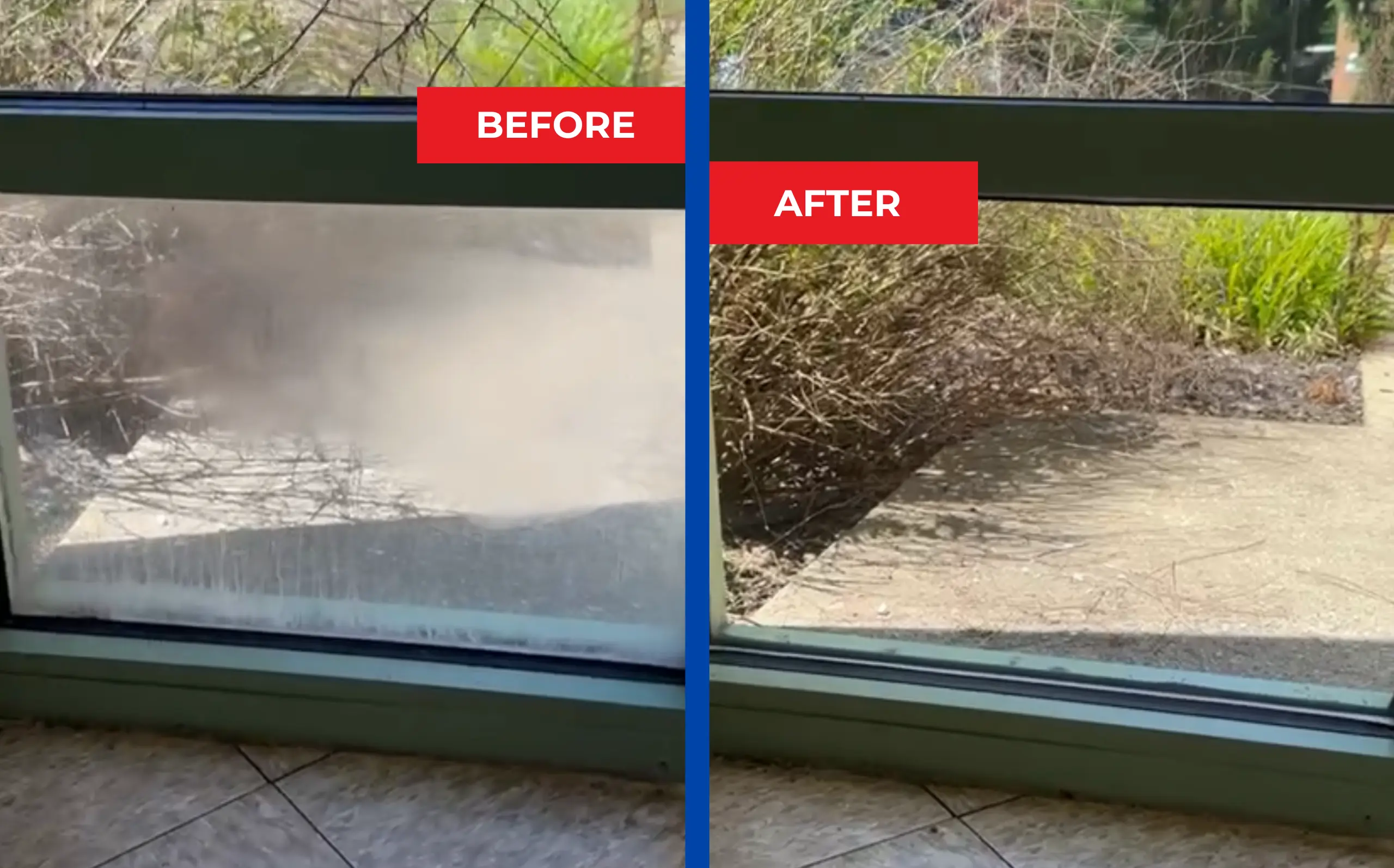
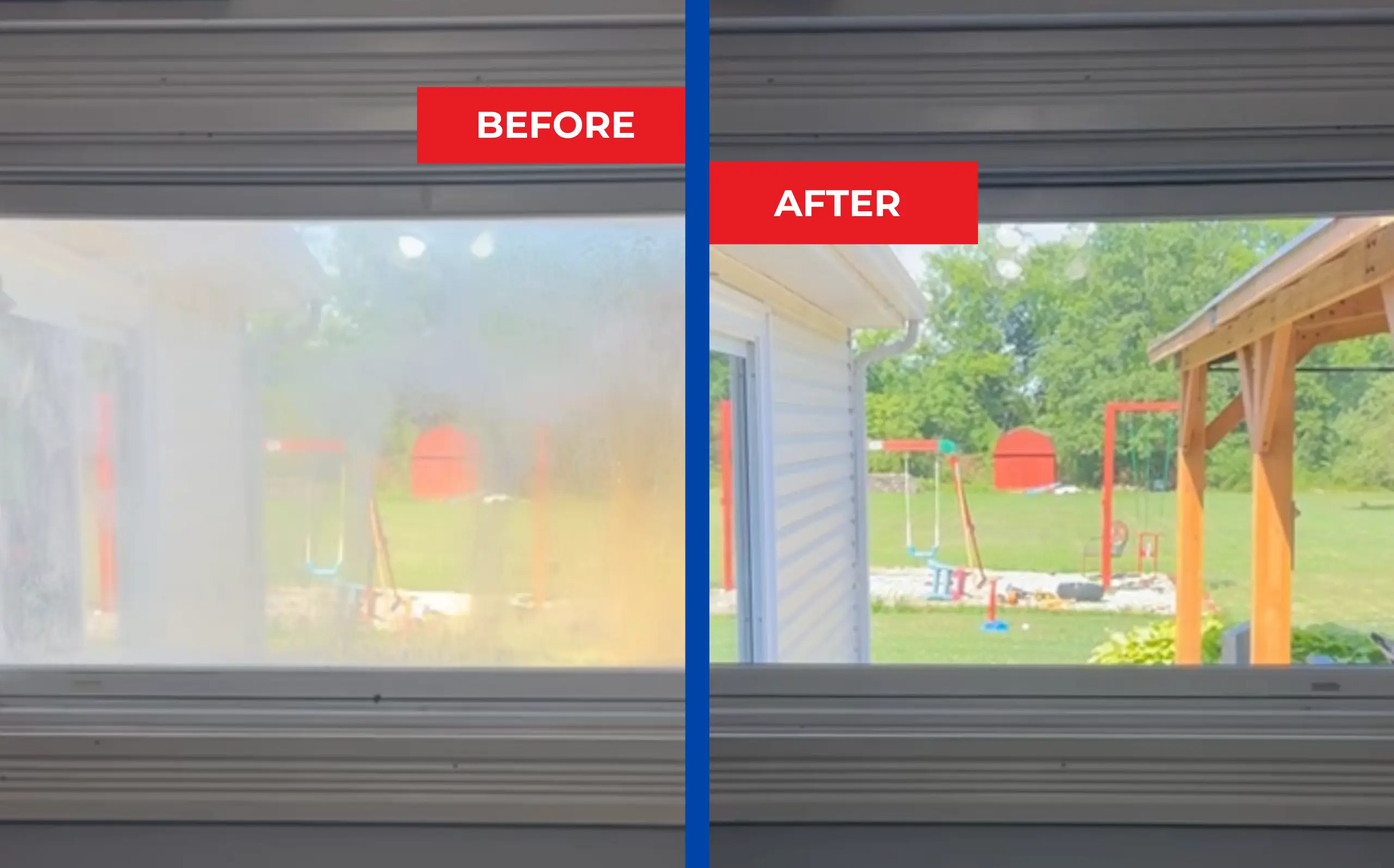
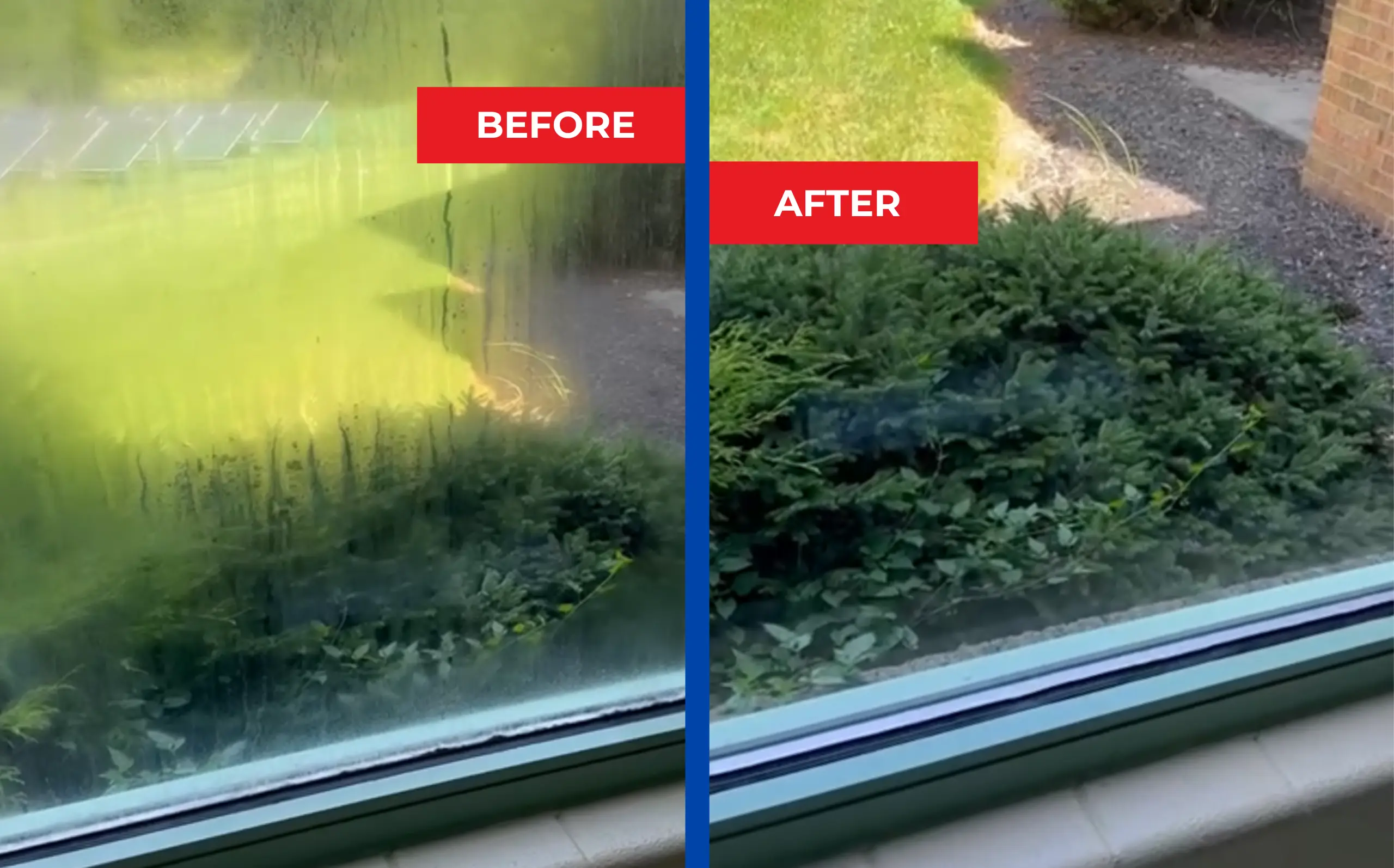
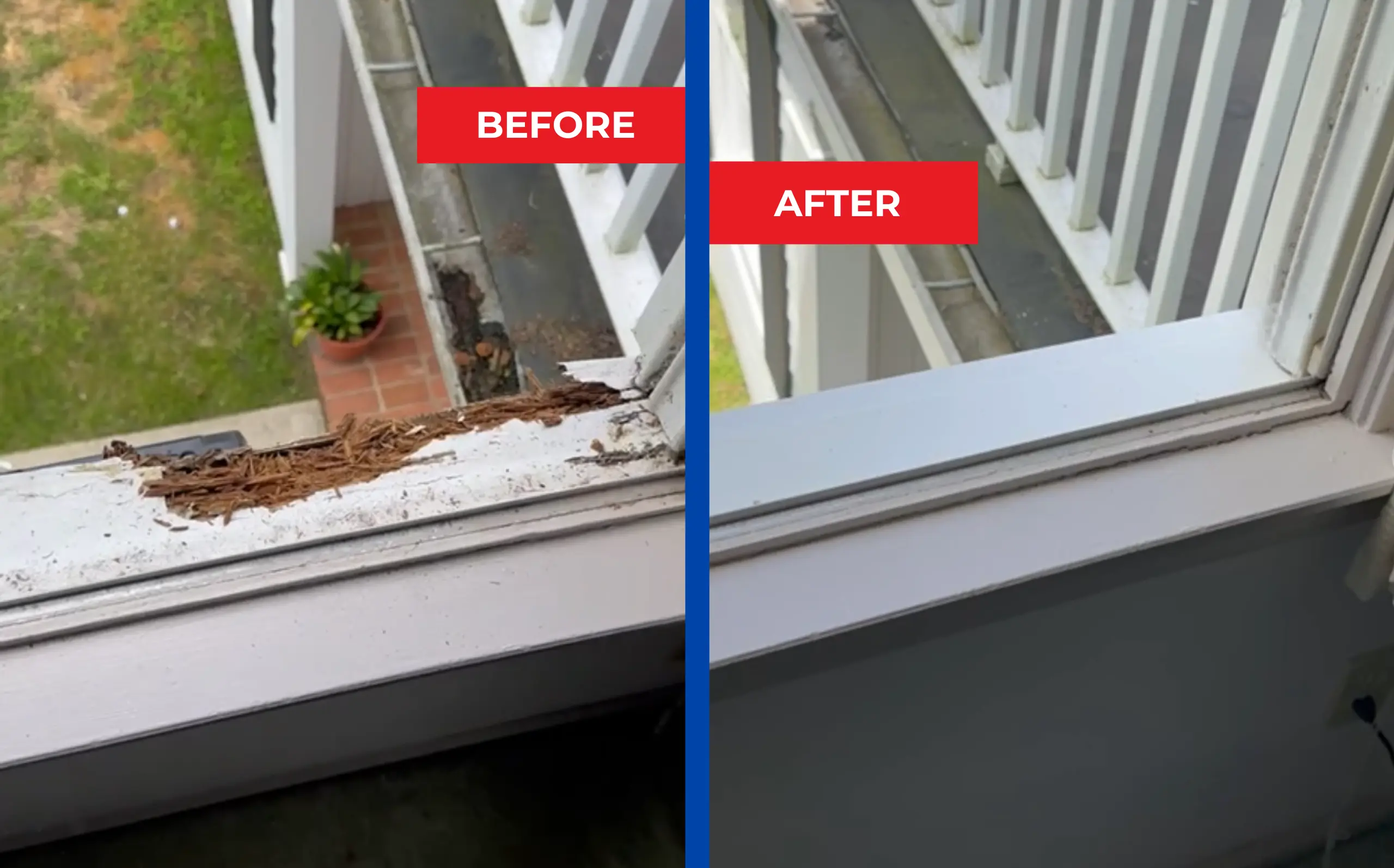
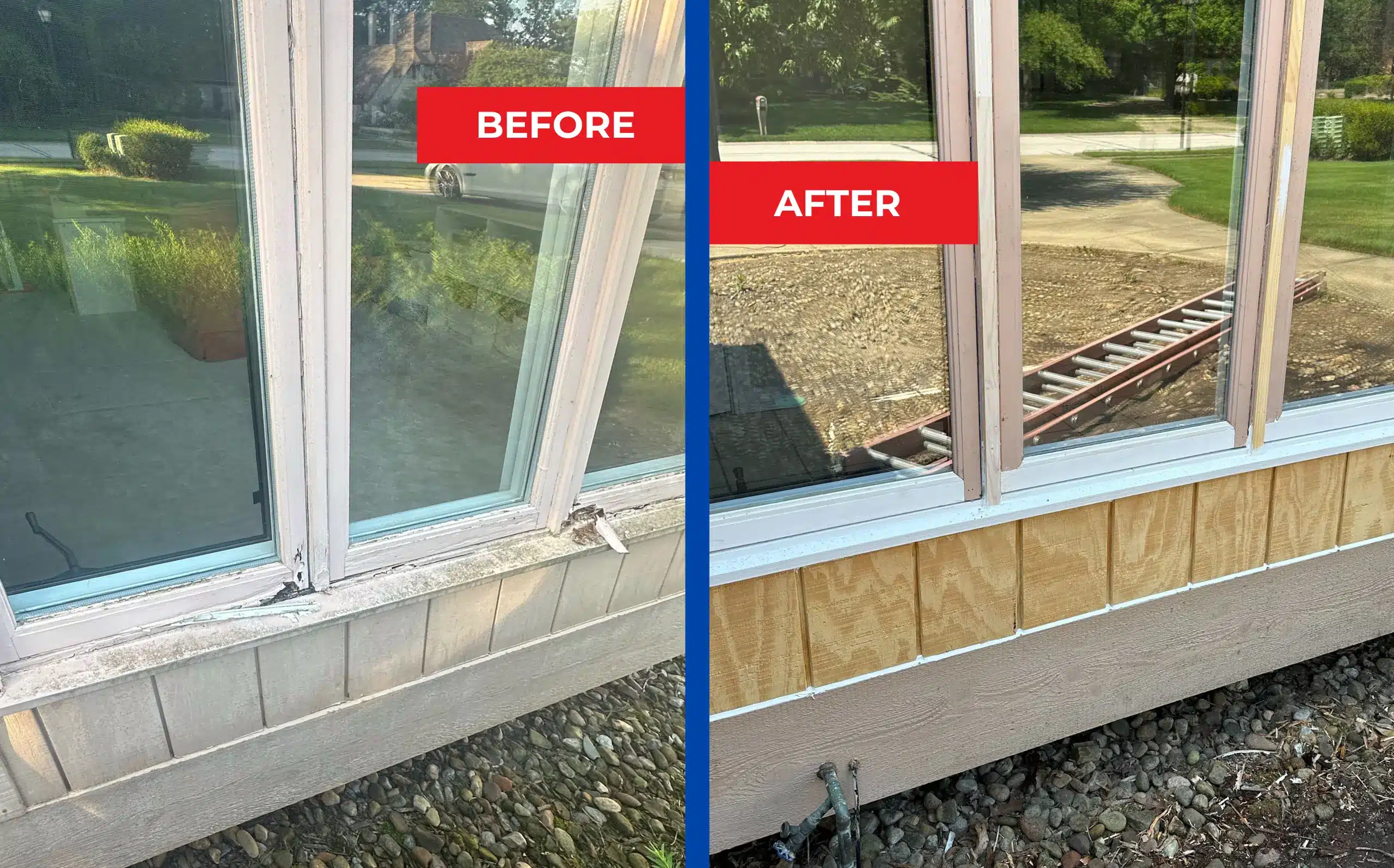
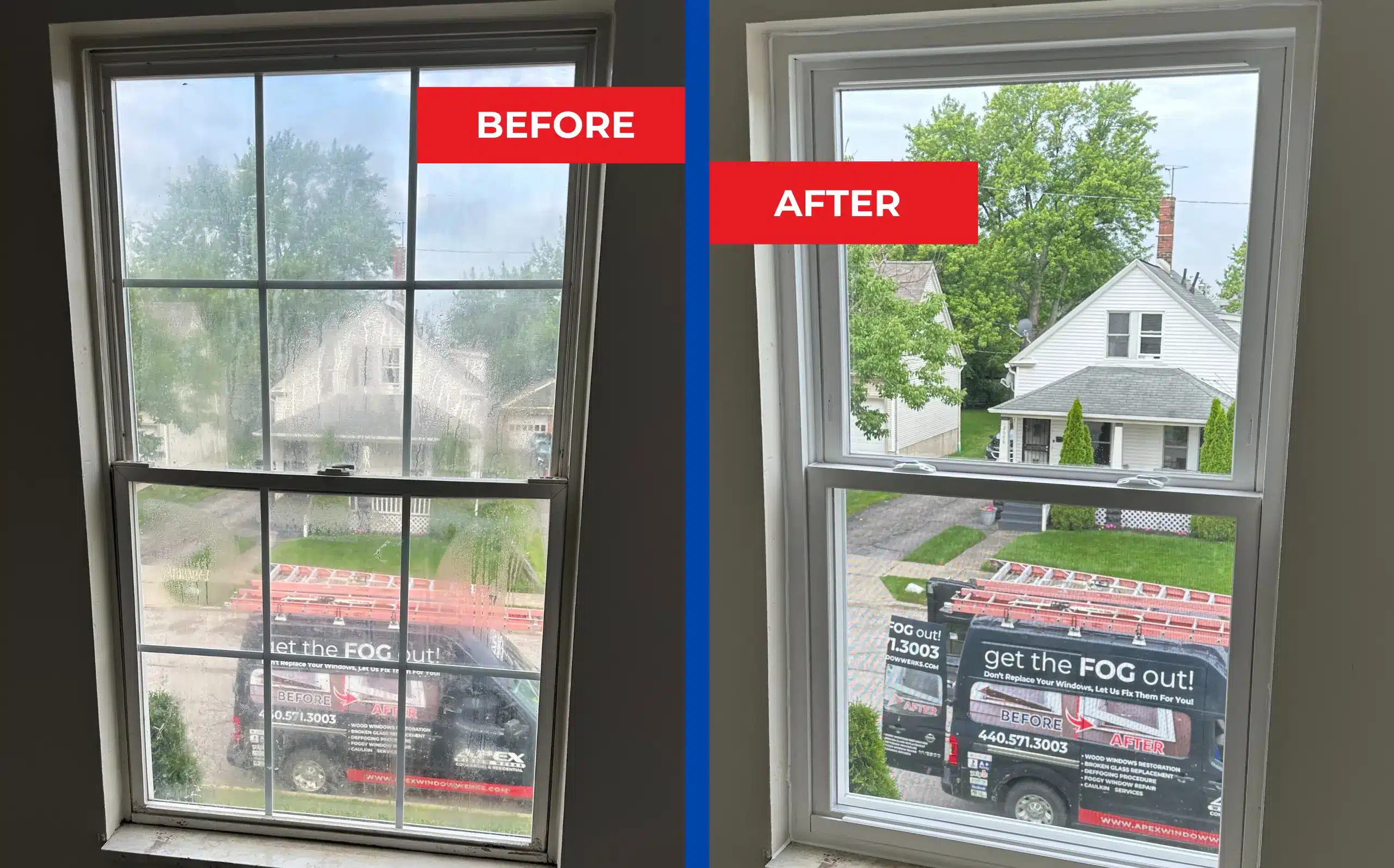
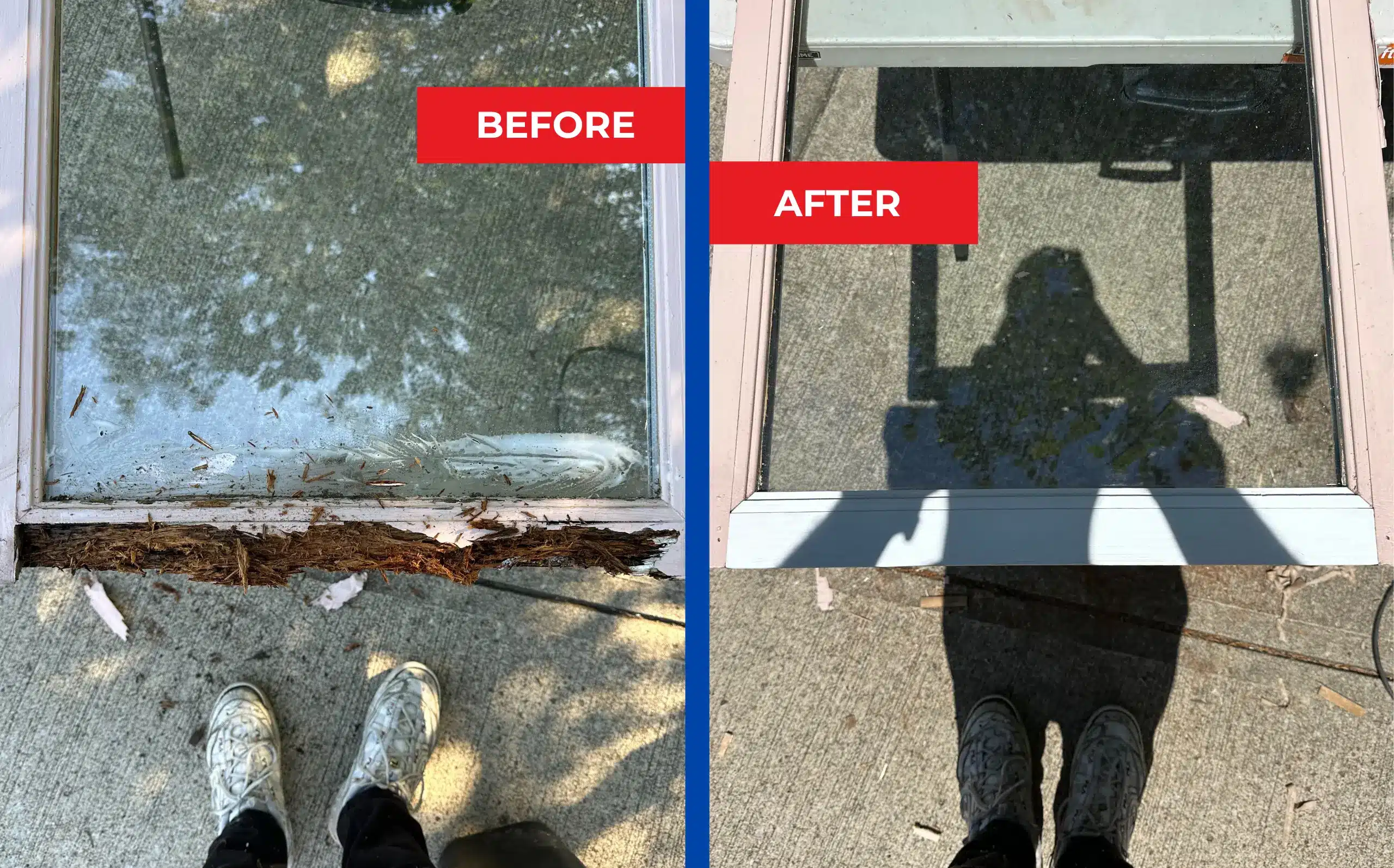
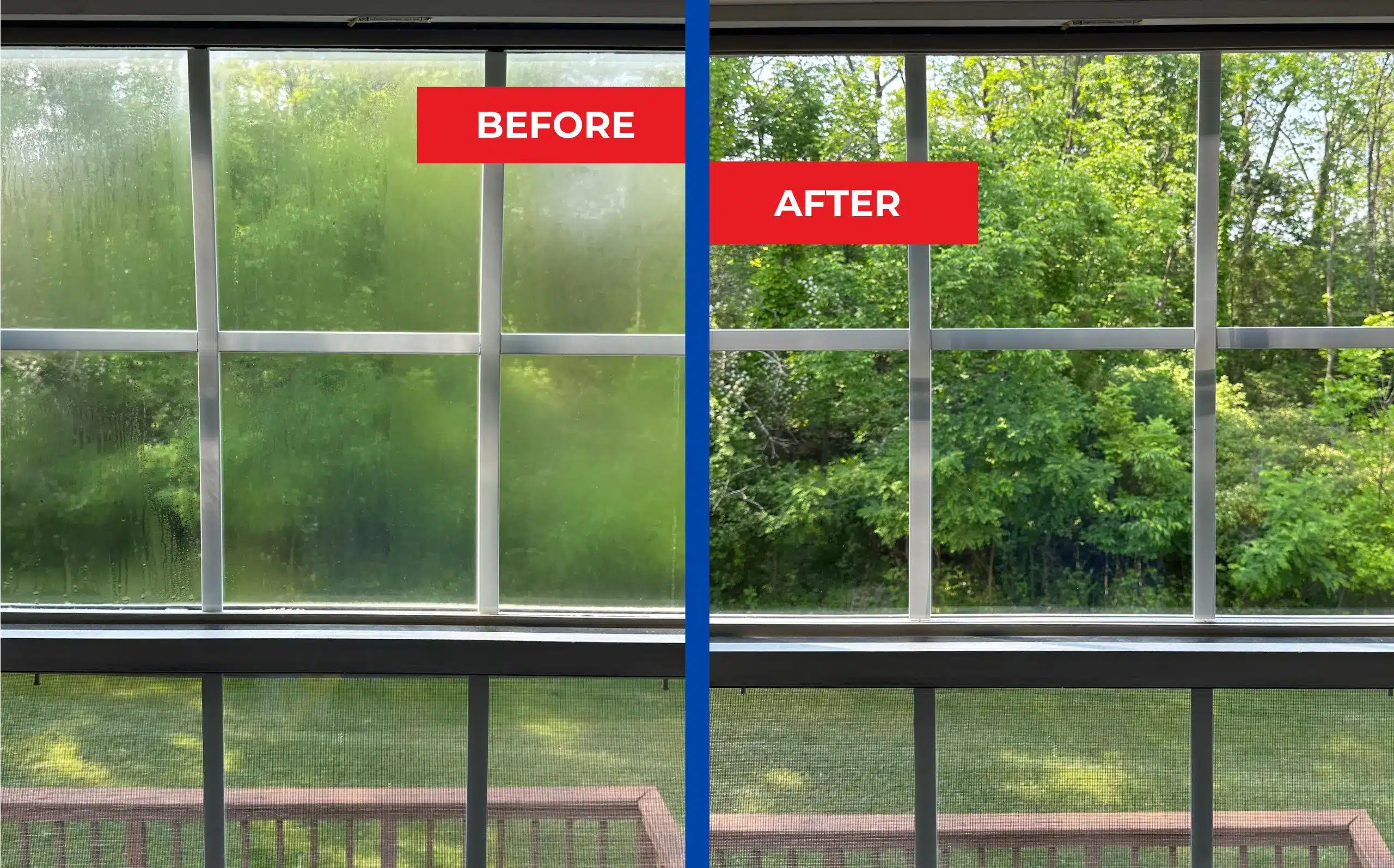
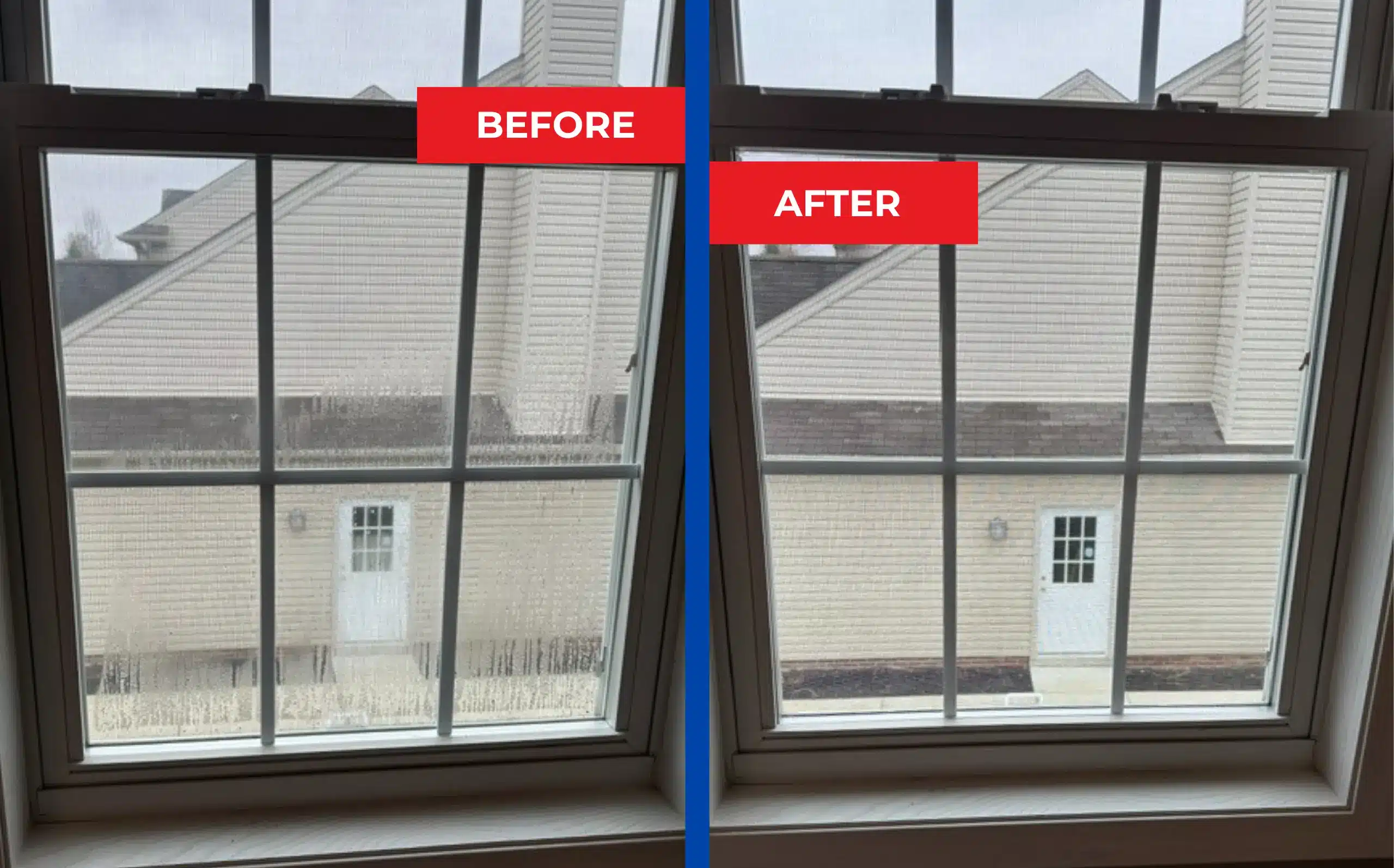
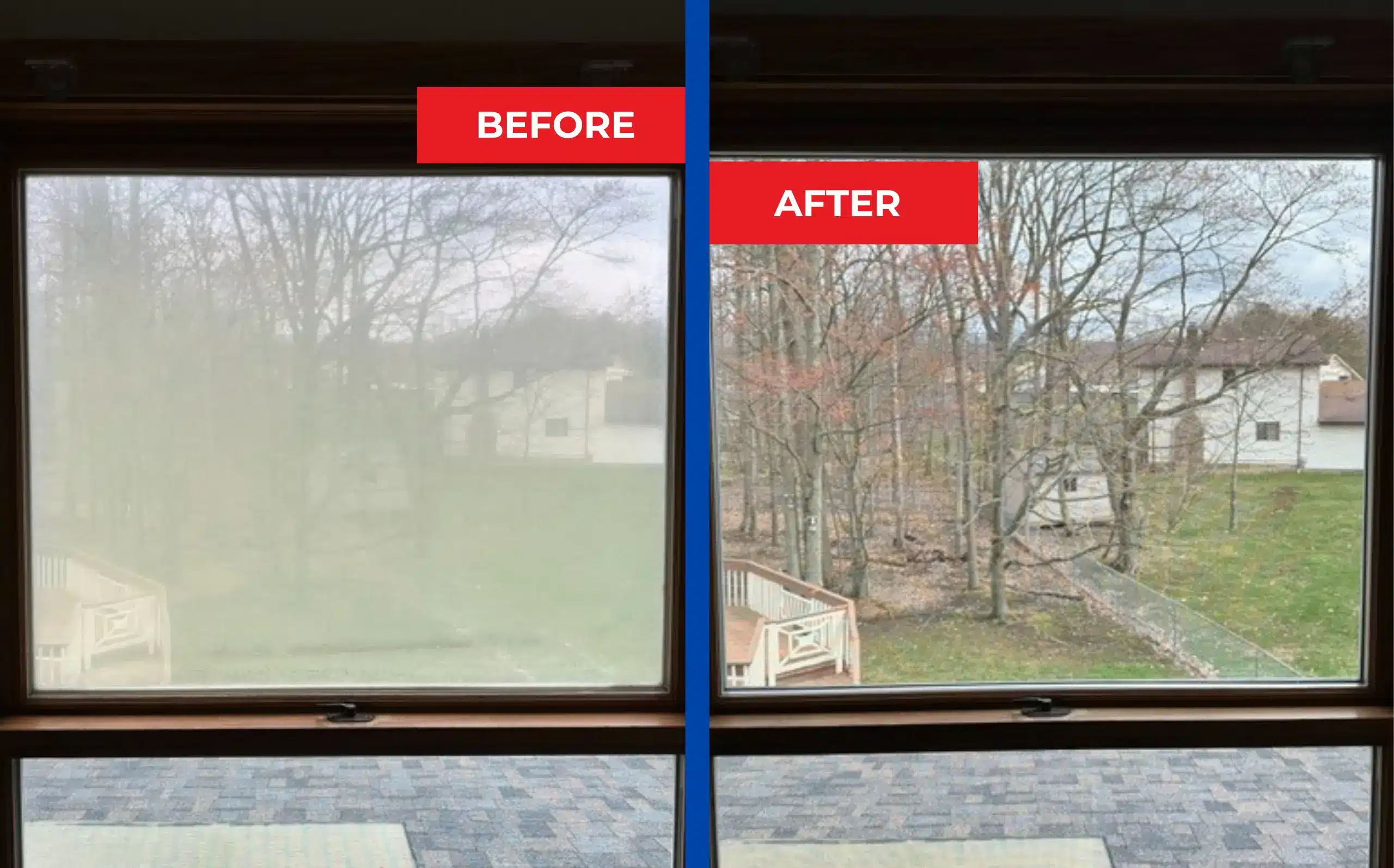
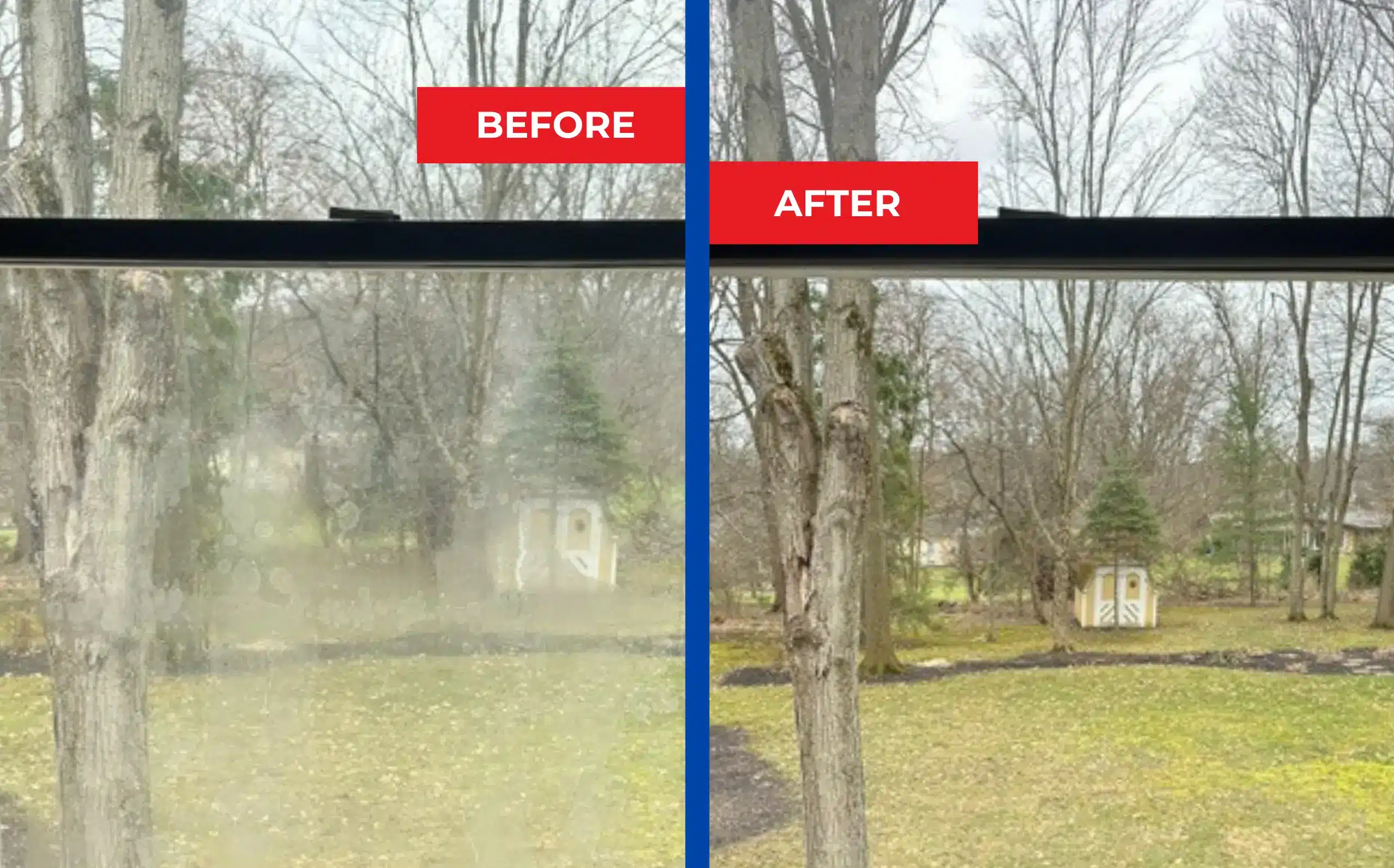
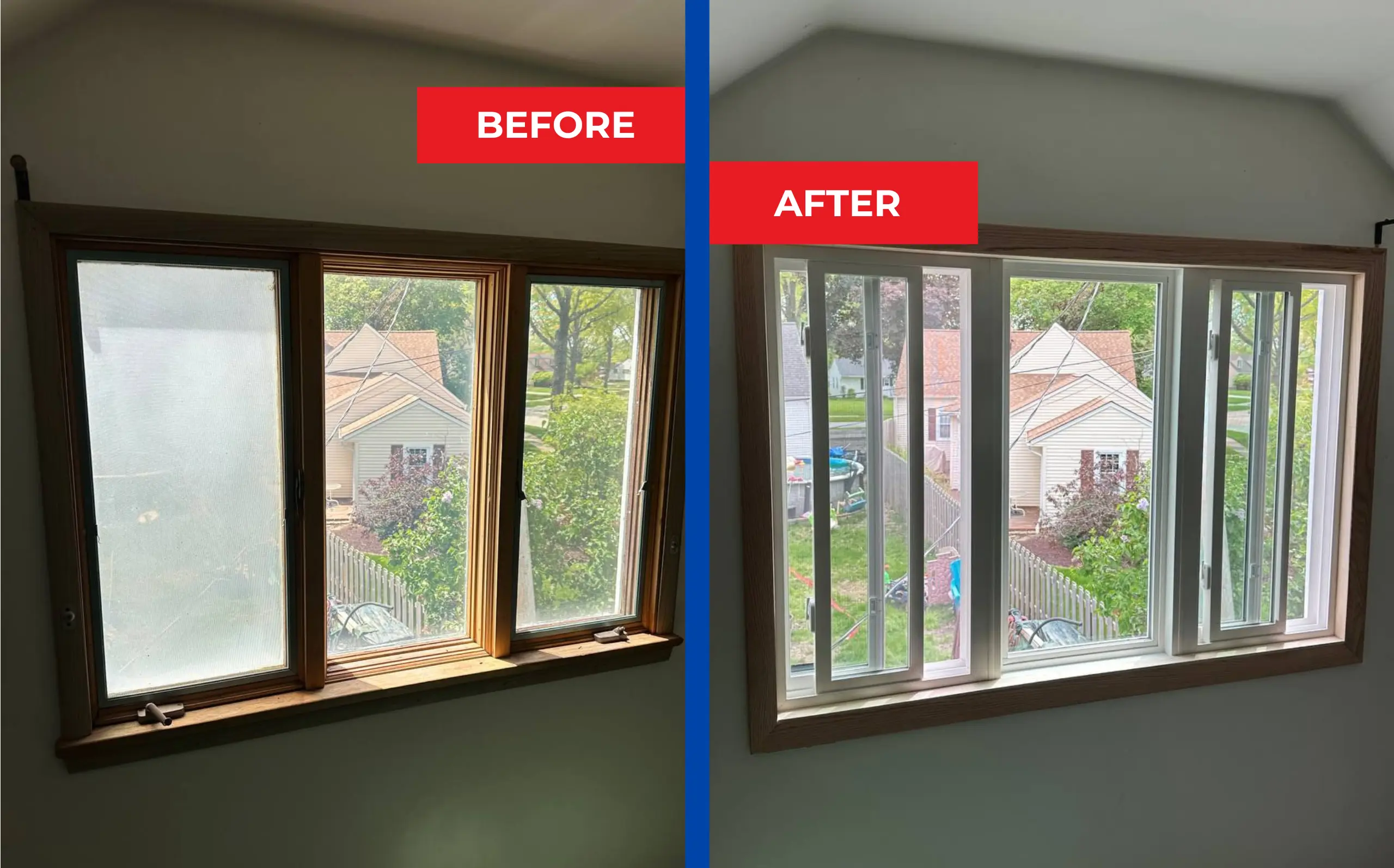
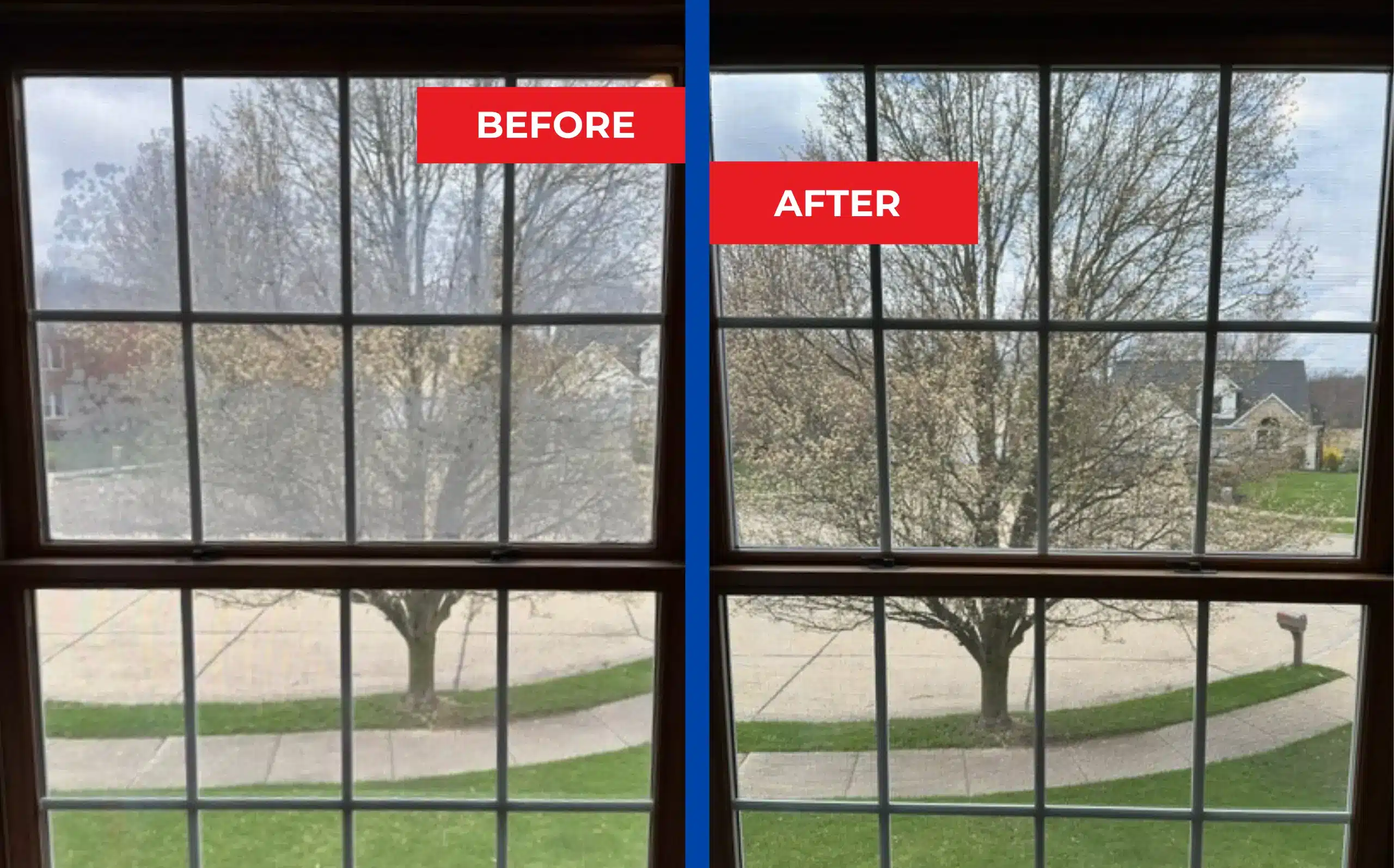
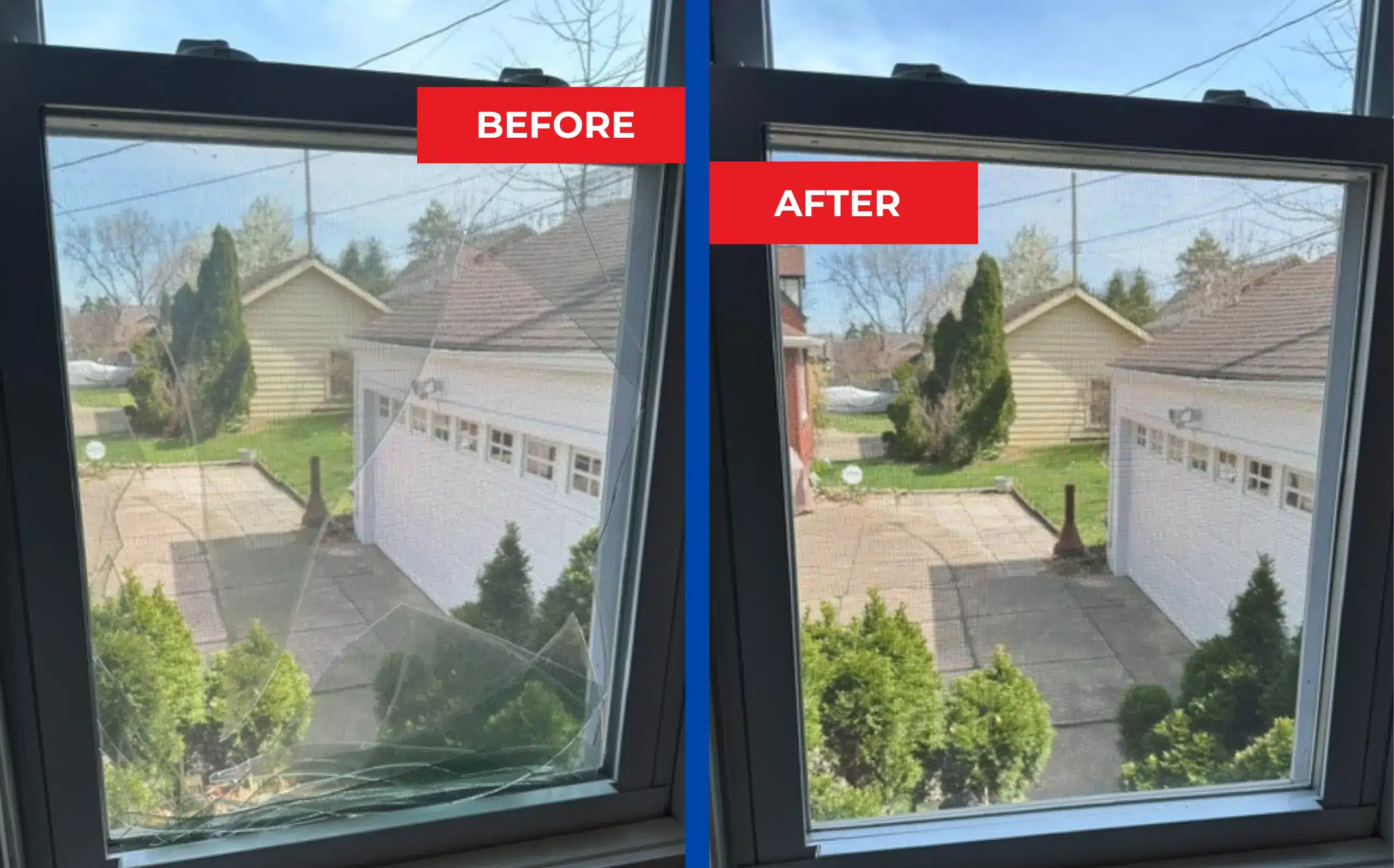
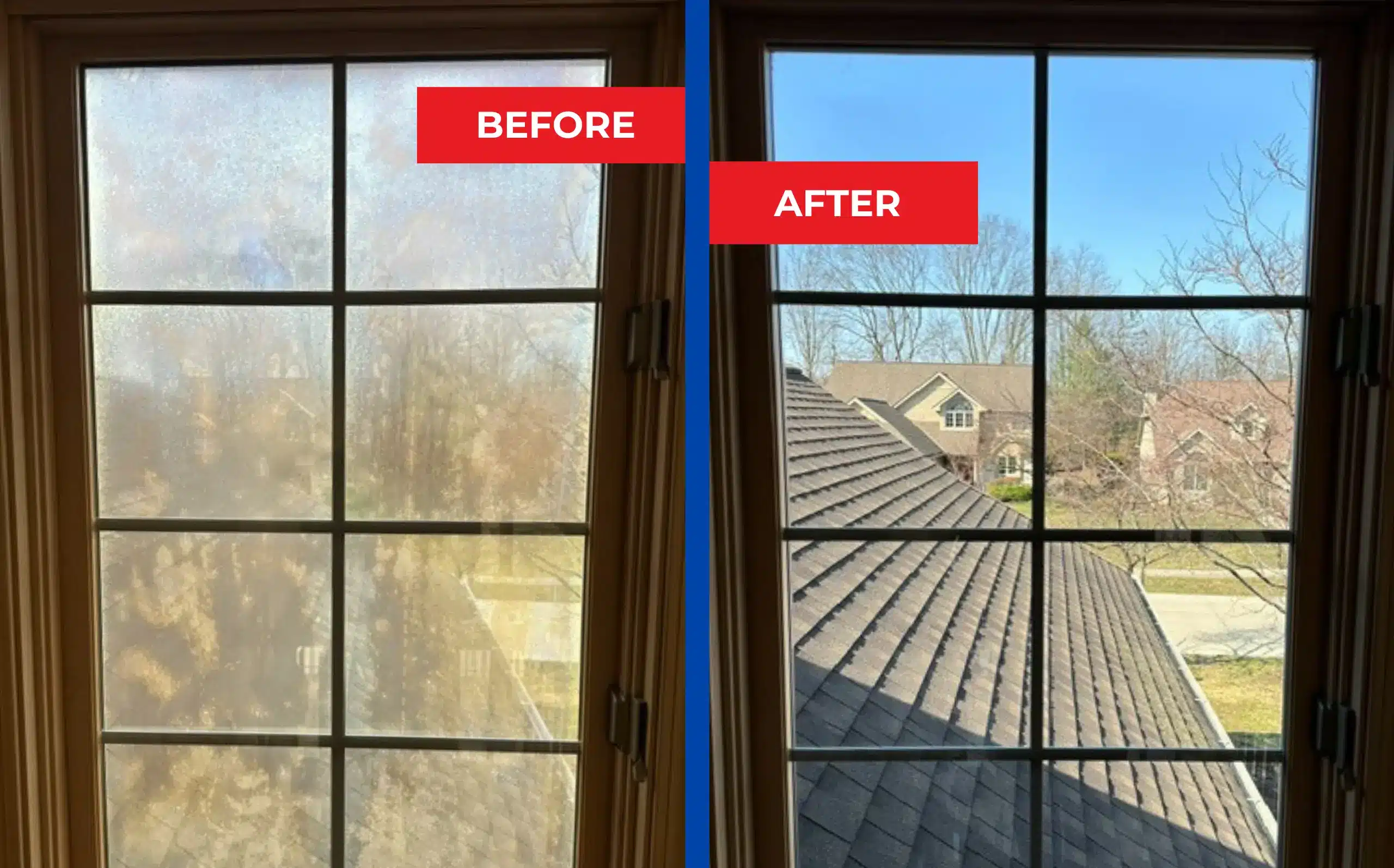
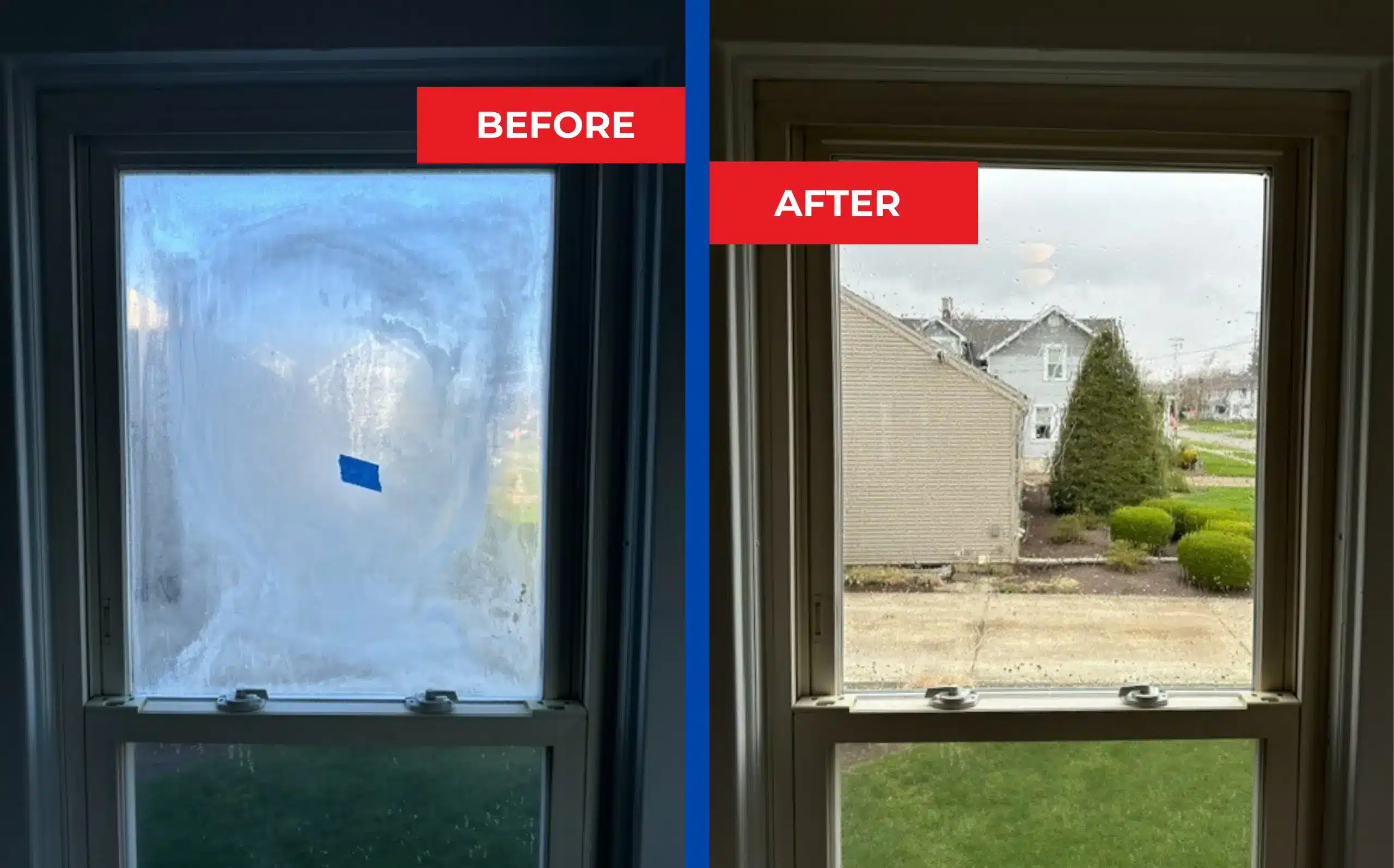
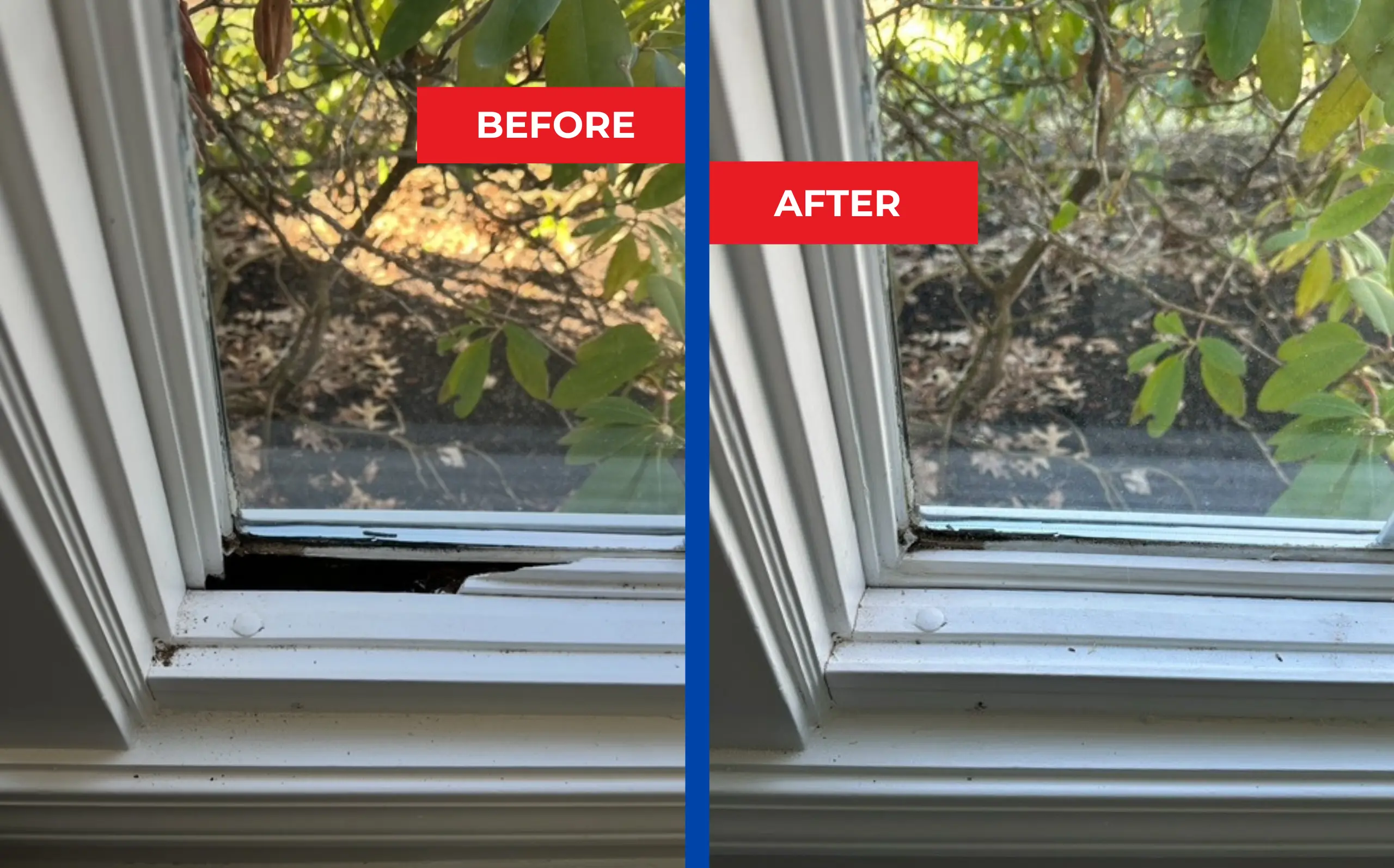
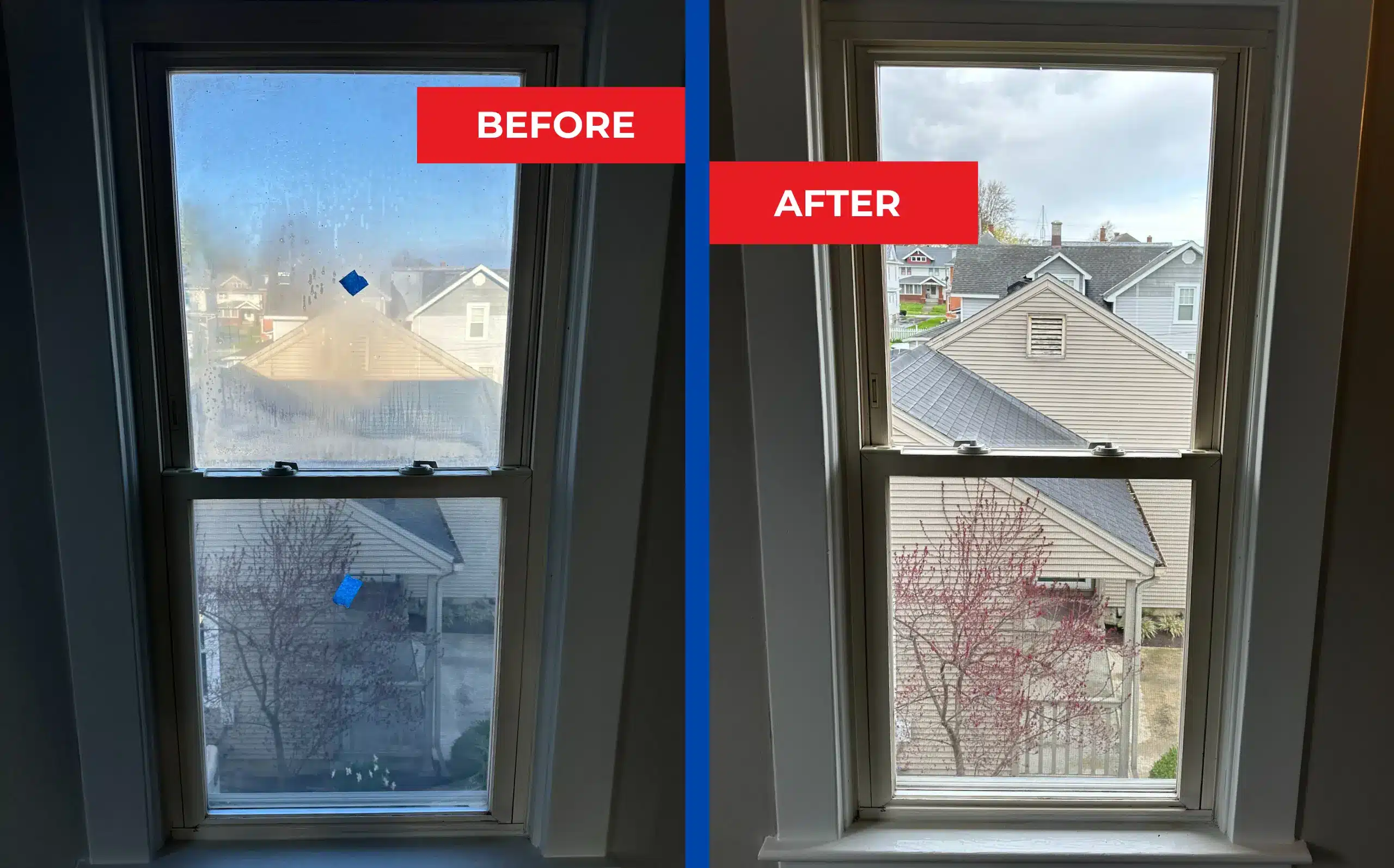
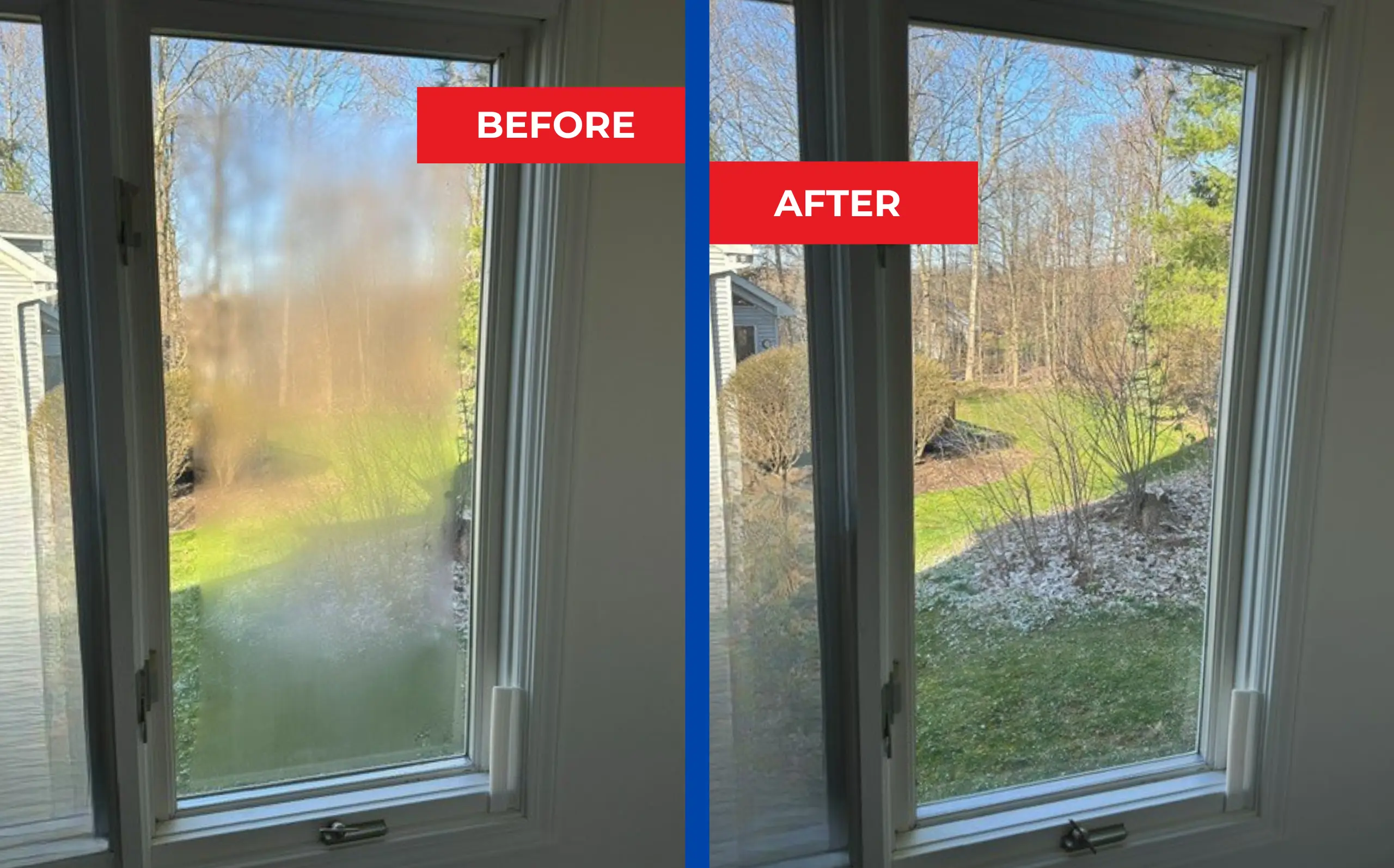
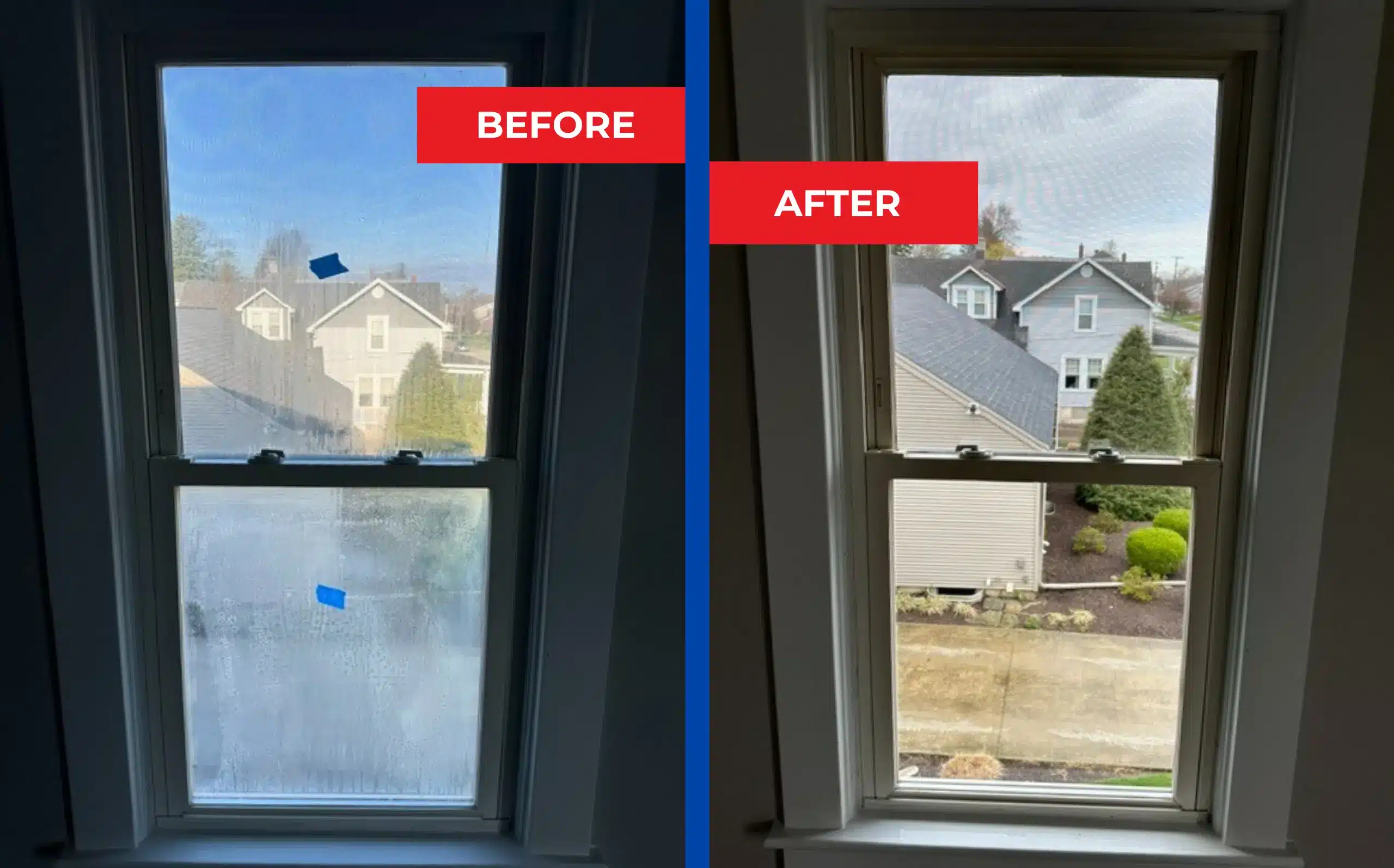
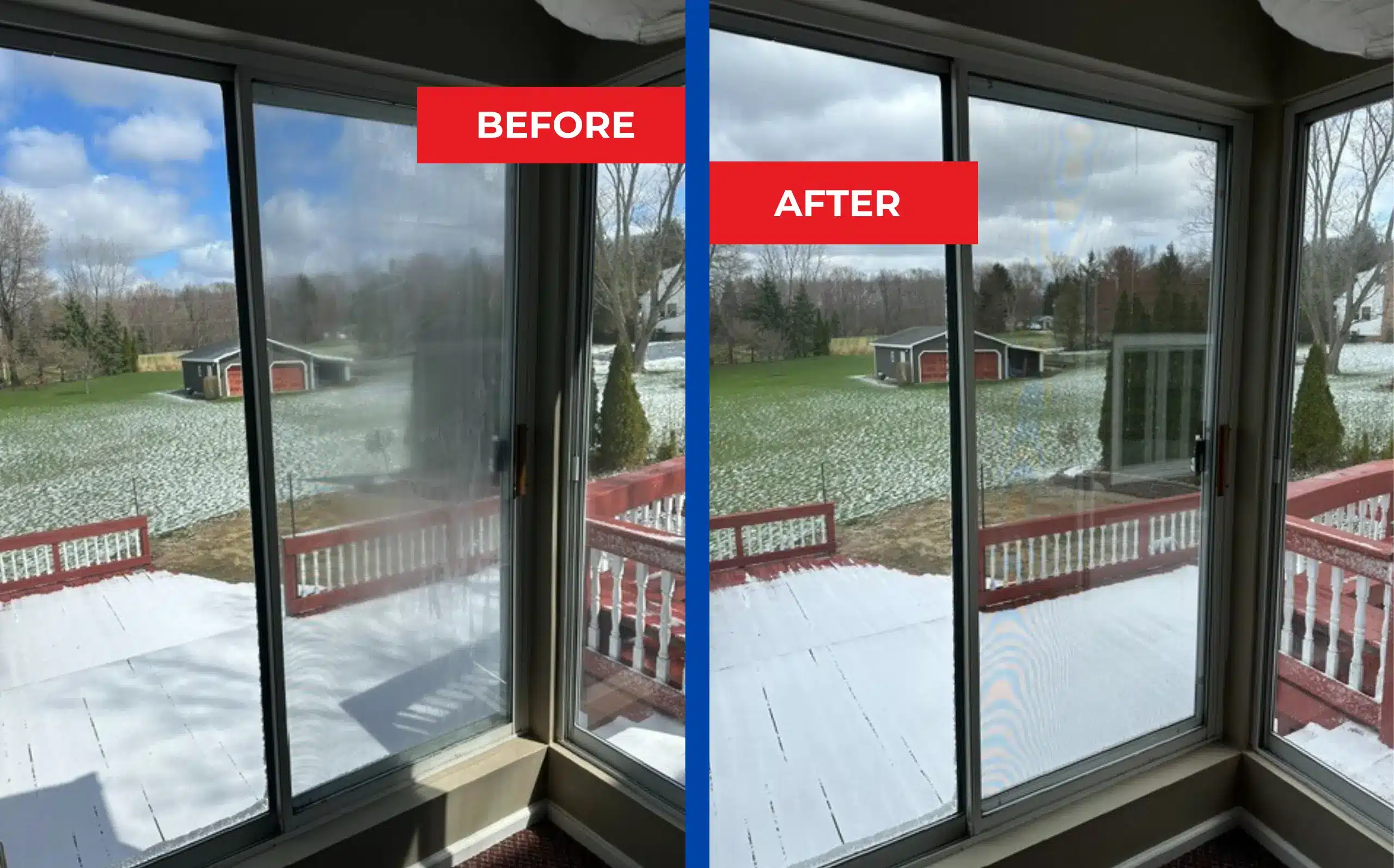
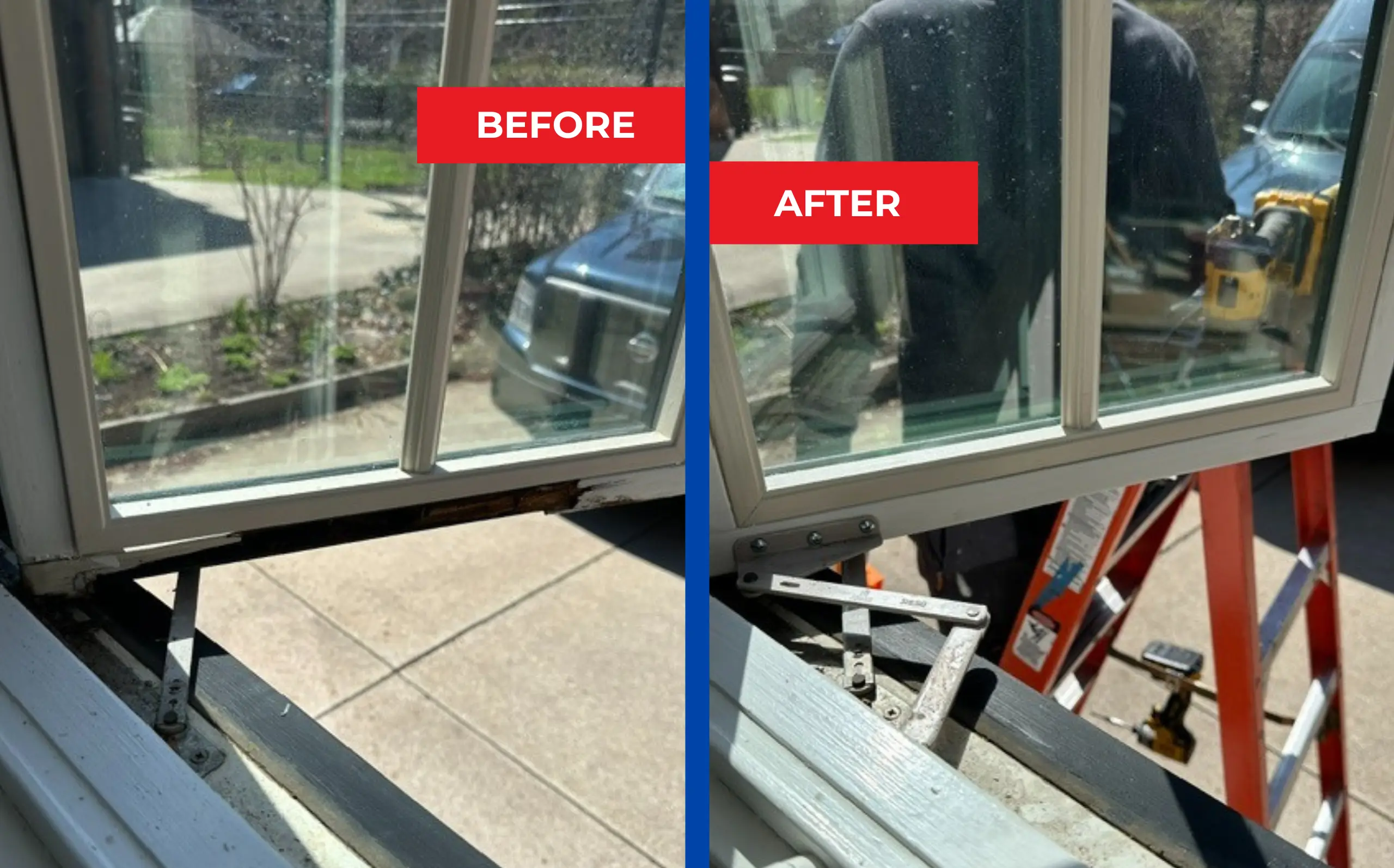
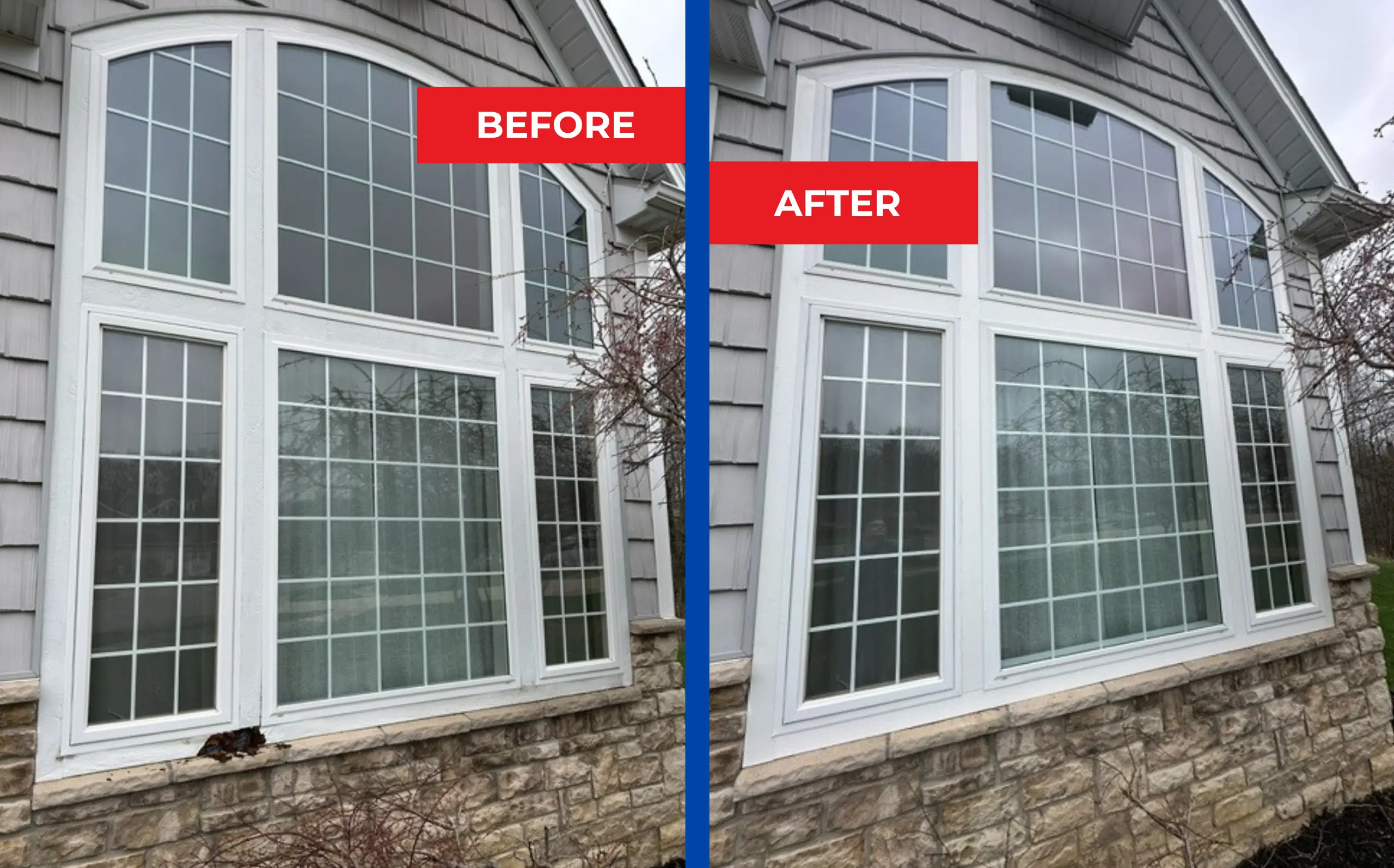
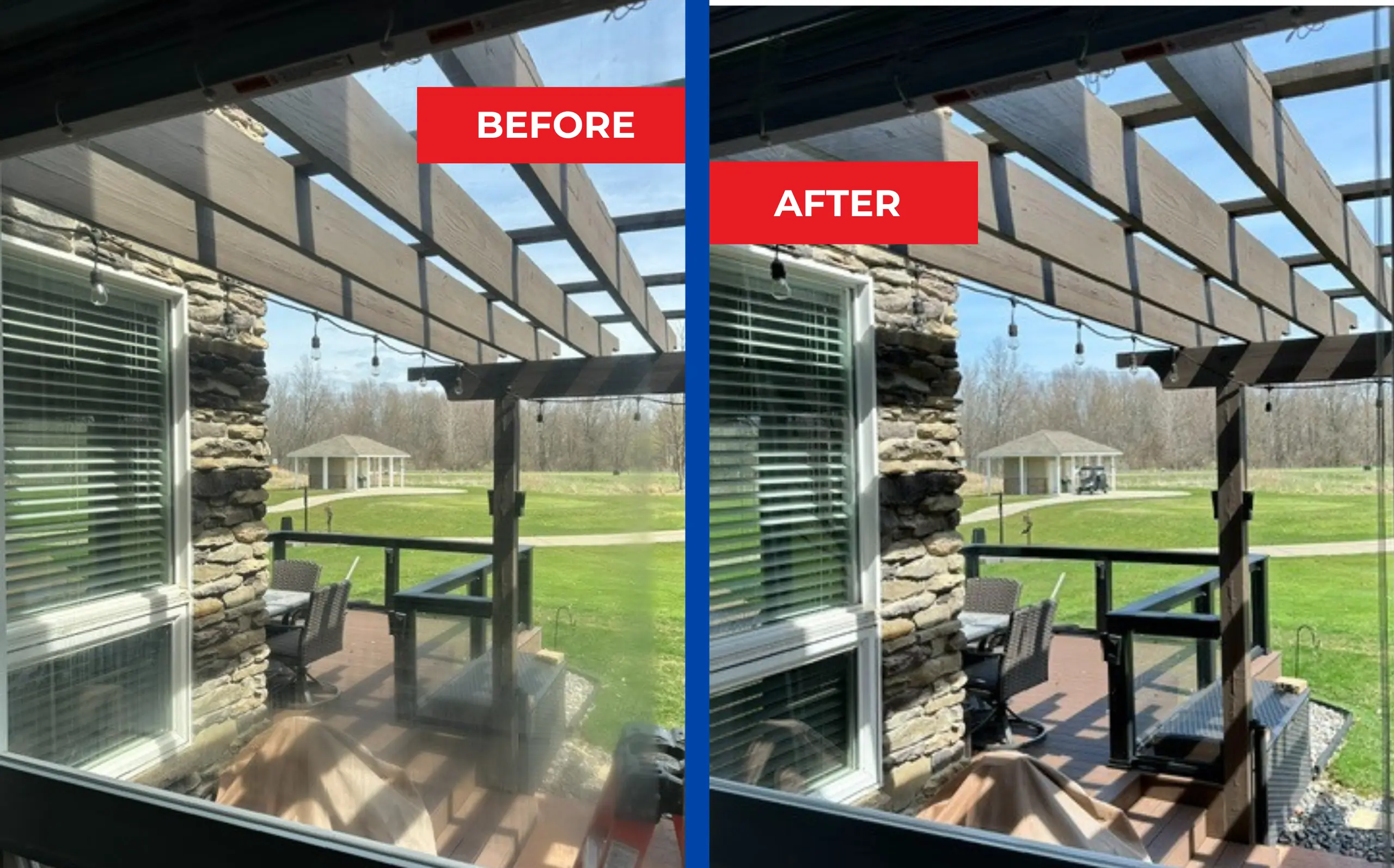
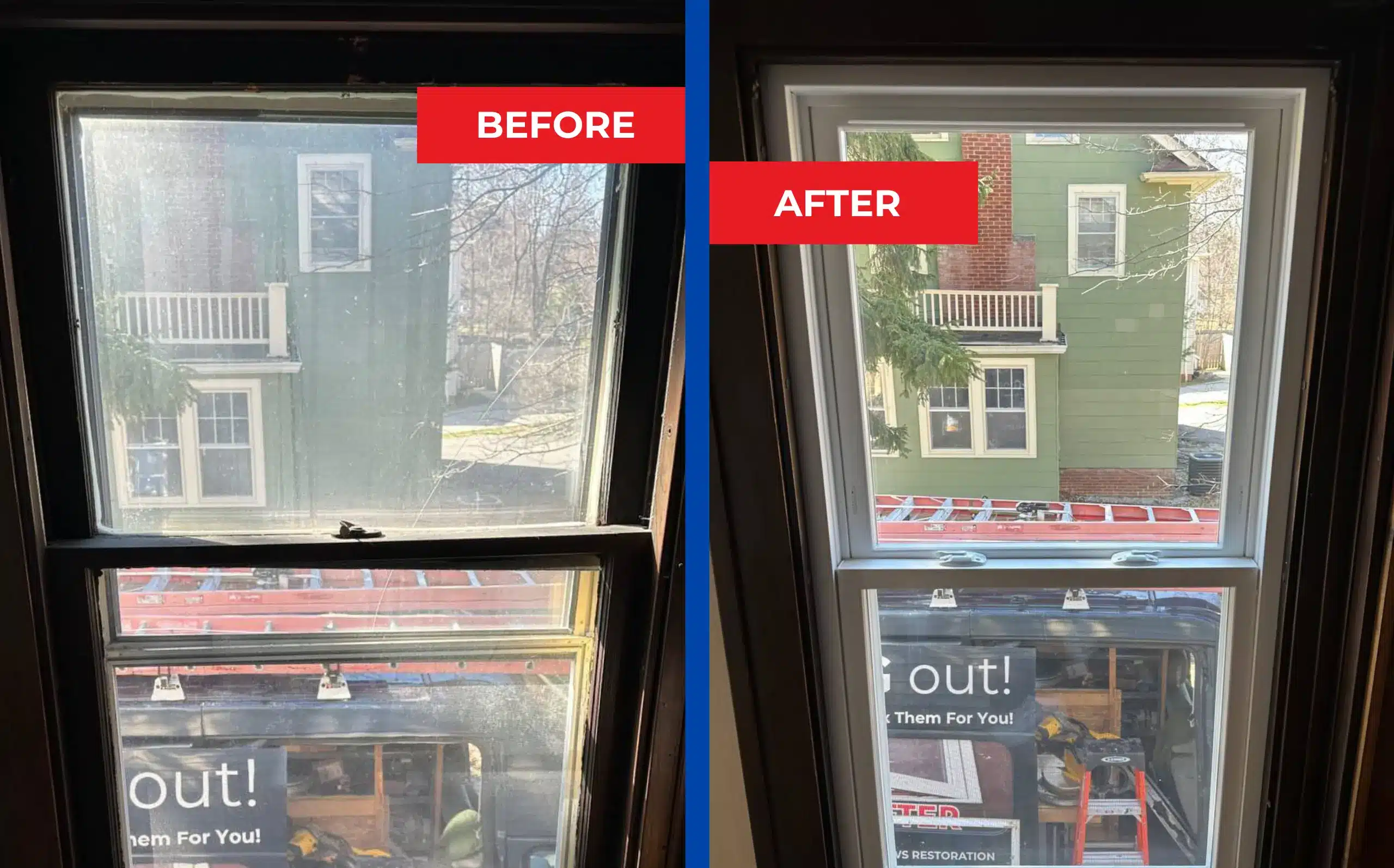
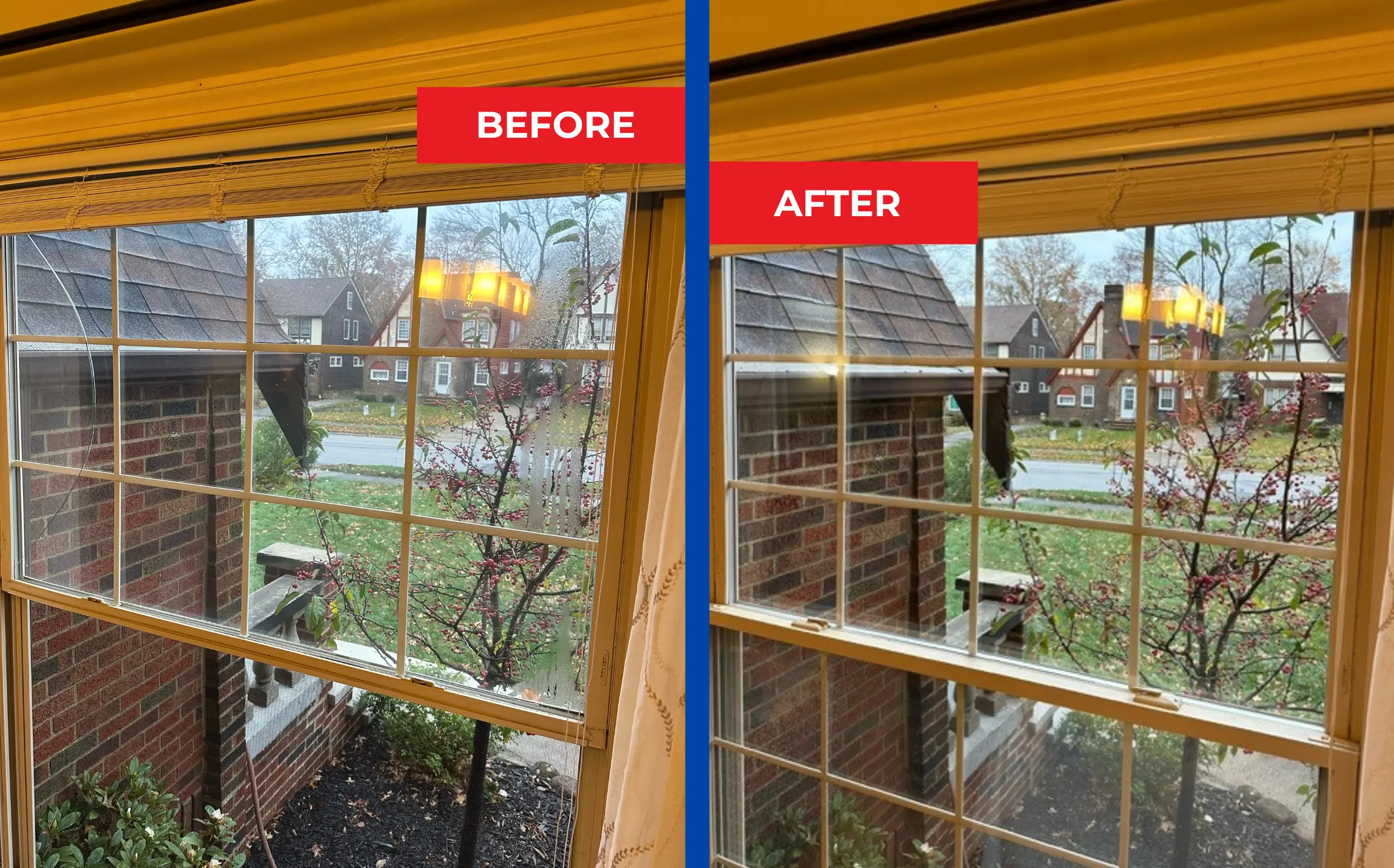
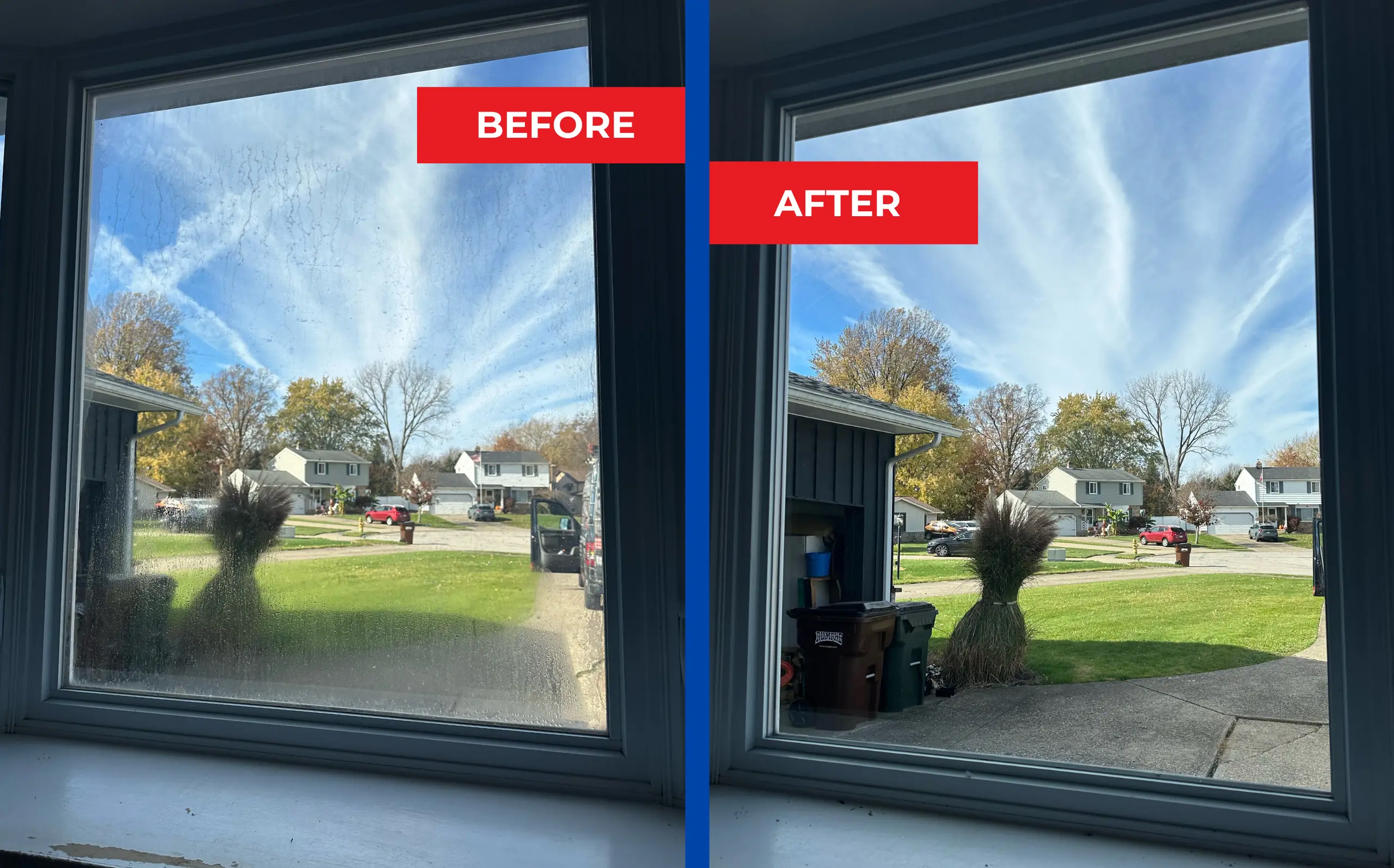
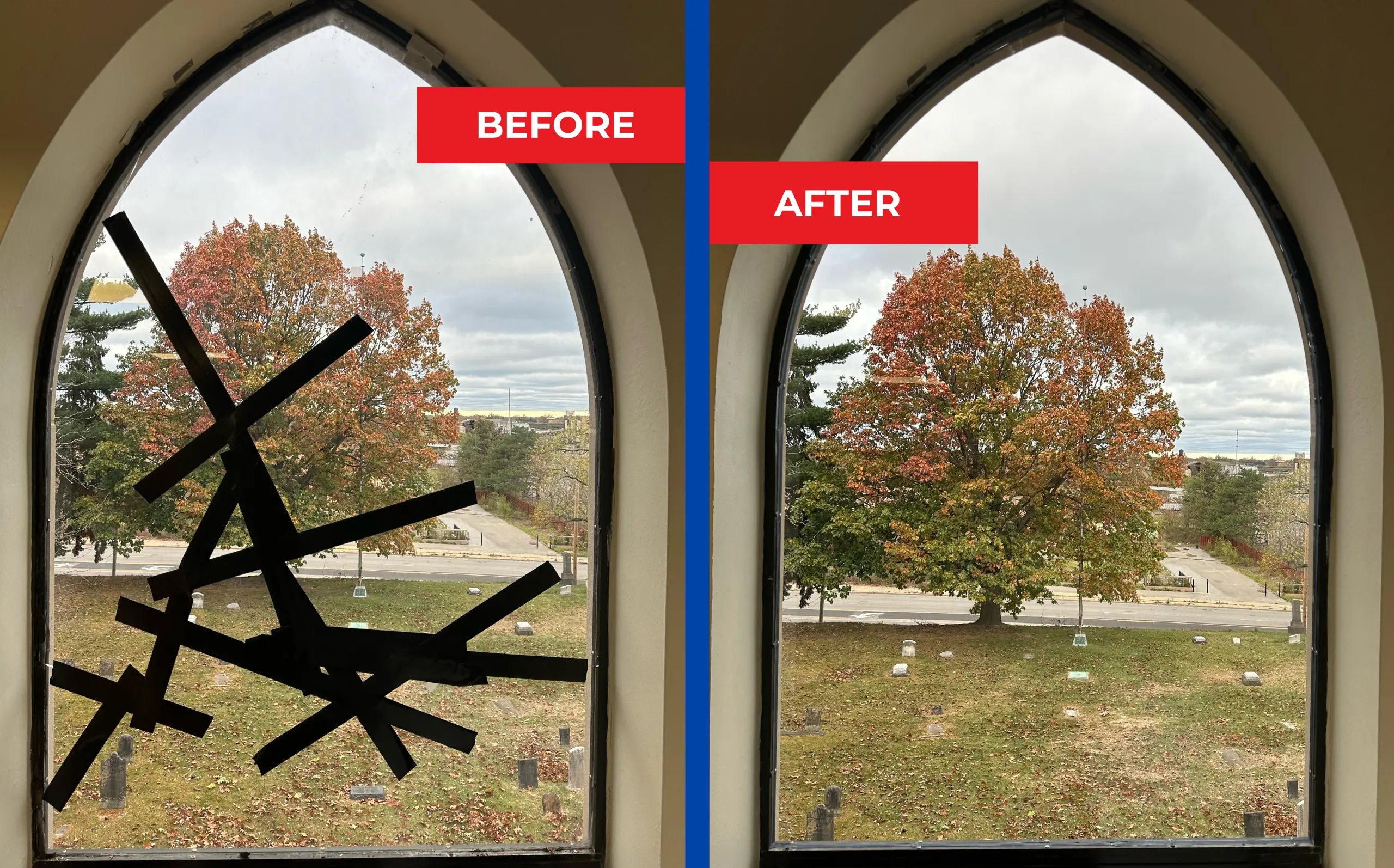
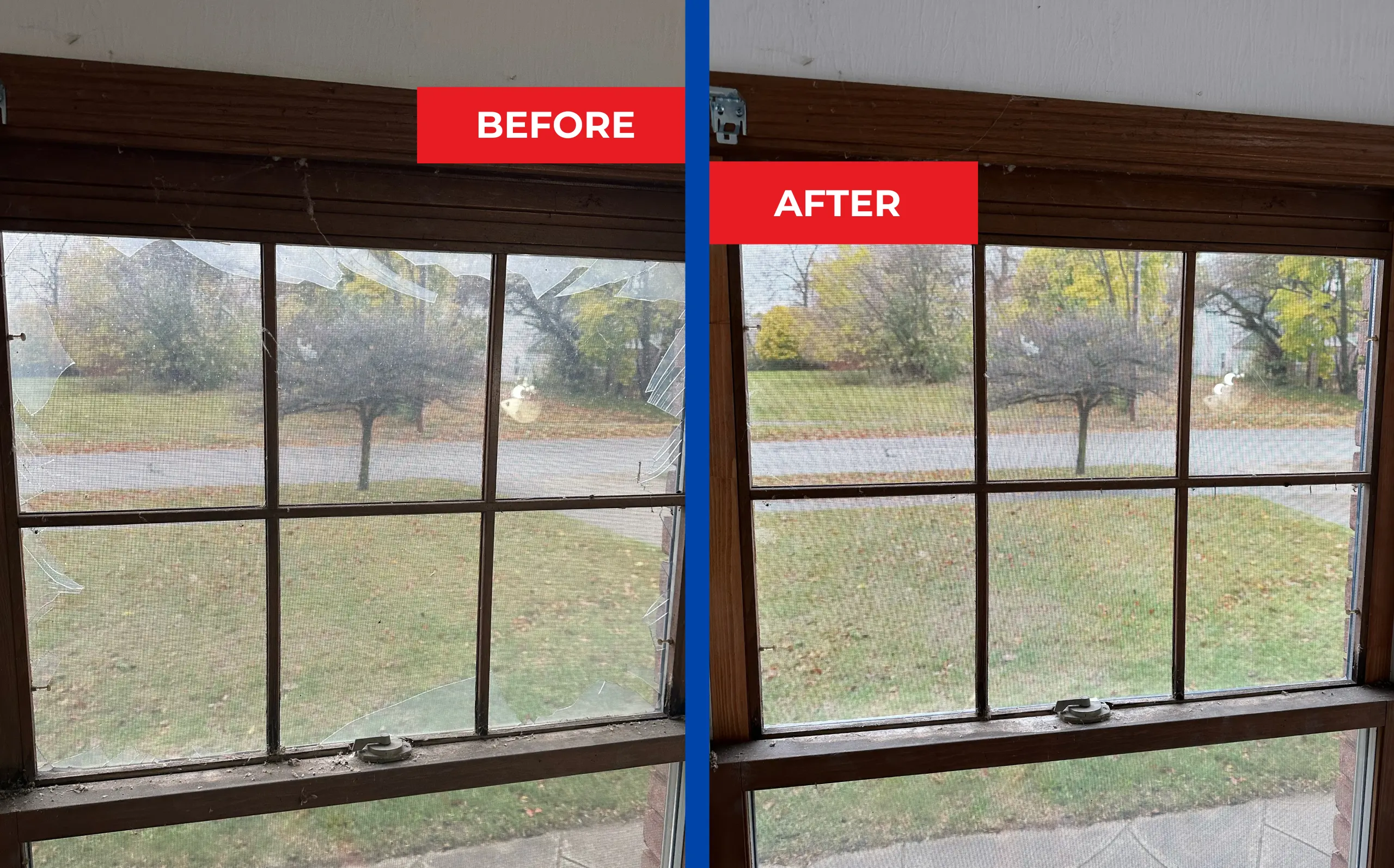
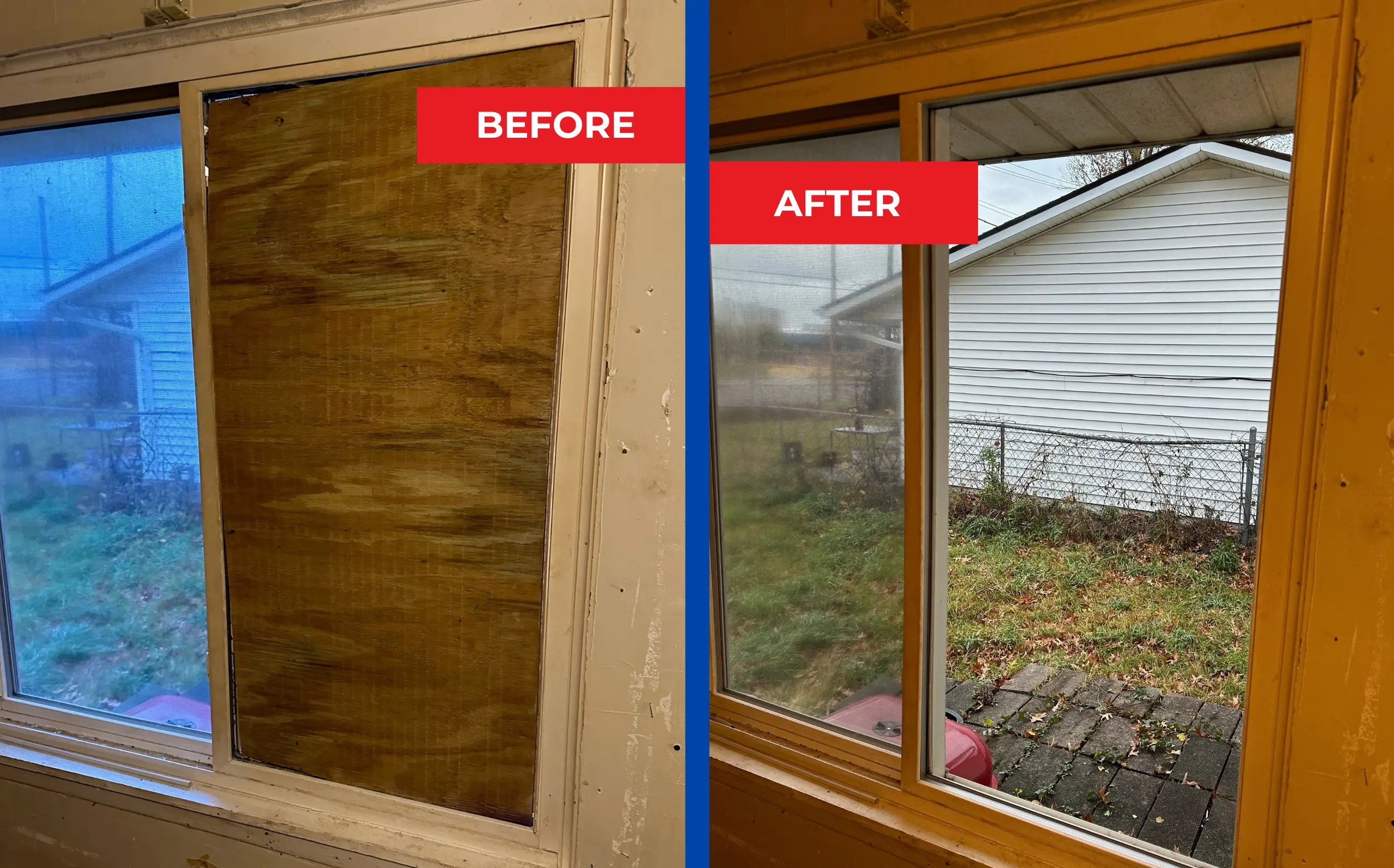
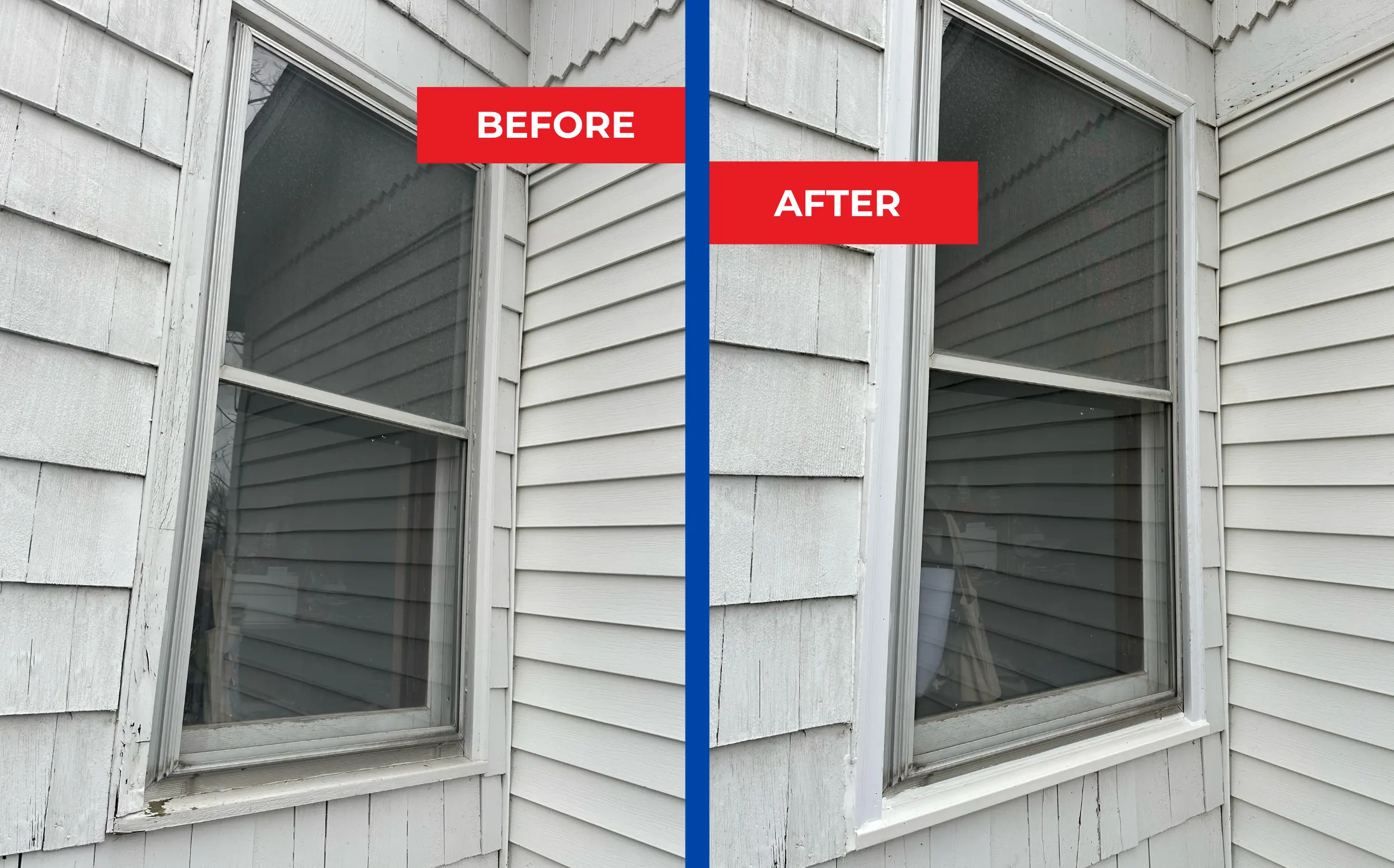
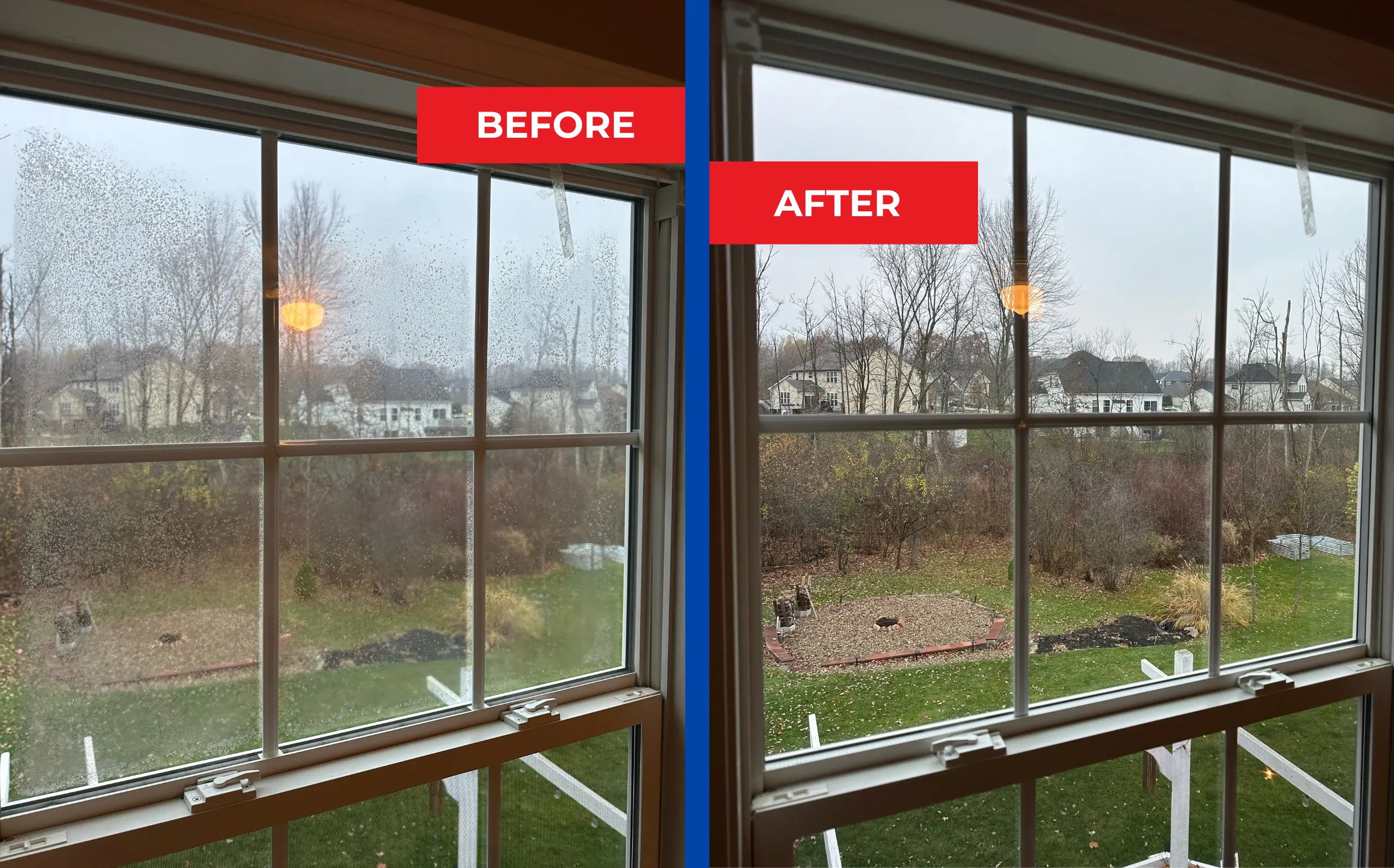
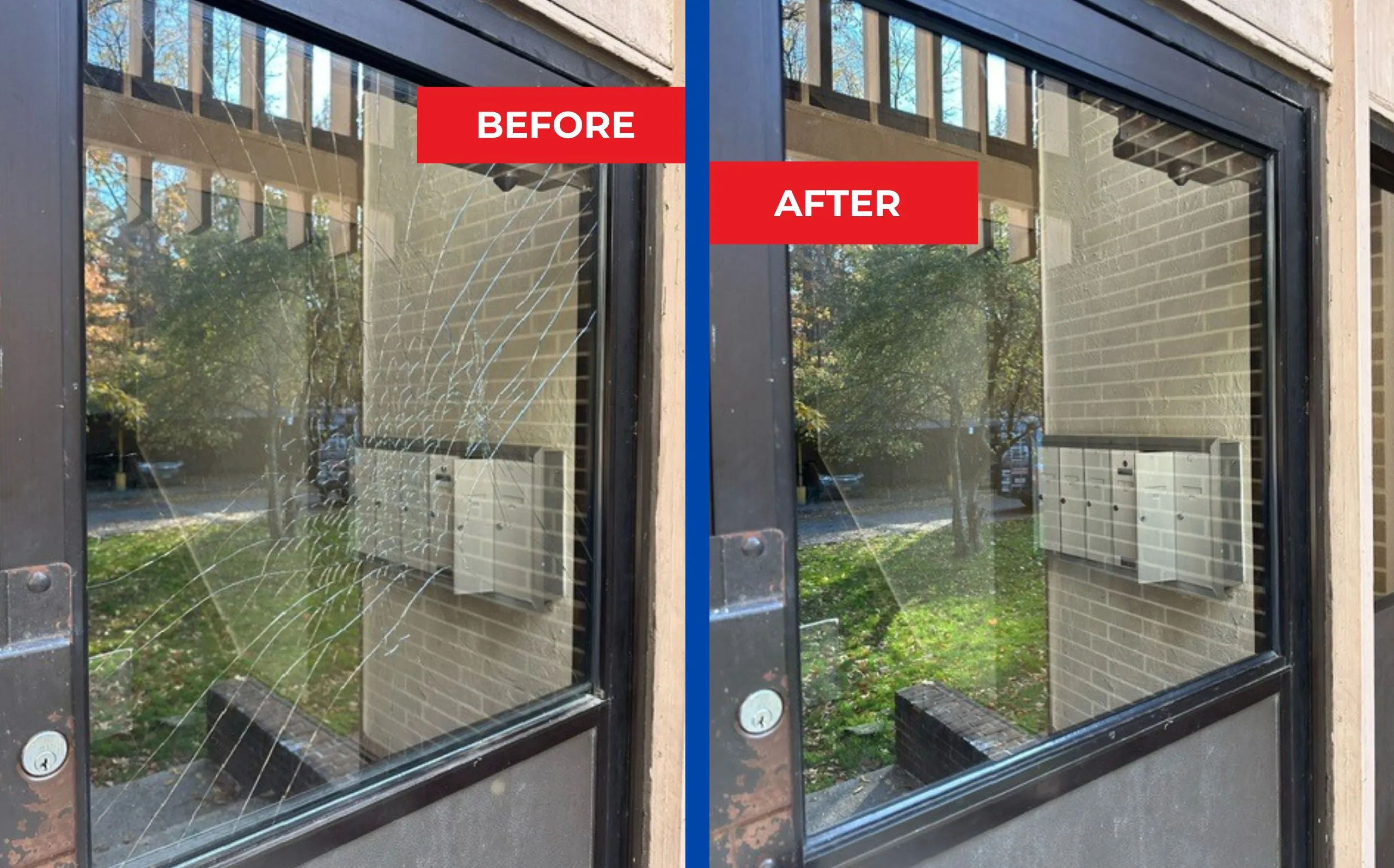
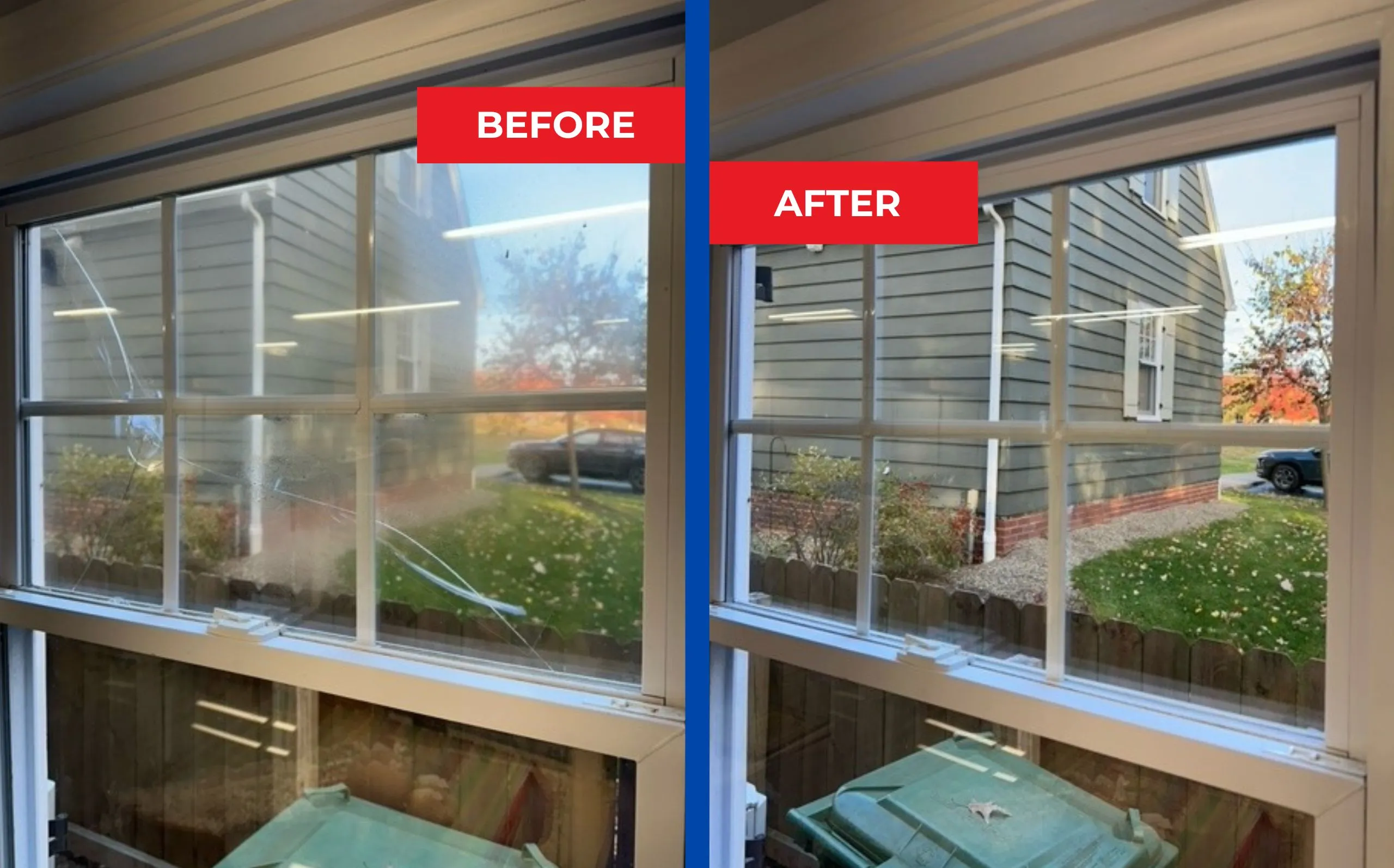
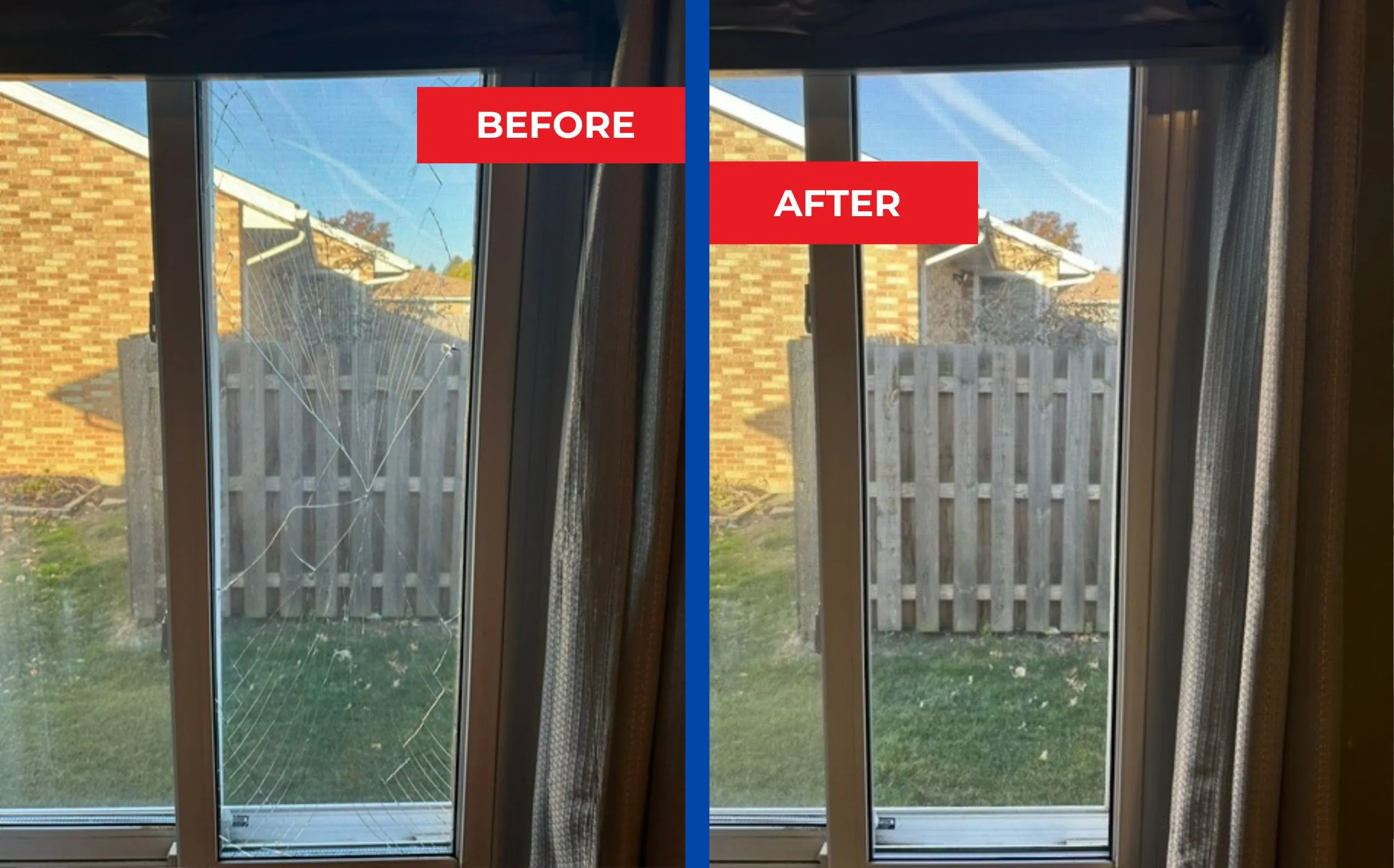
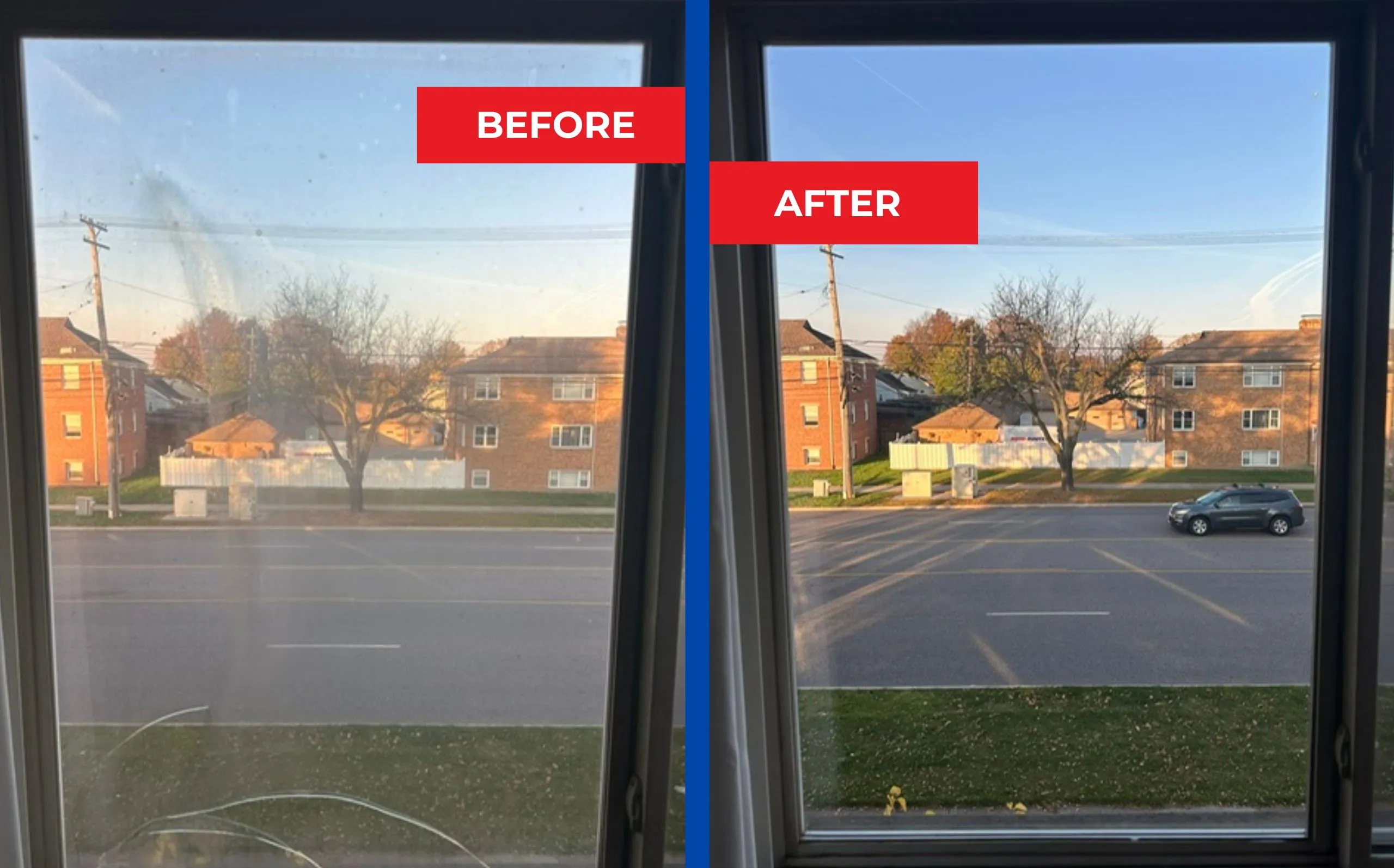
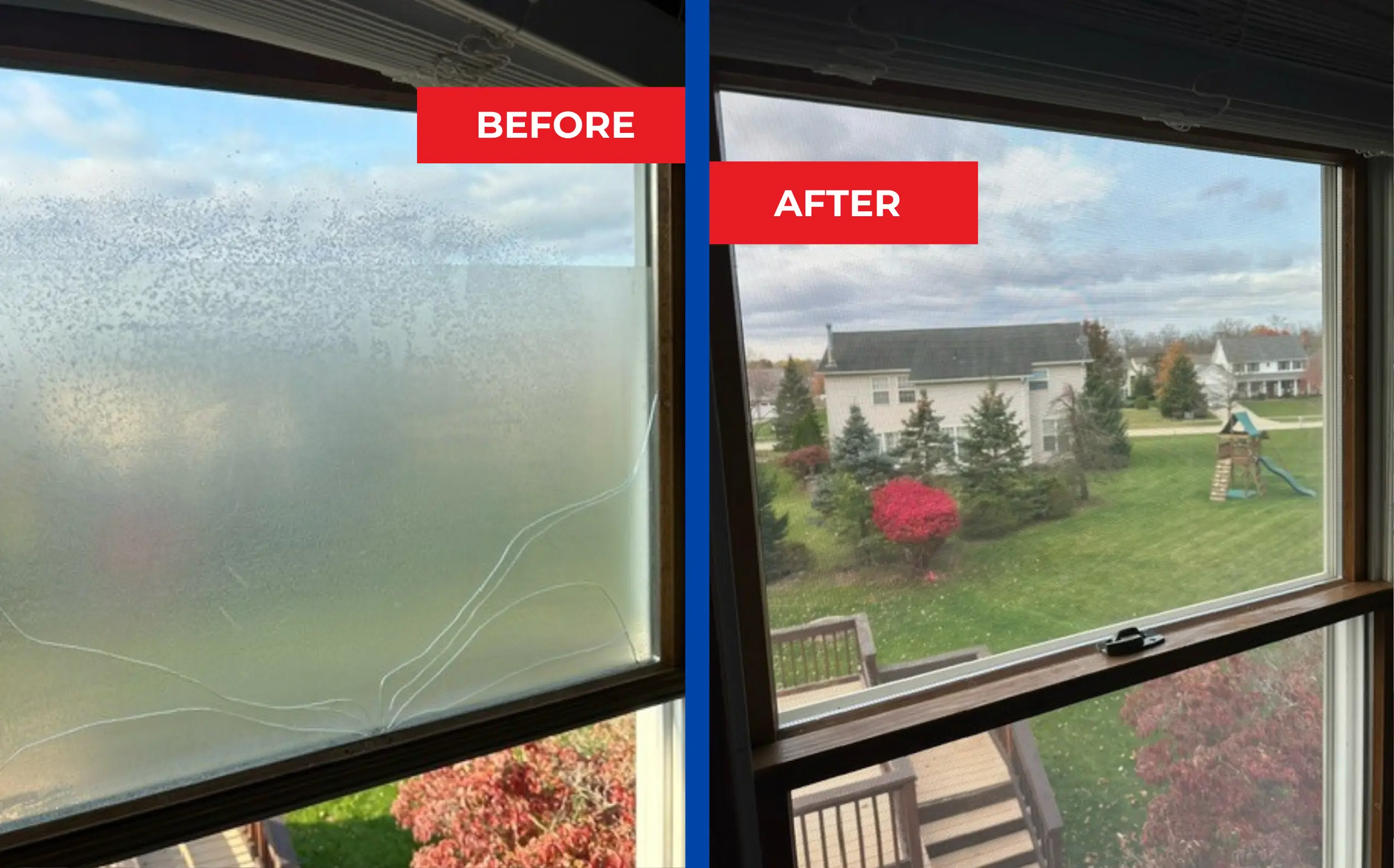
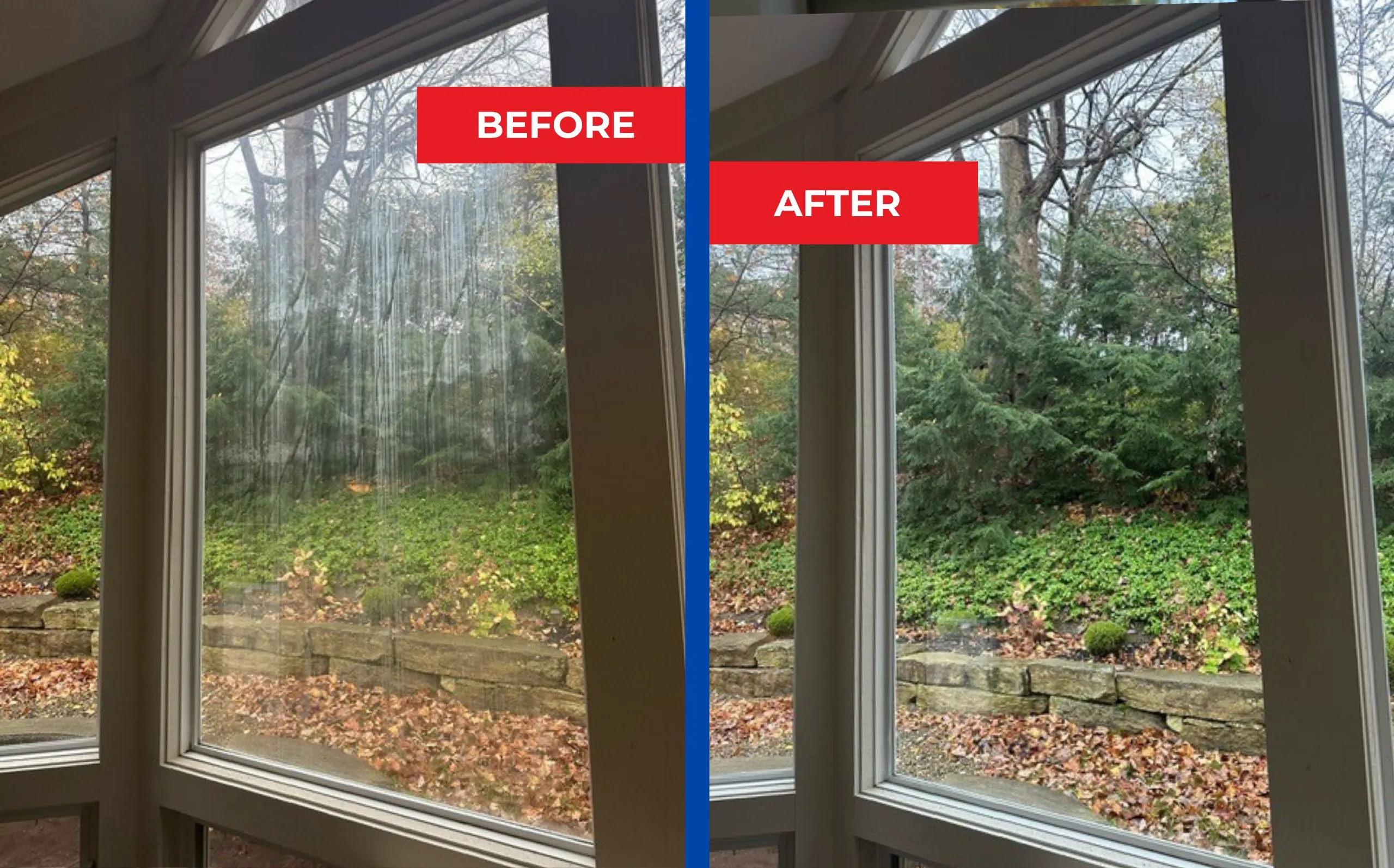
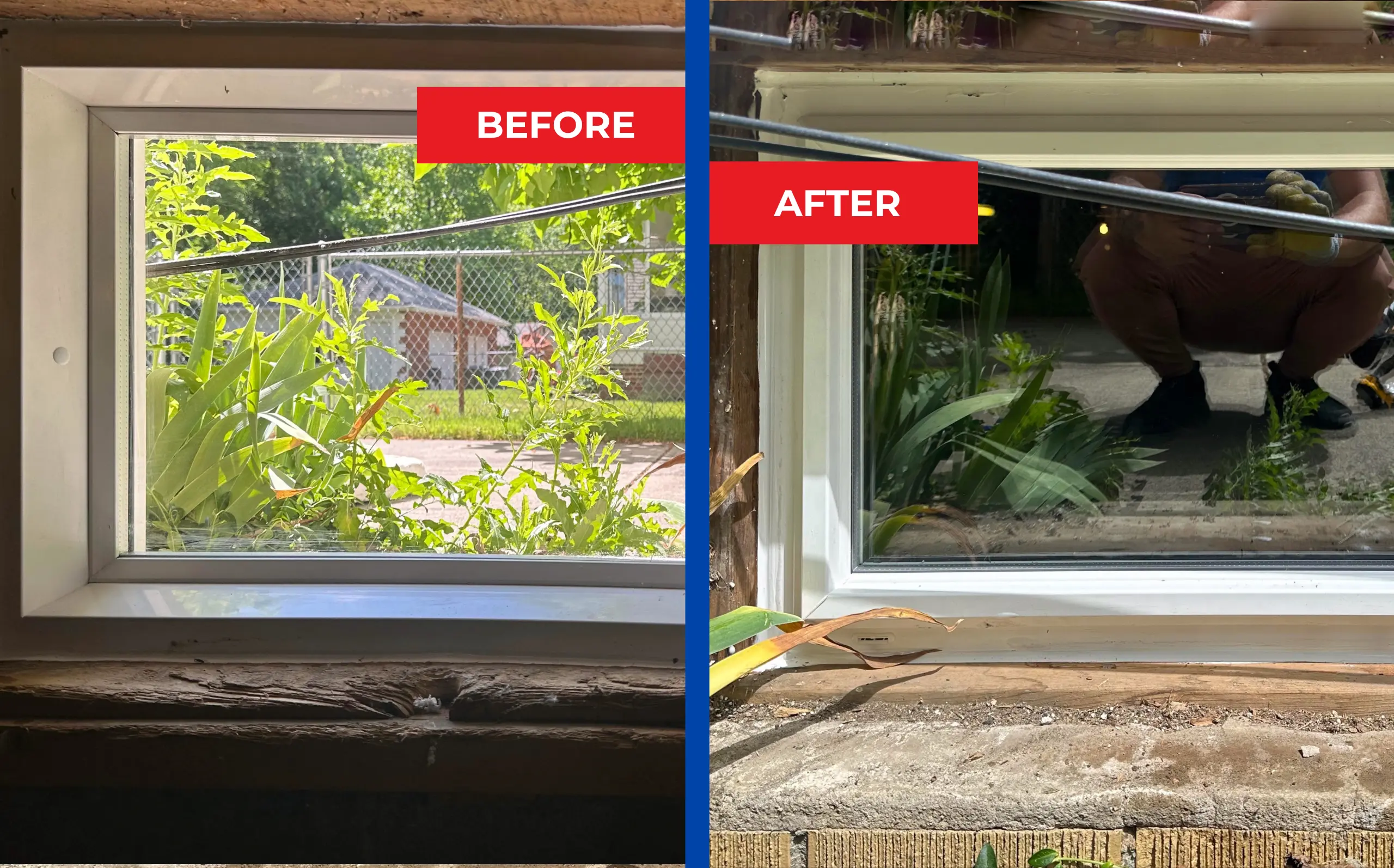
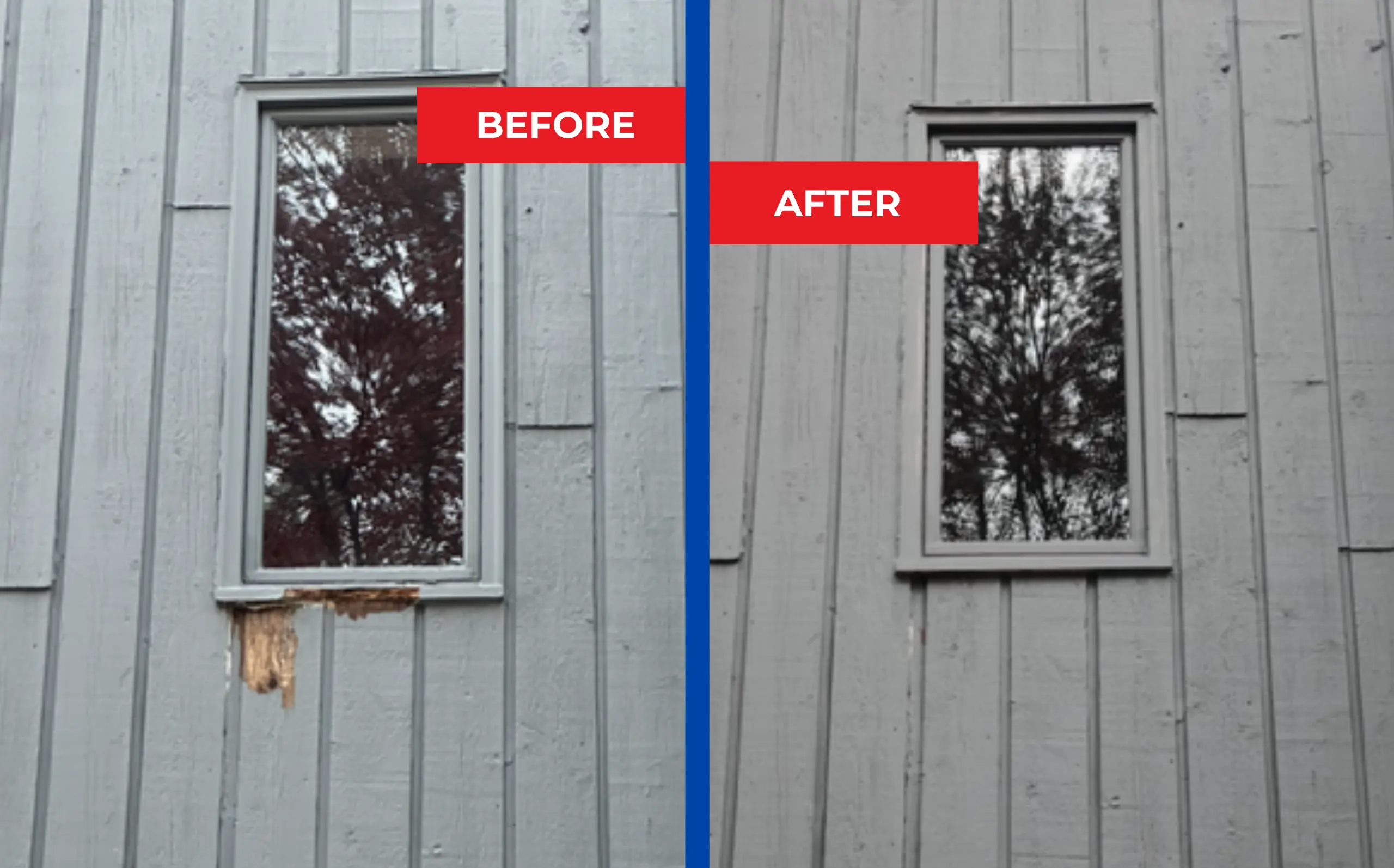
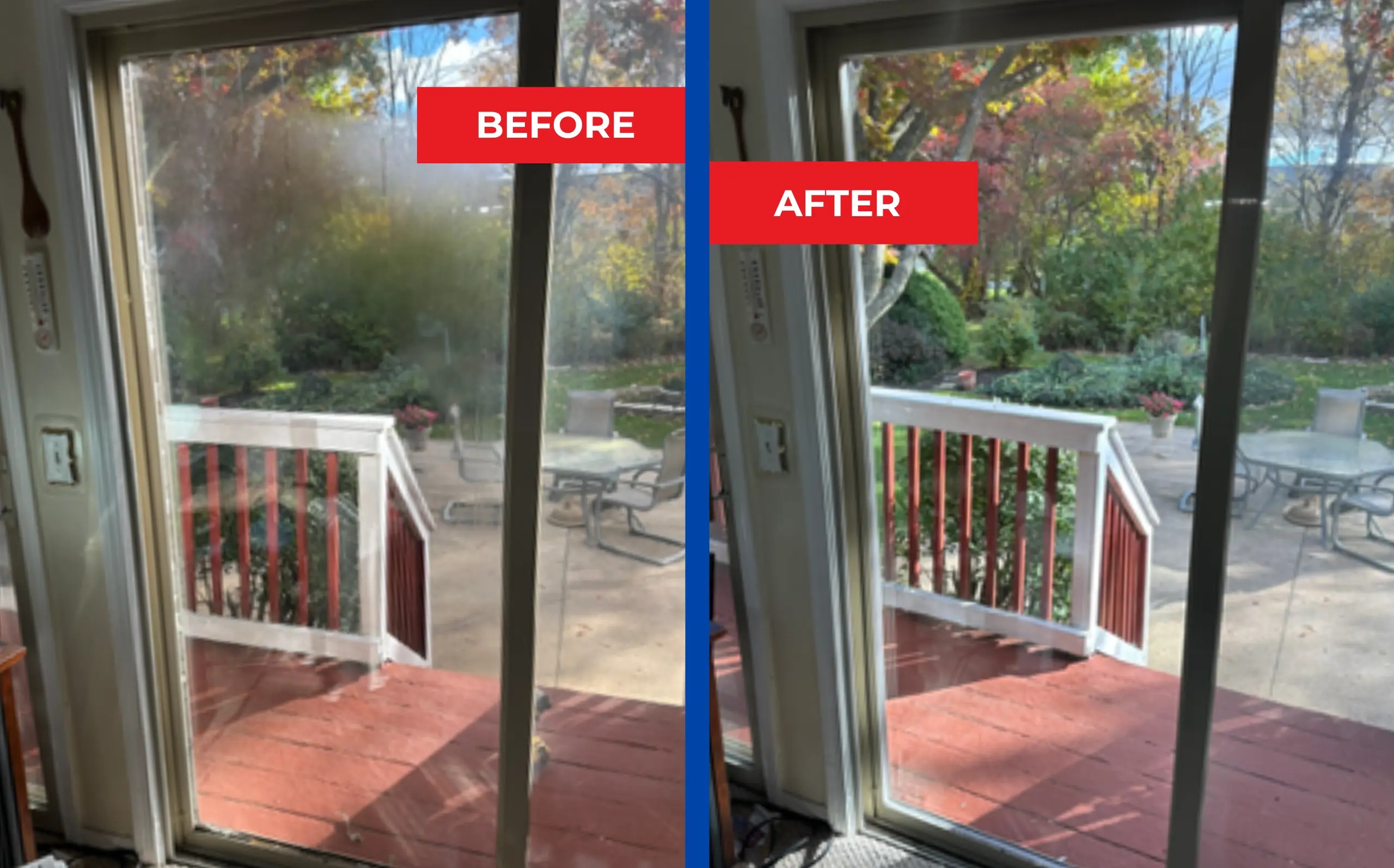
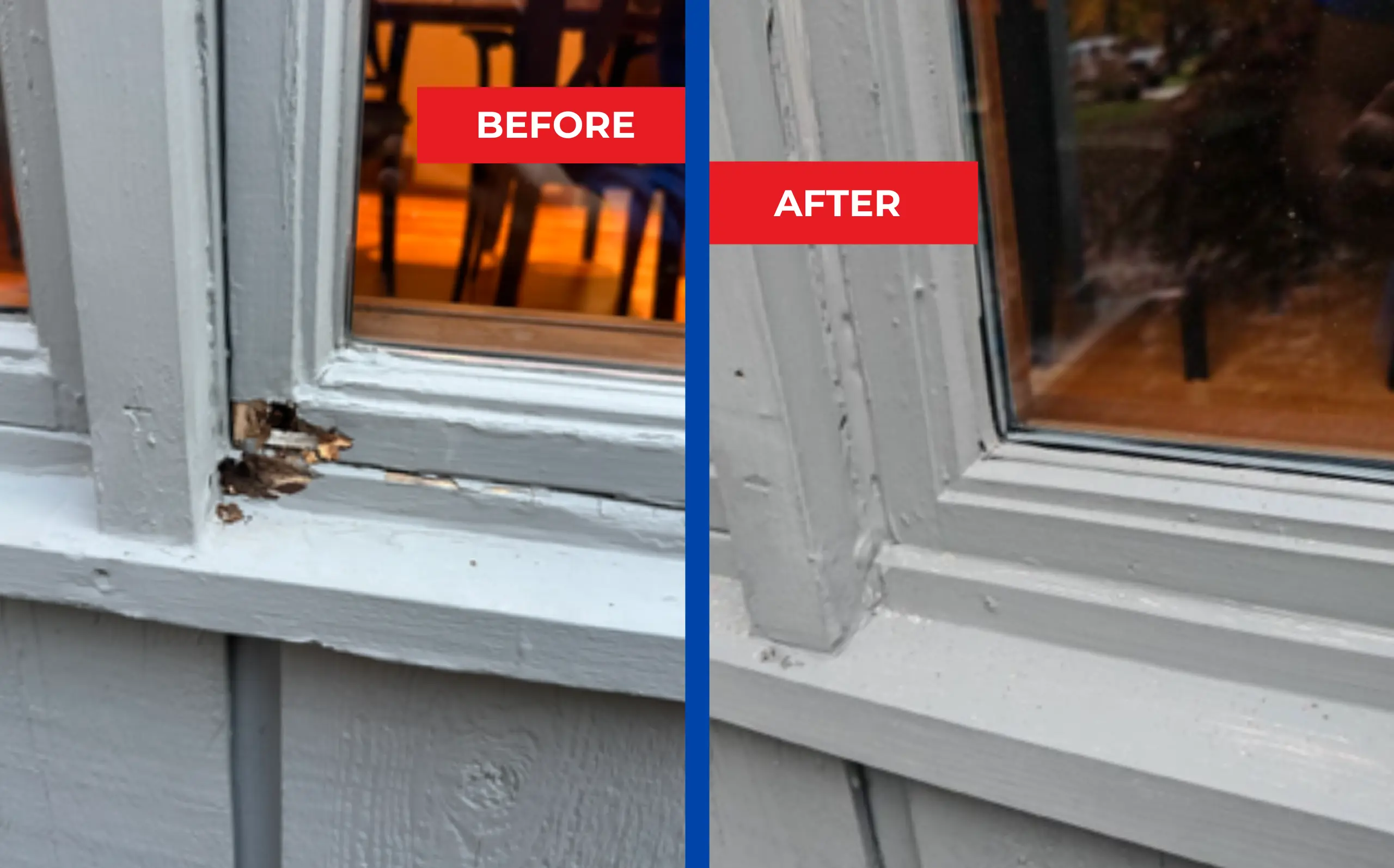
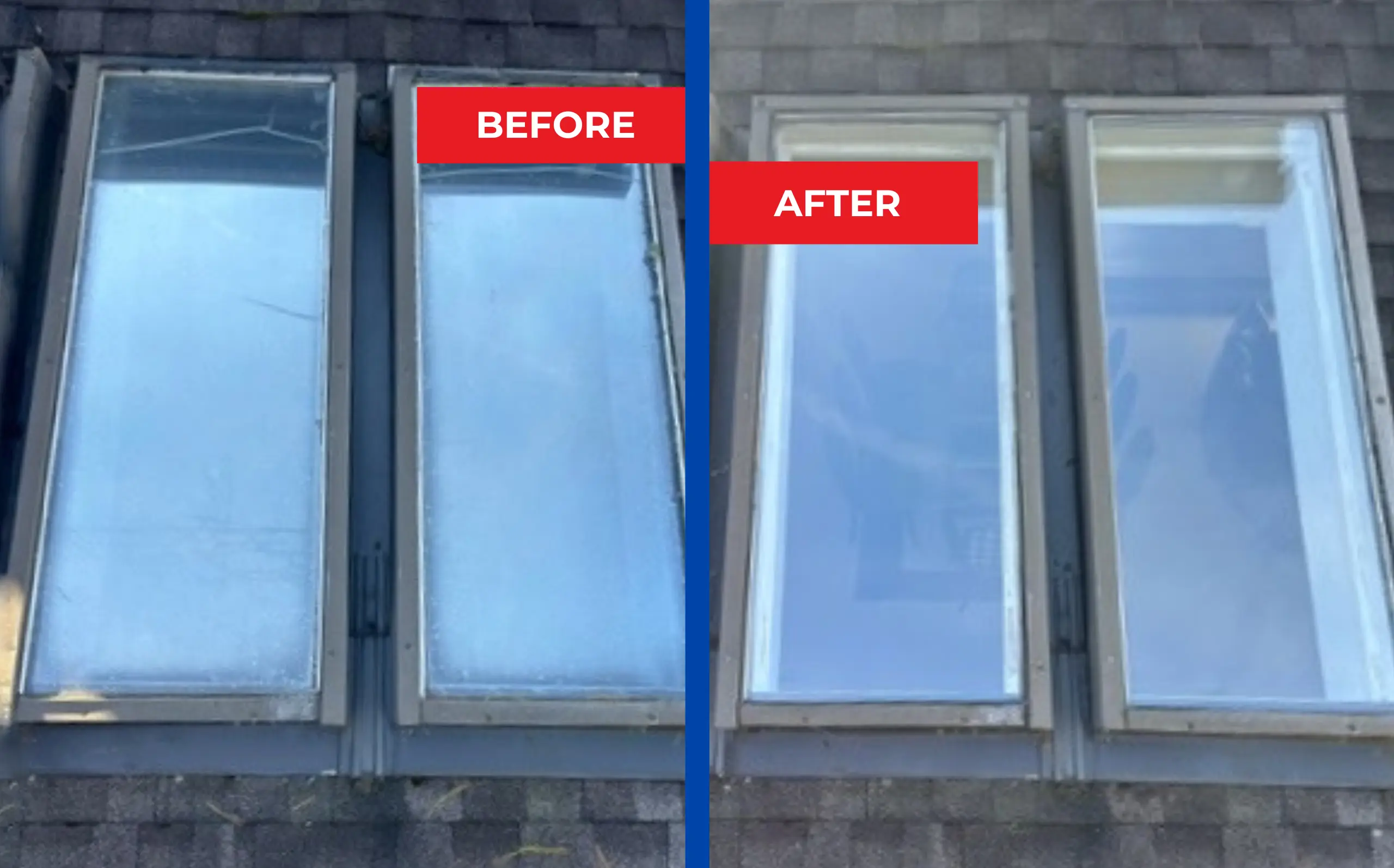
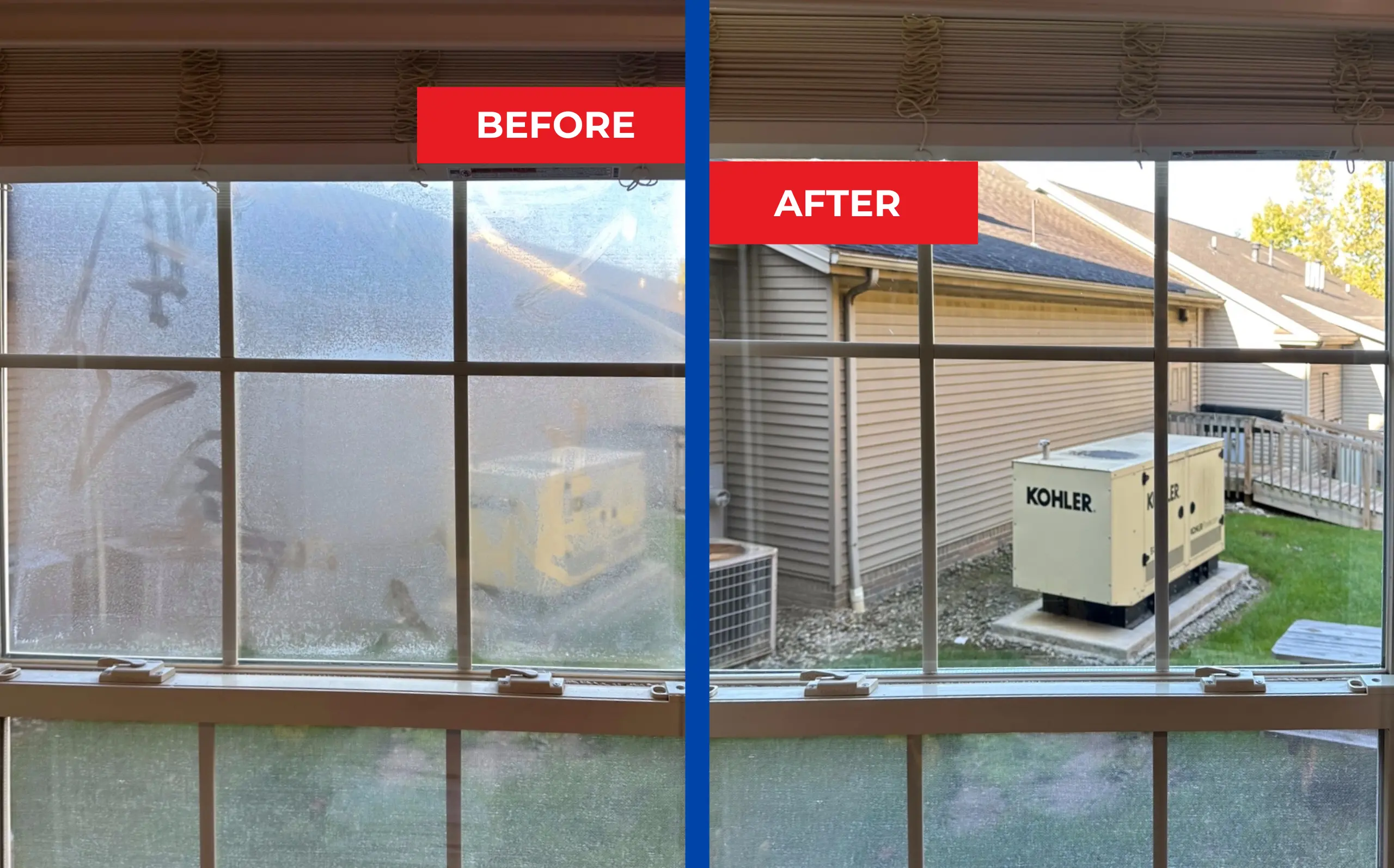
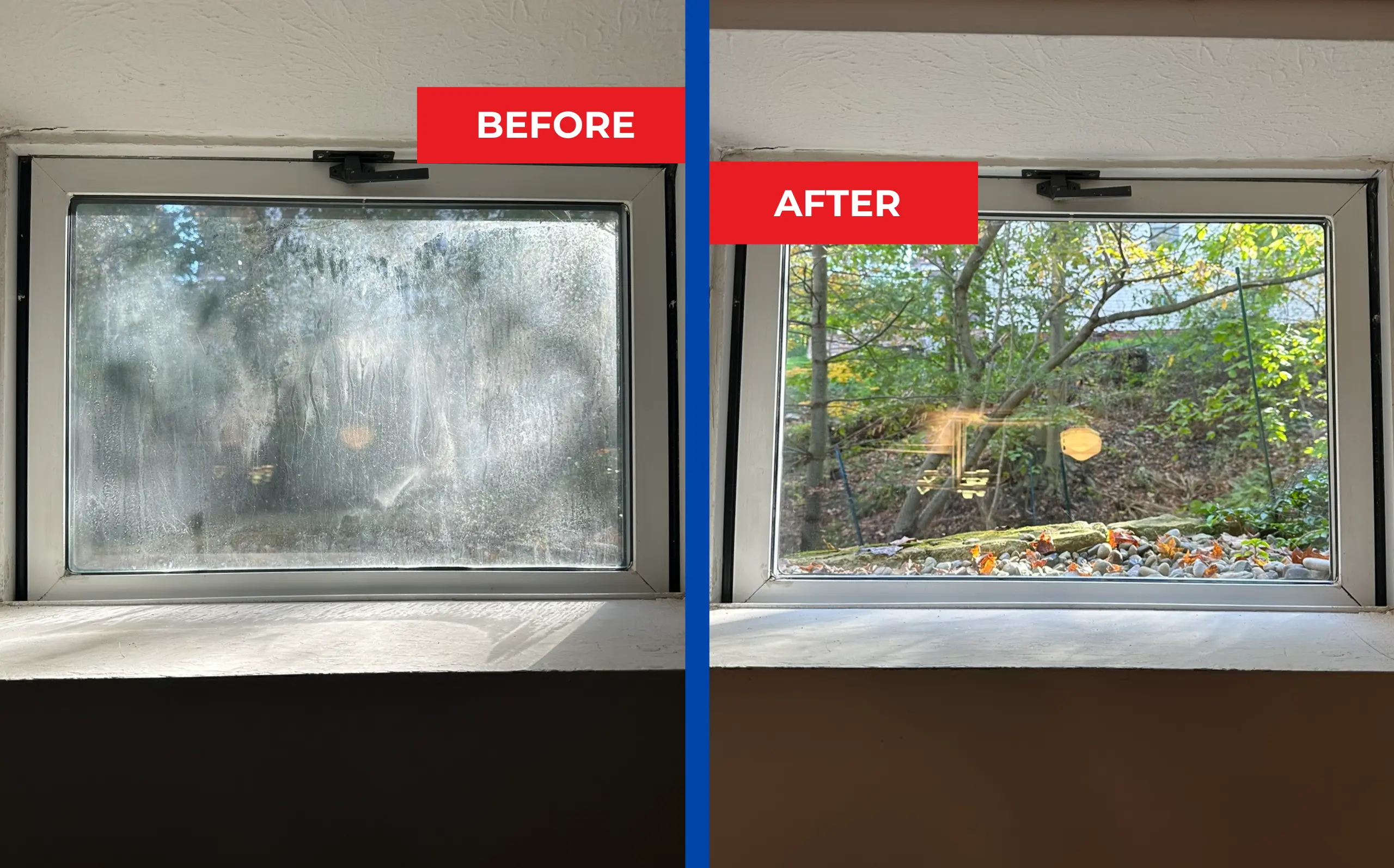
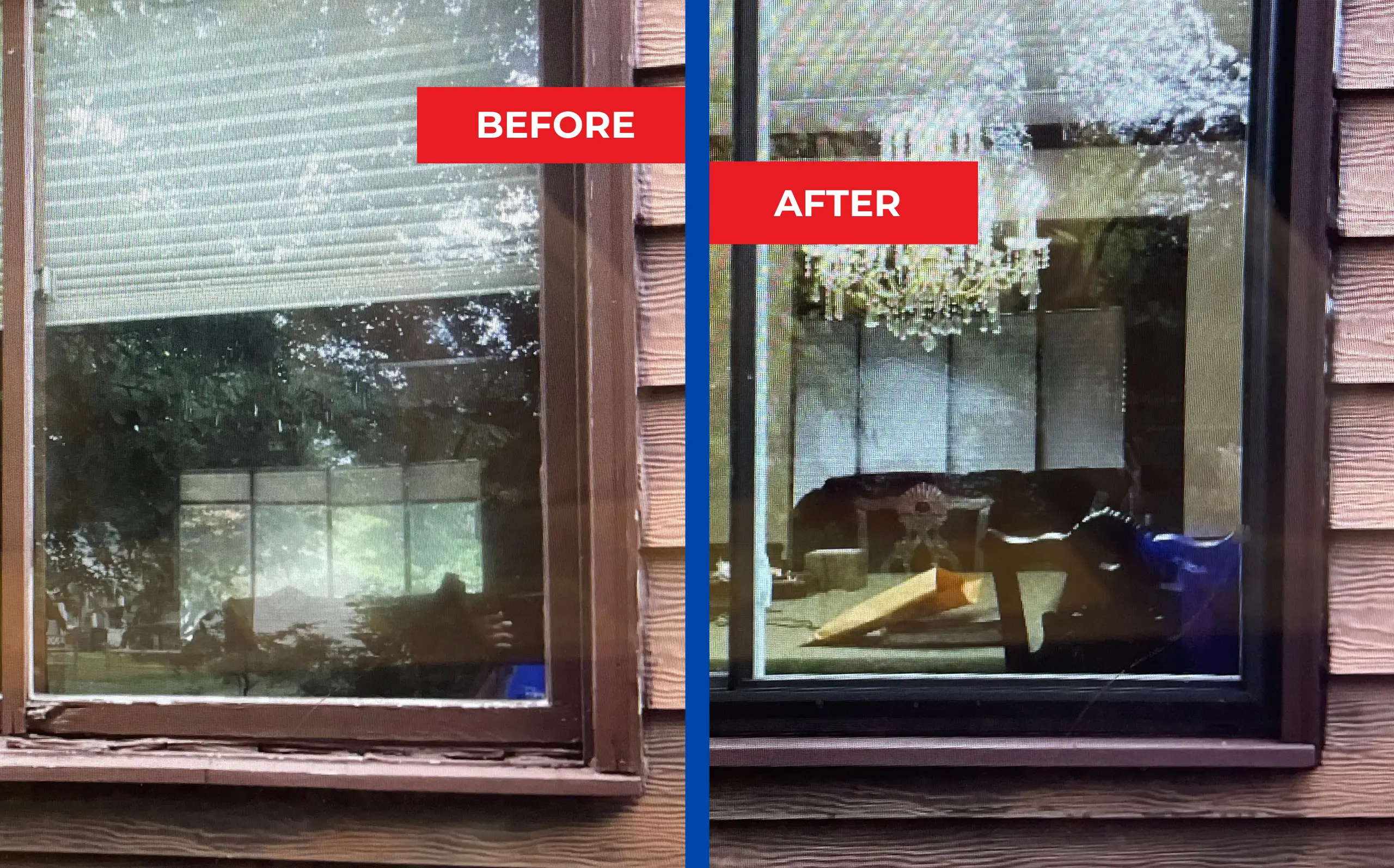
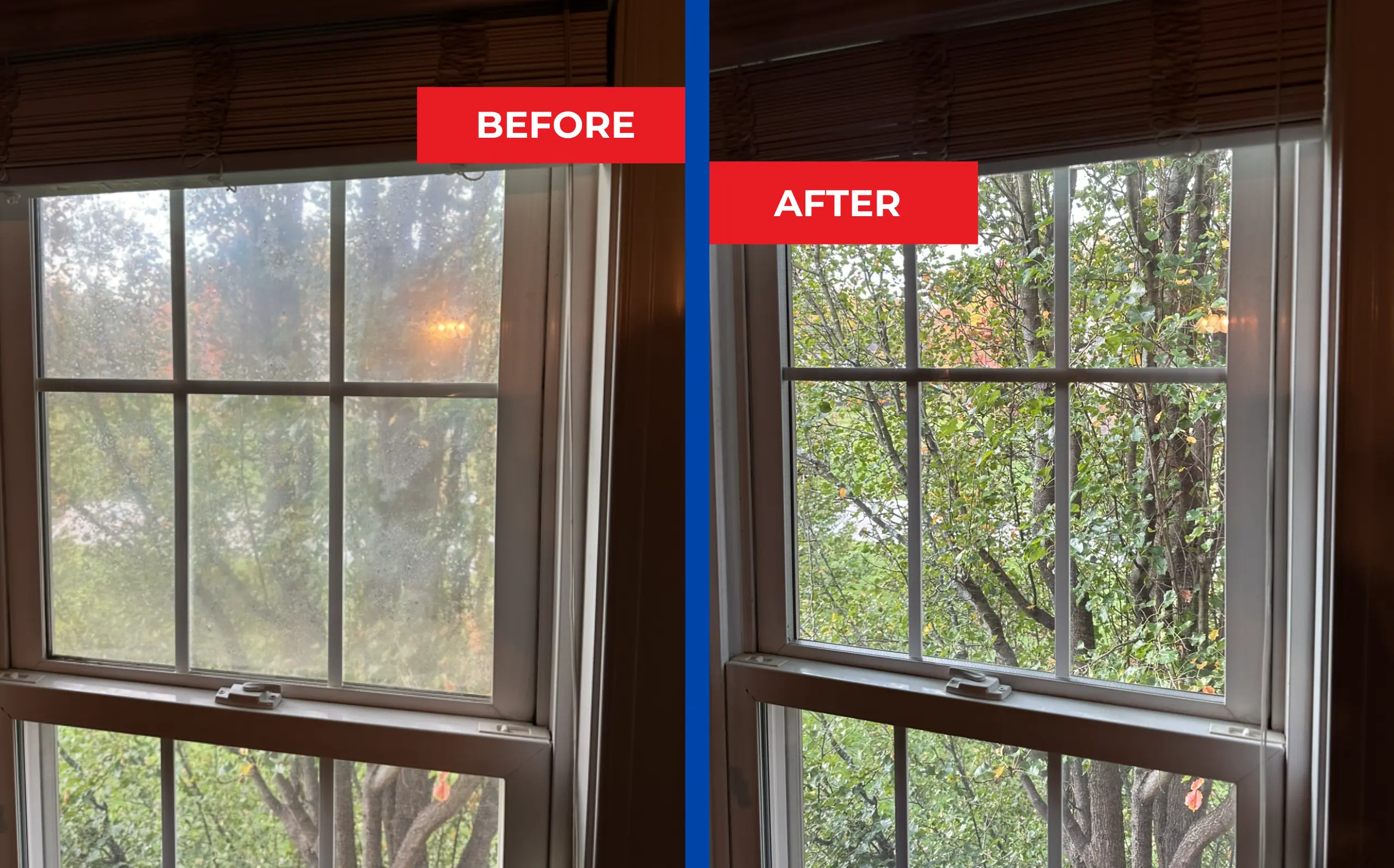
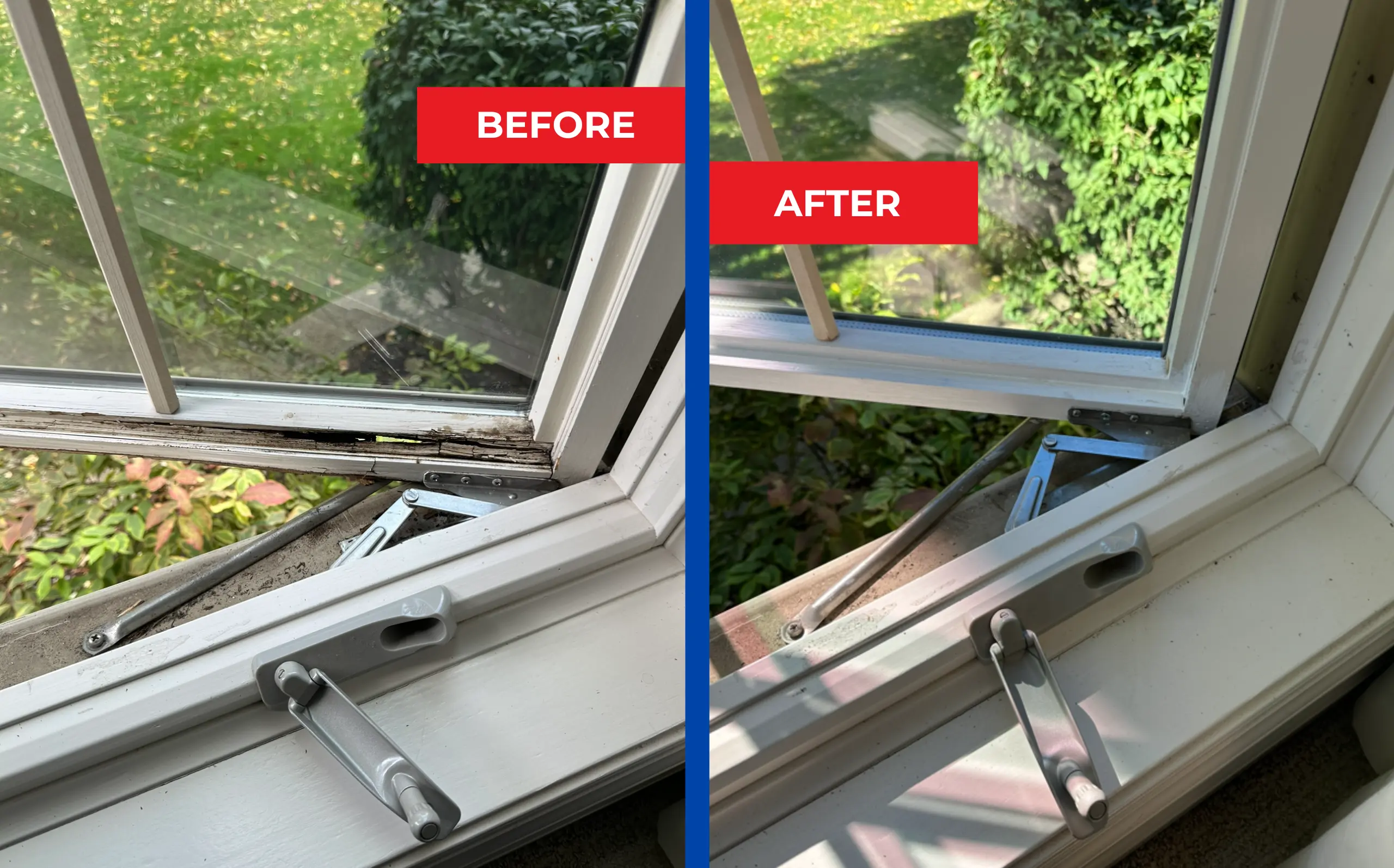
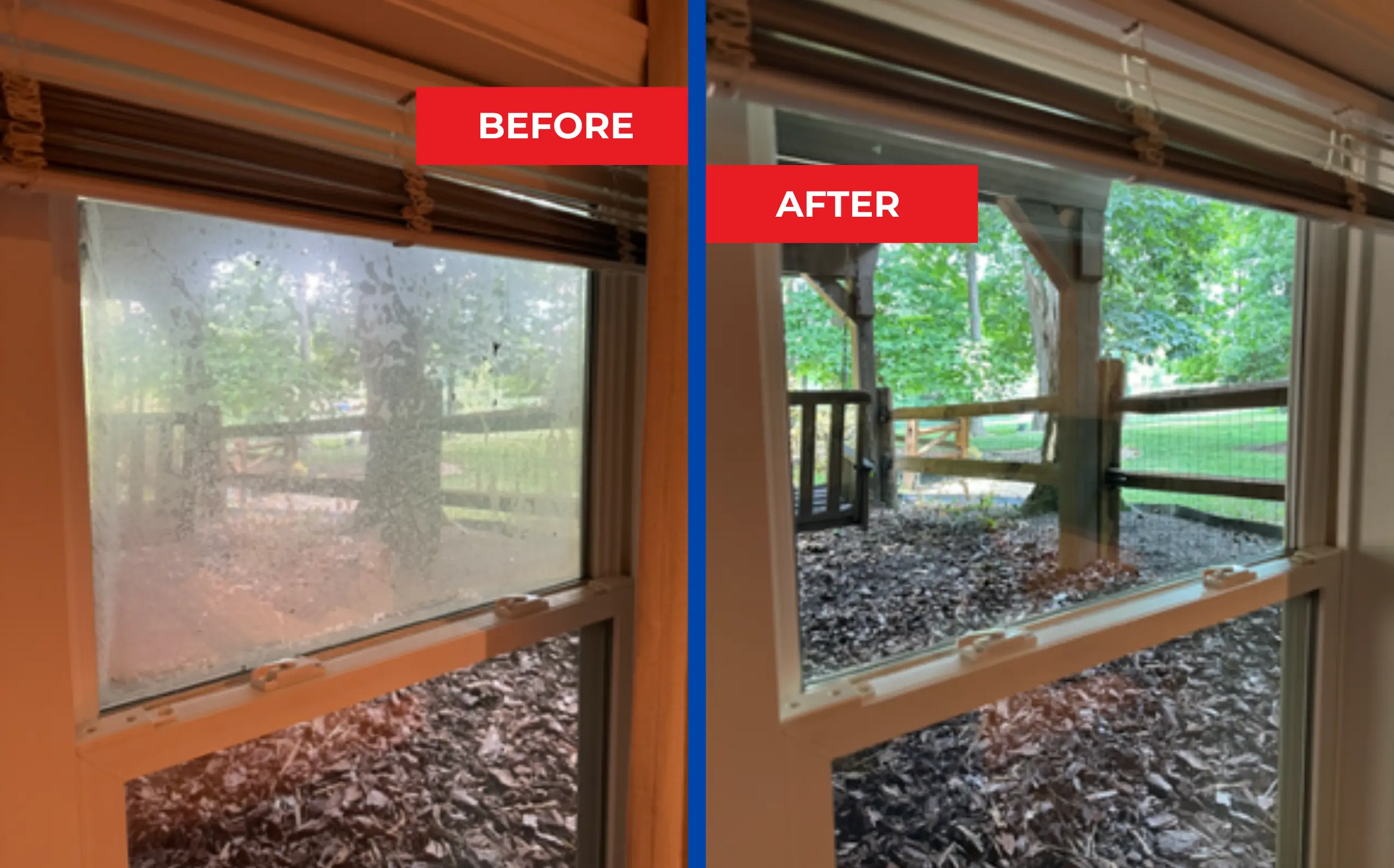
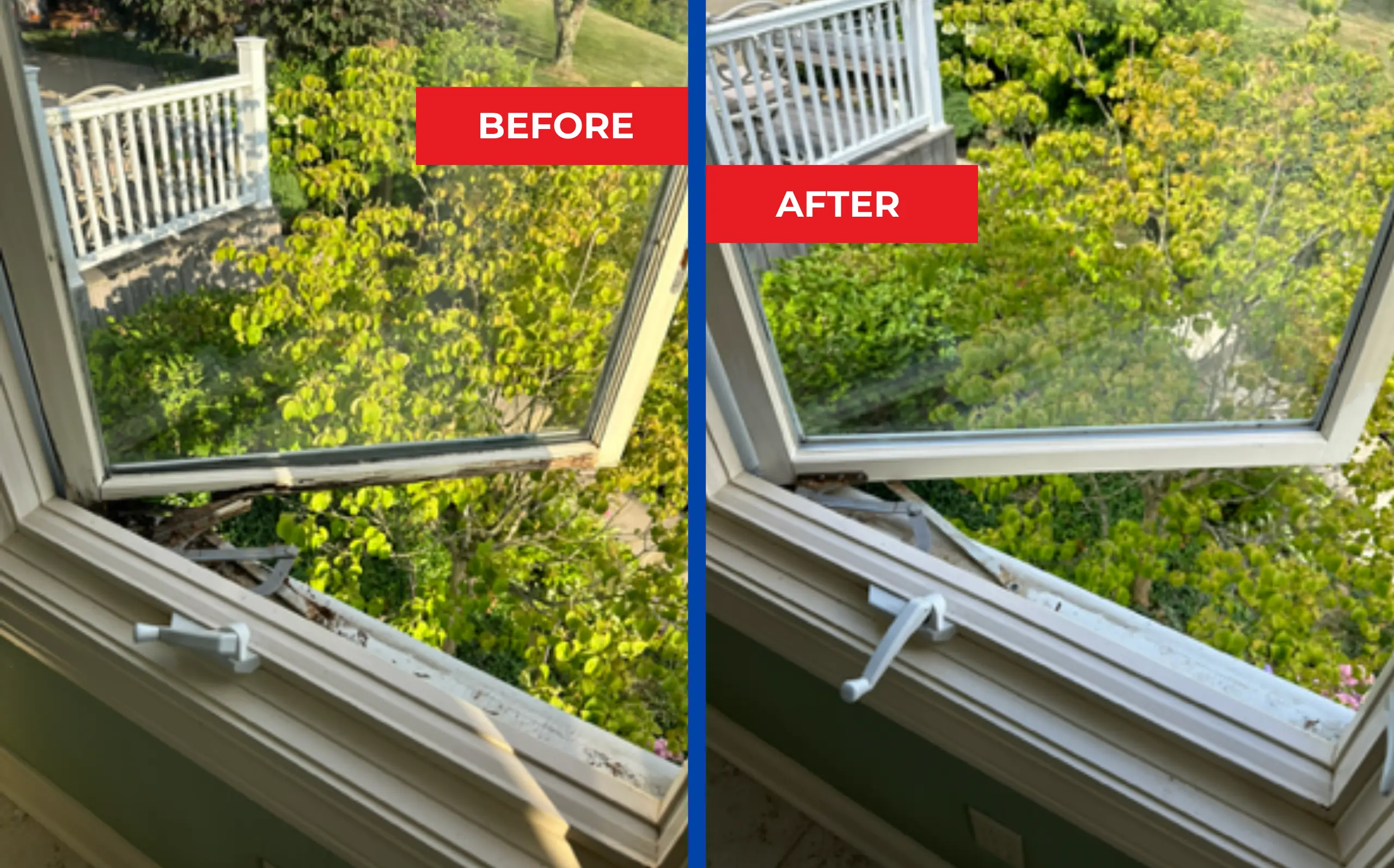
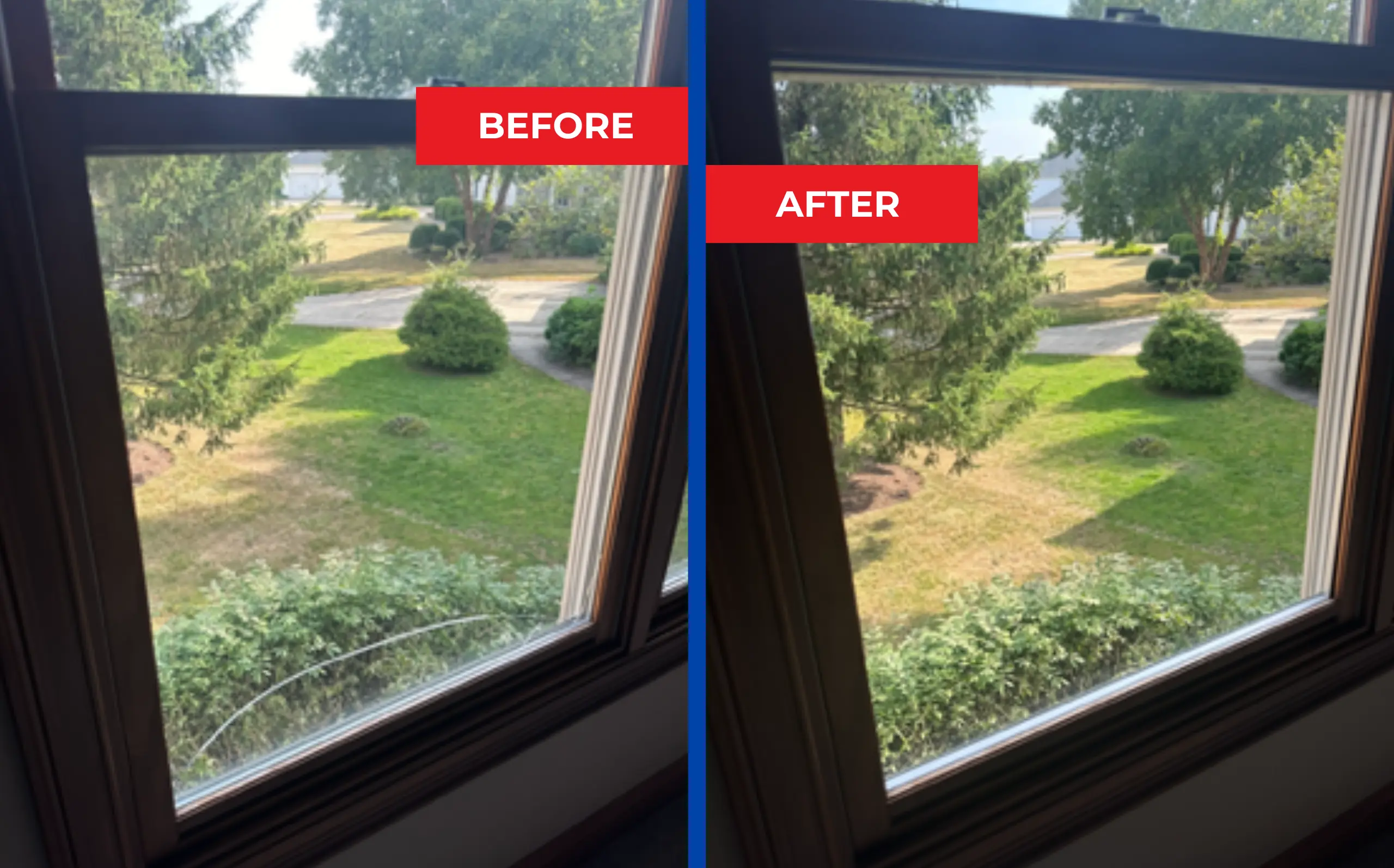
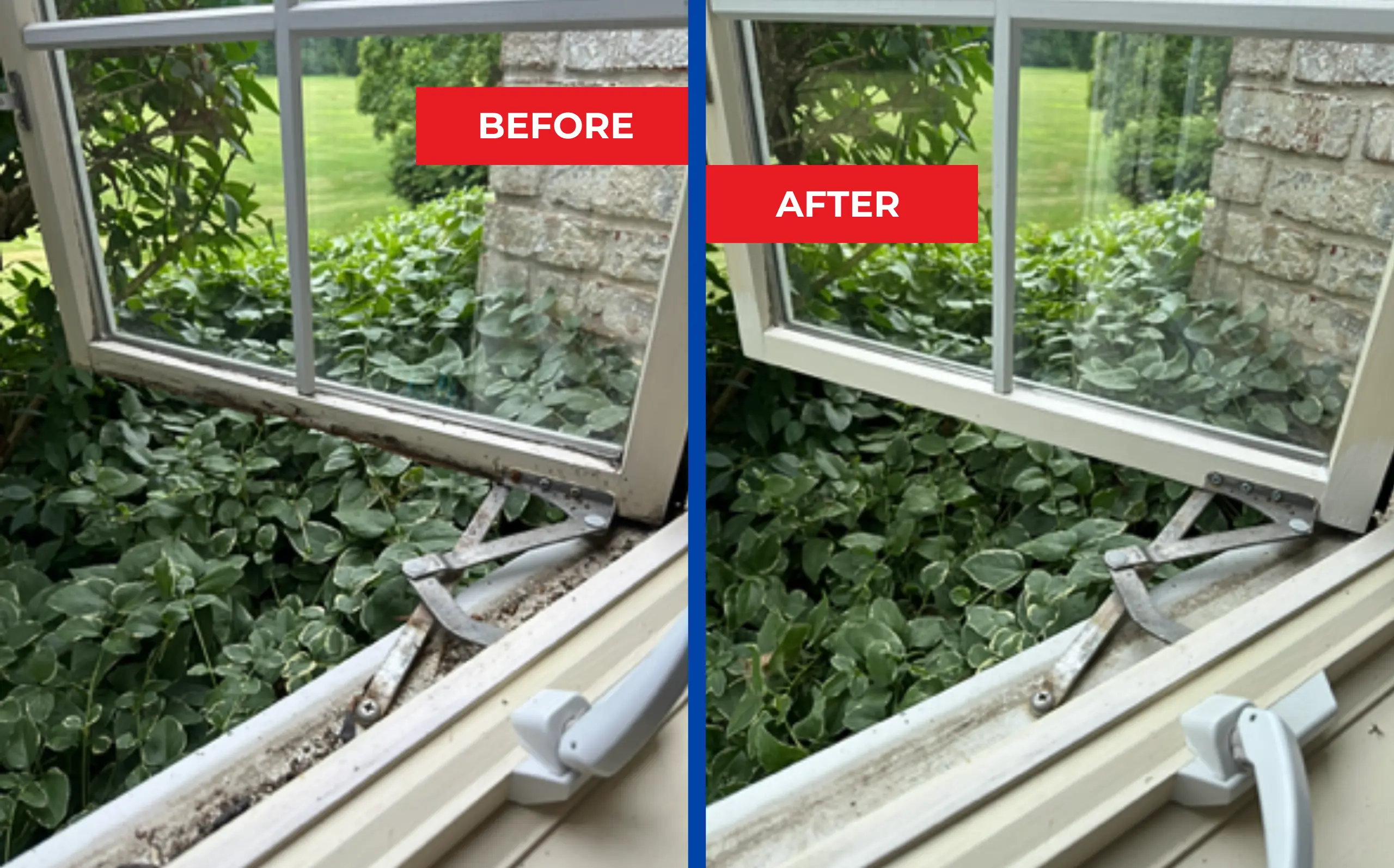
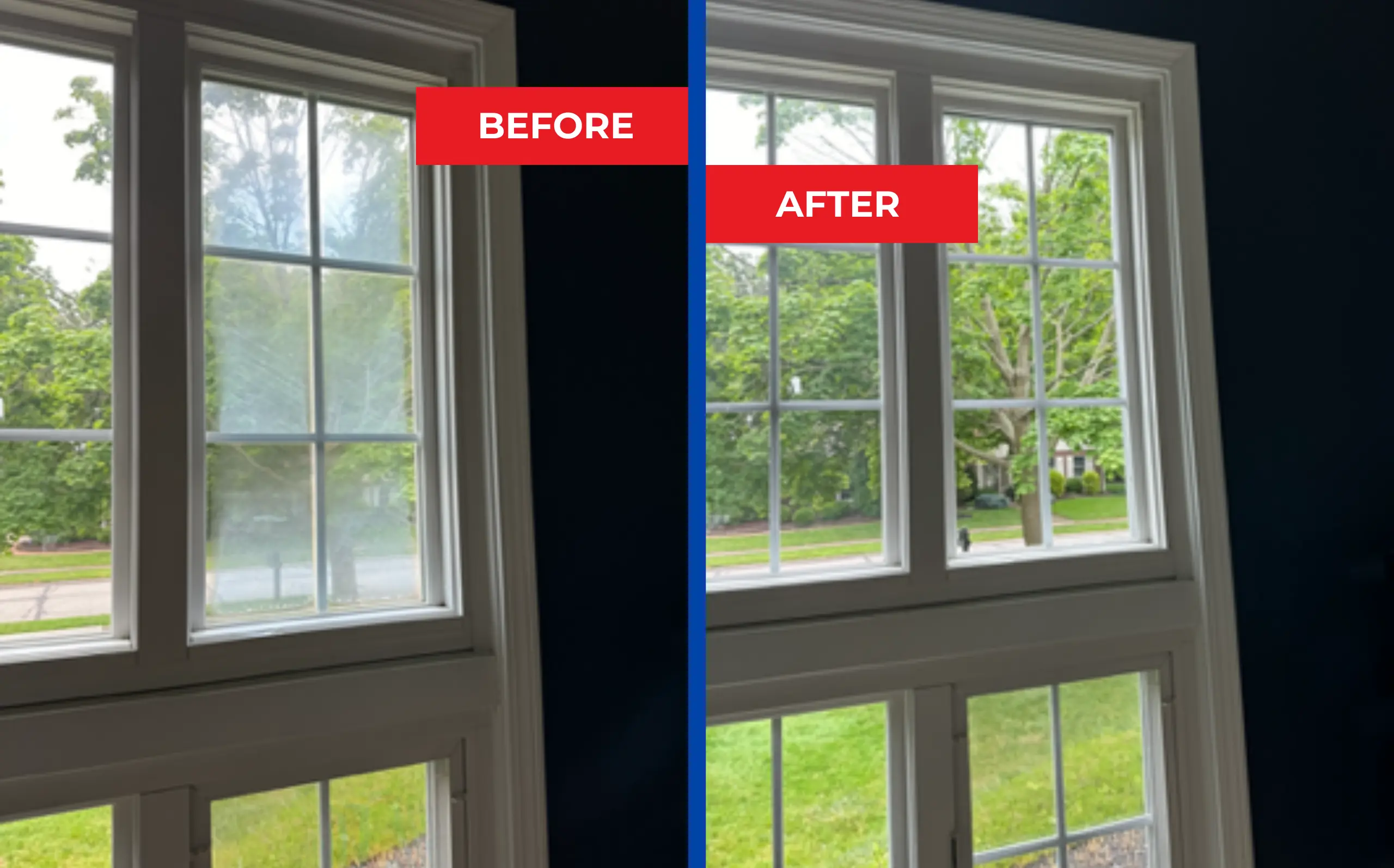
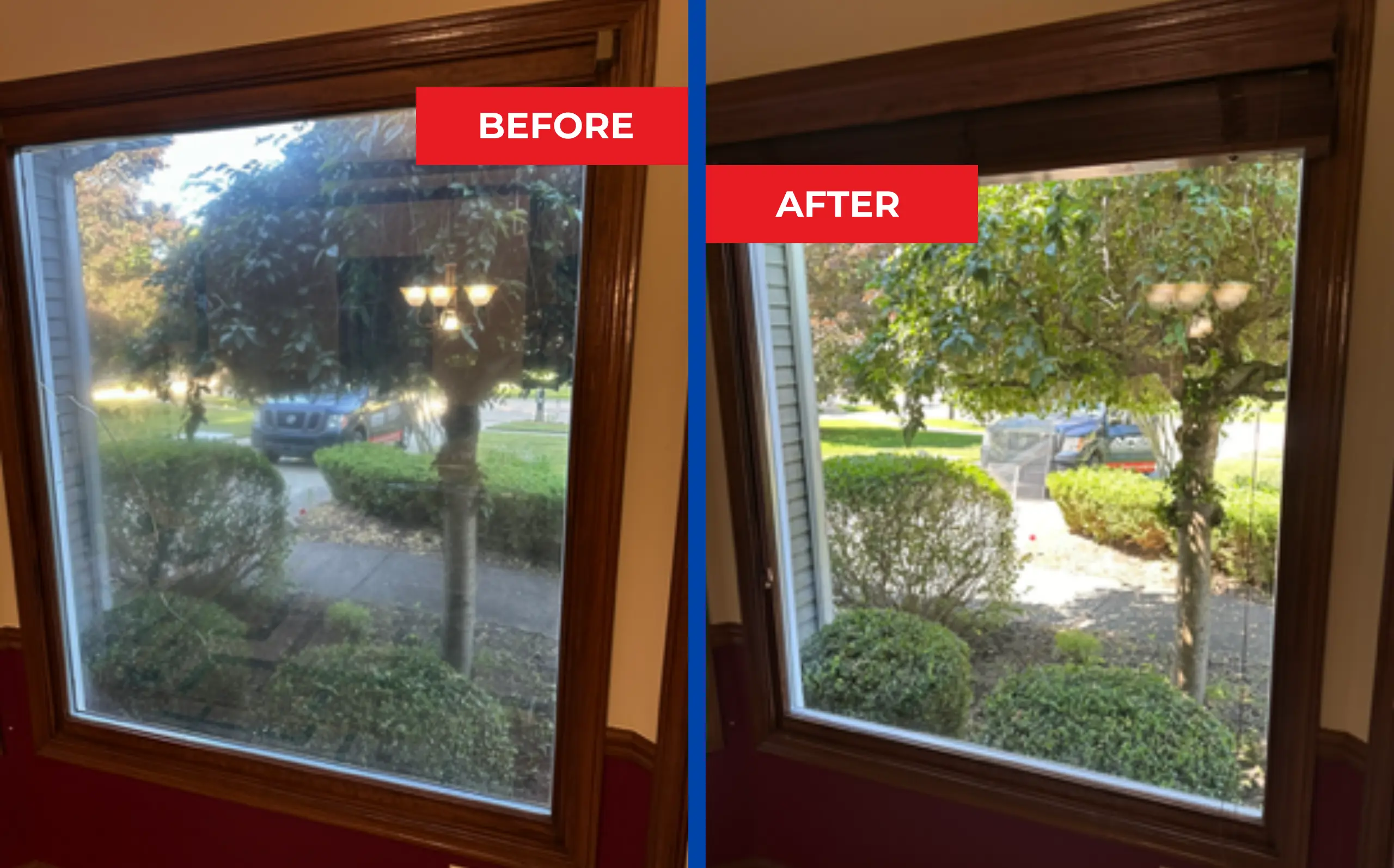
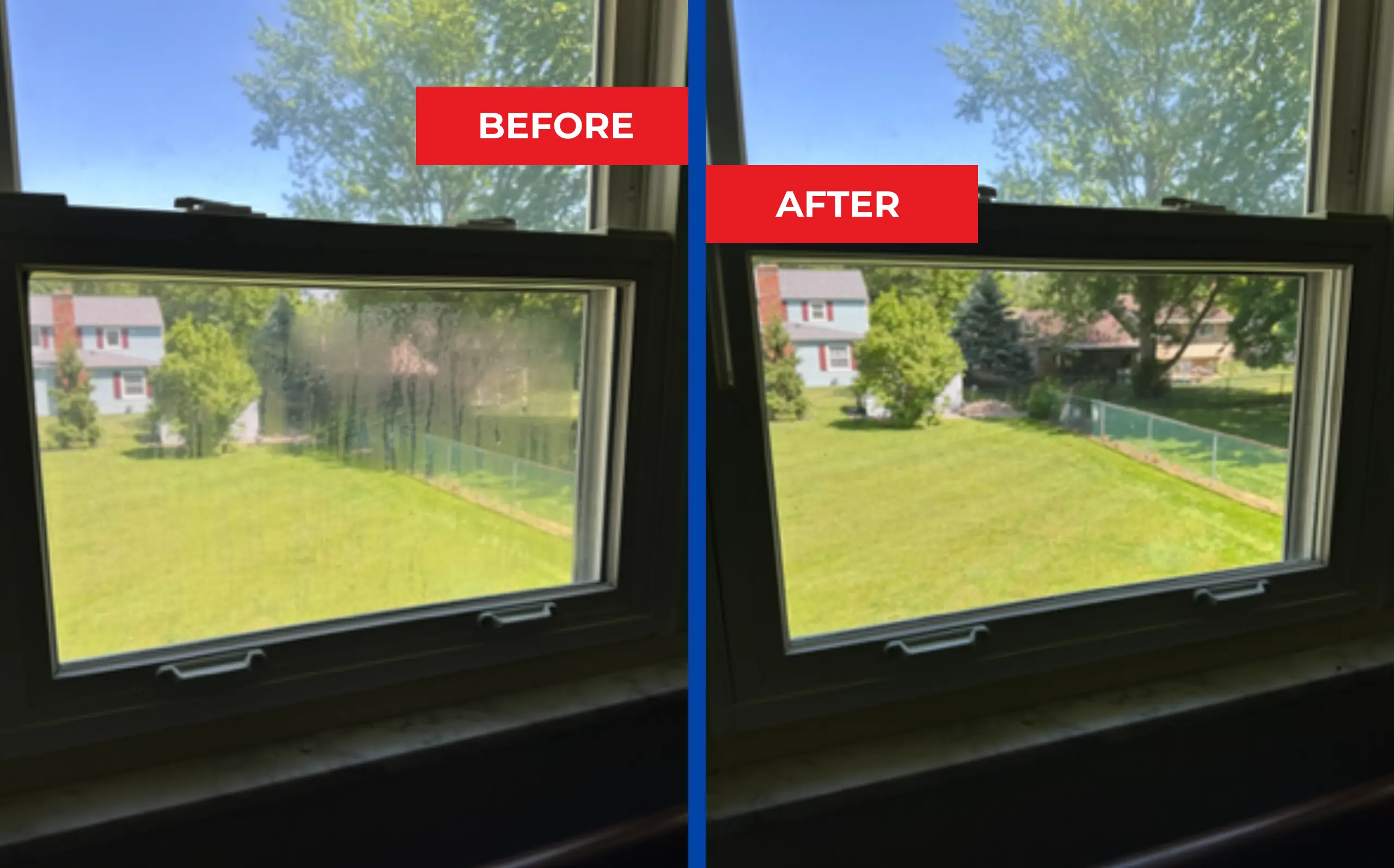
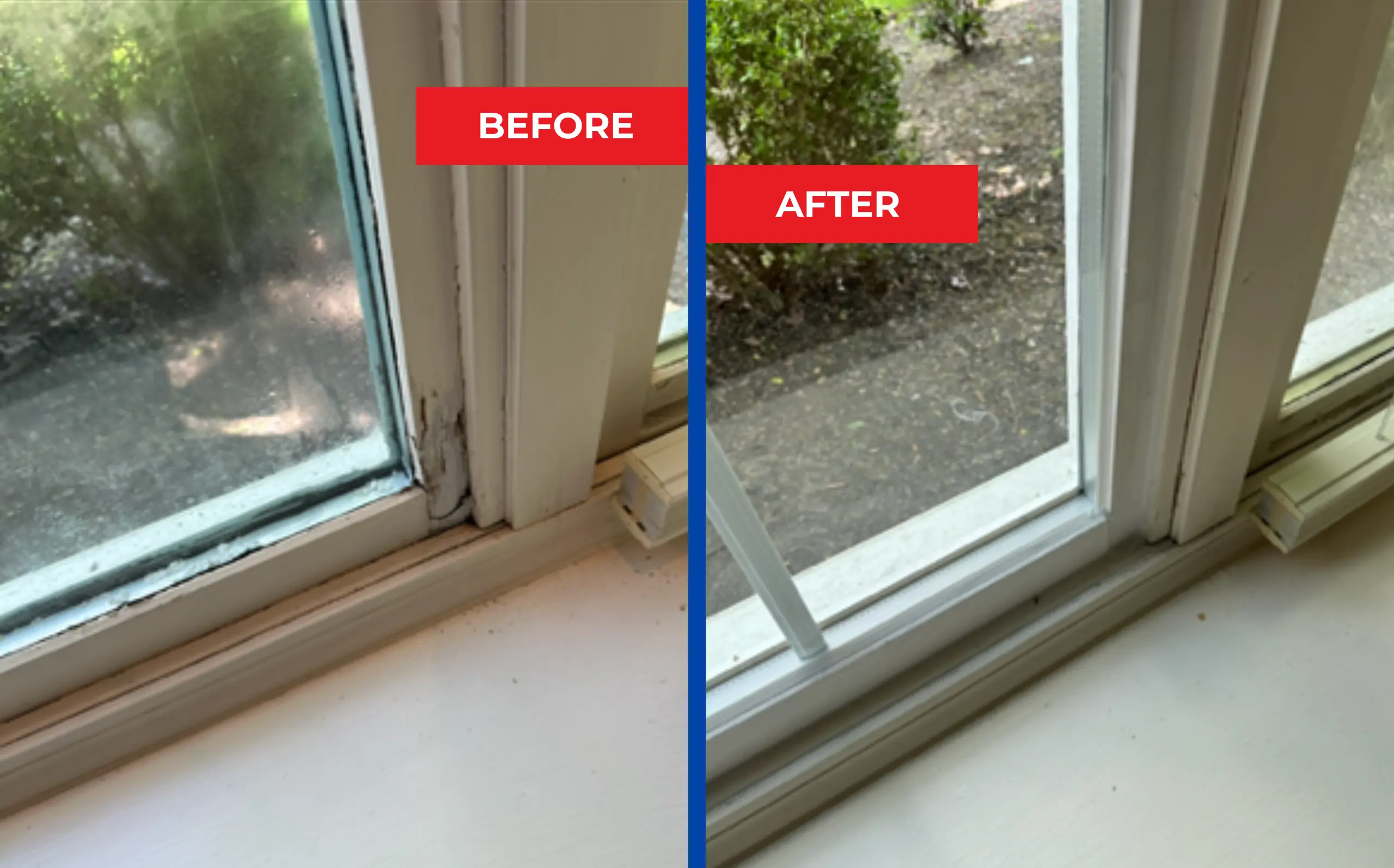
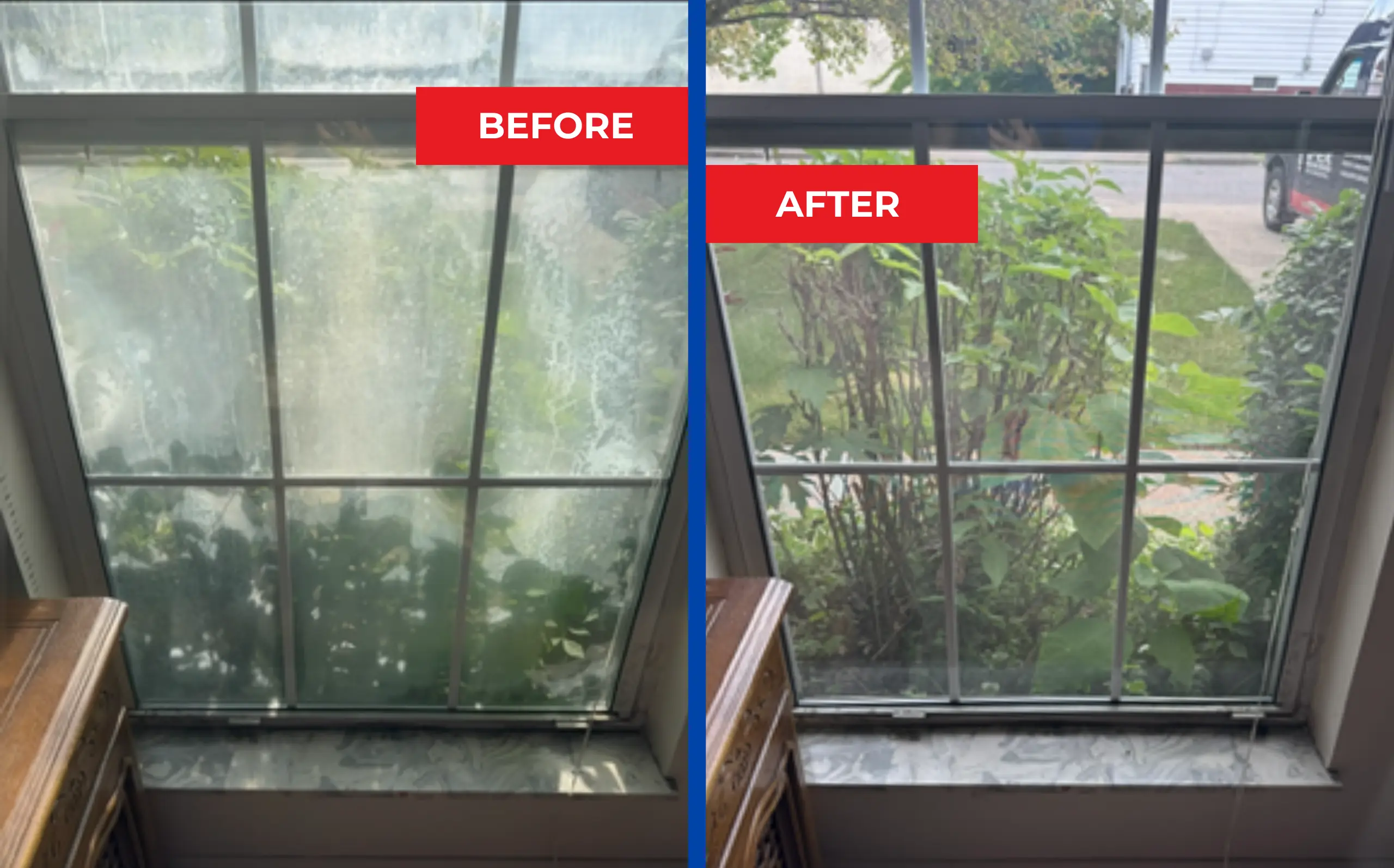
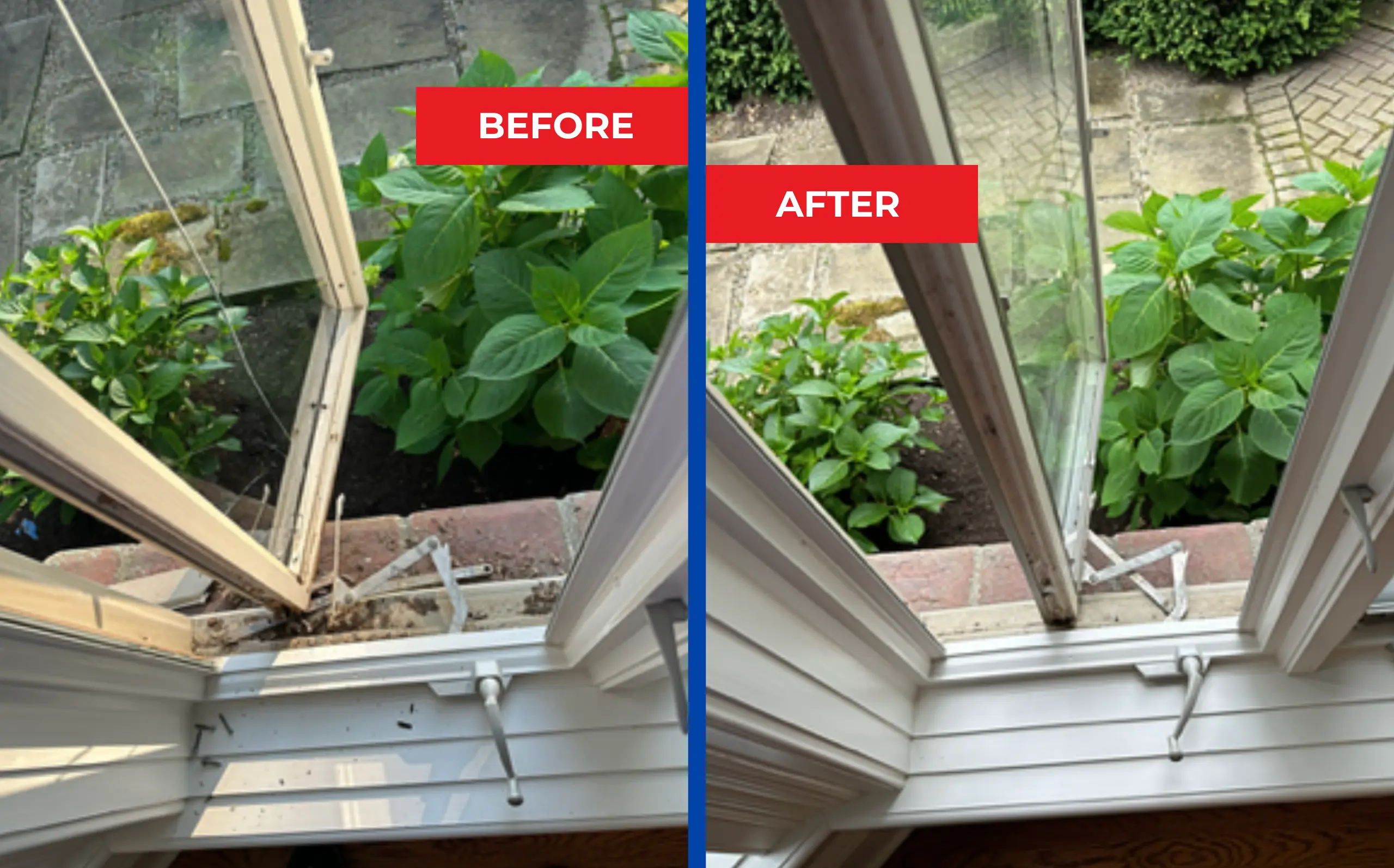
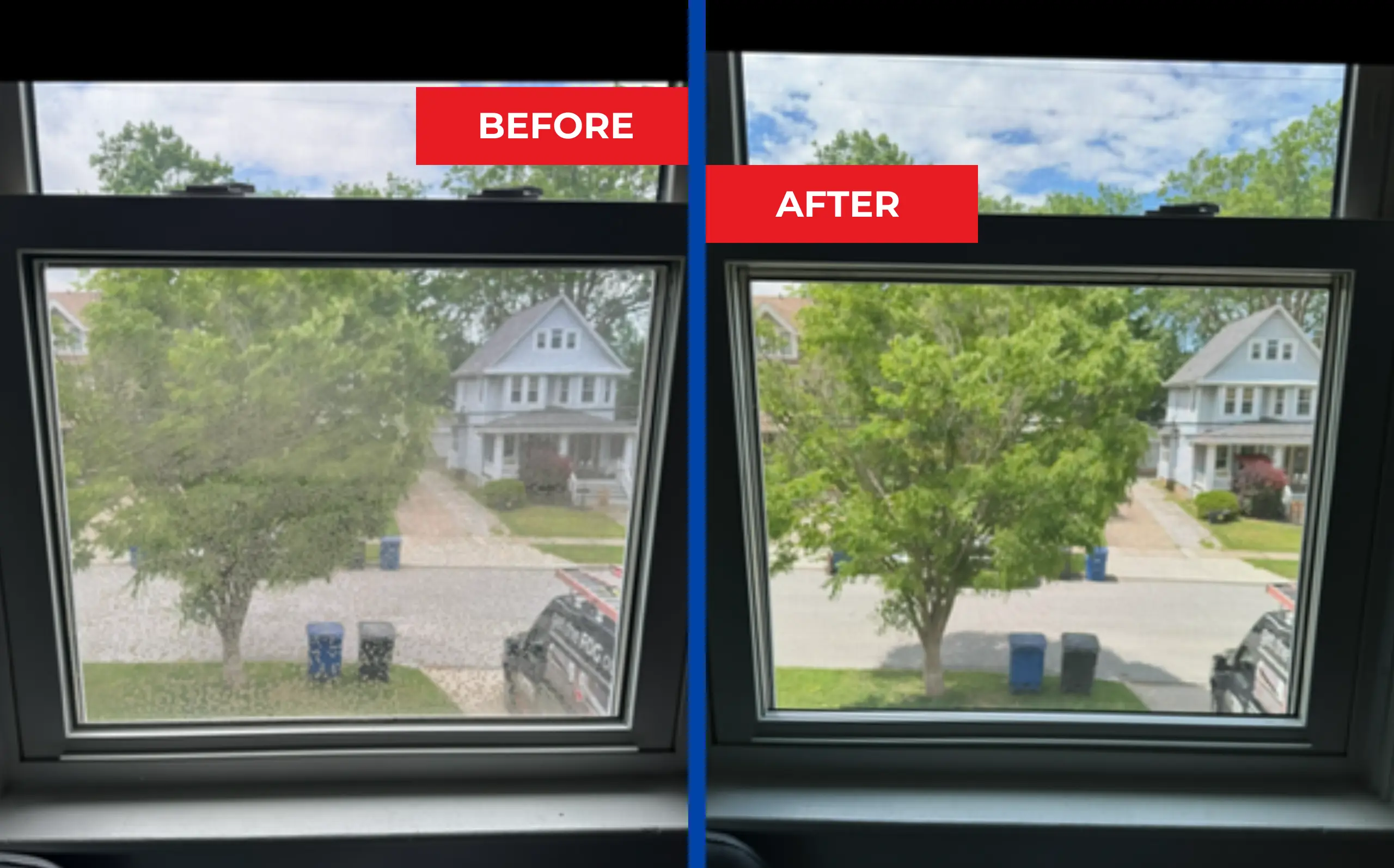
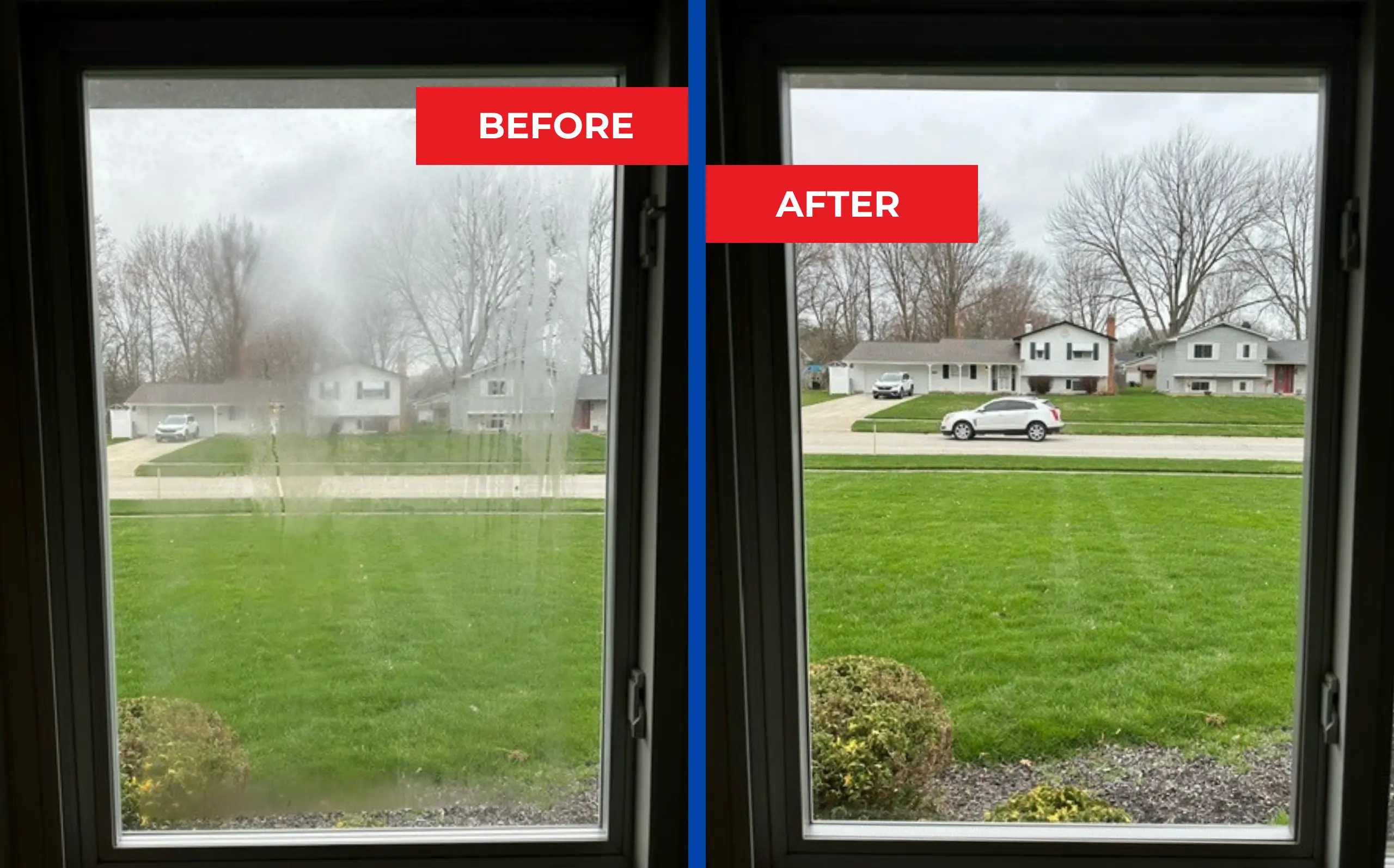
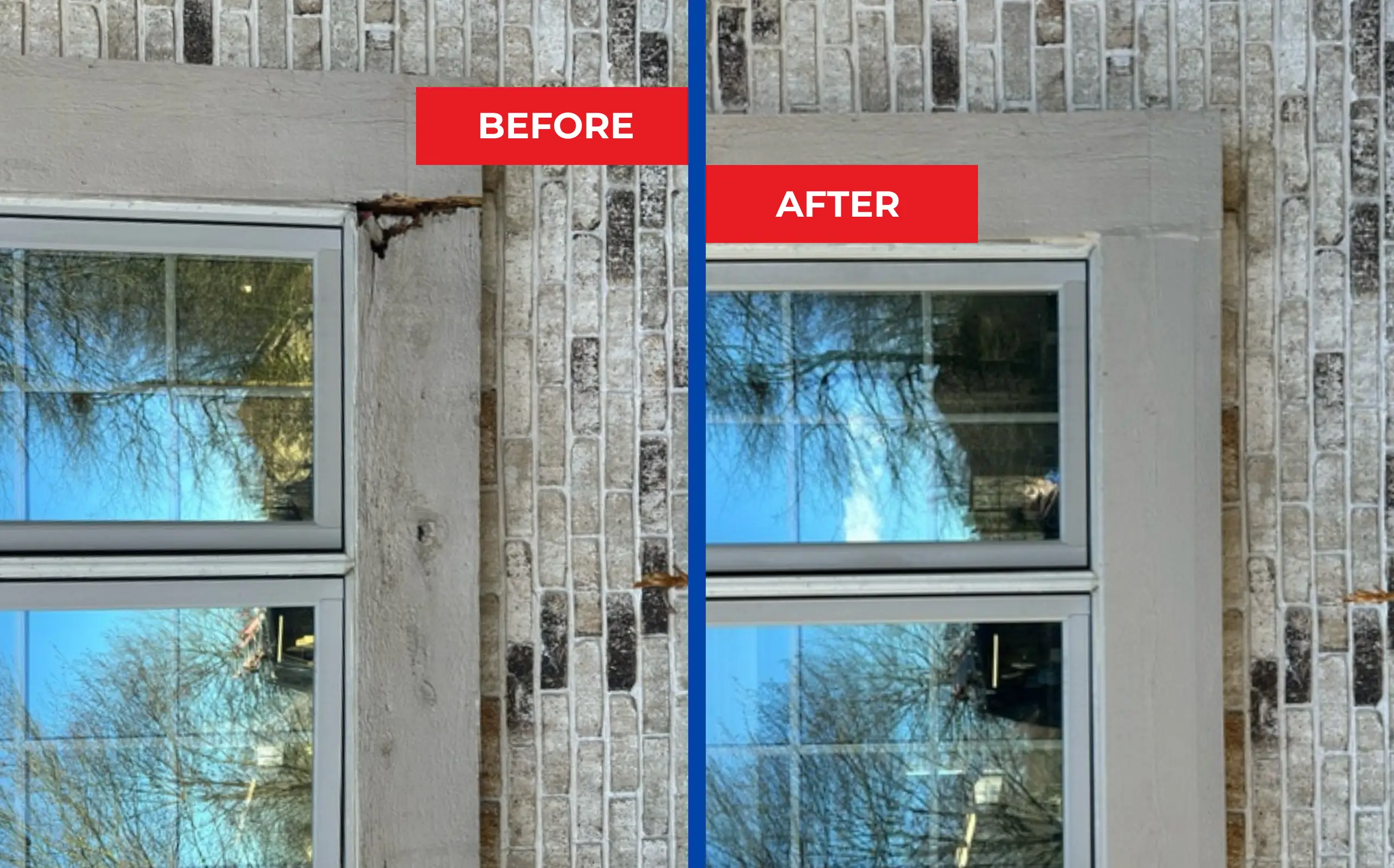
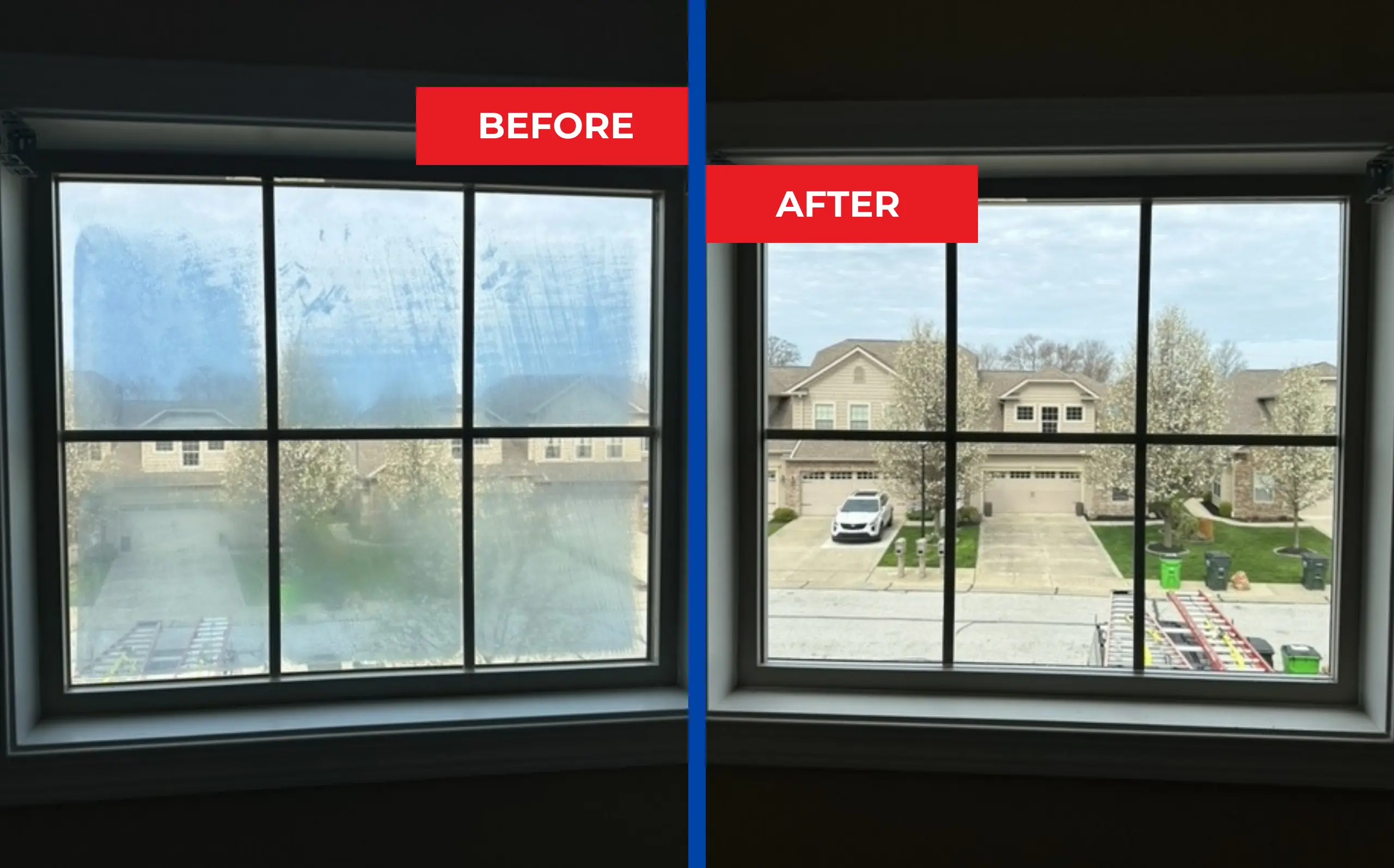
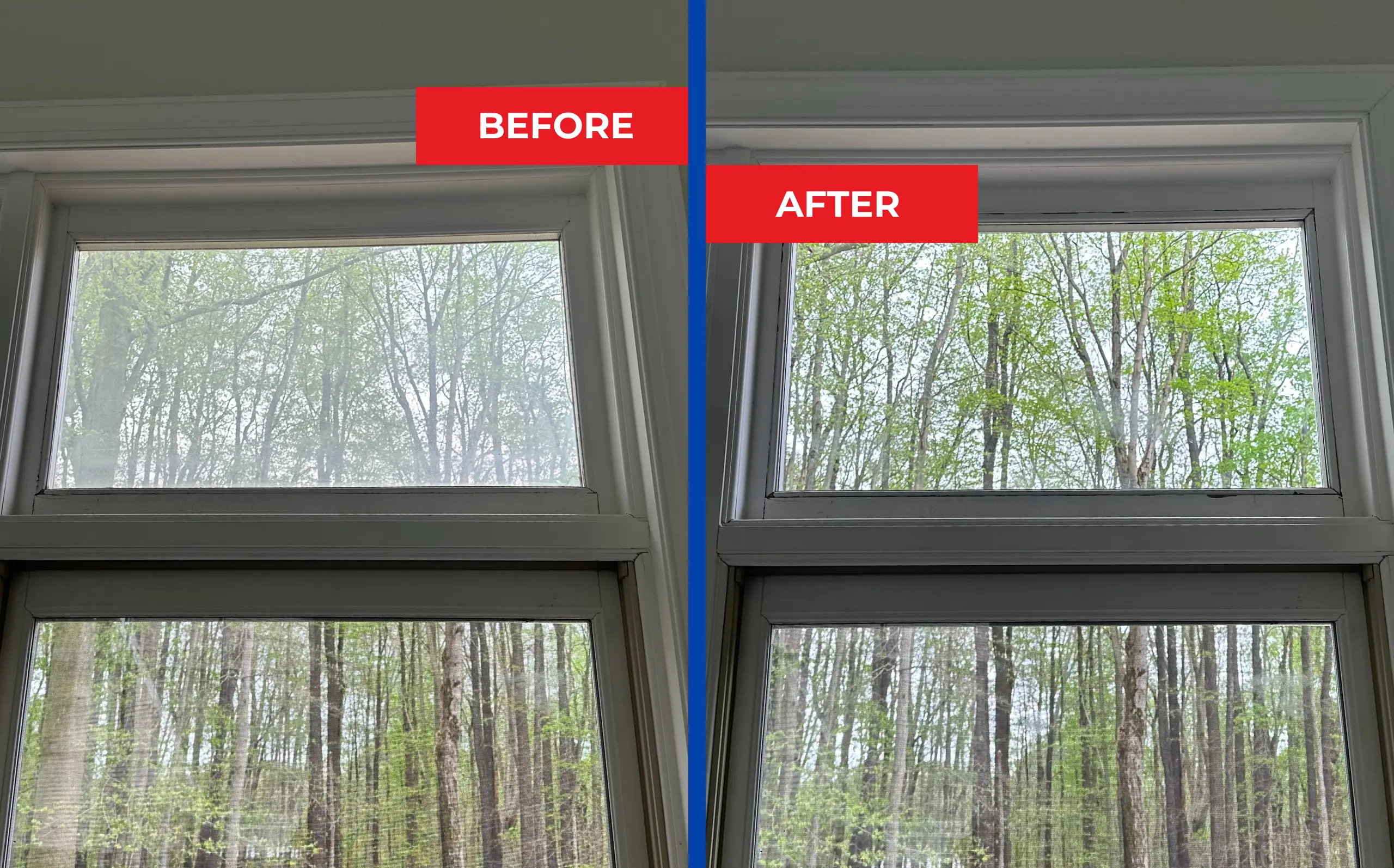
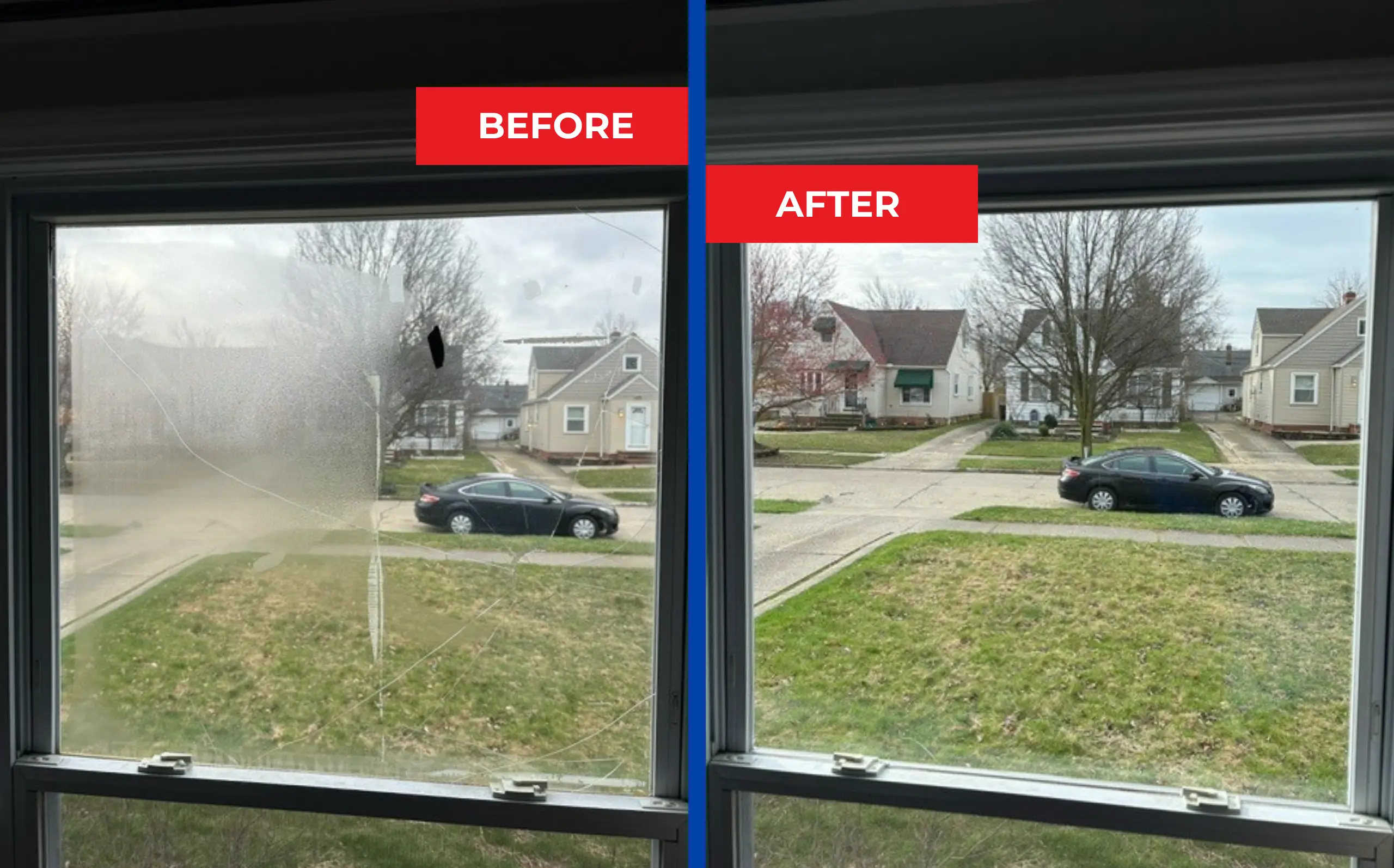
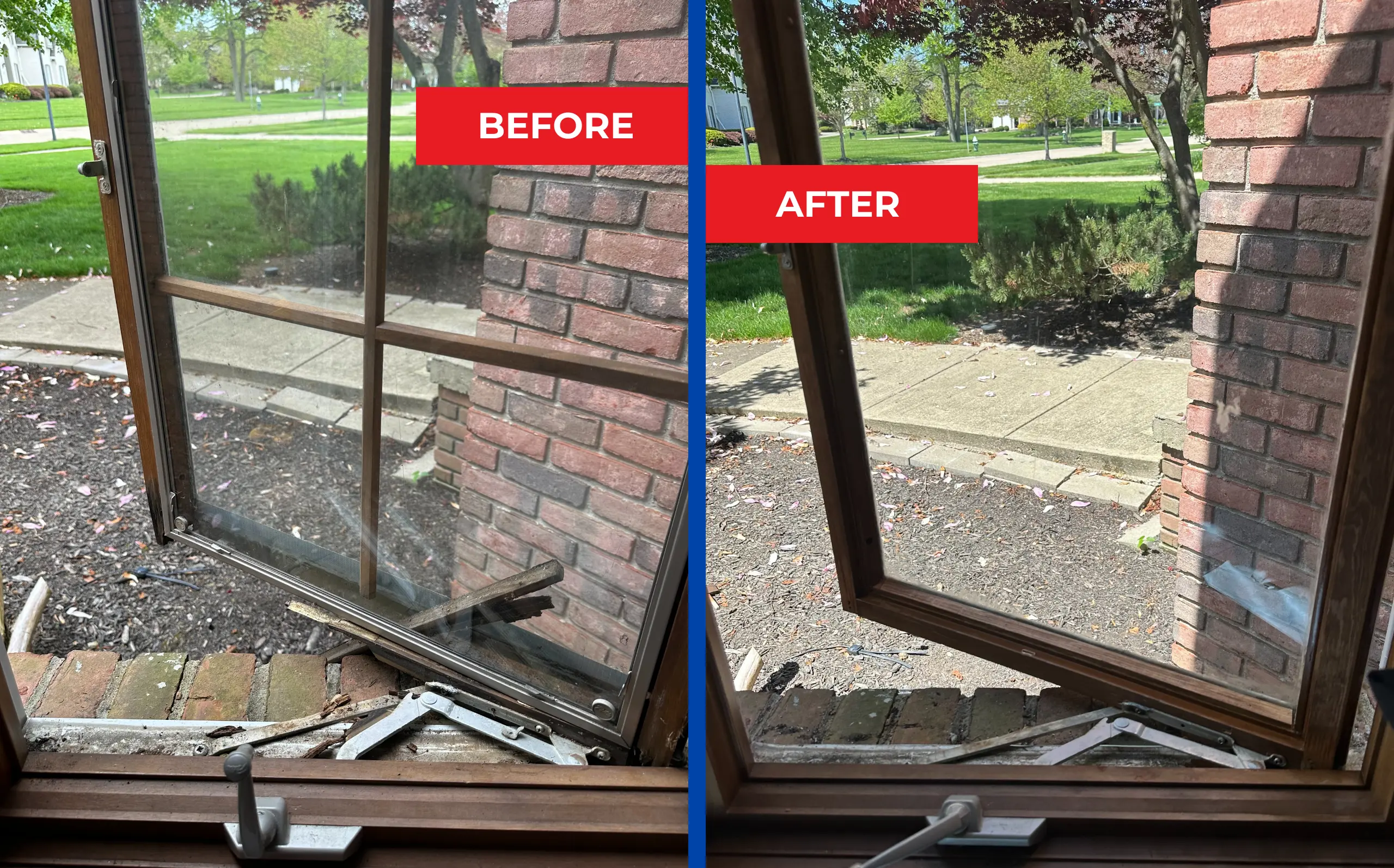
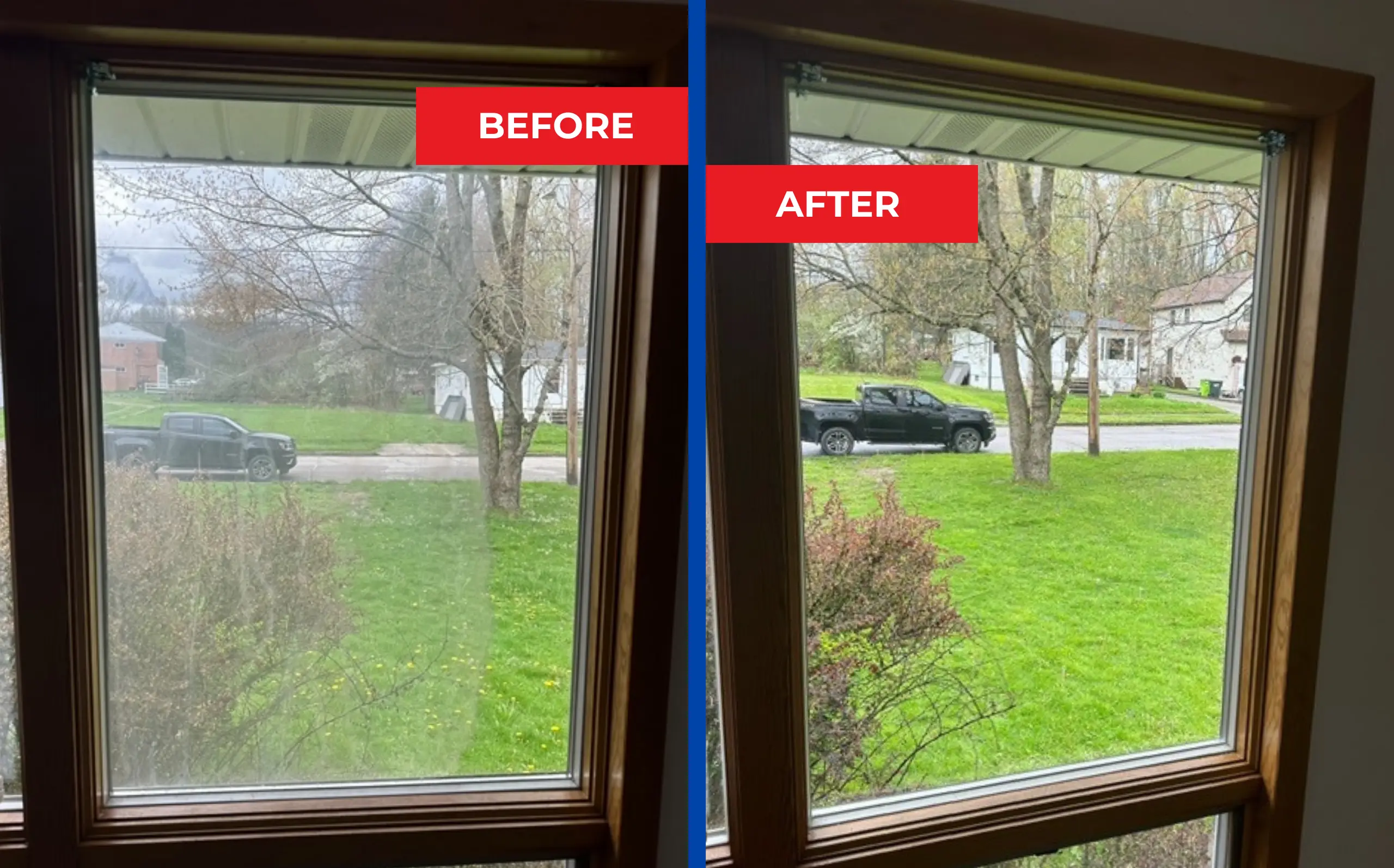
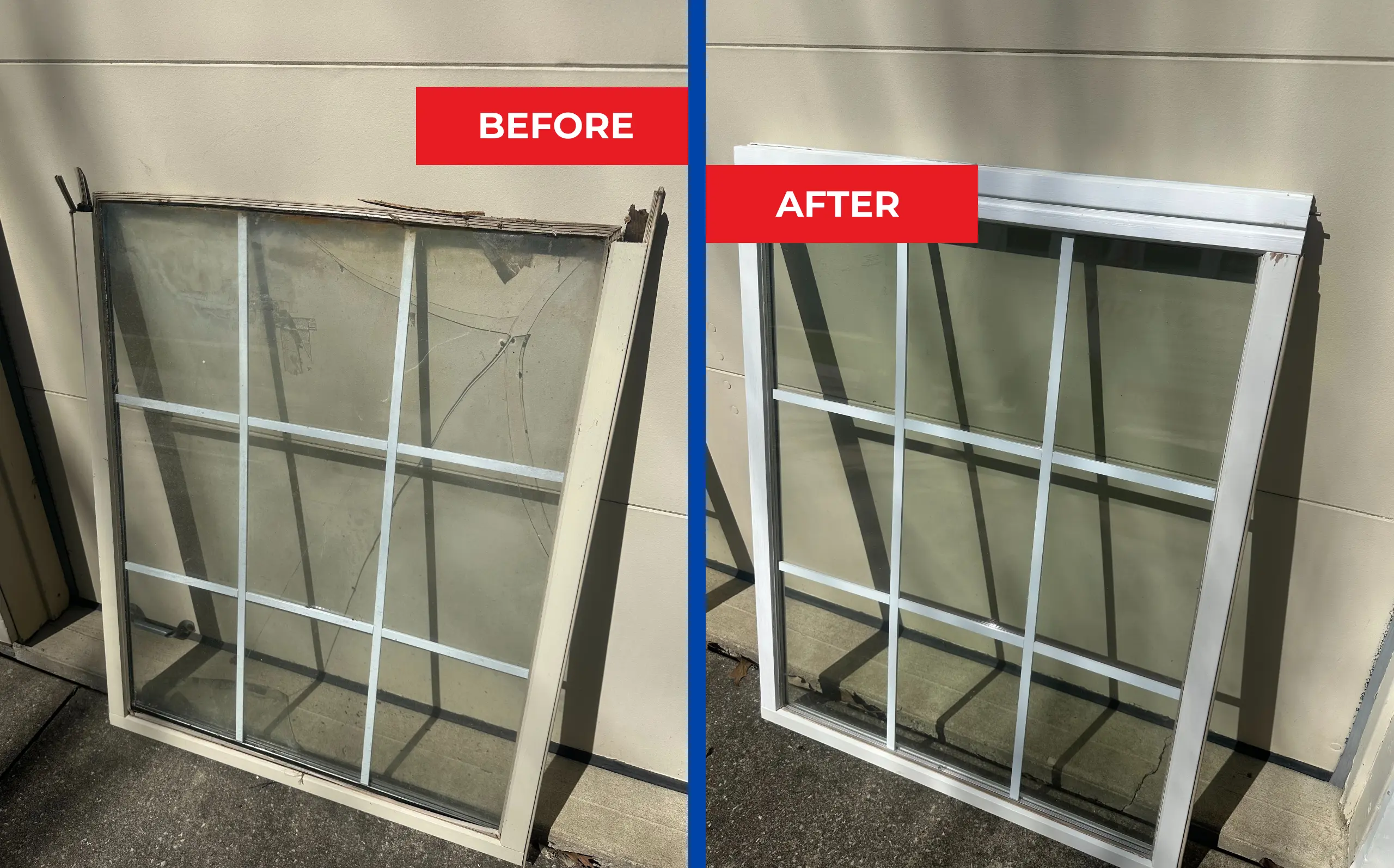
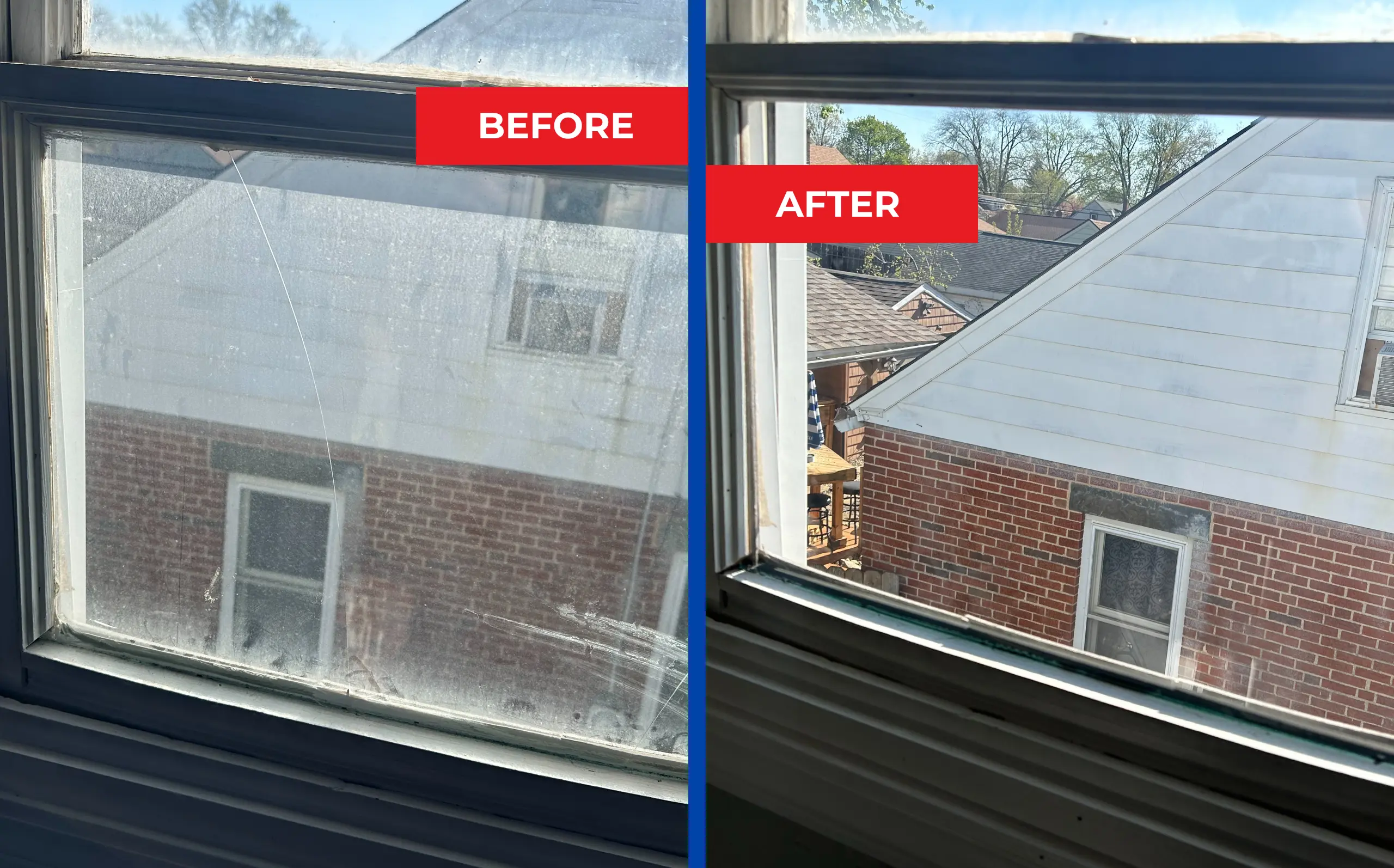
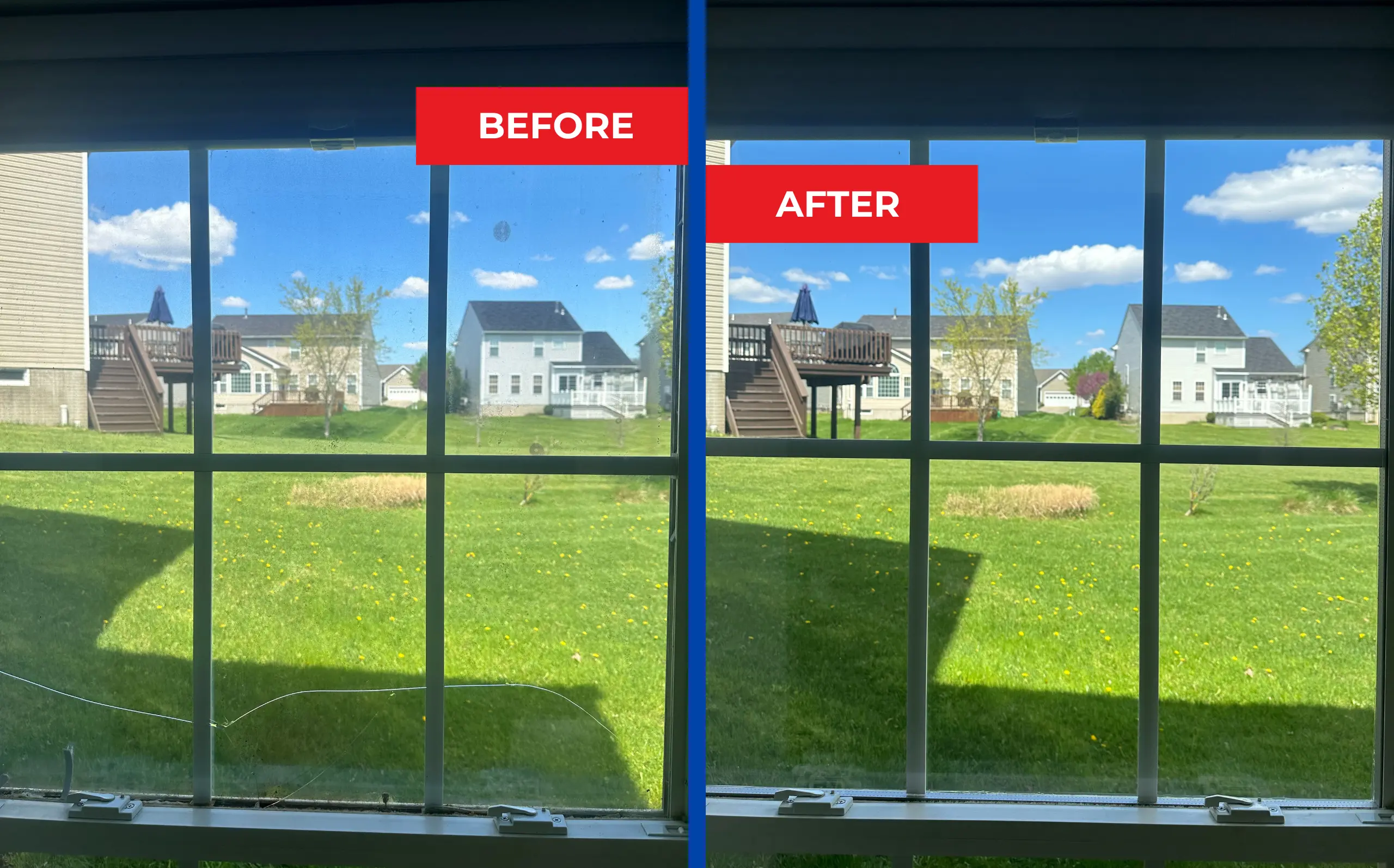
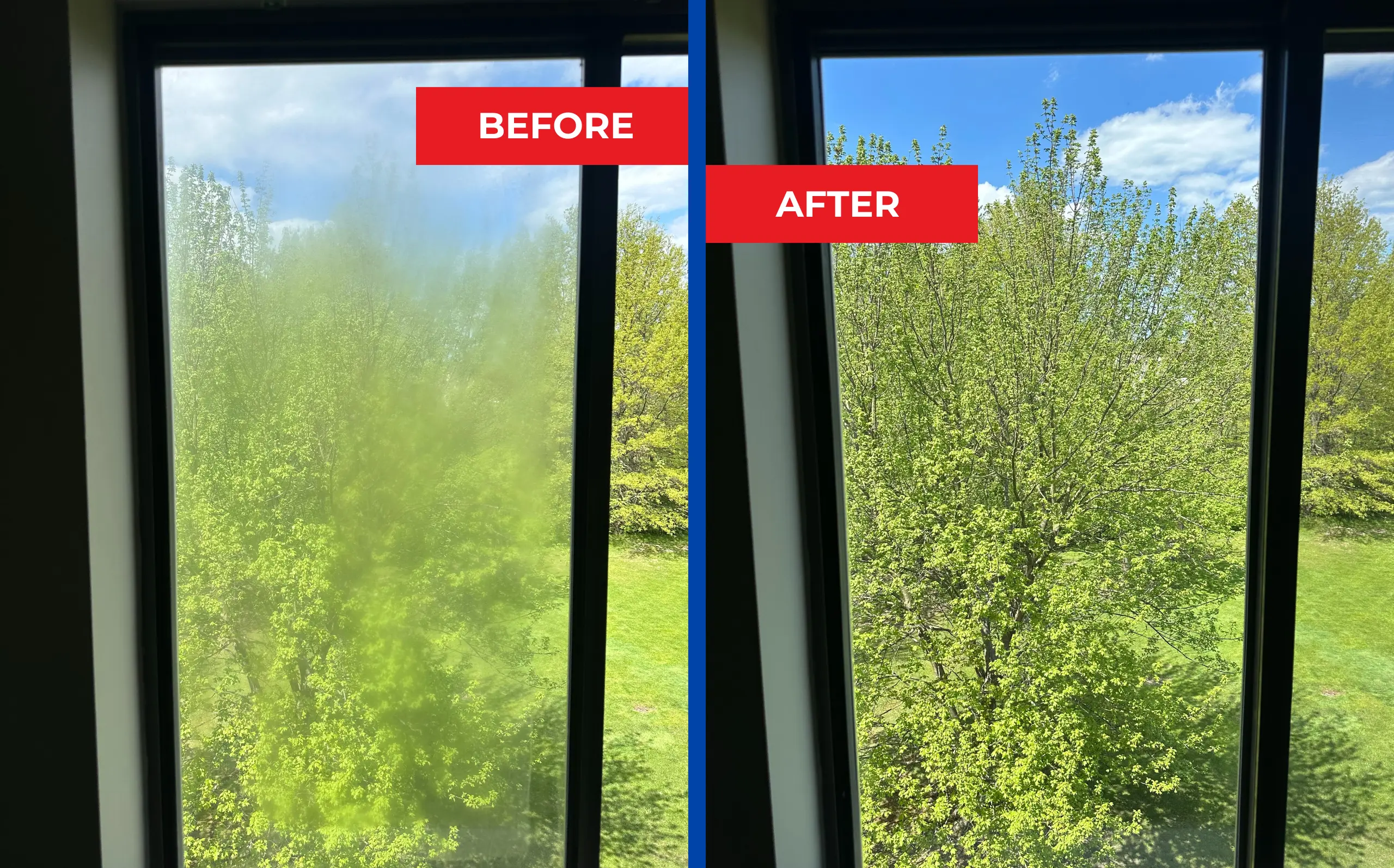
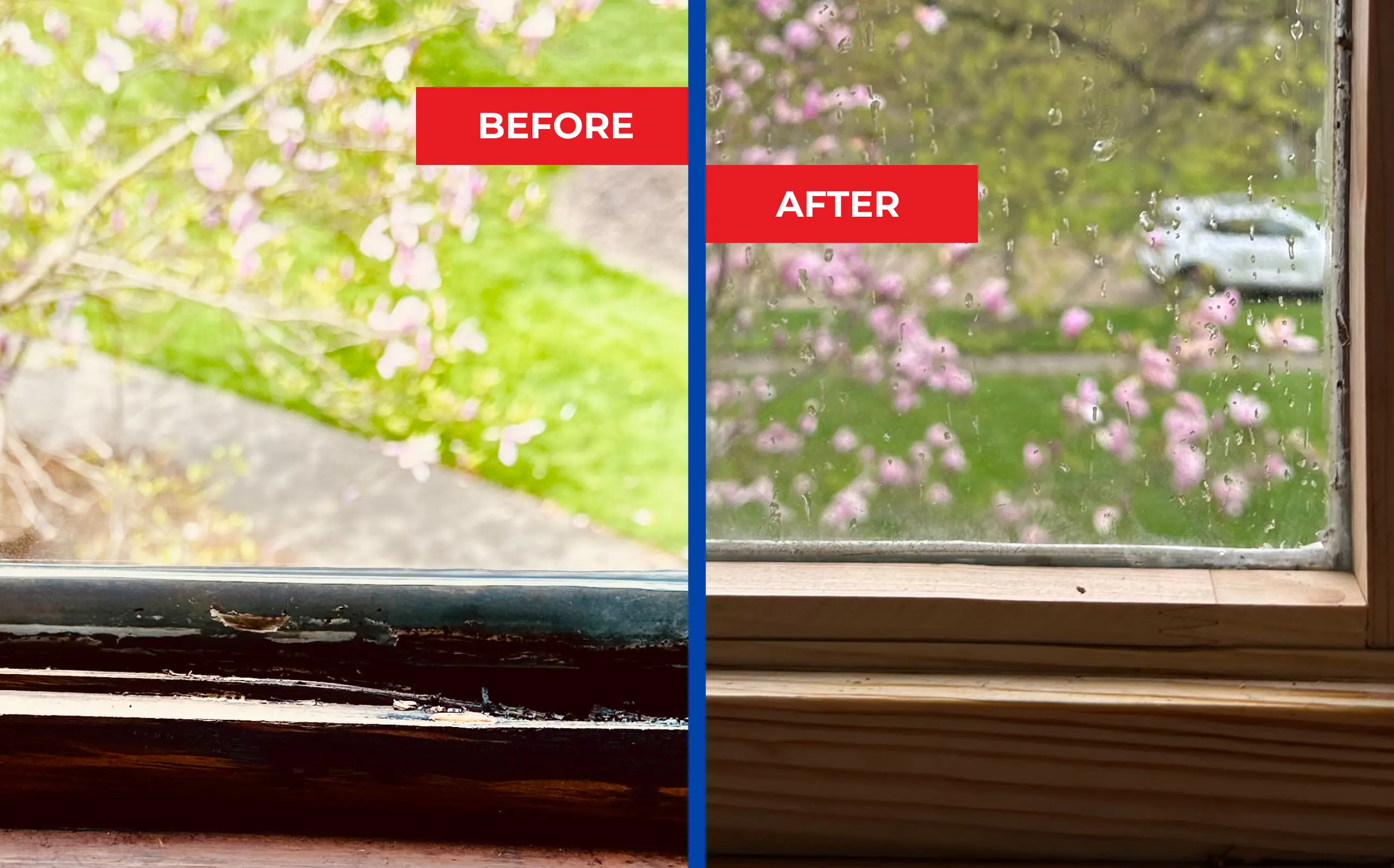
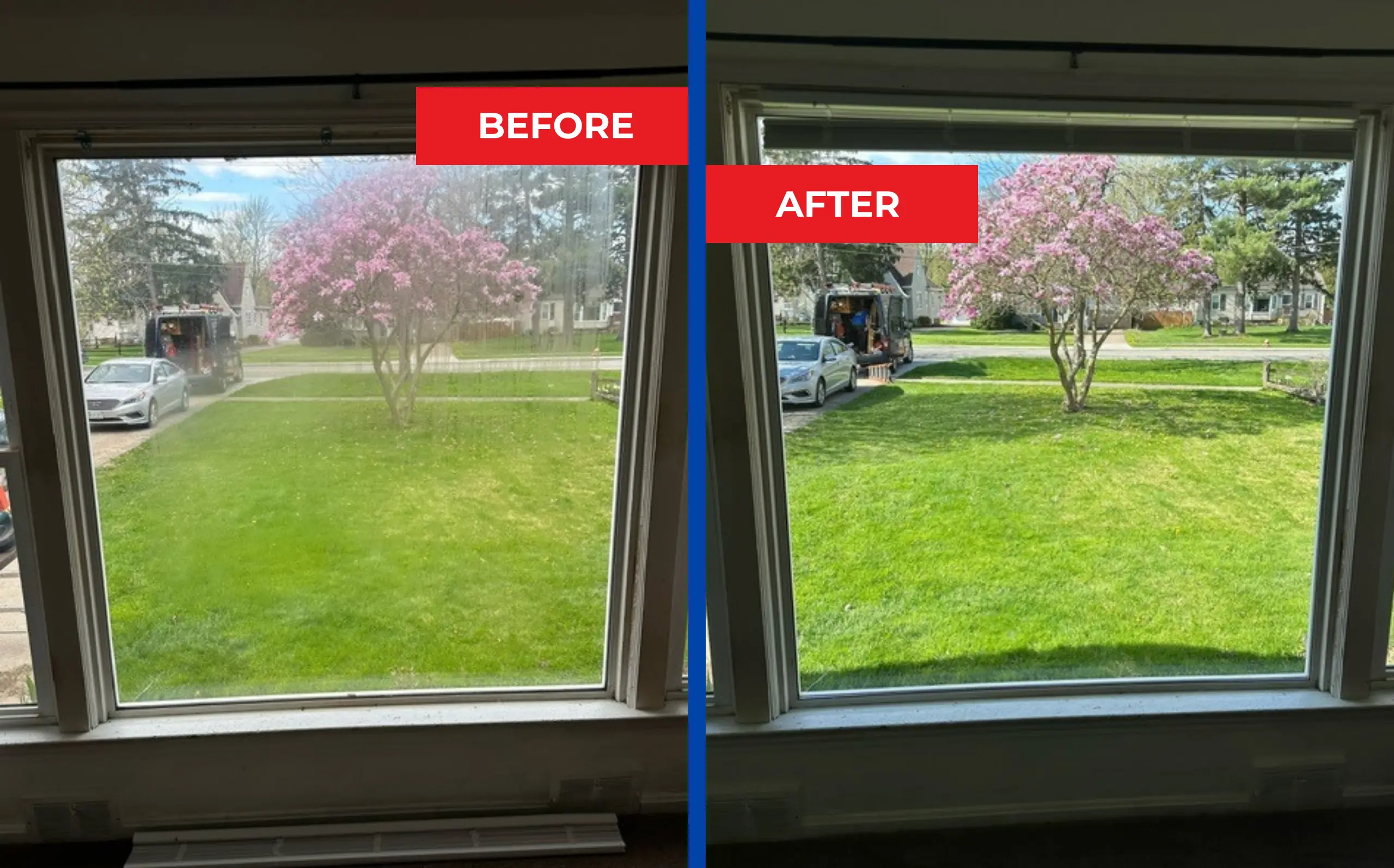
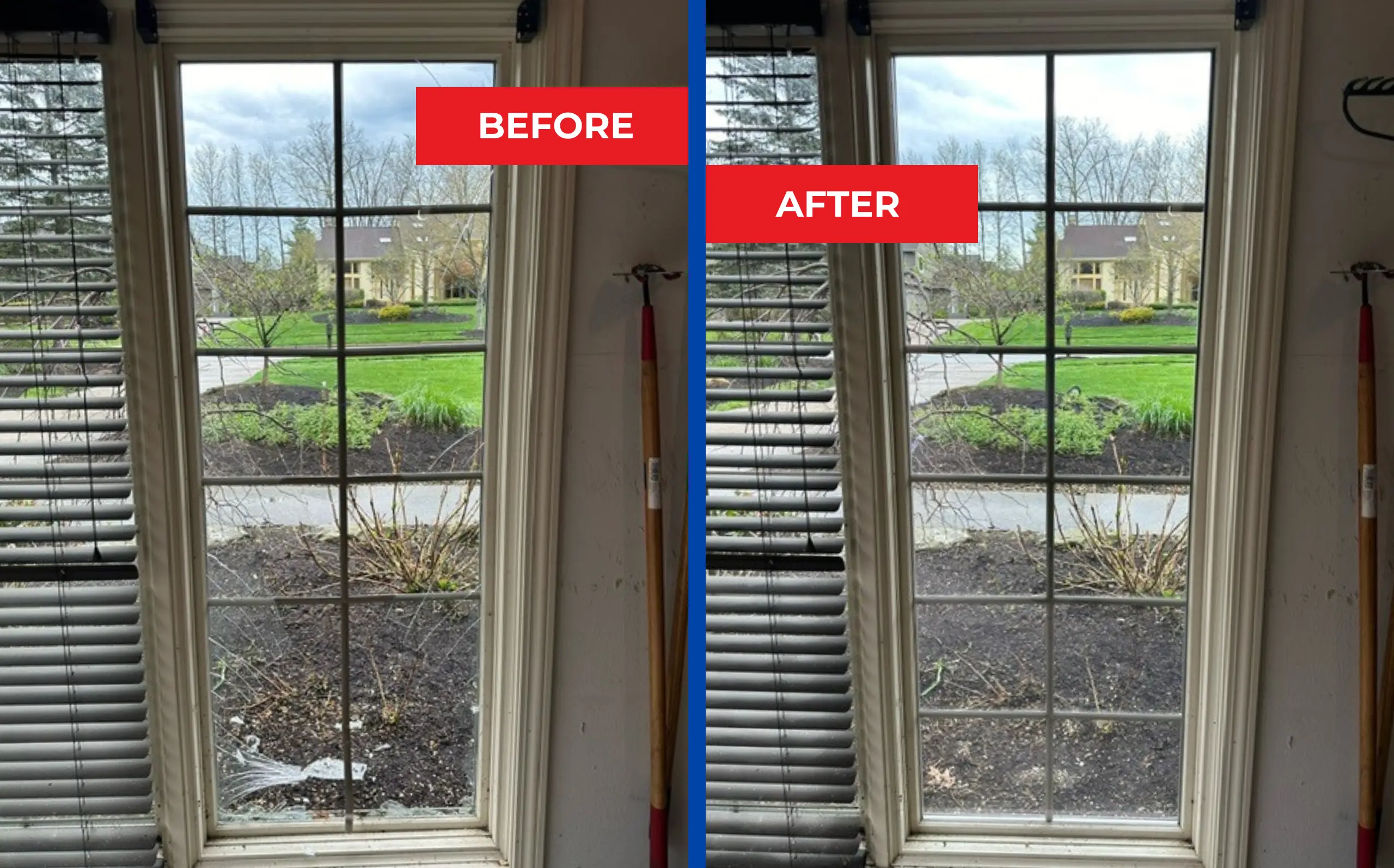
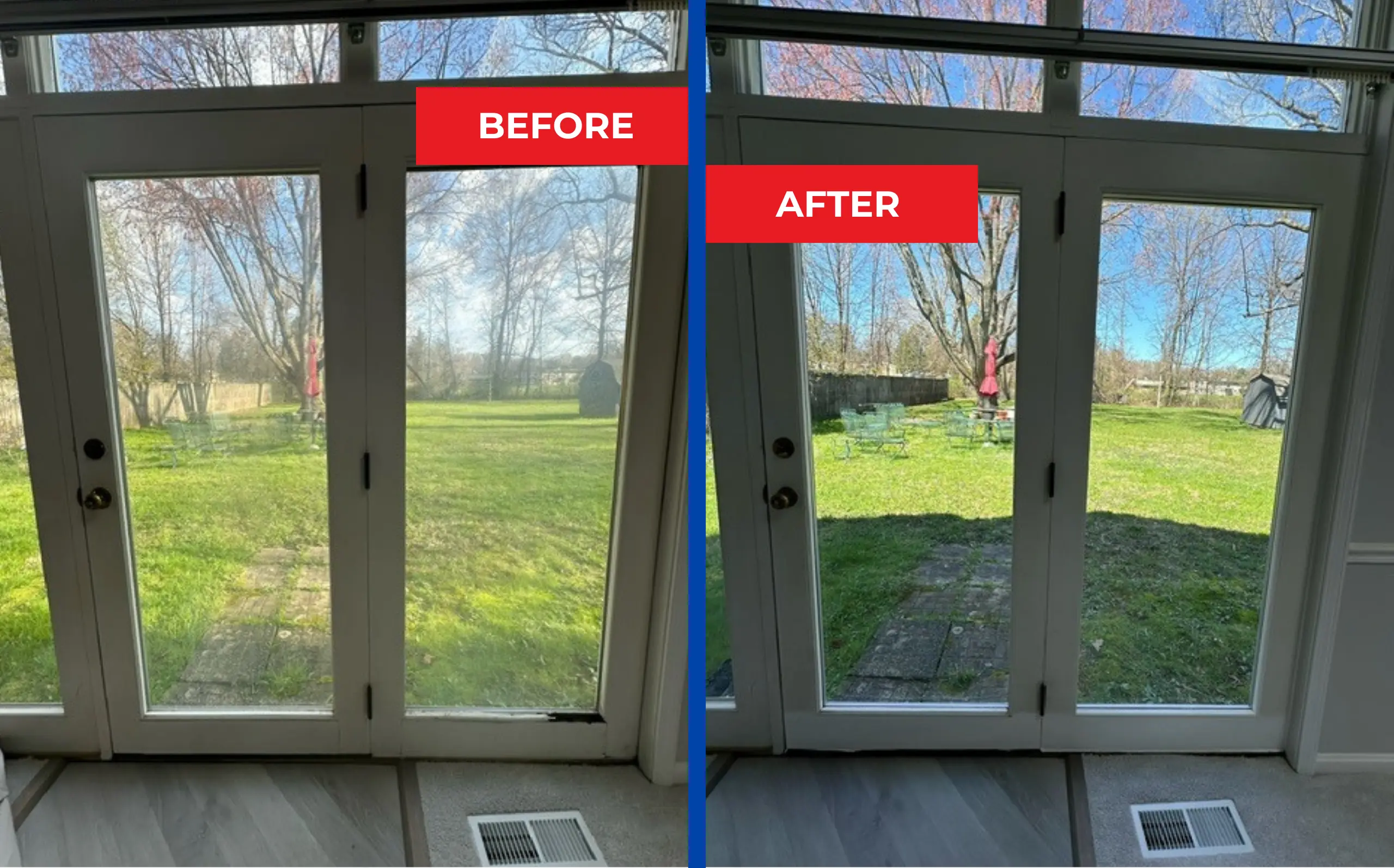
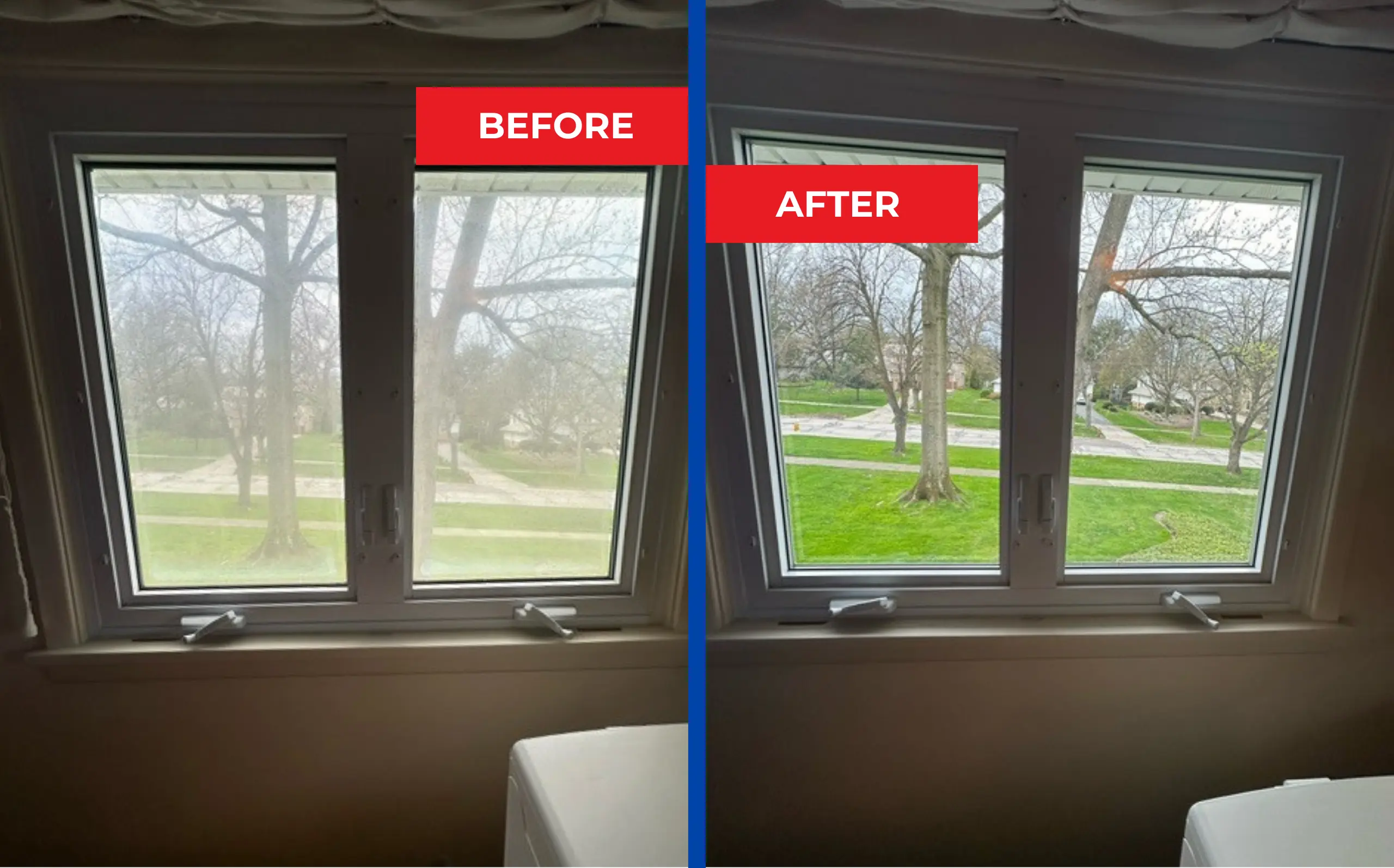
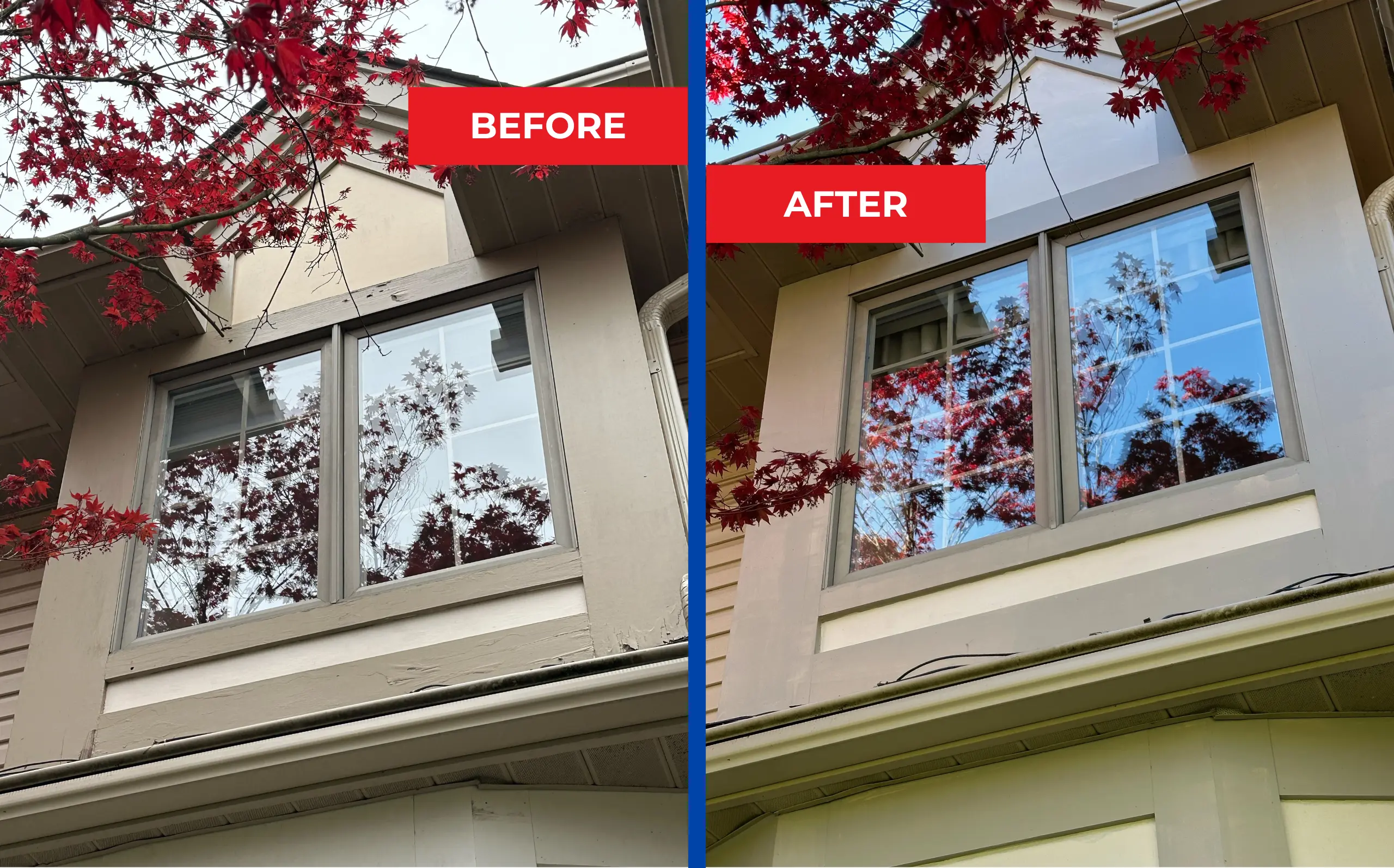
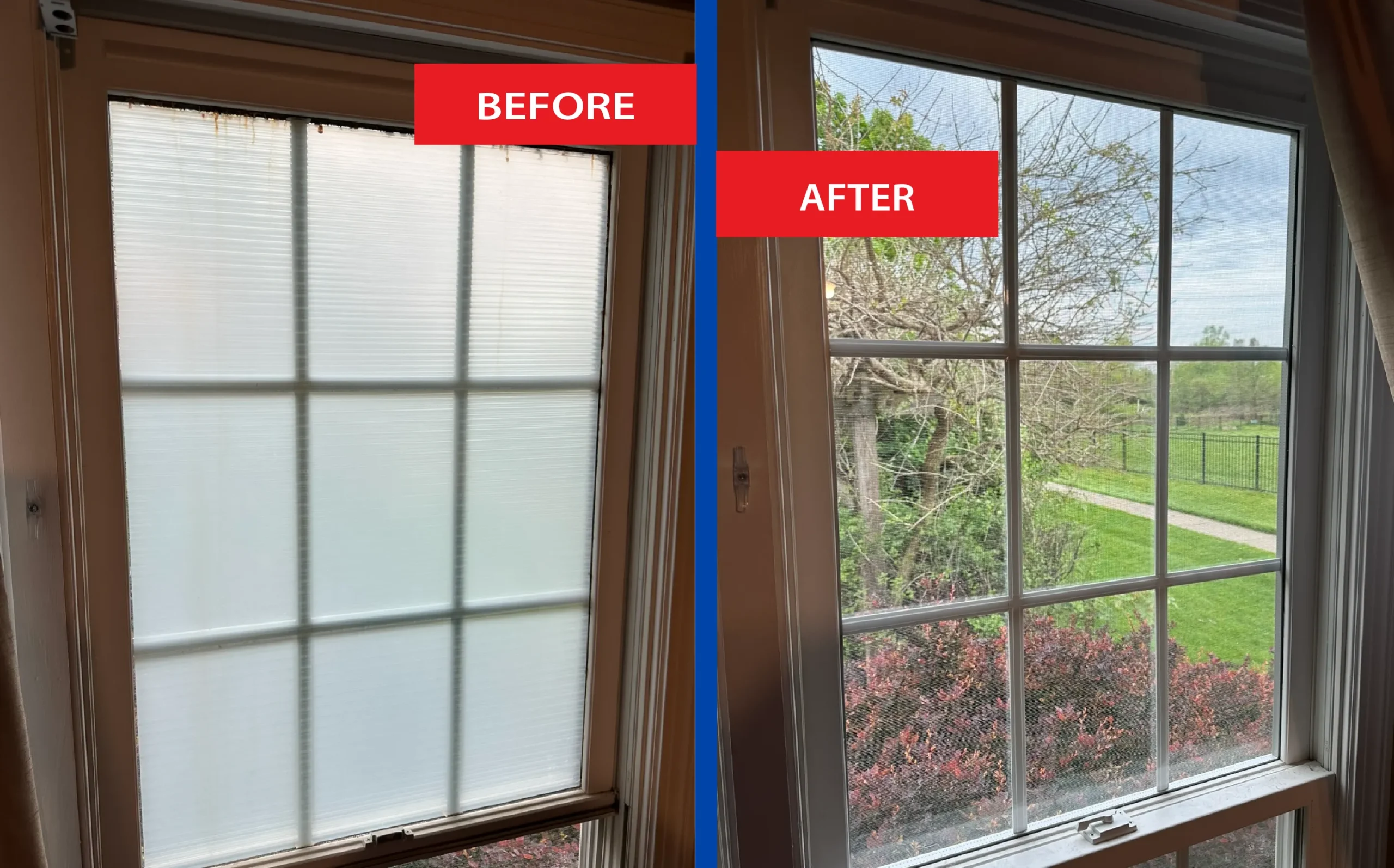
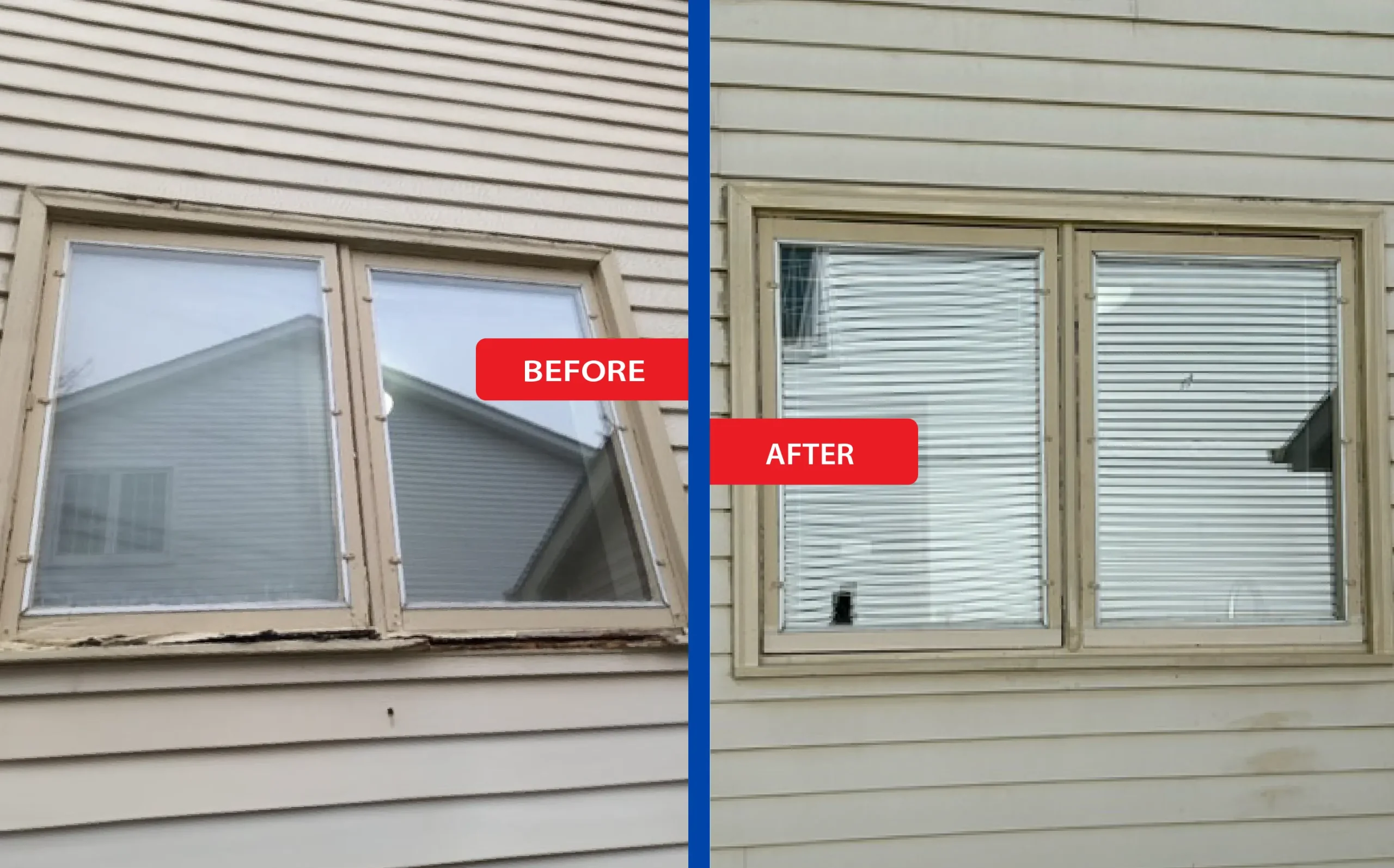
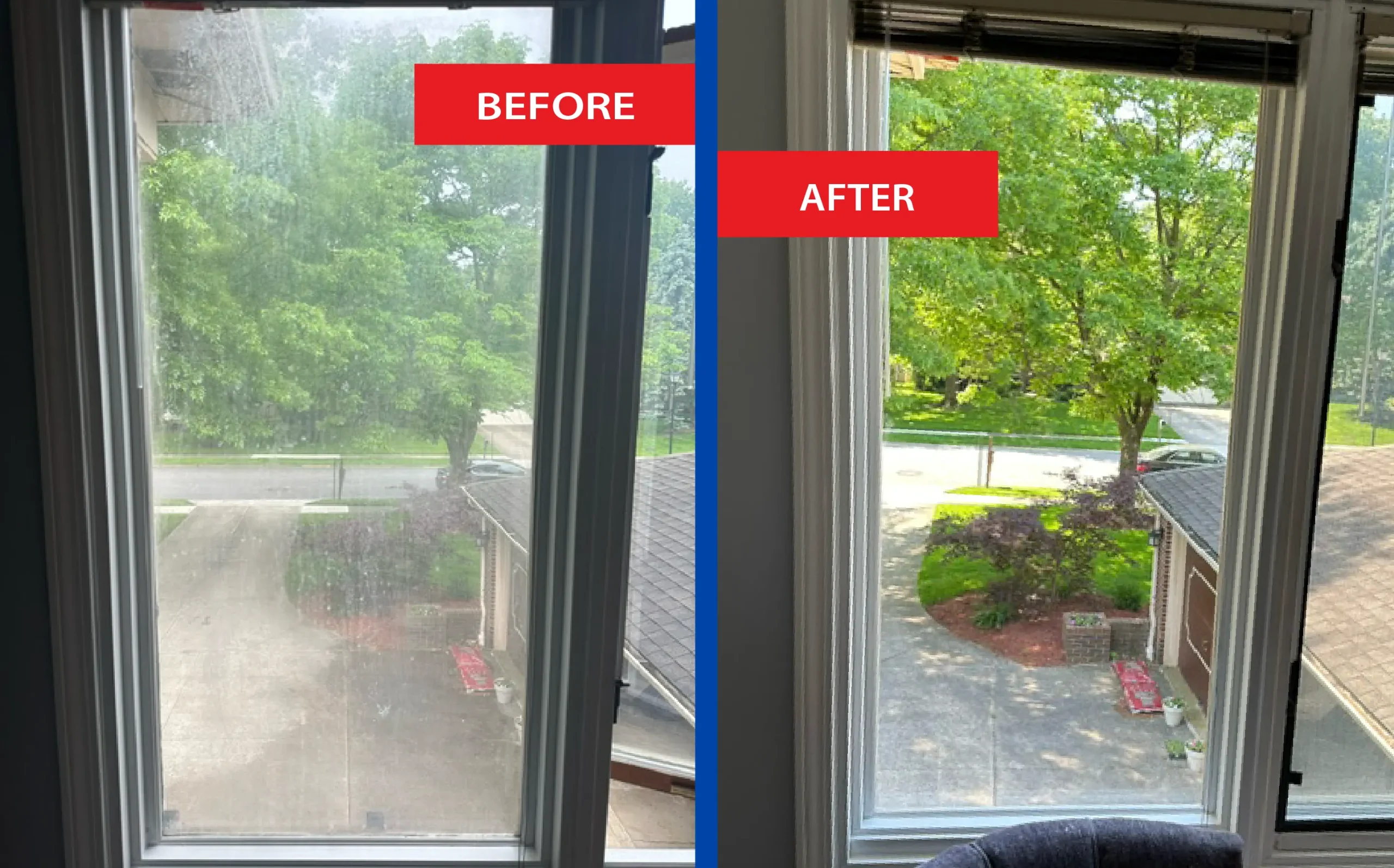
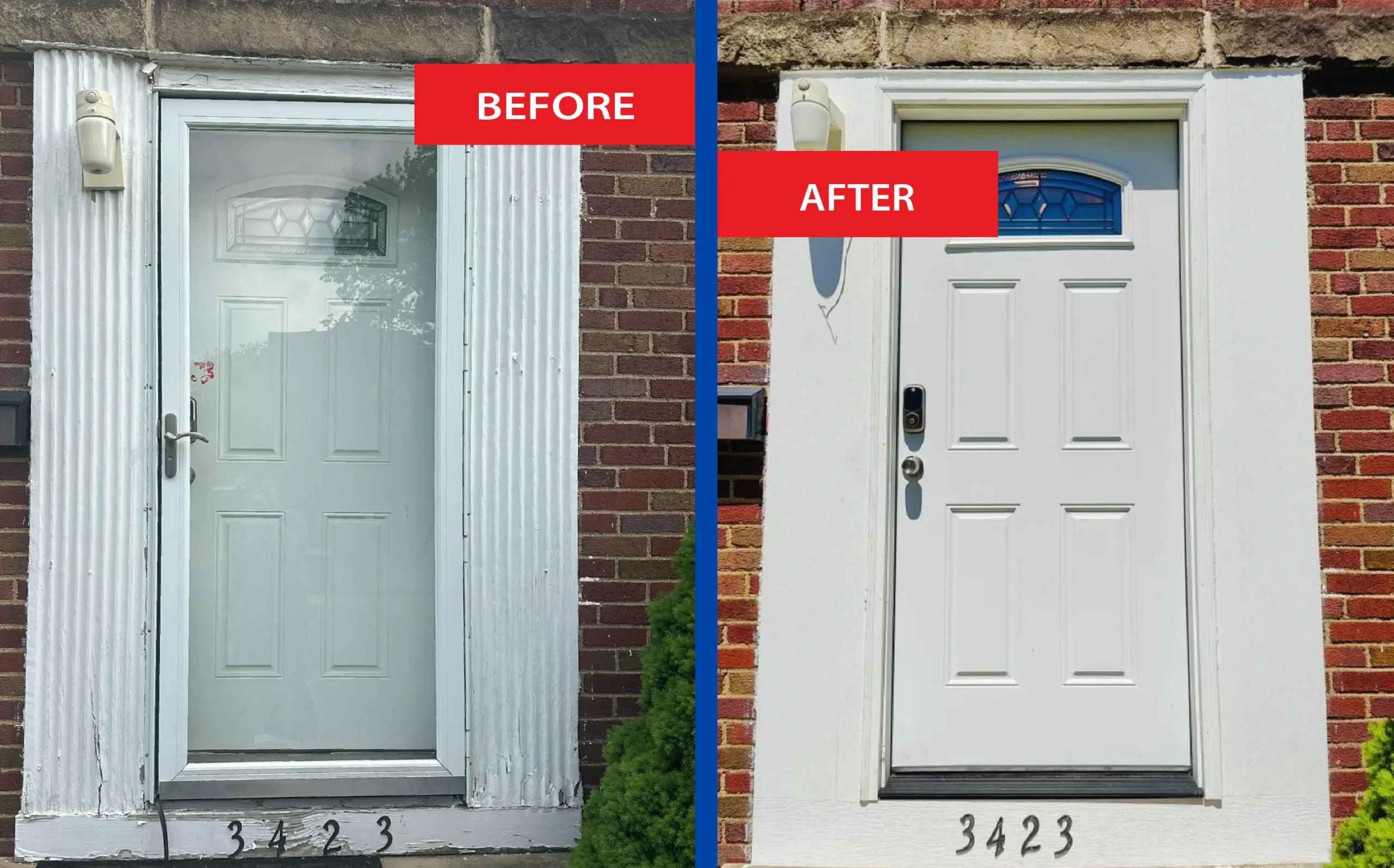
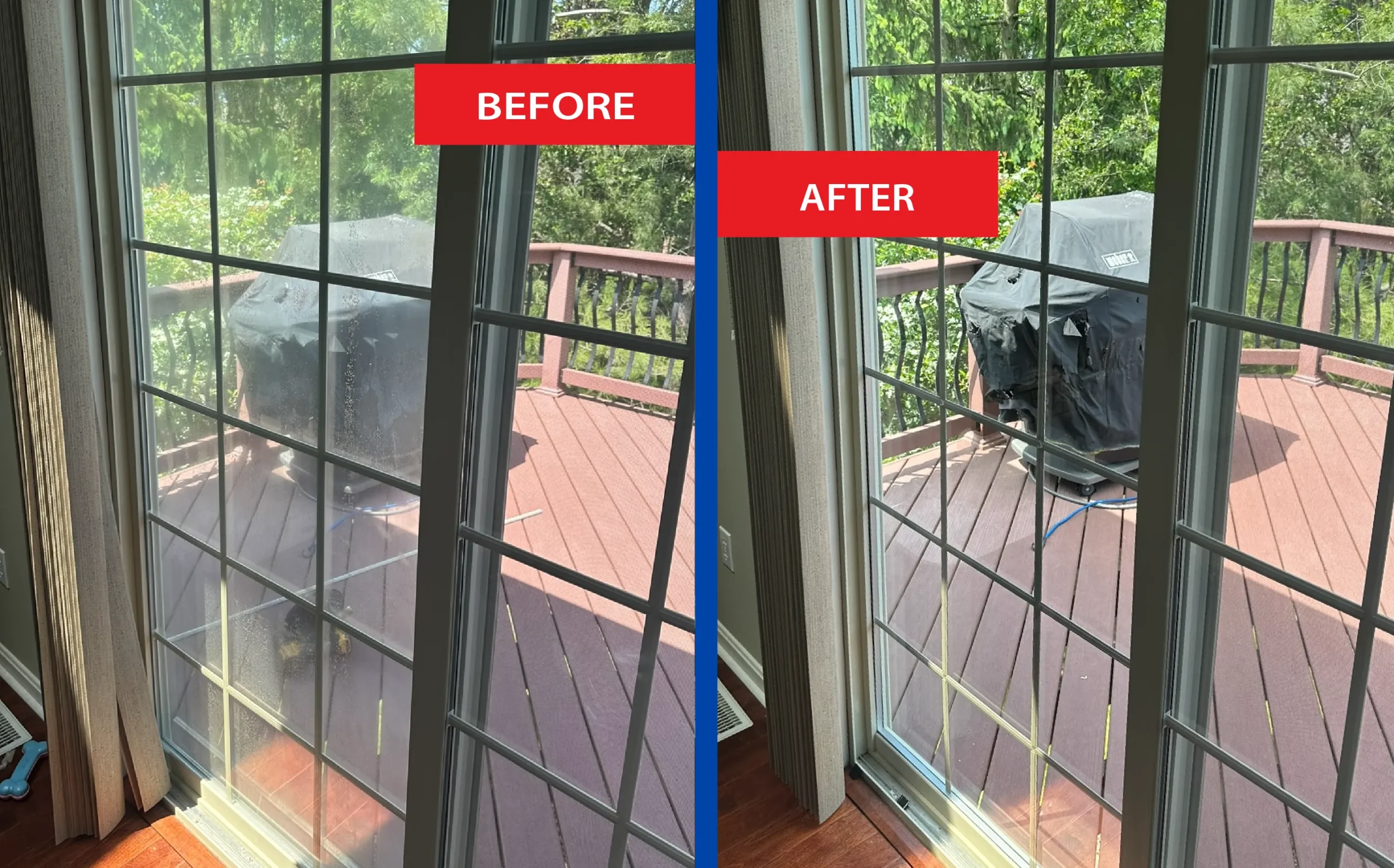
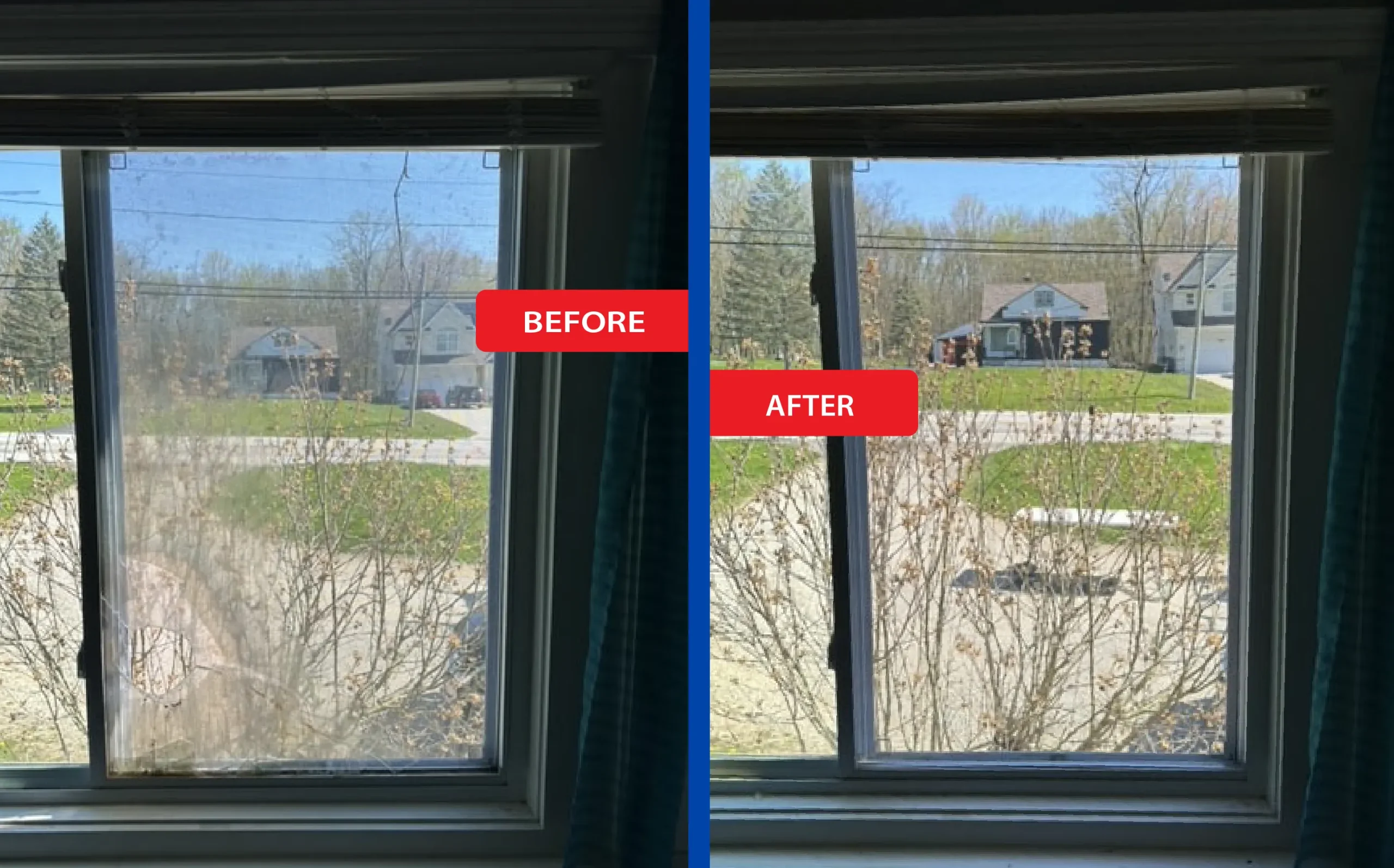
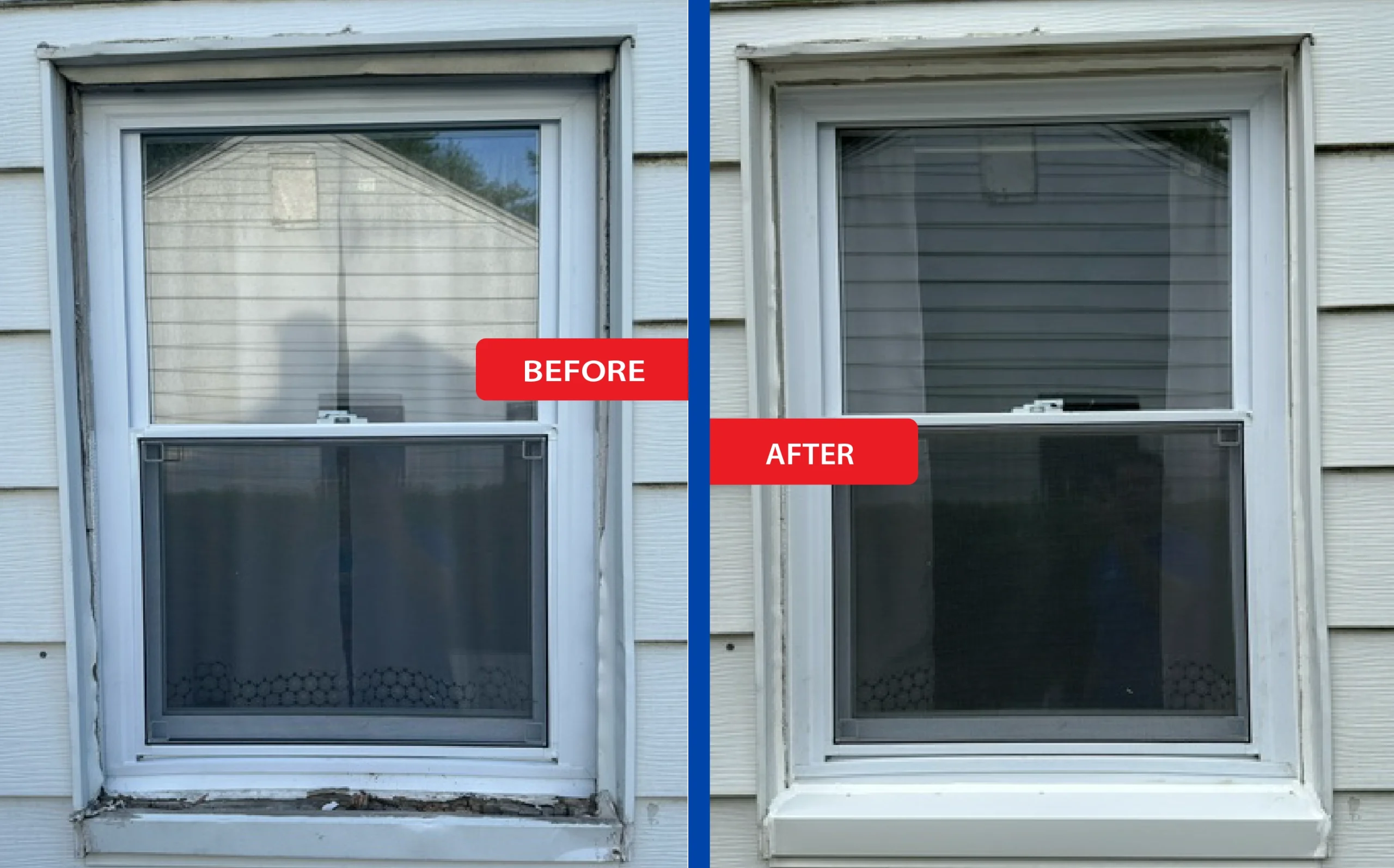
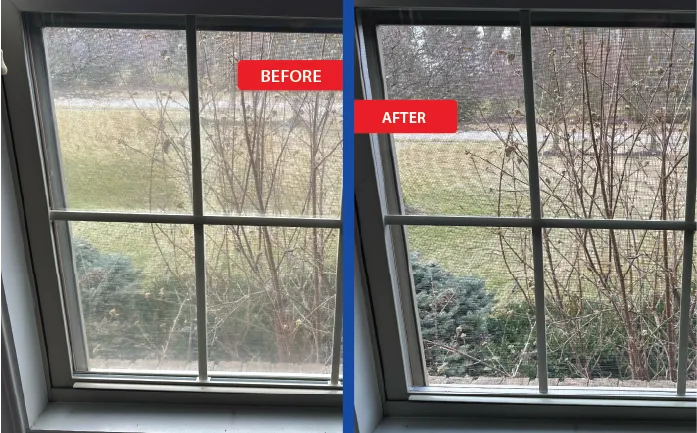
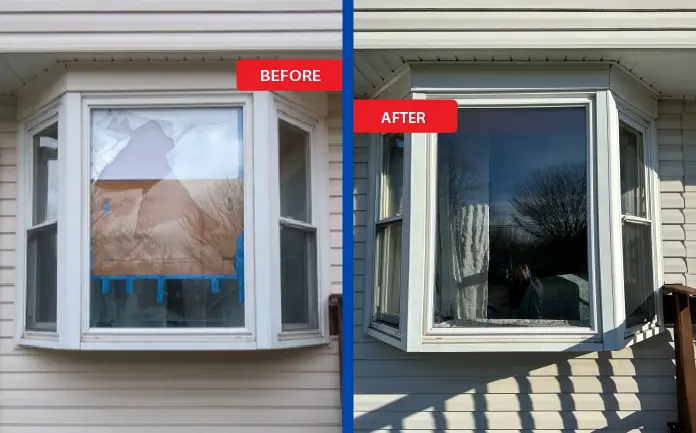
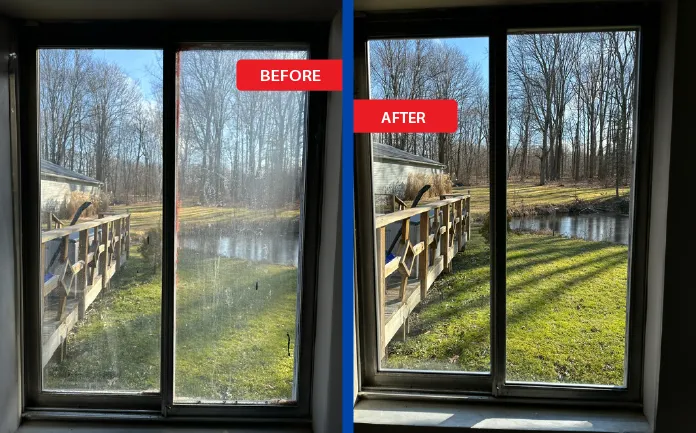
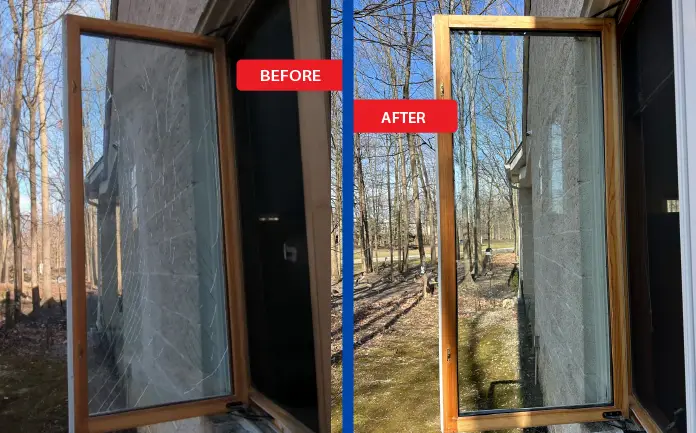
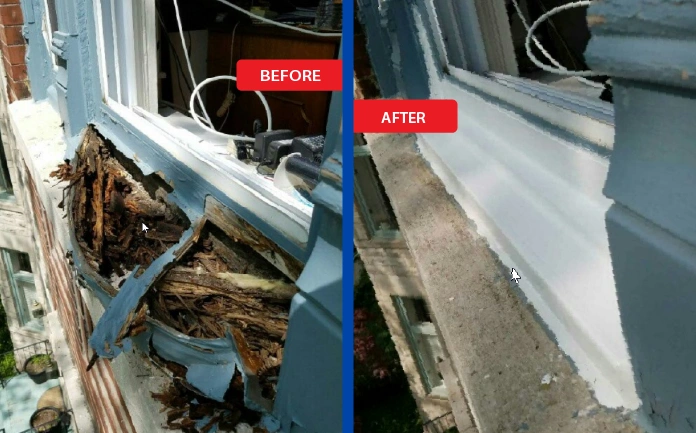
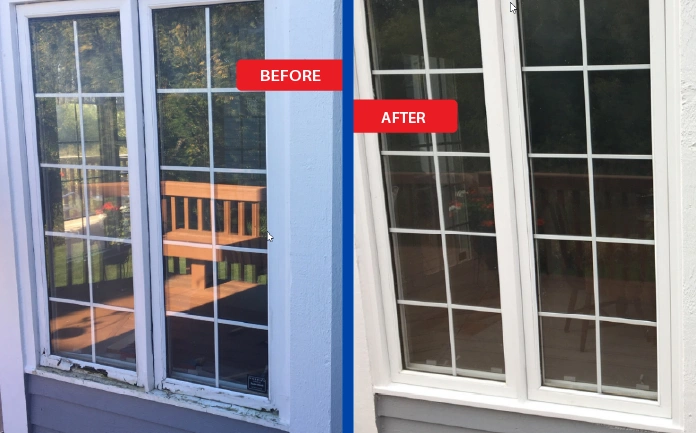
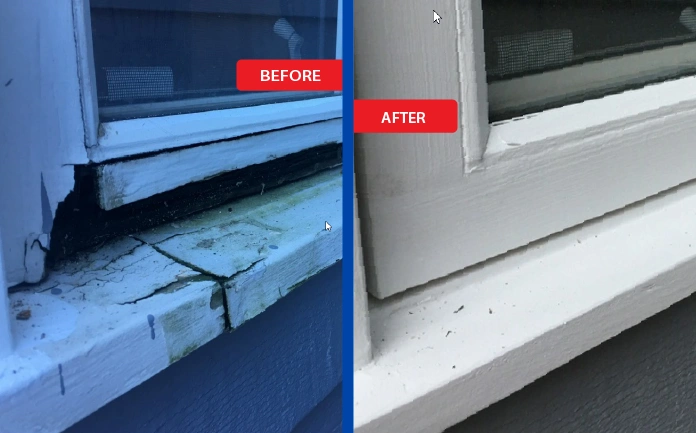
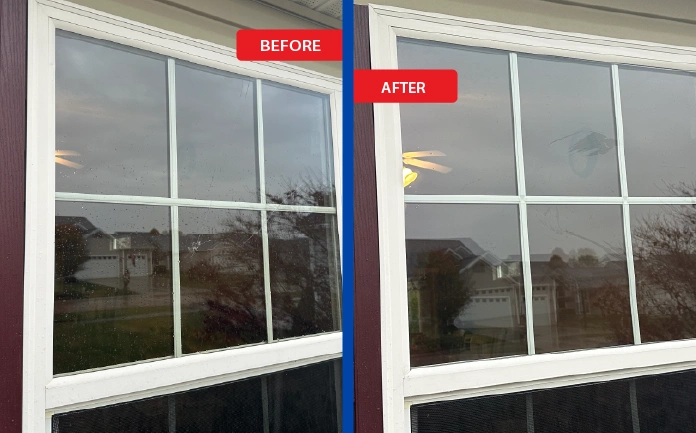
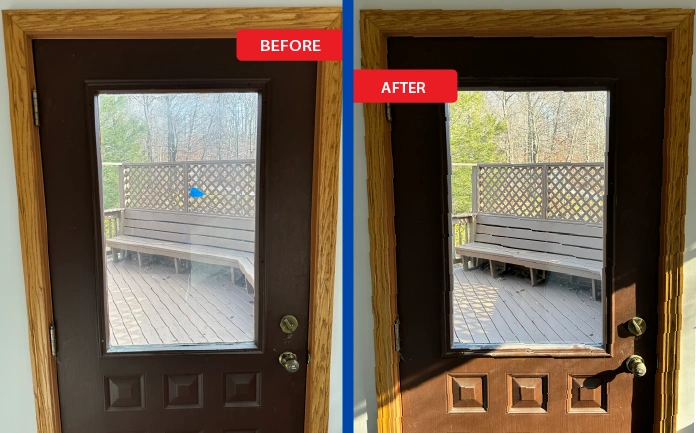
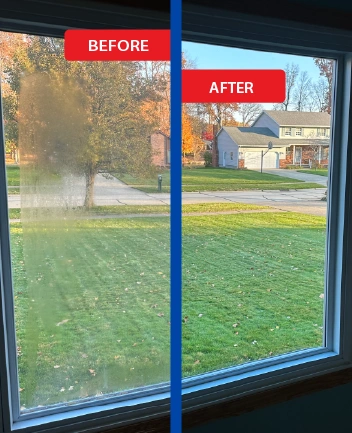
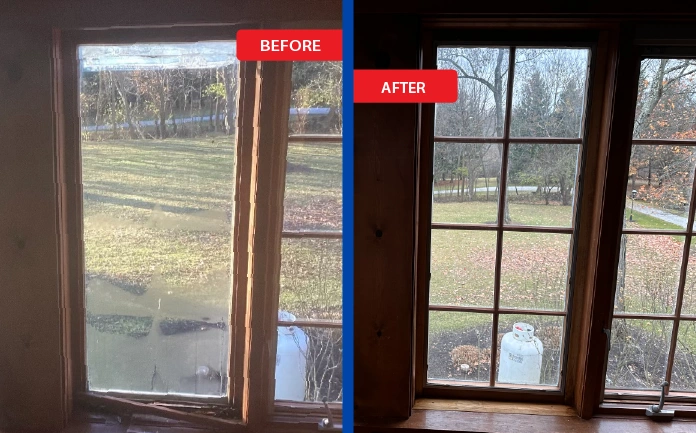
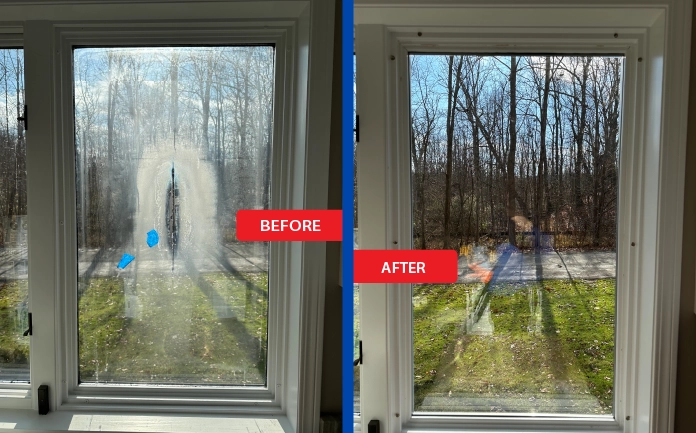
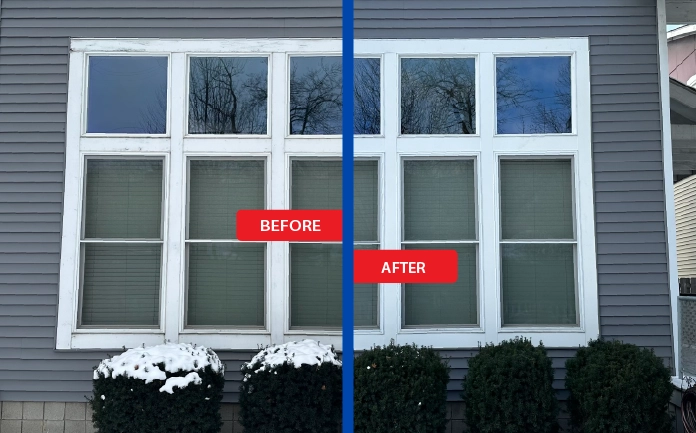
This Cleveland Heights window was failing in two directions at once. The wood sash had softened at the corners from years of trapped moisture, and the glass itself had fogged solid, turning the view of the neighbor's chimney and the bare winter trees into a gray smear.
Either problem alone would have justified a service call; together, they meant the window had been quietly losing both its structure and its seal for longer than anyone realized. Our crew rebuilt the decayed wood back to its original profile and replaced the failed insulated glass unit in the same visit, so the homeowners got a structurally sound window and a clear view back at the same time.
Cleveland Heights sits on the hilltop east of University Circle, and its housing stock reflects that era of development – dense blocks of Tudor Revival, Colonial Revival and foursquare homes built mostly between 1900 and 1930, many still carrying original or early-generation wood windows. The city's Landmark Commission reviews exterior changes on designated historic structures, which is one more reason repair tends to be the practical route here rather than full replacement – see the City of Cleveland Heights Landmark Commission for what that review process covers.
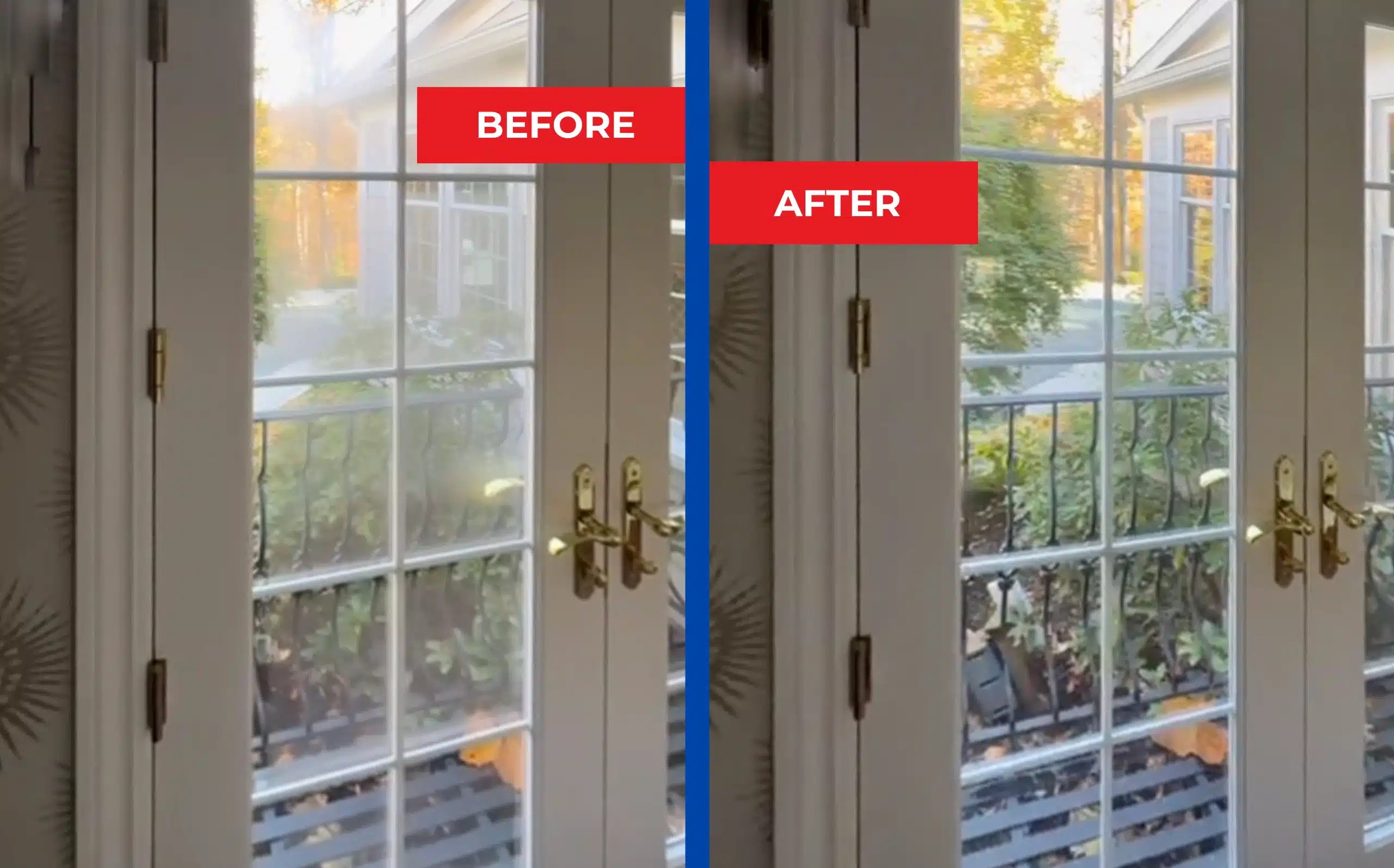
Rot and fog are not a coincidence when they show up on the same window – they usually share a cause. Once the exterior paint film on a wood sash cracks, water works into the joint at the corner, and the same moisture that softens the wood fibers also finds its way to the edge of the glass unit, where it gradually breaks down the perimeter seal. A window that has been quietly absorbing water for several seasons often shows both symptoms by the time anyone calls – a soft corner at the sash, and a haze building in the glass. That combination is one of the more common reasons homeowners in this part of the city reach out for wood window repair, and it is also why we check the glass condition on every rot repair rather than treating them as separate problems.
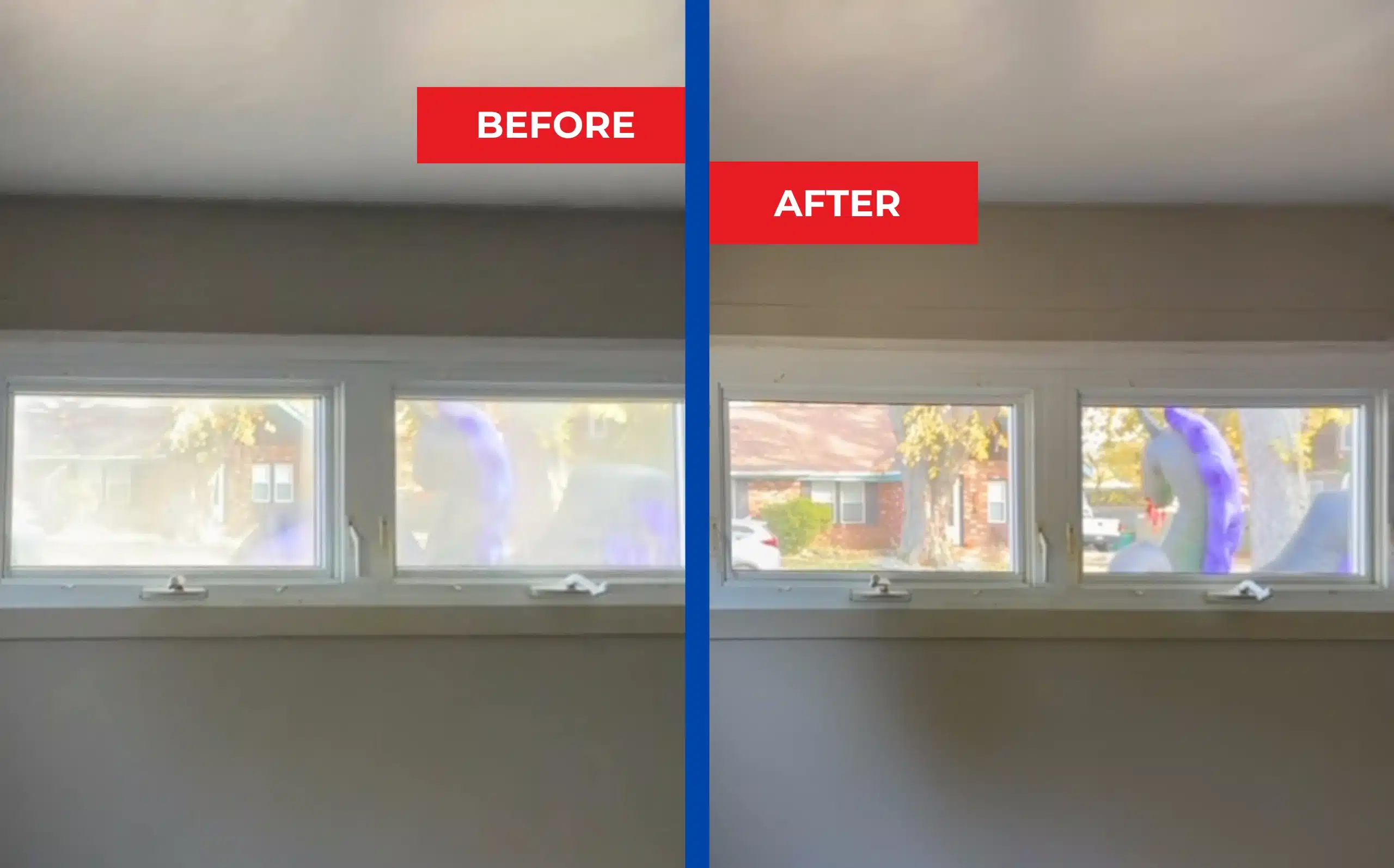
Apex Window Werks - Repair & Installation collaborates with leading industry brands to provide you with superior quality window and door options.
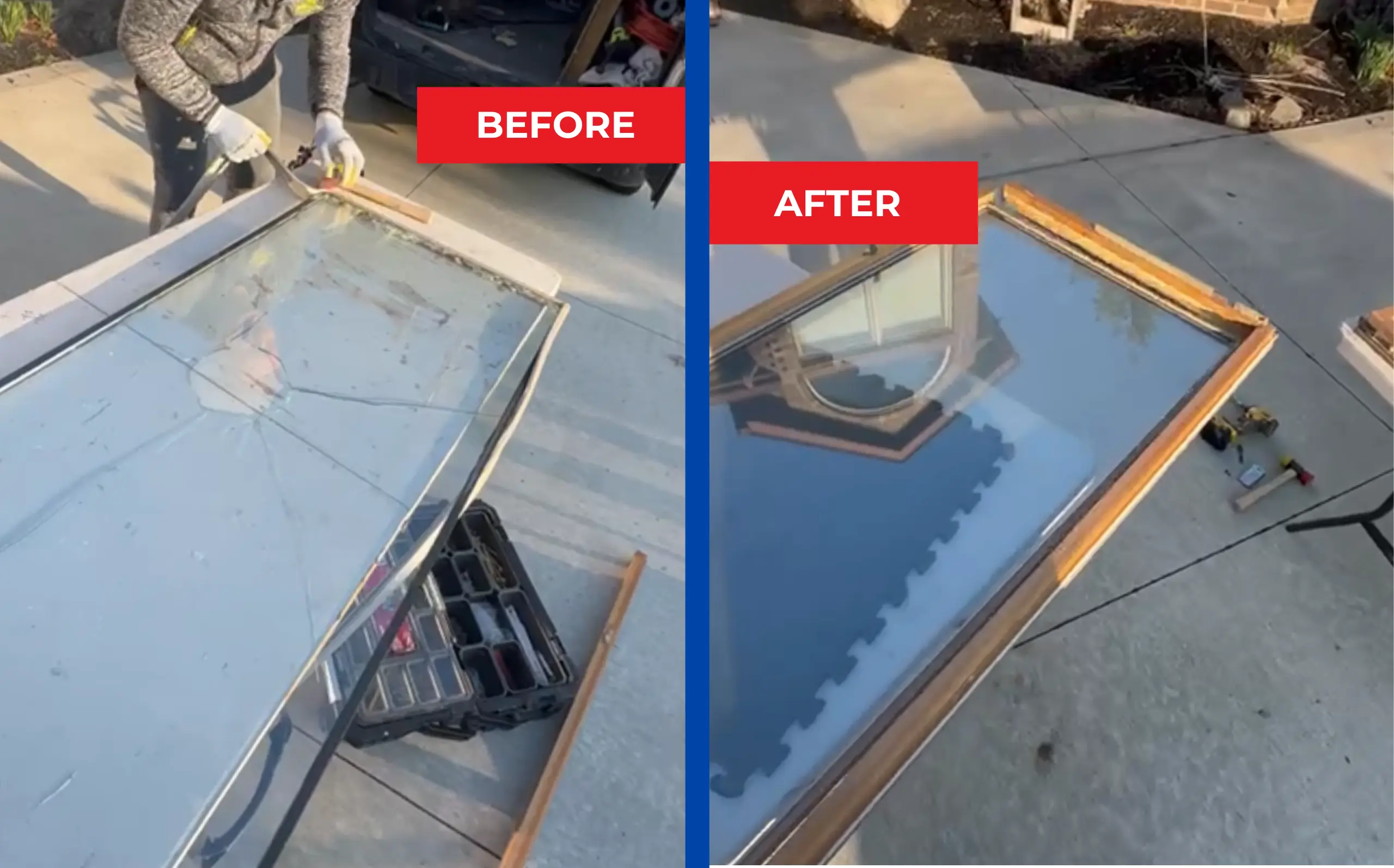
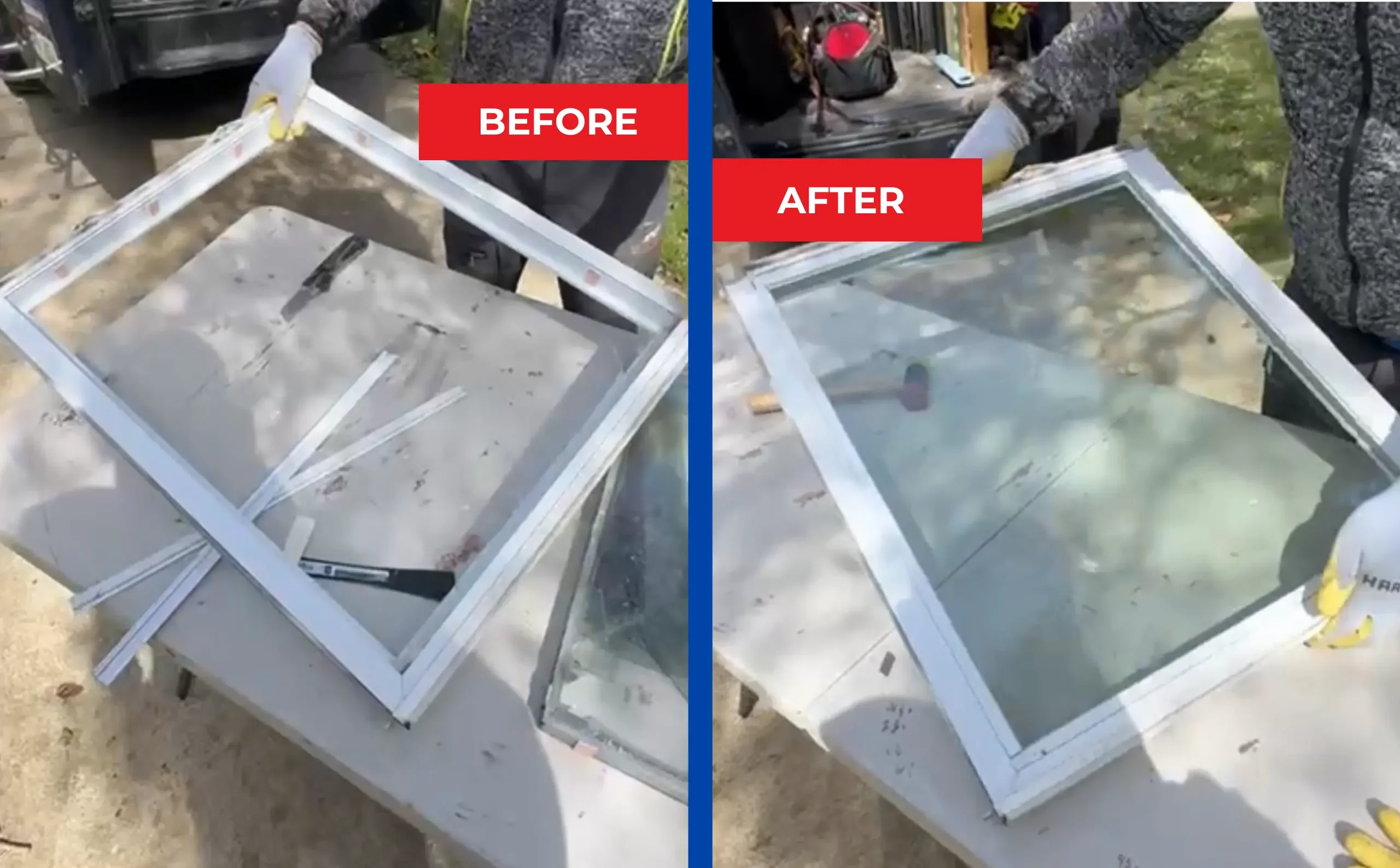
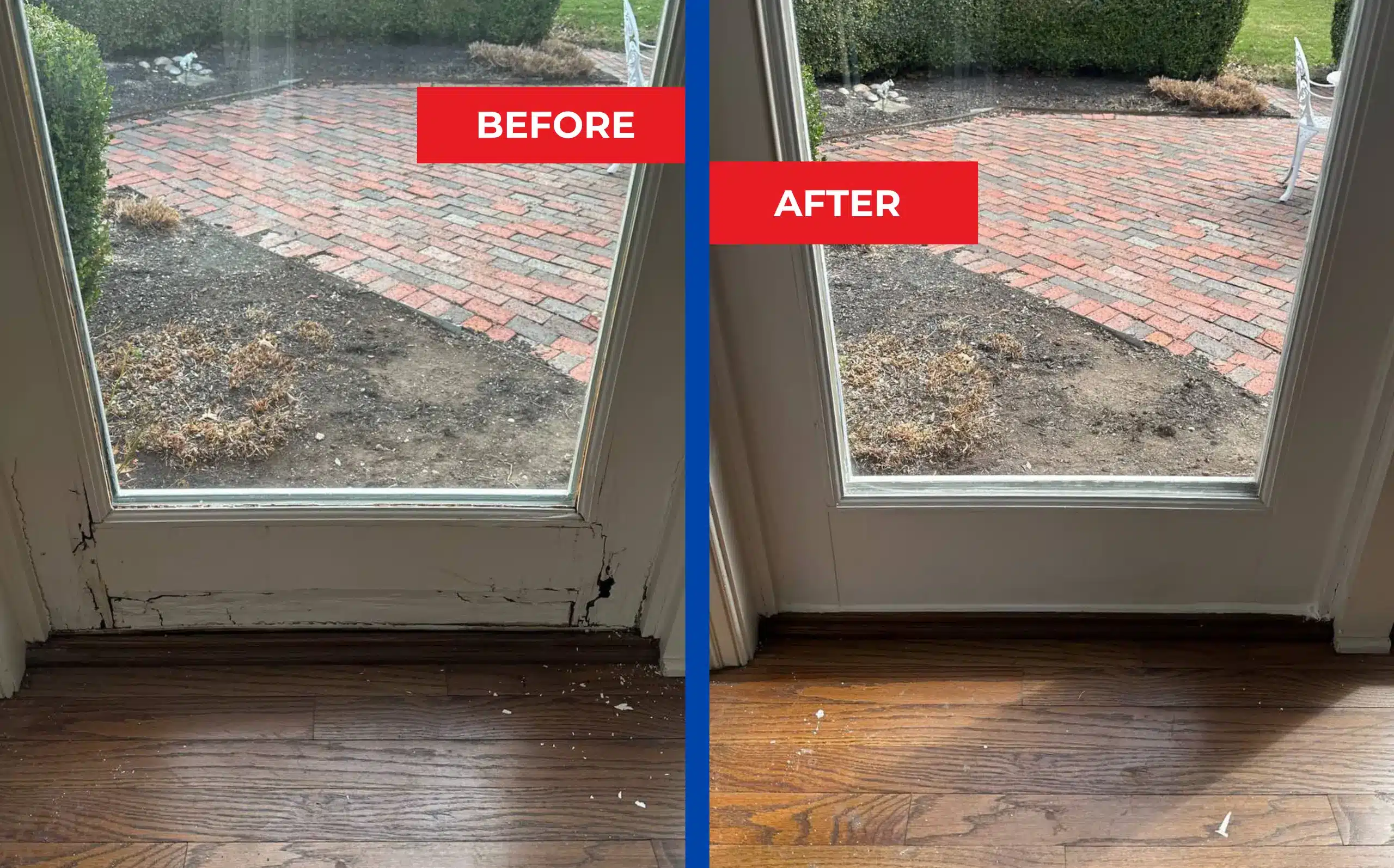
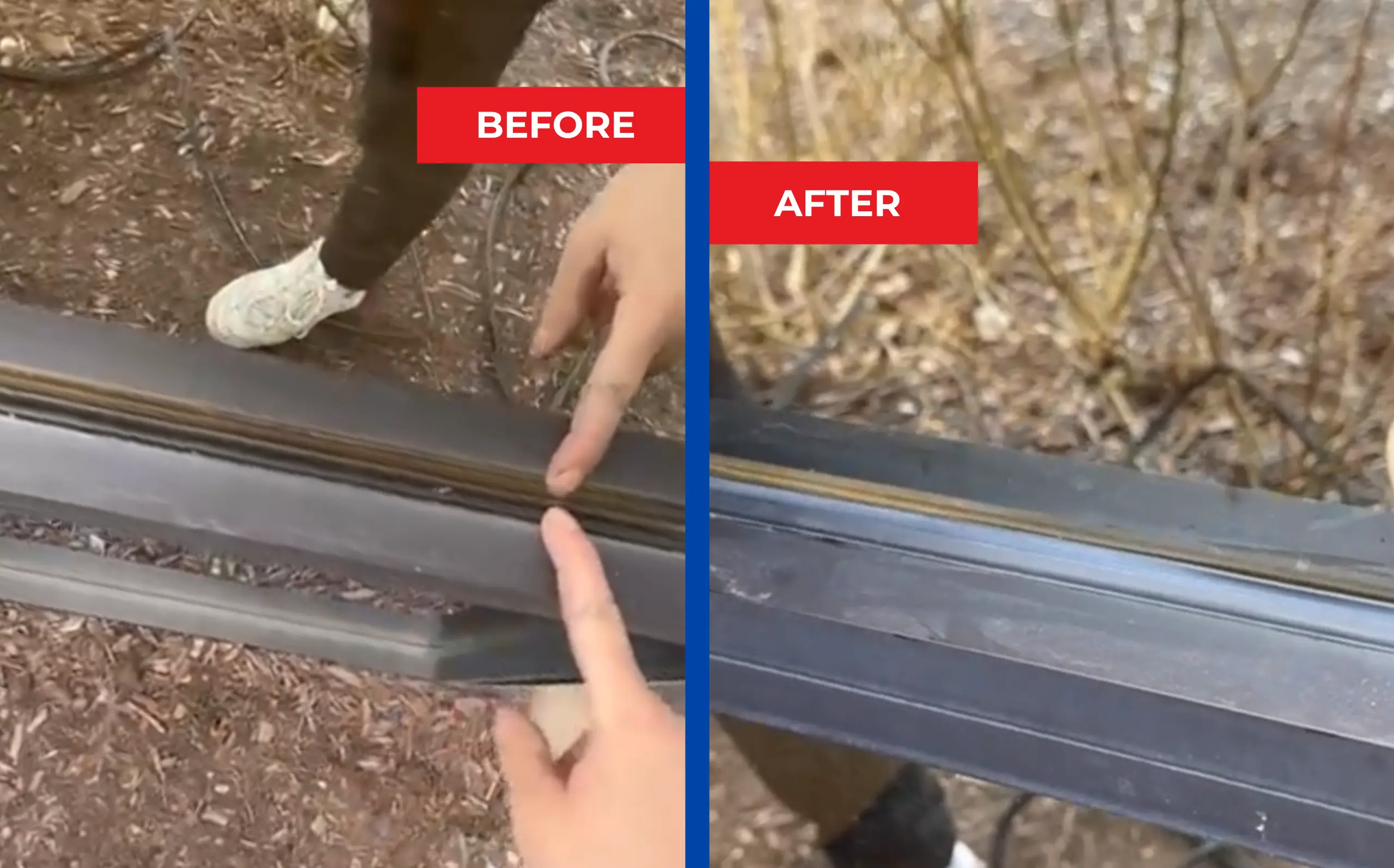
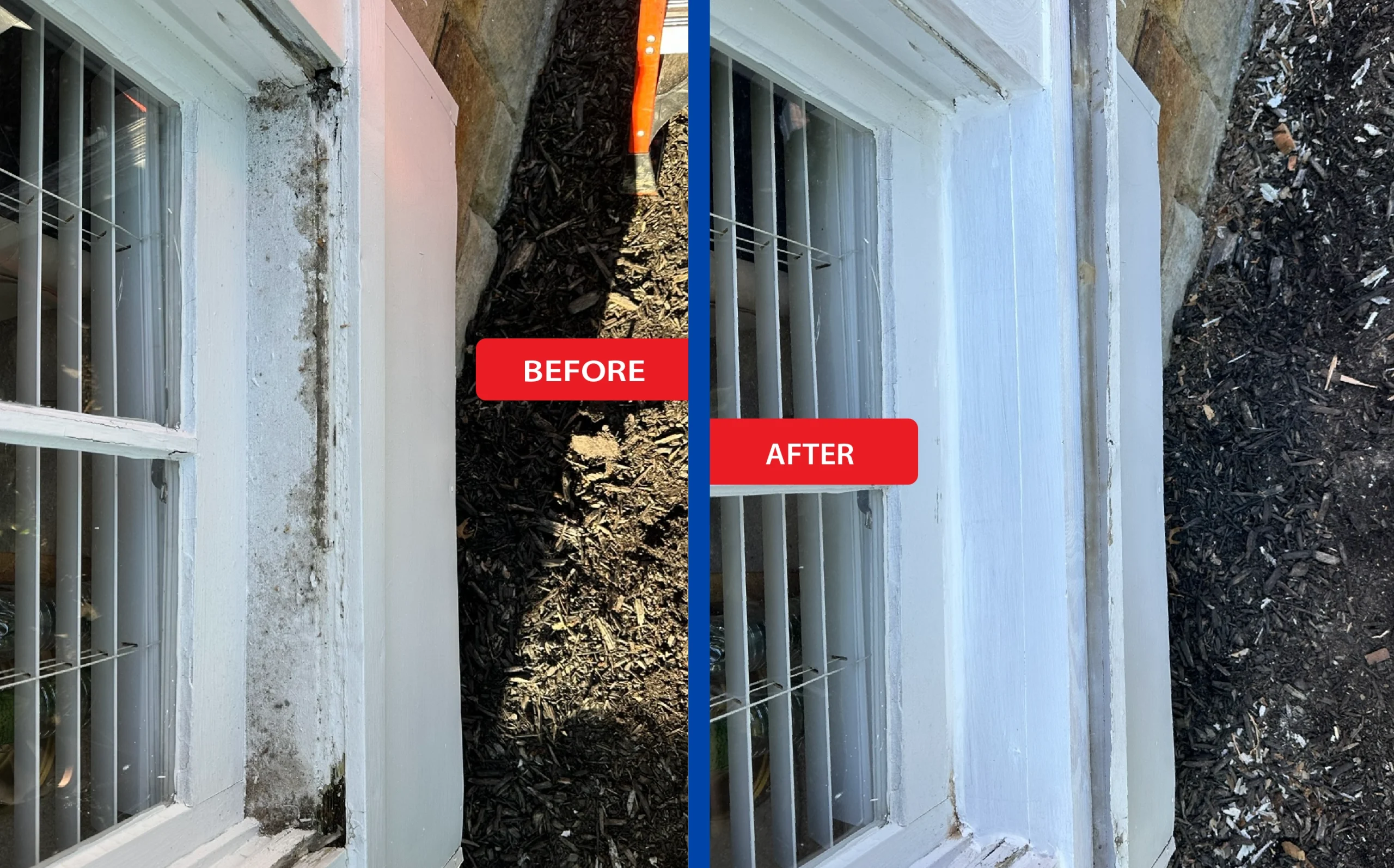
The order of operations matters here. We addressed the wood first, cutting back the softened material at the corner joint until we reached sound fiber, then rebuilt the missing section with new wood shaped to match the original sash profile. Only once the frame was structurally solid did we move to the glass – installing a fogged unit into a frame that still needs further drying or repair risks trapping moisture behind the new glazing seal, undoing the fix before it has a chance to hold.
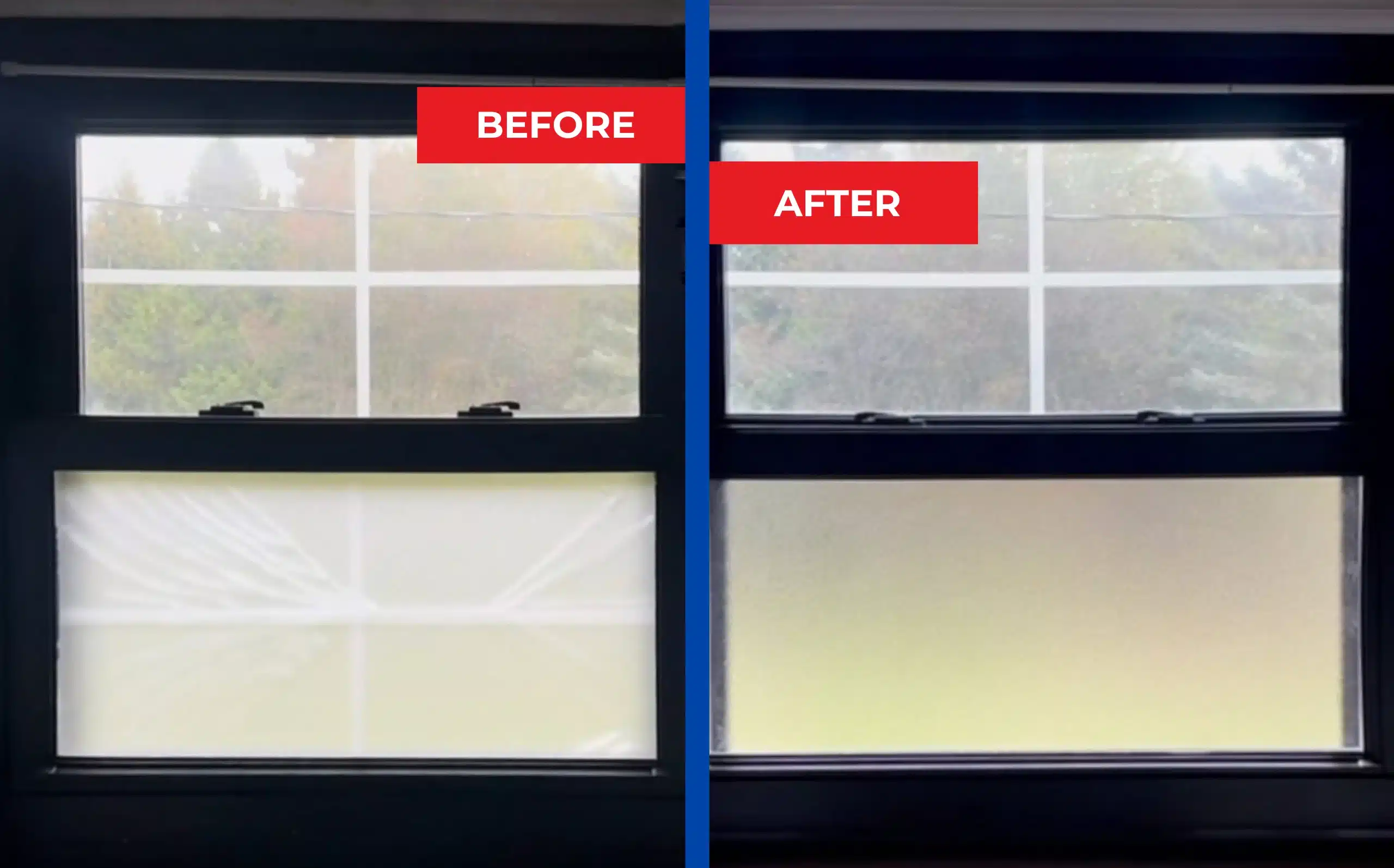
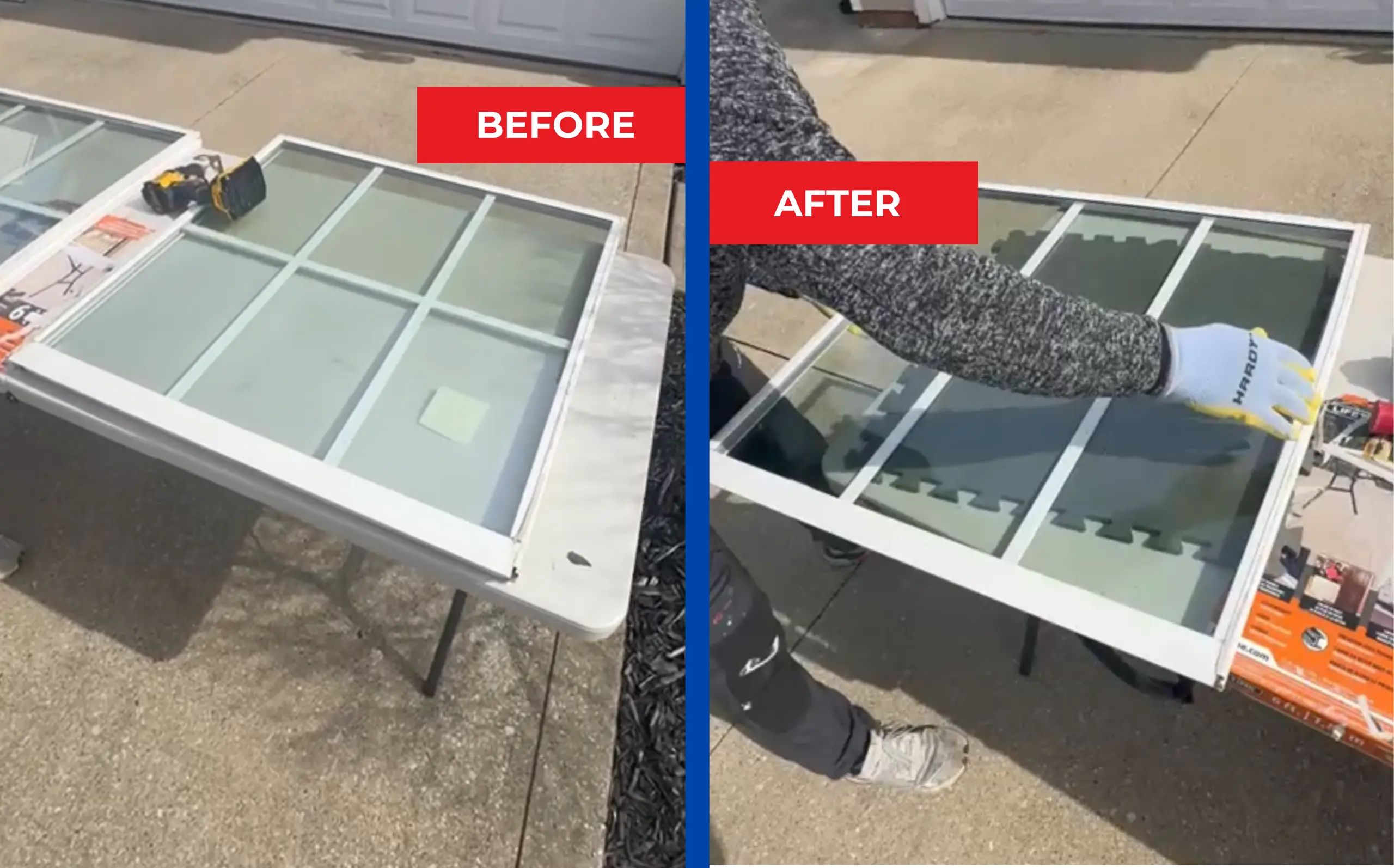
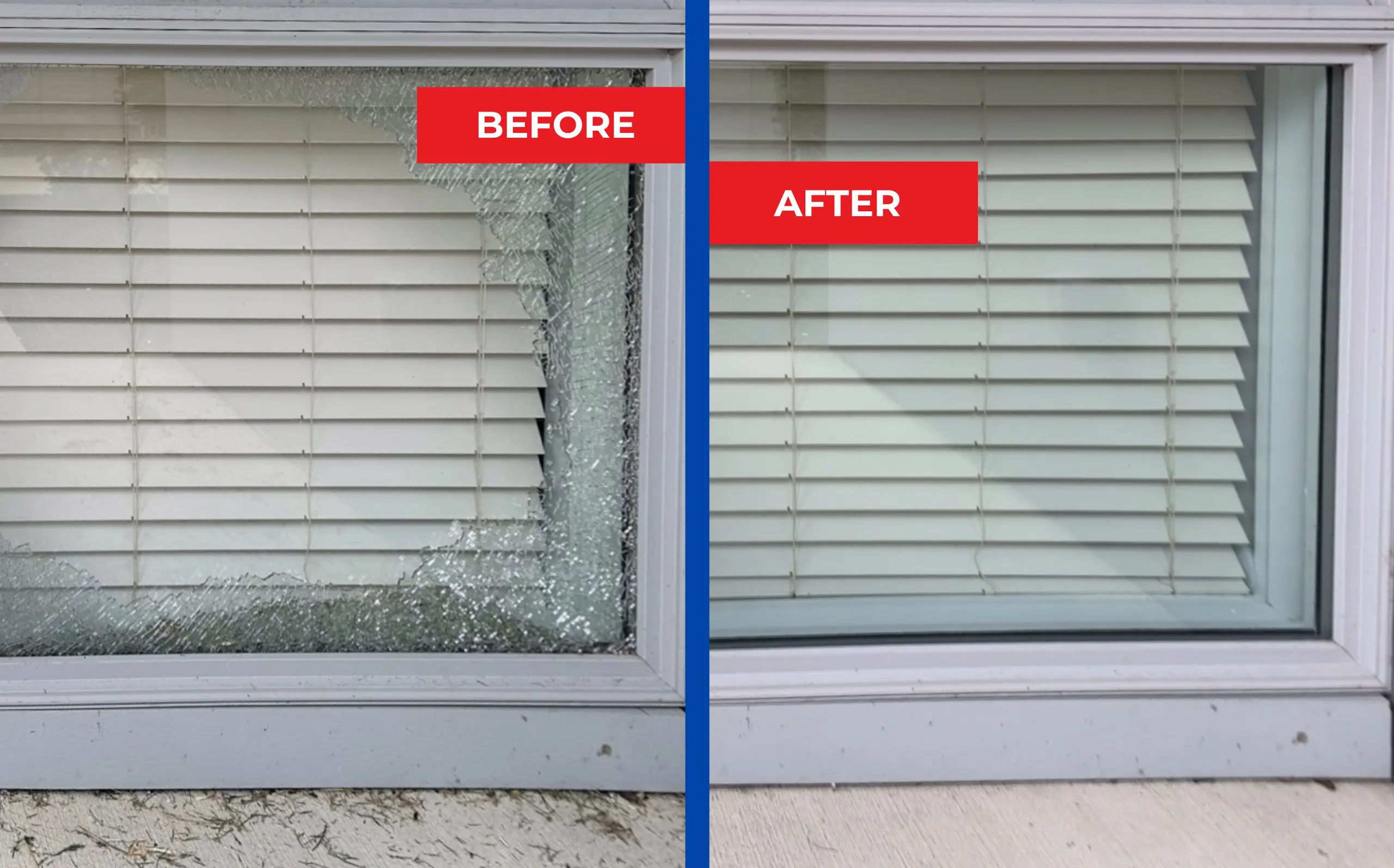
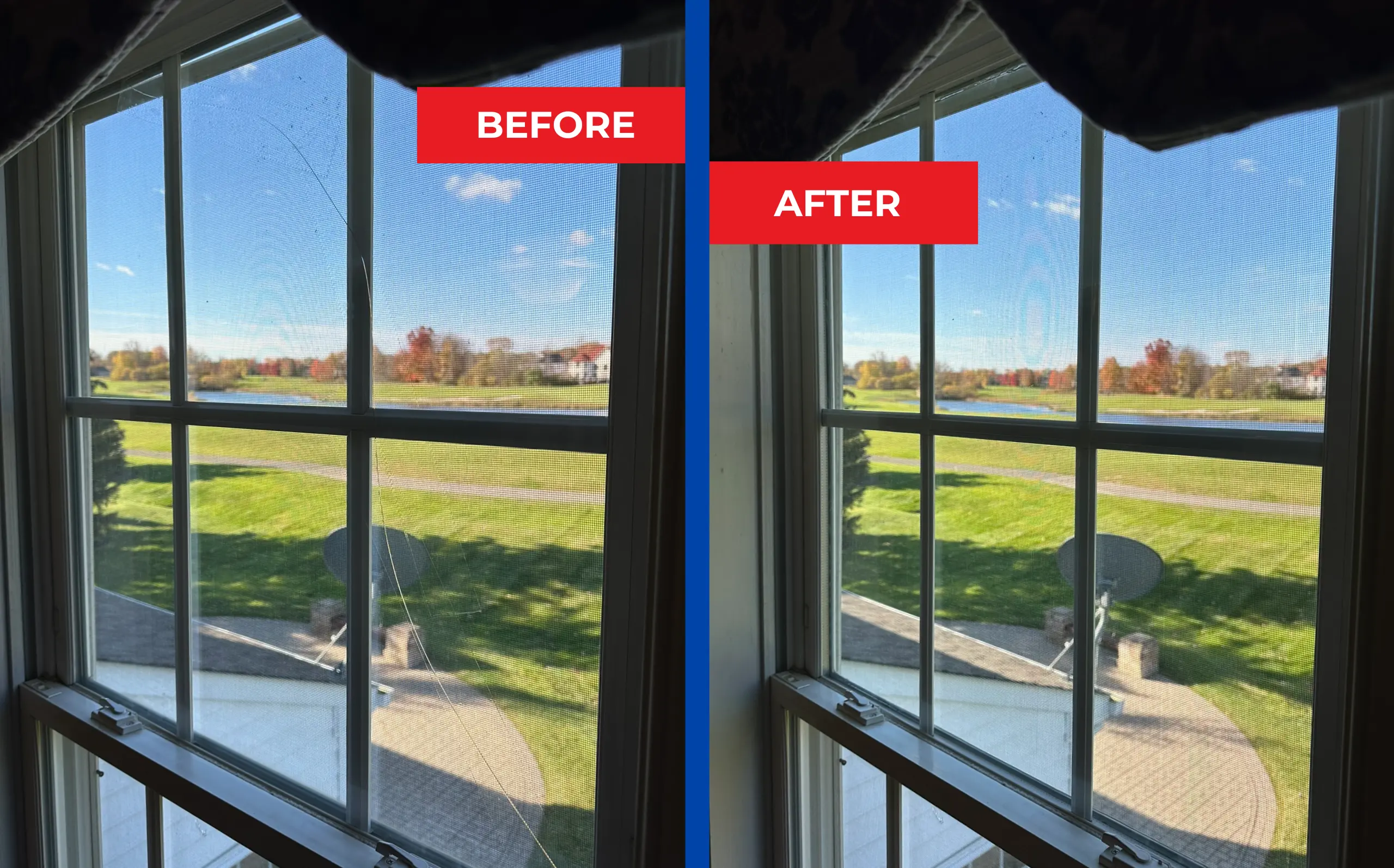
With the wood repaired, we measured the sash opening and fabricated a new insulated glass unit to match – fresh spacer, fresh desiccant, full gas fill – then set it with new glazing seals around the full perimeter. The sash was primed, painted to match the surrounding trim, and rehung. This two-part approach is standard on our rotten windows repair projects whenever the glass has also failed, and it pairs with the foggy window repair process we use on glass-only jobs elsewhere in the house. A similar combined repair – rot removal followed by glass replacement in the same visit – is documented in our wood window repair and glass replacement project in Bedford, where a moisture-damaged sash corner had spread the same way into the glass seal.
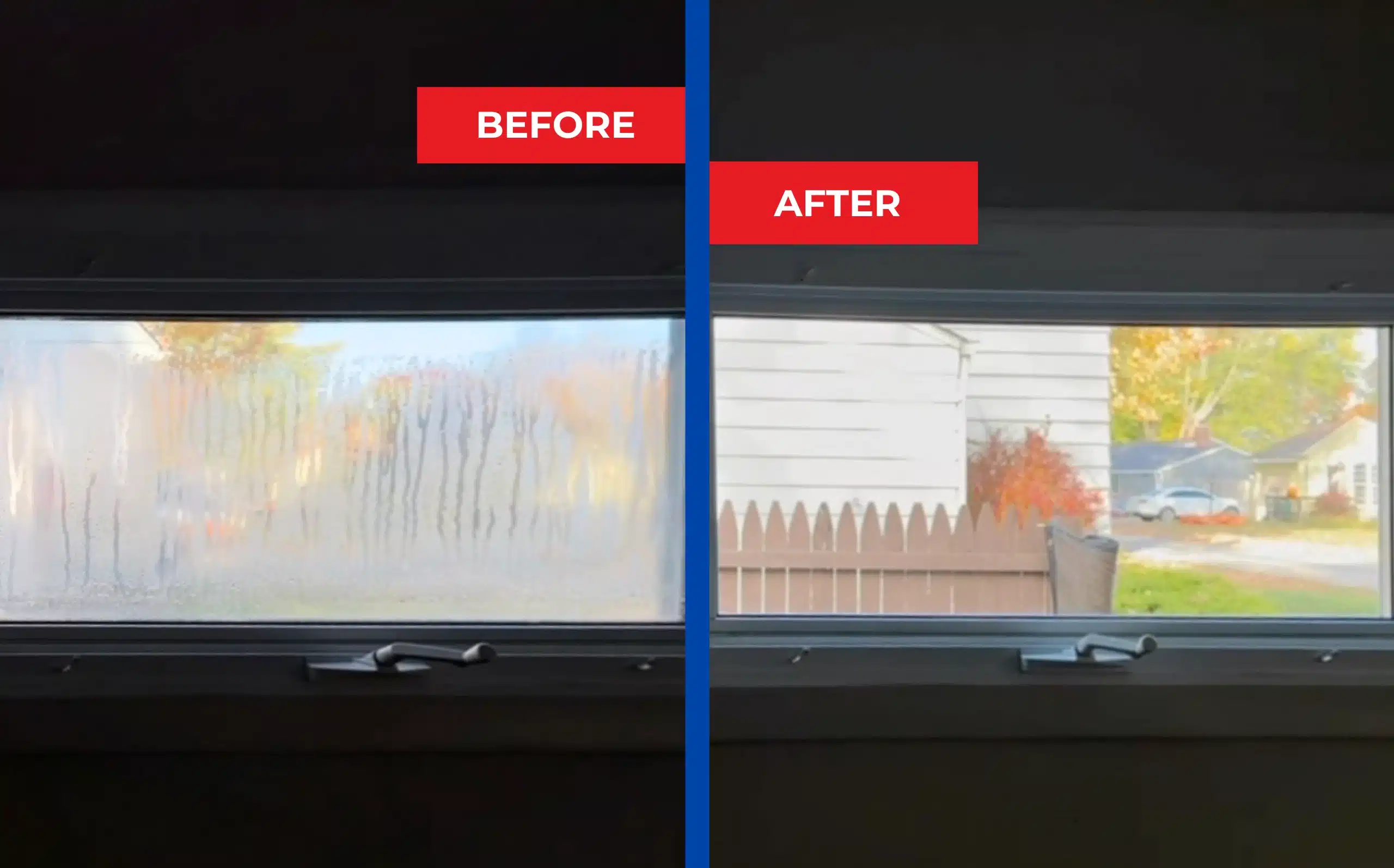
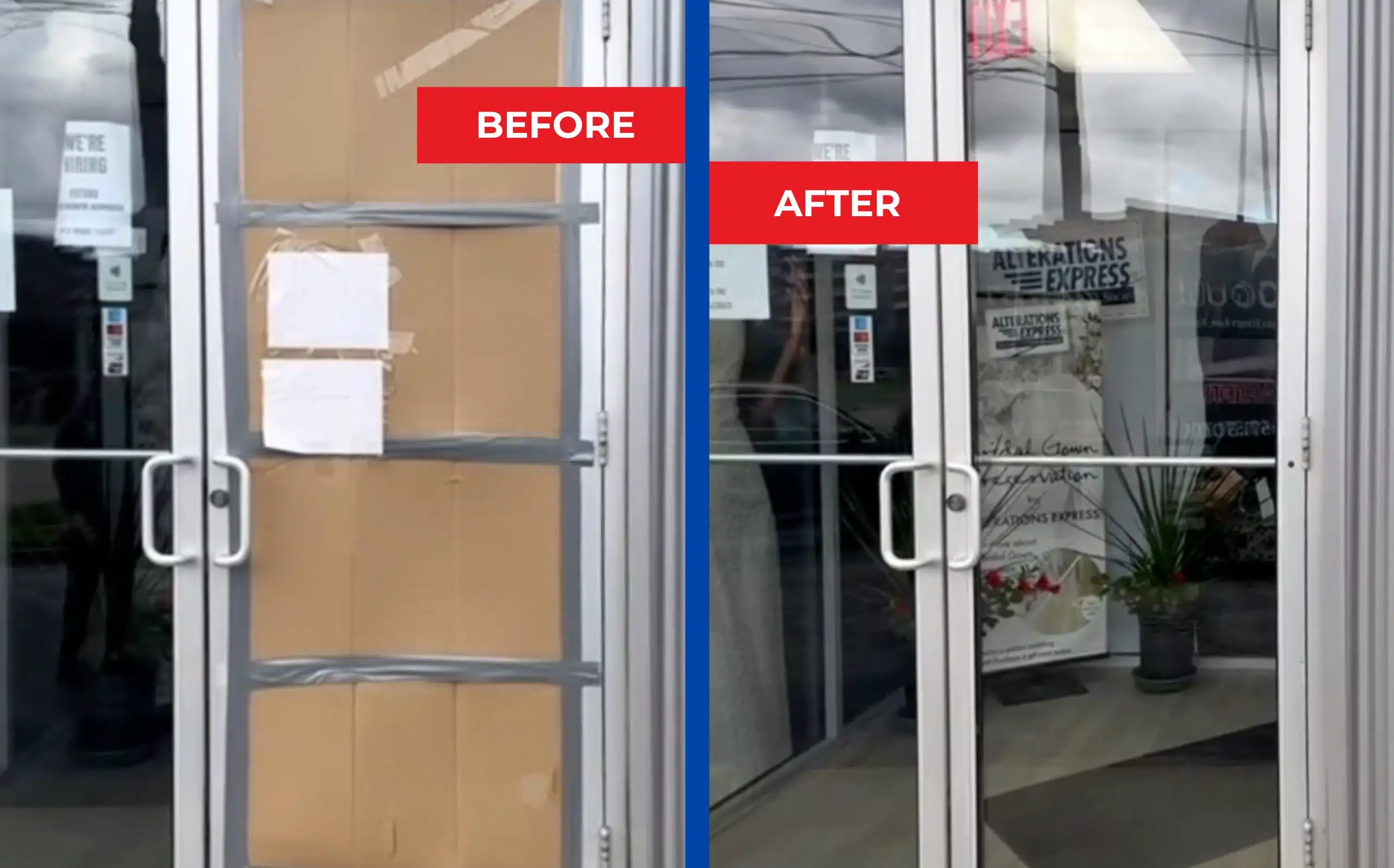
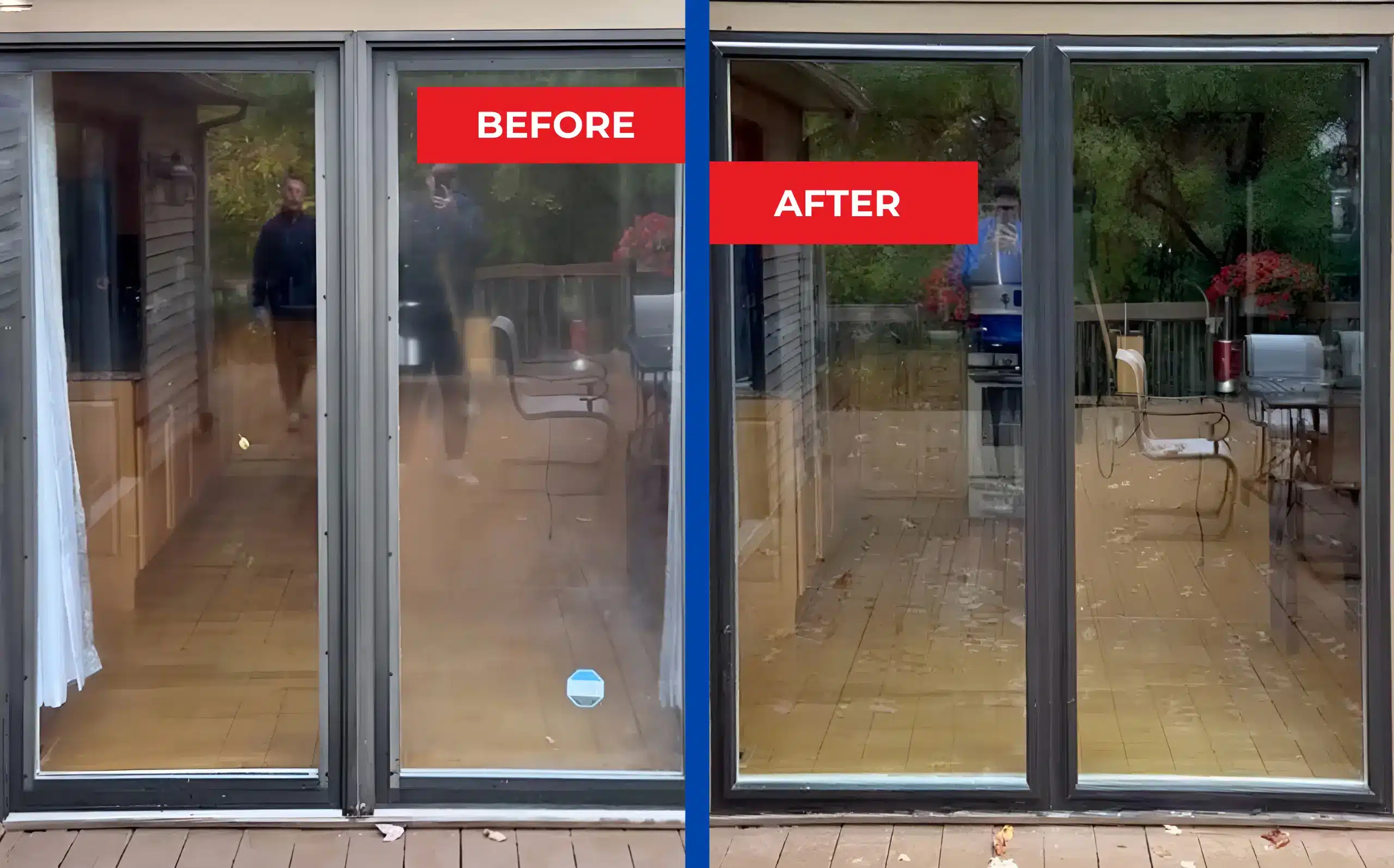
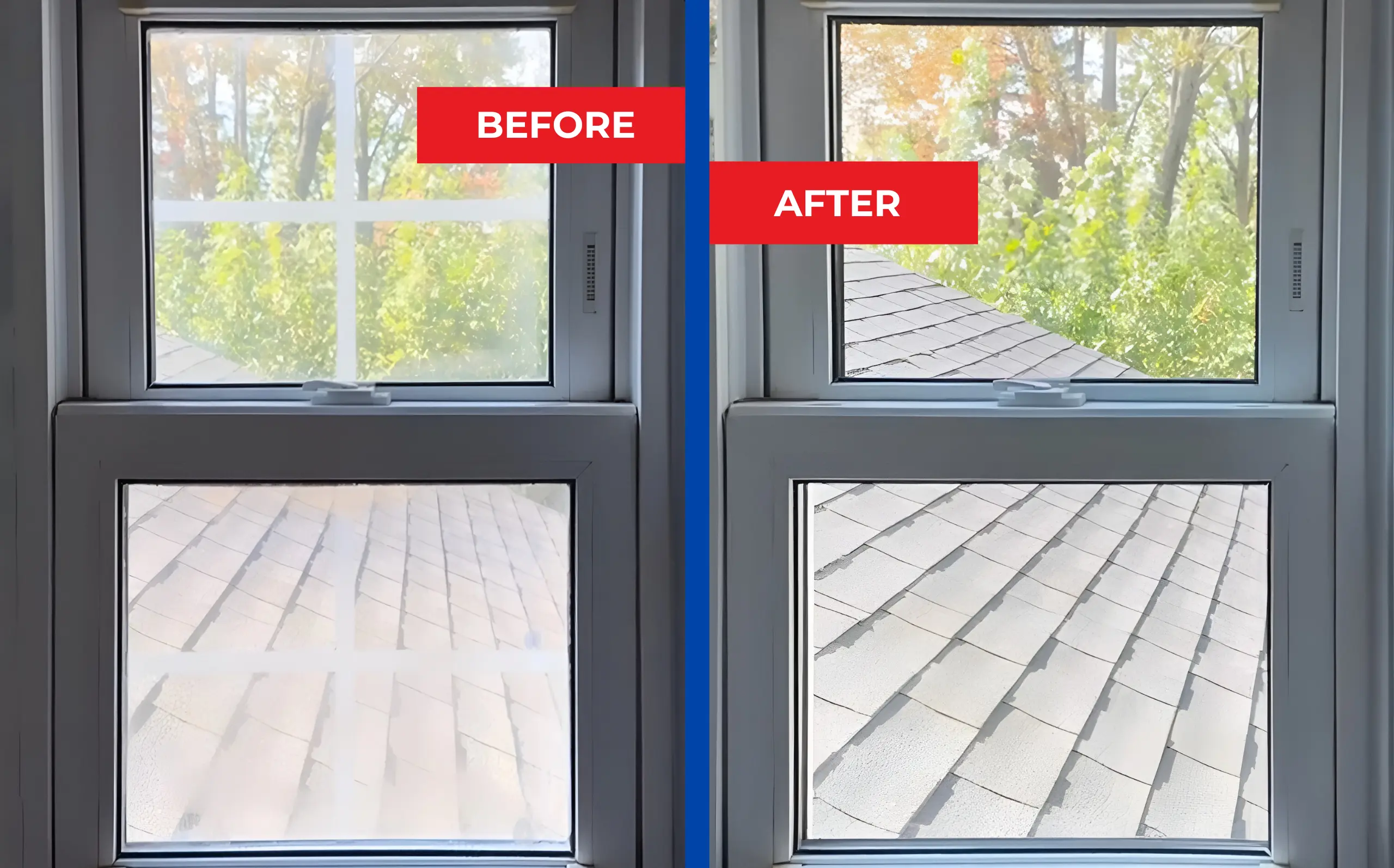
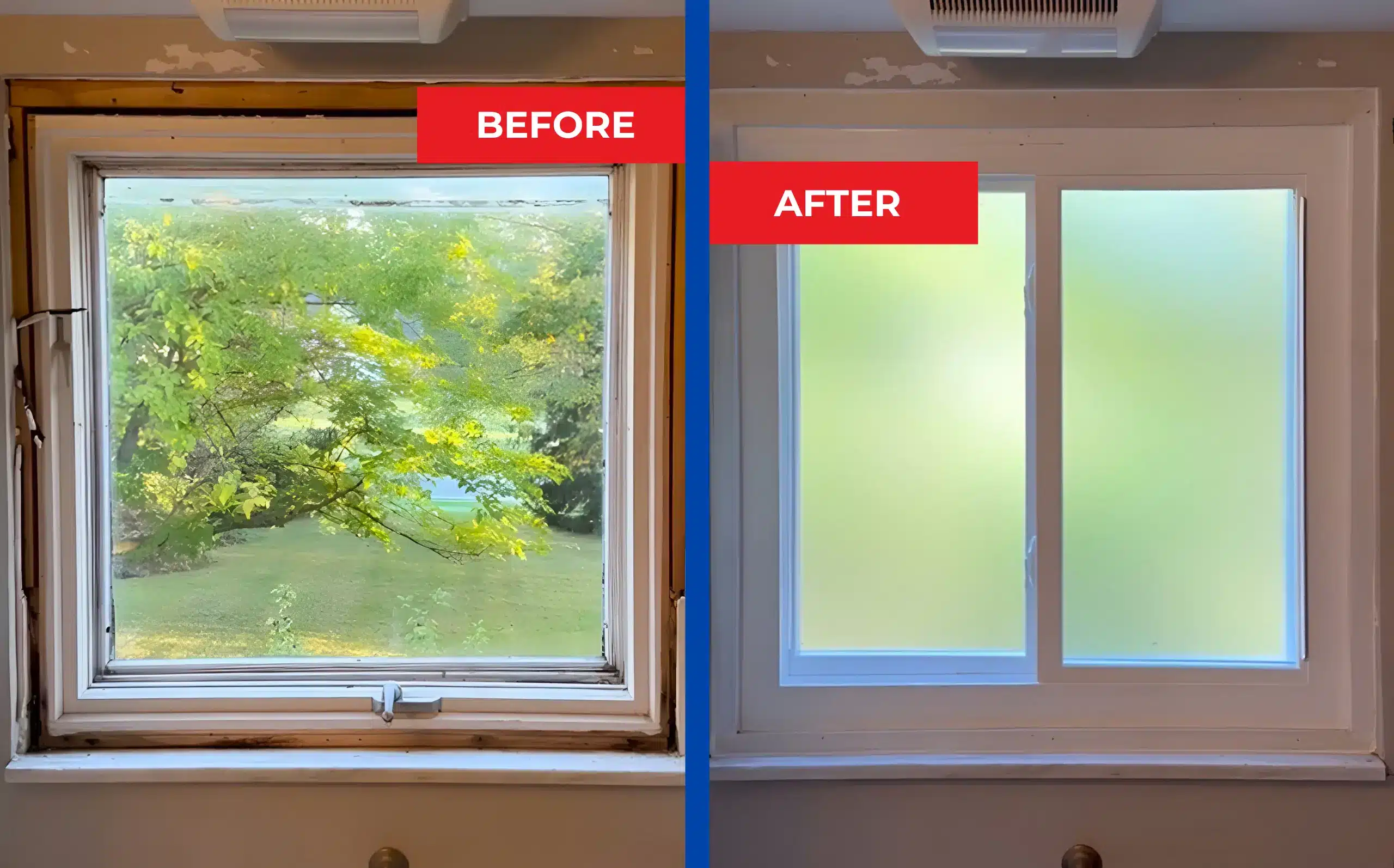
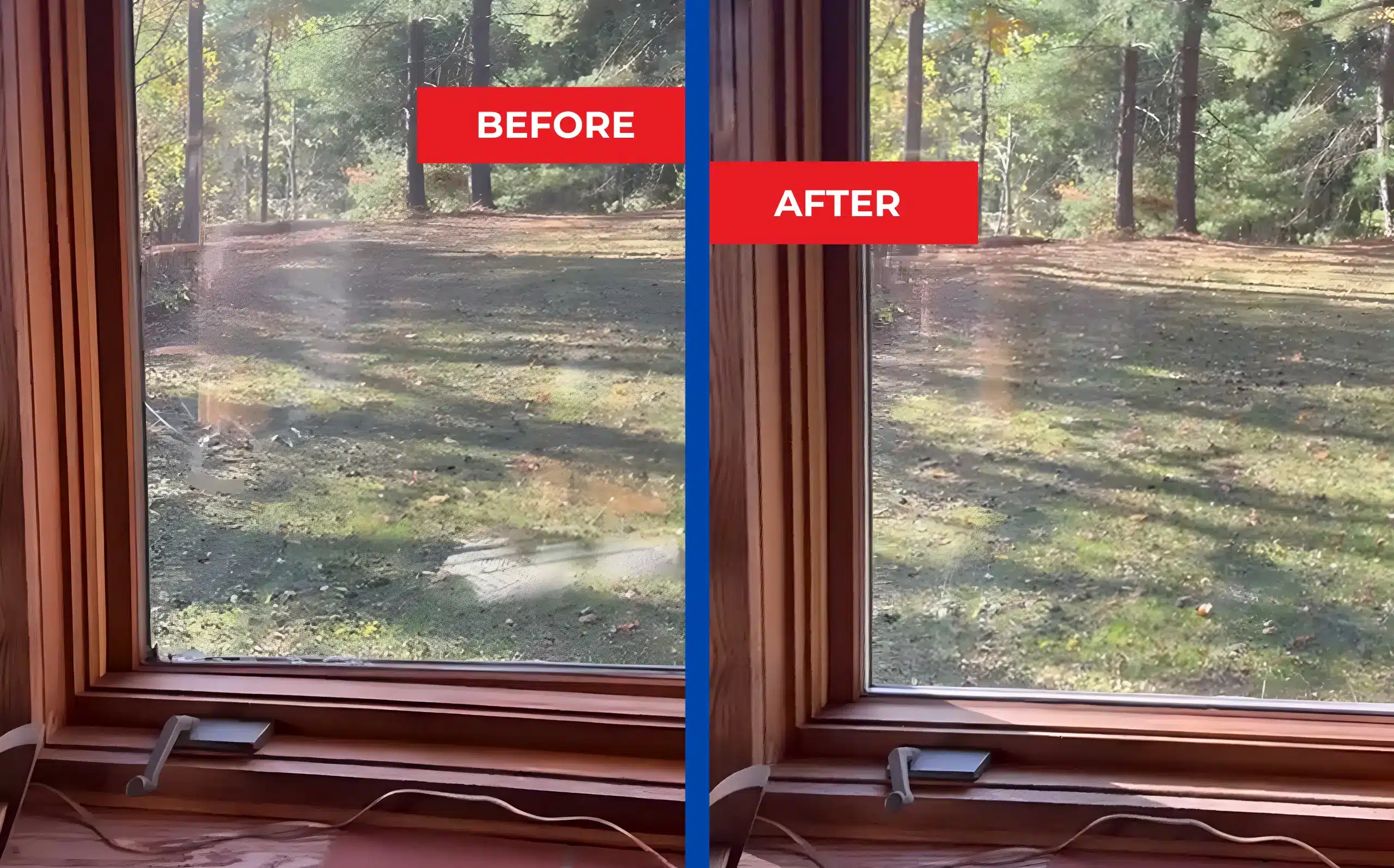
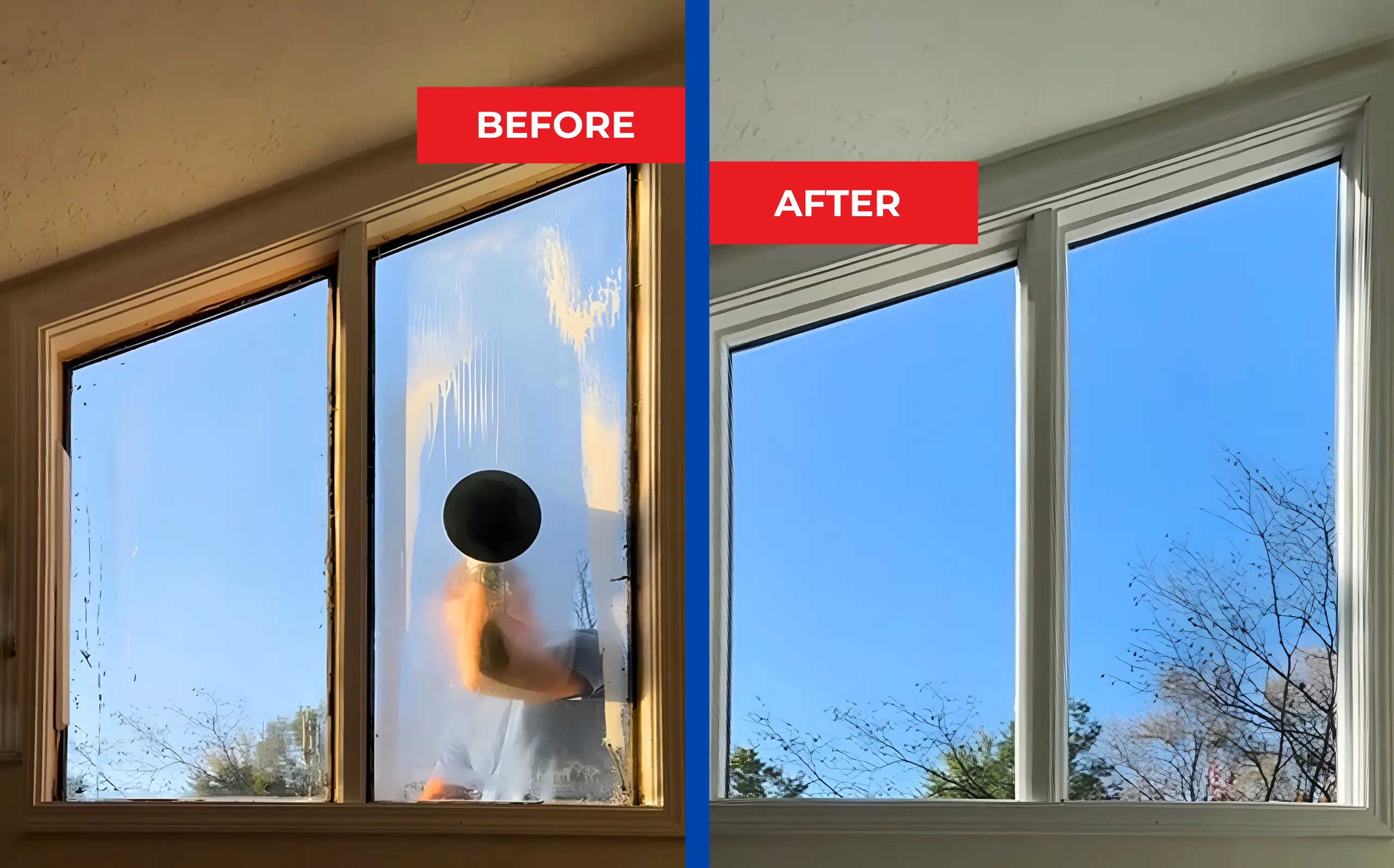
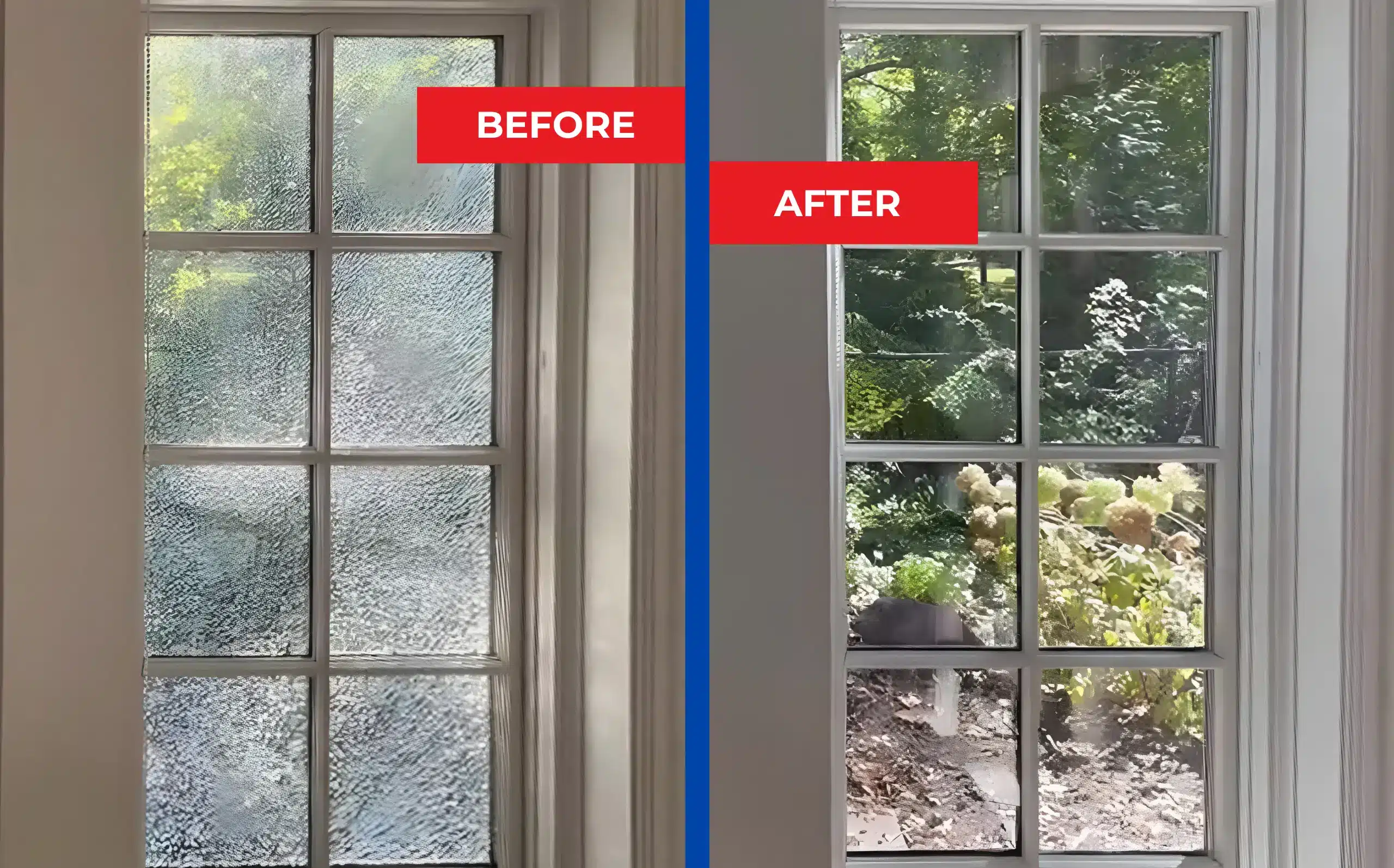
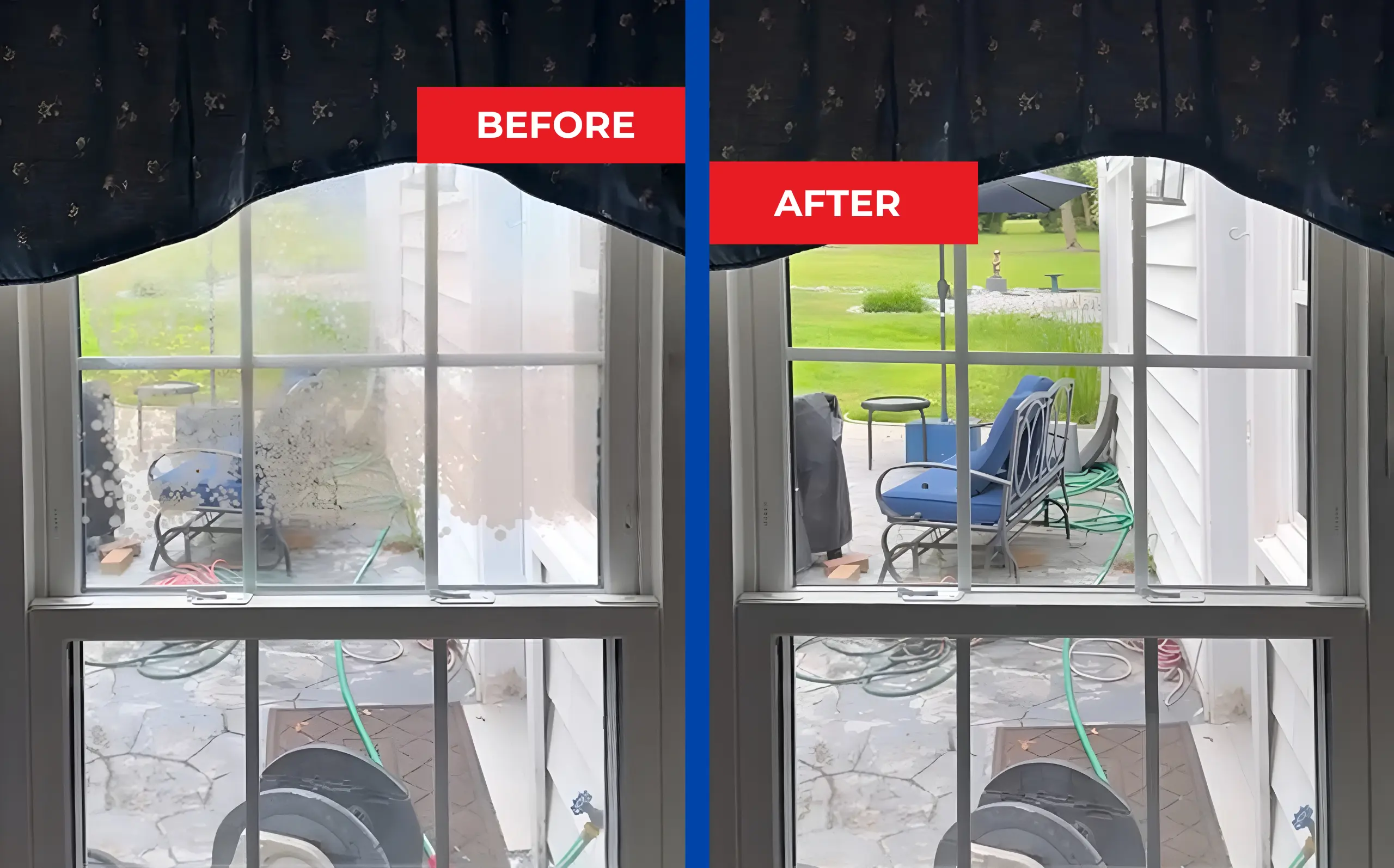
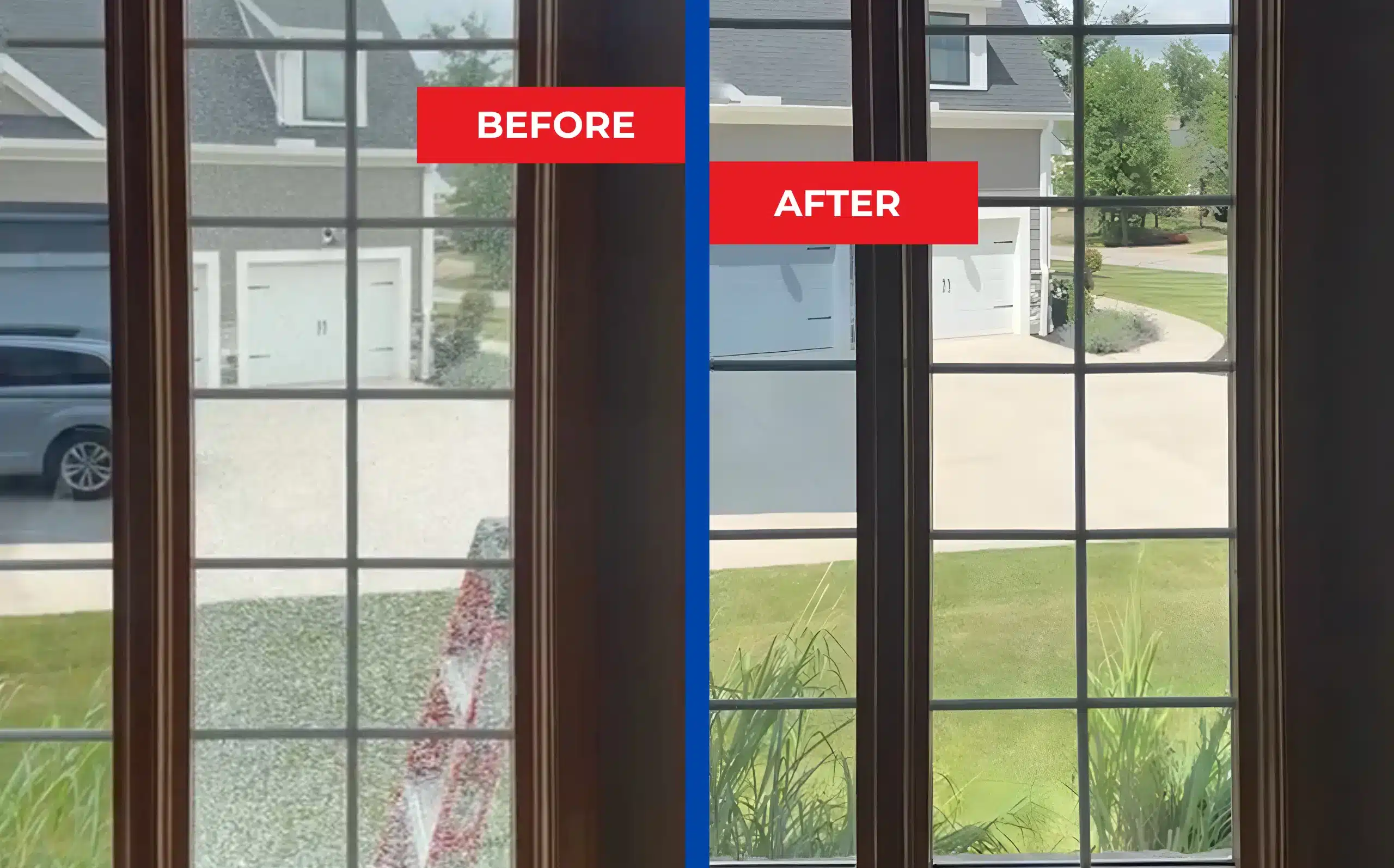
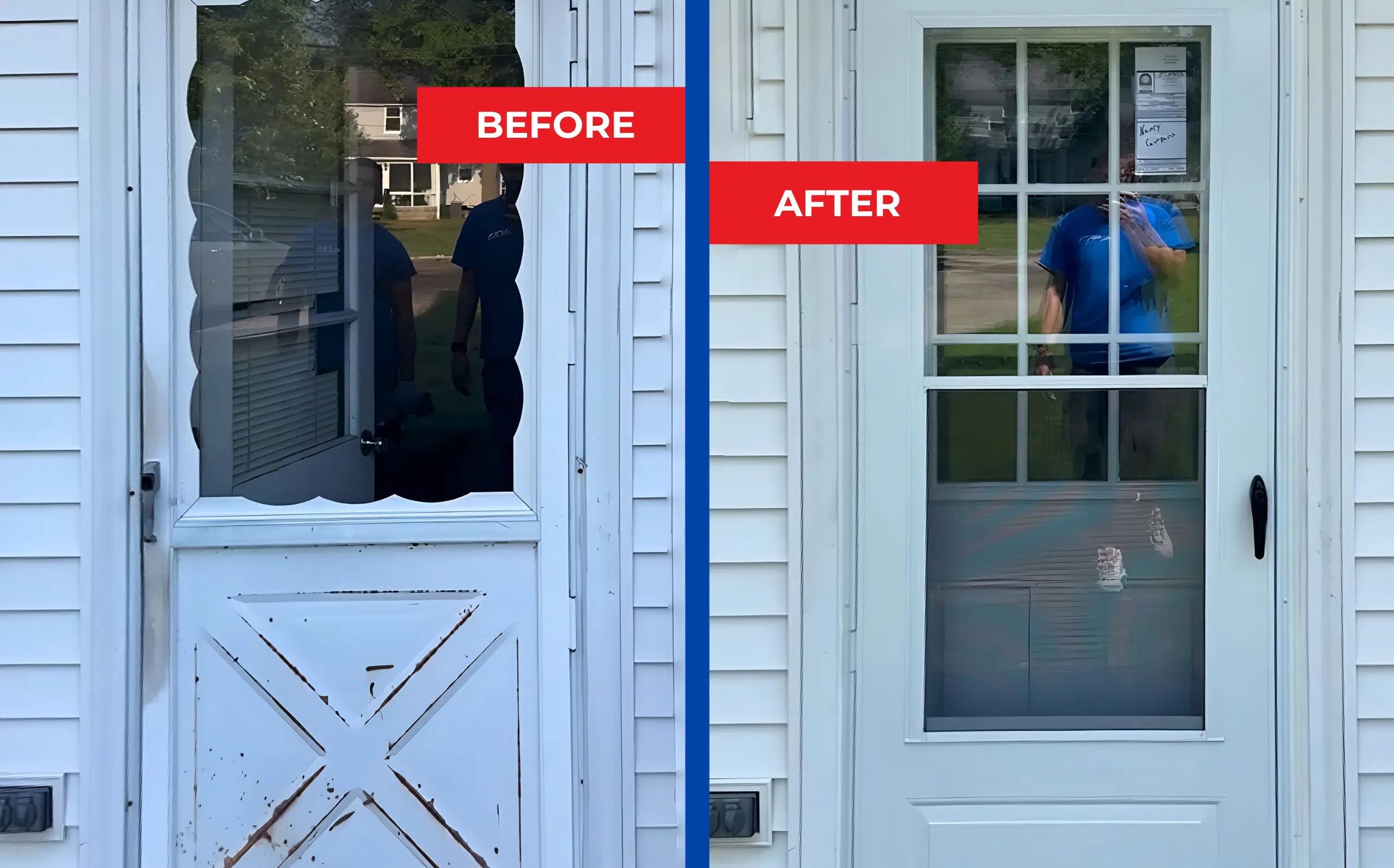
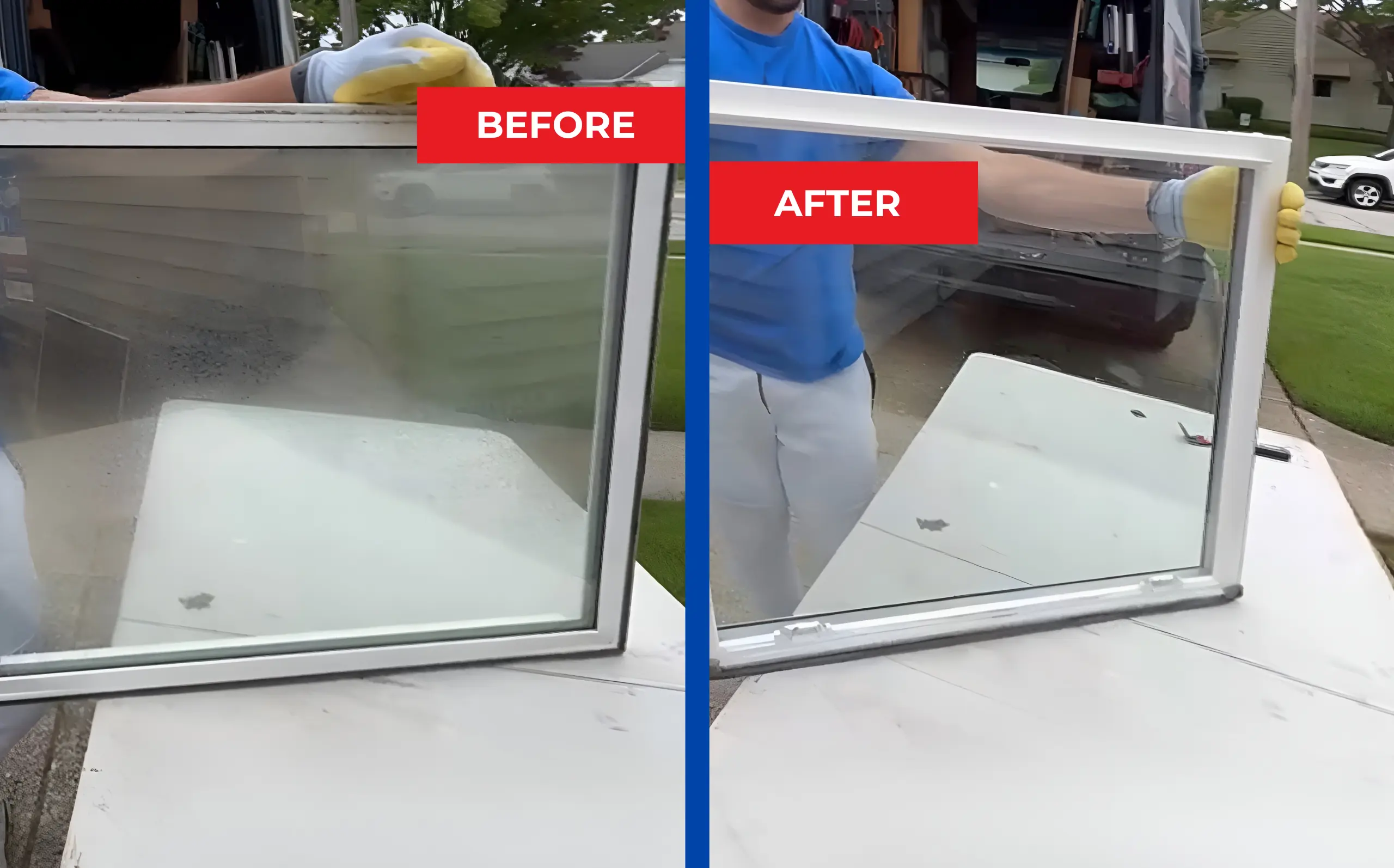
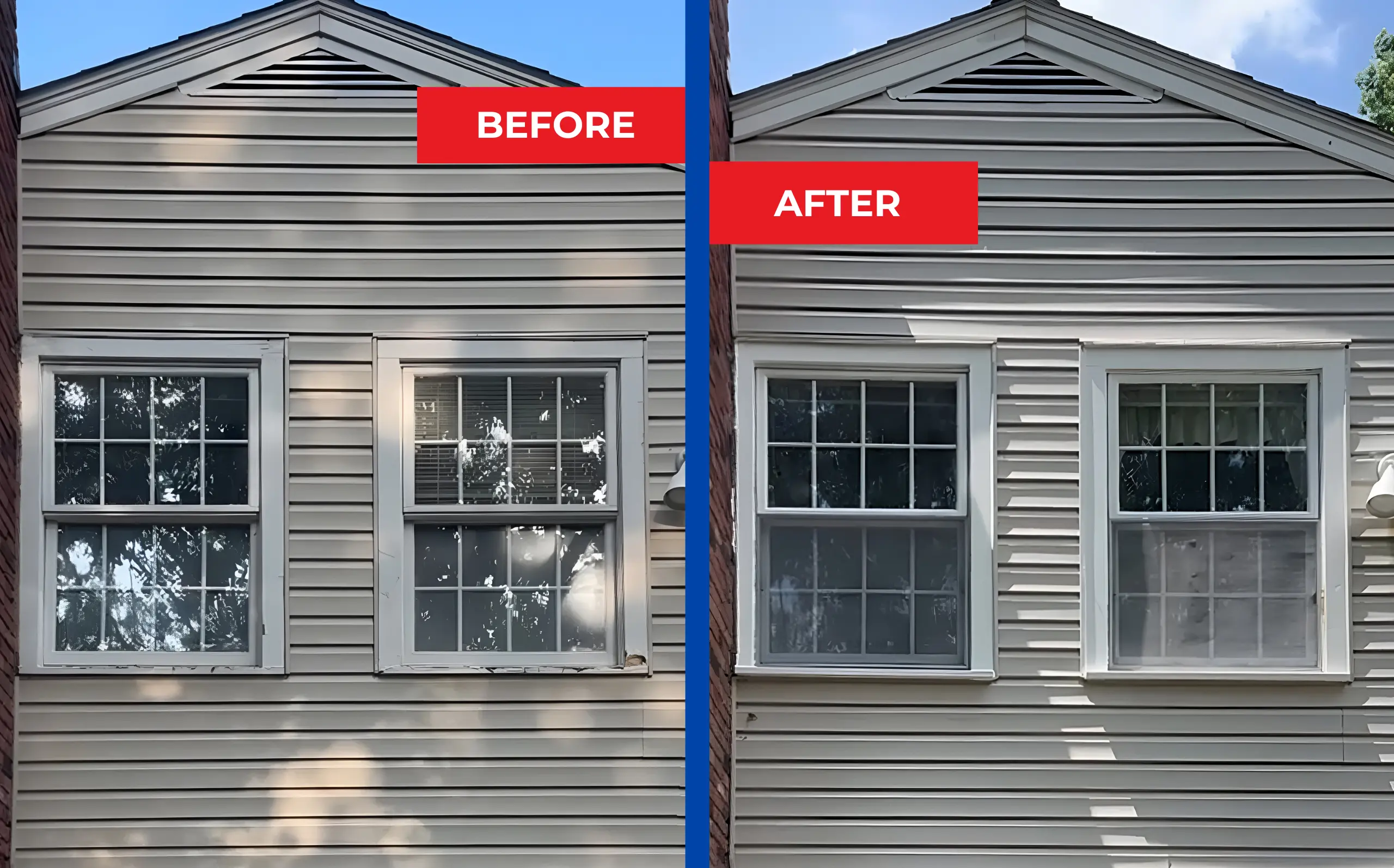
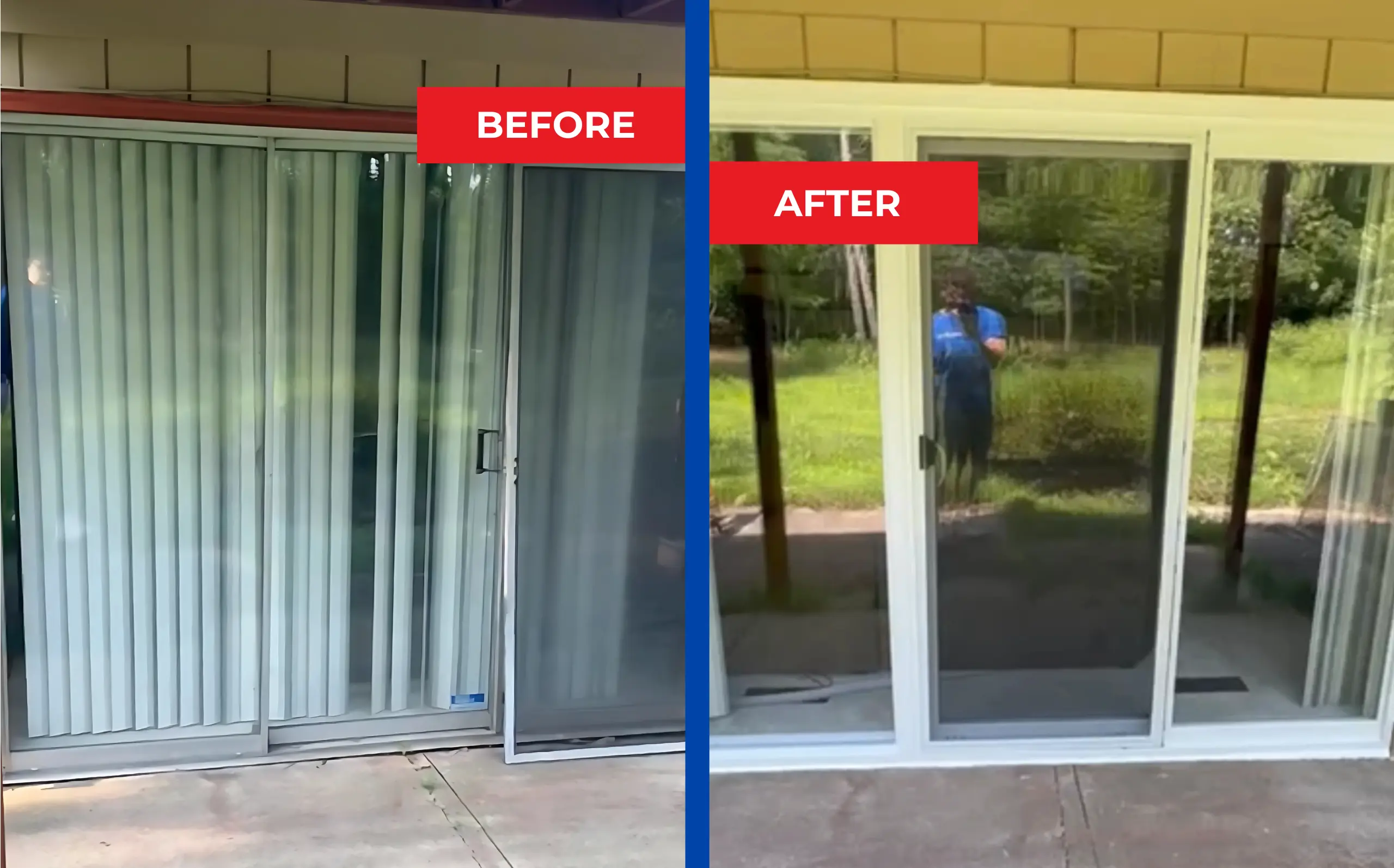
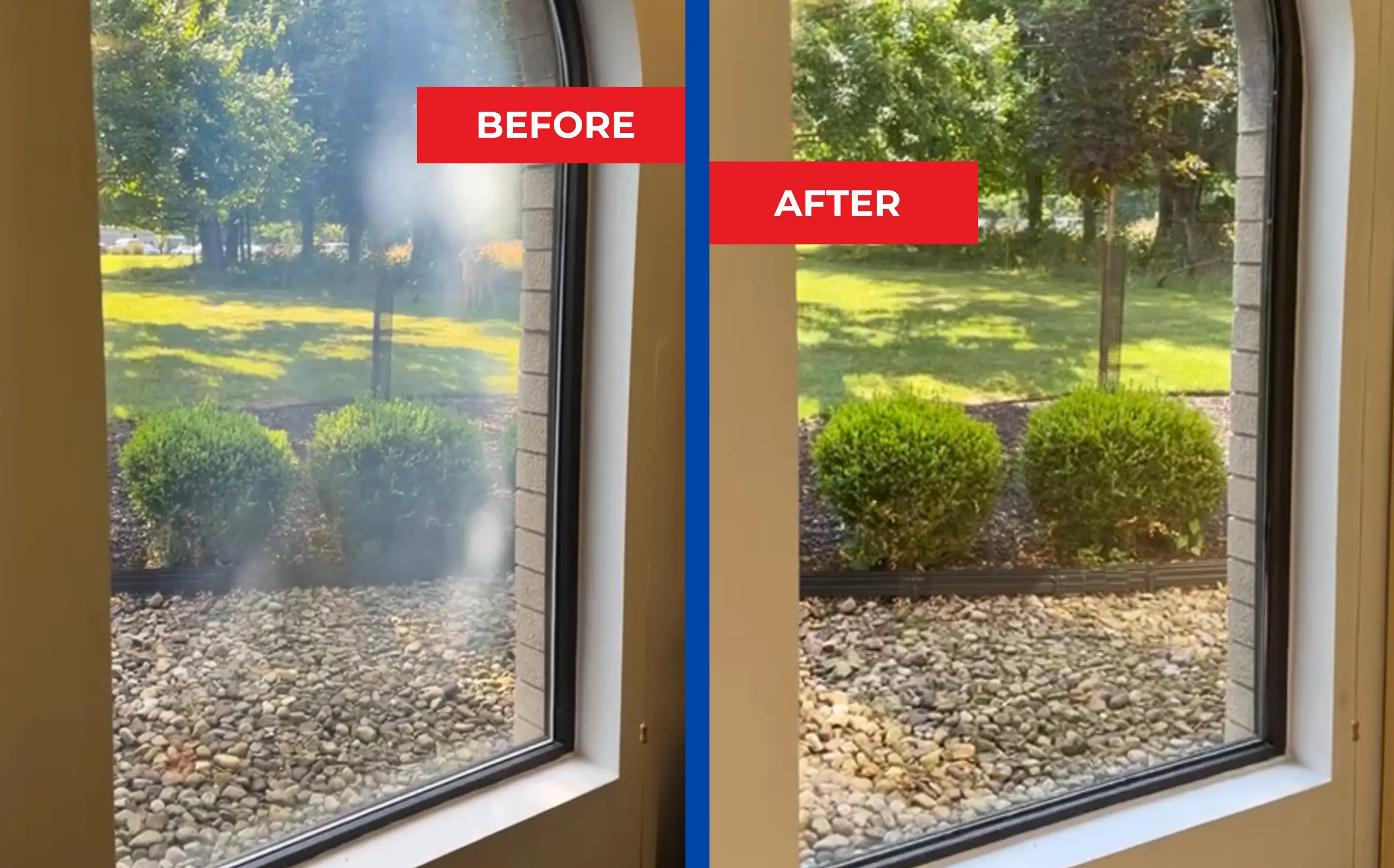
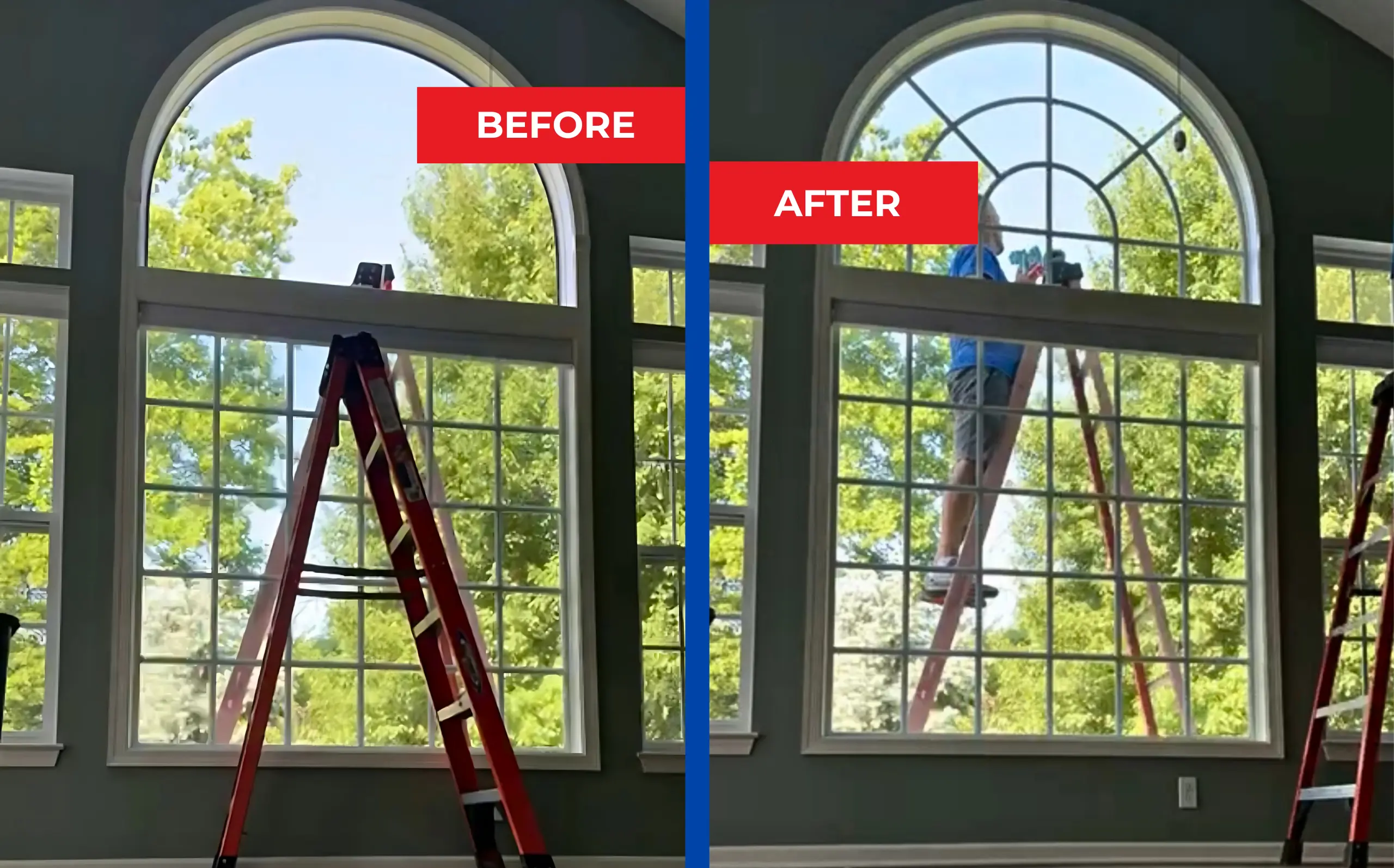
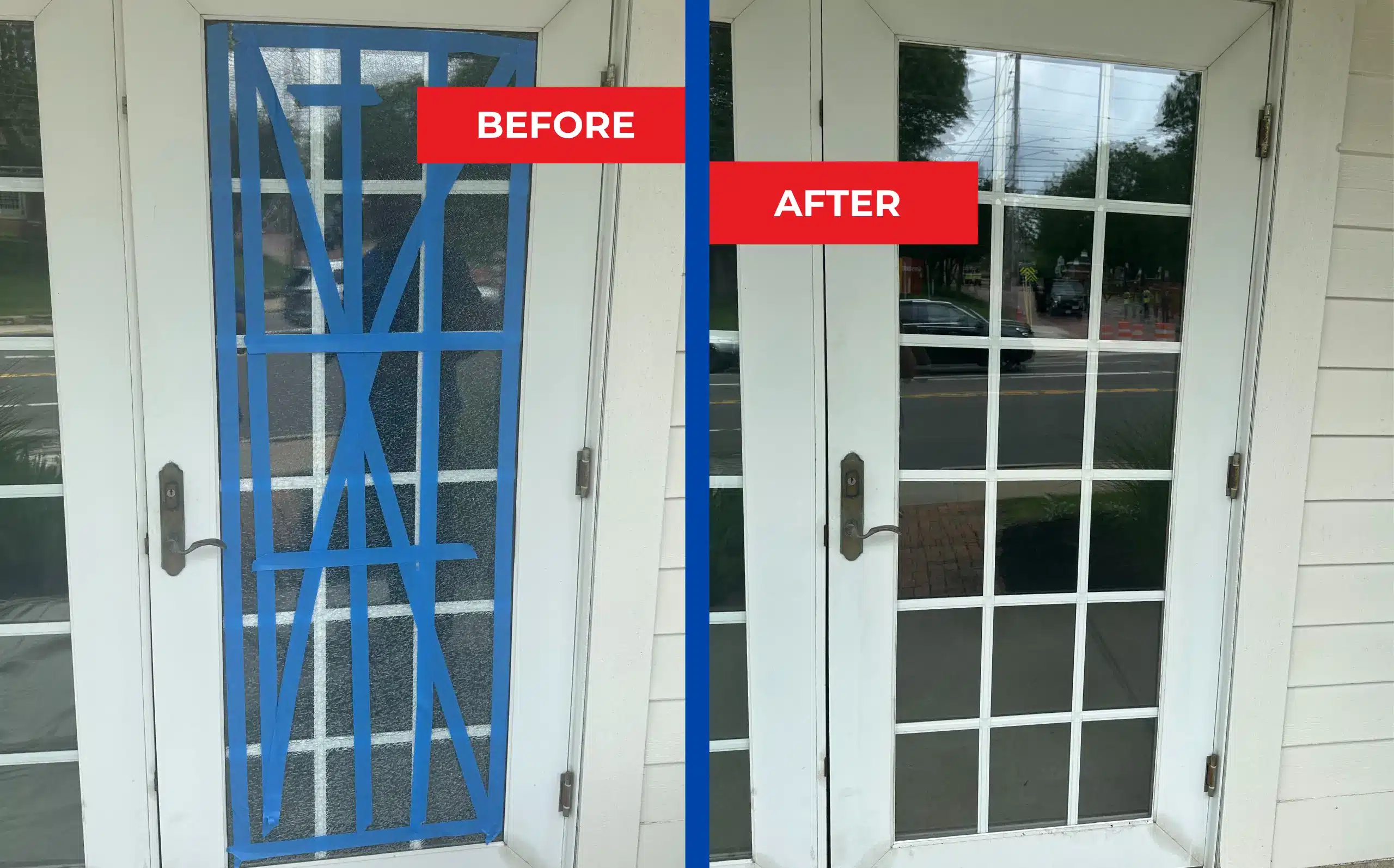
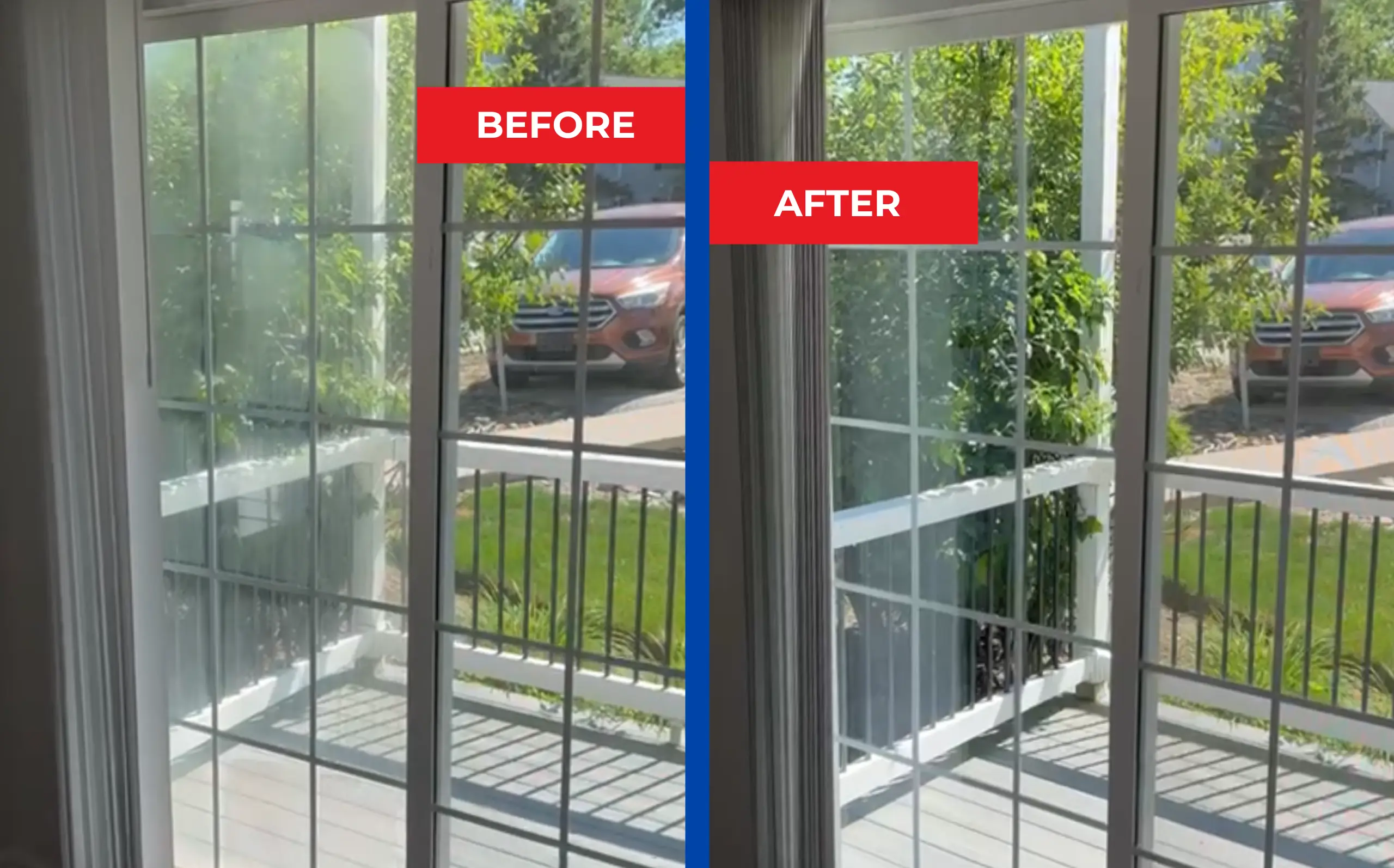
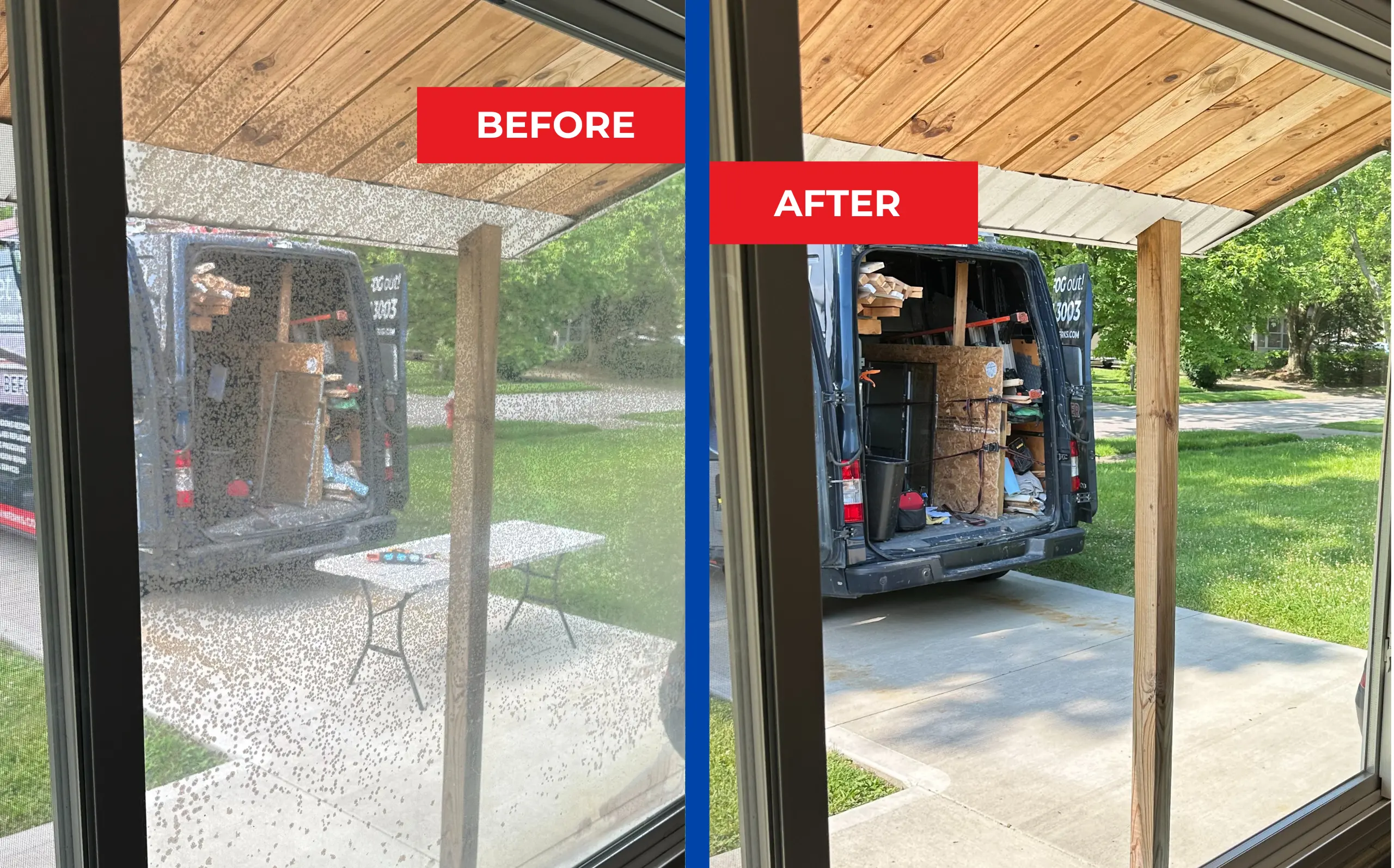
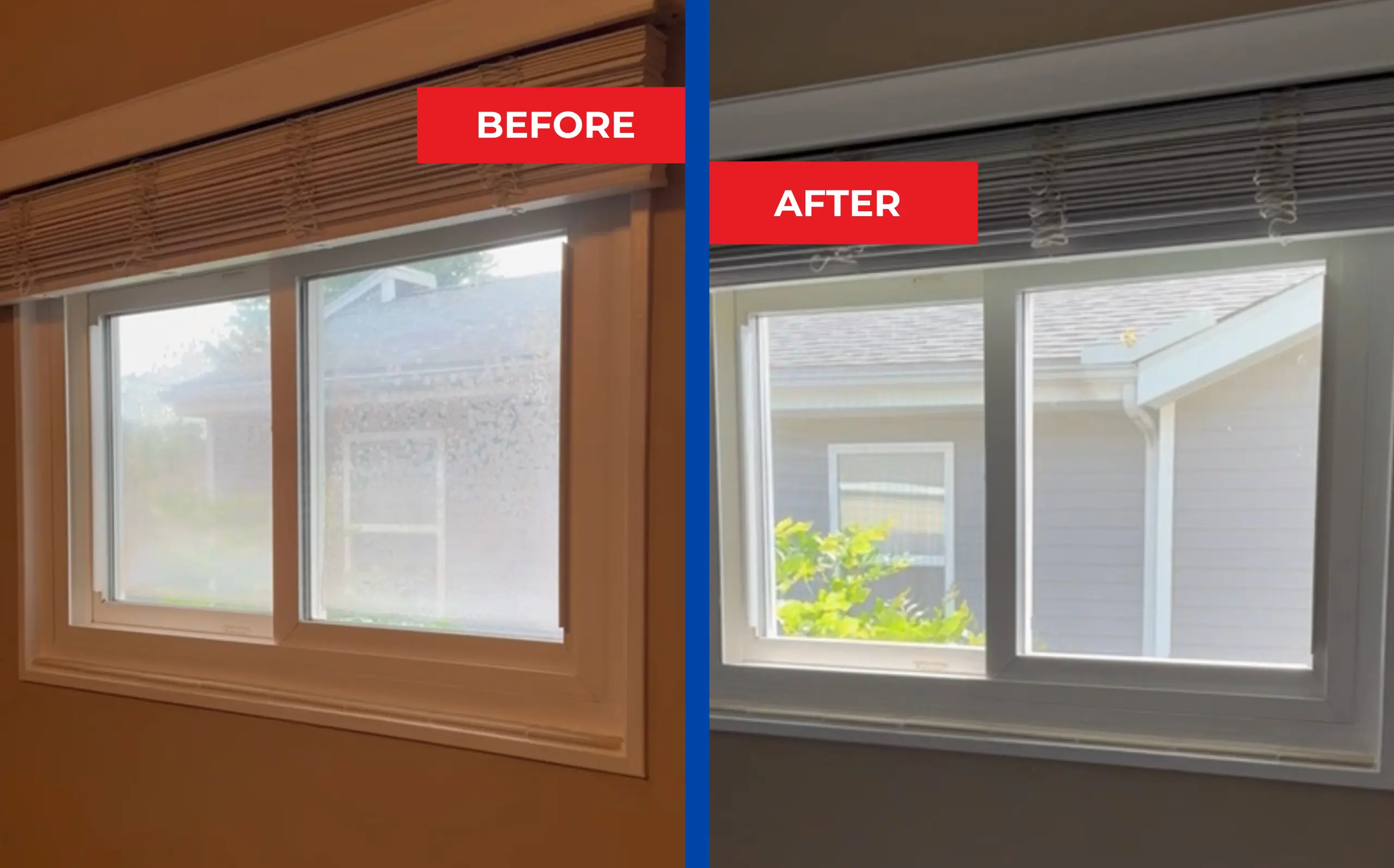
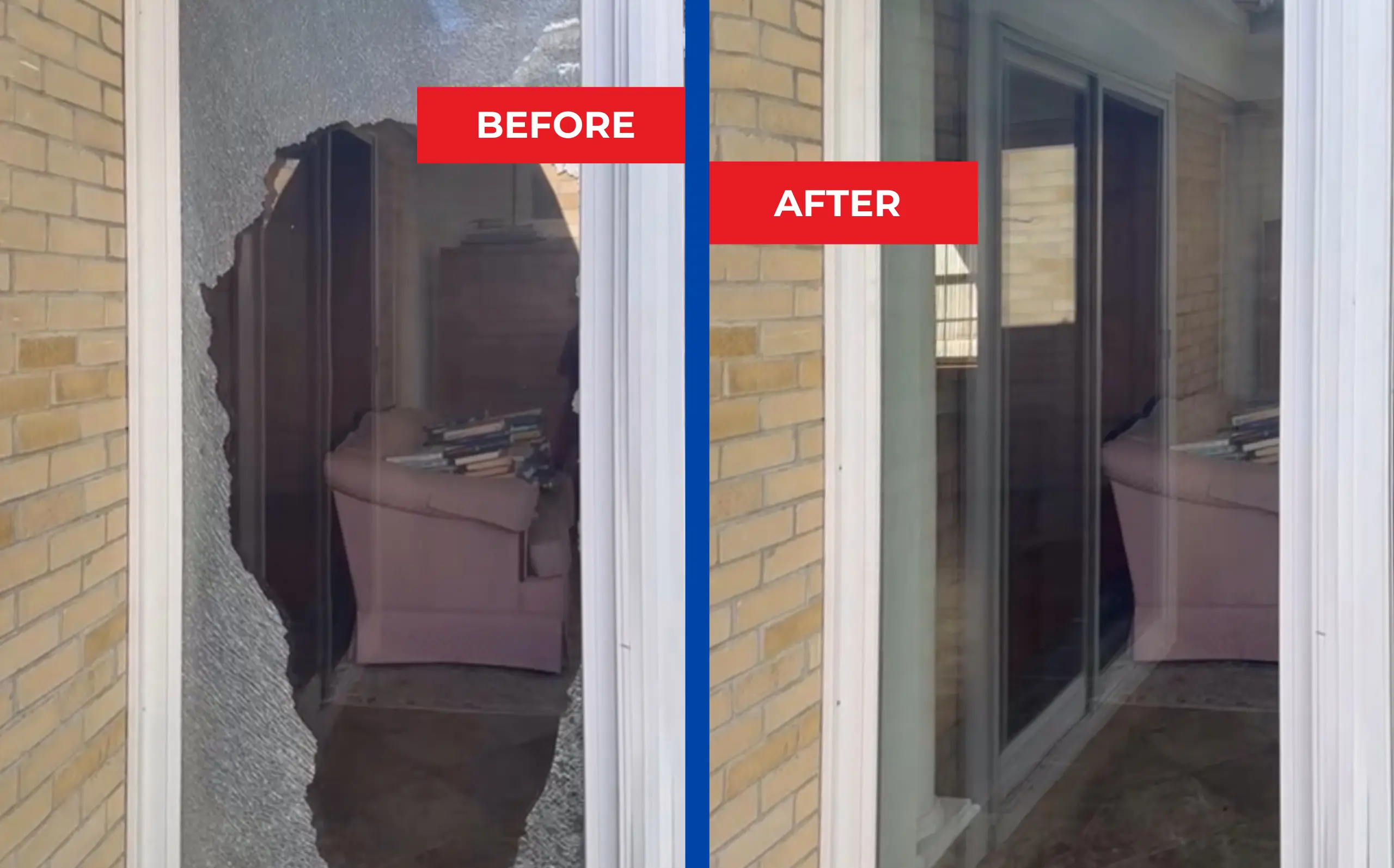
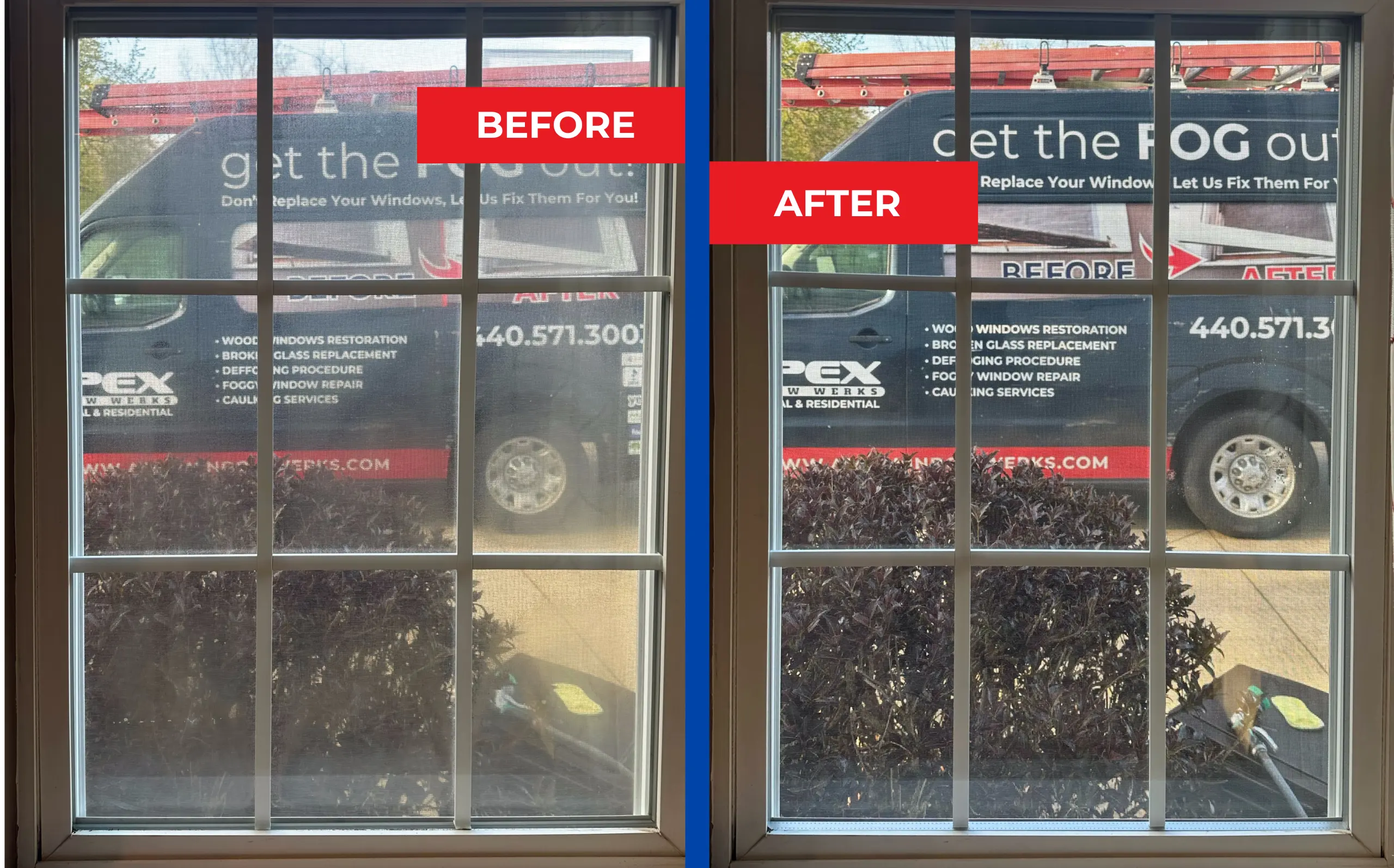
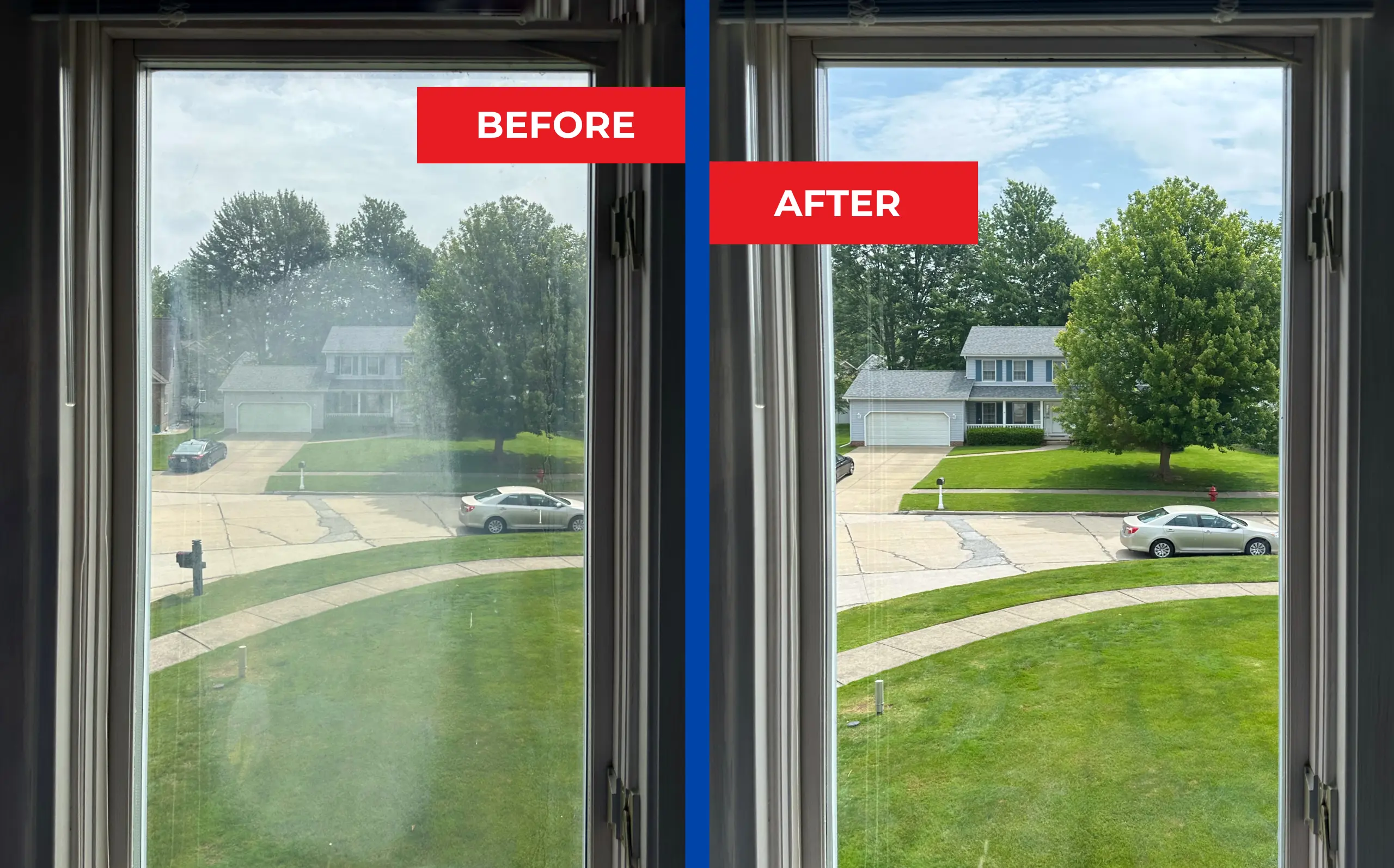
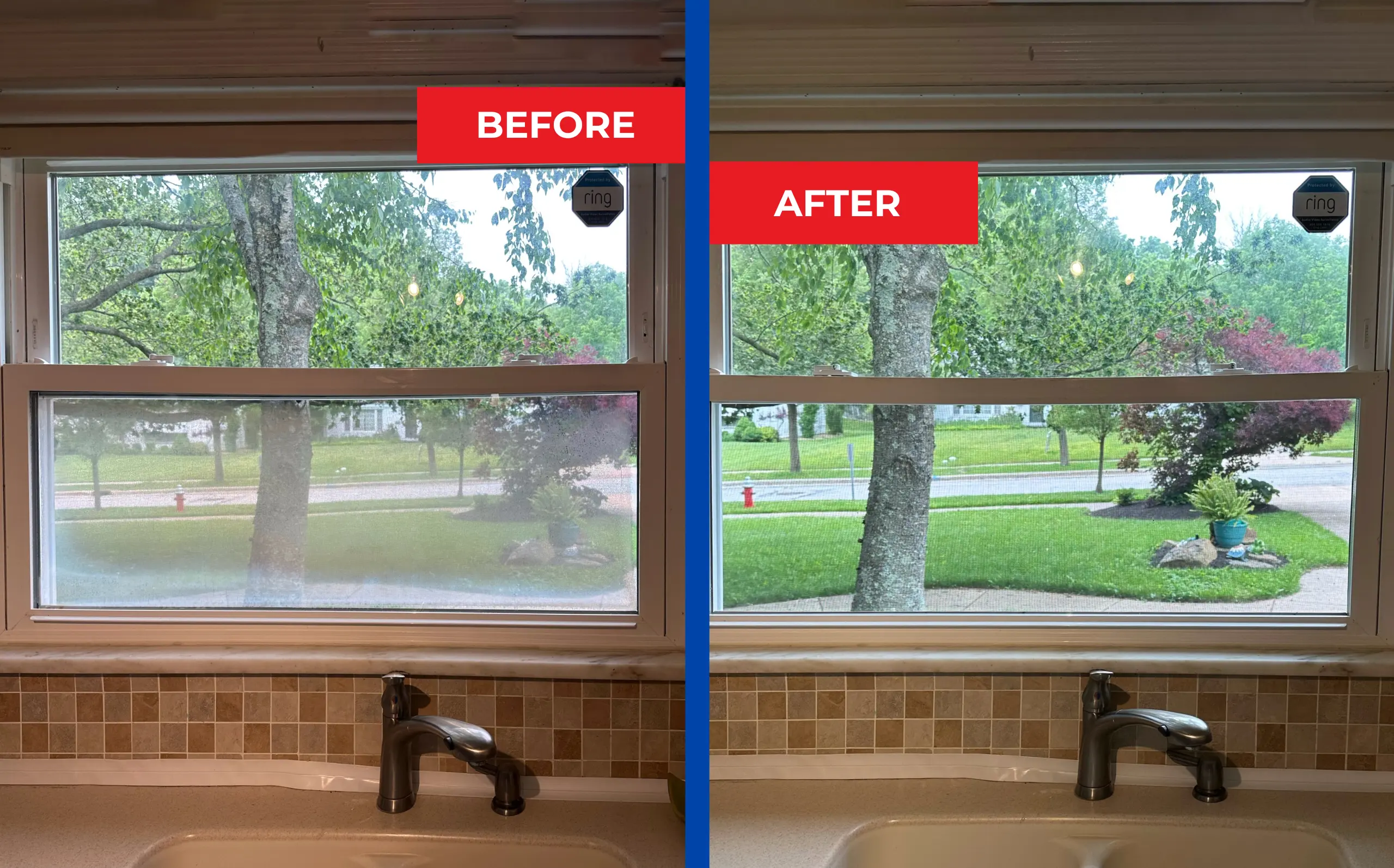
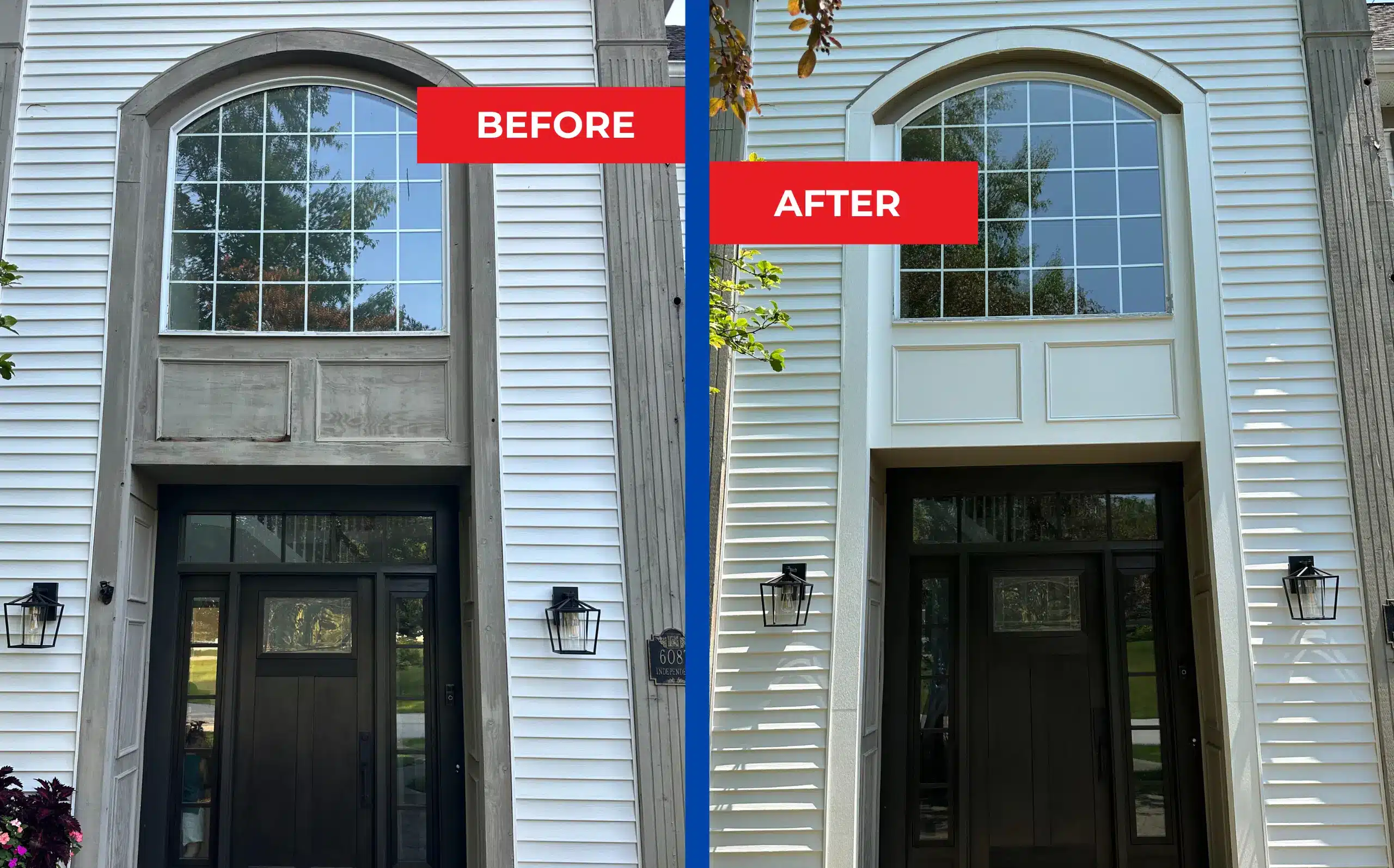
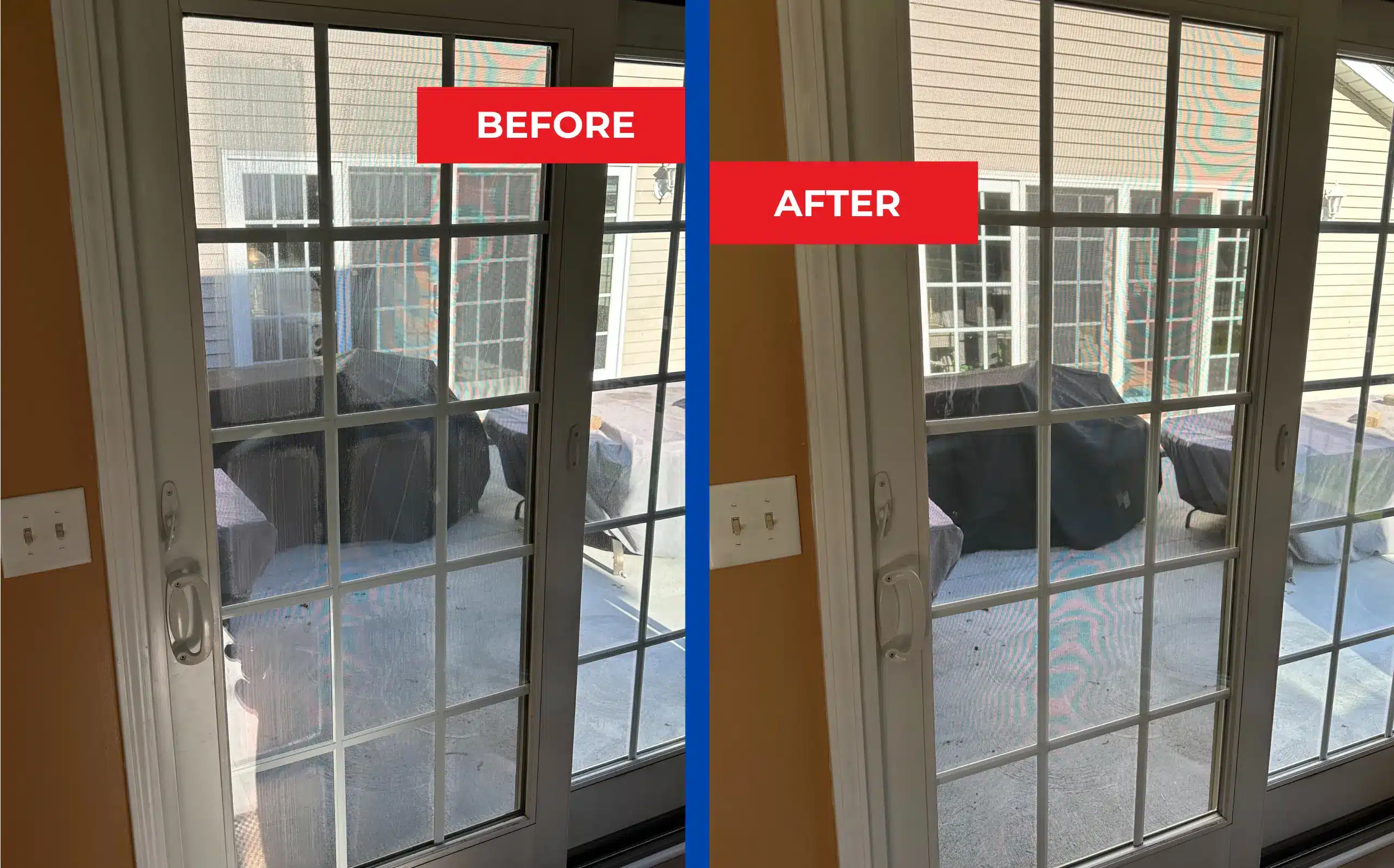
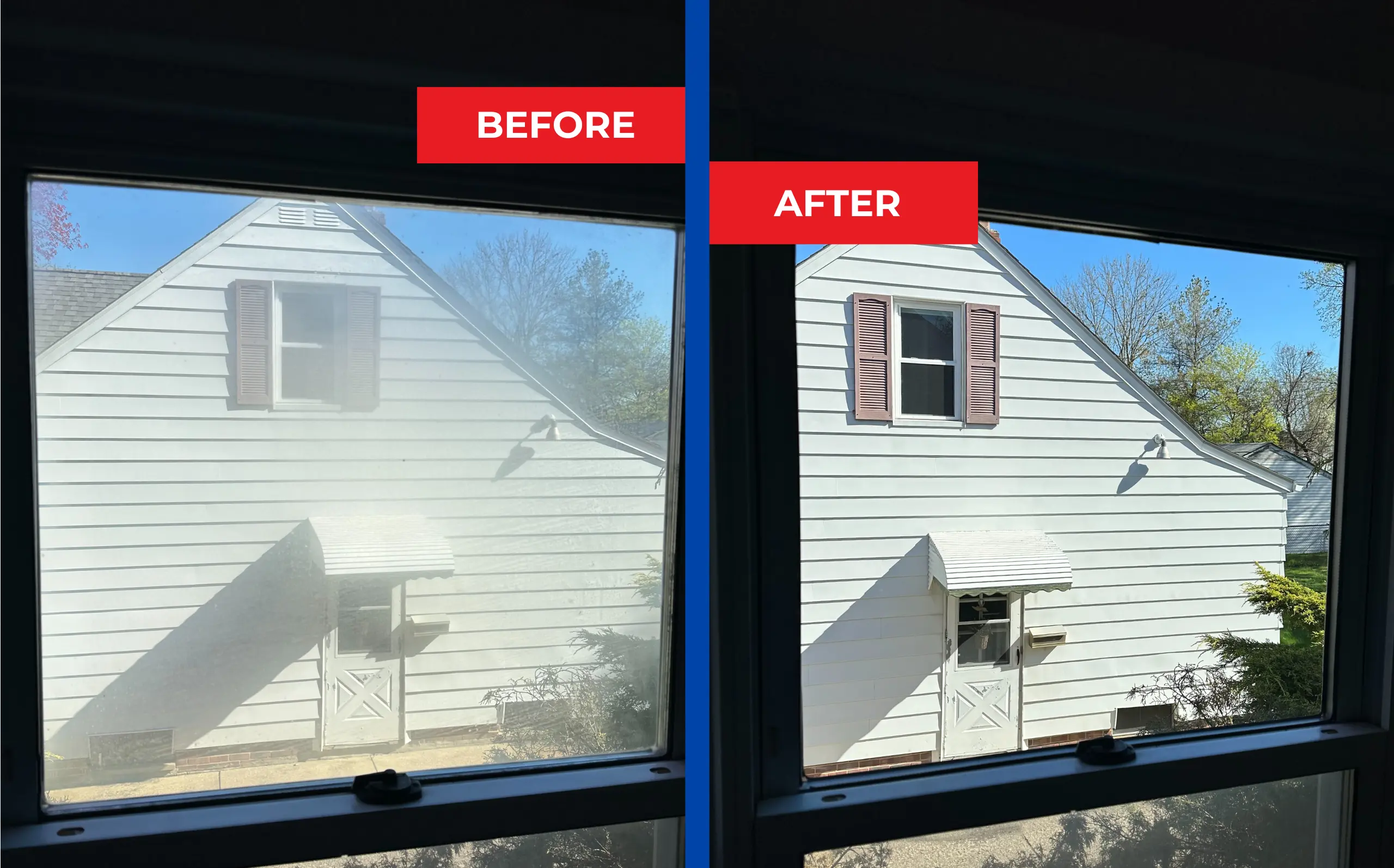
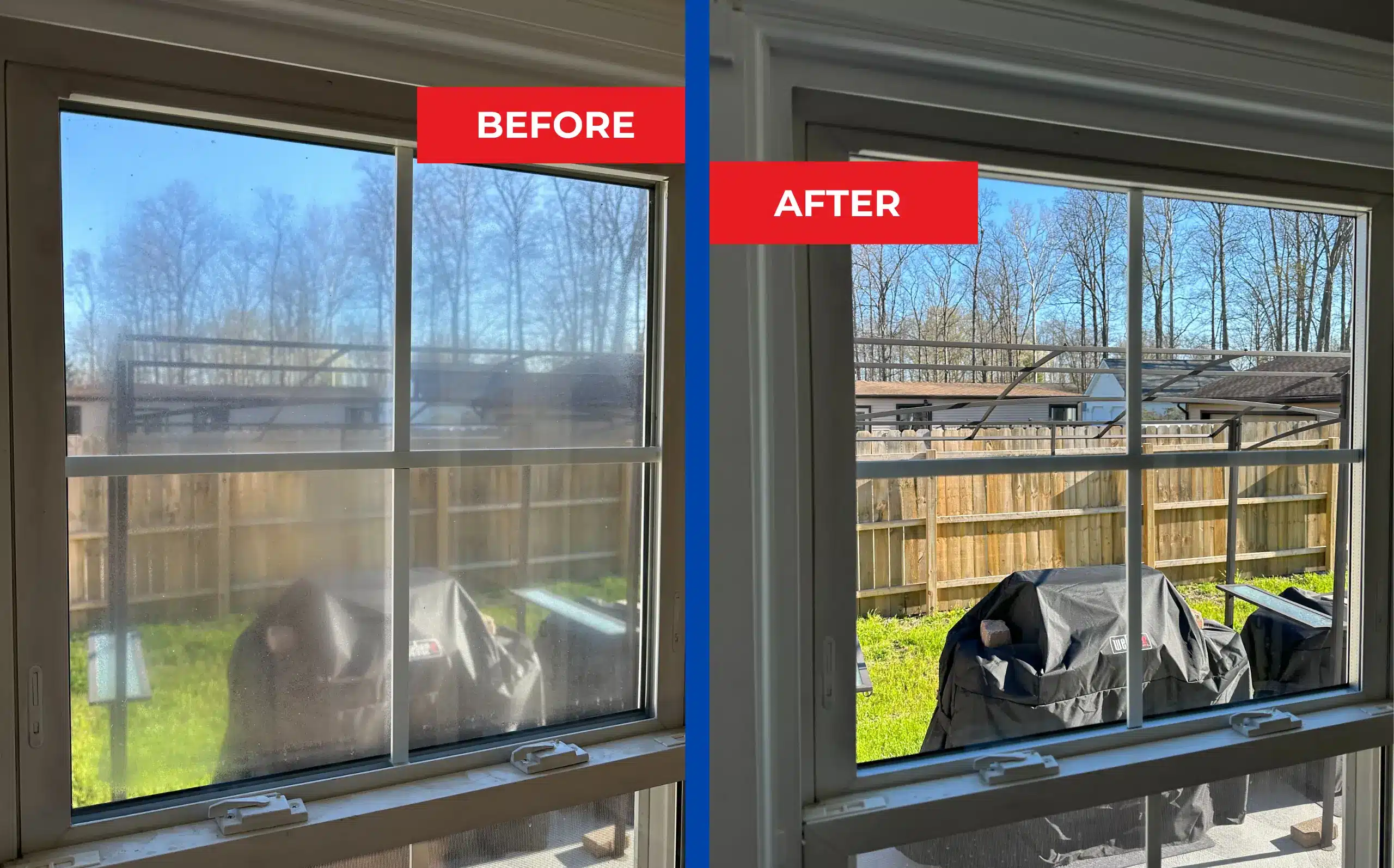
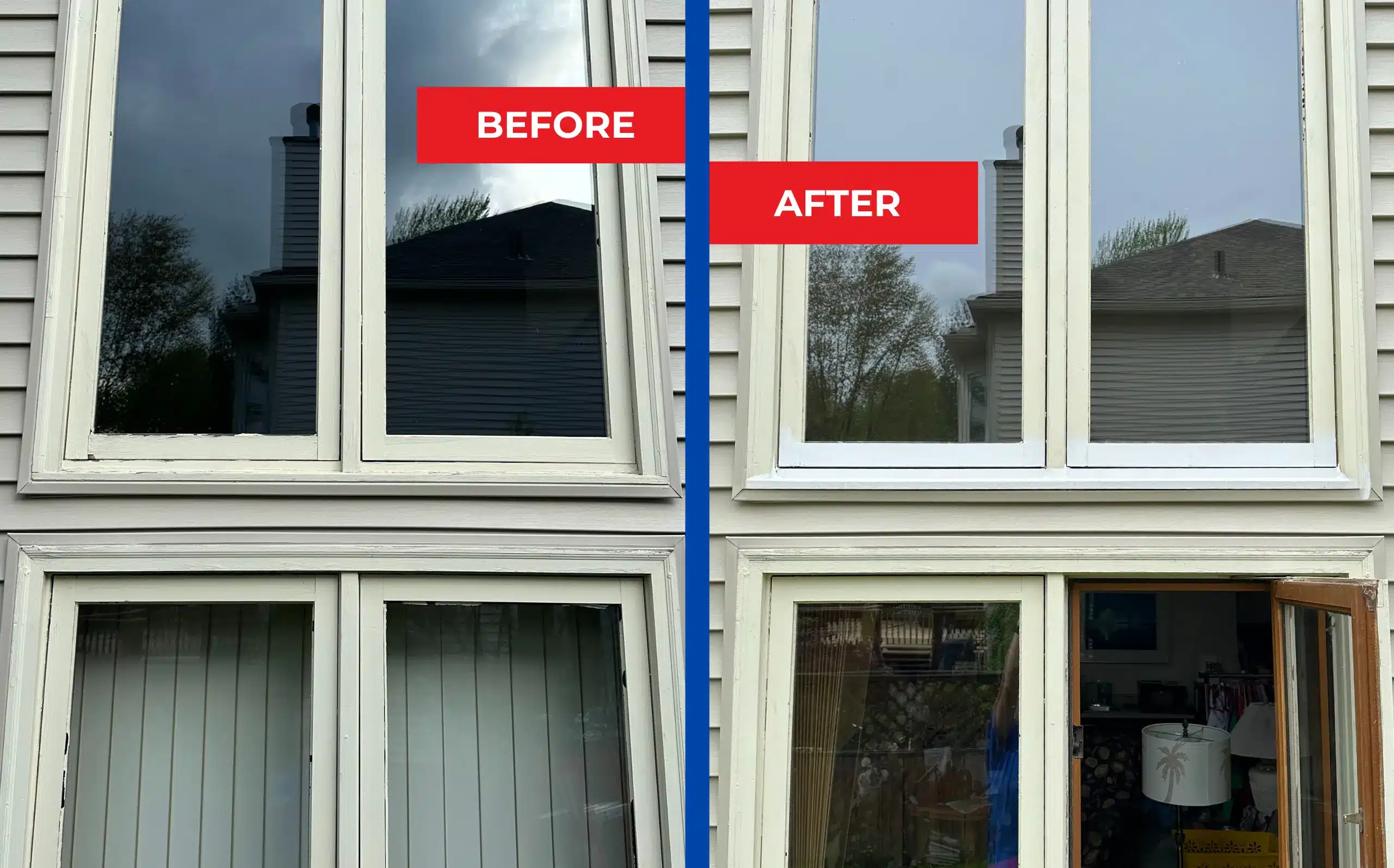
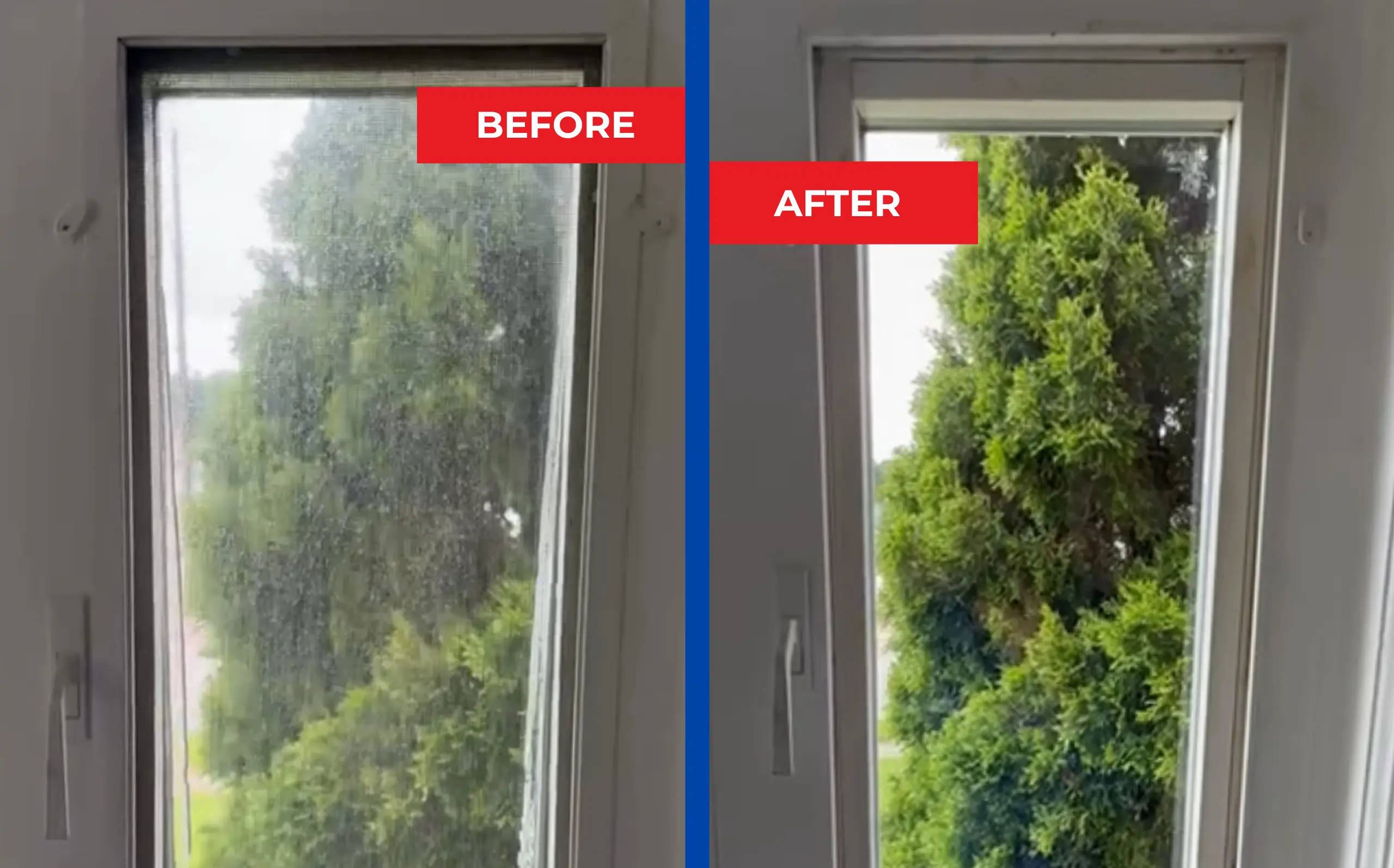
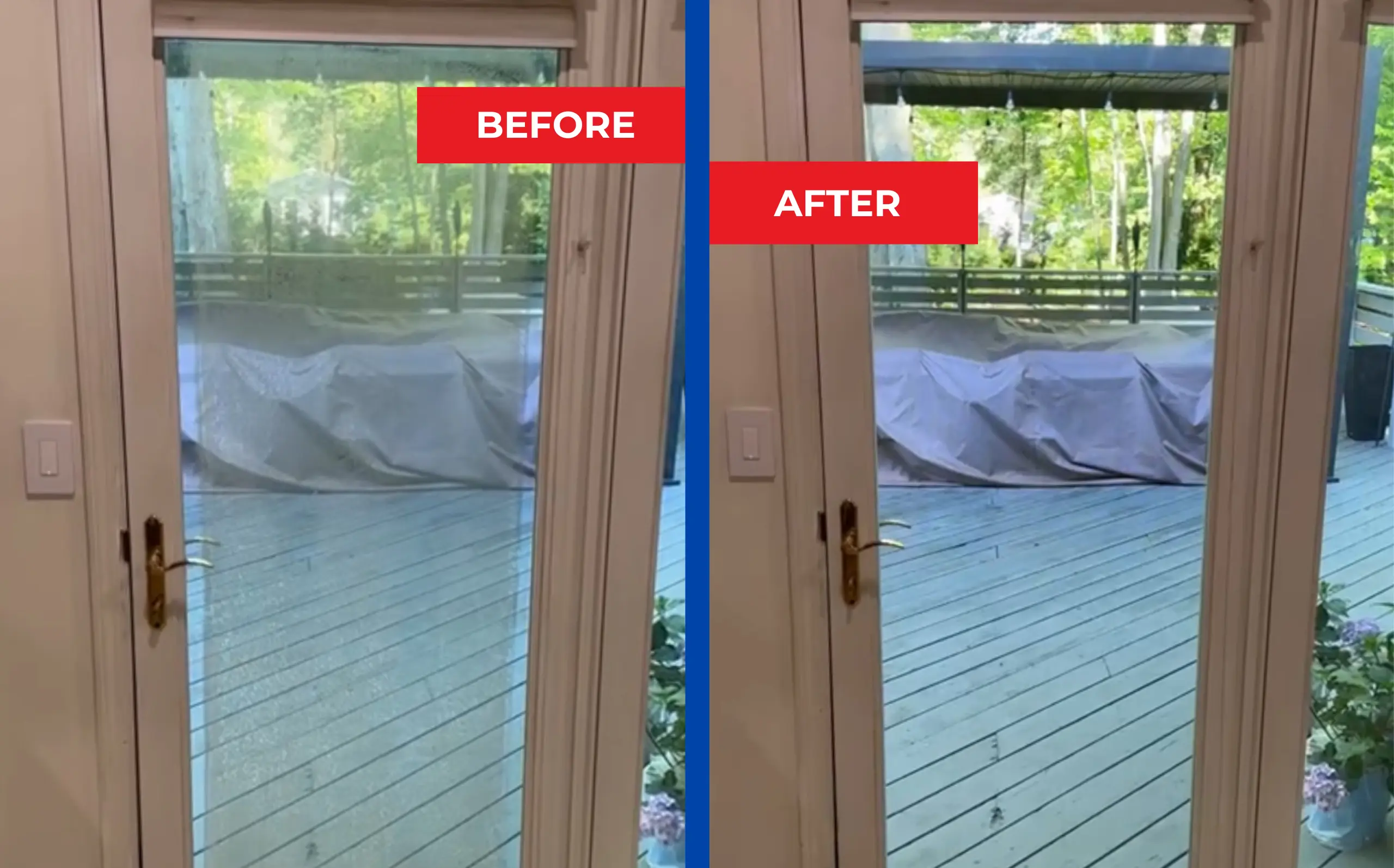
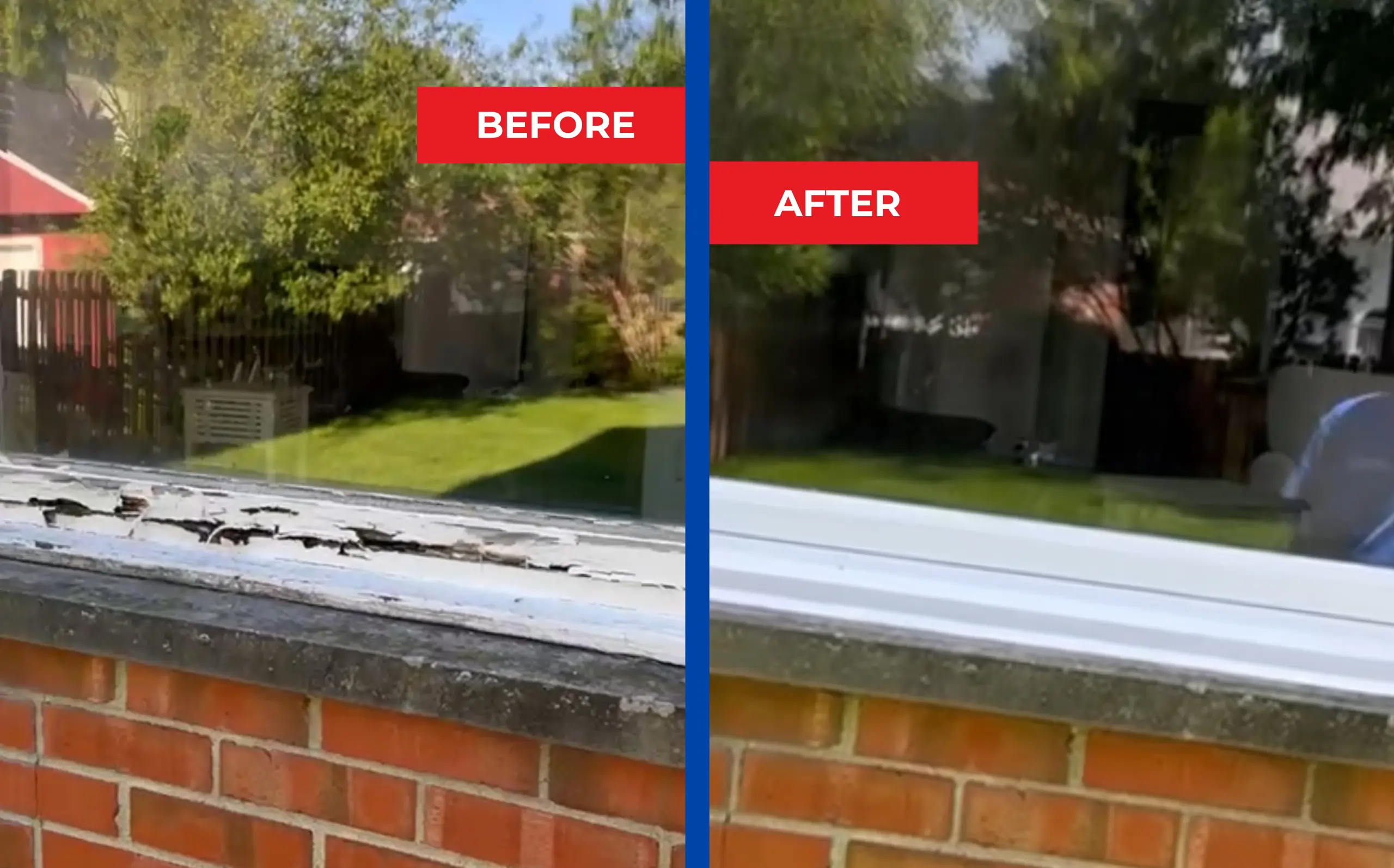
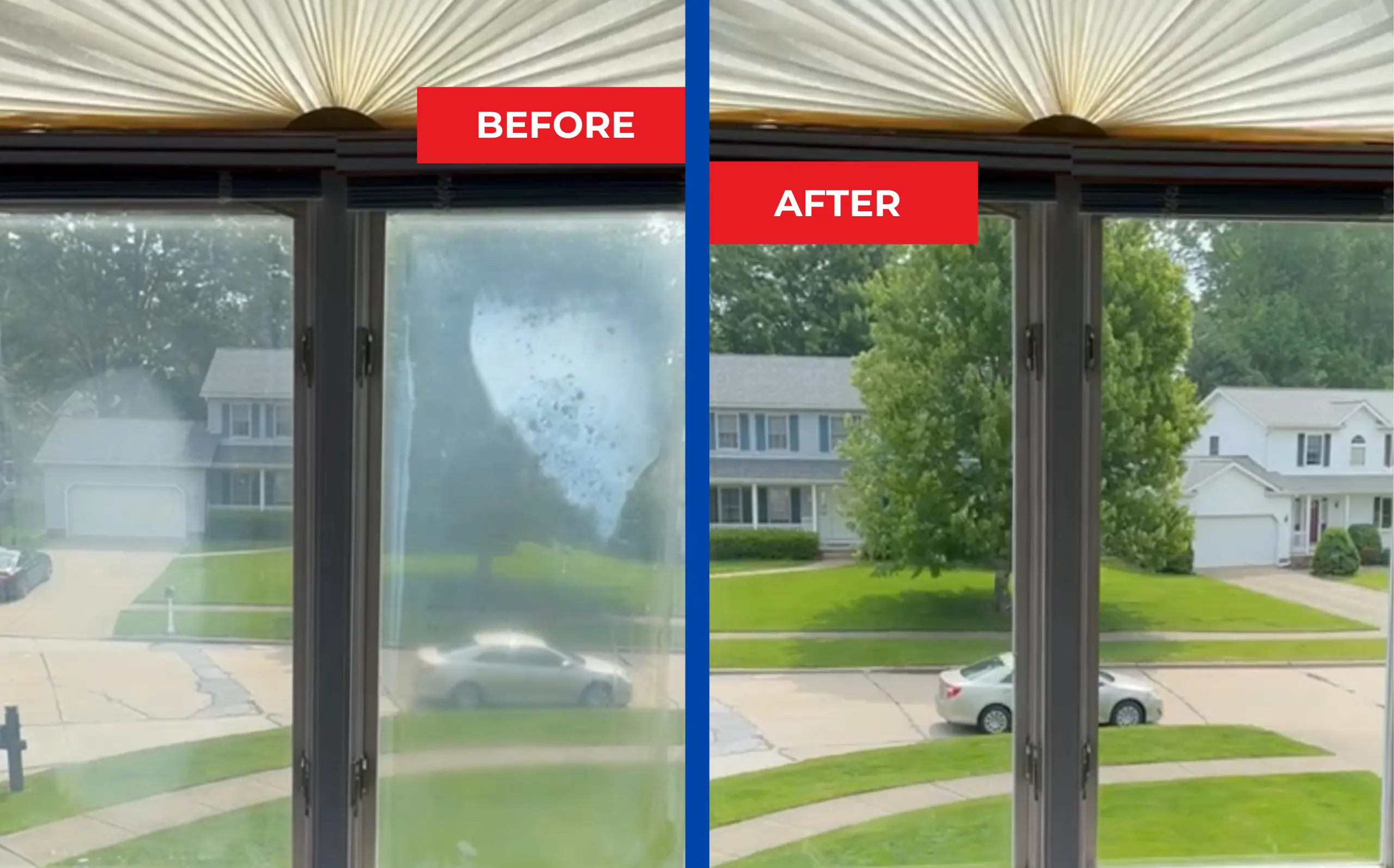
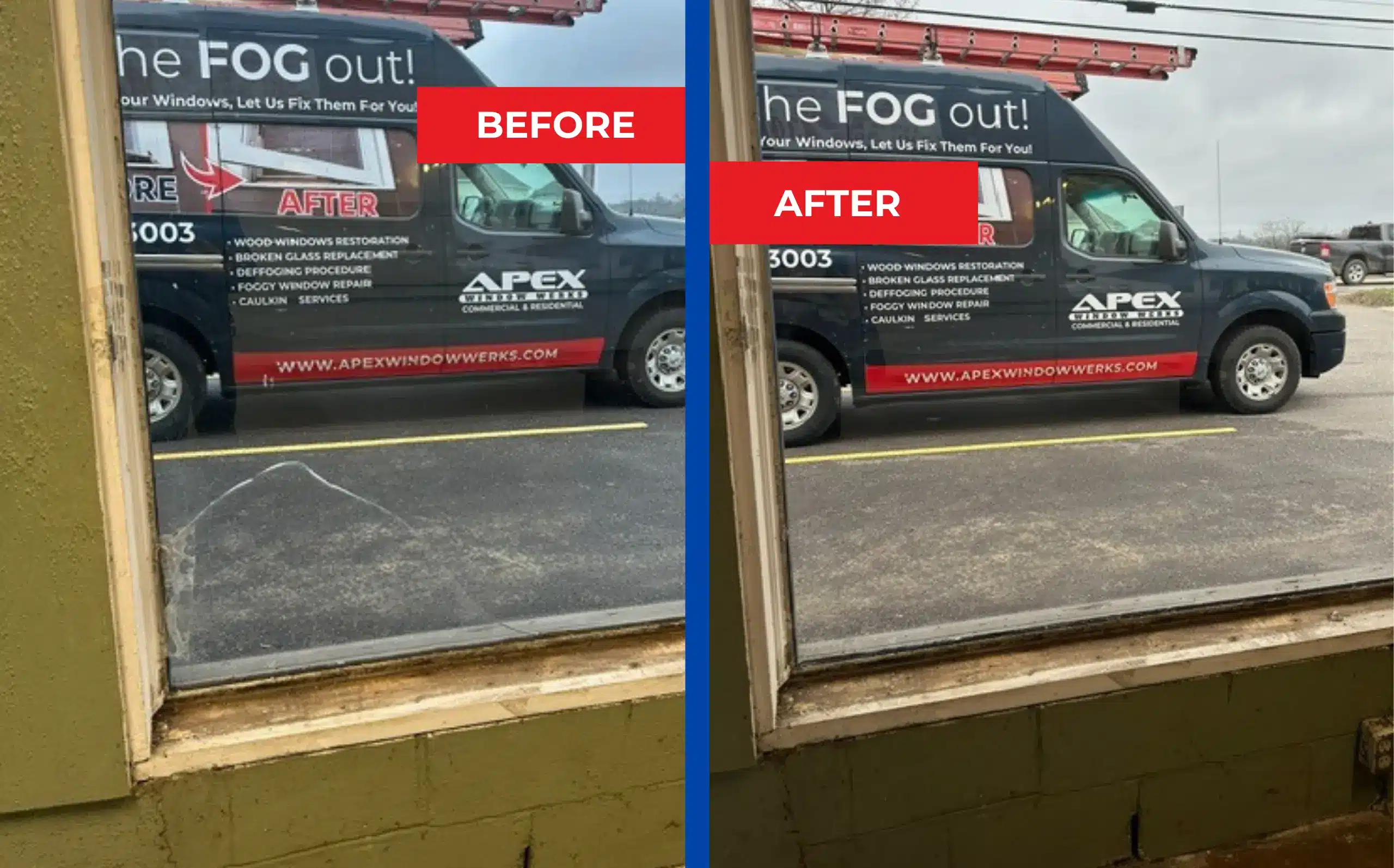
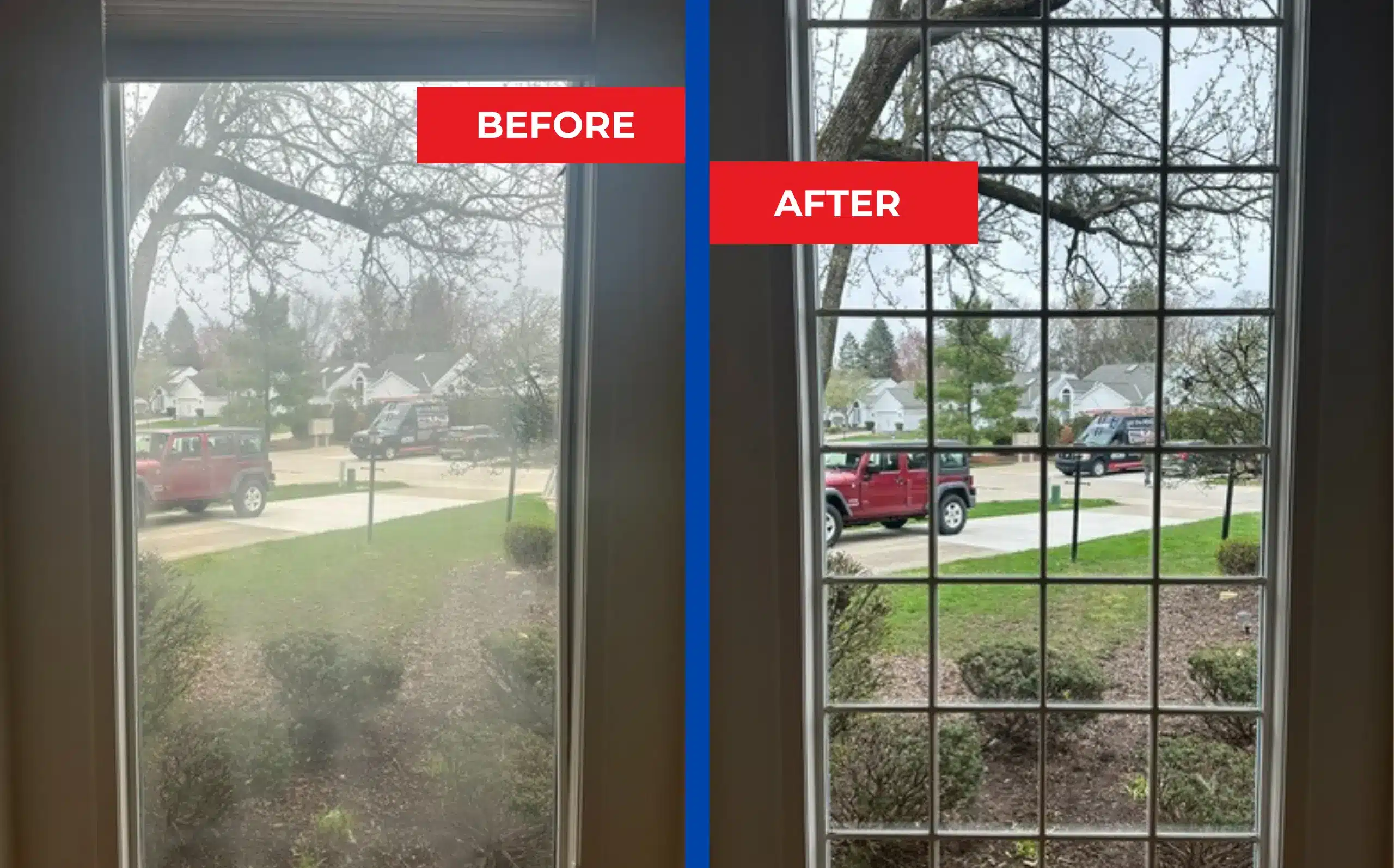
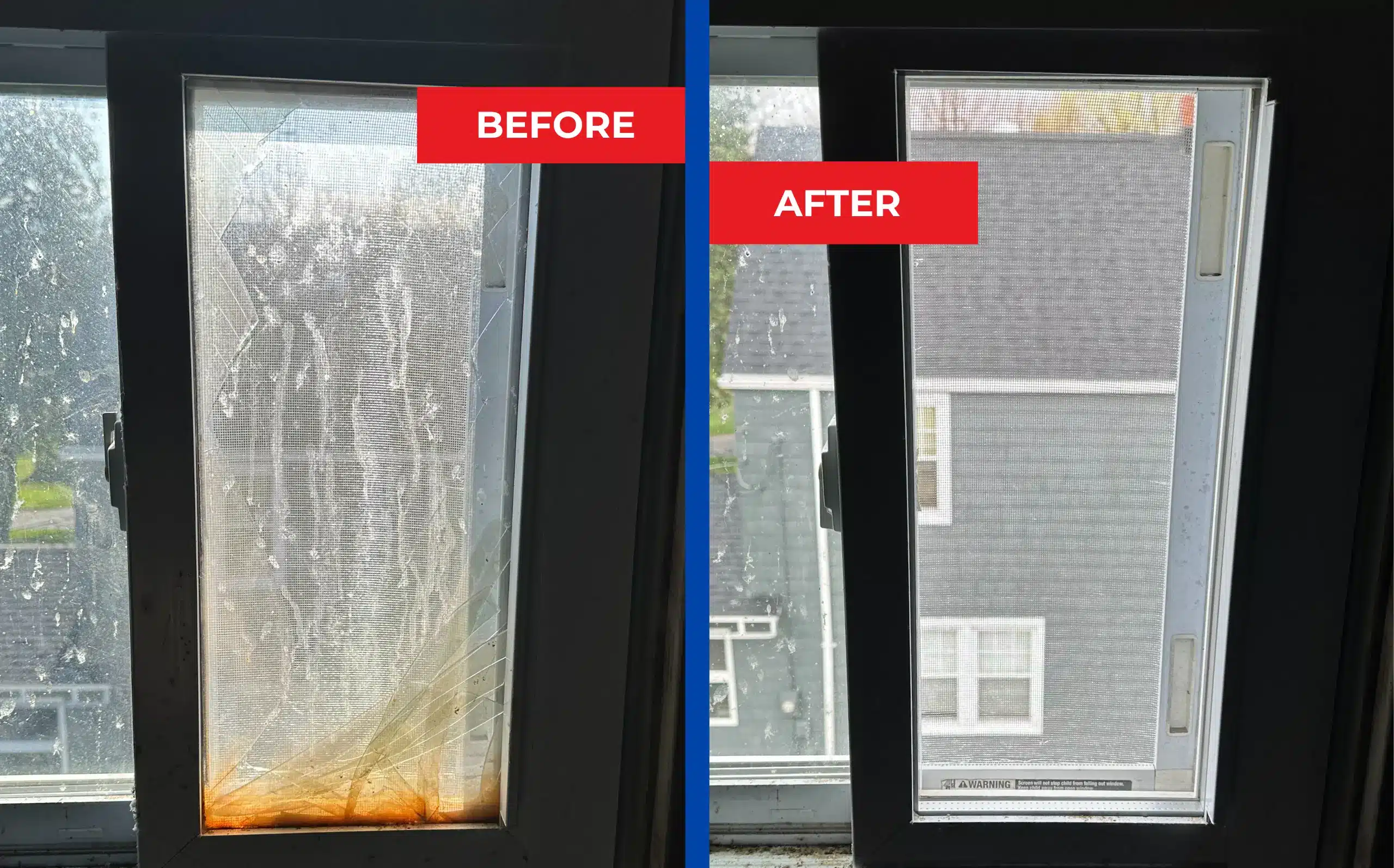
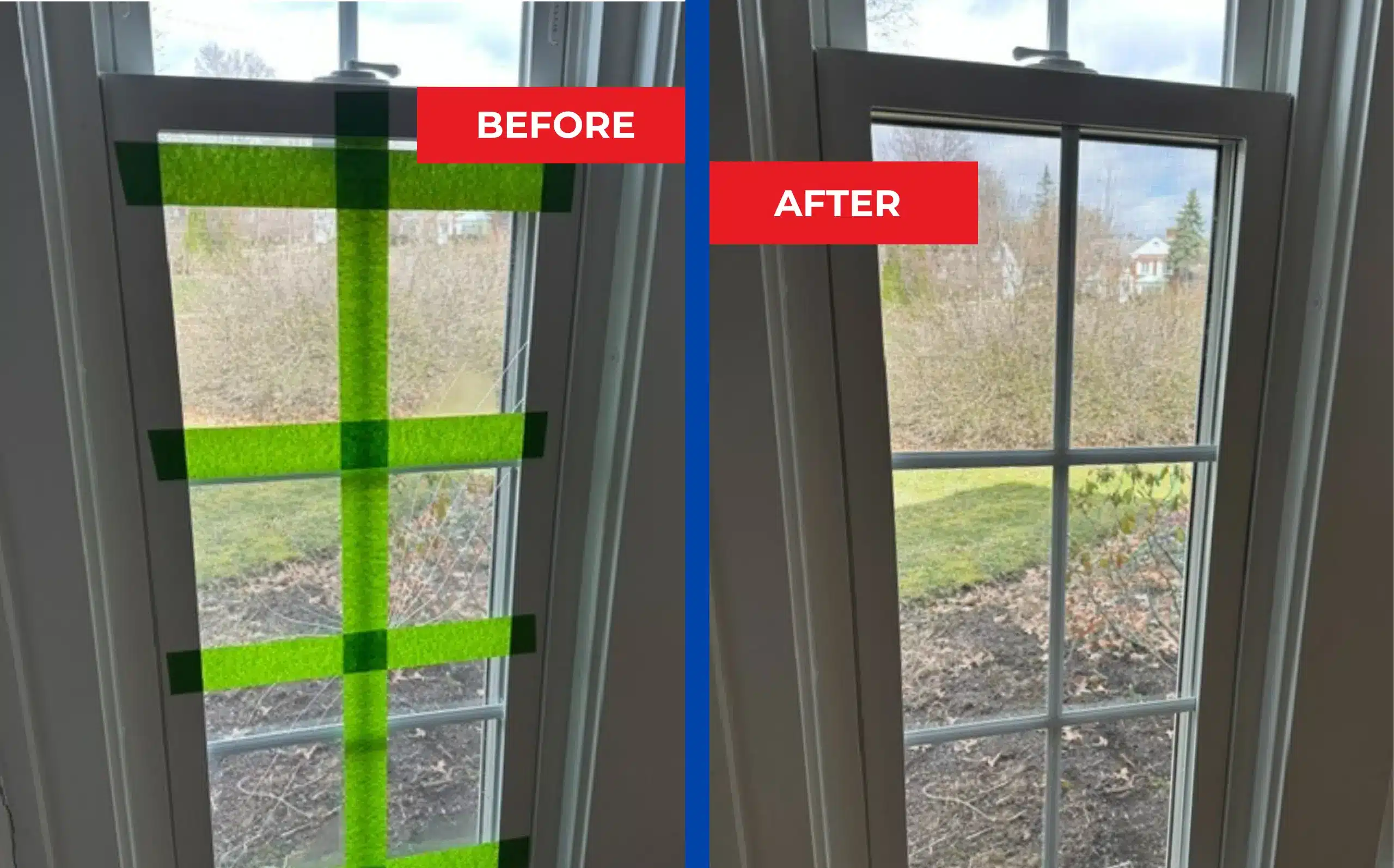
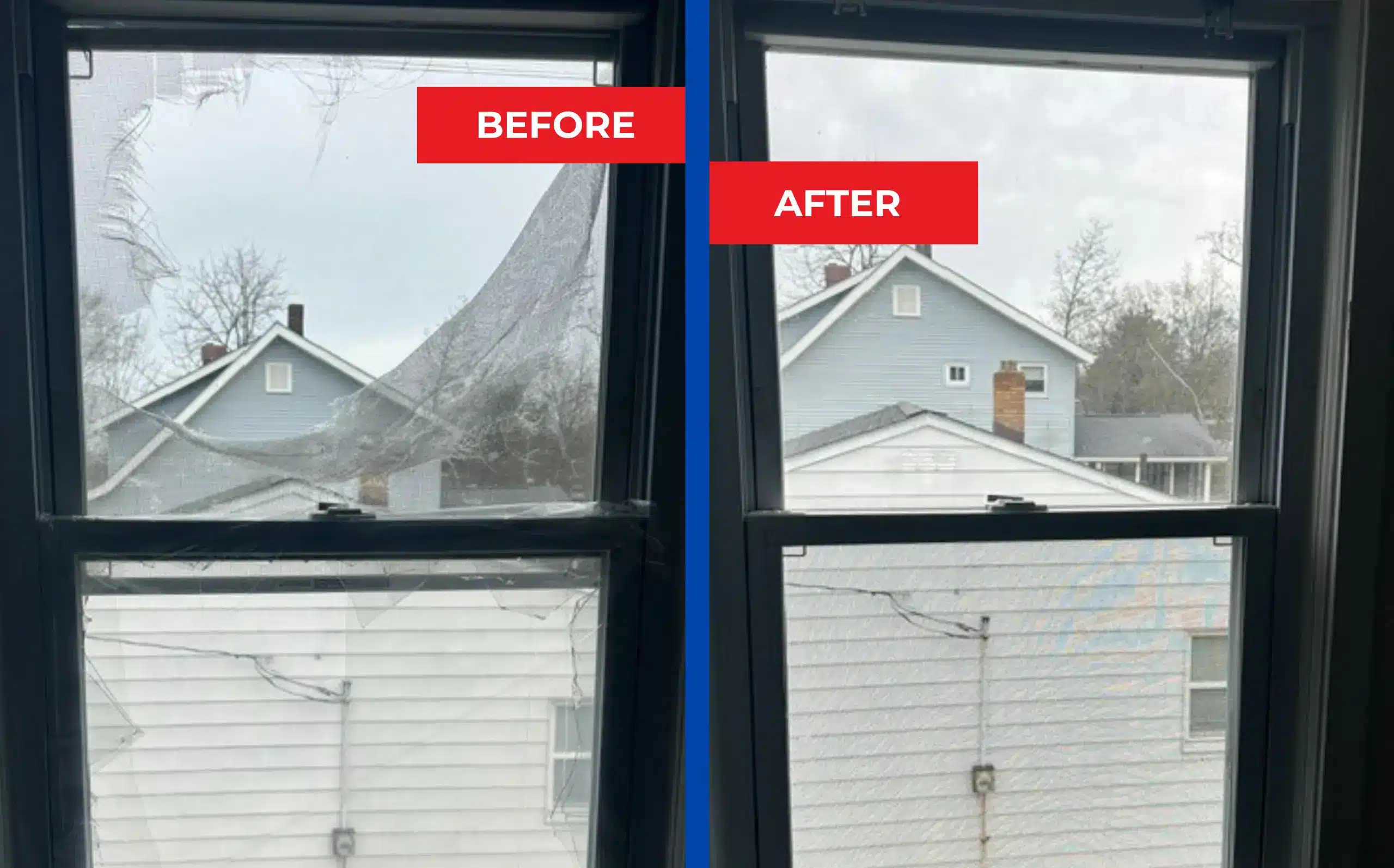
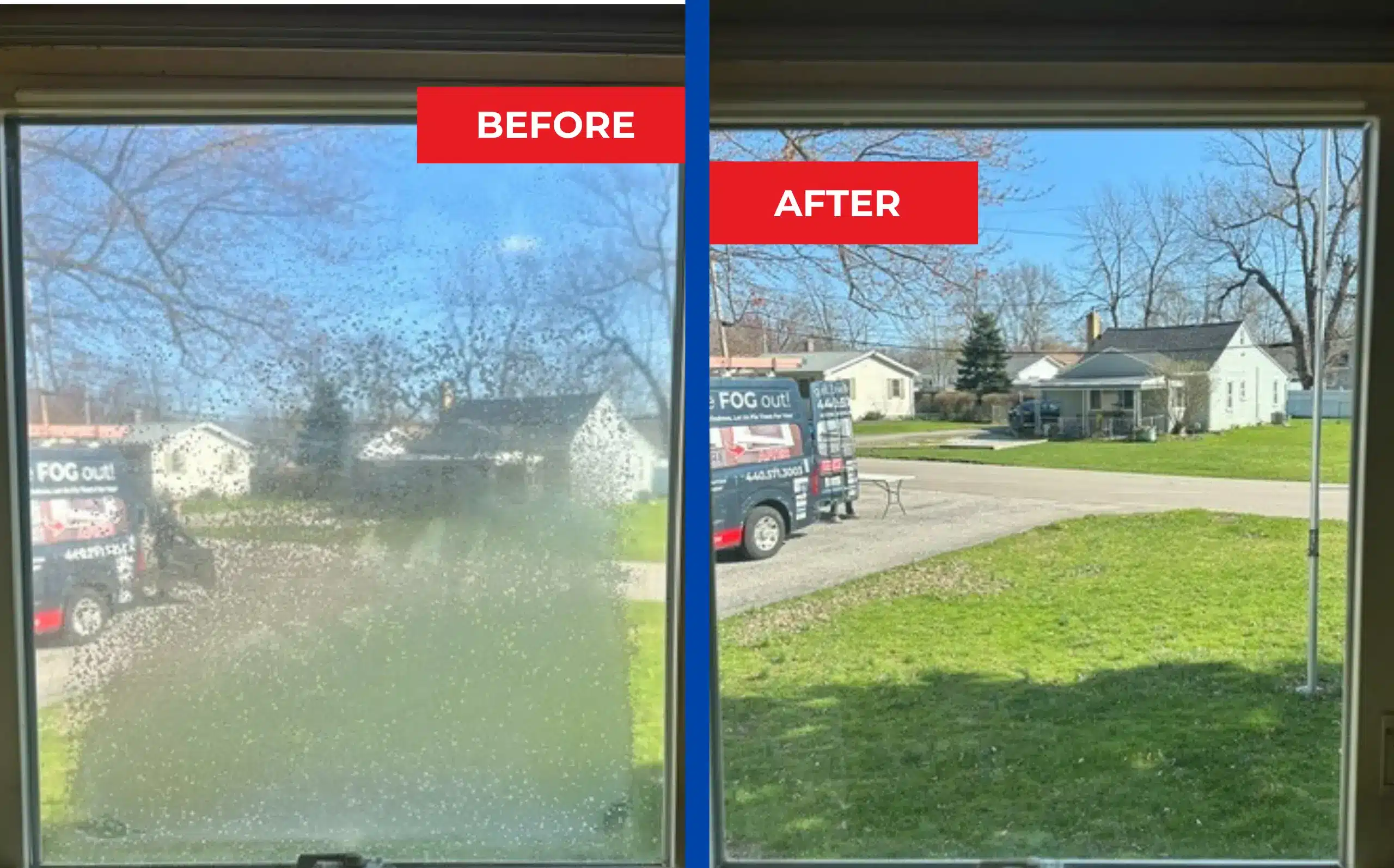
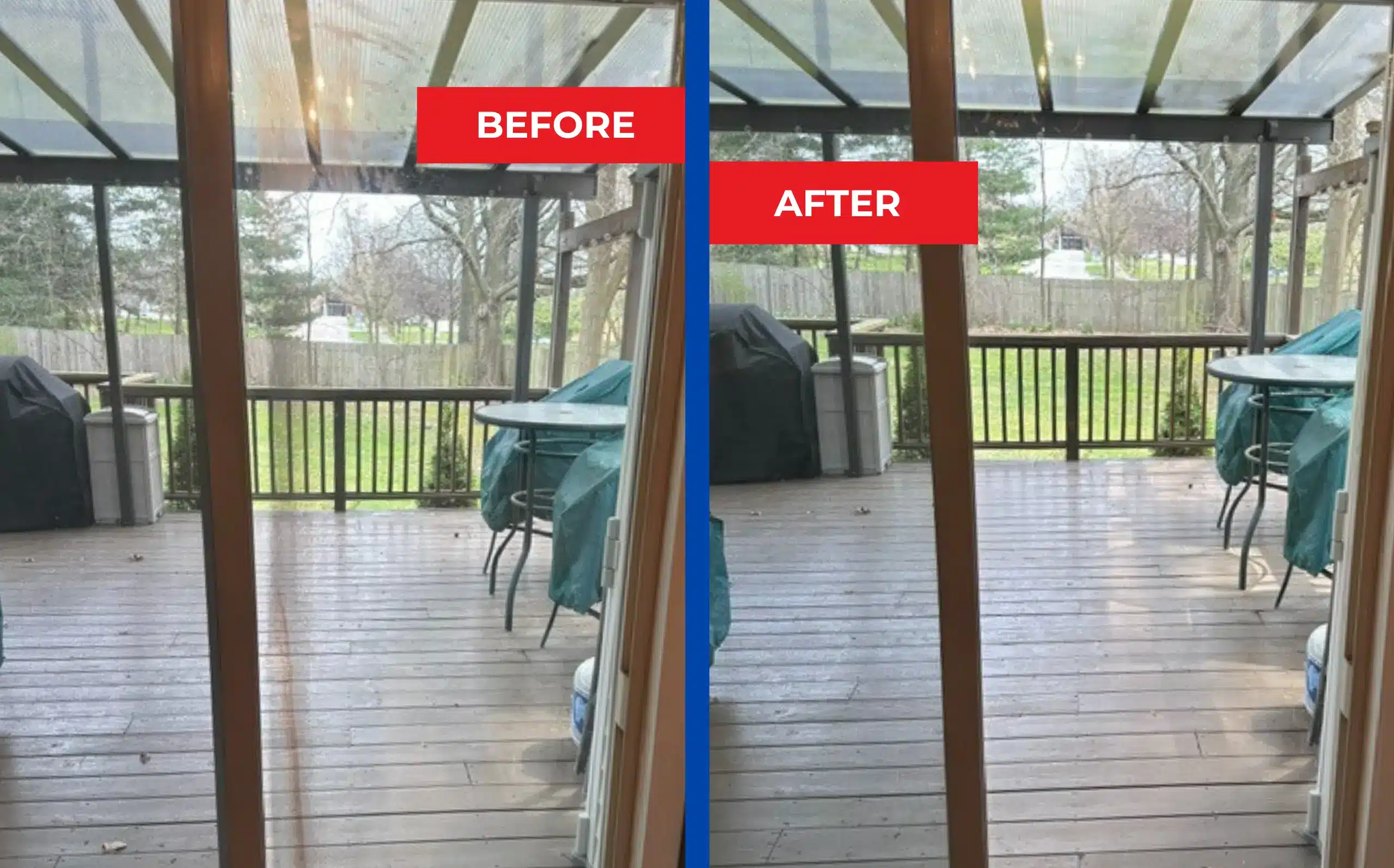
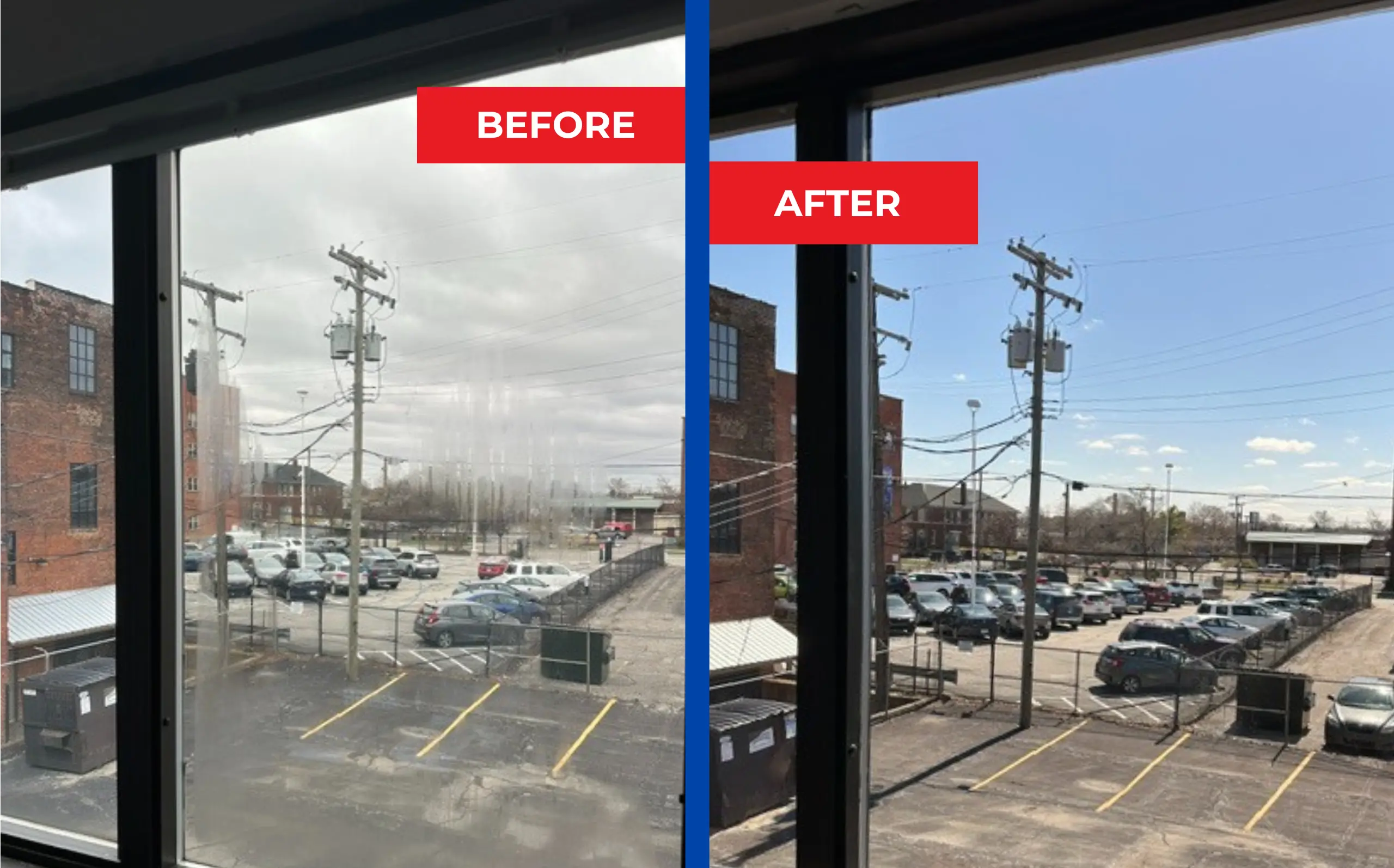
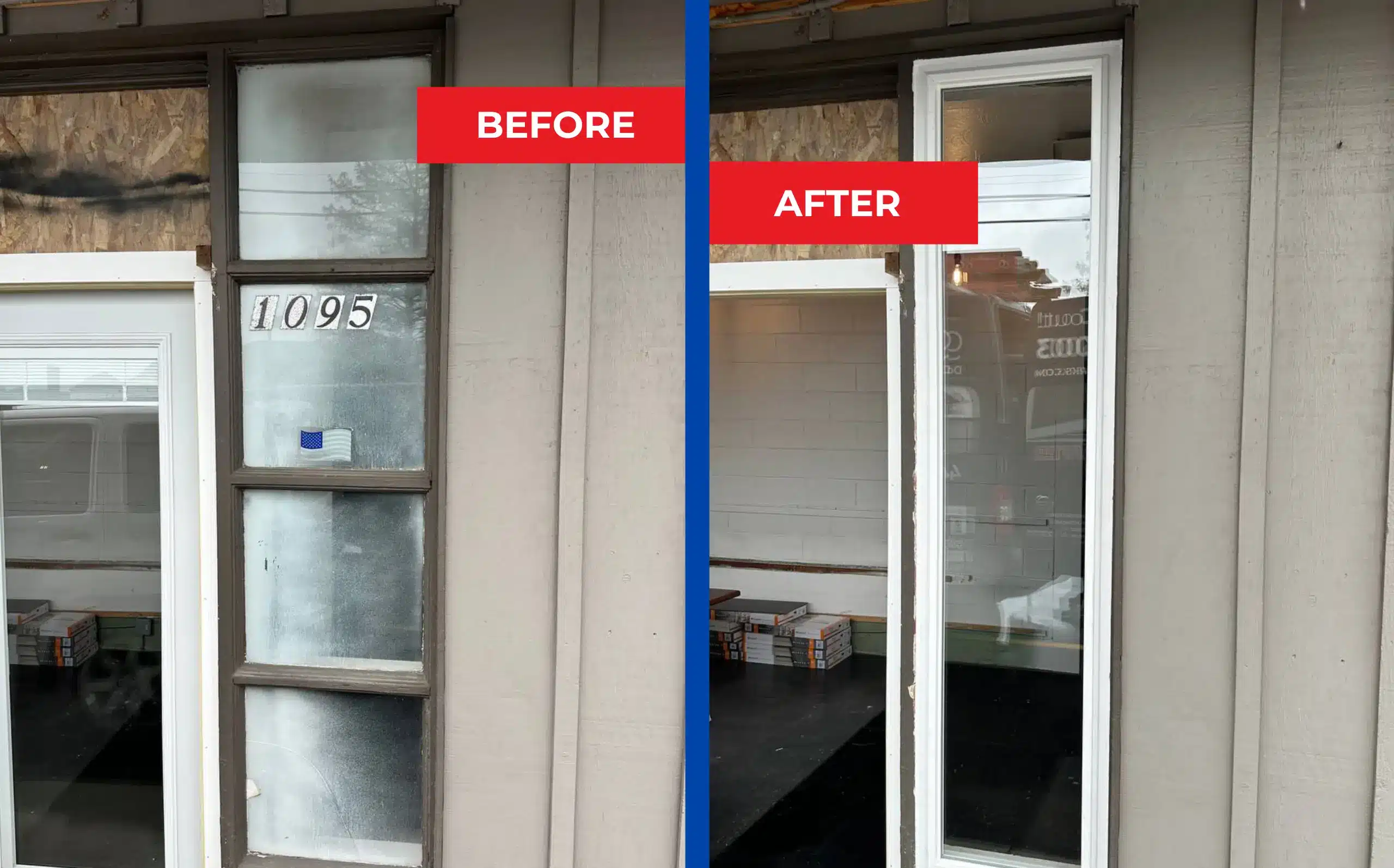
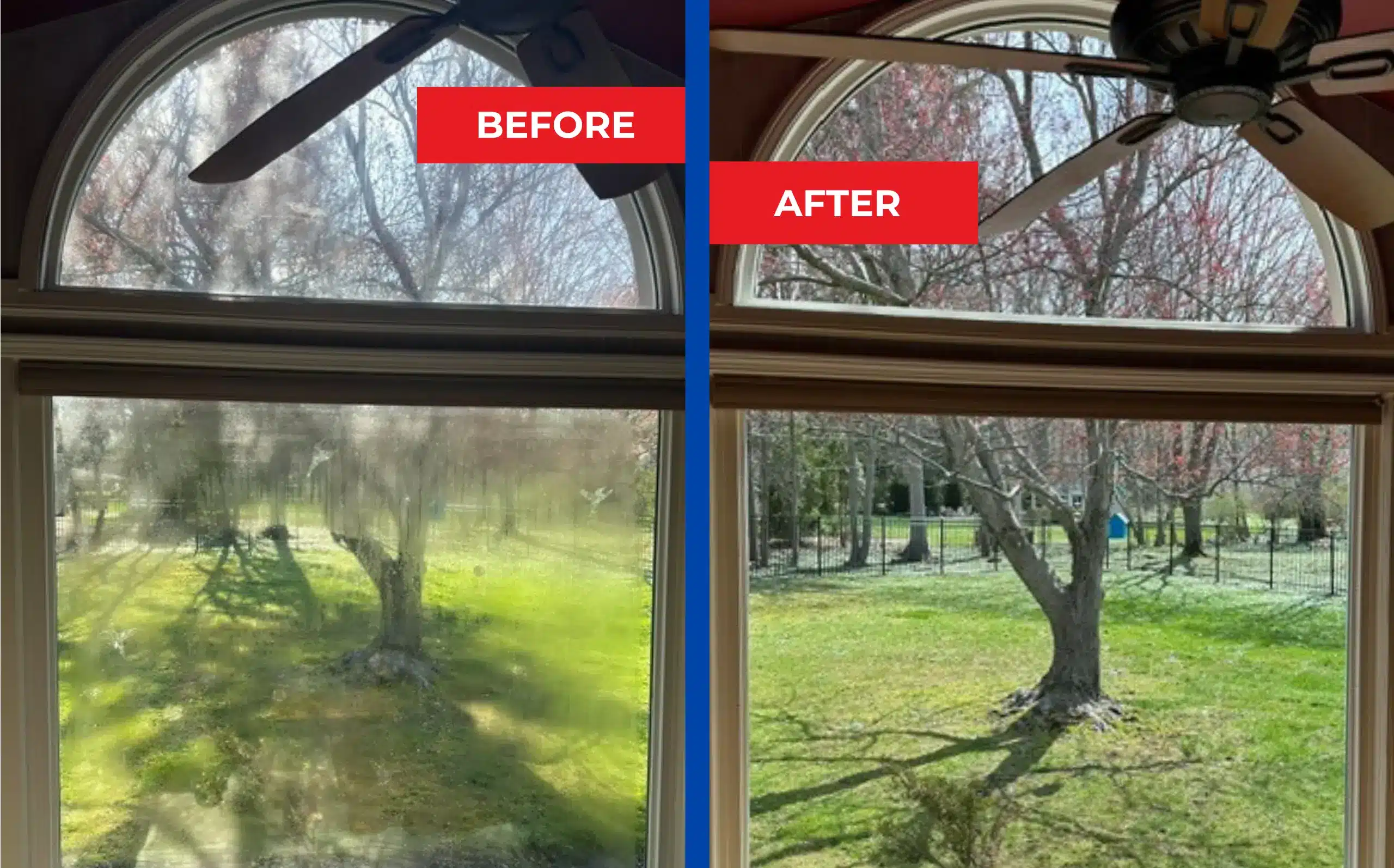
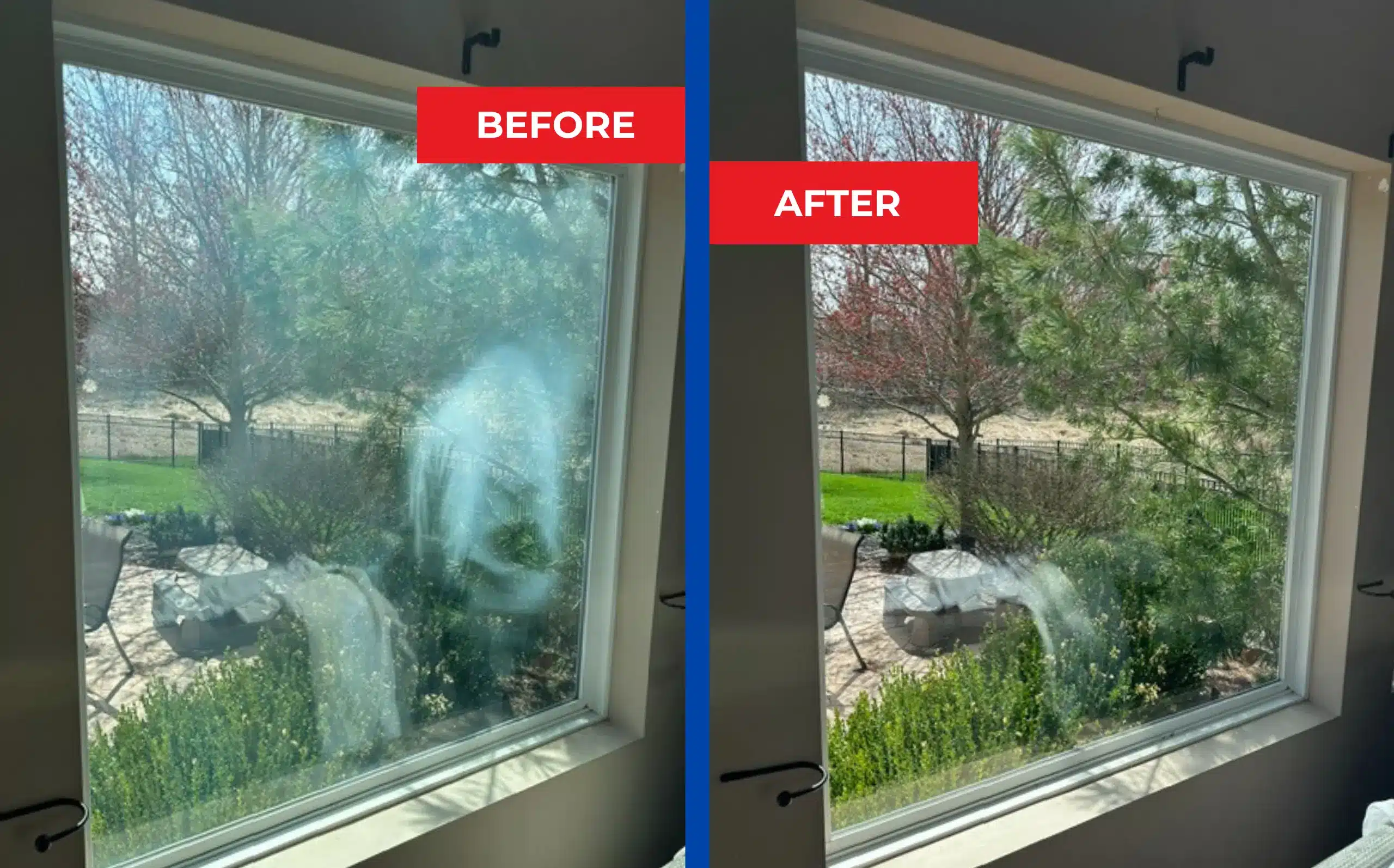
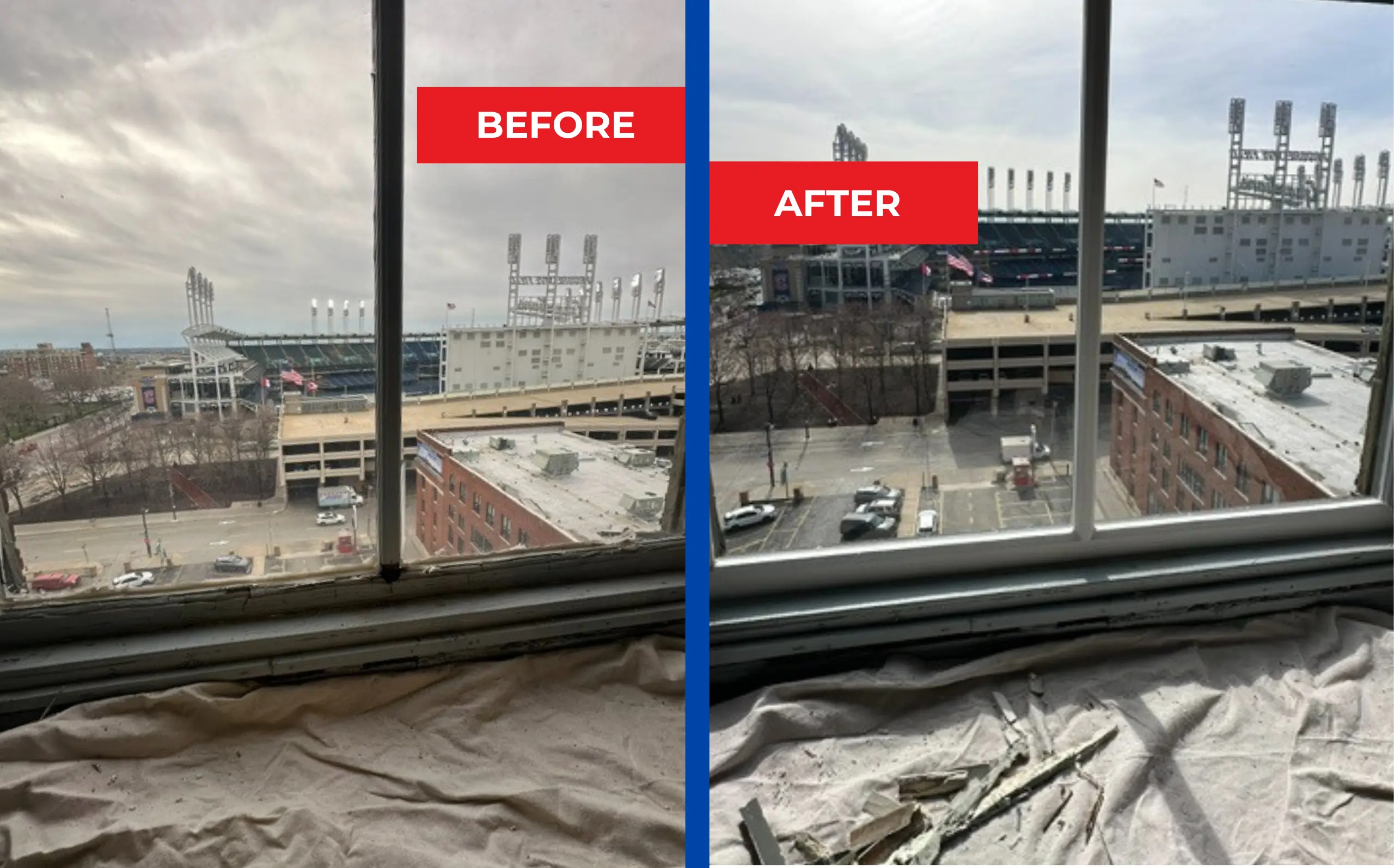
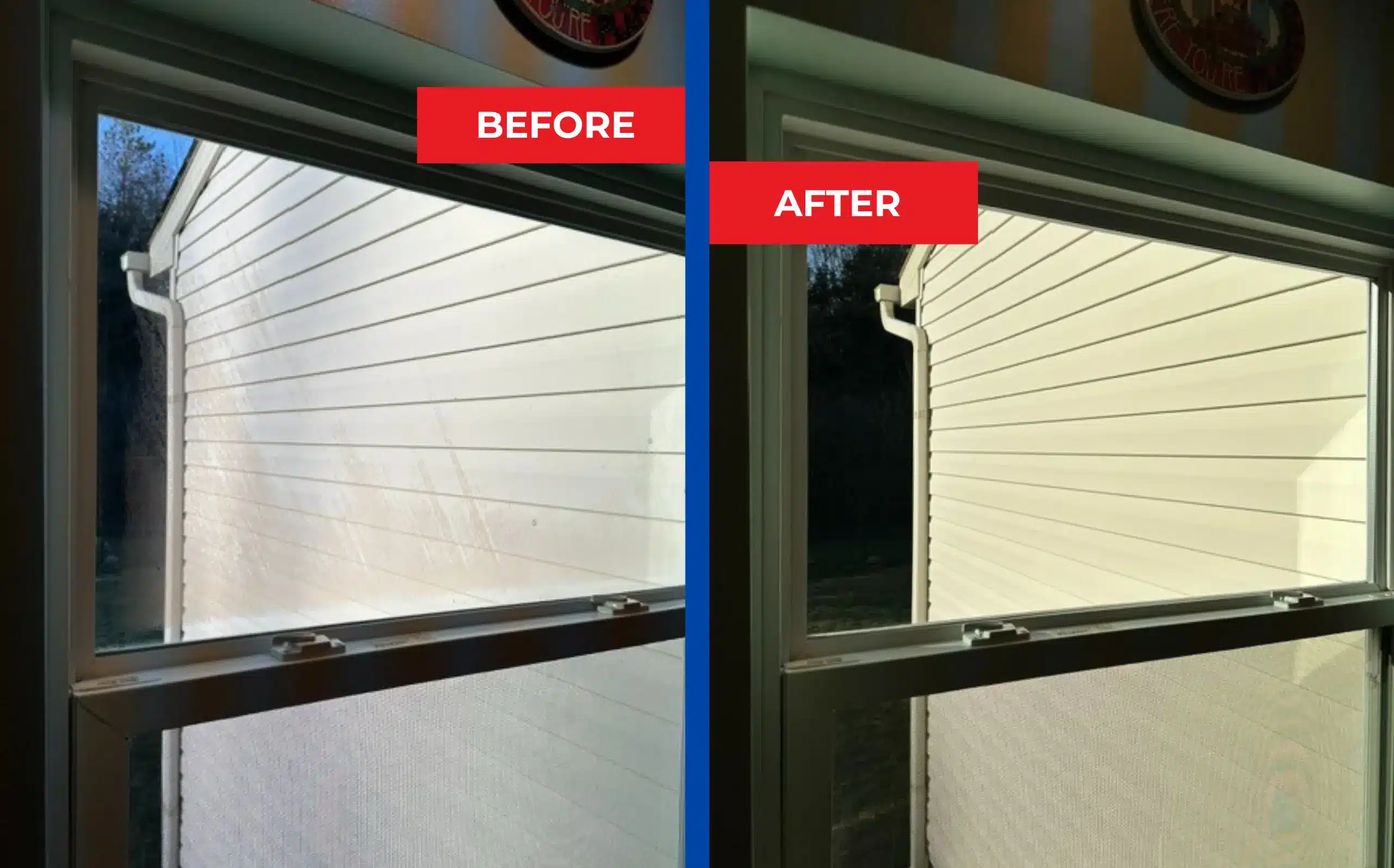
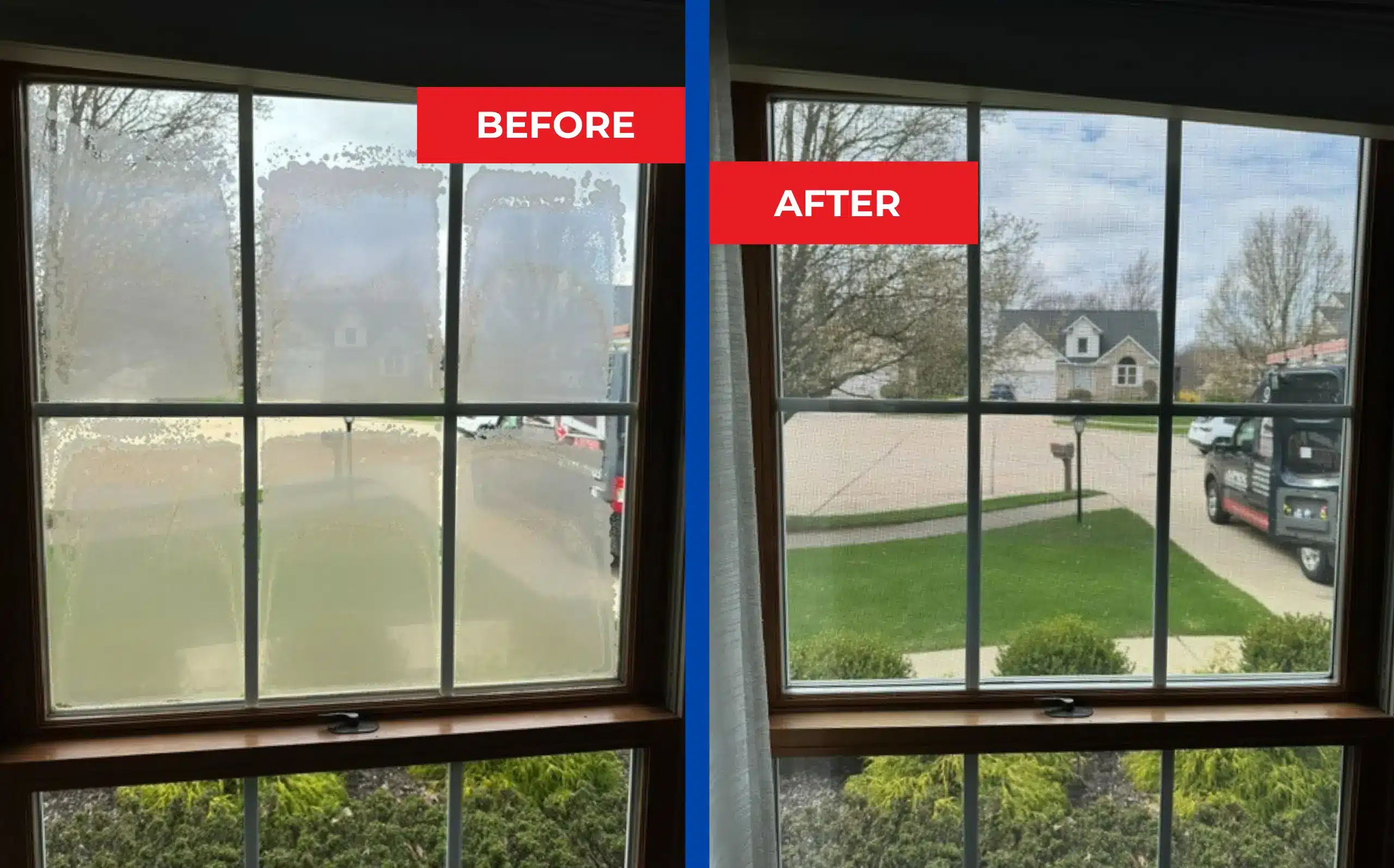
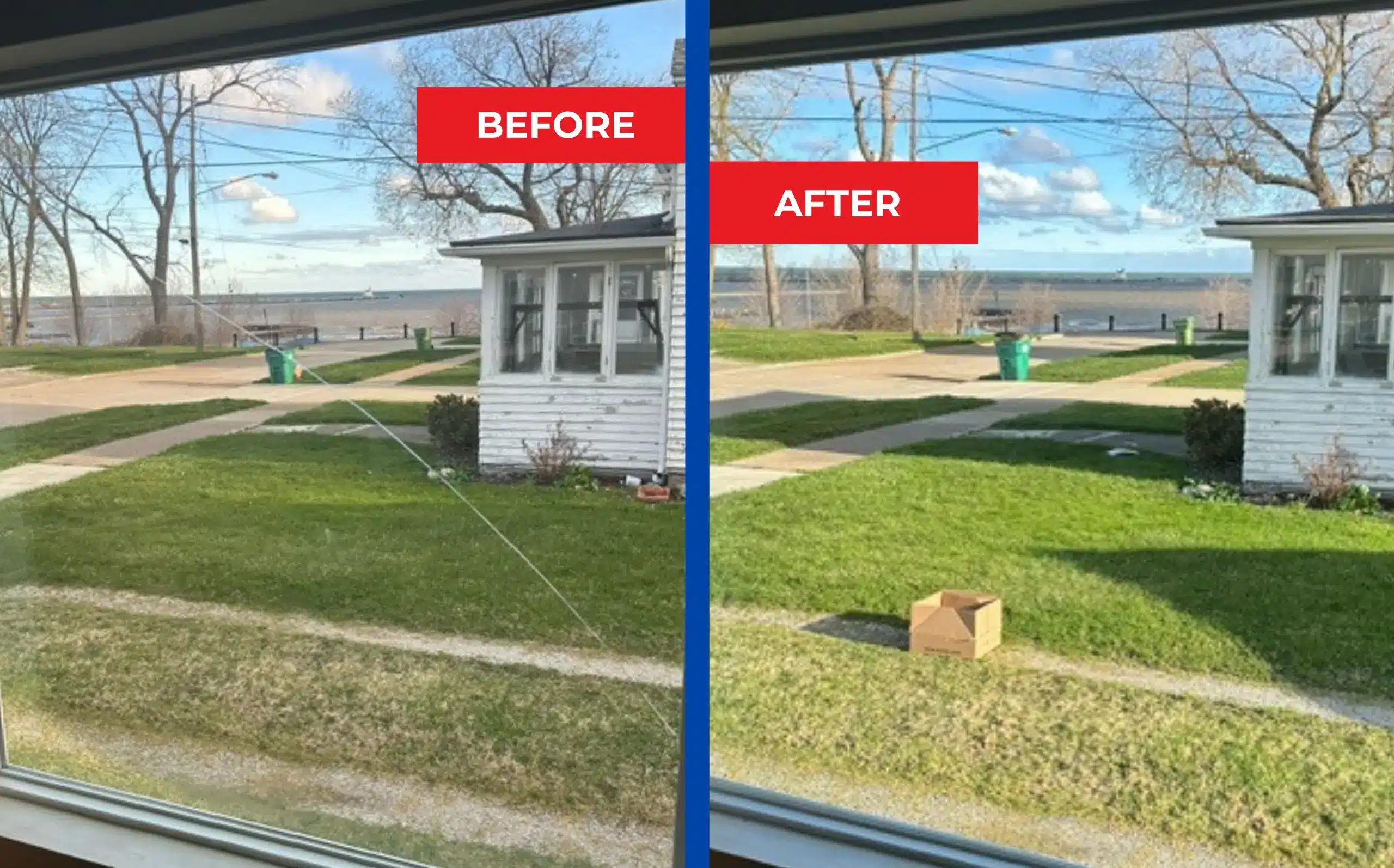
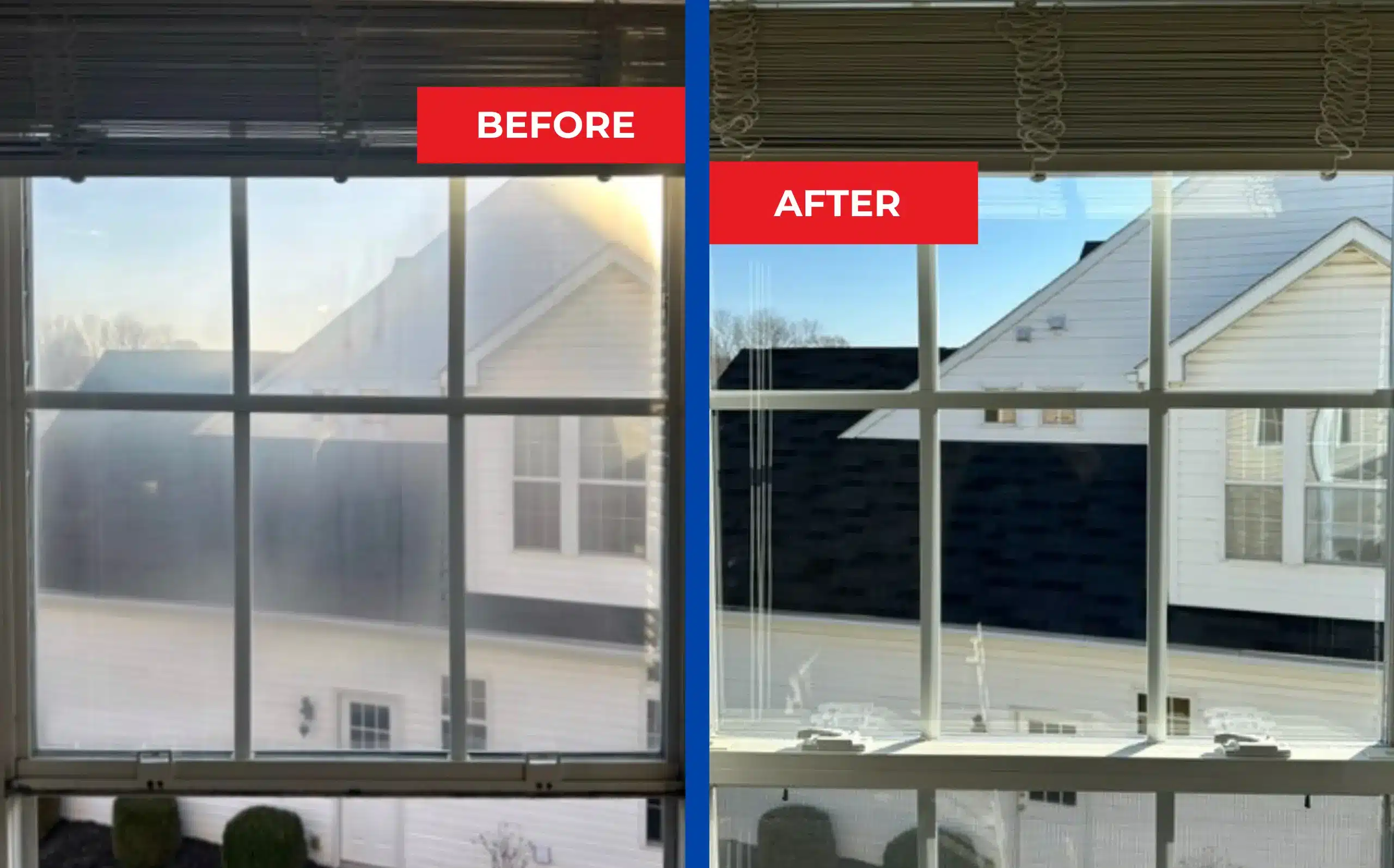
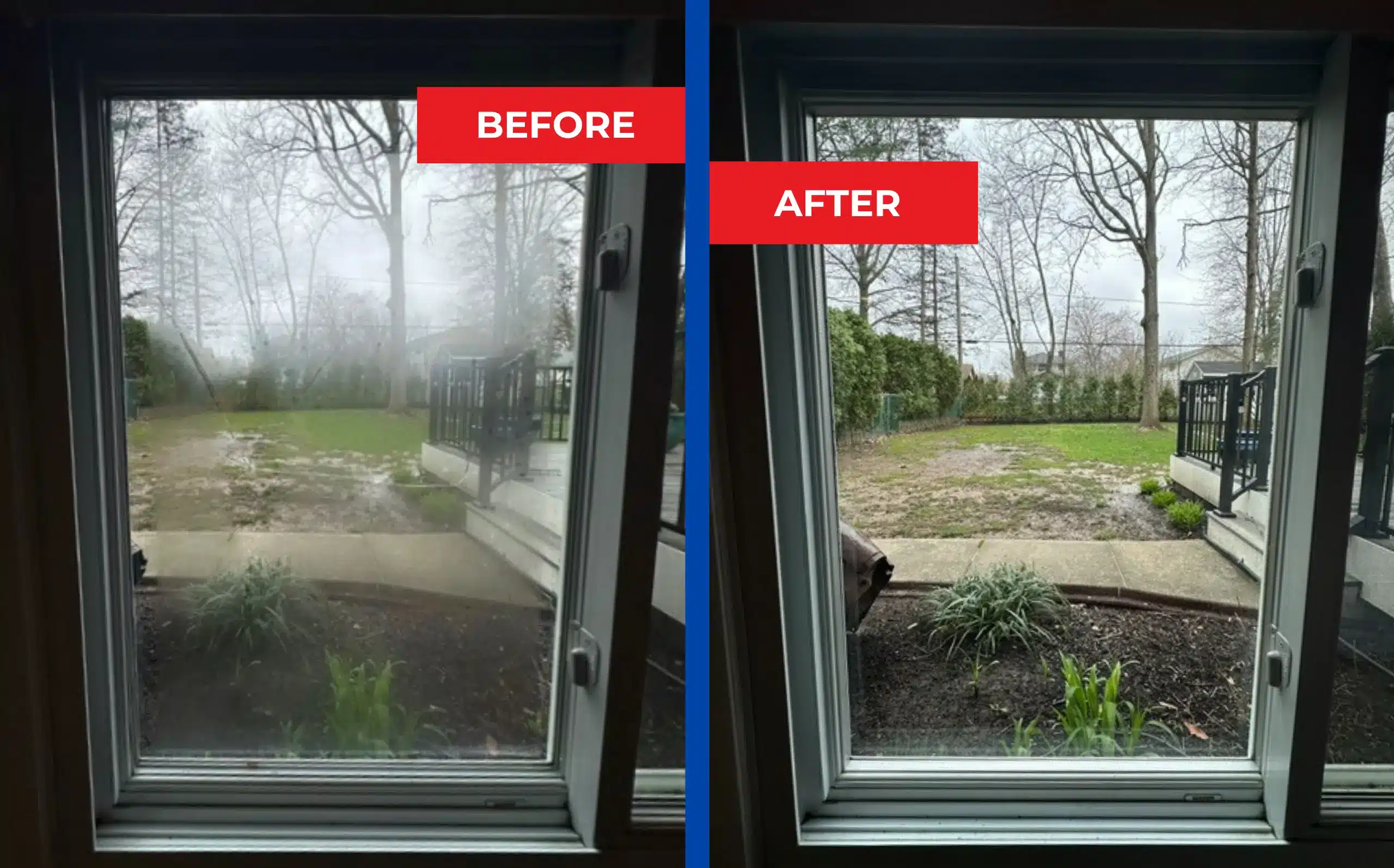
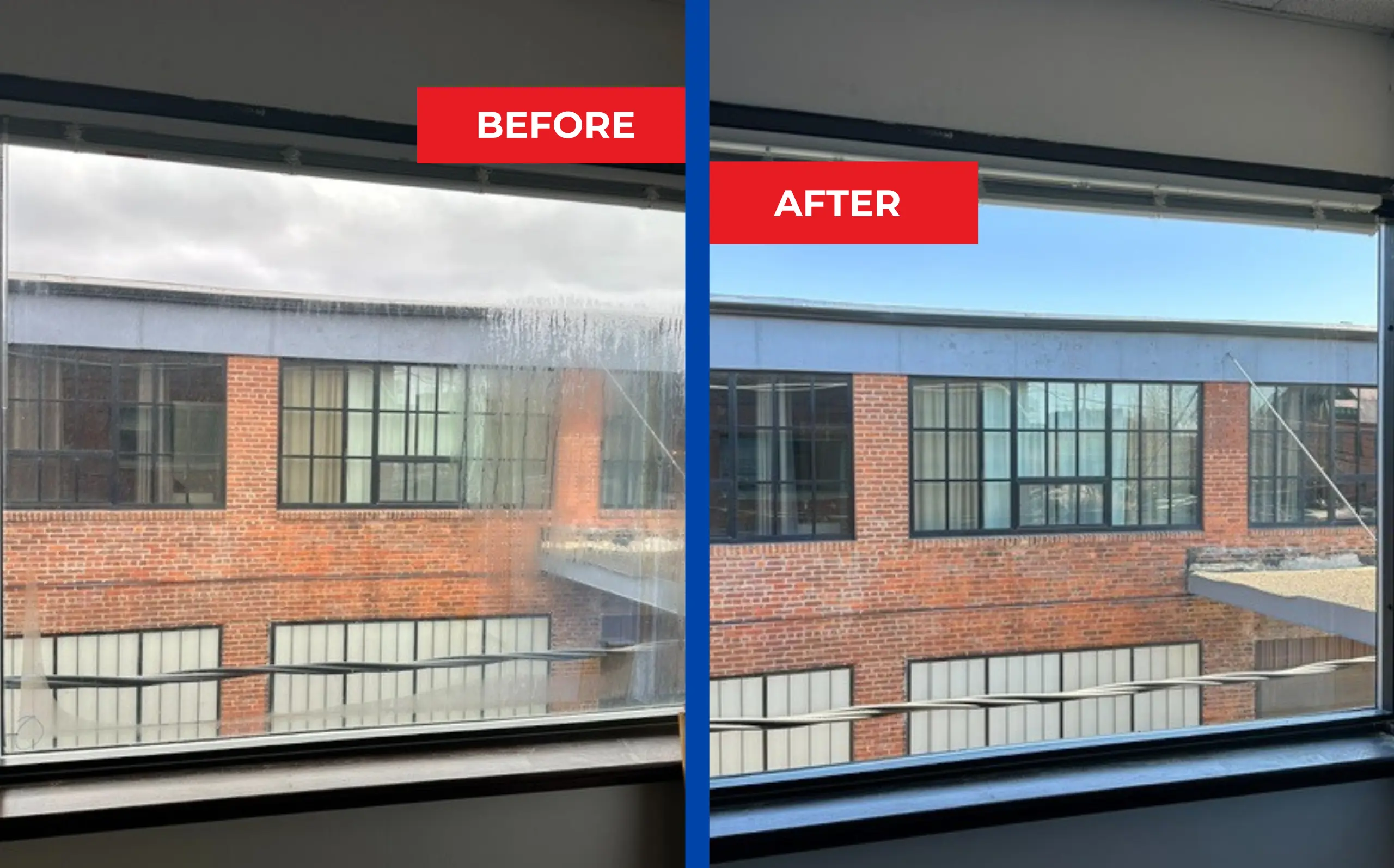
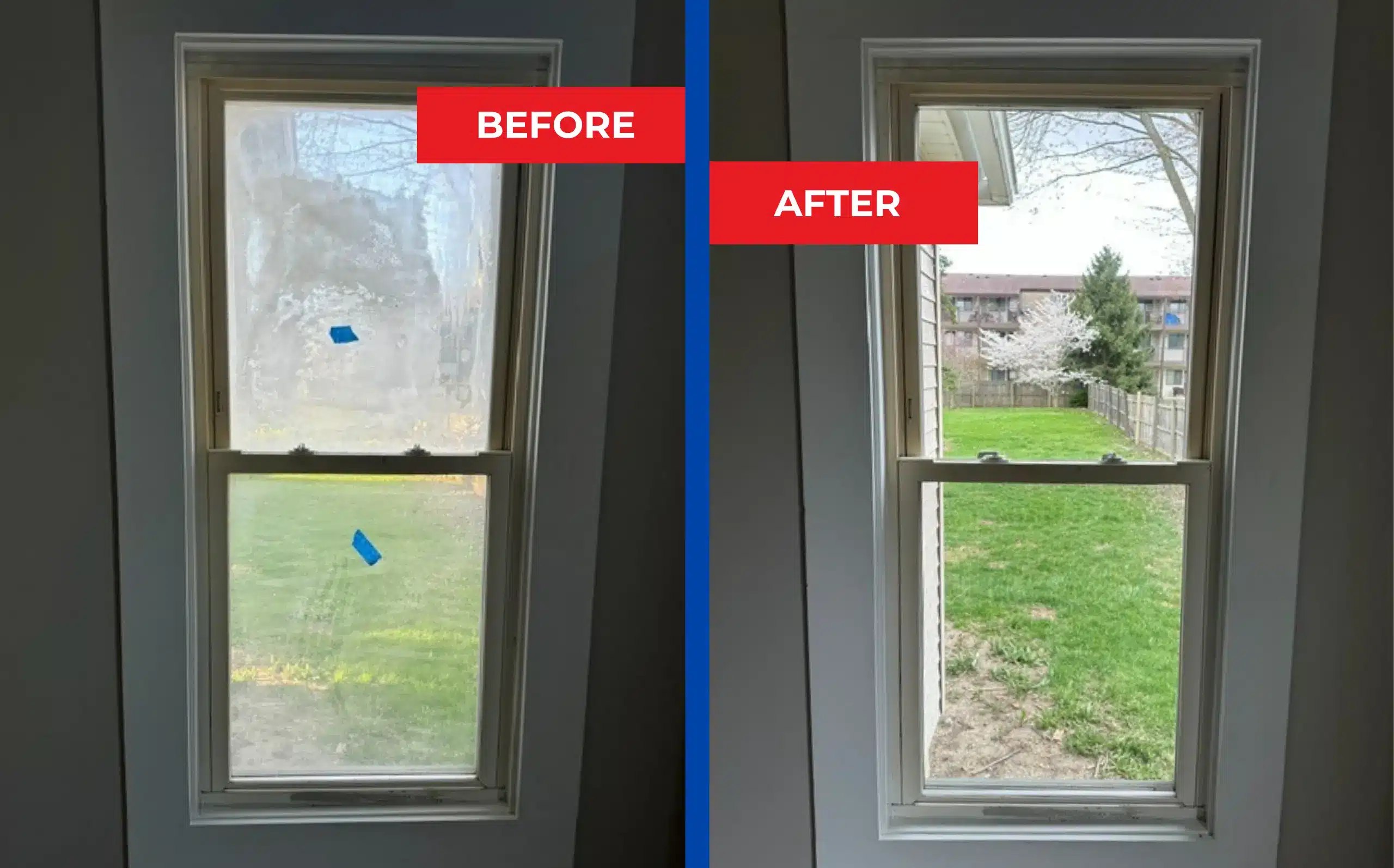
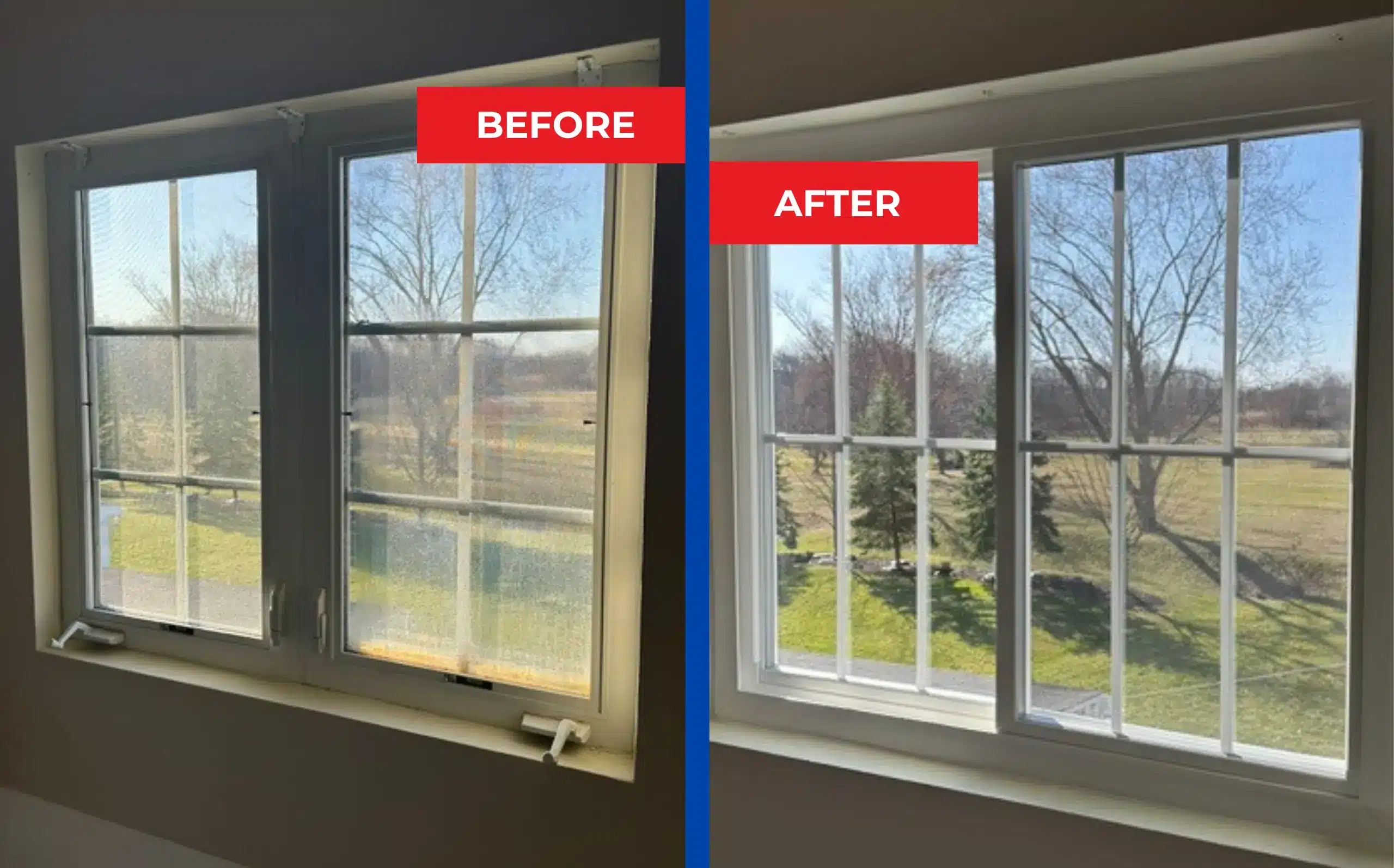
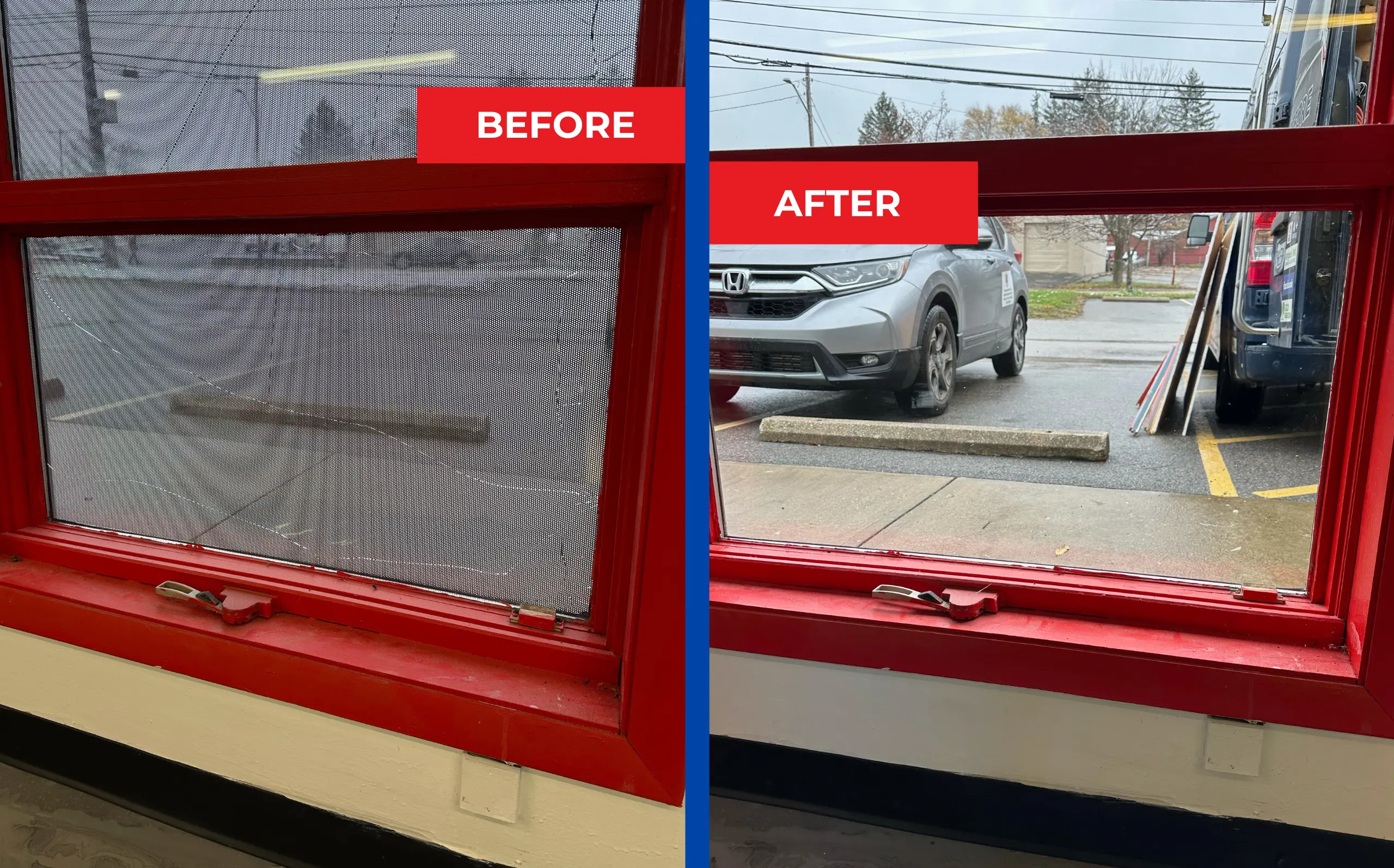
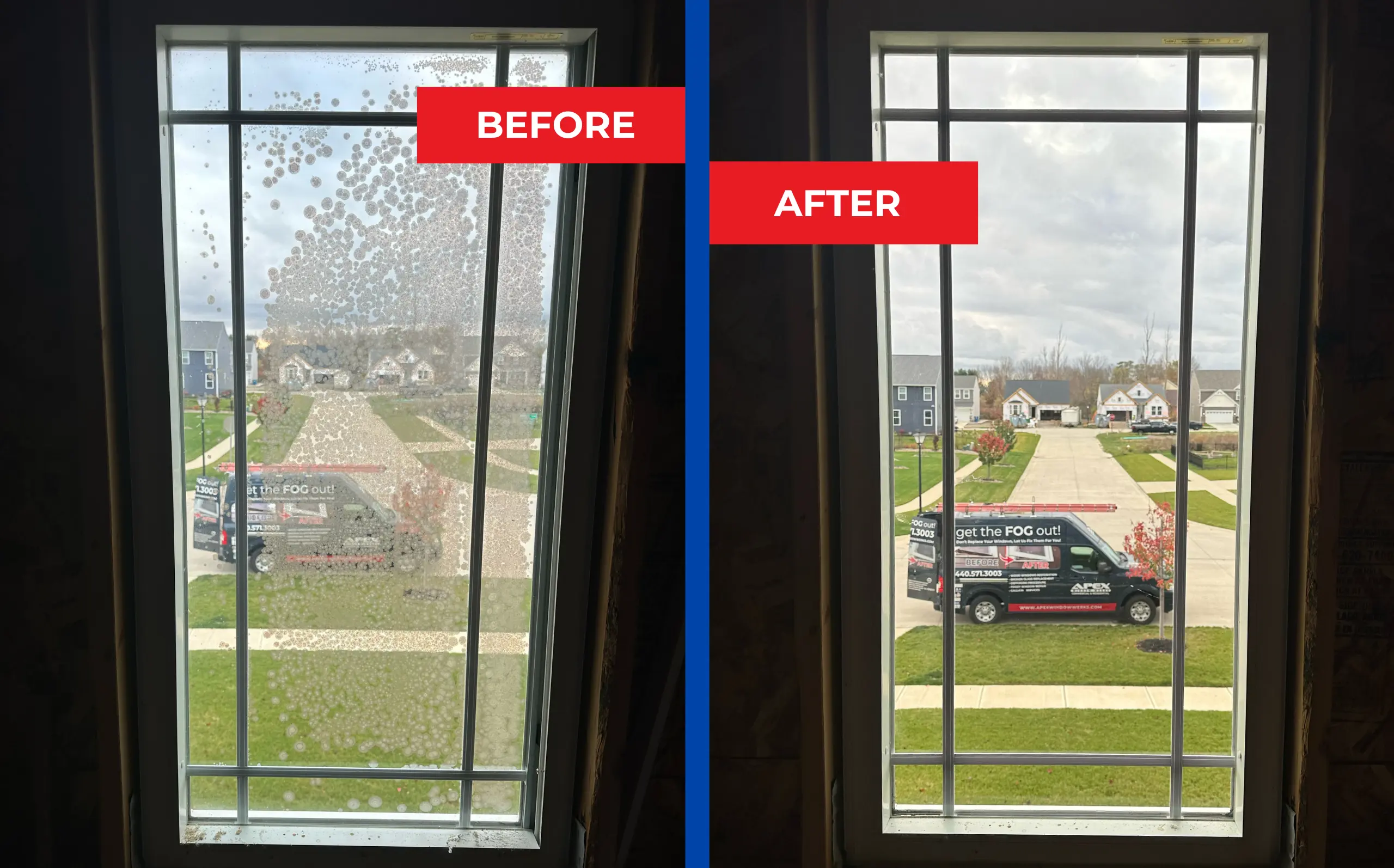
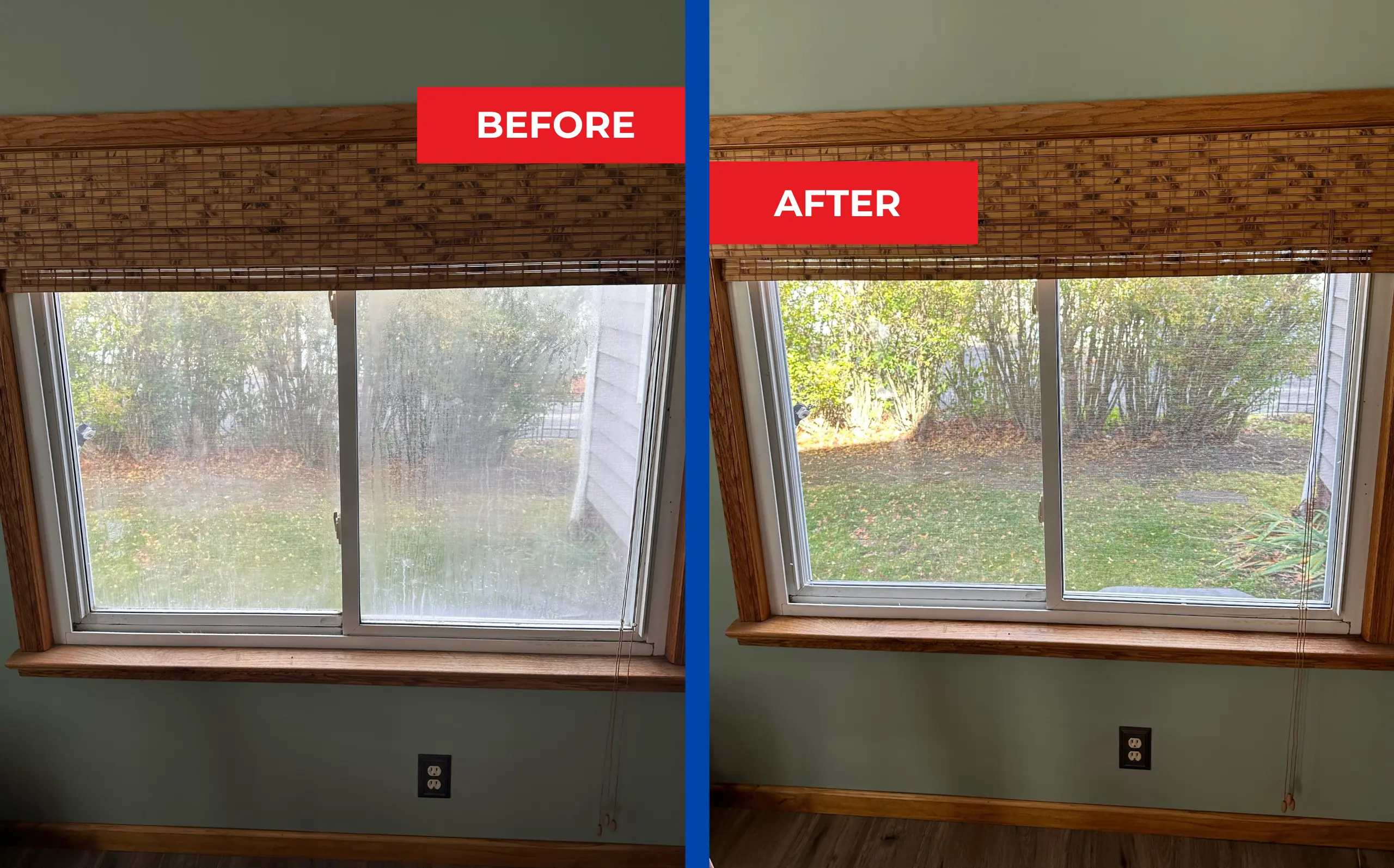
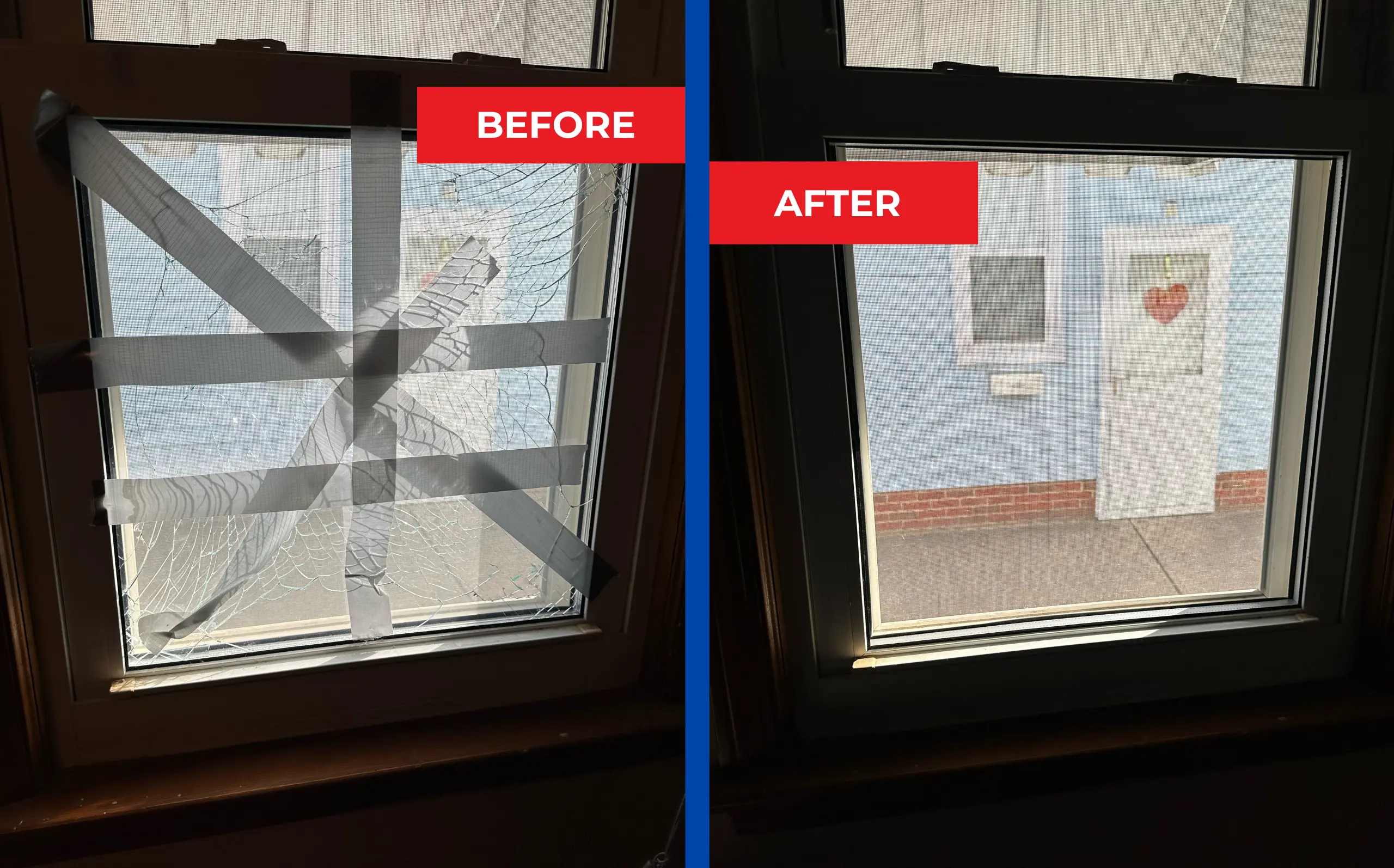
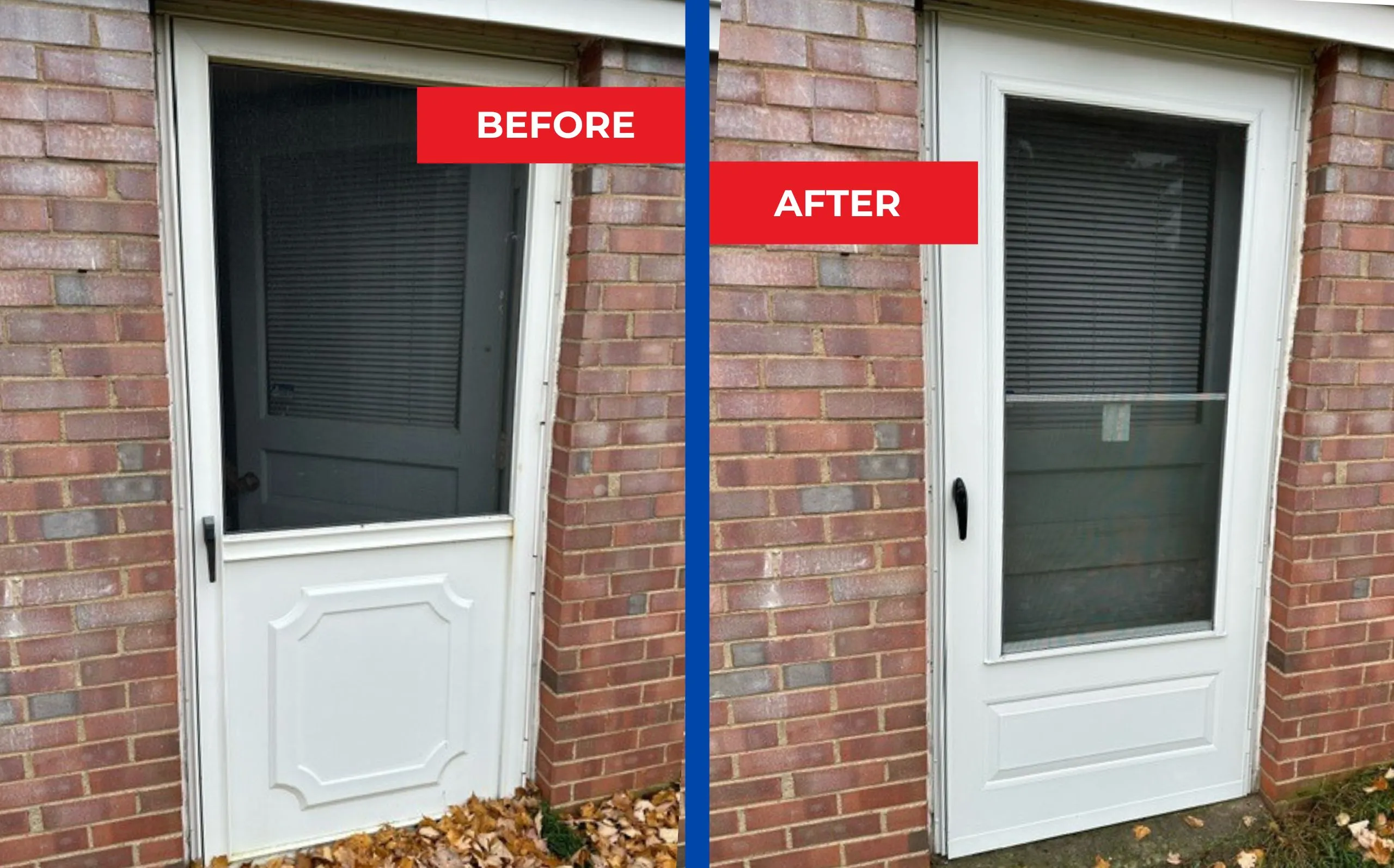
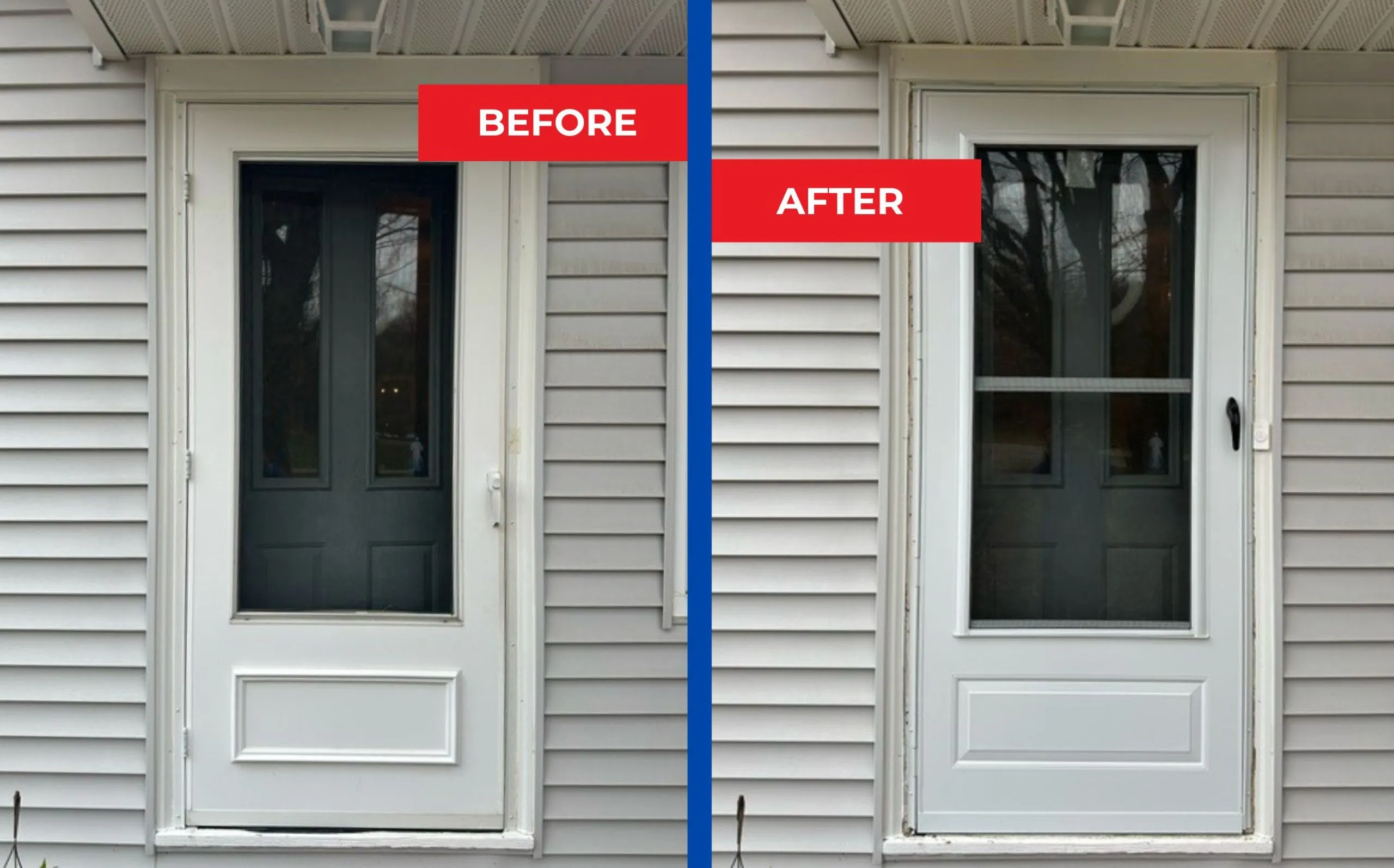
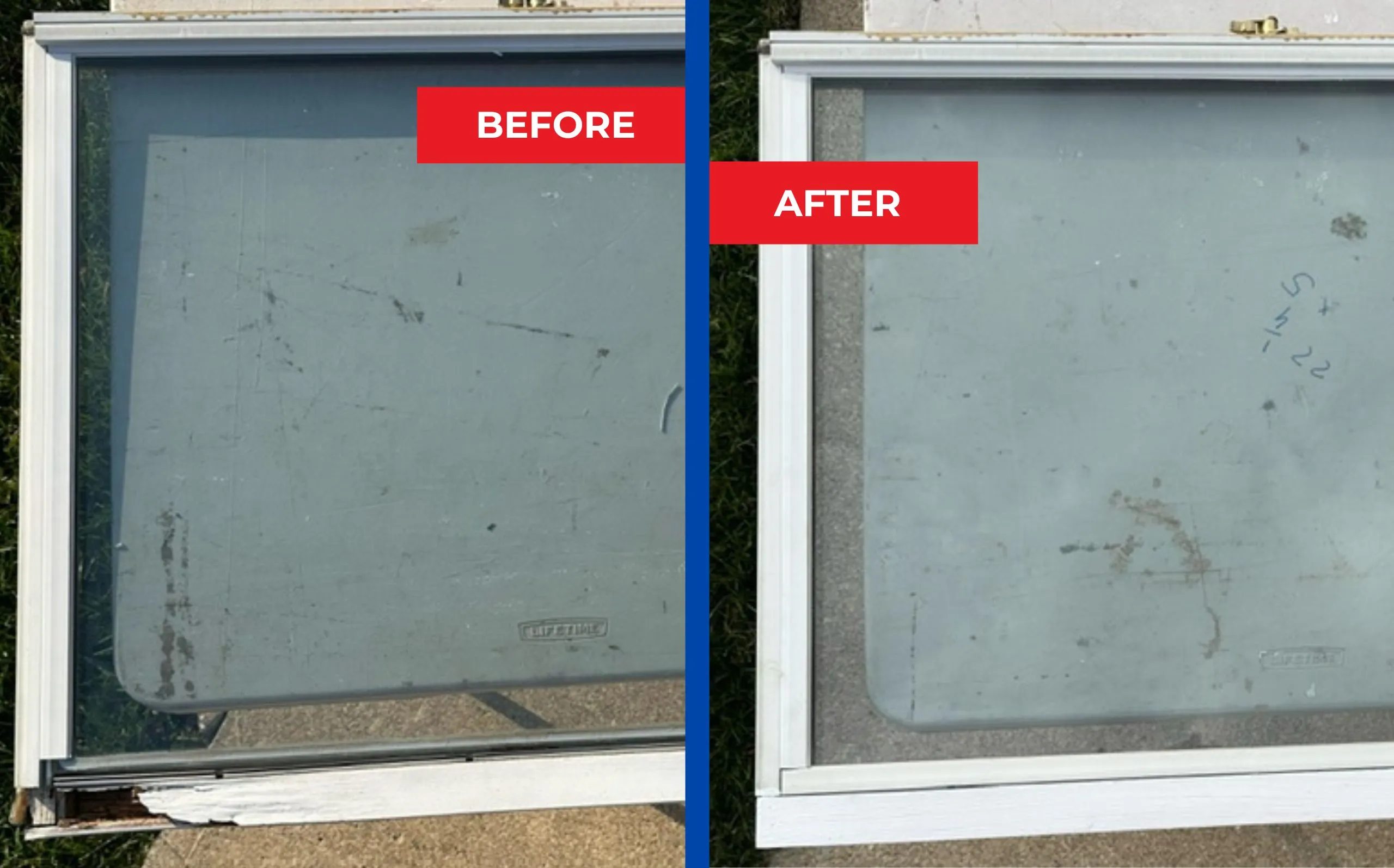
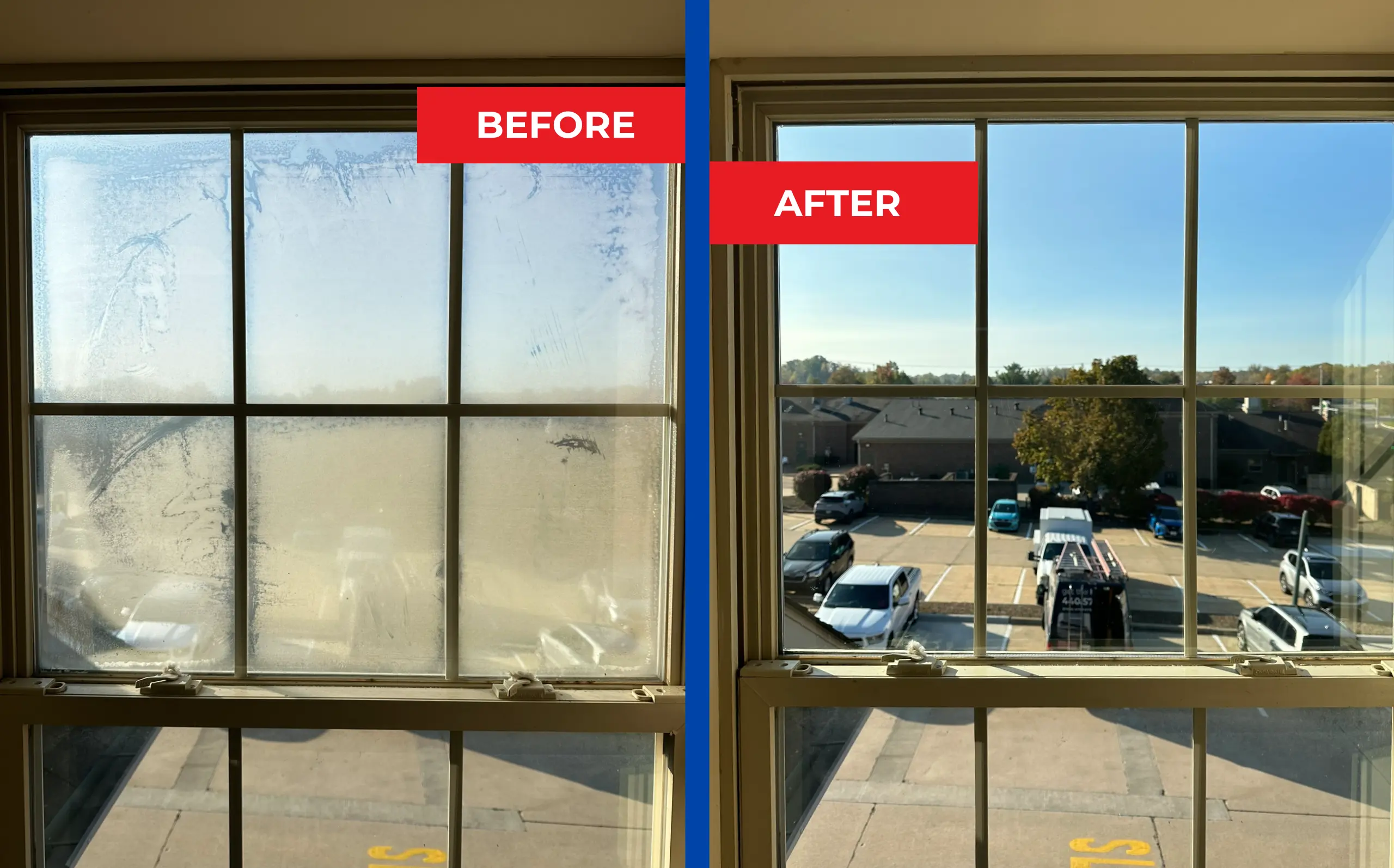
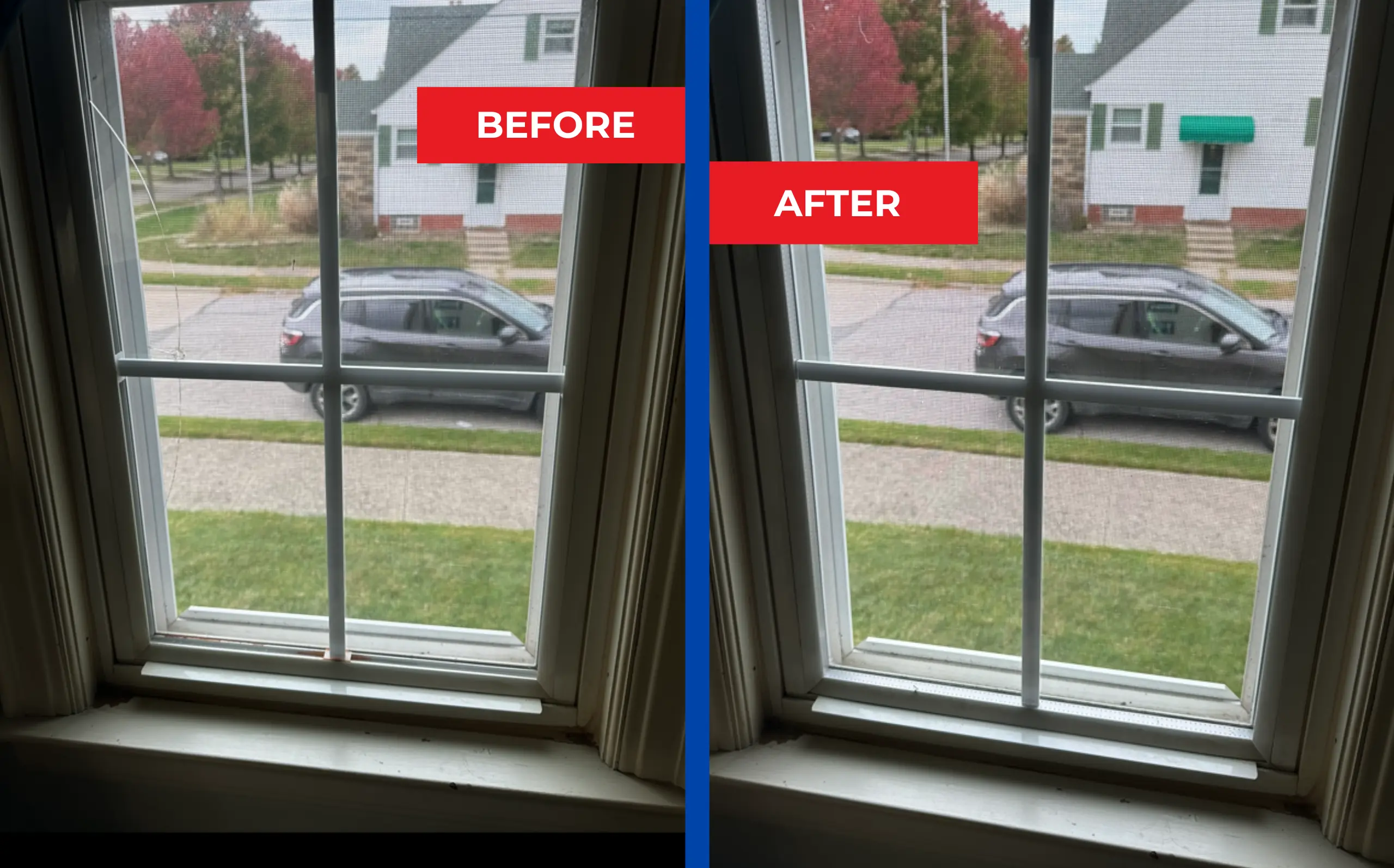
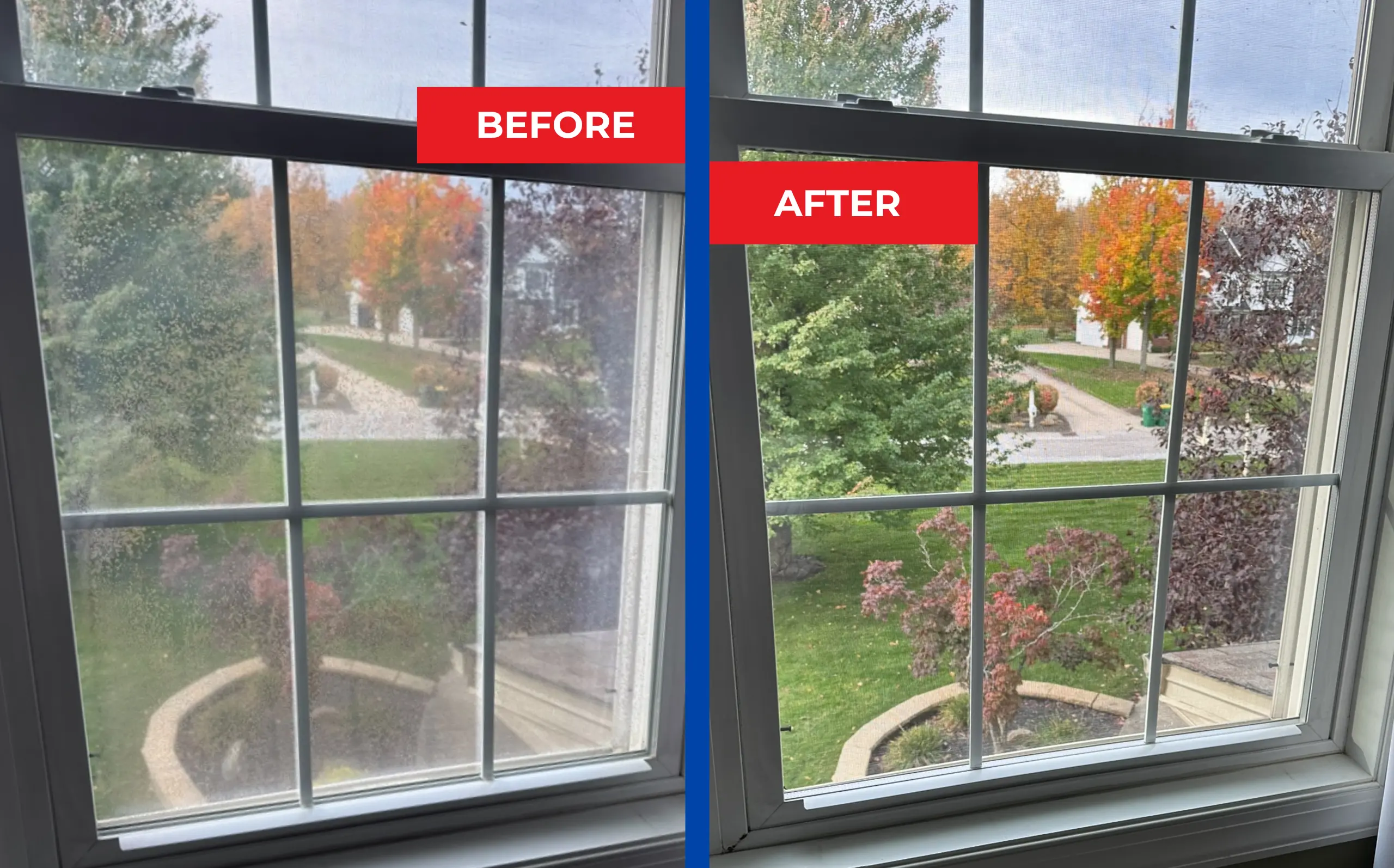
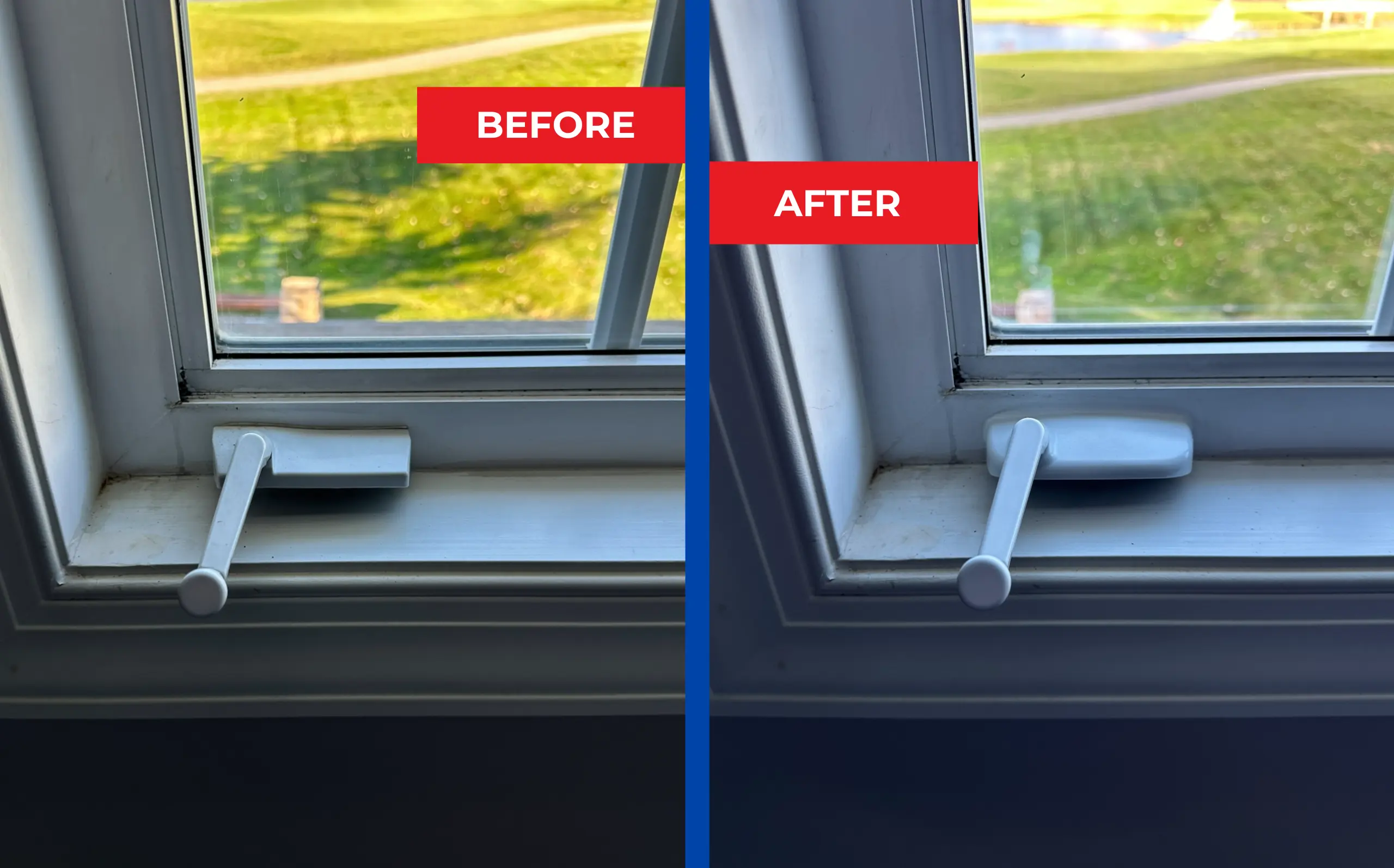
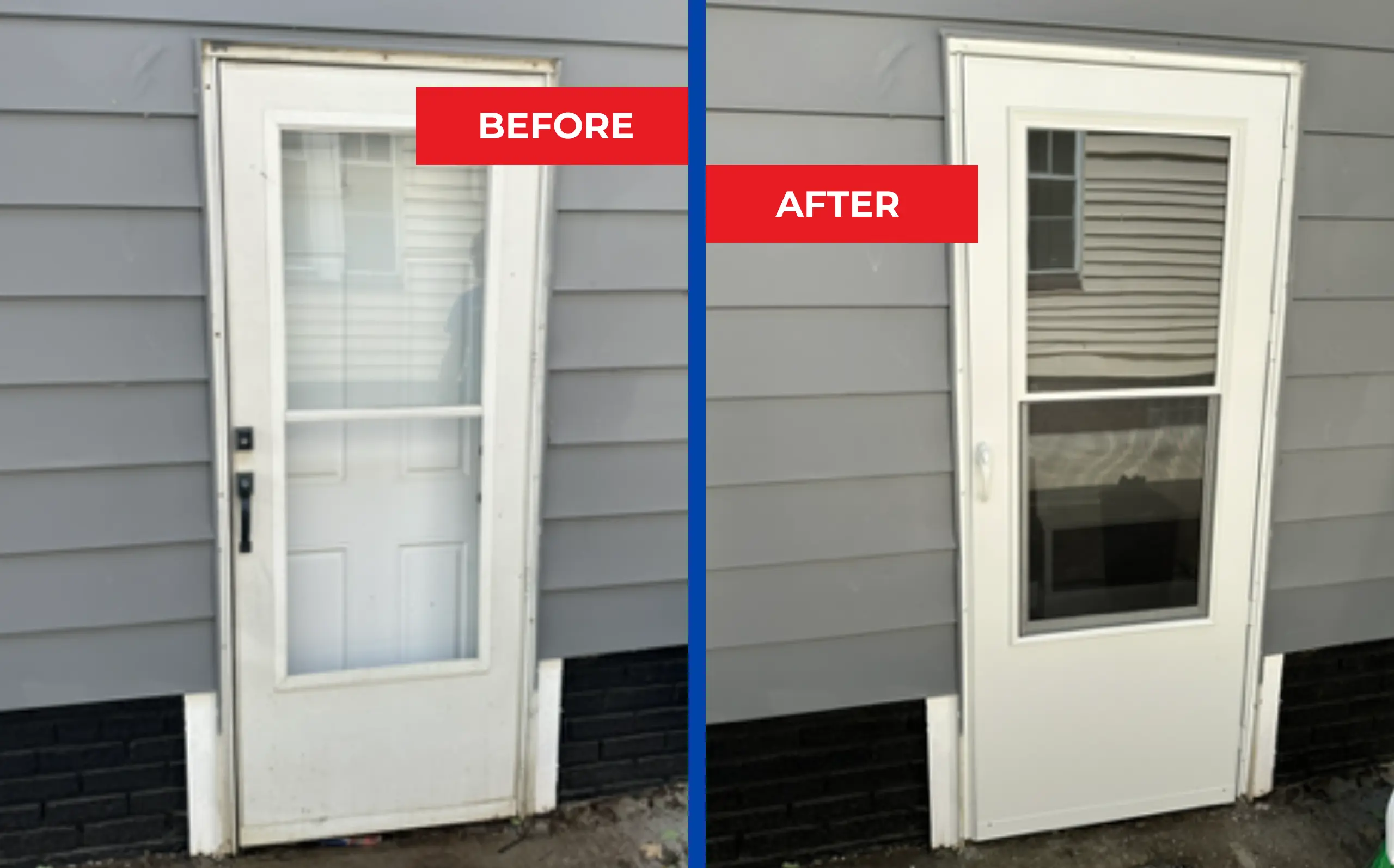
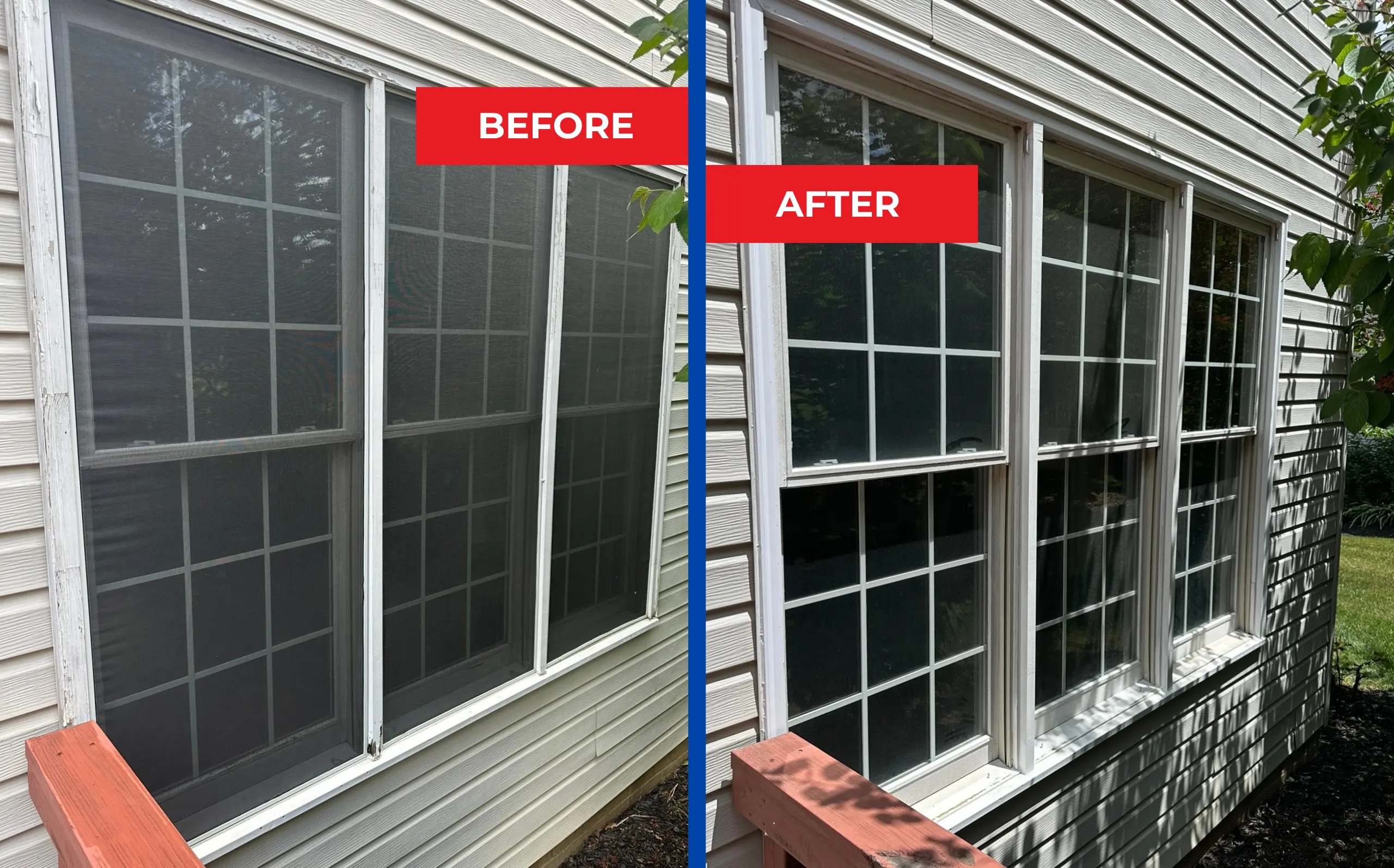
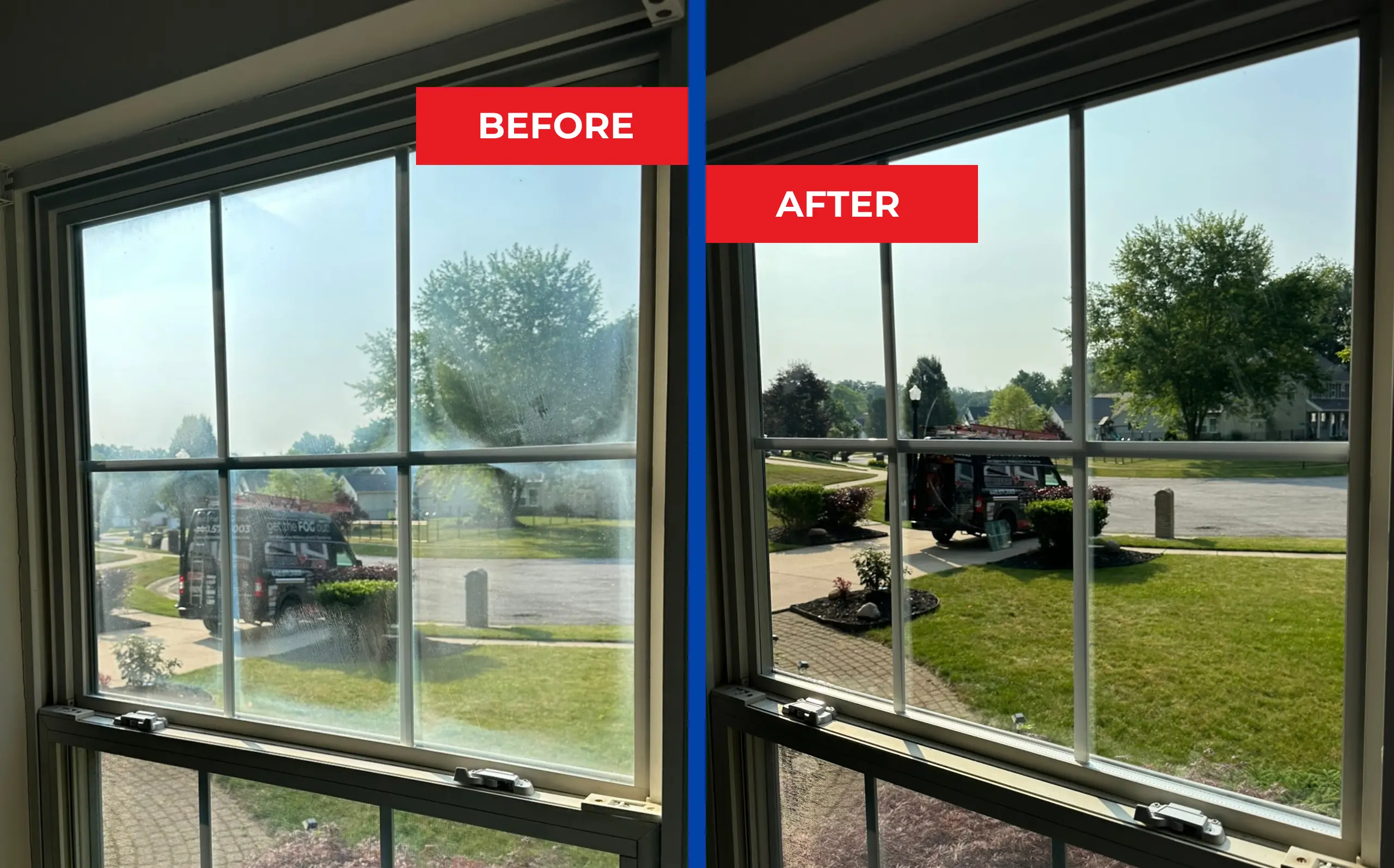
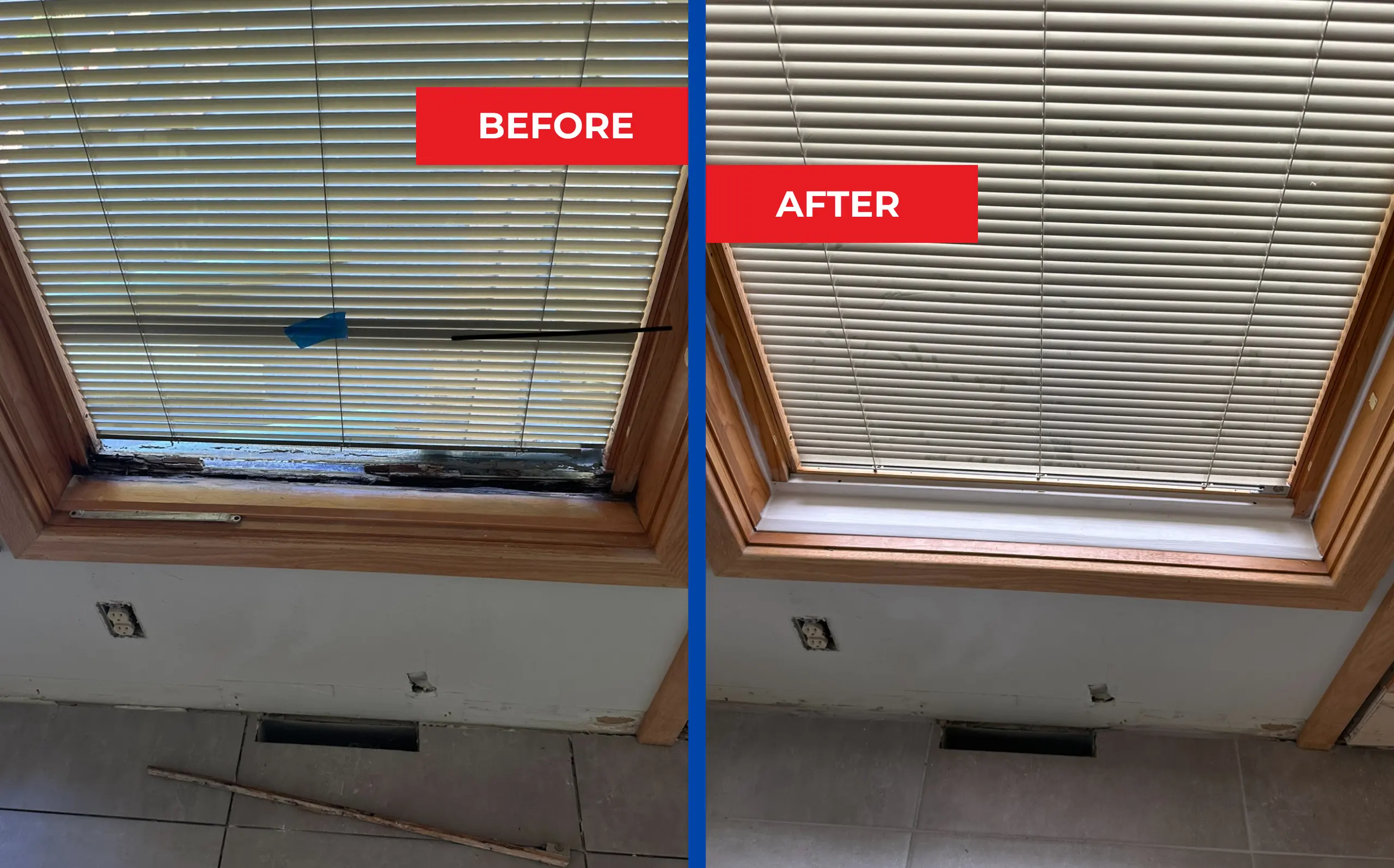
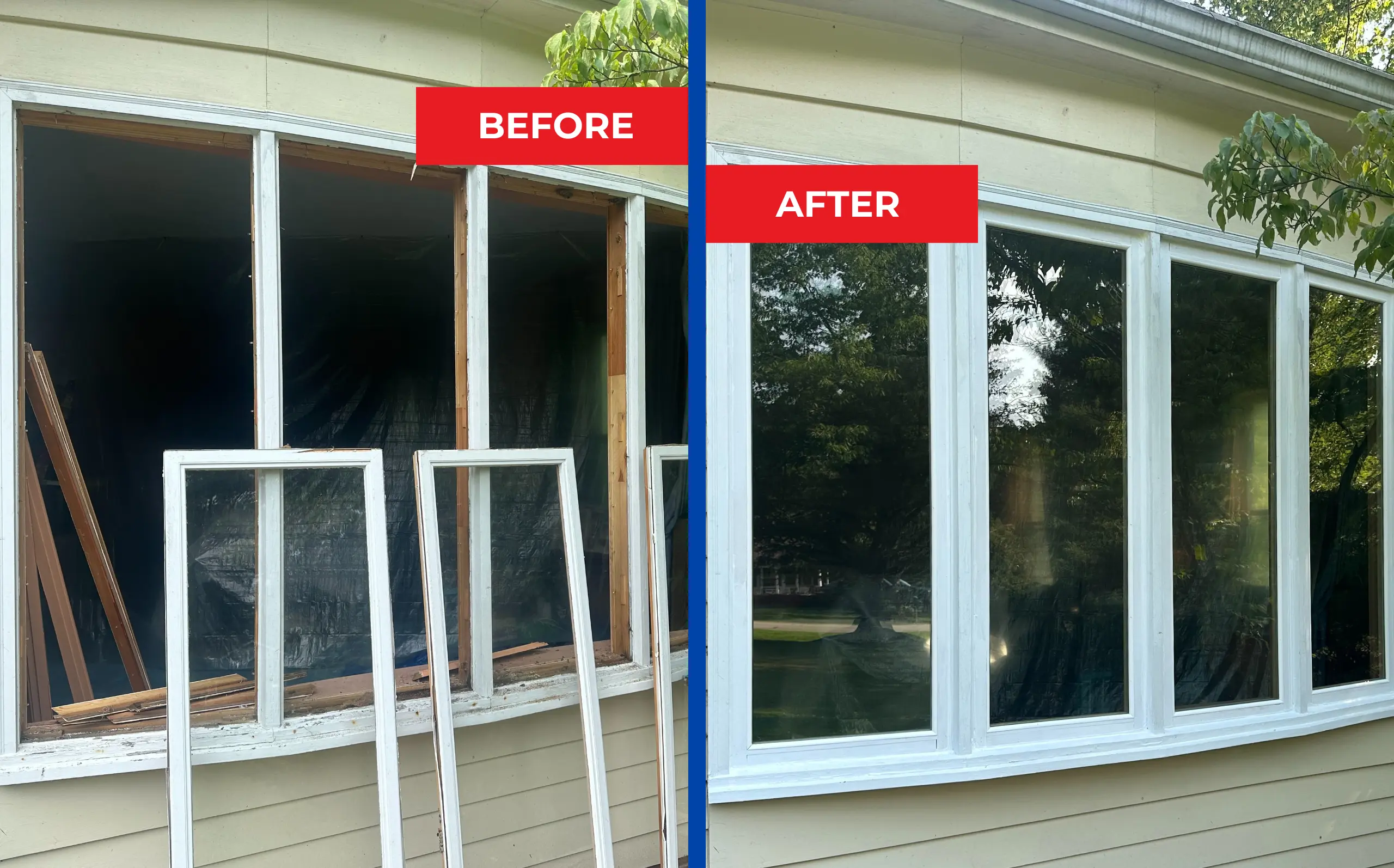
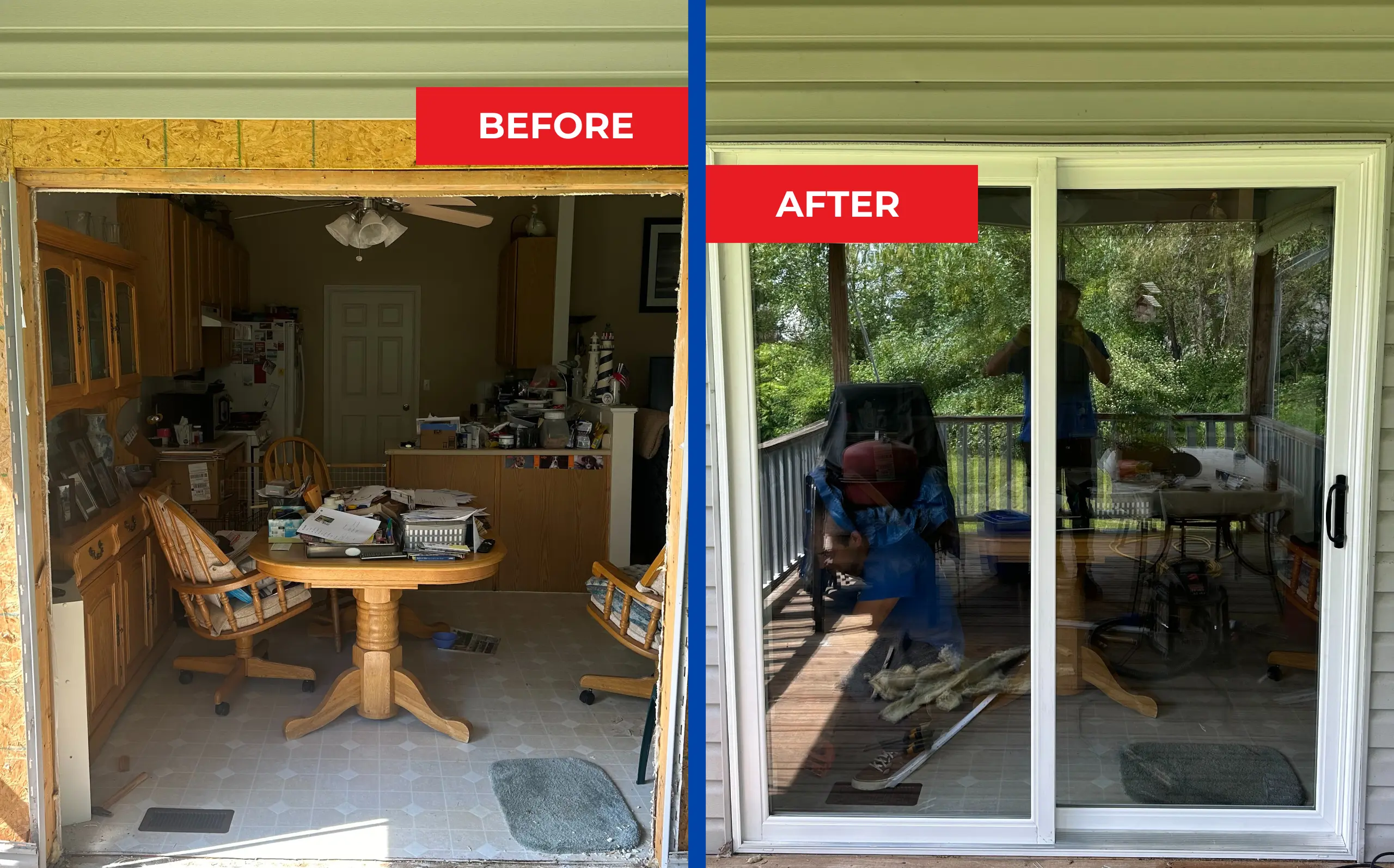
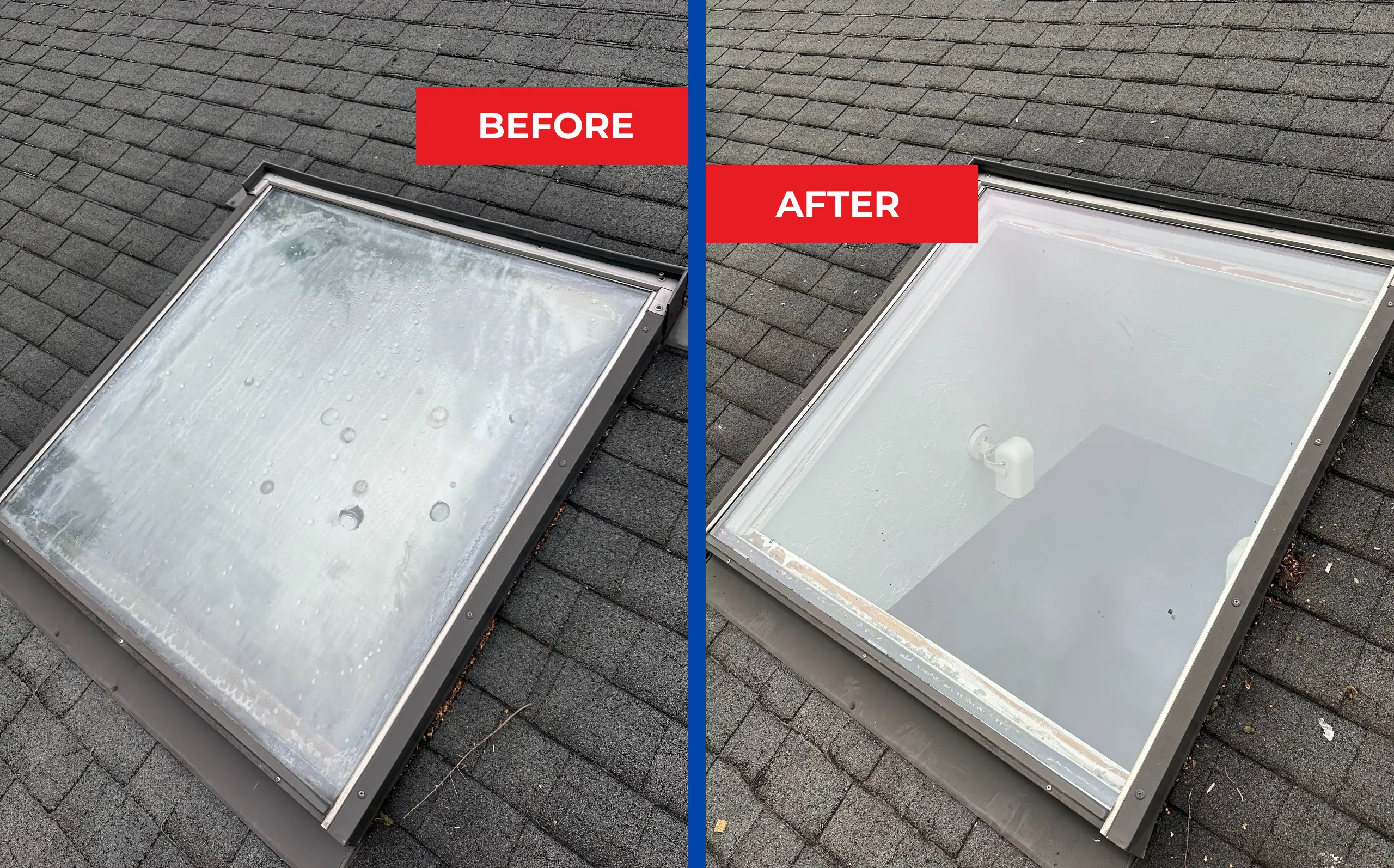
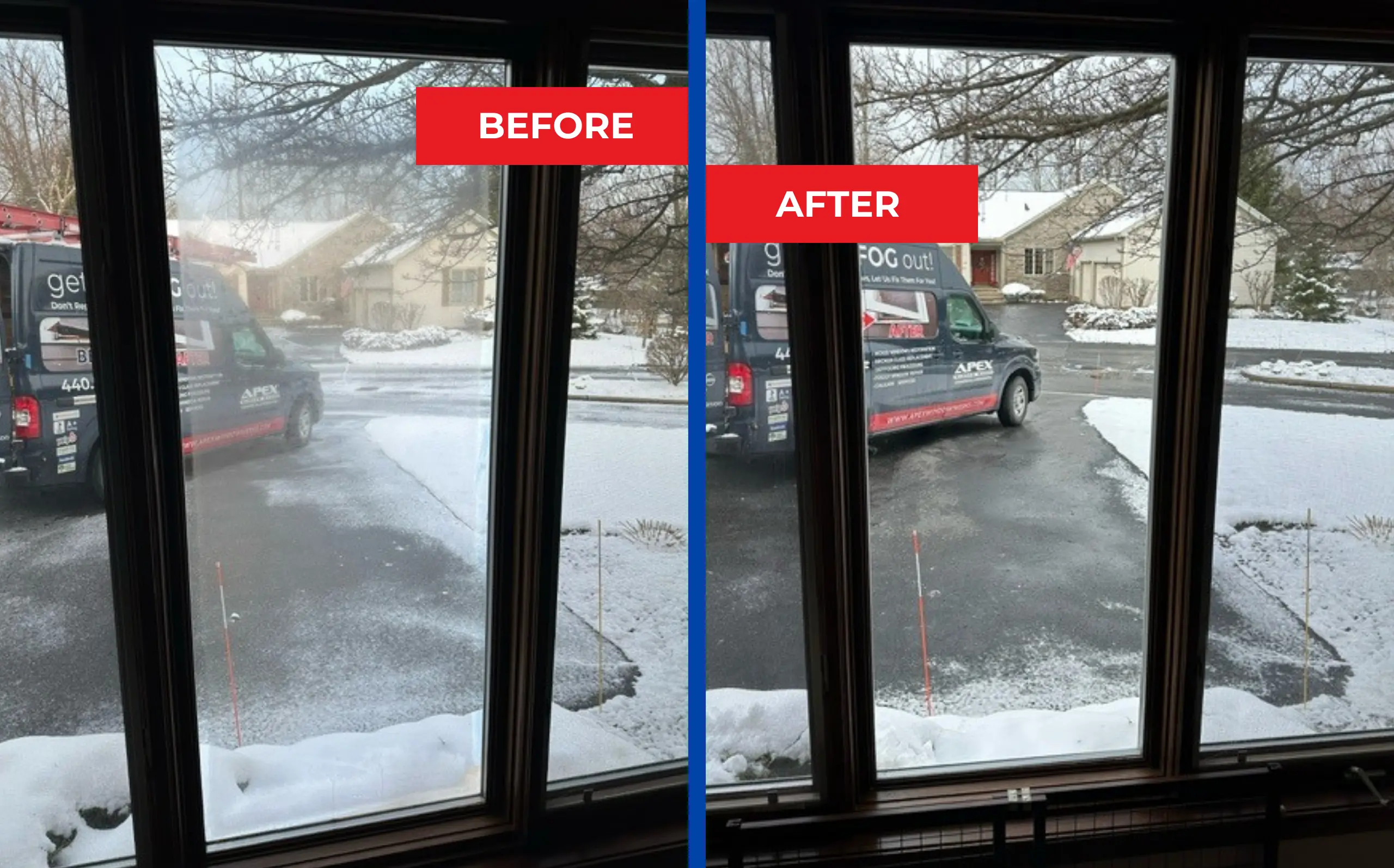
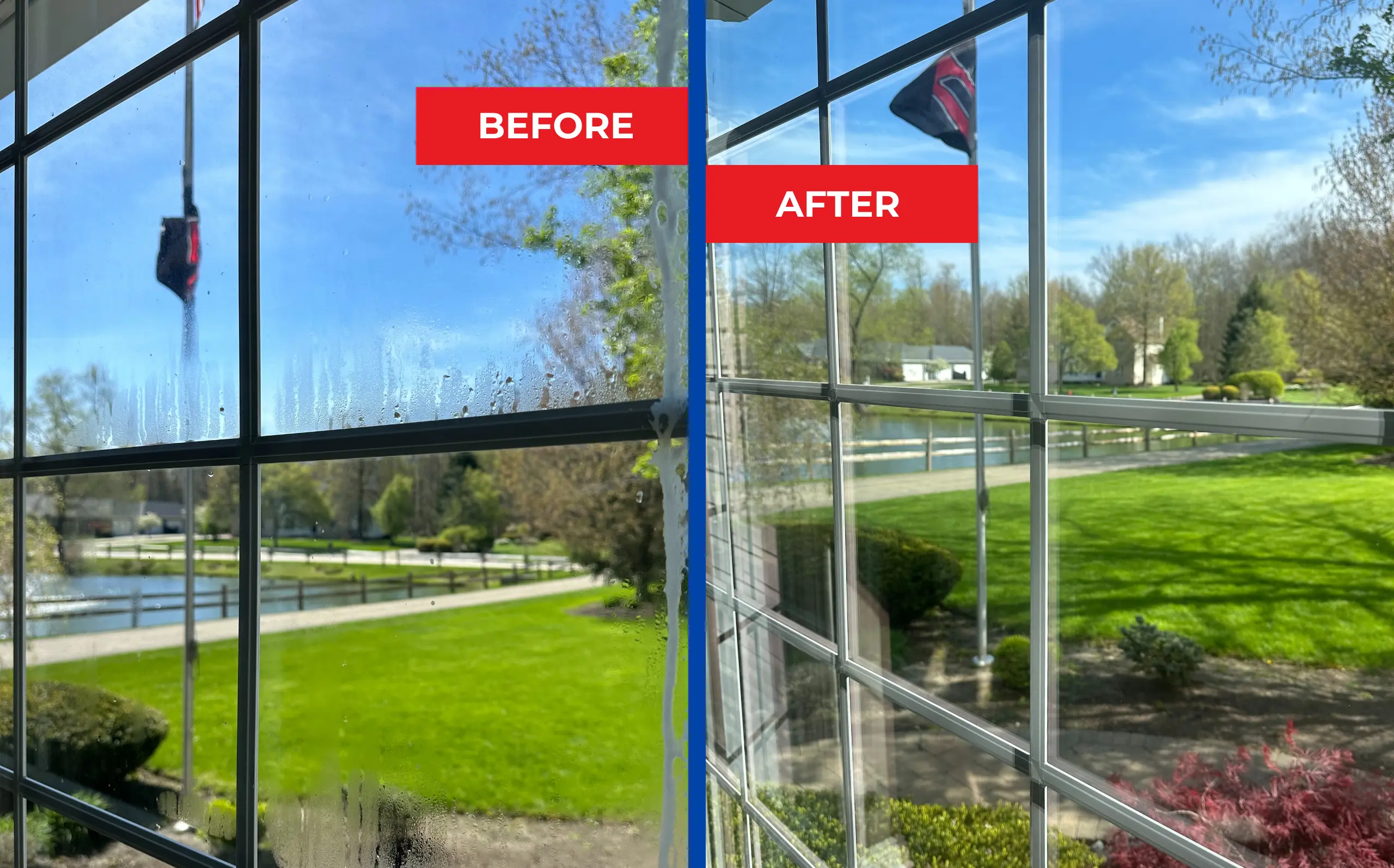
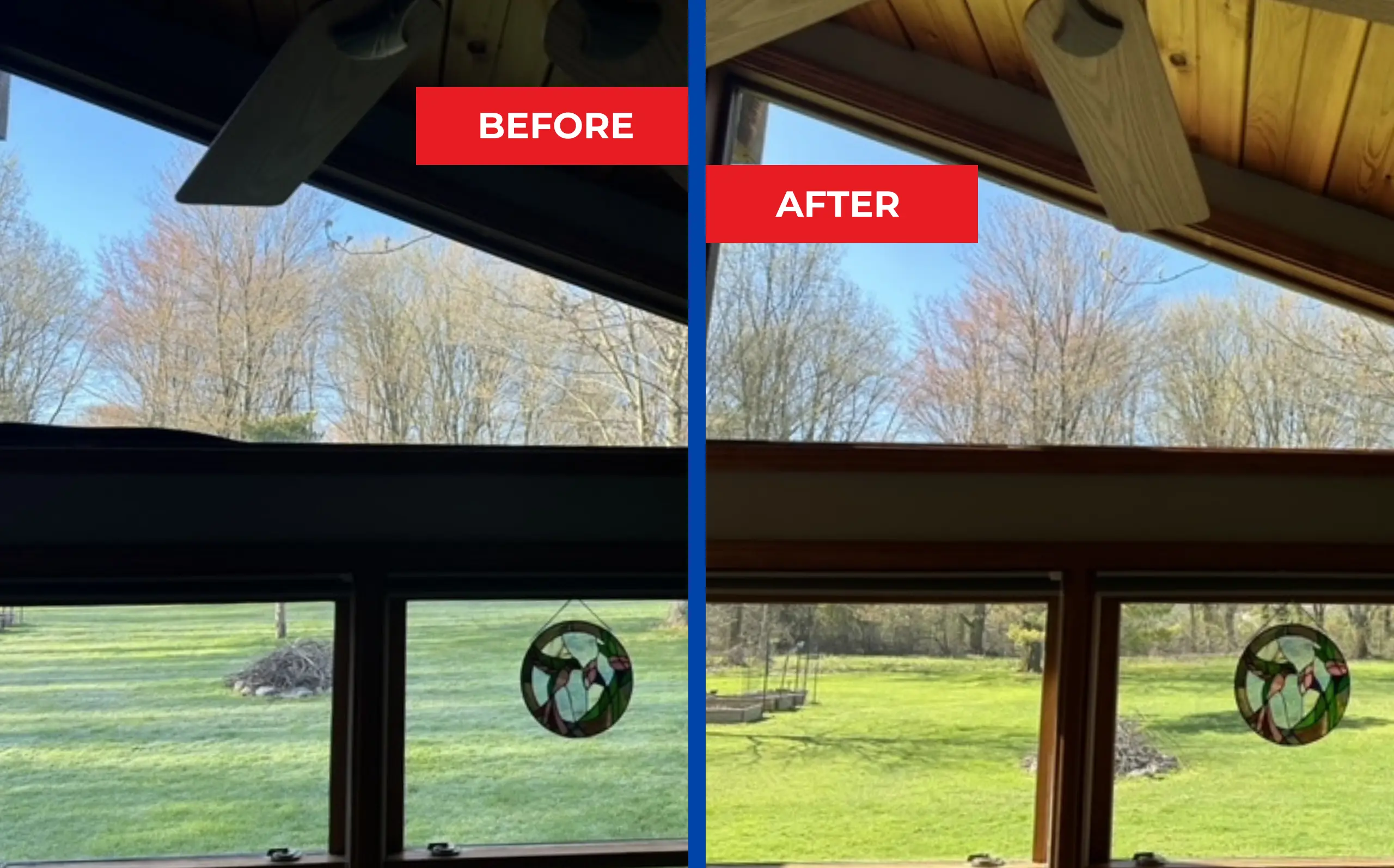
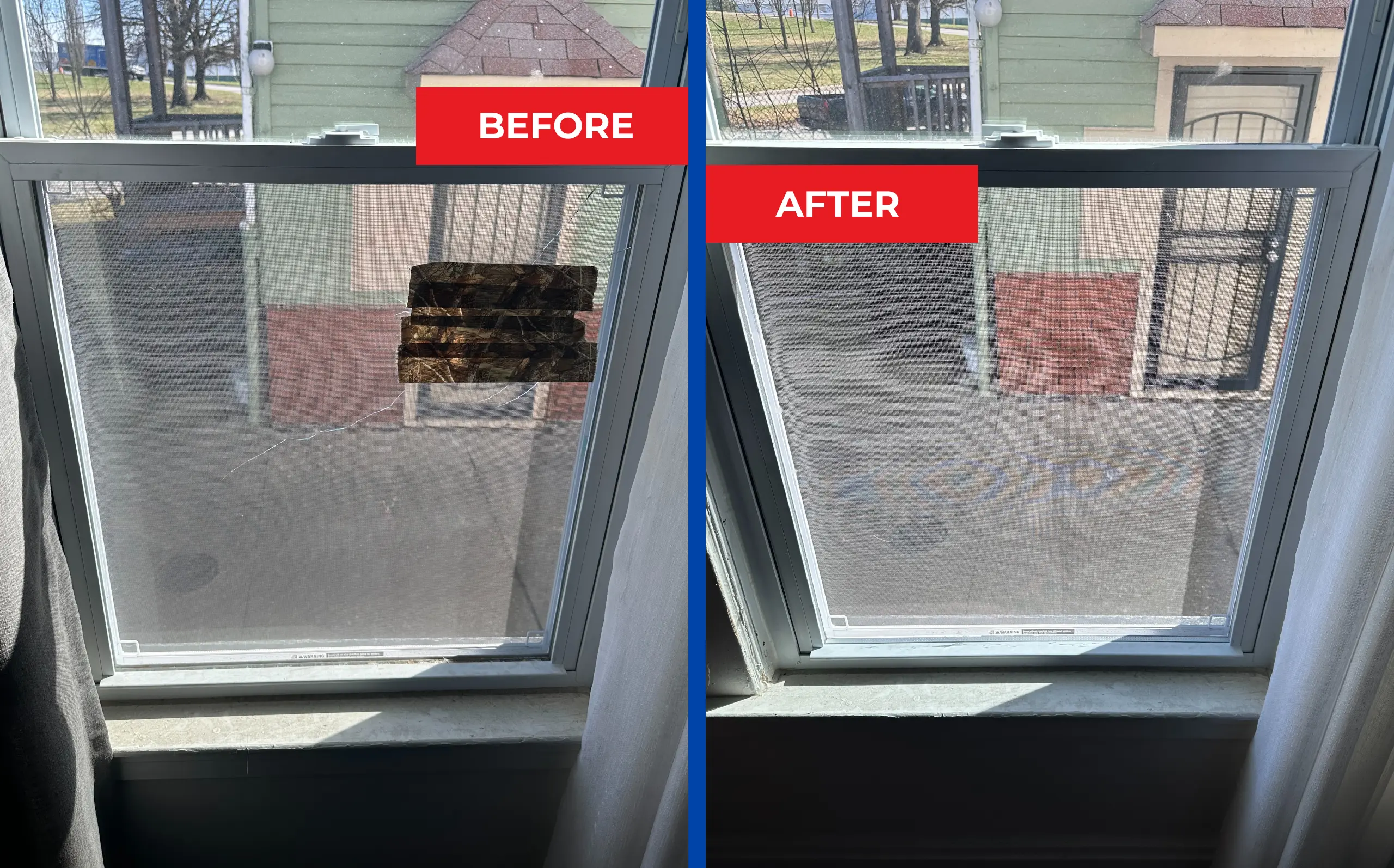
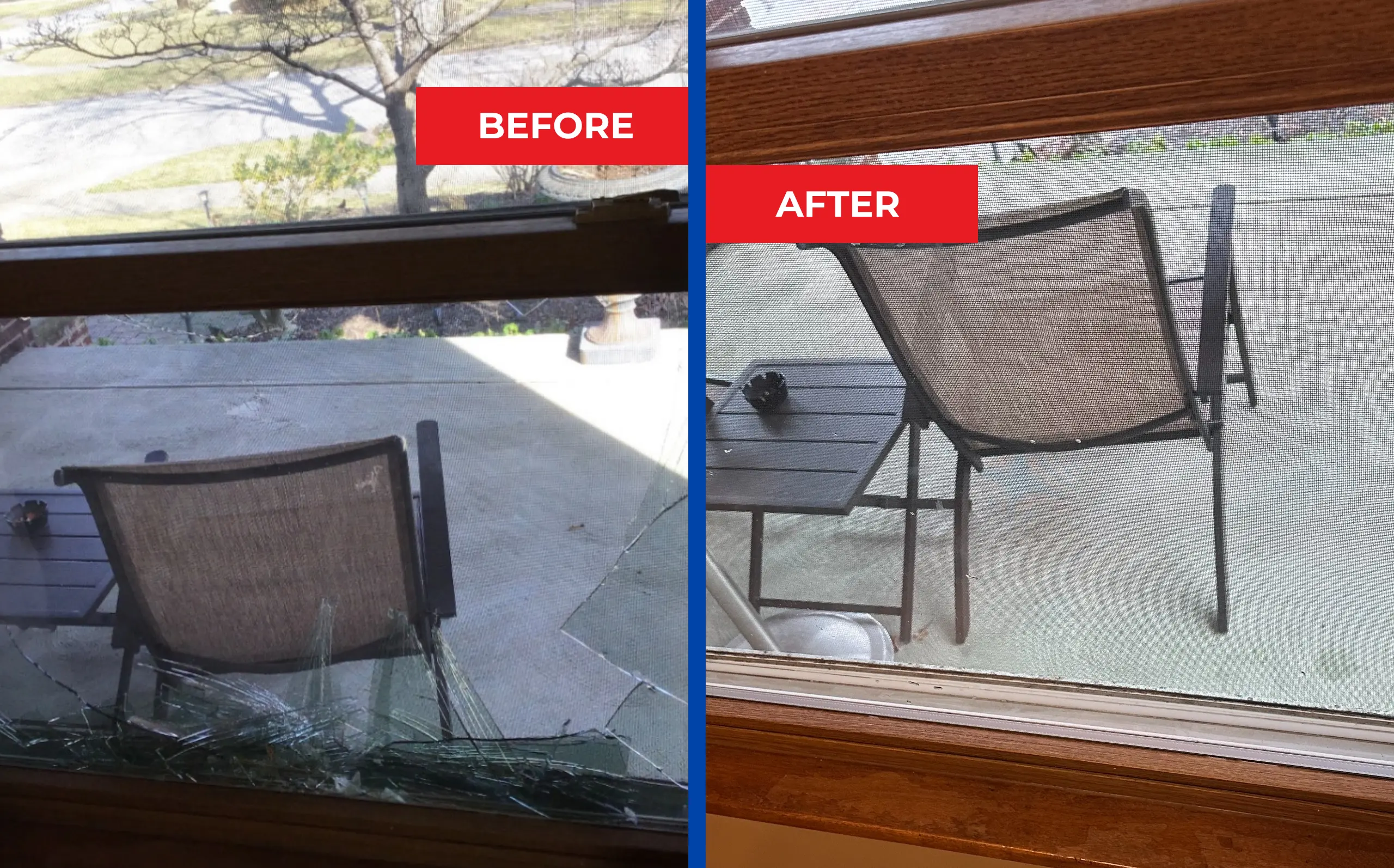
Slide the comparison and the difference is immediate. Before: a wall of white haze where the chimney and bare trees should be, with visible moisture damage at the frame. After: the brick chimney, the roofline, the branches against the sky – all sharp, framed by a rebuilt sash with a clean paint finish and no trace of the corner that had gone soft.
A window with both a structural and a glass problem rarely gets fixed correctly by addressing only one. Rebuilding the wood without replacing the fogged glass leaves the view clouded and the seal still failing; replacing the glass without repairing the rot means the new unit is sitting in a frame that is still absorbing water. We handle both together, in one visit, for wood window restoration in Cleveland Heights, OH and the surrounding hilltop neighborhoods. Call 440-496-7415 for a free on-site estimate – the earlier we catch the rot, the less wood needs replacing, and the sooner the glass gets fixed before the seal fails completely!
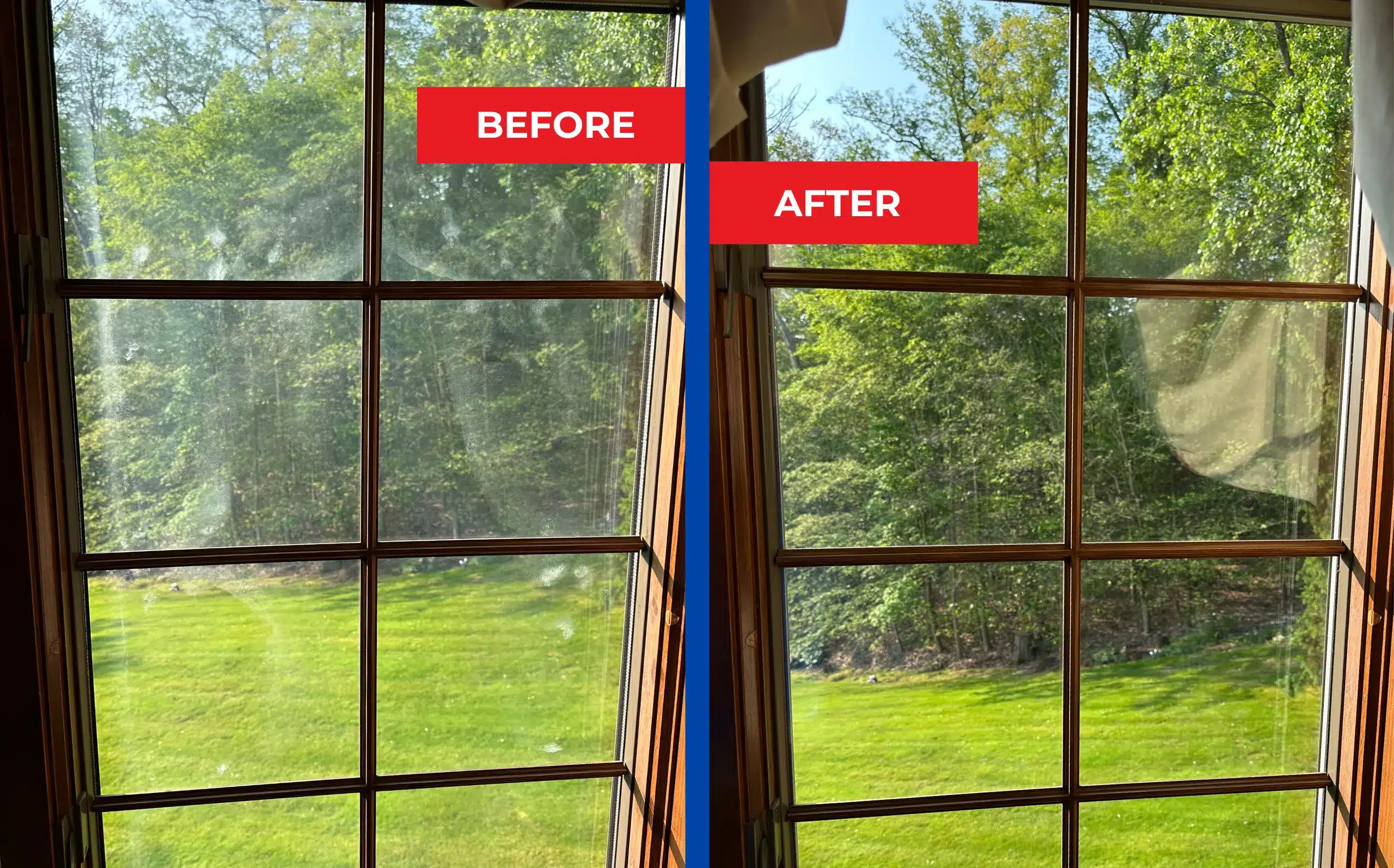
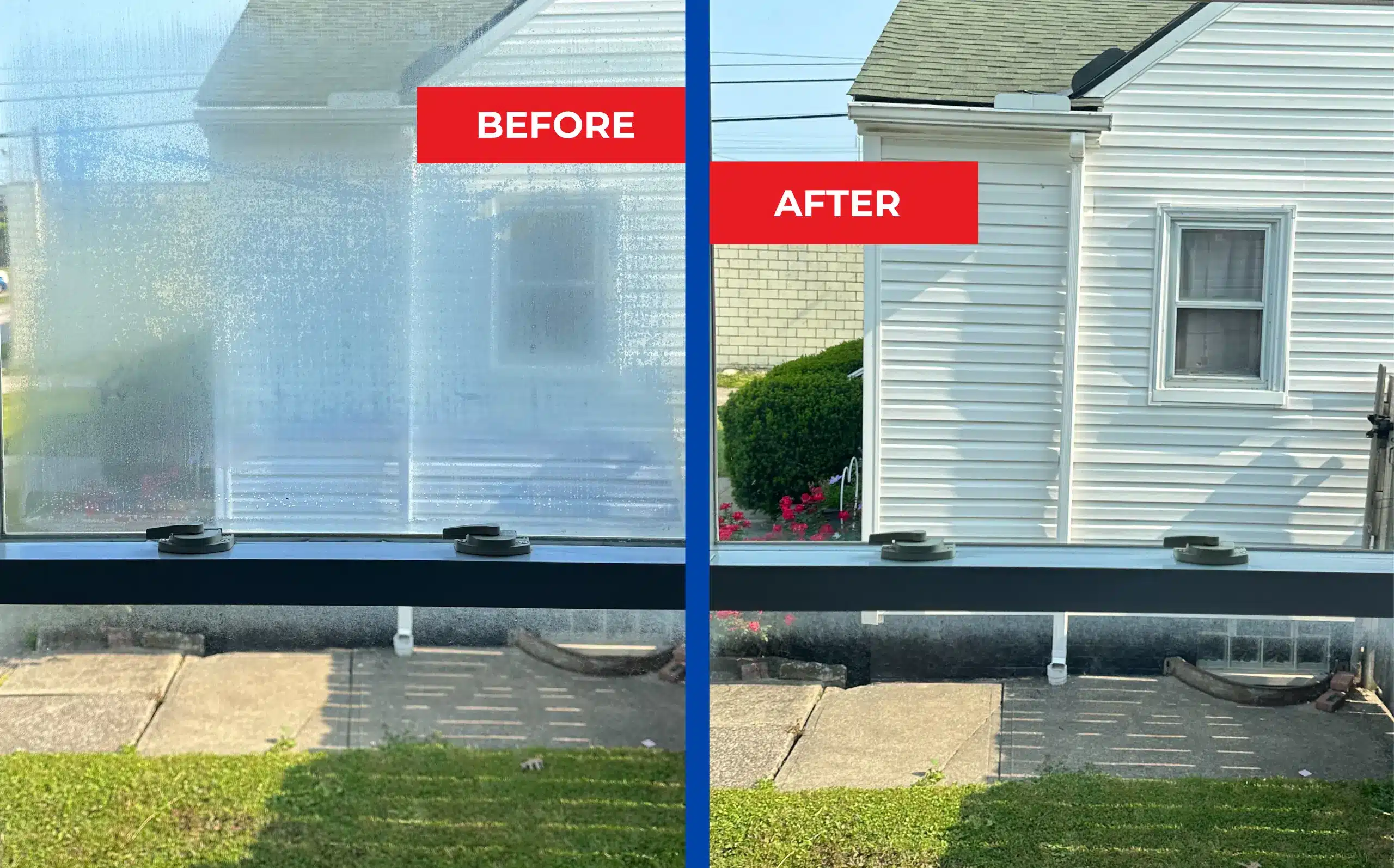
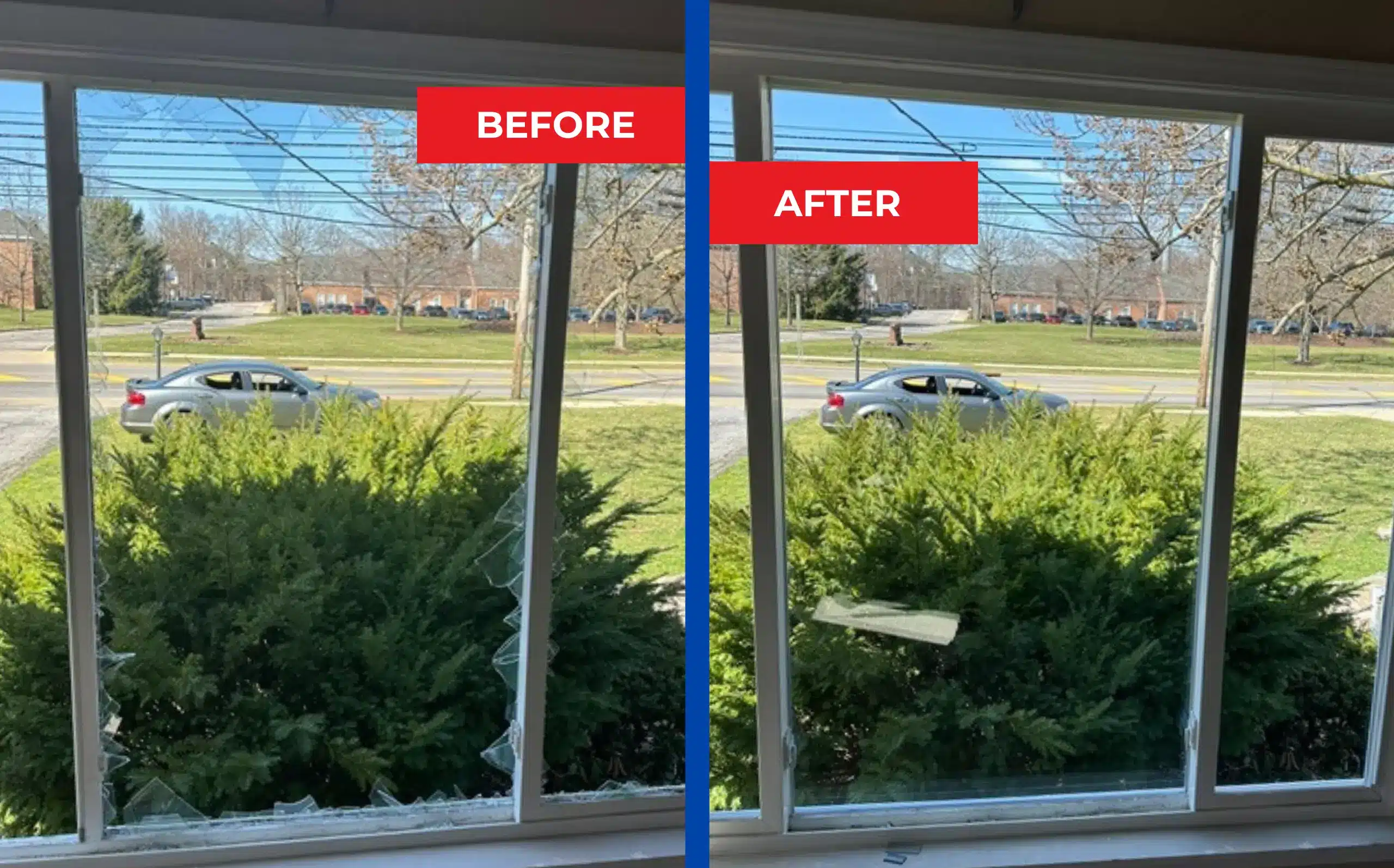
A rotted sash and a fogged glass unit rarely announce themselves as separate problems – in Bedford it showed up as a full wood window restoration, in Lakewood as an aging aluminum slider losing its seal. Browse our recent window repair and glass replacement projects to see how the same rebuild-and-reseal approach plays out across different homes and window types in Northeast Ohio.