440-496-7415
Google reviews that we have
Rating
4.8
583 reviews
channi zwick
3 days ago
Posted on

Google

Chris Olsen
1 week ago
Jay did an exceptional job and solved 2 thorny issues with an Andersen slider as both the screen and...
Jay did an exceptional job and solved 2 thorny issues with an Andersen slider as both the screen and the door both had issues and made it nearly impossible to use this expensive Andersen door. He fixed both issues quickly. He's a great guy, excellent communication skills, great personality and fantastic problem solving skills. Super impressed - thanks Jay and Apex Window Werks!
Read more Hide
Posted on

Google

Sue Hogan
1 week ago
Very timely and great work and value.
Posted on

Google

Patti Olszewski
2 weeks ago
We recently had 2 patio windows replaced, 2 new screens, and 2 windows that were hard to lift repair...
We recently had 2 patio windows replaced, 2 new screens, and 2 windows that were hard to lift repaired. Outstanding job from start to finish. Great communication, very professional, polite and tidy! I will be using Apex again for future business! Would highly recommend Apex if you're looking for any window repairs!
Read more Hide
Posted on

Google

Scott Himmel
2 weeks ago
High-quality work, reasonable price, respectful.
Posted on

Google

DW
3 weeks ago
We contacted the company after my wife got the number from one of their service vehicles. We had num...
We contacted the company after my wife got the number from one of their service vehicles. We had numerous fogged panes that needed attention. Once contacted, the estimate was provide quickly. Most of the glass was tempered and needed to be ordered special. This added about one week to the install date. We had 14 casement glass panes repaired in one visit. The windows were aluminum clad wood windows. I was concerned about having these 25 year old windows being dismantled to replace the panes. During the estimate Ben assured me this would not be an issue. The gentlemen that performed the work, were both polite and extremely efficient. The work was completed on all windows in just one visit. We did have a slight issue with one window. After contacting Apex the fix was handled quickly and with no issues. If you have fogged glass don't wait. The comfort level in the home was noticeable immediately. I would highly recommend Apex if you're in need of this kind of work. Having Apex replace the fogged glass saved me thousands of dollars over purchasing new windows. Thanks again for a job well done.
Read more Hide
Posted on

Google

Gayle Kostelec
4 weeks ago
High quality and excellent workmanship!
Posted on

Google

William Walls
1 month ago
The technician that installed our window was very qualified and attentive to the details. He made su...
The technician that installed our window was very qualified and attentive to the details. He made sure that the window was installed properly and met our expectations.
Read more Hide
Posted on

Google

Robert Haller
1 month ago
excellent work on window repairs
Posted on

Google

Douglas Campbell
1 month ago
Posted on

Google

Load more
4.8
Read our 583 reviews

WALK-INS ARE WELCOME, SAME DAY SERVICE!

Window Sill, Sash & Frame Repair

A window is only as good as the components holding it together – the sill it rests on, the sash that moves within it, and the frame that ties the whole system to your wall. When any one of these fails, the window stops working long before the glass ever does.

Apex Window Werks rebuilds rotted sills, repairs sticking or misaligned sashes, and restores damaged frames across the Cleveland–Akron area, keeping the original window in place wherever the structure allows it.

Virtual estimates
THE PROBLEM

Where a Window's Structure Actually Breaks Down

A window is a system of three interdependent parts, and a failure in one rarely stays isolated for long. The sill sits at the bottom of the opening and takes the brunt of every drop of water that runs down the glass or collects on the exterior sightline, which is exactly why sills rot first and most often.

The sash is the moving frame that holds the glass, riding on a track, a pivot, or a weight-and-pulley system depending on the window's design, and its failures show up as sticking, binding, or a sash that simply won't stay open. The frame is the fixed structure everything else sits inside, tying the whole window into the wall opening, and when it settles, twists, or absorbs water at a corner joint, every other component built into it starts to suffer in turn.

These three failures compound each other in a specific, predictable order in Northeast Ohio's climate. A sill that's been holding water through repeated freeze-thaw cycles softens first, and once it's compromised, water finds its way up into the bottom rail of the sash sitting on top of it.

From there, a swelling or rotting sash rail begins binding against the frame, and what started as a small drainage problem at the sill becomes a window that won't open at all. Homes with a large share of pre-1960s construction see this exact progression regularly, which is why window sill repair in Mentor, OH is one of our most frequent calls in that community – original wood sills there have often gone decades without the paint maintenance that would have kept water out in the first place.

SAME DAY EMERGENCY WINDOW REPAIR IN JUST 2 HOURS!

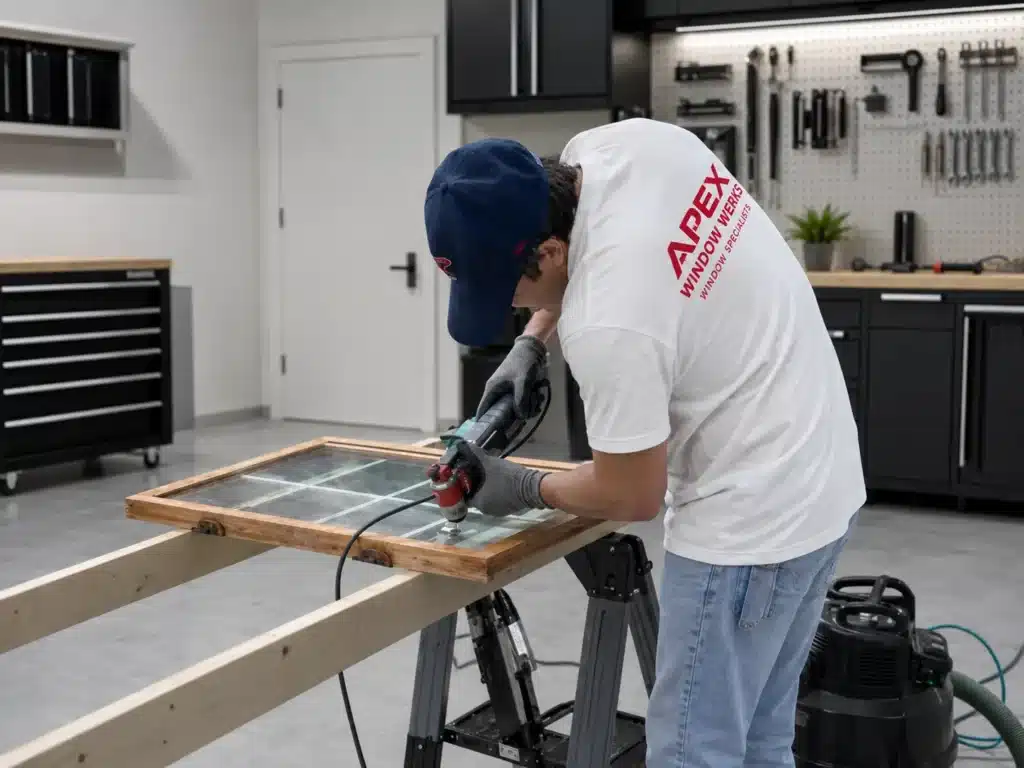
Bring your window to our workshop, and we'll have it repaired and ready for installation in just 2 hours! Our team, specialized in rapid response, is adept at providing quick and efficient service for emergency repairs.

OUR APPROACH

Diagnosing the Real Point of Failure Before Any Repair Begins

The first job on every visit is figuring out which of the three components – sill, sash, or frame – is the actual source of a problem, since symptoms often show up somewhere other than the true cause.

A window that won't close all the way might present as a sash problem, but the real issue is frequently a frame that's shifted out of square, or a sill that's swollen enough to push the bottom rail out of alignment. Treating the visible symptom without finding the underlying cause means the same complaint returns within a season or two.

Once we've identified the actual failure point, the repair approach depends on how far the damage has spread. Localized sill rot at a corner or along one edge is typically addressed with epoxy consolidation or a spliced wood repair matched to the original profile, keeping the rest of the sill intact. A sash that's swollen, warped, or has a failed joint gets rebuilt using the same techniques – removing only the compromised section and reconstructing it to match, rather than replacing the entire sash for a problem confined to one corner or rail. Frame issues, which are less common but more structurally significant, are assessed for whether the surrounding wall structure has settled or whether the frame itself has simply weathered and needs reconstruction in place.
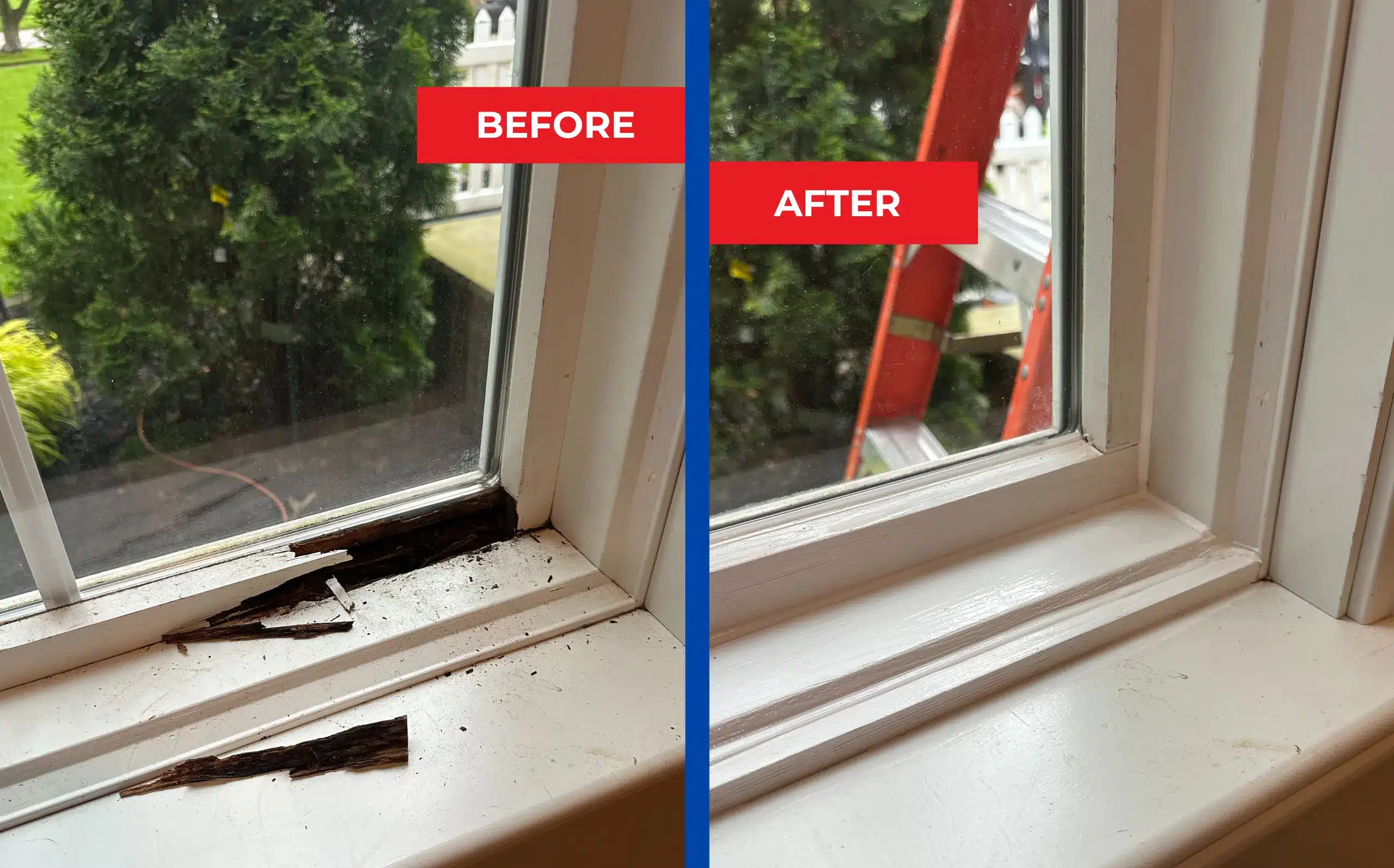
Materials matter as much as technique here. We use epoxy consolidants and wood fillers suited to exterior exposure, along with naturally decay-resistant species or pressure-treated lumber for any new wood introduced into a repair, since installing ordinary construction lumber into a location that already proved vulnerable to moisture just resets the clock on the same failure. The American Wood Council's guidance on naturally durable wood species outlines which species hold up best against exactly this kind of exposure, and it's a standard we build into every sill and frame repair rather than treating material selection as an afterthought. This structural work often coordinates directly with our rotten windows repair service when decay has spread beyond a single component.

Rotted or Soft Window Sills

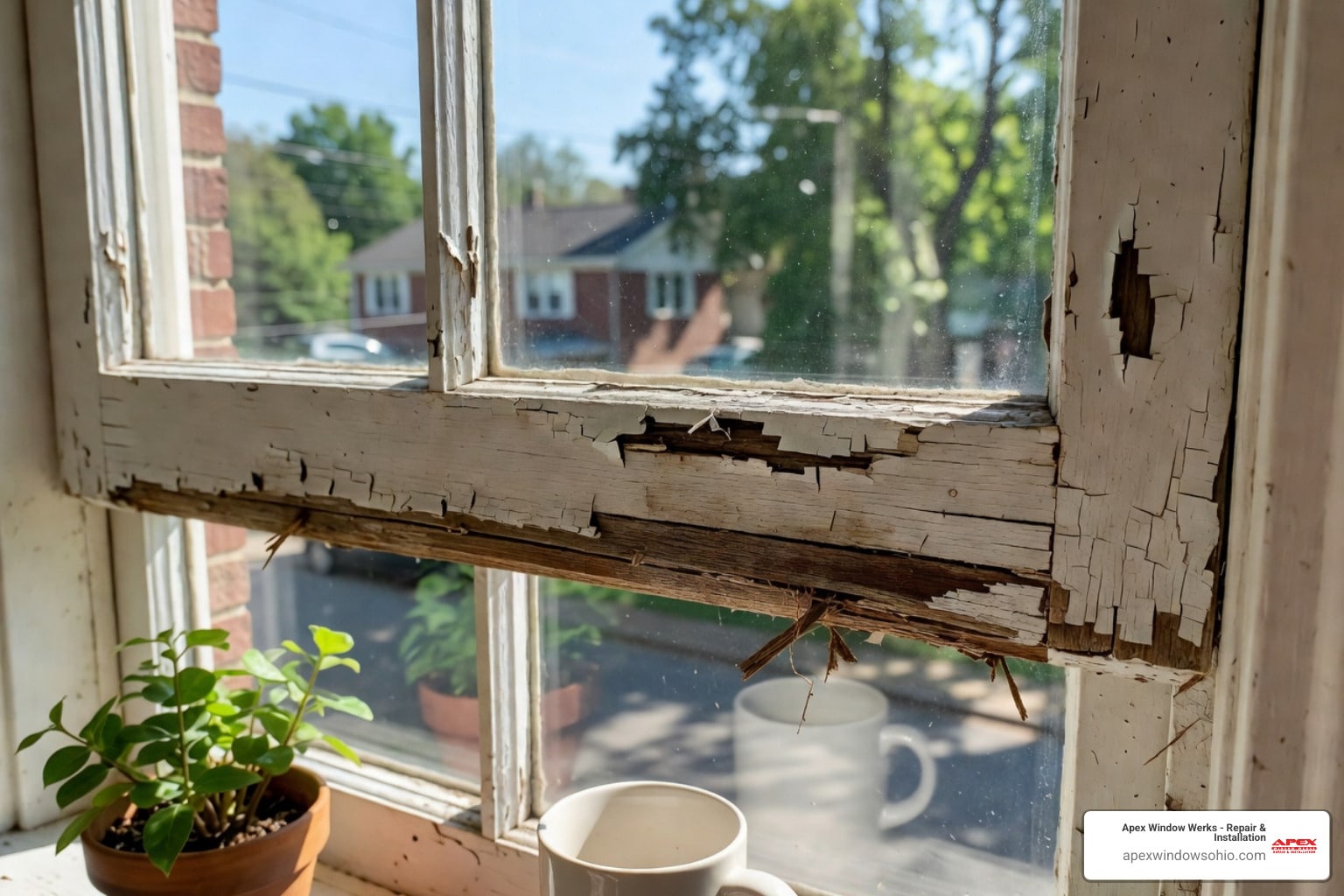
Water pooling at the sill's outer edge or running down from a failed glazing seal above it softens the wood from the surface inward, often for months before the damage becomes visible from inside the home. By the time paint is visibly cracking or a dark stain shows through the finish, decay has usually spread further than its outward appearance suggests.

We probe the surrounding wood to establish the true extent of the damage, then rebuild the sill using epoxy consolidation or a spliced repair, shaped to match the original sill profile and slope. Getting the drainage slope right matters as much as the material used, since a flat or reverse-sloped repair invites the same pooling that led to the original rotten windows repair call.

Sticking or Binding Sashes

A sash that drags or binds usually points to one of three causes: swollen wood, a frame shifted out of square, or paint buildup sealing the moving parts together. Each has a distinct fix, and forcing a stuck sash before diagnosing the cause risks cracking wood or snapping hardware that was never the real problem.

We identify which of the three is actually happening before touching the sash, using a combination of visual inspection and careful test movement. Once the true cause is confirmed, the fix ranges from paint-seal removal to targeted wood repair to frame realignment, addressing the mechanism that's actually causing the resistance rather than forcing the symptom to go away temporarily.

Warped or Twisted Sash Frames

Wood sashes exposed to uneven moisture – more on one face than the other, or more at the bottom than the top – can warp or twist slightly out of their original flat plane, which shows up as a sash that no longer sits flush against the frame on all sides. This creates gaps that let drafts through even when the sash appears fully closed.
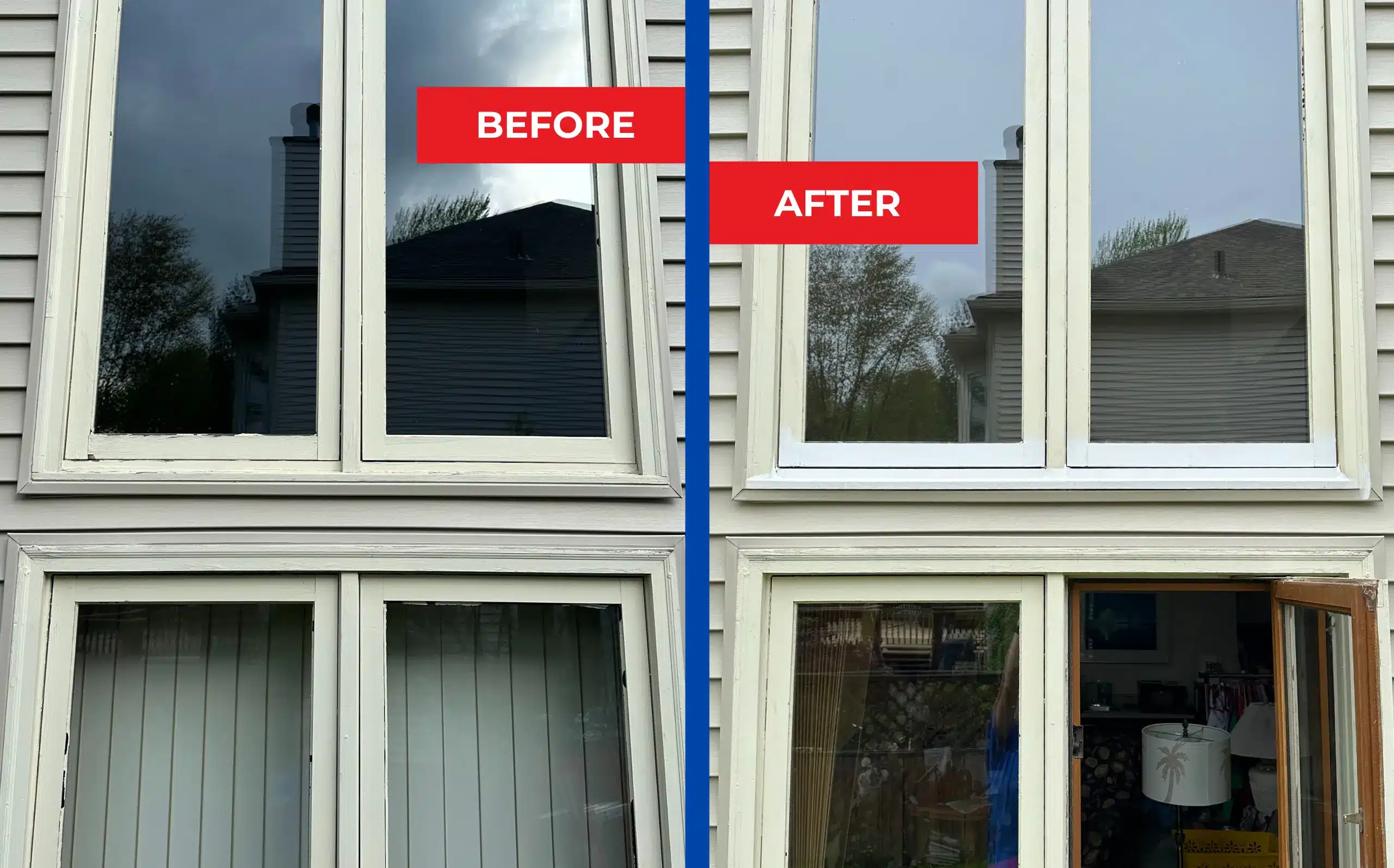
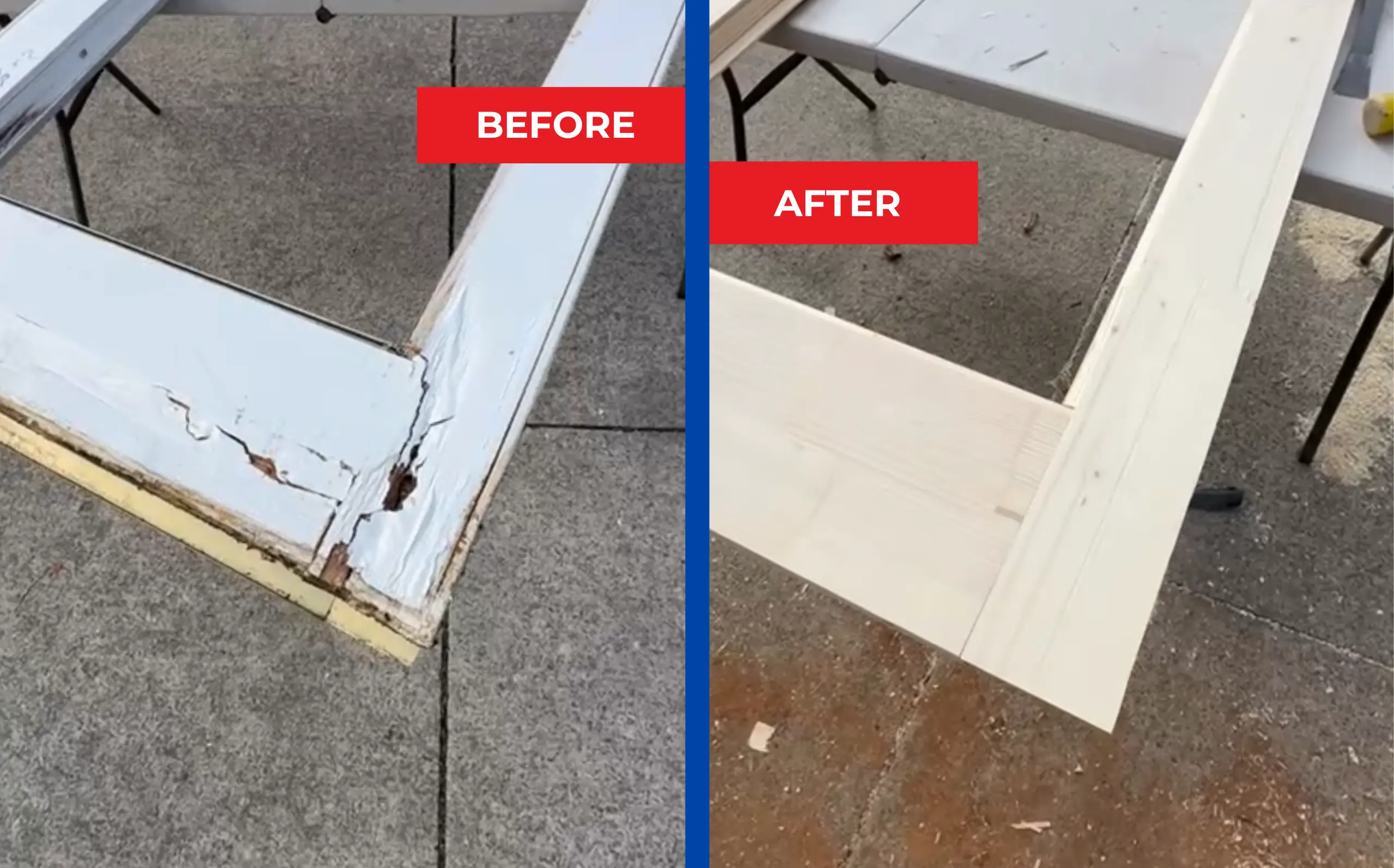
We assess whether a warped sash can be corrected through careful moisture equalization and clamping during reconstruction, or whether the twist has become permanent and requires rebuilding the affected section entirely. Either approach restores a flush, even seal around the full perimeter rather than leaving a partial gap that continues losing conditioned air.

FAILED SASH OR FRAME JOINTS

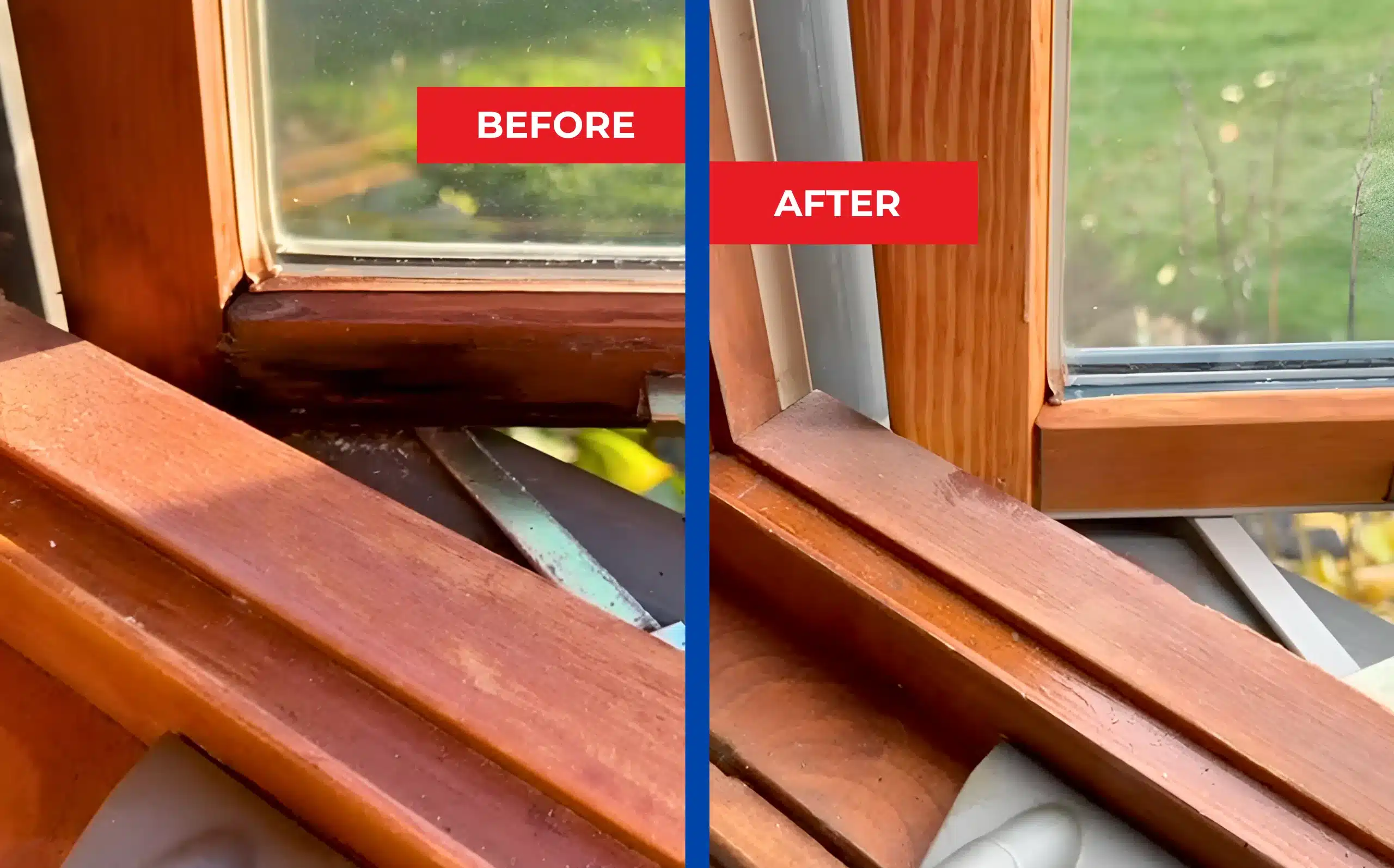
The corner joint where two pieces of wood meet – whether on a sash or the surrounding frame – is under constant mechanical stress from opening and closing, plus moisture exposure from any nearby glazing or exterior seal that's begun to fail. These joints are frequently the very first place visible damage appears.

We rebuild failed corner joints using splined or splice repairs that restore the original structural connection, rather than simply filling a gap with caulk or filler that looks fine but carries no actual load. A properly rebuilt joint should outlast the surrounding original material once it's cured and finished.

Frame Settling or Misalignment

A frame that's shifted slightly within its wall opening – from foundation settling, moisture-driven wood movement, or simple age – throws off how the sash sits inside it, even when the sash itself is in good condition. This shows up as a window that binds on one side while gapping on the other.

We assess whether the frame can be shimmed and resecured into proper alignment, or whether settling has progressed far enough that sections of the frame need reconstruction to restore a true, square opening. Correcting the frame alignment first prevents unnecessary wear on a perfectly sound sash forced to operate in a misaligned opening.

Deteriorated Weatherstripping and Seal Channels

The channel or groove that holds weatherstripping in place can deteriorate alongside the wood around it, particularly on older sashes where the material has compressed, torn, or fallen out entirely over years of use. A window with intact glass and a sound sash can still draft badly if this detail gets overlooked.

We replace weatherstripping to match the sash's specific channel design and confirm it seals evenly around the full perimeter once the sash is back in operation. This step gets checked on every sill, sash, or frame repair, not just jobs specifically called in for drafts.
THE FACTORS

Construction Eras That Predict Sill and Sash Failure


The age and type of a home's original window construction tells us more about likely failure points than almost any other factor. Weight-and-pulley double-hung windows, standard in homes built before the 1950s, rely on a sash cord and counterweight system running through a hollow frame cavity – when the sill beneath one of these windows rots, water often tracks directly into that cavity, affecting the pulley and weight mechanism at the same time as the visible wood damage. Homes in Twinsburg and similar communities with a strong concentration of this construction era see sill and sash problems arrive together more often than in newer housing stock built with different window systems entirely.


Post-war aluminum sliders and early vinyl retrofits, common through the 1960s and into the 1990s, fail differently – these systems typically have less wood exposed to direct weather, but their tracks and sill pans can corrode or crack, creating a different but equally disruptive failure mode that requires different repair techniques than a wood sill would.

Get a free estimate

What Determines Whether a Component Gets Repaired or Rebuilt


The decision between a targeted repair and a full component rebuild comes down to how much of the original material is actually still sound, not a fixed rule based on the window's age alone. A sill with rot confined to the outer few inches near the exterior edge is a straightforward repair candidate, while rot that's tracked all the way back to where the sill meets the jamb studs on both sides usually calls for full sill replacement rather than a partial patch that won't hold structurally.


We make this call using a physical probe test on the wood itself, not a visual estimate from a few feet away, since appearance alone consistently understates or overstates the real extent of decay. A wood window repair assessment during the same visit often catches related sash or glazing issues that share the same root moisture cause, so the full scope of a project gets identified upfront rather than discovered piecemeal across multiple service calls.

Get a free estimate
Step 1
Step 2
Step 3
Step 4
Step 5
01
Our Window Sill, Sash and Frame Repair Process

Inspection and Diagnosis

Every job starts with identifying which specific component – sill, sash, or frame – is the true source of a reported problem, since the visible symptom and the actual cause frequently sit in different places. We use a probe test on suspected soft or damaged wood to confirm the real extent of decay rather than estimating from appearance alone.

At the same time, we check how the sash moves within the frame under normal operation, looking for binding points, uneven gaps, or resistance that points toward frame misalignment rather than a problem with the sash itself. This full-system check prevents a repair that fixes one symptom while leaving its actual cause untouched.
02
Our Window Sill, Sash and Frame Repair Process

Material Assessment and Planning

Once the failure point is confirmed, we determine whether epoxy consolidation, a spliced wood repair, or a full component rebuild is the appropriate scope, based on how much sound original material remains. Over-repairing sound wood wastes money without improving the outcome, while under-repairing compromised wood guarantees a return visit within a year or two.

Material selection happens at this stage too – any new wood introduced into the repair is chosen for appropriate decay resistance given its specific exposure, and epoxy products are matched to the repair's location and expected moisture load rather than a one-size-fits-all approach.
03
Our Window Sill, Sash and Frame Repair Process

Structural Repair

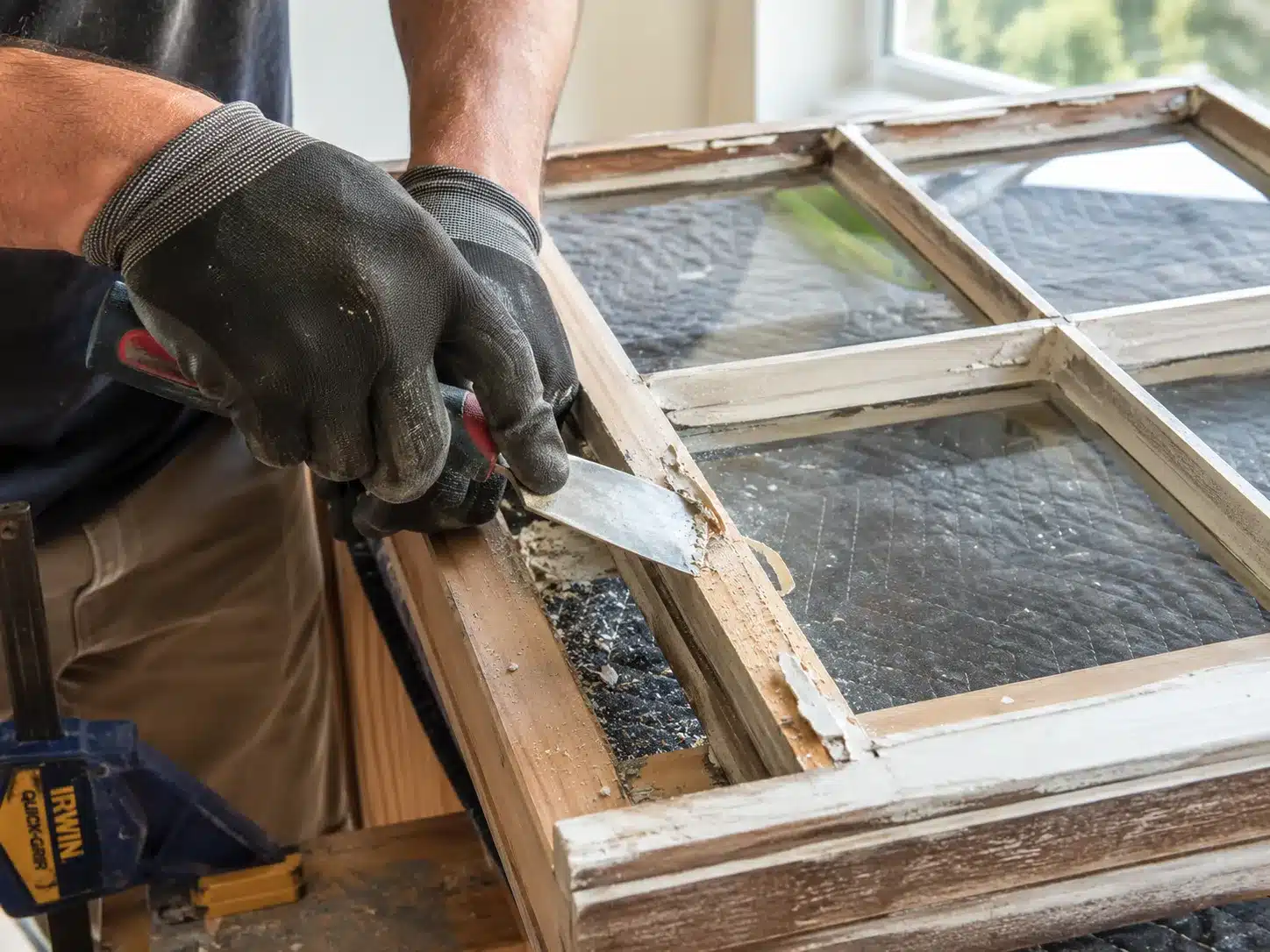
Compromised wood is removed back to sound material, and the repair is built up using epoxy consolidation for shallow decay or a spliced, scarfed repair for anything deeper, shaped and sanded to match the original profile precisely. This includes restoring correct drainage slopes on sills and true, flush surfaces on sash rails and stiles.

Frame realignment, when needed, happens at this stage as well – shimming and resecuring a settled frame into proper square before any sash work continues, since fitting a repaired sash into a still-misaligned frame just recreates the original binding problem.
04
Our Window Sill, Sash and Frame Repair Process

HARDWARE AND FINISH WORK

Once structural work is complete, we inspect and address hardware directly affected by the repair – sash cords, balances, locks, and lifts that may have been compromised by the same moisture that damaged the wood around them. Weatherstripping gets replaced to match the sash's specific channel design, restoring a proper seal around the full perimeter.

Repaired sections are then primed and painted or finished to match the surrounding original material, so the completed repair is visually seamless rather than an obvious patch. Matching sheen and color at the repair boundary receives the same attention as the structural work itself.
05
Our Window Sill, Sash and Frame Repair Process

Final Operation Check

The last step confirms the sash opens, closes, and locks smoothly across its complete range of motion, not just when sitting at rest. We check that the repaired sill sheds water correctly, that weatherstripping seals evenly on all sides, and that any realigned frame is holding its square position under normal operating stress.

We also document the completed repair with photos, useful both for our own records and for homeowners who want documentation of a component's service history for future reference or resale purposes.

Pella Window Repair

Pella's sash and frame systems vary in construction between their wood-interior clad lines and their all-vinyl products, which means the repair approach for a Pella sill or sash depends heavily on which specific product family is involved.

We identify the exact Pella construction type before beginning any structural repair, since treating a clad wood sash the same way as an all-vinyl unit risks using the wrong materials or technique for the actual substrate underneath.

Andersen Window Repair

Andersen's 400 Series and comparable clad lines use a specific wood-and-cladding sash construction that requires the cladding to be carefully removed and reinstalled during any underlying wood repair, rather than simply worked around.


We account for Andersen's cladding attachment method during sash and frame repairs, protecting the exterior cladding from damage while accessing the wood structure that actually needs the repair work underneath it.

Truth Hardware Repair

Truth Hardware's operating mechanisms – balances, locks, and multi-point systems – are built into the sash and frame assembly on many window brands, and a struggling window is frequently a hardware problem rather than a wood problem at all.

We diagnose whether a binding or non-functioning window is actually a Truth Hardware mechanism issue before assuming structural repair is needed, since replacing or adjusting the hardware directly often resolves what looks like a sash or frame problem.

Integrity Window Repair

Integrity's fiberglass-composite windows use a different structural approach than solid wood construction, with a fiberglass shell that behaves differently under moisture exposure and requires different repair materials than a traditional wood sash or frame.

We match repair techniques to Integrity's specific fiberglass construction rather than defaulting to wood-repair methods that aren't designed for this substrate, ensuring the fix bonds and performs correctly with the material actually present.

Kolbe Window Repair

Kolbe's custom and architectural window lines often feature non-standard sash and frame profiles built for a specific project, which means a generic replacement part rarely fits correctly when a structural repair is needed.

We assess Kolbe sill, sash, and frame repairs individually, often fabricating a matching profile by hand rather than assuming a standard part will fit a window built to custom architectural specifications.

Weather Shield Window Repair

Weather Shield's wood-framed windows, widely installed through the 1980s and 1990s, are now old enough that original sills and sash rails in this installed base commonly show the rot and wear patterns typical of that age range.

We see Weather Shield sill and sash failures often enough to recognize the typical points of concern before a full inspection even begins, usually starting at the sill and working upward through the sash rail above it.

Can a Rotted Sill Be Repaired, Not Replaced?

In the large majority of cases, yes. Sill rot typically stays contained to the section directly exposed to standing water or a failed seal above it, rather than spreading evenly across the entire sill length. A probe test confirms exactly how far the damage extends before any decision gets made about scope.

Epoxy consolidation or a spliced repair then restores the sill's structure and drainage function, matching the original profile closely enough that the fix is invisible once painted, all without requiring the sash, frame, or glass above it to be touched at all.

Why Do Sashes Sometimes Bind or Stick?

A sash can be entirely sound in its own construction and still bind or stick, because the actual cause often lives somewhere else in the window system entirely. A frame that's shifted slightly out of square, or a swollen sill pushing the bottom rail out of its normal resting position, both create real resistance that has nothing to do with the sash's own condition or craftsmanship.

Diagnosing where the true cause sits before touching the sash prevents unnecessary repair work on a component that was never actually the problem in the first place, and it usually means a faster, cheaper fix once the real issue is identified.

How Long Does a Structural Repair Last?

A properly executed repair using appropriate materials and correct drainage detailing should perform for decades, often outlasting the surrounding original wood since the repaired section uses modern epoxy consolidants or naturally decay-resistant species rather than whatever standard lumber was available when the window was originally built.

Repairs that fail prematurely almost always trace back to skipped diagnostic steps – treating a symptom without addressing its actual cause – rather than a limitation of the repair method itself.

Recent Window Sill, Sash and Frame Repair Projects

Every structural window repair starts from a different failure point – a rotted sill in one home, a full sash rebuild in another. See how we handled a wood sash repair in Cleveland, and a similar sill reconstruction in our wood window sill restoration in Chesterland. For homeowners dealing with mechanical issues rather than structural ones, our hardware repair page covers locks, balances, and operating mechanisms specifically.
BY WINDOW TYPE

Sill and Sash Repair Across Every Window Construction

Structural repair techniques vary considerably by window type, since each construction method distributes stress and moisture exposure differently. A weight-and-pulley double-hung window has hollow frame cavities housing sash cords and counterweights, which is the same construction we detail in our wood window repair process for older double-hung sashes, where the frame cavity often needs attention alongside the visible wood.


Casement and awning windows put stress on their hinge-side frame and operating hardware in a very different pattern than a double-hung window's vertical sliding motion, which changes where failures typically show up and how a repair needs to be approached. Sliding windows and doors introduce yet another variable, with a horizontal track and sill pan that fails through wear and debris accumulation rather than the rot patterns typical of a vertical wood sill.

Get a free estimate

Double-Hung Windows

The most common older window construction in this region, with sill, sash, and hidden weight-and-pulley hardware all requiring coordinated inspection during a structural repair.

Casement and Awning Windows

Hinge-side frame stress and crank hardware wear are the typical failure points on these window types, distinct from the sill-focused failures common on double-hung windows.

Sliding Windows and Doors

Track wear and sill pan drainage issues replace the wood rot patterns seen on traditional vertical windows, requiring a different diagnostic and repair approach entirely.

What Our Window Sill, Sash and Frame Repair Service Covers

A window that binds, won't stay open, or shows a soft spot at the sill is rarely a reason to replace the whole unit.
We repair rotted sills, rebuild sticking or warped sashes, and correct misaligned frames throughout the Cleveland–Akron area, keeping original windows functional rather than defaulting to full replacement.
Technicians serving this region diagnose the true point of failure before recommending any work, since the visible symptom and the actual structural cause frequently sit in different places on the same window. That diagnostic step happens on-site rather than over the phone, because sill, sash, and frame problems rarely look the same from a photo as they do up close, and it costs nothing to find out which component is actually at fault.

Our regular service area covers dozens of communities including Mentor · Euclid · Twinsburg · Rocky River · Hudson · Cleveland Heights, and the neighborhoods around each. Whether your home has one binding sash or several windows showing the same rot pattern along one exposed wall, our crews bring the same probe-and-repair process to every appointment, regardless of the home's age or window construction type.

Don't see your town listed? We serve the full Cleveland–Akron region – call 440-496-7415 and we'll confirm coverage for your address, along with an honest first read on whether your specific sill, sash, or frame issue is a repair candidate. Most estimates take under an hour, and there's never any obligation to move forward just because a technician came out to take a look.

FAQ

CAN A ROTTED WINDOW SILL BE REPAIRED WITHOUT REPLACING THE ENTIRE WINDOW?

In most cases, yes. Sill rot typically stays contained to the section exposed to standing water, so we remove only the compromised wood and rebuild it using epoxy consolidation or a spliced repair matched to the original profile and drainage slope. Our breakdown of window sash repair costs in Akron and Cleveland covers what typically drives price on a job like this — full window replacement only becomes necessary when decay has spread through the entire sill into the surrounding jamb structure.

WHY WON'T MY WINDOW STAY OPEN EVEN THOUGH THE GLASS AND SASH LOOK FINE?

A window that won't hold its position when open usually points to a hardware problem rather than a wood problem – a broken sash cord, a failed balance mechanism, or a worn spring system are the most common causes. We diagnose which specific hardware component has failed before recommending a fix, since this is frequently a quick repair rather than anything involving the sash or frame structure itself.

HOW DO YOU DETERMINE IF A SASH NEEDS FULL REBUILDING OR JUST A PARTIAL REPAIR?

We use a probe test, pressing a sharp tool into suspected soft areas, to distinguish sound wood from genuinely decayed material rather than relying on visual appearance alone. If decay is confined to a corner or a single rail, a spliced or epoxy repair restores the sash without full reconstruction; if it's spread through most of the sash's structure, rebuilding the whole component becomes the more reliable and often more cost-effective option.

DOES A MISALIGNED FRAME AFFECT HOW LONG A REPAIRED SASH WILL LAST?

Yes, significantly. A sash repaired and reinstalled into a frame that's still out of square will experience uneven stress every time it operates, which can shorten the life of an otherwise well-executed repair considerably. That's why we check and correct frame alignment as part of the same visit whenever it's contributing to the original problem, rather than treating it as a separate issue.

IS SILL, SASH, OR FRAME REPAIR COVERED BY ANY KIND OF WARRANTY?

Yes, structural repairs are backed by a workmanship warranty covering the materials and technique used in the repair itself. Warranty terms can vary depending on the specific scope of work and the materials selected, so we go over the exact coverage that applies to your particular repair during the estimate before any work begins.
Still have a question?