440-496-7415
Google reviews that we have
Rating
4.8
596 reviews
Eva Ryckman Durbin
5 days ago
He did a good job, worked hard and stayed late to get the job finished.
Posted on

Google

Lisa Martin
6 days ago
Communication with company was excellent before and up to the window replacement day. Vladimir was a...
Communication with company was excellent before and up to the window replacement day. Vladimir was an excellent technician. He was respectful and professional. Definitely recommend Apex.
Read more Hide
Posted on

Google

Roberta Ciszewski
1 week ago
They came right away for the estimate and came right away to fix my window and the job was done fast...
They came right away for the estimate and came right away to fix my window and the job was done fast and the workmanship was excellent.
Read more Hide
Posted on

Google

Cheri Sudar
1 week ago
Efficient work!
Posted on

Google

Robert Dangler
1 week ago
Very happy with the service.
Posted on

Google

Taras
1 week ago
Service was prompt. Workers were quick and clean. Thank You
Posted on

Google

Zack Maier
1 week ago
Amazing service. Dropped off a custom size window that needed repair and nobody else could fix. They...
Amazing service. Dropped off a custom size window that needed repair and nobody else could fix. They quoted three days, it was done in three hours. Fantastic experience. Highly recommended 👍 👍
Read more Hide
Posted on

Google

Mahyar Tehrani
3 weeks ago
Vladimir did a fantastic job! Very happy with the service. Thank you!
Posted on

Google

Irene
3 weeks ago
I had a great experience with Apex Window Werks. Their service was excellent. I highly recommend th...
I had a great experience with Apex Window Werks. Their service was excellent. I highly recommend them
Read more Hide
Posted on

Google

Rick Lograsso
3 weeks ago
Posted on

Google

Load more
4.8
Read our 596 reviews

WALK-INS ARE WELCOME, SAME DAY SERVICE!

House Window Repair in Northeast Ohio

Most windows that homeowners assume are finished are not. A sash that won't stay up, a frame letting in draughts, glass that has fogged between the panes: each of those is a component failure inside a window that is otherwise sound. We diagnose which part has gone, repair it where it can be repaired, and replace the unit only where it genuinely cannot.

Virtual estimates
THE PROBLEM

One Broken Part Doesn't Mean a Broken Window

A residential window is an assembly, not a single object. Glass, sash, balance mechanism, weatherstrip, lock, frame and exterior trim are separate components with separate lifespans, and they fail one at a time rather than together. When a homeowner says the window is broken, what has usually happened is that one of those seven parts has reached the end of its own life.

That distinction decides the cost of the job. A balance spring, an operator crank or a failed sealed unit can be changed while the frame stays exactly where it is. Replacing the whole unit to solve a single failed component means paying for six working parts in order to get one new one, plus disturbing the trim, the siding and the interior finish around the opening.

Northeast Ohio's housing stock makes this more common than it would be elsewhere. A large share of homes here were built before 1970, with wood windows whose frames were milled from timber denser than anything available today. Those frames routinely outlast the mechanisms and the glazing inside them by decades, which is why so much of what we see is a sound frame with worn-out working parts.
The complication is that the parts often are not available. Manufacturers discontinue lines, and some go out of business entirely, leaving perfectly good windows with no catalogue support behind them. Homeowners in Cleveland Heights & nearby areas are told regularly that a window is unrepairable when what is actually meant is that nobody stocks the part.

SAME DAY EMERGENCY WINDOW REPAIR IN JUST 2 HOURS!

Bring your window to our workshop, and we'll have it repaired and ready for installation in just 2 hours! Our team, specialized in rapid response, is adept at providing quick and efficient service for emergency repairs.

OUR APPROACH

Repair First, Replace Only Where Repair Won't Hold

Our first job on any call is diagnosis, and it is worth saying plainly that this runs against the commercial incentive most companies have. A replacement quote is worth several times a repair on the same window. We came into this trade as a repair shop, and the diagnosis genuinely determines the recommendation rather than the other way round.

What that looks like in practice: we open and close the unit, check the balance or operator under load, test the lock engagement, probe the frame and sill for soft timber, and look at the glass for seal failure. Those five checks separate almost every residential window problem into a component fix, a structural repair, or a case where the unit itself has gone.


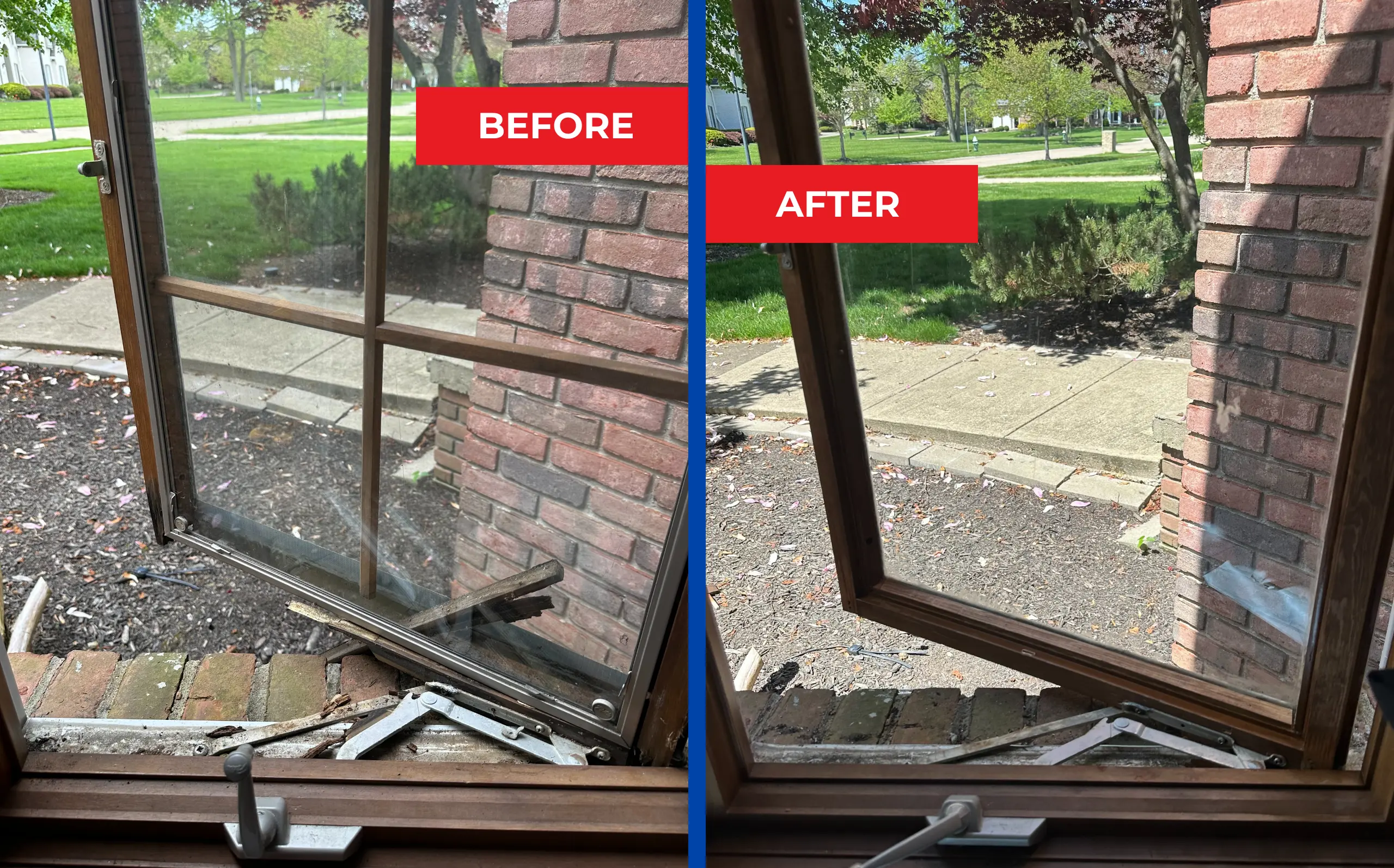
Component repairs cover balances, operators, hinges, locks, weatherstrip and sealed units, and most are done with the window still in the wall. Structural repairs cover rot, failed joints and worn sash edges, and those usually travel back to our workshop, because joints need clamping and finishes need to cure somewhere other than a ladder in November. Glass work runs from a single cracked pane through to a failed insulated unit refabricated to the original dimensions and fitted back into the sash you already own.

Where we do recommend replacement, we say why, and the reasons are specific rather than general: the frame is unsound rather than the sash, the unit has several failures running at once, or safety glazing rules make the existing configuration non-compliant for where it sits. What we will not do is quote a replacement for a window with one broken part. That is not a repair recommendation, it is a sales decision wearing one, and homeowners can usually tell the difference when the reasoning is spelled out.

Sash Won't Stay Up

A double-hung sash that drops when you let go has lost its counterbalance. In older wood windows that means a broken sash cord, with the weight sitting at the bottom of the pocket behind the frame. In newer units it means a spiral or block-and-tackle balance that has lost tension, or a shoe that has come off its track inside the jamb.

None of these are frame problems, and none of them require a new window. Cords are replaced through the access pocket, balances are matched by size and weight and swapped out. It is one of the most common calls we get, one of the cheapest to resolve, and one of the most frequently used to sell homeowners a full replacement they did not need.

Window Won't Close Properly

Windows that no longer meet the frame cleanly are usually telling you about movement rather than about themselves. Houses settle, and openings go slightly out of square over decades. The sash is still rectangular; the hole it sits in is no longer quite rectangular, so it binds on one side and gaps on the other.

The fix depends on how far it has gone. Minor binding is corrected by adjusting the stops or easing the sash edge. More serious racking needs the sash squared and rehung, or the frame packed back true. Both are done with the window in place, and both cost a fraction of replacing a unit whose only fault is the wall around it.

Fogged Or Cloudy Glass

Moisture between two panes means the perimeter seal on that insulated unit has failed and the sealed cavity is now open to outside air. The glass is not dirty and the window is not broken. One component inside the sash has reached the end of its service life, and no amount of cleaning reaches the space where the haze actually sits.

Sealed units are replaceable on their own. We measure the existing unit, have a new one fabricated to those dimensions, and fit it into the sash you already have, leaving frame, trim and siding untouched. On the same visit we can check whether other units in the house are heading the same way, which they usually are.

Draughts Around The Frame

Cold air arriving at the edges of a window rather than through it points at weatherstrip, at the sash-to-frame fit, or at the seal between frame and wall. These are three different problems producing an identical symptom, which is why draughts get misdiagnosed so often and why homeowners end up replacing windows that were never the cause.

We locate the actual leak path before quoting anything. Perished weatherstrip is replaced, a poor sash fit is adjusted, and a failed perimeter seal is dealt with at the frame. Where a whole elevation is draughty and the frames themselves have gone, that is a genuine replacement case and we will say so.

Rotten Sills And Frames

Soft timber at the sill or the lower corners of the frame is the one symptom on this list that genuinely can end a window. Rot spreads along the grain and into joints, and once it reaches the frame's structural corners the assembly loses the geometry that holds everything else in alignment.

It is also the symptom most often caught in time. Localised decay gets cut back to sound wood and rebuilt, and the window carries on.

Whether that is possible depends on how far it has travelled, which is why our sill, sash and frame repair assessments start with a probe rather than a quote.

Broken Or Cracked Pane

A cracked pane is a single-component failure with a single-component fix, and it is worth stating clearly because homeowners are frequently quoted for a whole unit. In single-glazed windows the pane is cut and reglazed. In double-glazed units the entire sealed unit is replaced as one piece, because the two panes and the spacer are manufactured together.

What changes the answer is where the window sits. Glass in or beside a door, or below a certain height from the floor, falls under safety glazing rules and has to be replaced with tempered or laminated product rather than annealed. We check that before ordering rather than after fitting.
THE FACTORS

Age Tells Us What We'll Find Before We Arrive

Construction era is the most reliable predictor in this work. Pre-war homes across the inner suburbs have weight-and-pulley double-hungs with single glazing, and the failures are cords, glazing compound and rot. Post-war ranches and capes bring aluminium sliders and steel casements, where the problems are rollers, weatherstrip and corroded hardware.

Renovation-era housing from the 1970s through the 1990s is where sealed-unit failure dominates, because that is when double glazing became standard and those units are now well past the age at which perimeter seals give out. Contemporary builds bring multipoint locks and large-format glass instead. Knowing which era a street belongs to means arriving with the right parts, which is why house window repair in Strongsville, OH looks different from a call on the east side.

Get a free estimate

Two Hours in the Workshop Beats Two Weeks Waiting

A great deal of residential window repair does not need to happen at your house at all. Sashes come out, travel to our workshop, get repaired properly on a bench with the right equipment, and go back in. Bench work is better work: joints can be clamped, glazing can be done flat, and finishes cure in controlled conditions rather than in whatever weather the day provides.

It also compresses the timeline dramatically compared with ordering a replacement unit and waiting for it. Walk-ins are welcome if you would rather bring a sash to us directly, which homeowners in Independence and the southern suburbs do regularly. More about how the shop and the crews work is on our about page.

Get a free estimate
Step 1
Step 2
Step 3
Step 4
Step 5
01

Our House Window Repair Process

Work Out Which Component Failed

Diagnosis comes before any figure is quoted. We operate the window through its full travel, load the balance or operator to see where it gives up, check lock engagement, probe the sill and lower frame corners for soft timber, and look at the glass edges for the tell-tale haze of a failed seal. Five checks, and almost every residential window sorts itself into one of three categories.

The point of doing this properly is that the categories carry very different costs, and a homeowner who has been quoted for a replacement deserves to know which one they are actually in. If you would rather get a sense of things before anyone visits, a virtual estimate works from photographs and measurements and will usually narrow it down.
02

Our House Window Repair Process

Decide In Place or On the Bench

Some repairs are straightforward on site: balance swaps, weatherstrip, lock and hardware changes, adjustments to a sash that has begun to bind. Others are far better done on a bench, particularly anything involving joints, reglazing, or rebuilding a section of timber that needs clamping while adhesive cures.

We make that call at the assessment and tell you which it will be, because it changes what happens in your house and for how long. Where a sash leaves the property, the opening is secured before we go. Nobody is left with a hole in the wall while a sash sits in a workshop across town.
03

Our House Window Repair Process

Source or Fabricate the Part

Matching a component to a discontinued window is a large part of this trade and it is where most of the skill sits. Balances are matched by length, weight capacity and shoe type rather than by brand. Sealed units are fabricated to measured dimensions rather than ordered from a catalogue. Hardware is identified by mechanism pattern where the original manufacturer no longer exists.

This is why a window nobody else could fix is frequently repairable. The correct question is rarely whether the original part is available, it is whether an equivalent can be identified and fitted. Where a wooden component has to be made rather than bought, it is milled to match the original profile.
04

Our House Window Repair Process

Repair and Refit

Component work is fitted, tested under load and adjusted. Structural work is cut back to sound material, rebuilt, and left to cure fully before the sash goes anywhere near the frame. Glass is set with the correct glazing method for the sash type, which differs between wood, vinyl and aluminium and is not interchangeable between them.

Refitting is where a repair either holds or does not. The sash has to sit square in an opening that may not be square, meeting the stops evenly along their length with the lock engaging without being forced. We adjust at the frame rather than forcing the sash, because forcing it simply moves the problem to the next component.
05

Our House Window Repair Process

Test, Adjust and Show You

Every repaired window is operated through its full range before we pack up, several times, with the lock engaged and released at each position. Balances get checked at the top and bottom of travel, since a balance can hold at one end and slip at the other. Draught paths are checked by hand along the meeting rail and the perimeter.

Then we show you, rather than describing it. You operate the window yourself while we are still there, which is the only reliable way to confirm it feels right to the person who uses it daily. If anything changes over the following weeks, get in touch and we will come back out and look at it.

Pella Window & Door Repair

Pella builds wood, fiberglass and vinyl windows and patio doors, and their units are among the most common we service in this region. We repair mechanisms, replace failed sealed units and rebuild wood components rather than pushing homeowners toward replacement while the frame is still sound.

Their older wood double-hungs and casements are frequently repairable long after homeowners have been told otherwise. The current product line is set out across Pella's own window and door range.

Andersen Windows & Doors

Andersen units turn up constantly in homes built or renovated from the 1980s onward, and their sashes, sliding doors and hardware are a regular part of our week.

Their glass sizes are specific, so replacement units are fabricated to measurement rather than pulled from stock.

Casement operators and multipoint locks are the two components we replace most often on their systems. Andersen's product specifications cover the original unit configurations.

Truth Hardware Mechanisms

Truth Hardware makes operators, hinges, locks and mechanisms fitted into windows from many different manufacturers, which is why their name appears on parts inside units branded as something else entirely. Identifying the mechanism rather than the window is often the fastest route to a repair.

A seized casement crank or a failed multipoint lock is usually a Truth component, and usually replaceable on its own. That single distinction saves a great many windows from being written off unnecessarily.

Milgard Windows & Doors

Milgard vinyl and aluminium windows are widely installed across the region, particularly in renovation-era and later housing.

We service their balances and hardware and replace failed insulated units, keeping the existing frames wherever the vinyl and the welded corners remain sound.

Their sliding units are prone to roller and track wear rather than frame failure, which is a component fix rather than a replacement case in the great majority of the calls we take.

JELD-WEN Windows

JELD-WEN produces wood, vinyl and clad windows across a wide range of price points, so what we find behind the badge varies considerably from house to house. We repair sashes, replace sealed units and rebuild wood components on units otherwise in serviceable condition.

Because the range is so broad, identifying the specific line matters more than usual before sourcing anything. We work from the unit itself rather than from the brand name on the spacer bar.
Windsor Windows

Windsor wood and clad windows appear across suburban housing throughout Cuyahoga and Summit counties.

We repair their hardware, replace glass and rebuild wood components, keeping original frames wherever the timber has not gone past sensible repair.

Their older wood units in particular tend to have frames in far better condition than the mechanisms inside them, which is the exact situation component repair exists for.

When the Manufacturer No Longer Exists

Discontinued and defunct window lines are one of the most common reasons homeowners are told a window cannot be fixed. Manufacturers retire product lines routinely, and some leave the market altogether, which means no catalogue part and no factory support for units that are otherwise in good working order.
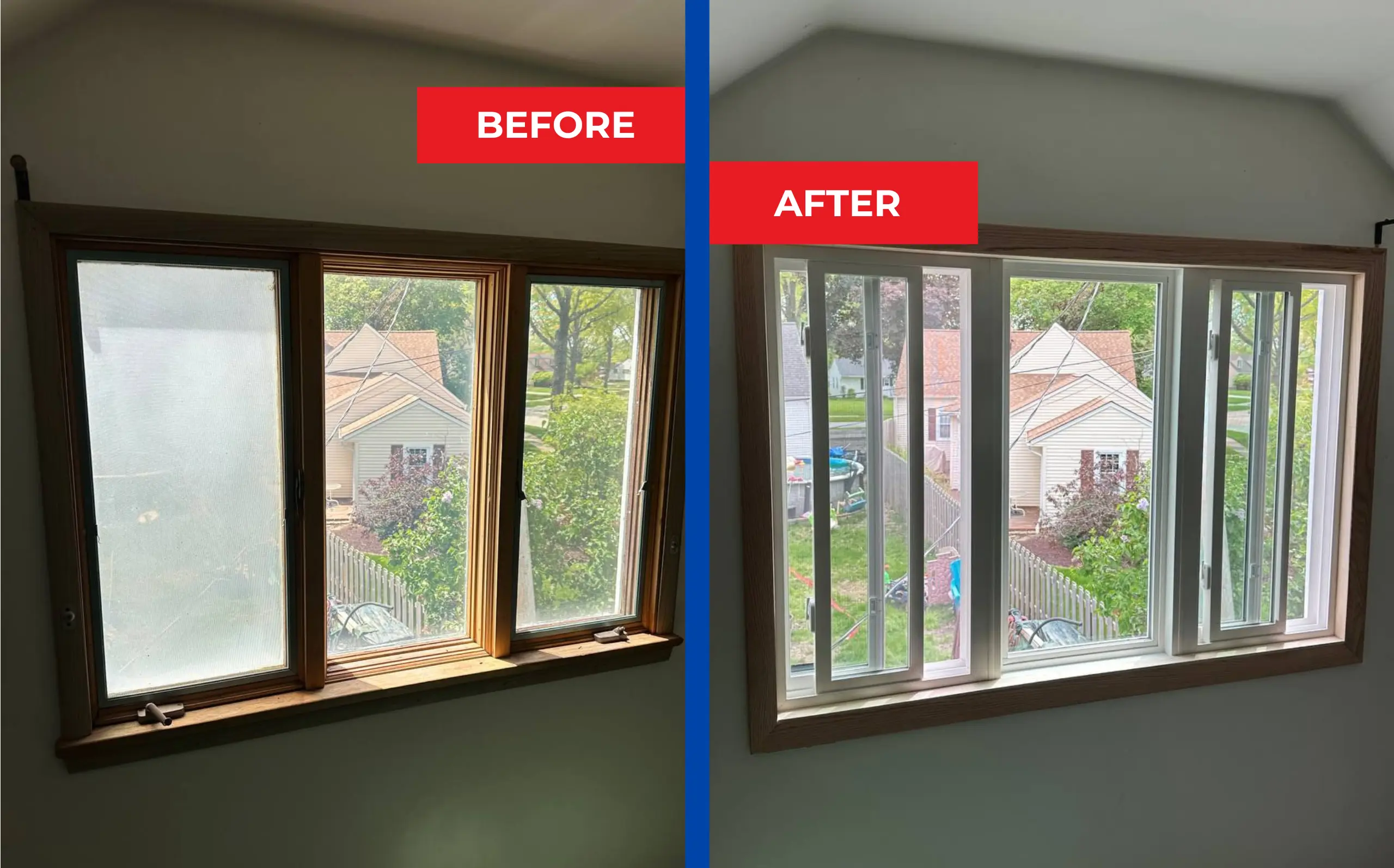

That is a sourcing problem rather than a repair problem. Balances are matched by dimension and load rather than by brand, sealed units are fabricated to measurement, and wooden components are milled to the original profile. Where the glass itself is the issue, insulated glass replacement works to your existing sash regardless of who originally made it.

What the Energy Argument Actually Says

Replacement is often sold on energy savings, and the underlying figure is real: the Department of Energy puts heat gain and loss through windows at 25 to 30 percent of residential heating and cooling energy use. That is a substantial number and it is quoted constantly in replacement marketing.

What gets quoted less often is the same source's other point. Where existing windows are in good condition, improving them can be the more cost-effective route, and the DOE guidance on updating or replacing windows sets out both paths rather than assuming the second. Sealing air leaks and restoring a sound window is frequently the better value.

How Repair & Replacement Costs Compare

Replacement pricing in 2026 runs to several hundred dollars per window at the low end and well beyond a thousand for larger or specialty units, before installation complexity is considered. Component repairs occupy an entirely different bracket, because the material cost is a part rather than a manufactured unit.

The honest caveat is that repair stops making sense at some point, and that point is real rather than rhetorical. Multiple simultaneous failures in one unit, or an unsound frame, tip the arithmetic toward full window replacement. We would rather tell you where that line falls on your particular windows than pretend it does not exist.

Repairs We've Finished Around Northeast Ohio

The clearest way to see where the repair-or-replace line actually falls is to look at jobs on both sides of it.

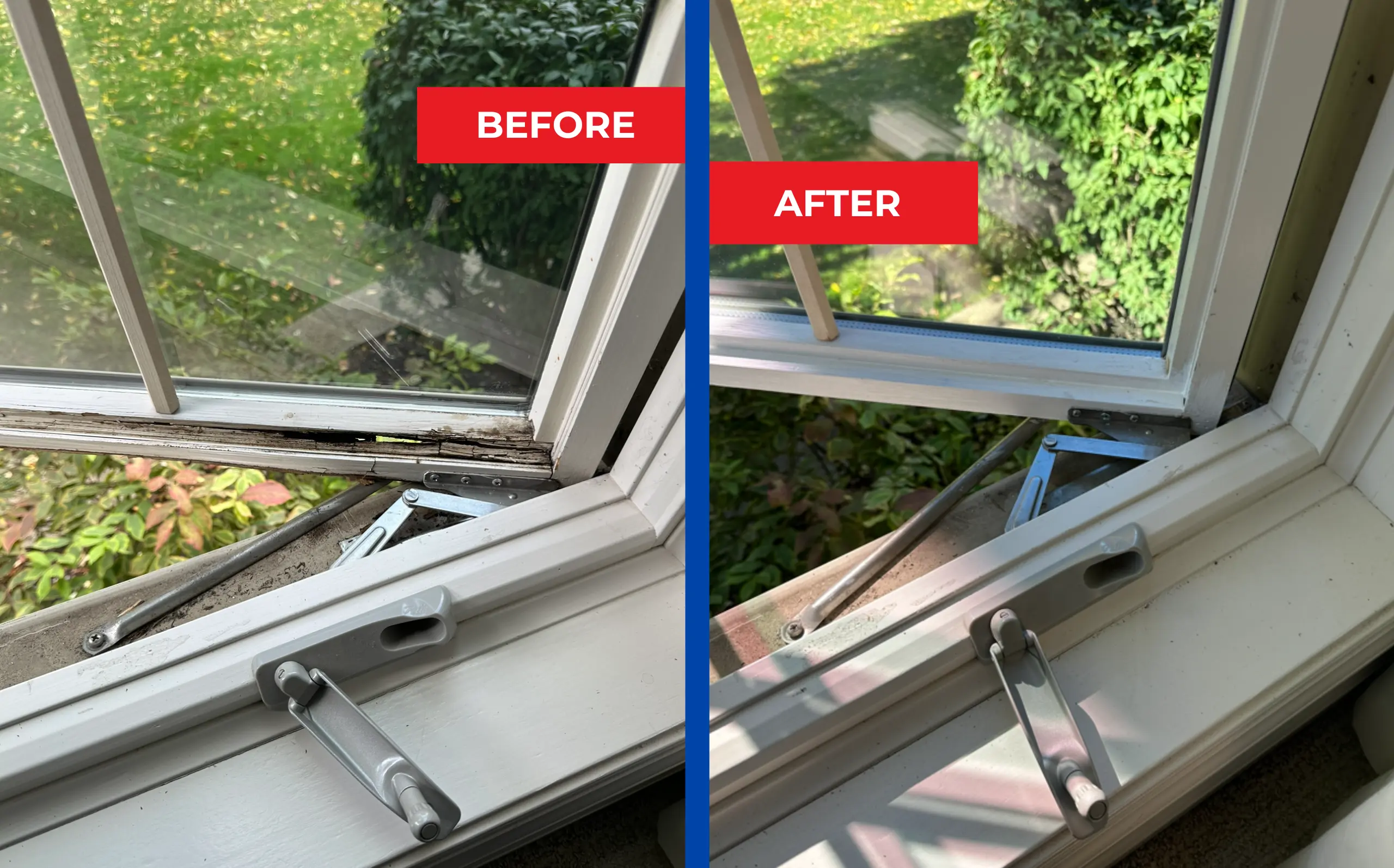
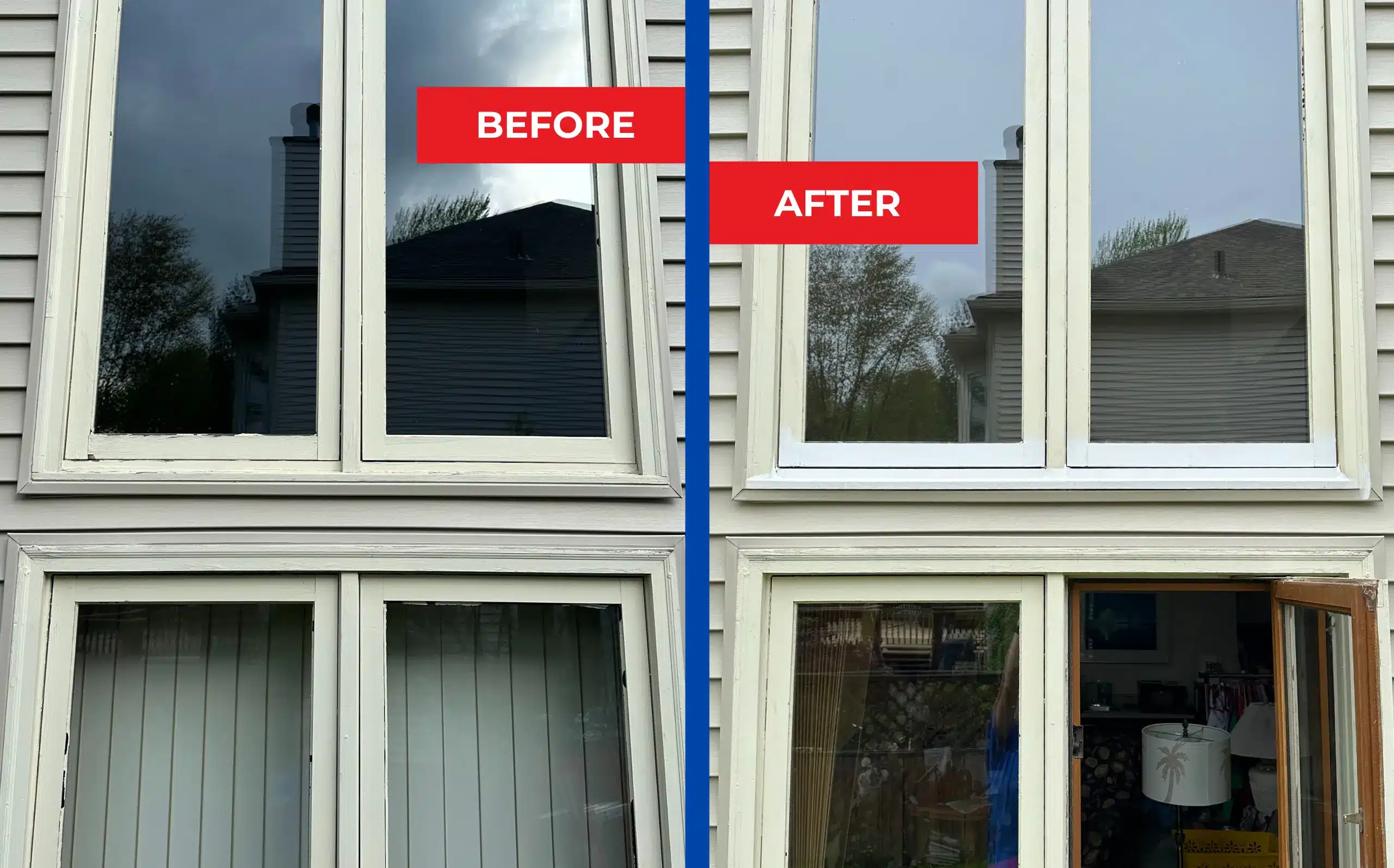
Our wood window repair and glass replacement in Bedford shows a moisture-damaged sash corner rebuilt rather than discarded. The vinyl window installation in Lakewood shows the other outcome, where replacement was the correct call. For costs, our article on what sash window restoration really costs sets out real figures with the labour breakdown.
BY WINDOW TYPE

Repairs by Window Style and Frame Material

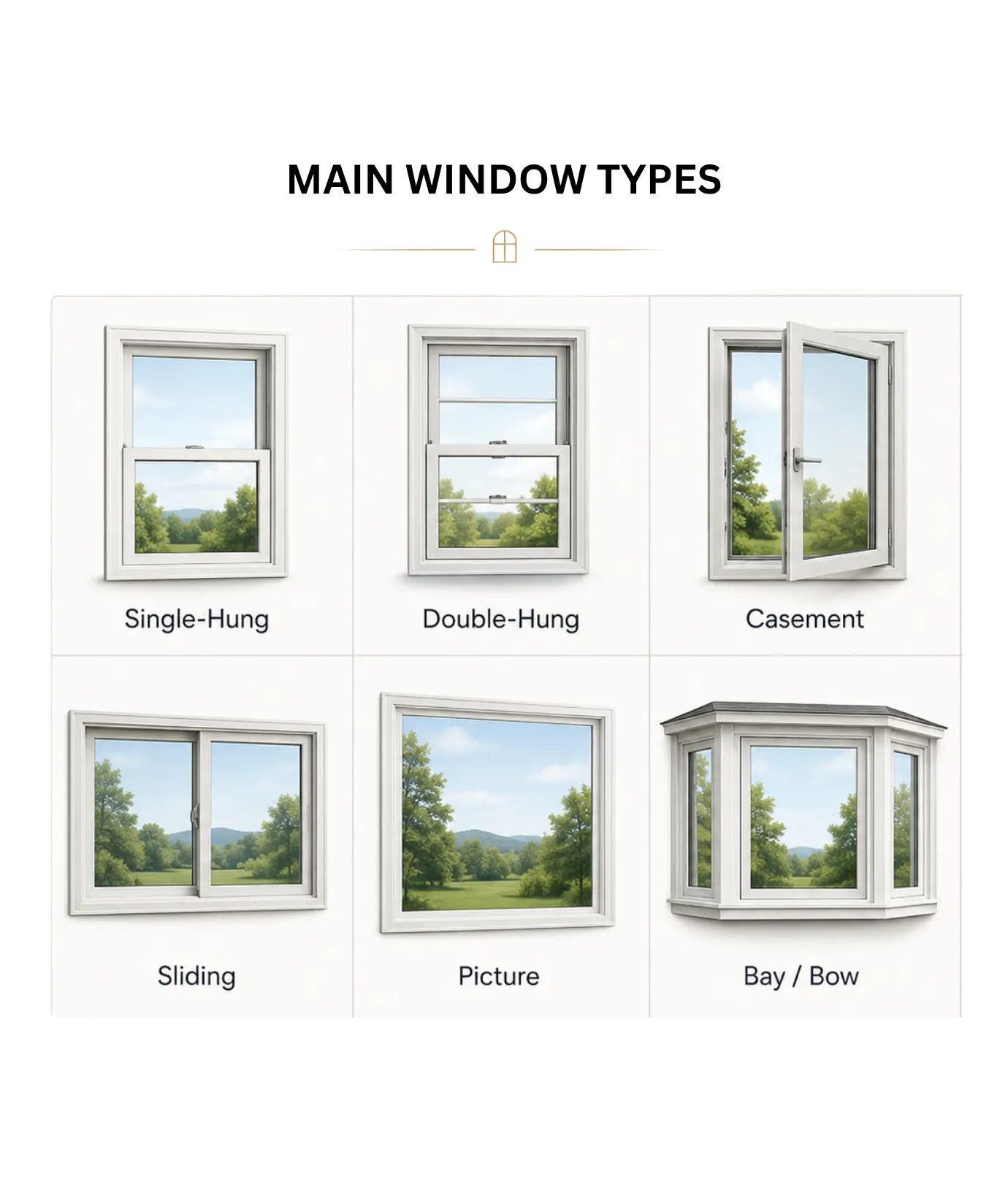
What can be repaired, and how, depends on two things that have nothing to do with the symptom: how the window is built to move, and what its frame is made from. Movement determines which mechanism carries the load and therefore which component is most likely to fail first. A double-hung relies on counterbalance, a casement on a geared operator and hinge arms, a slider on rollers and track. Each of those fails in its own characteristic way, and each is replaceable independently of the sash it serves.

Frame material decides what is possible once you get past the mechanism. Wood can be cut back, rebuilt and milled to a matching profile, which is why wood window repair saves units that look beyond hope, while welded and extruded frames behave differently. The table below sets out what each material realistically allows. Where a frame has genuinely failed, that becomes a replacement conversation, and where damage is sudden rather than gradual, emergency window repair secures the opening the same day.
Get a free estimate

Double-Hung & Single-Hung

Counterbalance failures dominate, whether cords in older wood units or spiral balances in newer ones. The frame is very rarely the problem.

Casement and Awning

The geared operator and hinge arms carry all the load, so these wear first. Both are replaceable without touching the sash or frame.

Sliders and Picture Windows

Sliders fail at rollers and track. Fixed picture units have no mechanism at all, so nearly every call on them is glass.

Residential Window Repair Across Cleveland and Akron

Most windows arrive at us already written off by somebody else.
We find the component that actually failed, repair it where repair will hold, and tell you plainly when it won't – because a replacement quote for one broken part is a sales decision, not a diagnosis.
We work on residential windows across the whole Cleveland–Akron corridor rather than a single town, on everything from a single sash that won't stay up to a full elevation of failed sealed units. Because we started as a repair shop rather than a replacement dealer, the assessment drives the recommendation. If you want a sense of things before anyone visits, start with a virtual estimate.

We cover Westlake, Solon, Mentor and Broadview Heights, along with the rest of Cuyahoga, Summit, Lorain, Lake and Medina counties. The housing changes noticeably across that spread, from pre-war wood double-hungs on the inner east side to renovation-era sealed units further out, and the repair that makes sense changes with it.

Don't see your town listed? Call 440-496-7415 or send us photographs of the window and what it is doing. We will tell you which component has most likely failed and whether it is worth repairing. If the answer is that your window really has reached the end, we will say so, and there is no obligation attached to hearing it.
FAQ

CAN YOU REPAIR A WINDOW WITHOUT REPLACING THE WHOLE FRAME?

Yes, and that describes most of our work. Balances, operators, hinges, locks, weatherstrip and sealed glass units are all replaceable while the frame, trim, siding and interior finish stay untouched.

This matters financially because the frame is the expensive part of a window and usually the healthiest, particularly in older homes where it was milled from denser timber than anything sold today. Even rotten sections can normally be cut back to sound wood and rebuilt in place, so long as the decay has not reached the joints holding the assembly square.

AT WHAT POINT IS A WINDOW NOT WORTH REPAIRING?

Three situations, and age is not one of them. When the frame itself has gone soft, when three or more components have failed simultaneously in the same unit, or when the glazing no longer meets safety requirements for its position. You can check the first yourself: press a screwdriver tip into the sill and the lower corners of the frame.

If it sinks in rather than meeting resistance, the decay has reached structural timber. A single broken part almost never reaches this threshold, and a hundred-year-old frame in sound condition is usually worth more than what would replace it.

DO I HAVE TO REPLACE ALL MY WINDOWS AT ONCE?

No. Windows fail individually and can be dealt with individually, and nobody should be pressured into a whole-house project by one bad unit. There is one genuine caveat worth knowing: sealed units installed on the same day tend to fail within a few years of each other, because they came from the same production batch and have had identical exposure since.

If two or three have fogged, the rest of that batch is likely following. Checking them on one visit costs less than several separate call-outs later.

WHY DO SO MANY OLDER CLEVELAND HOMES HAVE WINDOWS THAT WON'T STAY OPEN?

Because a large share of the housing stock here predates 1970 and uses weight-and-pulley counterbalances. Cast iron weights hang on cords inside pockets in the jambs, and the cotton or hemp cord perishes long before the timber does, typically after thirty to fifty years.

When it snaps the weight drops to the bottom of the pocket and the sash loses its counterbalance entirely. You can usually confirm it by tapping the jamb and listening for a dull thud where the weight is sitting. The weights are still there and the fix is new cords, not a new window.

WHAT DOES A WINDOW REPAIR ESTIMATE ACTUALLY INCLUDE?

Which specific component has failed, what repairing it involves, whether the work happens at your house or on our workshop bench, and a price for that repair. If we think replacement is the better answer, the estimate states why in specific terms rather than general ones.

Worth applying to any contractor you get an estimate from: ask which individual part failed. Anyone who can name it has diagnosed the window. Anyone who answers that it is old or beyond economical repair has priced a replacement without diagnosing anything.
Still have a question?