440-496-7415
Google reviews that we have
Rating
4.8
596 reviews
Eva Ryckman Durbin
4 days ago
He did a good job, worked hard and stayed late to get the job finished.
Posted on

Google

Lisa Martin
5 days ago
Communication with company was excellent before and up to the window replacement day. Vladimir was a...
Communication with company was excellent before and up to the window replacement day. Vladimir was an excellent technician. He was respectful and professional. Definitely recommend Apex.
Read more Hide
Posted on

Google

Roberta Ciszewski
5 days ago
They came right away for the estimate and came right away to fix my window and the job was done fast...
They came right away for the estimate and came right away to fix my window and the job was done fast and the workmanship was excellent.
Read more Hide
Posted on

Google

Cheri Sudar
5 days ago
Efficient work!
Posted on

Google

Robert Dangler
1 week ago
Very happy with the service.
Posted on

Google

Taras
1 week ago
Service was prompt. Workers were quick and clean. Thank You
Posted on

Google

Zack Maier
1 week ago
Amazing service. Dropped off a custom size window that needed repair and nobody else could fix. They...
Amazing service. Dropped off a custom size window that needed repair and nobody else could fix. They quoted three days, it was done in three hours. Fantastic experience. Highly recommended 👍 👍
Read more Hide
Posted on

Google

Mahyar Tehrani
2 weeks ago
Vladimir did a fantastic job! Very happy with the service. Thank you!
Posted on

Google

Irene
3 weeks ago
I had a great experience with Apex Window Werks. Their service was excellent. I highly recommend th...
I had a great experience with Apex Window Werks. Their service was excellent. I highly recommend them
Read more Hide
Posted on

Google

Rick Lograsso
3 weeks ago
Posted on

Google

Load more
4.8
Read our 596 reviews

WALK-INS ARE WELCOME, SAME DAY SERVICE!

Custom Cut Mirrors in Northeast Ohio

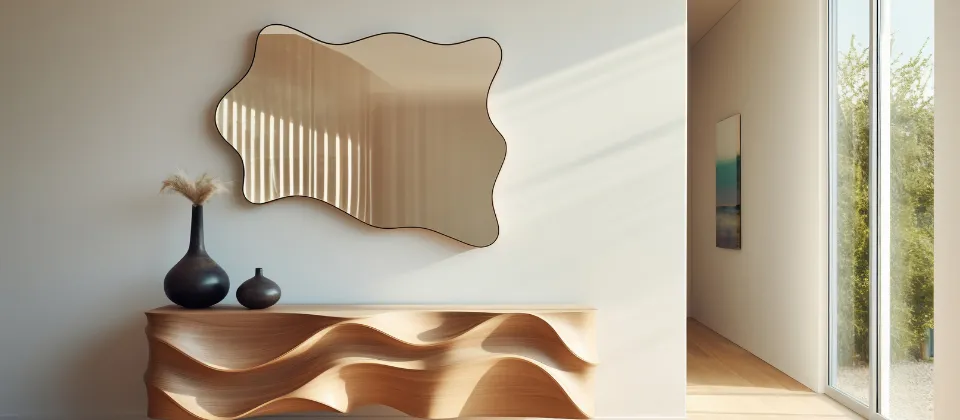
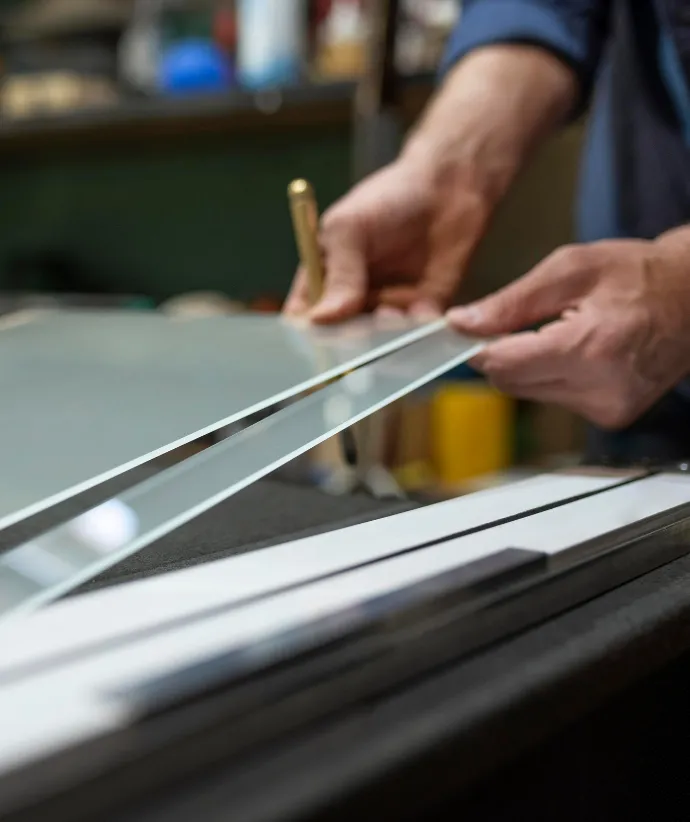
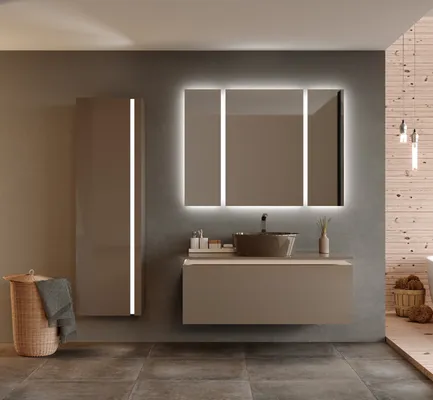
Mirrors rarely come in the size the wall actually is. We measure the opening, cut the panel to fit it, finish the edges the way you want them, and hang it.
Bathrooms, closets, hallways, dining rooms and commercial rooms across the Cleveland–Akron area.

Virtual estimates
THE PROBLEM

When a Mirror Starts Going Black Around the Edges

A mirror is float glass with a silver layer on the back, protected by a copper or copper-free coating and two coats of paint. Those paint layers, not the silver, are the real barrier, and they are sealed across the face but left open at the cut edge. Moisture and cleaning spray reach that edge, work under the paint, and lift the silver off the glass.

Nothing on the front surface is wrong. The damage sits underneath, which is why wiping and polishing change nothing, and why a scratch on the back does the same work an unsealed edge does.

Bathrooms here run through a punishing cycle. Furnace-dry winter air, then a shower that pushes the room to saturation in minutes, then the same swing again the next morning, six months a year. Older bathrooms across Shaker Heights and Akron often have no exhaust fan at all, only an operable window nobody opens in January, so the moisture simply sits.

Mirrors in those rooms were usually glued flat to plaster with no air gap, so condensation gathers along the bottom edge for hours. Add ammonia cleaner running to that edge and the backing fails years early.

SAME DAY EMERGENCY WINDOW REPAIR IN JUST 2 HOURS!

Bring your window to our workshop, and we'll have it repaired and ready for installation in just 2 hours! Our team, specialized in rapid response, is adept at providing quick and efficient service for emergency repairs.

OUR APPROACH

EVERYTHING THAT HAPPENS BEFORE THE MIRROR GOES
ON THE WALL

A custom mirror order is a sequence of decisions, not a product off a shelf. We measure the opening or take a physical template where the wall is out of square, agree the thickness, pick an edge finish, and mark any cutouts needed for outlets, sconces, faucet sets or a medicine cabinet return. Radius corners, notches around tile trim and drilled holes for fixings are all set at that point, because none of them can be changed after the glass is cut.

A desilvered mirror cannot be re-silvered in your bathroom, and there is no honest repair for a lifted backing. Resurfacing kits sold for the job put a fresh coating over the damaged one, which shifts the colour of the reflection and rarely holds through a full season of showers. What usually does survive is everything around the glass: the frame, the cabinet carcass, the tile surround, the mounting clips. In those cases the work is a new panel into existing trim rather than a remodel, and the room stays usable throughout. The same logic runs through our replacement glass for windows and doors: keep the surround, change the pane.

Thickness follows span. Small framed panels are usually fine at 1/8 inch, while a wide vanity run or a full-height panel wants 1/4 inch so it stays flat and doesn't ripple the reflection. Edges are polished flat, pencil-rounded or beveled, and a bevel needs deciding early because it eats into the visible width. Backing matters just as much in a wet room: copper-free mirror is built to resist the edge corrosion that ends most bathroom panels, and it costs little enough at the point of order to be worth asking for. For salons, gyms and offices we handle the same work through our commercial glass repair and replacement crews.

Black Edge Creep

The grey-black band creeping in from the bottom of a bathroom mirror is desilvering. Water vapor and cleaning spray reach the exposed cut edge, work their way under the paint and copper layers, and lift the silver coating off the glass. It starts at an edge or a drilled hole, never in the middle of a panel, and only ever spreads inward, which is why it looks worse every single year.

Once the silver has gone, no cleaning product or resurfacing kit brings it back, because the reflective layer is physically missing rather than dirty. We measure the opening, cut a new panel to the same size and edge finish, and set it on spacers so air can reach the back. Homes in Wickliffe with original 1960s vanity walls show it first along the sink-side edge.

Mirror Too Small

New vanity, same old mirror. A 48-inch cabinet goes in under a 36-inch mirror and the proportions never recover, or a double-sink remodel leaves a single panel floating awkwardly between two faucet sets. The mirror itself is usually sound. It simply belongs to a bathroom layout that no longer exists, and no reframing hides a panel short at both ends of the counter.

Cutting a new panel to the finished cabinet width is straightforward once the tile and backsplash are set, which is why we measure after the vanity is installed rather than from a plan. We can also cut two matched panels for a double vanity, with the gap sized to the light fixture between them so the spacing reads deliberate.

Cracked Vanity Mirror

Mirrors crack from point pressure far more often than from impact. A clip tightened hard against the glass, a shim missing behind one corner, or a cabinet that has shifted slightly on an uneven floor will all concentrate load in one spot until the panel lets go. The crack usually runs from a fixing point or a drilled hole outward, in a long curve rather than a star.

A cracked mirror is a handling risk as much as a cosmetic one, because annealed mirror breaks into long shards rather than crumbs. We take the panel down whole where we can, clear the fragments, check whether the substrate behind it caused the failure, and cut the replacement with corrected clip positions so the same pressure point doesn't repeat itself later.

Loose Or Sagging

Mirror mastic has a working life. Over years of heat cycling, the adhesive bed behind a large glued panel can release in patches, and the mirror starts to bow away from the wall at one corner or sit visibly proud along a top edge. On plaster in particular, the mastic sometimes holds perfectly well while the plaster skin it is bonded to lets go instead.

A mirror that has begun to move is not something to leave through another season, because the failure is rarely gradual once it starts. We assess whether the panel can be re-secured with clips or a J-channel taking the weight properly, or whether the wall needs making good first. Where the substrate is sound, mechanical fixings usually beat re-gluing outright.

Scratched And Chipped

Edge chips come from installation and from cleaning tools, and they matter more than they look, because a chip breaks the paint seal and gives moisture a direct route to the silver. Surface scratches are a different problem entirely: they sit in the glass itself, so no polish or filler removes them without distorting the reflection around the repaired area.

Small chips on an edge that will sit behind a frame or a clip can often be left alone, and we will tell you when that is the case rather than sell a panel nobody needs. A scratch across the working face of a mirror is a replacement, and we would rather say so at the estimate than after you have paid for a polish attempt.

Outdated Builder Sheet

Large frameless sheets glued straight to drywall were standard in mid-century and 1970s builds across the region, run wall-to-wall above the vanity with no frame, no edge finish and no gap behind. They date a bathroom instantly, and because the raw cut edge was never sealed, they are usually the first mirrors in a house to go black along the bottom.

Replacing one is mostly a question of what the wall looks like underneath, since mastic rarely comes off drywall paper cleanly. We plan for that: either a slightly oversized new panel that covers the damaged zone, or removal, board repair and a properly edged mirror set on clips. Both routes are honest options and we price them side by side.
THE FACTORS

Split-Levels, Colonials and the Mirrors They Came With

Housing era predicts mirror type here more reliably than budget does. Post-war ranches and split-levels came with wide frameless builder sheets over the vanity. Pre-war colonials and Tudors more often have framed mirrors, built-in medicine cabinets with mirrored fronts, and the occasional mirrored closet door from a later renovation. Contemporary builds from the mid-1990s on tend toward large single panels with polished edges, sometimes with an integrated light bar that constrains any replacement to a specific height.

That matters because each one fails differently and each one is replaced differently. A builder sheet is a mastic problem. A medicine cabinet front is a hardware and hinge problem before it is a glass problem. A mirrored bypass door is a safety glazing question. When we look at a bathroom in Mayfield Heights the first thing we establish is not the size but how the existing panel is actually held to the wall.

Get a free estimate

Cutting and Edging In-House Means Fewer Weeks Waiting

Most of the delay in a mirror order is not the glass. It is the round trip: someone measures, sends the numbers to a fabricator, waits, then comes back to install whatever arrives. We cut and edge in our own shop, which removes a link from that chain and means a re-cut after a surprise on site costs days rather than a fresh lead time. Walk-ins are welcome at the shop if you would rather bring a template in yourself.

It also means we can be honest at the estimate about what is quick and what is not. A rectangular polished-edge panel is a short job. A beveled panel with radius corners and three drilled holes is not, and pretending otherwise helps nobody. We have run this shop since 2016, and you can read more about how the company works. Homeowners in Fairview Park usually ask about timing first.
Get a free estimate
Step 1
Step 2
Step 3
Step 4
Step 5
01

our custom cut mirror process

Measure the Opening

The estimator who visits measures the opening in three places across both the width and the height, because walls in houses built before the 1970s are rarely parallel, and a panel cut to a single figure will bind at one end while leaving a visible gap at the other. We work from the tightest of the three. Where a mirror is going back into an existing frame or cabinet, we measure the rebate rather than the old glass, since the panel coming out may itself have been cut short by whoever fitted it.

Anything tiled, arched or genuinely out of square gets a physical template instead of numbers, trimmed against the wall until it sits right. That costs an extra half hour on site and removes most of the reasons a panel ever comes back. If you would rather have a price before anyone visits, a virtual estimate works from photos and rough dimensions. We still measure properly before cutting, because a photograph cannot show that one side of a wall leans half an inch.
02

our custom cut mirror process

Agree Thickness, Edge & Backing

Thickness is settled before anything else, because it governs both optical flatness and weight, and weight decides how the mirror can be fixed later. Wide vanity runs and full-height panels get quarter-inch glass so the reflection stays true across the span, while smaller framed pieces are usually fine at an eighth. We have taken down enough thin oversized panels bowing gently against a wall to be firm about this, even when the lighter glass would trim the cost of the order.

Edge finish is the part you actually look at every day. Flat polished reads clean and modern, pencil edge is softer and more forgiving where a wall is slightly irregular, and a bevel adds depth but eats into the usable reflective width, so it has to be chosen before cutting rather than after. In a bathroom we also suggest copper-free backing, which is made to resist the edge corrosion that finishes most vanity mirrors, and costs little enough to be worth specifying upfront.
03

our custom cut mirror process

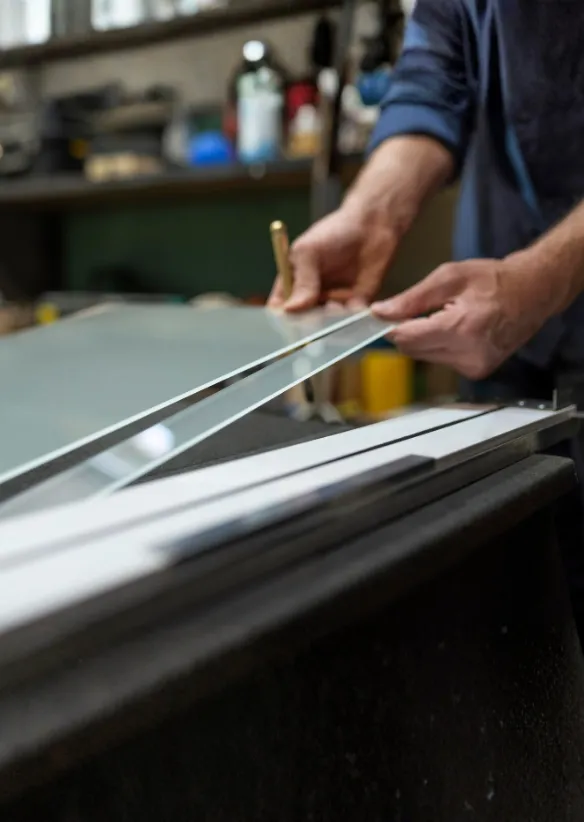
Cut & Edge in Our Own Shop

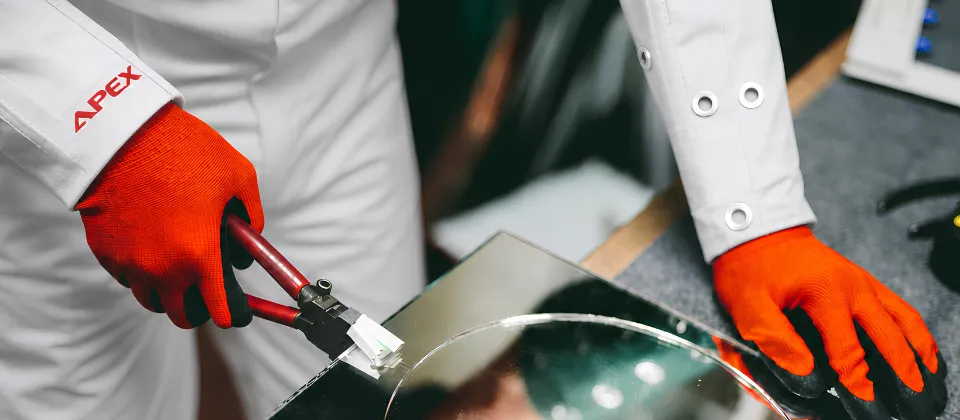
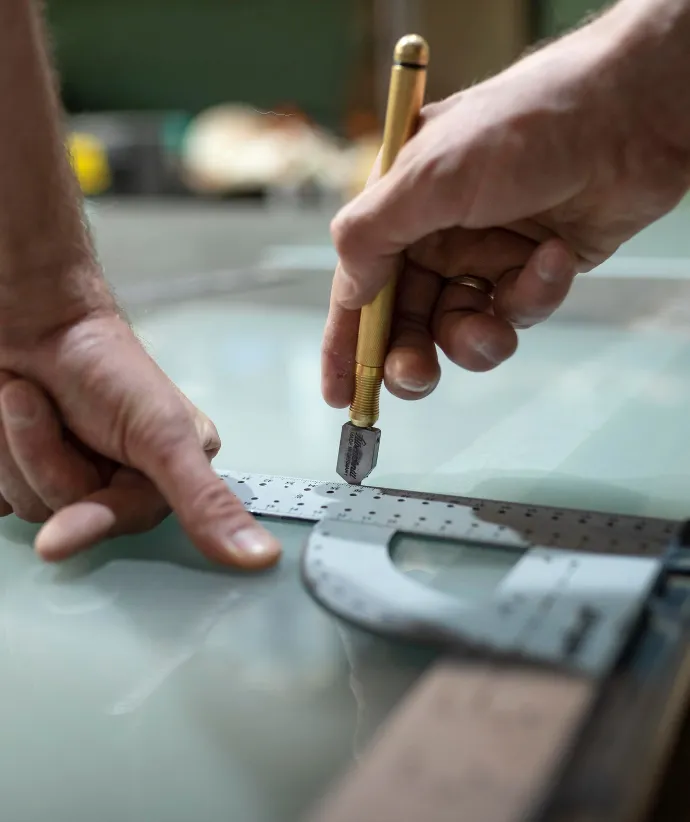
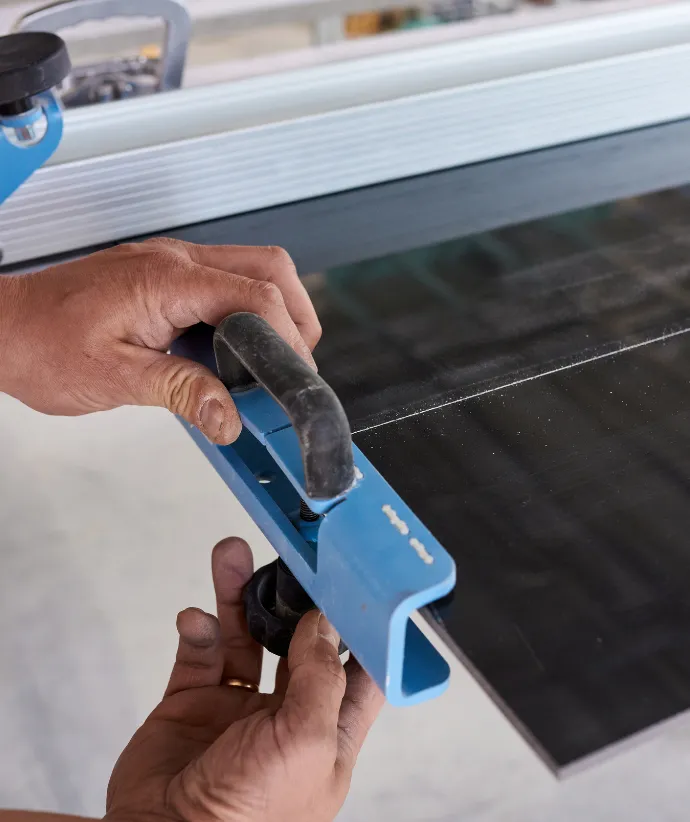
Cutting and edging happen on our own bench rather than at a third-party fabricator, which is the reason a re-cut here costs a morning instead of a fresh lead time. The panel is scored and broken to the agreed dimensions, then run on the edging machine to the finish you picked. Walk-ins are welcome if you would rather bring a template in yourself, and the same bench cuts the sealed units for our window and door glass replacement work.

Cutouts are where mistakes get expensive. Holes for sconces, fixings and fittings are drilled at this stage with clearance allowed around each one, because glass will not tolerate a hole placed tight to an edge or a corner. We work from the template rather than remembered site notes, and where anything on it disagrees with the measurements taken, the wall gets checked again before glass is cut. A recut costs us a morning; a wrong panel costs everyone a week.
04

our custom cut mirror process

Deliver & Protect the Room

Large mirrors travel on edge in padded frames, never flat, because a quarter-inch panel over four feet wide flexes far more than people expect and can crack under its own weight if it is carried face-up. Anything at that size is a two-person carry. Our crews walk the route in before the glass comes through the door, checking doorway widths, stair turns and any light fitting hanging at head height on the way.
Before the panel enters the room, counters, floors and the vanity itself are covered. Bathrooms are tight spaces full of hard surfaces, and a chipped sink is a more annoying repair than the mirror ever was. If the old mirror is still on the wall it comes down at this point, whole wherever possible, and every fragment is cleared before anything new is offered up. Mastic-glued panels are eased rather than pulled, to keep wall damage to a minimum.



05

our custom cut mirror process

Fix, Level and Check

Fixing method follows the wall rather than preference. Clips or a J-channel carrying the weight properly are our first choice wherever the substrate allows it, because they hold mechanically, come away cleanly, and let the panel be swapped years later without touching the plaster behind it. Mastic on spacers is used where clips are not an option, and in any bathroom we set the panel slightly off the substrate so air can reach the back of the glass.

The mirror is levelled against the counter and the tile line, not the ceiling, since ceilings are rarely the straightest reference in an older bathroom and the eye reads a mirror against the horizontal directly beneath it. Before packing up we sight along the face to check the reflection is flat, confirm each clip is bearing evenly rather than pinching a corner, and take the old mirror, the offcuts and all packaging away with us.

Pella Window Repair

Pella builds wood, fiberglass and vinyl windows and patio doors, and their units are among the most common we service across Northeast Ohio. We repair mechanisms, replace failed sealed units and rebuild rotted wood components rather than pushing homeowners toward full replacement, provided the frame underneath is still sound.

The part that carries over to mirror work is the bench itself. Cutting a replacement pane to a Pella sash tolerance takes the same accuracy as cutting a mirror to a tiled opening, with no adjustment available once the glass is scored. Their current range is set out across Pella's own product pages.

Andersen Windows & Doors

Andersen units appear constantly in homes built or renovated from the 1980s onward, and their sashes, sliding doors and hardware are a regular part of our week. Their glass sizes are specific, so most replacements have to be fabricated to order rather than pulled from stock, and we cut those ourselves.

That habit carries straight into mirror work, where nothing is a stock size either and every panel is cut to one opening. Andersen's published unit specifications list original glass dimensions, which is genuinely useful when a homeowner is trying to work out what they already have on the wall.

Peachtree Doors & Windows

Peachtree patio doors and windows are common in homes built from the 1970s through the 1990s, and many are no longer supported by the original manufacturer. That leaves owners with units working perfectly well but with no parts available, which is exactly the gap custom fabrication exists to fill.

Mirrored bypass and closet doors from the same era have an identical problem: original panels are discontinued, so any replacement has to be cut from scratch to the door leaf. We measure the frame rather than trusting the old glass, which has often been trimmed at some point in its life.

SuperSeal Vinyl Windows

SuperSeal vinyl windows and doors are widely installed across the region, and their sealed units are a frequent replacement job for us. Vinyl systems hold glass in a way that rewards accurate cutting, since a panel a fraction oversized will not seat and one slightly undersized will not stay put.

That tolerance discipline is the shared skill between sealed units and mirror panels. Both are cut once, to a measured opening, with no trimming possible afterward. It is the reason we template awkward openings rather than working from a single width and height taken across the middle.

Visions Window Repair

Visions vinyl windows and doors turn up regularly in renovation-era homes across Cuyahoga and Summit counties. We service their hardware and replace failed insulated units, keeping the existing frames in place wherever the vinyl and the welded corners are still in good condition.

Homeowners who call us about a Visions unit often have a bathroom or hallway mirror on the same list, and both come off the same visit. Measuring the mirror while we are already on site saves a second trip, and usually a second minimum charge along with it.

Gerkin Windows

Gerkin makes aluminum and vinyl windows alongside storm products, and aluminum framing brings its own habits: tight channels, narrow sightlines and very little tolerance for a pane cut generously. We work on their units regularly and hold the same standards when cutting anything else.

Aluminum is also a common mirror framing material, so the handling and finishing overlap directly. Framed mirror panels are sized to the channel depth rather than the visible opening, a distinction that catches people out when they try measuring a framed mirror themselves.

Annealed, Tempered & Where Code Steps In

Standard silvered mirror is annealed glass, and the industry specification it is made to, ASTM C1503, covers clear and tinted silvered flat glass up to 6 mm – roughly a quarter inch – intended for indoor use. That same specification states plainly that it does not address safety glazing, and directs anyone with a safety glazing application to the model building codes instead.

That distinction matters in a real bathroom. A mirror hung on a wall is decorative glass. A mirror forming part of a door, a closet bypass panel or a surface inside a bathing enclosure falls under glazing rules, and the answer there is usually tempered or safety-backed product. You can read the standard's own scope at ASTM International.

Mastic, Clips & the Wall Underneath

How a mirror is attached decides how much work removing it will be, and homeowners are rarely told this before the fact. Mastic bonds hard to drywall paper, so a glued panel usually takes the paper with it, leaving a torn surface that needs skimming before anything new goes up. On plaster the bond is often stronger than the plaster skin itself.

Clips and J-channel behave completely differently. They hold the mirror mechanically, come off cleanly, and let the panel be swapped later without touching the wall at all. We use them wherever the substrate allows it, which is most of the time. Bathrooms we look at in Highland Heights are split fairly evenly between the two methods.

Backlit & Fog-Free Mirrors Need Power First

Backlit and heated fog-free mirrors are genuinely good products, and they are also electrical fittings. They need a supply run to the right point behind the panel, on a circuit rated for a wet location, and in most cases that is a licensed electrician's work rather than ours. Nobody enjoys hearing this after the mirror has arrived.

So we say it at the estimate. We will cut the panel, size the cutouts and hang it, and we will happily coordinate around whoever is doing the wiring, but the supply has to exist before install day. If you are planning a lit mirror, talk to us earlyand we will tell you what the electrician needs to leave behind the wall.

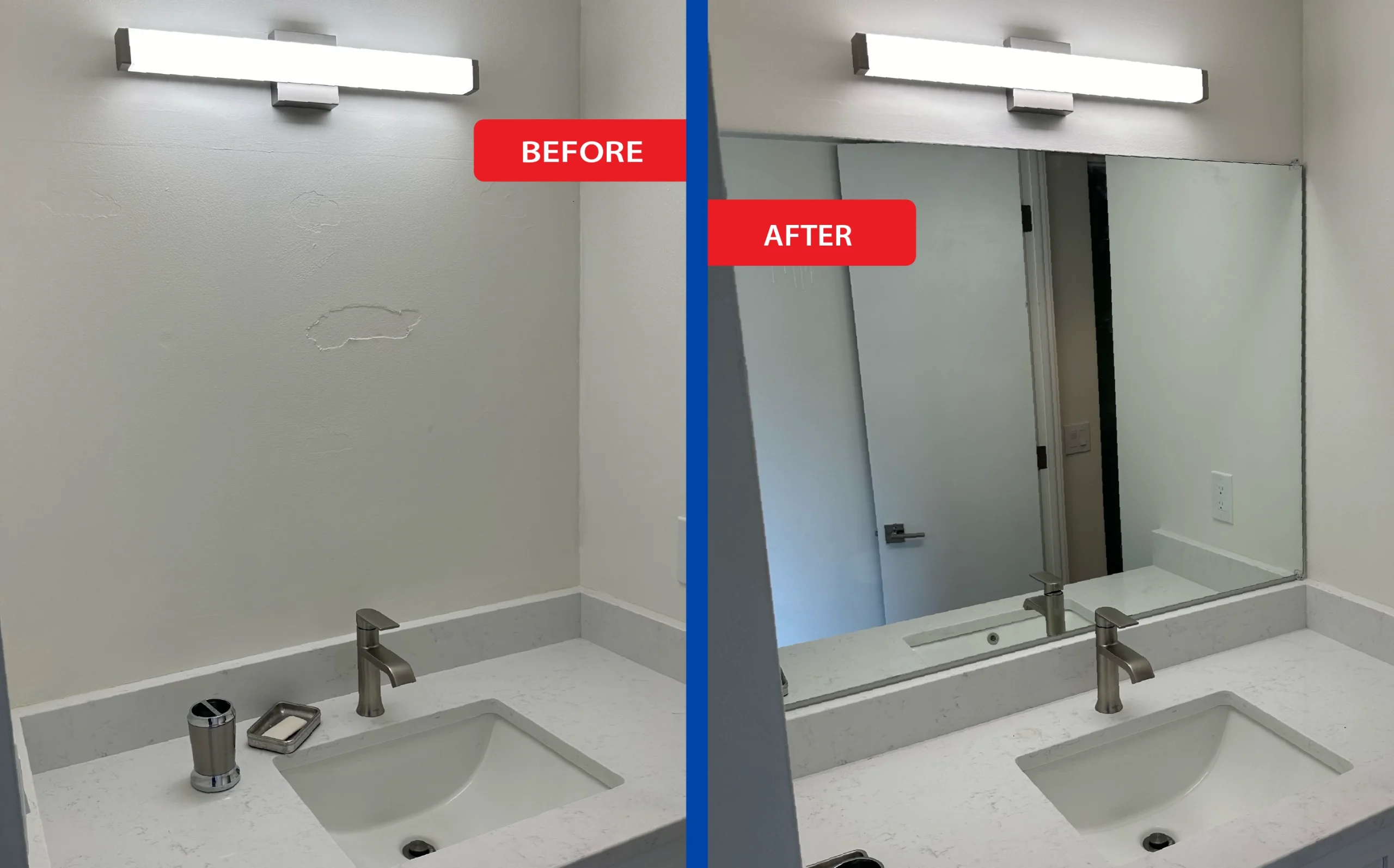
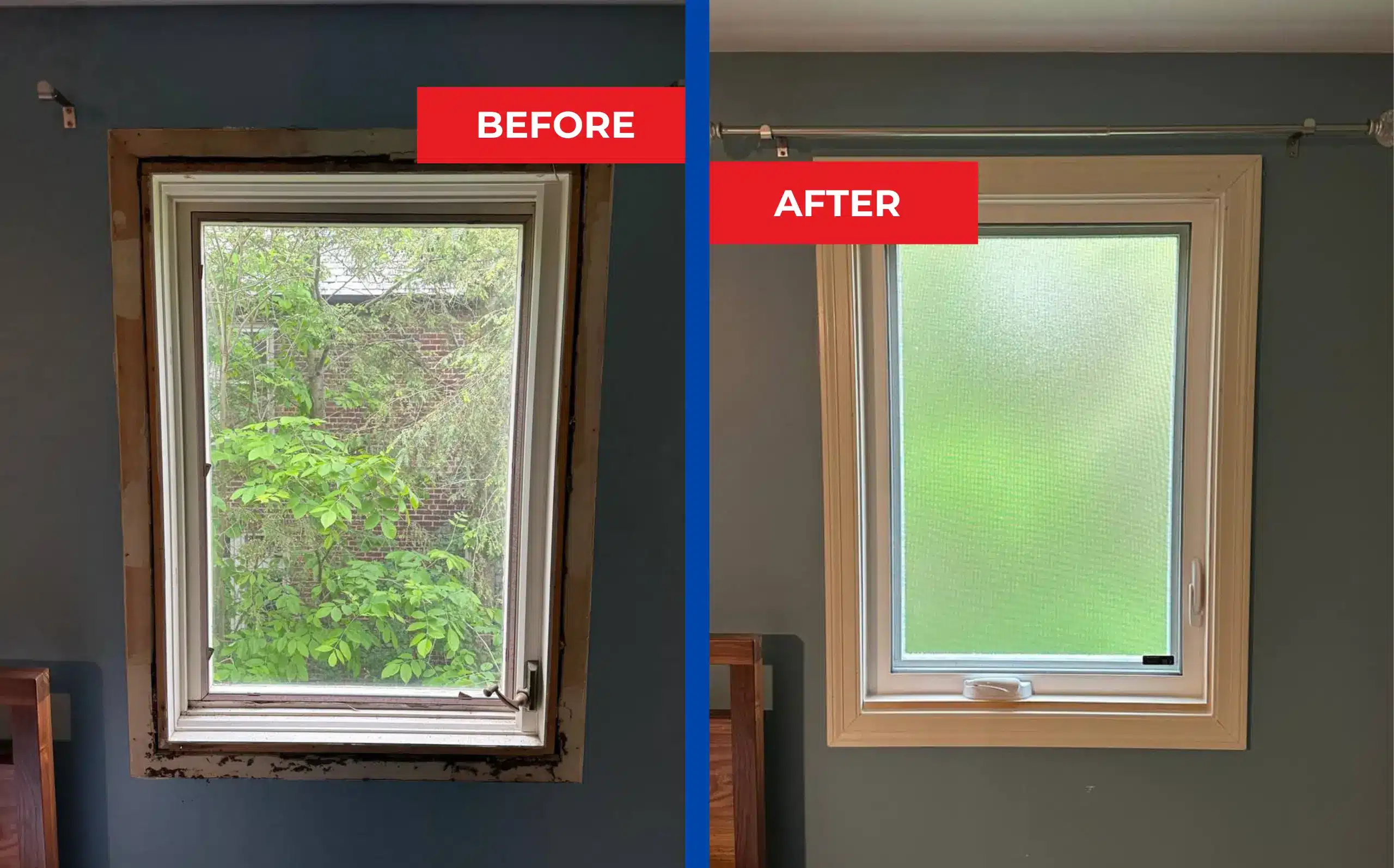
Mirror and Glass Work We've Finished Recently

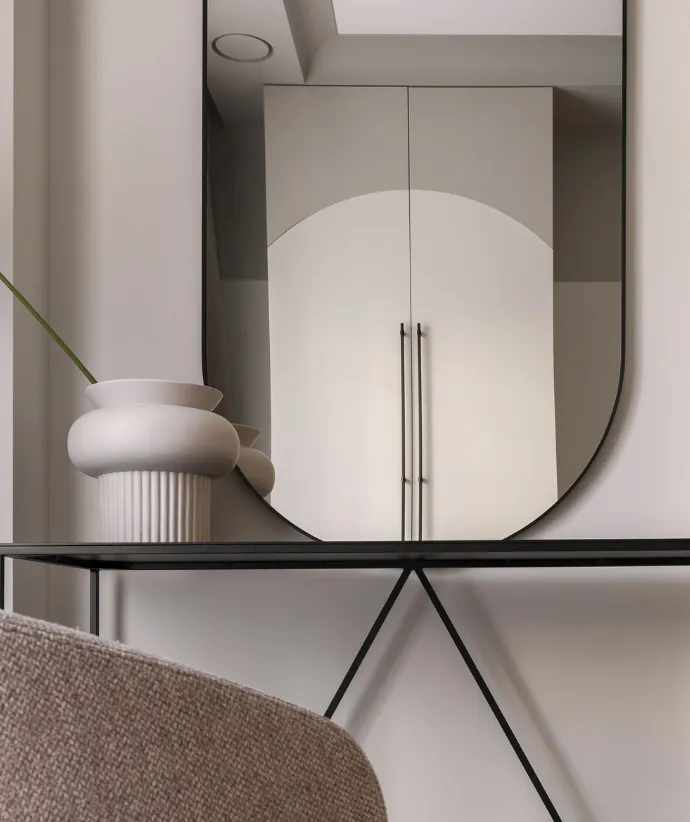
Photographs make the difference between edge finishes far clearer than descriptions do, and they show what a properly fitted panel looks like against real tile and real trim rather than a showroom wall.

Our bathroom mirror installation in Akron shows custom-cut panels fitted above the vanity. For a look at how we handle privacy glass in the same rooms, see the frosted glass replacement on a Cleveland bathroom window. More before-and-after sets are in our full project gallery.
BY MIRROR TYPE

Matching the Panel to the Room It Lives In

Mirrors are usually discussed as a single product, which hides the fact that a vanity mirror, a closet door panel and a dining room feature mirror are three different jobs with three different constraints. The vanity mirror is a moisture problem before it is a design one, and every decision about edge sealing and air gap follows from that. A closet or door panel is a safety and weight problem, because it moves, and anything that moves needs glass that fails safely. A feature mirror is neither: it is a sizing and flatness problem, where the only real enemy is a panel too thin for its span, rippling the reflection across the room.

Commercial rooms add a fourth set of rules again, with wall-length mirror runs in salons, studios and gyms needing joint spacing and fixing patterns that residential work never requires – that side is handled through our commercial glass repair and replacement team. And when a bathroom mirror is part of a wider renovation, it often sits alongside full window replacement work on the same property.
Get a free estimate

Bathroom and Vanity Mirrors

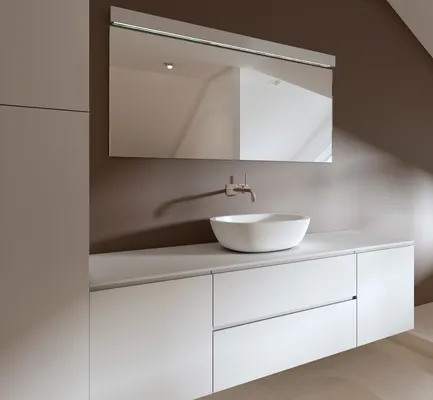
Cut to the finished cabinet width after tiling, edged and set on spacers so air reaches the back – the single change that most delays edge desilvering.

Closet and Door Panels

Mirrors on moving doors carry weight and impact risk, so these are specified as safety glazing and sized to the door leaf rather than the opening.

Feature Wall & Dining Mirrors

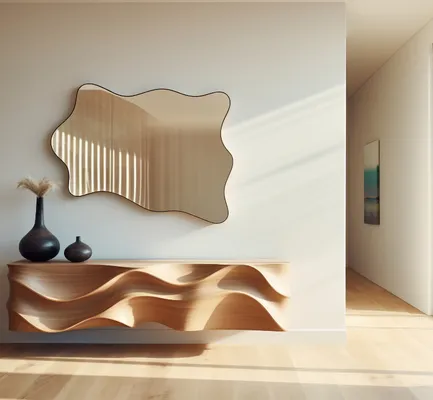
Large decorative panels need quarter-inch glass to stay optically flat, with beveled or polished edges chosen to suit the trim already in the room.

Mirror Work Across the Cleveland–Akron Area

A mirror is the one piece of glass in the house nobody measures twice.
We measure it, cut it to the wall you actually have, finish the edges, and hang it – bathroom, closet, hallway or dining room.
Custom mirrors are cut and edged in our own shop and installed by our own crews, across the whole Cleveland–Akron corridor rather than a single town. That covers a replacement panel over one vanity just as readily as a full wall run in a studio or salon, and it covers the awkward jobs too: arched openings, notched panels, mirrors that have to work around an existing sconce that isn't moving. If you would rather get a price before anyone visits, start with a virtual estimate.

We work regularly in Beachwood, Pepper Pike, Bay Village and Valley City, along with the rest of Cuyahoga, Summit, Lorain, Lake and Medina counties. Older east-side bathrooms and newer west-side builds tend to bring us different problems, which is genuinely useful – a company that only ever saw one housing era would be guessing at the other.

Don't see your town listed? Call us on 440-496-7415 or send us the measurements and we will tell you honestly whether it is a job we should be doing. If a mirror only needs re-securing rather than replacing, we will say so, and if the wall behind it needs attention first we will say that too. There is no obligation attached to an estimate!
FAQ

DO YOU CUT MIRRORS TO SIZE IF I BRING THEM TO YOUR OAKWOOD SHOP?

Yes – walk-ins are welcome at our shop on 1st Place in Oakwood, and you can bring either finished measurements or a physical template. Turnaround depends on size and edge finish, so call ahead if you need it the same day.

DO I NEED TEMPERED GLASS FOR A MIRROR ON A CLOSET DOOR?

Usually yes. Once a mirror forms part of a door or a moving panel it stops being decorative glass and falls under safety glazing rules, which generally means tempered or safety-backed product. We handle the same distinction on our replacement window and door glass work.

WHAT THICKNESS SHOULD A LARGE WALL MIRROR BE?

Quarter-inch for anything wide or full-height, eighth-inch for smaller framed panels. Thin glass over a long span flexes very slightly against the wall, and that flex is what produces a warped, funhouse reflection at the centre of the panel.

CAN YOU MATCH A NEW MIRROR TO THE ONE ALREADY IN MY BATHROOM?

Size, thickness and edge finish we can match exactly. Colour is the honest caveat: an existing panel that has aged or begun desilvering will not match new stock, and antique and distressed finishes vary between production batches. Replacing both panels is usually the better result.

WILL YOU REMOVE AND DISPOSE OF MY OLD GLUED-ON MIRROR?

Yes, removal and haul-away are part of the job. Mastic-glued mirrors often take drywall paper with them, so we assess the wall first and tell you before install day whether it needs making good – see finished examples in our project gallery.
Still have a question?