440-496-7415
Google reviews that we have
Rating
4.8
596 reviews
Eva Ryckman Durbin
4 days ago
He did a good job, worked hard and stayed late to get the job finished.
Posted on

Google

Lisa Martin
5 days ago
Communication with company was excellent before and up to the window replacement day. Vladimir was a...
Communication with company was excellent before and up to the window replacement day. Vladimir was an excellent technician. He was respectful and professional. Definitely recommend Apex.
Read more Hide
Posted on

Google

Roberta Ciszewski
5 days ago
They came right away for the estimate and came right away to fix my window and the job was done fast...
They came right away for the estimate and came right away to fix my window and the job was done fast and the workmanship was excellent.
Read more Hide
Posted on

Google

Cheri Sudar
5 days ago
Efficient work!
Posted on

Google

Robert Dangler
1 week ago
Very happy with the service.
Posted on

Google

Taras
1 week ago
Service was prompt. Workers were quick and clean. Thank You
Posted on

Google

Zack Maier
1 week ago
Amazing service. Dropped off a custom size window that needed repair and nobody else could fix. They...
Amazing service. Dropped off a custom size window that needed repair and nobody else could fix. They quoted three days, it was done in three hours. Fantastic experience. Highly recommended 👍 👍
Read more Hide
Posted on

Google

Mahyar Tehrani
2 weeks ago
Vladimir did a fantastic job! Very happy with the service. Thank you!
Posted on

Google

Irene
3 weeks ago
I had a great experience with Apex Window Werks. Their service was excellent. I highly recommend th...
I had a great experience with Apex Window Werks. Their service was excellent. I highly recommend them
Read more Hide
Posted on

Google

Rick Lograsso
3 weeks ago
Posted on

Google

Load more
4.8
Read our 596 reviews

WALK-INS ARE WELCOME, SAME DAY SERVICE!

Window Capping in Northeast Ohio

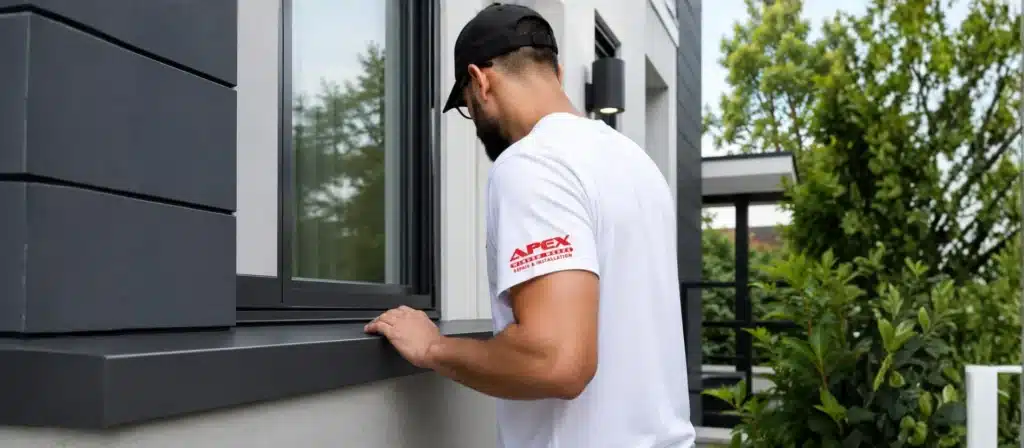
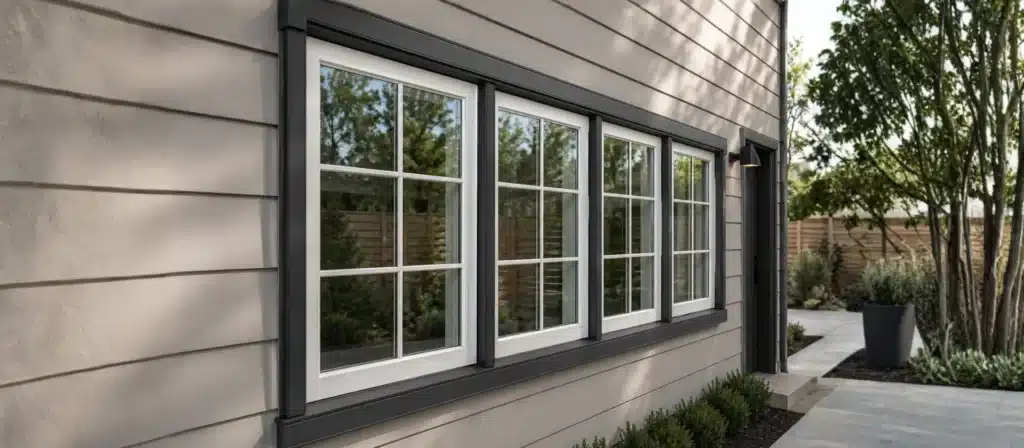
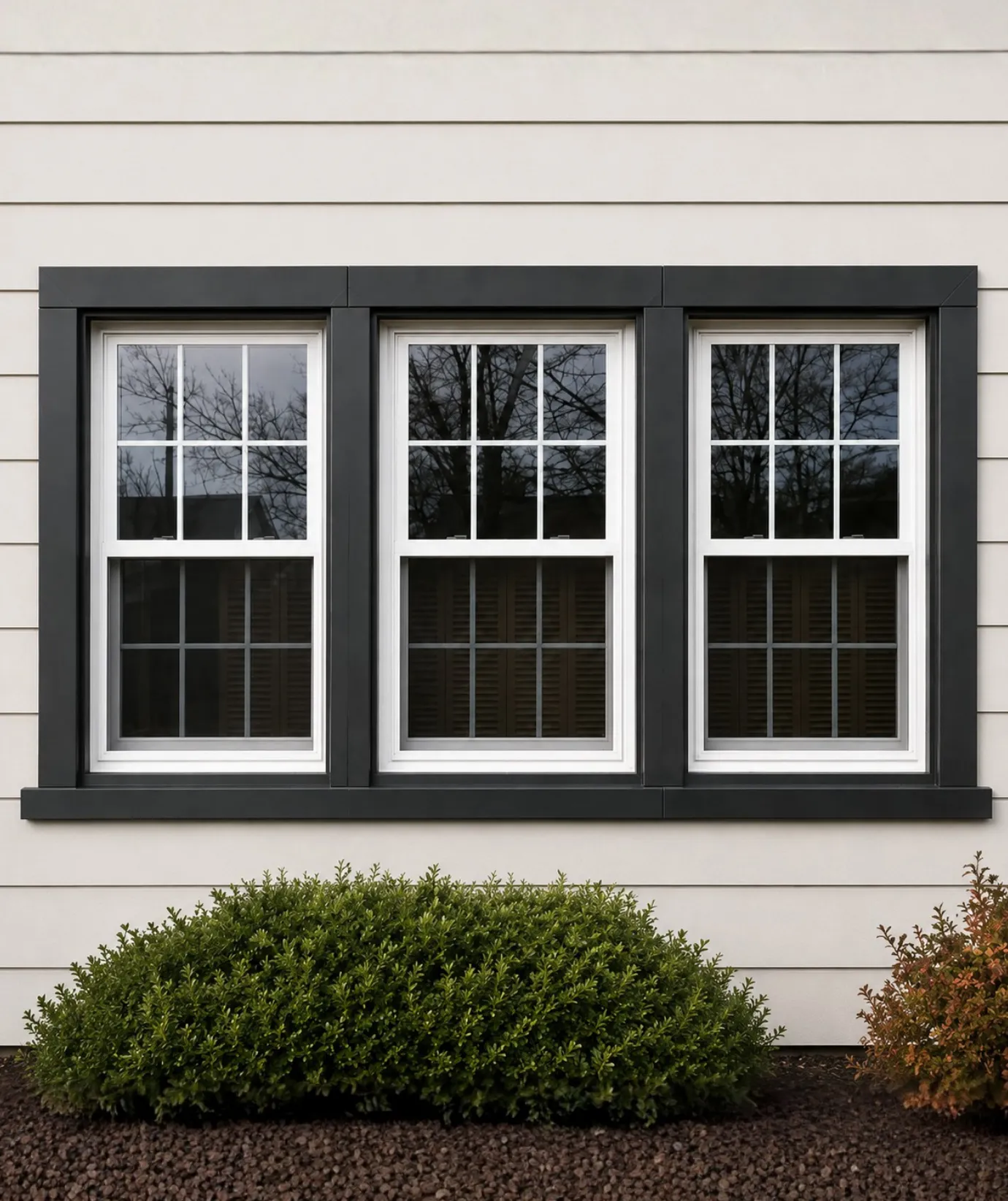
Capping wraps the exterior wood trim around your windows in custom-bent aluminum, so it never needs scraping and repainting again.
We check the wood first and repair what needs repairing, because metal over soft timber hides a problem instead of solving it.

Virtual estimates
THE PROBLEM

Why Exterior Window Trim Fails
Faster Than the Window Itself

Paint is the only thing standing between exterior brickmold, casing and sill and the weather. Once the paint film cracks, usually at a joint where two boards meet, water is drawn into the end grain by capillary action and the wood starts holding moisture instead of shedding it. Bubbling paint is that same moisture pushing its way back out again, which is why repainting over it never holds for long.

The damage concentrates in predictable places. Horizontal surfaces hold water longest, so sills go before casing, and the lower corners where boards butt together go before either. Those joints expose end grain, which absorbs far faster than a face surface does. South and west elevations add UV, breaking the paint film down from above while water works at it from inside the timber.

Northeast Ohio compresses all of this into a shorter cycle than most of the country. Lake-effect snow sits on sill surfaces for days rather than draining off, then freeze-thaw swings work that trapped water in and out of the wood as it expands and contracts. The sequence repeats through the season, and each pass opens the paint film a little further than the last one did.

That is what brings most people to capping. Homeowners in Lakewood with original wood trim tell us they were repainting every three to four years and still losing ground, because each coat sits on a surface slightly worse than the one before. The window units themselves are frequently sound, operating correctly with years left in them. It is the wood wrapped around them that has run out.

SAME DAY EMERGENCY WINDOW REPAIR IN JUST 2 HOURS!

Bring your window to our workshop, and we'll have it repaired and ready for installation in just 2 hours! Our team, specialized in rapid response, is adept at providing quick and efficient service for emergency repairs.

OUR APPROACH

The Wood Gets Inspected Before Any Metal Goes On

Capping is a covering, not a repair. Aluminum is impermeable, so anything wrapped underneath it loses the ability to dry out. Wood that was cycling wet and dry through the seasons now holds whatever moisture level it had on the day the metal went on.


Home inspectors write about this openly, because capped windows deny them any chance to assess the timber beneath, and because nails eventually pop when the wood behind has decayed too far to hold them. That failure is well documented in the trade, and it is entirely avoidable.


So the first visit is an inspection, not a measure-up. We probe the sill, the lower corners of the casing and the joints where boards meet, because that is where decay starts and where a probe tip sinks in before anything shows on the surface. Where the wood is sound, we cap it. Where it is soft, it gets cut back to solid timber and rebuilt through our rotten window repair work, and then it gets capped.

Aluminum coil arrives flat and is bent on site to the profile of each individual window, because trim profiles vary between houses and often between elevations of the same house. Corners and returns are folded, not filled. That distinction matters more than any other detail on this page: sealant has a service life and folded metal does not, so a job that depends on caulk to stay watertight is already on a clock.

Missing Drip Cap

The head of the window is where most trouble starts, not the sill. Without a metal drip cap above the trim, water running down the wall face has a direct path in behind the capping, and it will find it. Contractors who cap for a living report that the majority of callbacks on cladding work trace back to water getting in around the drip cap rather than any failure of the panels themselves.

We check for a drip cap before quoting and fit one where it is missing or has been buried under siding at some point. It is a small component that decides whether everything below it stays dry. Capping installed without one looks identical on day one and behaves completely differently by the third spring, which is why it is not an upgrade we leave optional.

No Slope On The Sill

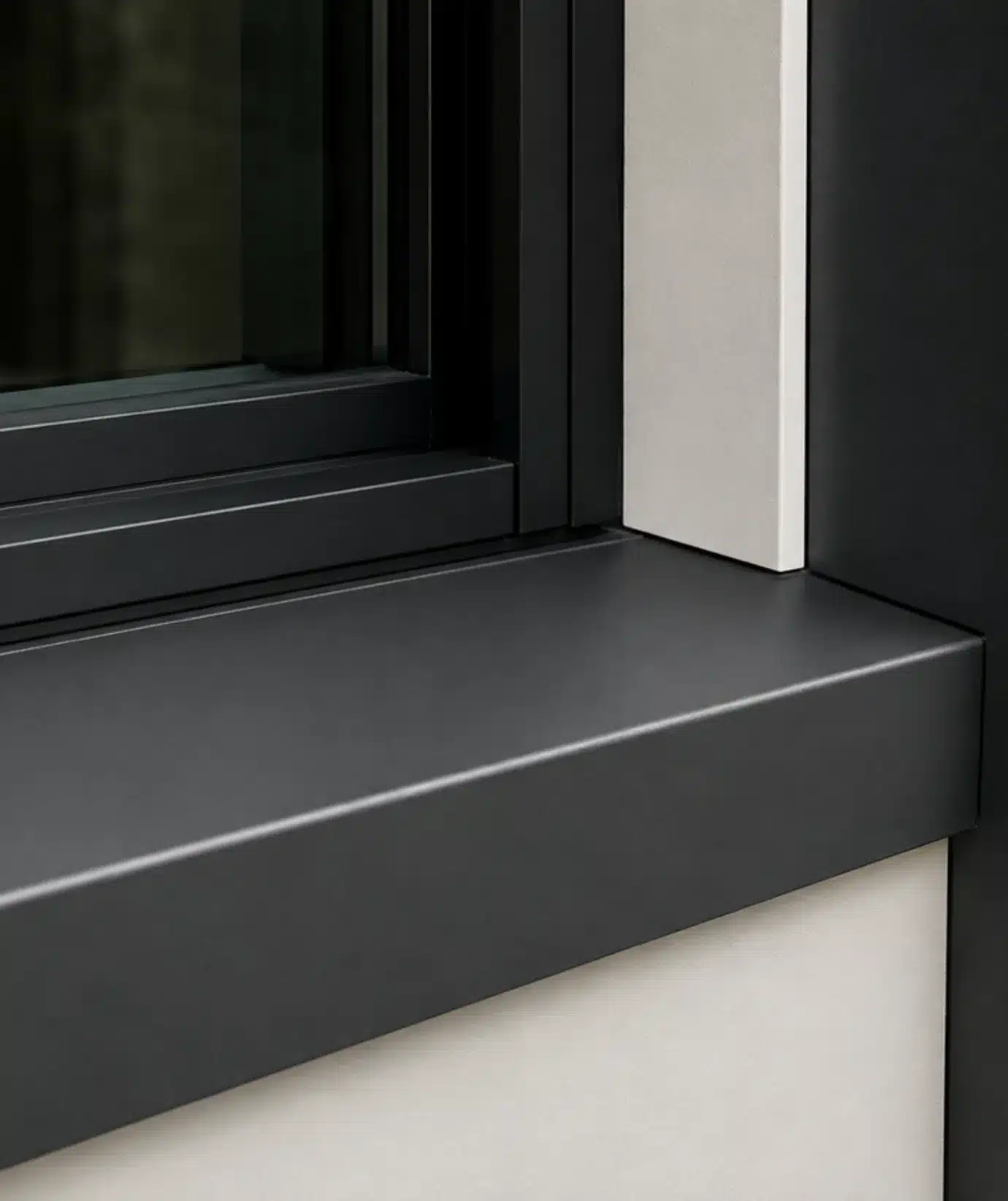
A capped sill has to shed water, and that means the leading edge must be the lowest point on the sill so water runs off the front rather than wicking back toward the wall. Trade practice is a deliberate slope on both the top surface and the underside, with the sill projecting past the finished wall below so the drip line clears the siding or masonry cleanly.

Flat capping over a flat sill is one of the most common shortcuts we find on existing work, and it turns the sill into a shallow tray. Water sits, freezes, lifts the metal slightly at the seam and gets underneath. Correcting it is not a matter of adding sealant, it means re-bending the piece to the right profile and refitting it properly.

Caulked Shut Underneath

Sealing the underside of a capped sill feels thorough and is actively harmful. Wood transfers moisture naturally and aluminum is impermeable, so any vapour reaching the back of the metal needs somewhere to escape. A correctly capped sill is caulked between the trim and the glass and against the brickmold, and deliberately left open underneath so trapped moisture can vent out.

This is the detail separating capping that protects wood from capping that slowly destroys it. Where we take off older work and find the underside sealed solid, the timber behind is usually damp regardless of how good the visible metalwork looks. Venting is not something we skip for a neater-looking finish.

Capped Over Soft Wood

Wrapping metal over already-decayed timber is the worst thing capping can be used for, and it happens because it is quick, cheap and invisible afterward. The decay does not stop.

It continues in the dark with the moisture already held in the wood, and the first outward sign is often nails backing out of trim that can no longer hold them.

We will not cap wood that fails a probe test, and we say so at the estimate rather than after the metal is on. Where damage is localised it gets cut back and rebuilt. Where it has spread into the frame itself, full window replacement is the honest answer and capping is the wrong product entirely.

Caulk Past Its Life

Every capping job has some sealant in it, and sealant is the one component with a defined lifespan. Industry guidance for capped windows is an annual look and re-caulking roughly every five to seven years. Nobody enjoys hearing that a maintenance-free product still needs checking, so most companies selling capping do not mention it at all.

We would rather set the expectation correctly. Capping removes repainting entirely, which is the real benefit, and reduces maintenance to occasional inspection of the sealed joints. The less a job relies on caulk in the first place, the longer that interval stretches, which is exactly why we fold corners and returns instead of filling them.

Loose Or Rattling Panels

Aluminum expands and contracts with temperature, and a panel fastened too rigidly or nailed in the wrong place will oil-can, buckle slightly or work loose along an edge. In a Cleveland-area winter the swing between a sunlit south face at midday and that same face overnight is more than enough to move metal noticeably.

Panels that have started lifting at a corner or rattling in wind are not cosmetic problems, because a lifted edge is an open route for water. We refasten with colour-matched nails at the correct spacing, or re-bend and refit the piece where the original was cut short. Loose capping on a house we are already visiting gets flagged whether or not it was our work.
THE FACTORS

Not Every Window Should Be Capped

Capping suits some houses very well and others not at all, and the difference is worth understanding before anyone quotes. It works best where there is substantial exterior wood trim in sound condition: brickmold, wide casing, a projecting sill with a real profile to bend metal around. Post-war and renovation-era homes across the region usually fit that description, and the wood on them is standard millwork rather than anything irreplaceable.

Where we advise against it is narrower than people expect, but real. Trim that is already soft needs repair first, not covering. Vinyl and aluminum-clad units have no exposed wood to cap in the first place. And original millwork on an architecturally significant house is worth restoring rather than hiding, which is why a job like window capping in Rocky River, OH often means capping a later addition while leaving the street-facing original trim alone.

Get a free estimate

Cleveland's Historic Districts Have a Say in This

If your house sits in a locally designated historic district, capping is not simply your decision. Cleveland's Landmarks Commission reviews exterior alterations to designated landmarks and to properties inside designated districts through Certificates of Appropriateness, and it applies the Secretary of the Interior's Standards for Rehabilitation when doing so. Those Standards discourage substitute materials that misrepresent historic character, and aluminum cladding over original wood trim is a recognised example.

In practice that means a capping job on a contributing property may need approval before a permit is issued, and may not receive it. We would rather tell you that at the estimate than after the coil is bent. District boundaries can be checked on the Cleveland Landmarks Commission interactive map, and where a property falls inside one we will talk through restoration options instead. More on how we work is on our about page, and we cover Cleveland and its surrounding districts routinely.

Get a free estimate
Step 1
Step 2
Step 3
Step 4
Step 5
01

Our Window Capping Process

Probe and Assess the Wood

The first thing that happens is a physical check of the timber, not a measurement. We work along the sill, the bottom corners of the casing and every joint where two boards meet, pressing with a probe to find soft spots that have not yet shown through the paint. Wood that stays firm takes capping. Wood that gives under pressure does not, whatever the paint looks like from the street.

We also look above the window for a drip cap, and behind the trim edges for evidence of past water tracking. This is the stage where a job either proceeds as capping, or becomes a repair job with capping afterward, or occasionally gets talked out of altogether. If you would rather have a rough picture before anyone visits, a virtual estimate works from photographs and dimensions.
02

Our Window Capping Process

Repair What Needs Repairing

Anything soft is cut back to sound timber and rebuilt before metal is considered. Small localised decay is consolidated and filled; anything larger has the affected section removed and replaced with new stock matched to the original profile. Sills take the most of this work, because they hold water longest and sit lowest in the assembly where everything eventually drains toward.

Skipping this step is what gives capping its poor reputation in the trade, and it is why we run the two jobs in this order rather than as separate visits months apart. A repaired sill wrapped in aluminum lasts. An unrepaired one keeps decaying quietly, and the aluminum guarantees nobody notices until the fasteners let go.
03

Our Window Capping Process

Measure and Bend the Coil

Each piece is measured off the actual window, then bent on the brake to that window's profile. Nothing is ordered pre-formed, because brickmold and casing profiles differ between houses and frequently between elevations of one house where additions were built in different decades. Bending on site means a piece that does not sit right gets re-bent immediately rather than reordered.

Corners and returns are folded rather than cut and filled. A fold carries water across the joint by shape alone and depends on nothing with a service life; a filled corner depends entirely on the sealant continuing to hold. This is slower work, and it is the main reason capping quotes vary so widely between companies for what looks like the same job.
04

Our Window Capping Process

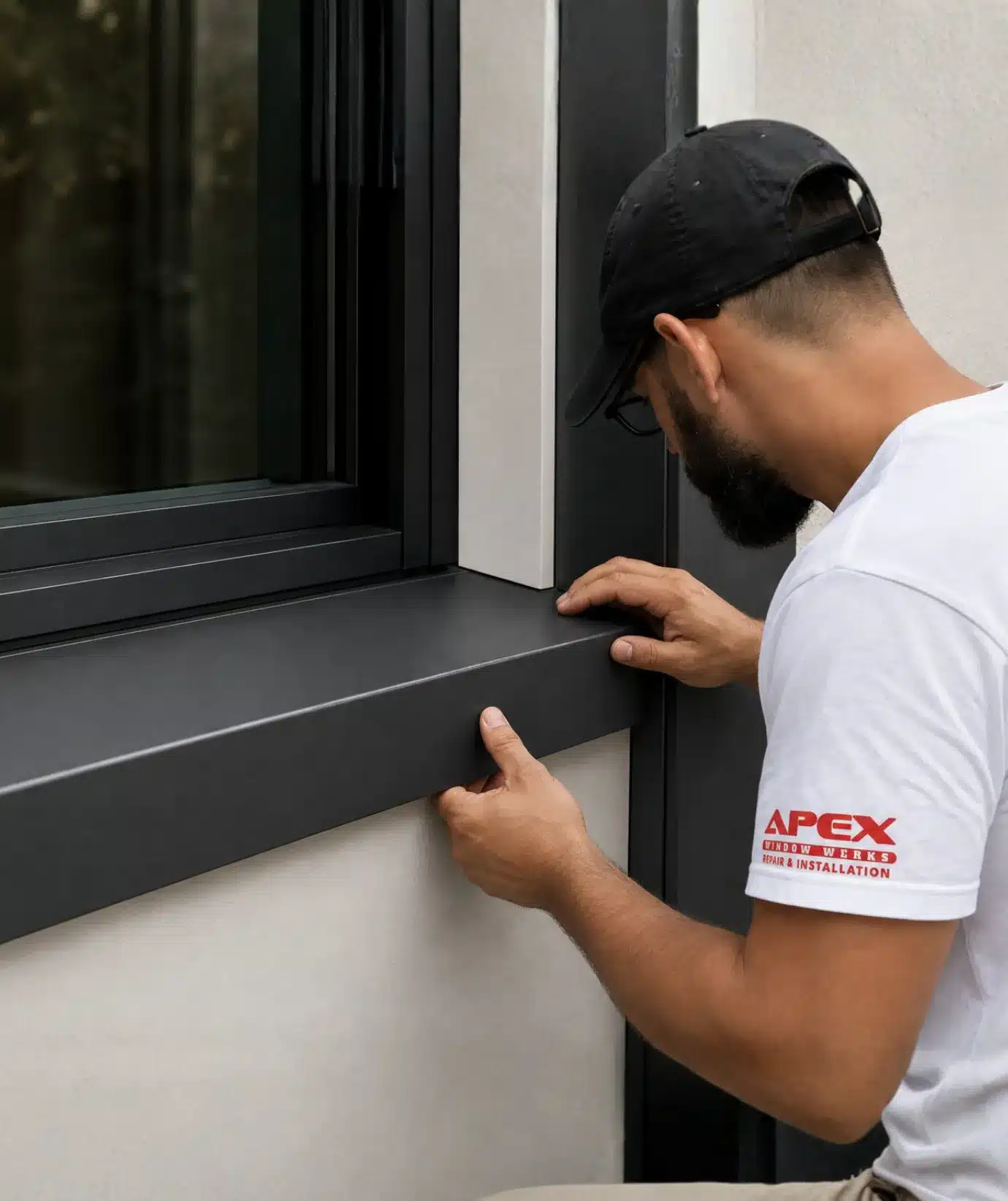
Fit the Head, Jambs and Sill

Order of assembly matters, because water runs downhill and each piece has to shed onto the one below rather than behind it. The drip cap and head go on first, jambs next, sill last, with every overlap arranged so runoff stays on the outside face the whole way down. Reversing that sequence produces a job that looks correct and funnels water into the wall.

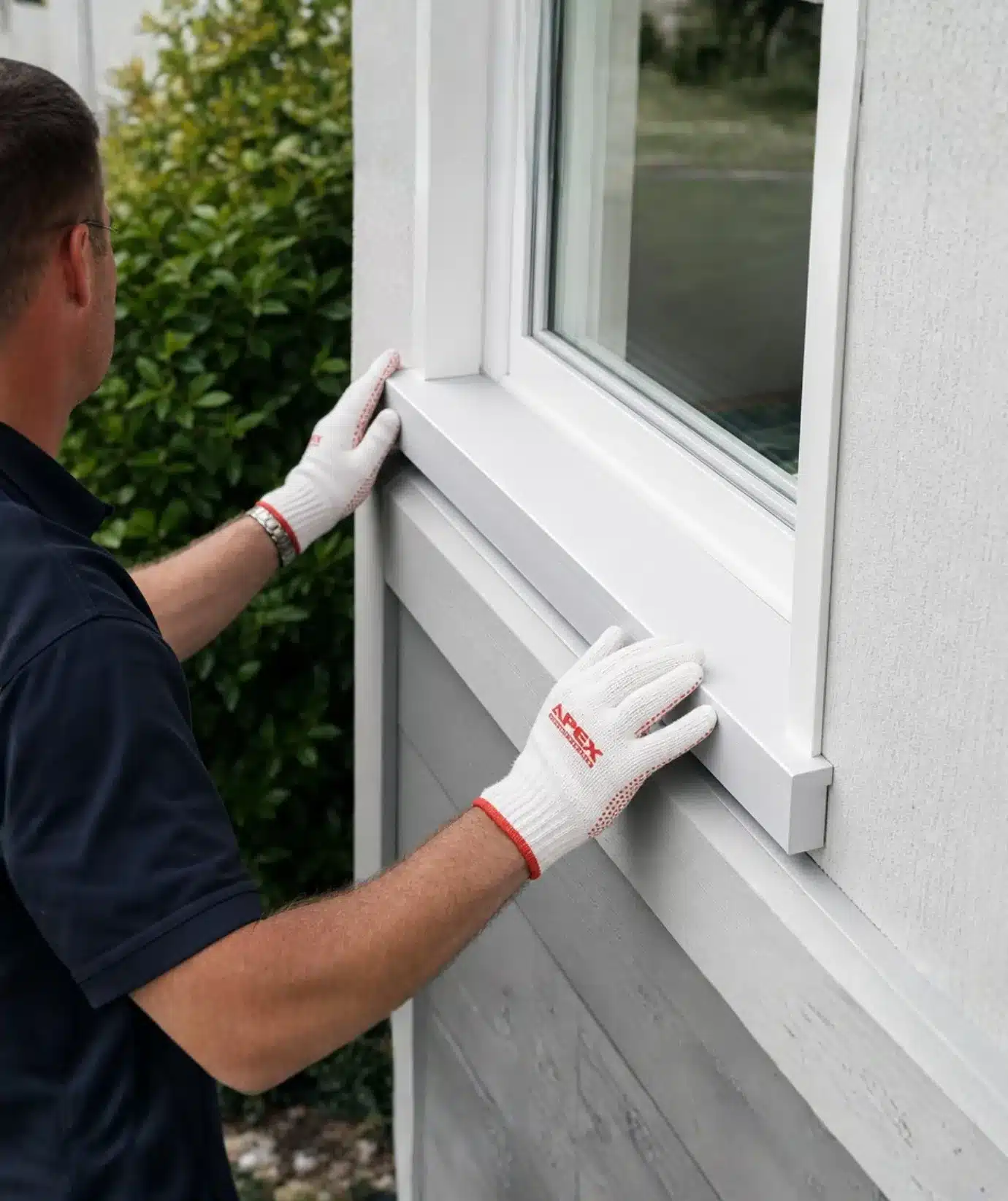
The sill is bent with slope on the top surface and the underside, leading edge lowest, projecting far enough past the wall below for the drip line to clear the siding. It is caulked to the glass and against the brickmold, and left open underneath so any moisture reaching the back of the metal can vent out rather than sit against the wood.
05

Our Window Capping Process

Fasten, Seal & Walk It With You

Fastening uses colour-matched nails at spacing that allows for thermal movement, because aluminum on a sun-facing elevation moves measurably between midday and midnight and a panel pinned too tightly will buckle. Only the joints meant to be sealed get sealed, and we point out which ones those are, so future maintenance is obvious rather than guesswork.

Before leaving we walk the elevations with you and check the same things we would check on someone else's work: no lifted edges, sill slope shedding forward, drip line clear of the siding, undersides open. Offcuts and old paint debris leave with us. If anything needs a second look afterward, get in touch and we will come back out.

Pella Window Repair

Pella builds wood, fiberglass and vinyl windows and patio doors, and their wood units are among the most common we service across Northeast Ohio. We repair mechanisms, replace failed sealed units and rebuild wood components rather than pushing homeowners toward replacement while the frame is still sound.

Their older wood units are frequently surrounded by original exterior brickmold and casing, which is precisely the millwork capping exists to protect. The current product line is set out across Pella's own window and door range.

Andersen Windows & Doors

Andersen units appear constantly in homes built or renovated from the 1980s onward, and their sashes, sliding doors and hardware are a regular part of our week. Many of their clad units pair a protected exterior sash with wood casing and sill that were left bare, which is where the maintenance burden ends up sitting.

That combination is a common reason people call about capping: the window itself needs nothing while the trim around it needs painting every few years. Andersen's product specifications cover the original unit configurations.

Marvin Windows

Marvin is a wood-window manufacturer, and wood windows are the ones that come with real exterior trim. We repair their sashes, replace glass in their units and rebuild wood components on systems otherwise in good condition, which is most of them, because the underlying joinery tends to be well made.

Marvin installations here are often in houses substantial enough to have wide casing and deep projecting sills. Those profiles need more bends per window, and the finished job looks considerably better for the extra folds.
Lincoln Windows

Lincoln wood windows and patio doors show up in mid-range and custom builds around the Cleveland and Akron suburbs. We service their hardware, replace insulated units and repair wood components, keeping the original frames wherever the timber has not gone past the point of sensible repair.

Their sills are typically generous, which is good for capping and also means they collect and hold more snowmelt than a shallow profile does. Sill condition is the first thing we check on a Lincoln unit before quoting any trim work.
Rockwell Windows

Rockwell units turn up in renovation-era housing across the area, often in homes that have been through several rounds of exterior work over the decades.

We repair and reglaze them, and we frequently find their trim has been painted over many times rather than stripped and properly recoated. Layered paint hides more than it protects, and it is often the first sign that the timber beneath needs a proper look before anything is wrapped over the top of it. We probe rather than assume.

Kolbe Windows & Doors

Kolbe is a wood-craftsmanship brand, and their units are usually found in homes where the original millwork is worth keeping rather than covering. We repair their sashes and rebuild wood components, and on this particular service we are about as likely to advise against capping as for it.


Where a Kolbe installation sits on a later addition or a rear elevation, capping the trim is straightforward and sensible. Where it forms part of an architecturally significant front elevation, restoration is the better answer.

The Drip Cap Nobody Mentions

A drip cap is a bent metal flashing above the window trim that pushes water running down the wall out and away from the head of the window. It is small, cheap, invisible once siding is back in place, and it is the most consequential single piece of the assembly. Contractors doing cladding work consistently report that most of their callbacks trace to water entering around the drip cap rather than through the capping panels.

It matters even more once capping is on, because the trim beneath can no longer dry. On older houses the drip cap is often missing entirely, or was buried when siding went on in a later decade. We check for one on every quote and fit one where needed, alongside any sill, sash and frame repair the opening turns out to need.

Aluminum Coil Versus Vinyl-Coated Trim

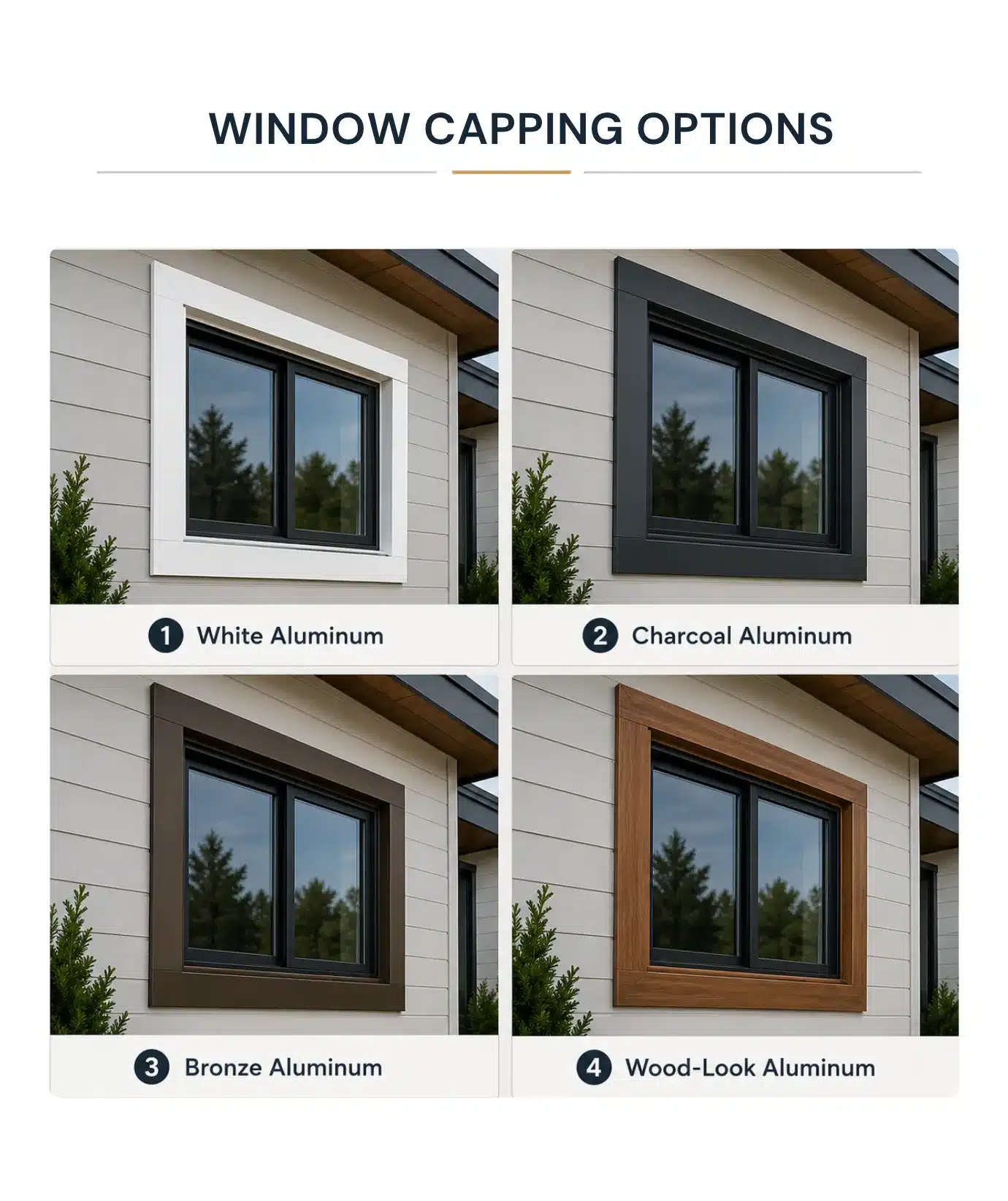
Residential capping is most commonly done in factory-painted aluminum coil, with vinyl-coated aluminum as an alternative. Both are impermeable, which is exactly why the venting and slope details above matter so much: whatever moisture reaches the back of the panel has to be able to leave, regardless of which material that panel is made from.

Aluminum's practical advantages are that it holds a fold cleanly, takes a baked finish that never needs repainting, and can be bent to an unusual profile on site rather than ordered in. It can be repainted later if a colour scheme changes, though that is skilled work and not a reason to pick a colour you are unsure about now. If you are weighing options, talk it through with us before the order goes in.

What Capping Does & Does not Do for Energy Bills

Capping is sometimes sold as an energy-efficiency improvement. The honest position is that any effect is marginal: an extra exterior barrier can slightly reduce draft potential, but capping wraps trim and does nothing to the glass, the sealed unit or the air seal around the window. Anyone quoting capping as a route to lower heating bills is overselling it, and we would rather say so plainly.

What capping genuinely delivers is the end of exterior repainting on that trim, and protection of sound wood from water. If the actual complaint is cold air or condensation, the fix is at the glass, and insulated glass replacement addresses it directly. The two jobs are often worth doing together, but for entirely different reasons.

Trim and Sill Work From Recent Jobs

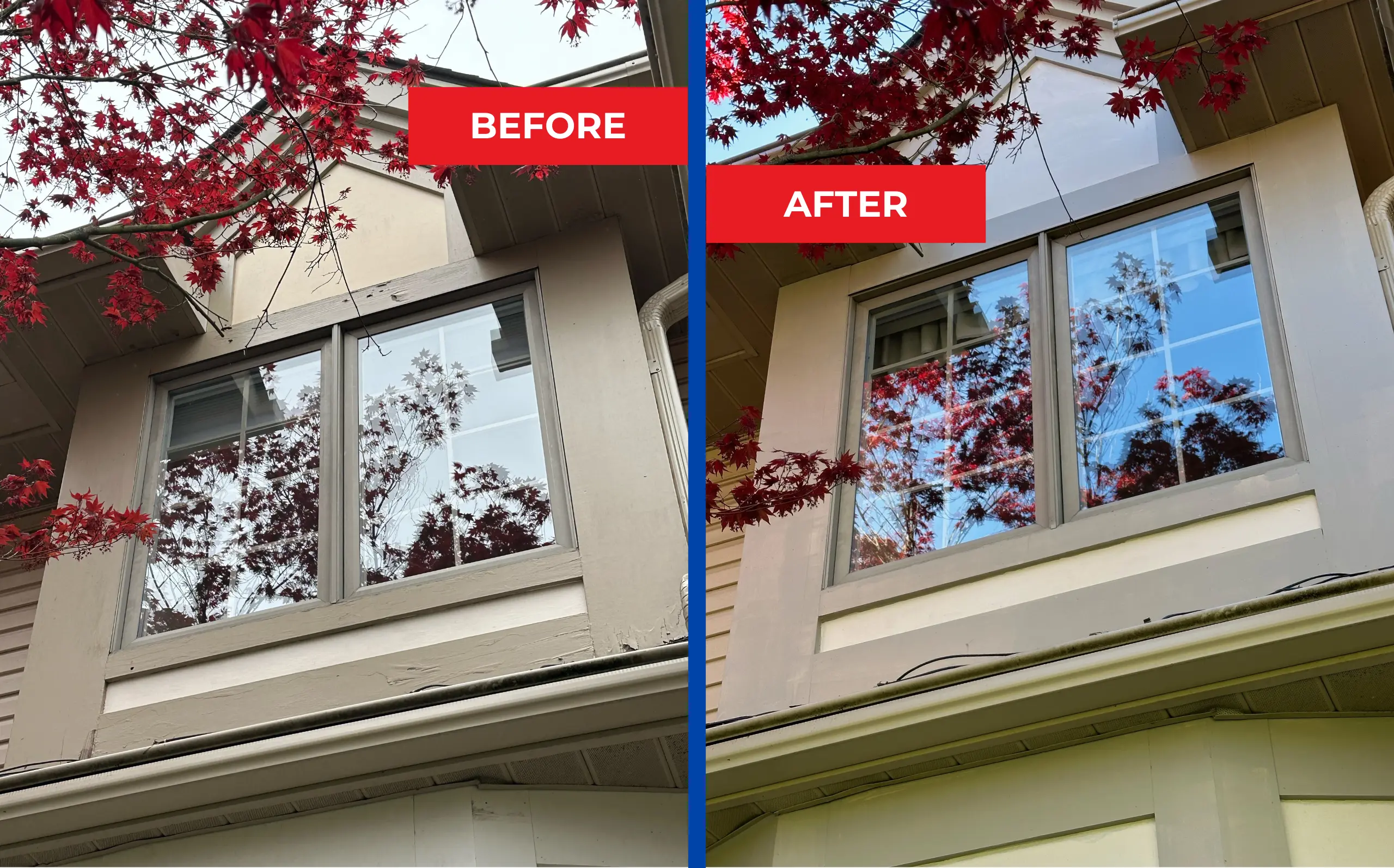
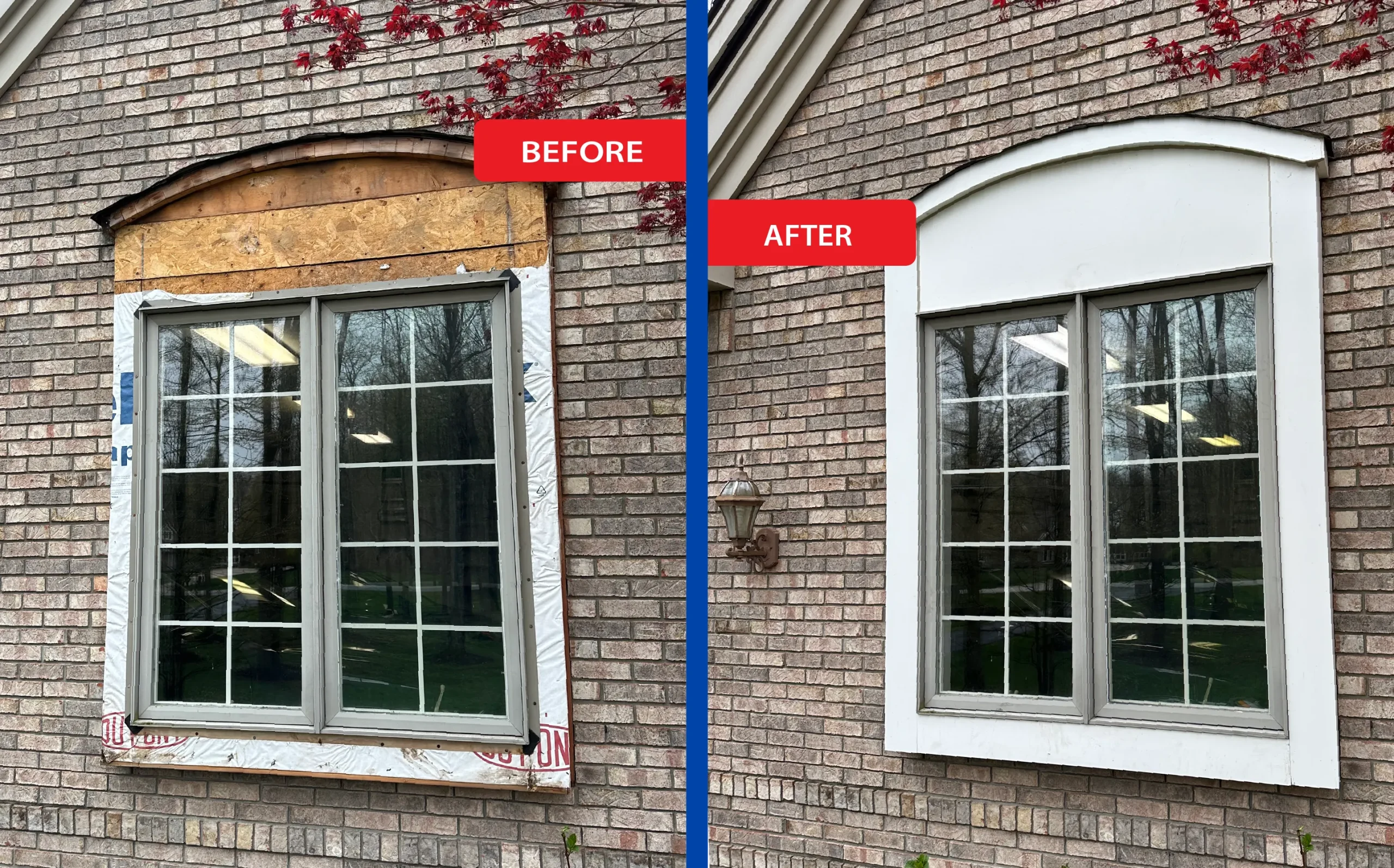
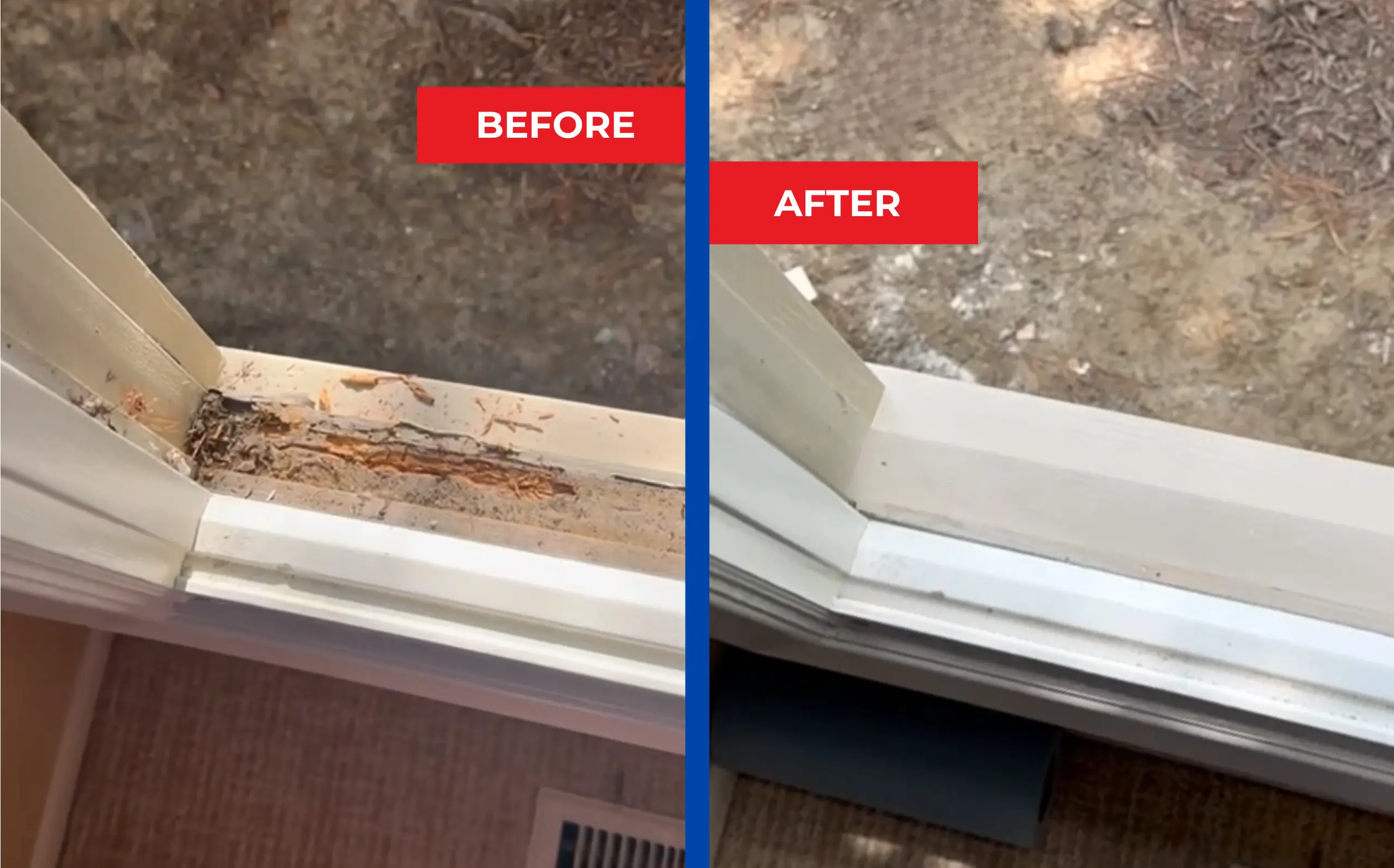
Exterior trim work photographs well because the difference is structural as much as cosmetic, and the before images show the condition of the wood that a finished job hides from view.

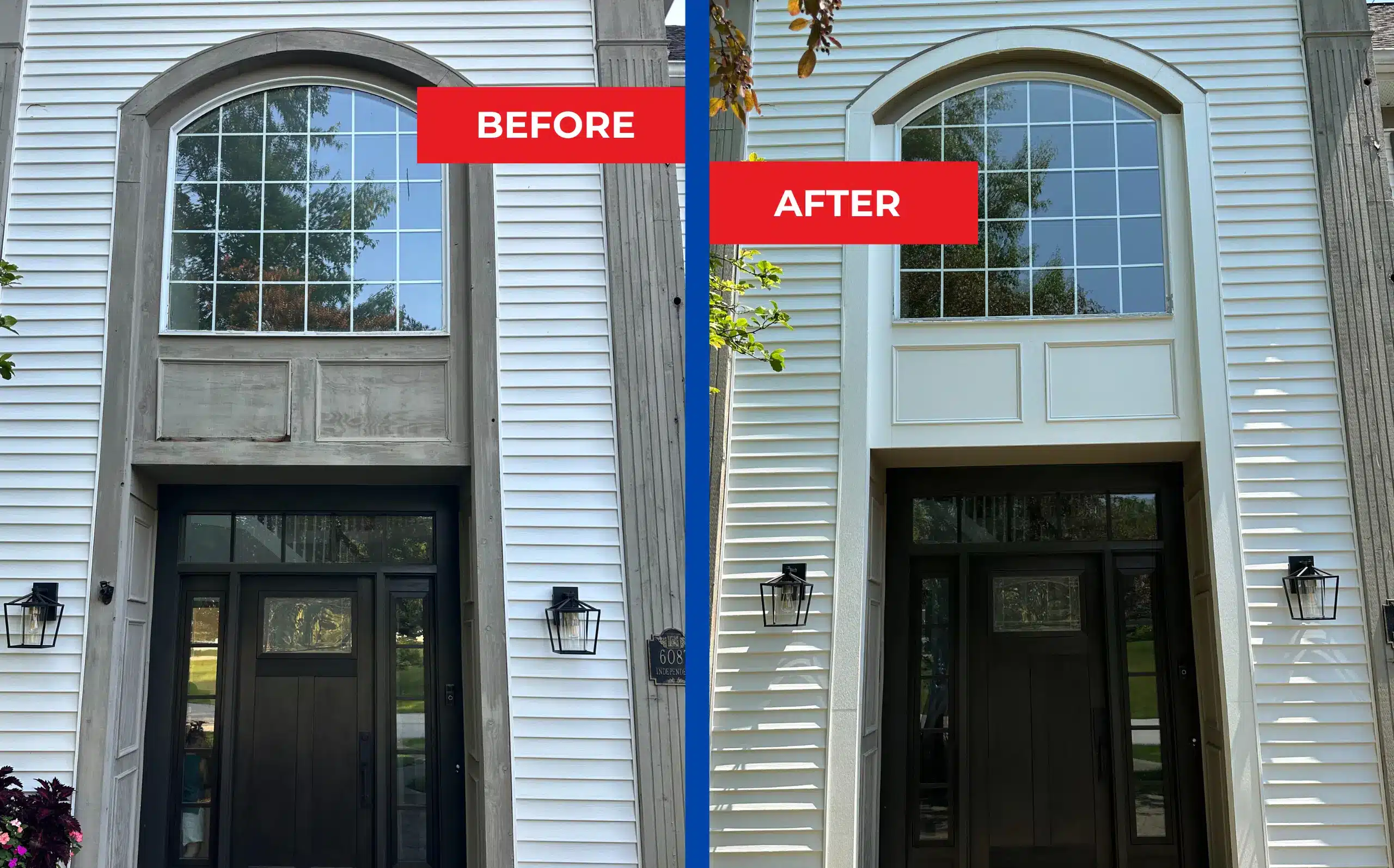
Our exterior window trim restoration in Akron covers a tall arched entryway, a profile that shows why bending happens on site rather than off the shelf. The wood window sill restoration in Chesterland shows the repair stage that has to come before any metal goes on. Further before-and-after sets are in the full project gallery.
BY WINDOW TYPE

What Gets Wrapped on Each Window Style

Capping is discussed as one service, which obscures how much the work varies between window styles standing on the same wall. What actually drives the effort is how many separate pieces have to be bent and how many corners have to be folded rather than filled. A plain rectangular double-hung with flat casing might be four pieces. A bay with angled returns, or an arched head, can be three times that, with every piece bent to a profile that exists nowhere else on the house.

The second variable is how much exposed wood there is to begin with. Some units have substantial brickmold, wide casing and a deep projecting sill, all of it weather-exposed. Others were built with minimal trim, or have already been partly covered during earlier siding work, leaving only the sill and a narrow casing edge worth addressing. We quote per window rather than per house for exactly this reason, and where trim has already gone too far, we will point you toward full window replacement rather than wrapping something at the end of its life.
Get a free estimate

Double-Hung & Casement Windows

Straight runs with square corners, so the folds are simple and repeatable. The sill profile and its slope do most of the work in deciding how long the job lasts.

Bay and Bow Windows

Angled returns make every corner a custom bend, and the multiple sill sections all have to shed water forward without draining into each other at the joints.

Arched and Specialty Shapes

Curved heads cannot be bent from a straight run, so pieces are formed in segments and lapped. Slow, skilled work, and where installation quality shows most.

Aluminum Trim Capping From Cleveland to Akron

Capping is worth doing well or not at all, and the wood decides which.
We probe the timber, repair what has gone soft, bend the coil on site to your window's own profile, and fit it so water runs off the front instead of collecting behind it.
Capping is exterior work, so it stands or falls on details you cannot see once the job is finished: whether there is a drip cap above the head, whether the sill slopes forward, whether the underside was left open to vent. We work across the whole Cleveland–Akron corridor rather than one town, and because we came to this trade through repair rather than siding, the inspection comes first as a matter of course. For a picture of cost before anyone visits, start with a virtual estimate.

We cover Euclid, Twinsburg, Medina and North Olmsted, along with the rest of Cuyahoga, Summit, Lorain, Lake and Medina counties. Housing stock changes noticeably across that area, from pre-war millwork on the inner east side to post-war and renovation-era trim further out, and the right answer on capping changes with it.

Don't see your town listed? Call 440-496-7415 or send photographs of the trim and we will give you a straight read on whether capping is the right product for it. If the wood needs repair first, we will say so. If your property sits in a historic district where capping is unlikely to be approved, we will say that too, and neither answer costs you anything.
FAQ

WILL CAPPING TRAP MOISTURE AND CAUSE MY WINDOW TRIM TO ROT?

It will if it is installed badly, and this is the one legitimate criticism of capping. Aluminum is impermeable, so a correct job leaves the sill underside open to vent and slopes the metal to shed water forward. Capping sound, dry wood with proper venting protects it. Capping damp or decayed wood accelerates the decay.

HOW MUCH DOES WINDOW CAPPING COST PER WINDOW?

Independent industry cost guides put capped windows in the region of $85 to $185 each installed, with labour rather than material making up most of that figure. Real cost tracks window size, how many separate bends the profile needs, and whether the wood needs repair first, which is why it is quoted per window rather than per house.

MY WOOD TRIM IS ALREADY SOFT IN PLACES – CAN IT STILL BE CAPPED?

Not until it is repaired. Soft timber gets cut back to sound wood and rebuilt first, then capped, which is how we sequence it rather than treating the two as separate jobs. Where decay has reached the frame itself, rotten window repair or replacement is the honest answer instead.

AM I ALLOWED TO CAP WINDOWS IN A CLEVELAND HISTORIC DISTRICT?

Often not without approval first. Exterior alterations to designated landmarks and to properties inside designated districts go through the Cleveland Landmarks Commission for a Certificate of Appropriateness, and aluminum cladding over original wood trim is the kind of substitute material that review exists to catch.

DOES CAPPING MEAN I NEVER HAVE TO PAINT MY WINDOW TRIM AGAIN?

Yes for the painting, no for maintenance altogether. The baked aluminum finish does not need repainting, which is the real reason most people buy it. The sealed joints are the exception: standard practice is an annual look and re-caulking roughly every five to seven years, and the fewer joints a job relies on, the longer that stretches.
Still have a question?