

Pocket Door Off Track? Here is How to Slide It Back into Place
What to Do When Your Pocket Door Falls Off Track in Cleveland-Akron
If you need to fix a pocket door off track, here are the basic steps to get it sliding again:
- Inspect the top of the door to find which hanger (front or back) has come loose.
- Slide the door toward the opening so you can reach the hanger.
- Lift the door slightly and guide the hanger bolt back onto the track wheel assembly.
- Engage the retention clip to lock the hanger in place.
- Test the door by sliding it back and forth before replacing any trim.
Most pocket doors slide along a metal track hidden inside the wall. Two hangers at the top of the door connect to roller carriages on that track. When one hanger slips off, the door sags, drags, or stops moving entirely.
It is a frustrating problem — especially when guests end up stuck on the wrong side of a bathroom door. The good news is that in most cases, you do not need to tear open a wall to fix it. The repair can often be done right through the door opening in under two hours.
I’m Nataly Godes, General Manager at Apex Window Werks, where our team regularly helps Cleveland-Akron homeowners fix pocket door off track issues as part of our broader door and window repair work. In the sections below, I’ll walk you through exactly how to diagnose the problem and get your door sliding smoothly again.
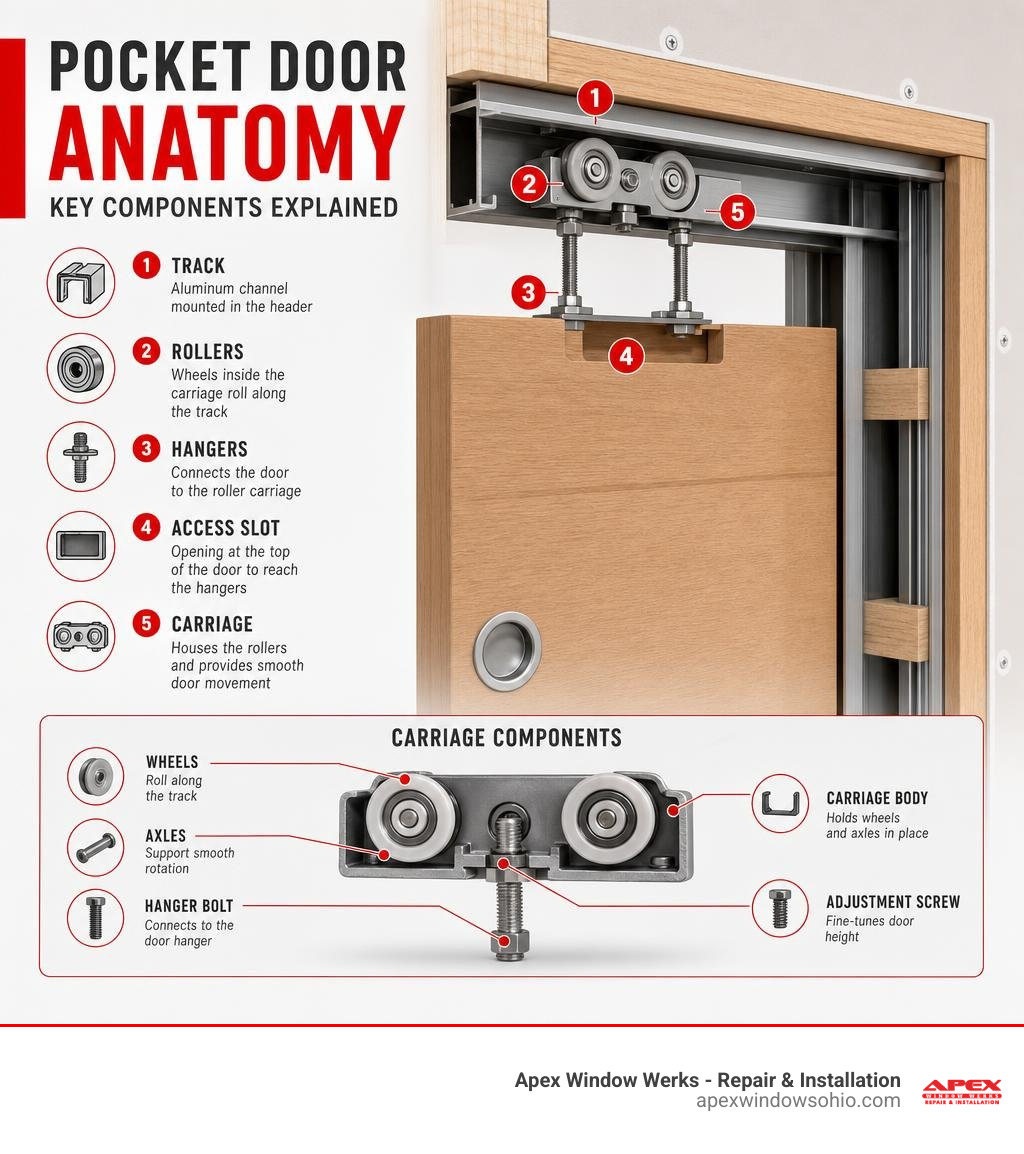
How to Fix Pocket Door Off Track Issues in Cleveland-Akron
Before we grab our tools, we need to understand why these doors decide to jump their tracks in the first place. Pocket doors are brilliant space-savers, but because their hardware is tucked away inside a dark wall cavity, they can be a bit mysterious.
Over years of heavy use, several common mechanical failures can occur:
- Worn Rollers: Just like the tires on your car, pocket door rollers wear down over time. They can develop flat spots, crack, or lose height, which causes the door to drop and drag along the floor.
- Bent Head Track: If someone puts too much downward pressure on the door, or if the track was made of lightweight metal, the track can bend or sag. This prevents the rollers from gliding smoothly.
- Carriage Failure: The wheeled carriage that rides inside the track can crack or lose its ball bearings. When this happens, the wheels stop rolling and start sliding, eventually jumping out of the track entirely.
- Warped Door Panel: Wood doors are sensitive to humidity. In high-moisture areas like bathrooms or laundry rooms, a wooden door panel can warp. This causes the door to rub against the internal wall studs, putting extra stress on the rollers until they pop off.
- Foundation Settling: In many historic homes throughout the Cleveland area, natural foundation settling can throw the door frame out of level. If the track is no longer perfectly horizontal, gravity will pull the door unevenly, causing derailments.
If you want to read more about the general mechanics of these systems, you can check out this guide on How to Repair a Pocket Door for additional background.
How to Diagnose Pocket Door Problems in Cleveland-Akron Homes
When we visit a home in Lakewood or Westlake to repair a sliding door, our first step is always a thorough visual inspection. You do not want to start pulling off trim until you know exactly where the failure has occurred.
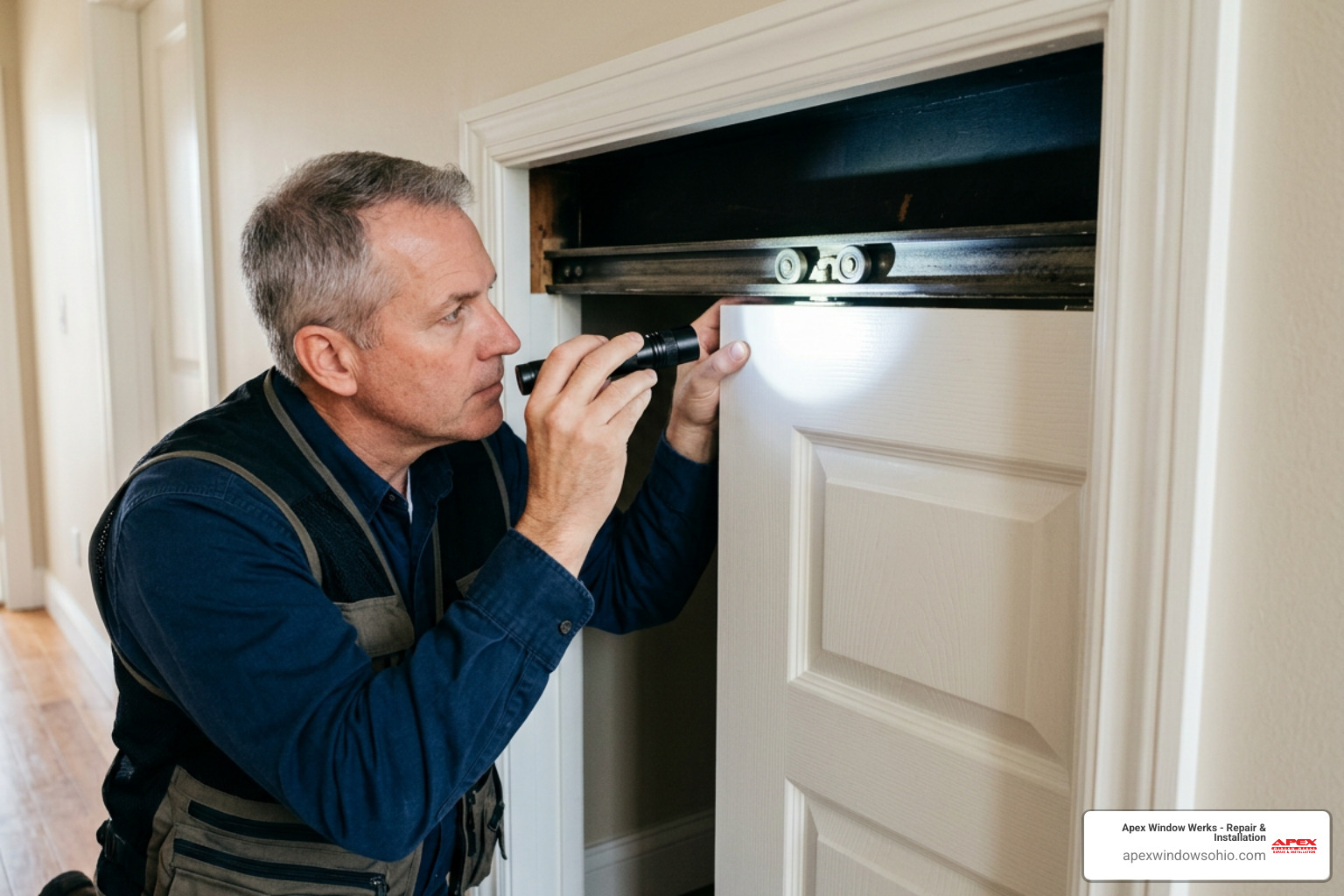
To diagnose your door, grab a bright flashlight and peer into the narrow gap between the top of the door and the head jamb. Look for drag marks on the floor, scrape marks on the door face, or a visible tilt in the door panel. If the door is sitting unevenly in the opening, you are definitely dealing with a hanger or roller issue.
Identifying Front Hanger vs. Back Hanger Failure
Every pocket door is suspended by two hangers. Determining which one has failed is actually quite simple once you know what to look for:
- Front Hanger Failure: If the front hanger (closest to the leading edge of the door) has detached, the door will sag heavily toward the floor at the opening jamb. You will likely see the door scraping the floor when you try to pull it closed.
- Back Hanger Failure: If the back hanger (closest to the wall pocket) has released, the door will remain relatively level at the front, but you will notice a large, uneven gap at the top corner near the pocket. The door may also feel incredibly heavy and refuse to slide into the wall.
If you suspect the back hanger has let go, you can find more troubleshooting steps in this article on Fixing a Pocket Door Off Track.
Inspecting Older J-Tracks vs. Modern Carriage Systems
The age of your home plays a major role in the type of hardware hidden inside your wall.
In older historic homes across Cleveland Heights and Shaker Heights, you will often find J-track systems. These feature a single-sided, J-shaped metal track. The rollers have a single wheel that hooks over the lip of the track. While simple, these are highly prone to jumping off if the door is lifted or bumped.
Modern homes usually feature closed carriage systems. These tracks are shaped like an inverted box with a slot at the bottom. The rollers consist of three-wheel or four-wheel carriages that ride completely enclosed inside the track. These are much harder to derail, but when they do fail, it is usually because the plastic wheels have cracked or the metal mounting plate has broken.
Step-by-Step Guide to Realigning Your Door in Westlake, OH
Now that you have diagnosed the issue, it is time to get your hands dirty. Working on a pocket door requires patience, but following a systematic approach will prevent cosmetic damage to your walls and trim.

Preparing Your Tools and Workspace
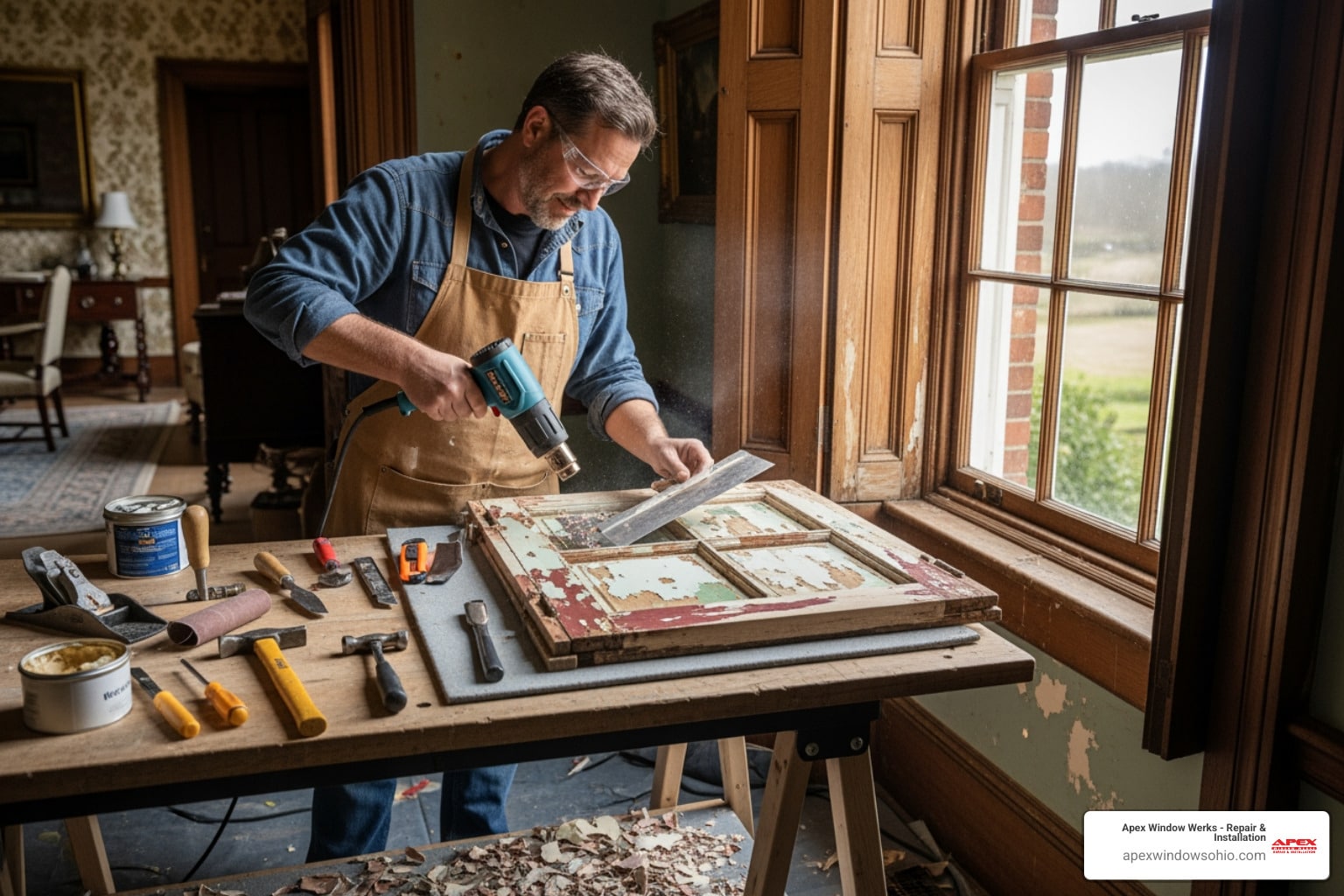
Before you begin, gather the following tools and safety gear:
- A sturdy putty knife and a small pry bar
- Flathead and Phillips screwdrivers
- A bright flashlight or headlamp
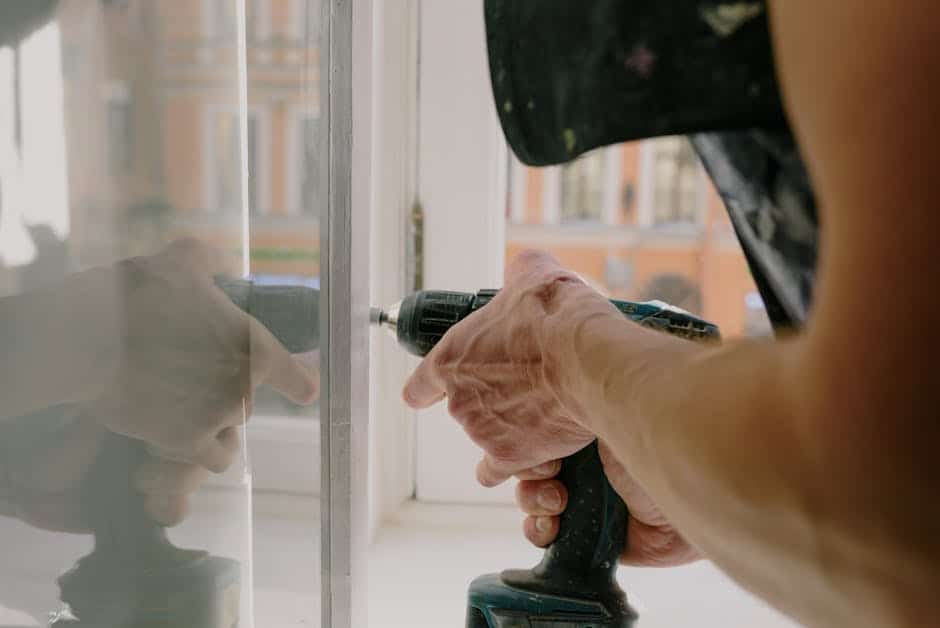
- An adjustable wrench or a specialized pocket door adjustment wrench
- A drop cloth or old blankets to protect your flooring
- A helper (pocket doors are heavy and awkward to handle alone)
Lay down your drop cloth along the path of the door to protect your hardwood or tile floors from scratches.
Accessing the Track to Fix Pocket Door Off Track Rollers
To get real access to the rollers and hangers, you will need to remove the stop trim. The stop trim consists of the thin wooden strips on the top and sides of the door frame that keep the door centered.
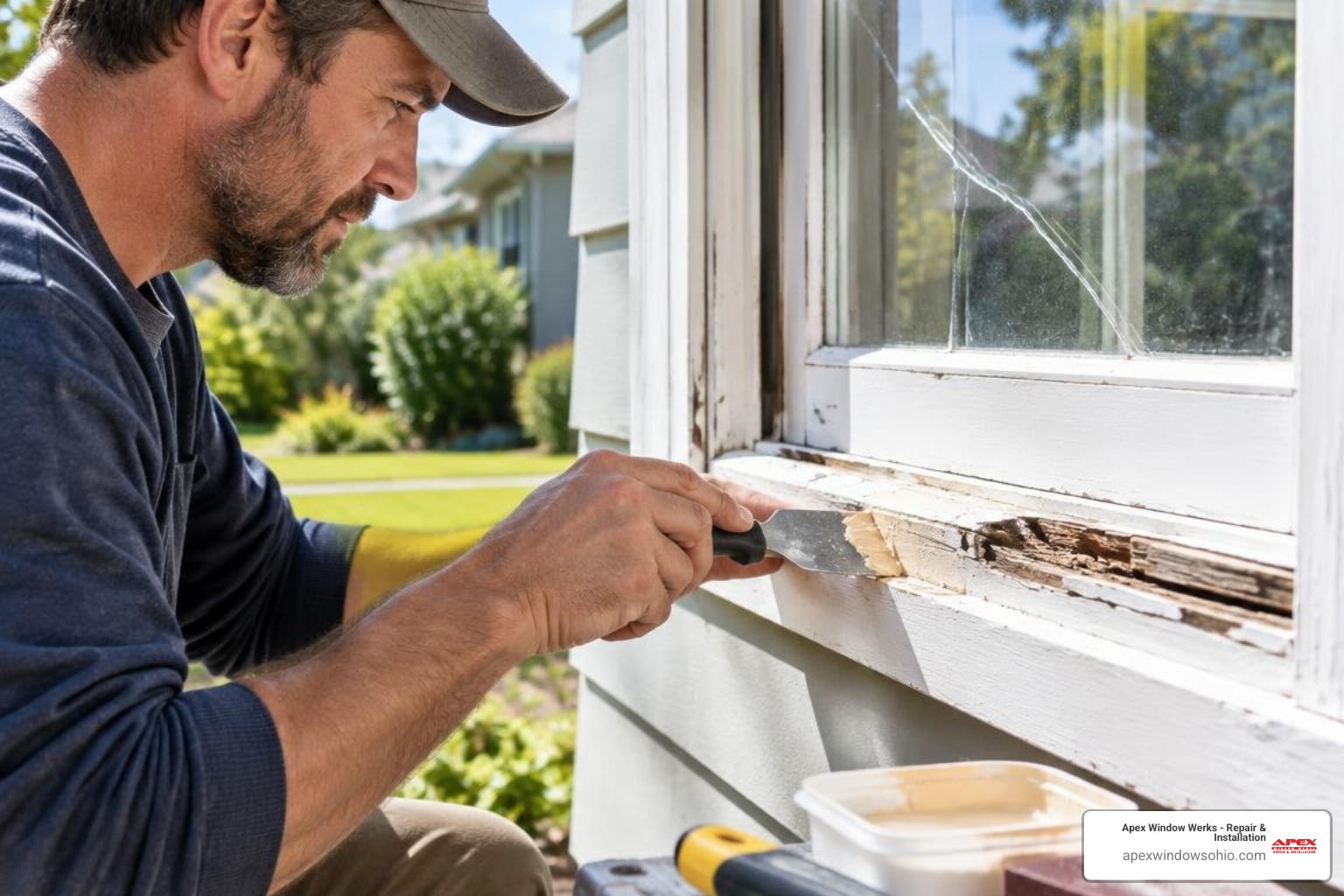
First, use a utility knife to carefully slice through any paint or caulk seal where the trim meets the door frame. This prevents the paint from peeling off the wall when you remove the wood. Next, gently slide a stiff putty knife behind the top stop trim and pry it outward. Once you have a small gap, use your pry bar to gently pull the trim away, working slowly to avoid snapping the wood. Repeat this process for the side stop trim.
If you love tackling home maintenance projects yourself and want to learn more about handling delicate wood elements, you might find our guide on How to Fix Your Weighted Windows Without Breaking a Sweat helpful for mastering trim removal techniques.
Reattaching the Door to the Hangers
Once the top trim is removed, you should have a clear view of the track and the hanger bolts.
First, use your flashlight to locate the roller carriages inside the track. If they have rolled deep into the pocket, you can use a bent wire hanger or a thin wooden stick to gently pull them back toward the center of the opening.
Next, have your helper assist you in lifting the door panel. Align the mounting bracket on top of the door with the hanger bolt hanging down from the track carriage. Slide the bolt into the slot on the bracket.
Most modern systems use a small plastic or metal retention clip to lock the bolt into the bracket. Flip this clip closed until you hear it snap into place. Once both hangers are secured, carefully slide the door back and forth to ensure it glides smoothly without rubbing.
Advanced Repairs in Lakewood, OH: When to Cut Drywall vs. Using the Access Slot
In a perfect world, every pocket door would slide back onto its track with a simple adjustment. However, if the track itself is damaged, or if the carriages have shattered inside the wall, you may need to perform more advanced repairs.
| Repair Method | When to Use | Wall Damage | Time Required |
|---|---|---|---|
| Access Slot Method | Minor roller replacement, basic realignment, carriage adjustments | None | 1 to 2 hours |
| Drywall Cutout Method | Broken head track, structural sagging, pre-1980s systems without access slots | Moderate (requires patching and painting) | 3 to 6 hours |
Utilizing the Head Jamb Access Slot
Many modern pocket door frames feature a built-in access slot. This is a removable section of the wooden head jamb or a hidden gap behind the trim designed specifically to let you slide the rollers out of the track without touching the drywall.
If your frame has this feature, you can simply remove the access panel, slide the old roller carriages out, slide new ones in, and reattach the door. It is a clean, non-destructive repair that saves hours of drywall patching.
Replacing Damaged Tracks and Rollers in Lakewood, OH
If you are dealing with a structurally failed track in an older Lakewood home, cutting a small section of drywall is often unavoidable.
To do this, use a drywall saw to cut a neat, rectangular access hole (typically about 18 by 10 inches) directly below the track on one side of the wall. Save the piece of drywall you cut out; you can use it as a patch later. Through this opening, you can unscrew the damaged track, install a new heavy-duty aluminum track, and use plastic shims to ensure it is perfectly level before securing it.
If your home maintenance checklist is growing and you need professional help with other areas of your home, explore our Service: House Window Repair page to see how we can assist you.
Preventive Maintenance Tips for Smoothly Sliding Doors in Cleveland-Akron
The best way to fix a derailed pocket door is to prevent it from coming off the track in the first place. A little routine maintenance goes a long way.
Cleaning and Lubricating the Track System
Dust, pet hair, and debris love to collect inside the wall pocket. Over time, this buildup acts like speed bumps for your rollers, forcing them to jump the track.
- Vacuum the track monthly using a crevice tool attachment to suck up loose dirt.
- Blow out any stubborn dust deep inside the pocket using a can of compressed air.
- Clean the track with a damp microfiber cloth wrapped around a thin ruler.
- Lubricate the rollers quarterly with a dry silicone spray. Never use heavy oils or WD-40, as they attract dust and create a sticky grime that will eventually ruin the bearings.
Routine Hardware Adjustments to Fix Pocket Door Off Track Recurrence
At least once a year, take a few minutes to inspect your door hardware. Use a flashlight to check that the mounting bracket screws on top of the door are tight. If you notice the door is starting to hang slightly crooked, use your adjustment wrench to turn the hanger bolts until the door is plumb and level. Catching these minor misalignments early will save you from a major derailment down the road.
Frequently Asked Questions About Door Repairs in Akron, OH
How much does professional pocket door repair cost?
The cost of professional pocket door repair varies depending on the complexity of the issue. A simple adjustment or roller realignment is highly affordable and can be completed quickly. If the track is structurally damaged or if we need to cut drywall to replace old hardware, the cost will be higher to cover the additional labor and materials. We always discuss options with our customers to find the most cost-effective solution.
Can you fix a pocket door without removing the trim?
In some cases, yes. If the front hanger has simply slipped out and the door has not retreated into the wall pocket, you may be able to lift the door and guide it back onto the carriage bolt using a thin wrench without removing any trim. However, for a complete roller replacement or to repair a back hanger, removing the stop trim is usually necessary to avoid scratching the door face.
How much does window sash repair cost in Akron, OH?
Similar to door repairs, the cost of window sash repair depends on the materials and the extent of the damage. Simple glass replacement or sash cord repairs are very straightforward, while restoring historic wood sashes requires specialized craftsmanship. Investing in professional sash repair helps preserve your home’s energy efficiency and historic charm.
Conclusion
A pocket door that refuses to slide can quickly disrupt the flow of your home. Whether you decide to tackle this repair as a weekend DIY project or prefer to hand it over to the experts, the key is to work carefully and use the right tools.
At Apex Window Werks, we pride ourselves on delivering fast, high-quality, and affordable repair services to homeowners throughout the Cleveland-Akron area. If you would rather leave the heavy lifting to us, we offer same-day service to get your doors and windows back in perfect working order.
Beyond our sliding door repairs, we also specialize in preserving the historic beauty of Ohio homes. If you have drafty or sticking classic windows, be sure to check out our wood window repair services to see how we can bring them back to life. Contact us today to schedule your repair!