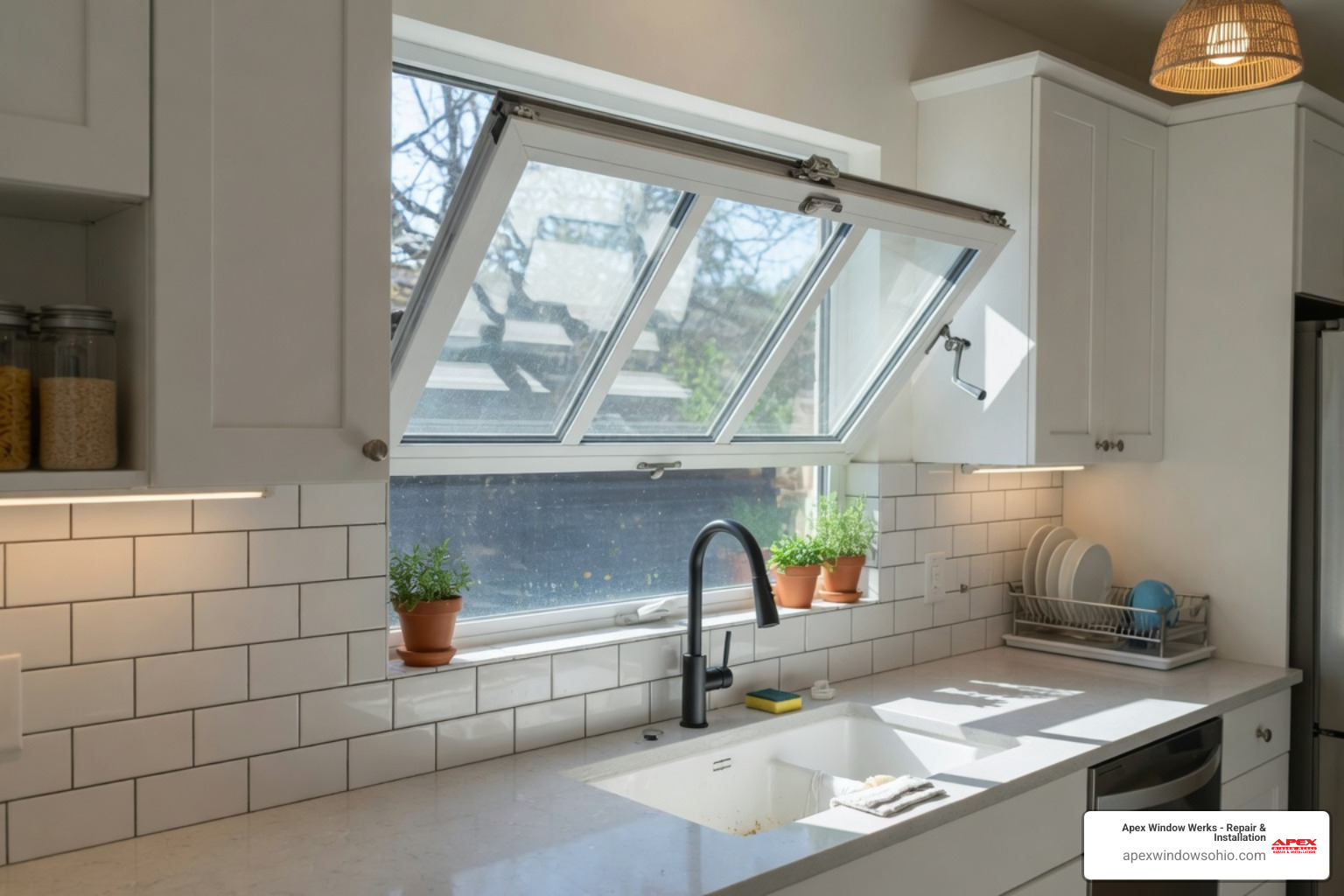


Casement Window Crank Replacement: Finding the Perfect Fit
Signs You Need a Casement Window Crank Replacement in Northeast Ohio
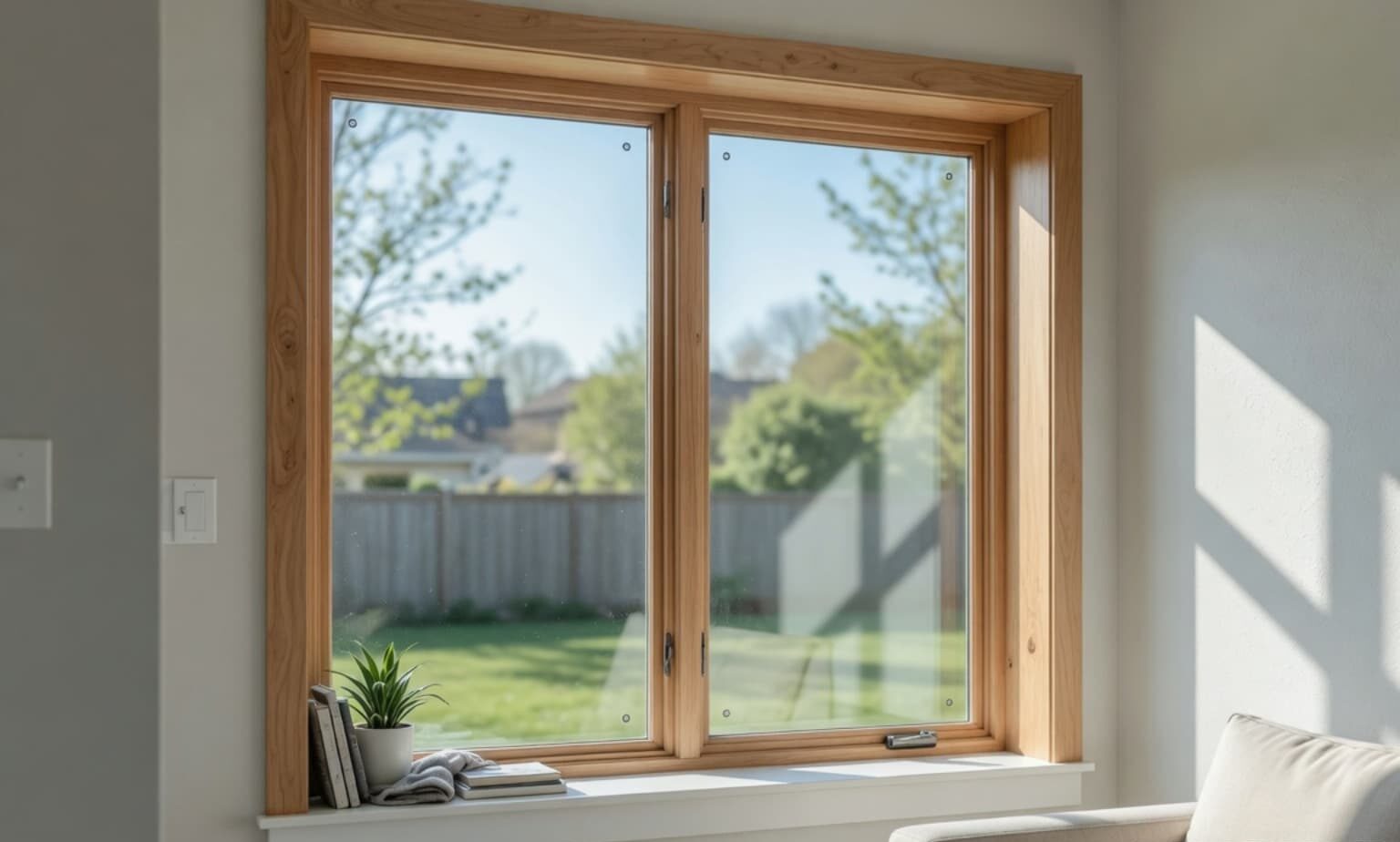
When a casement window stops opening smoothly, the issue usually boils down to mechanical wear. Over sixty percent of operable window service issues in homes come from improper maintenance and mechanical misalignment. When these mechanical window parts fail, the signs are hard to miss.
Common warning signs include:
- The crank handle turns continuously without moving the window sash at all.
- You hear or feel a loud grinding noise inside the mechanism when turning the handle.
- The operator arm binds or stops halfway through its full swing.
- The window sash leaves an open gap when fully closed, letting in cold drafts and rain.
- The crank handle wobbles loosely on the splined drive spindle.
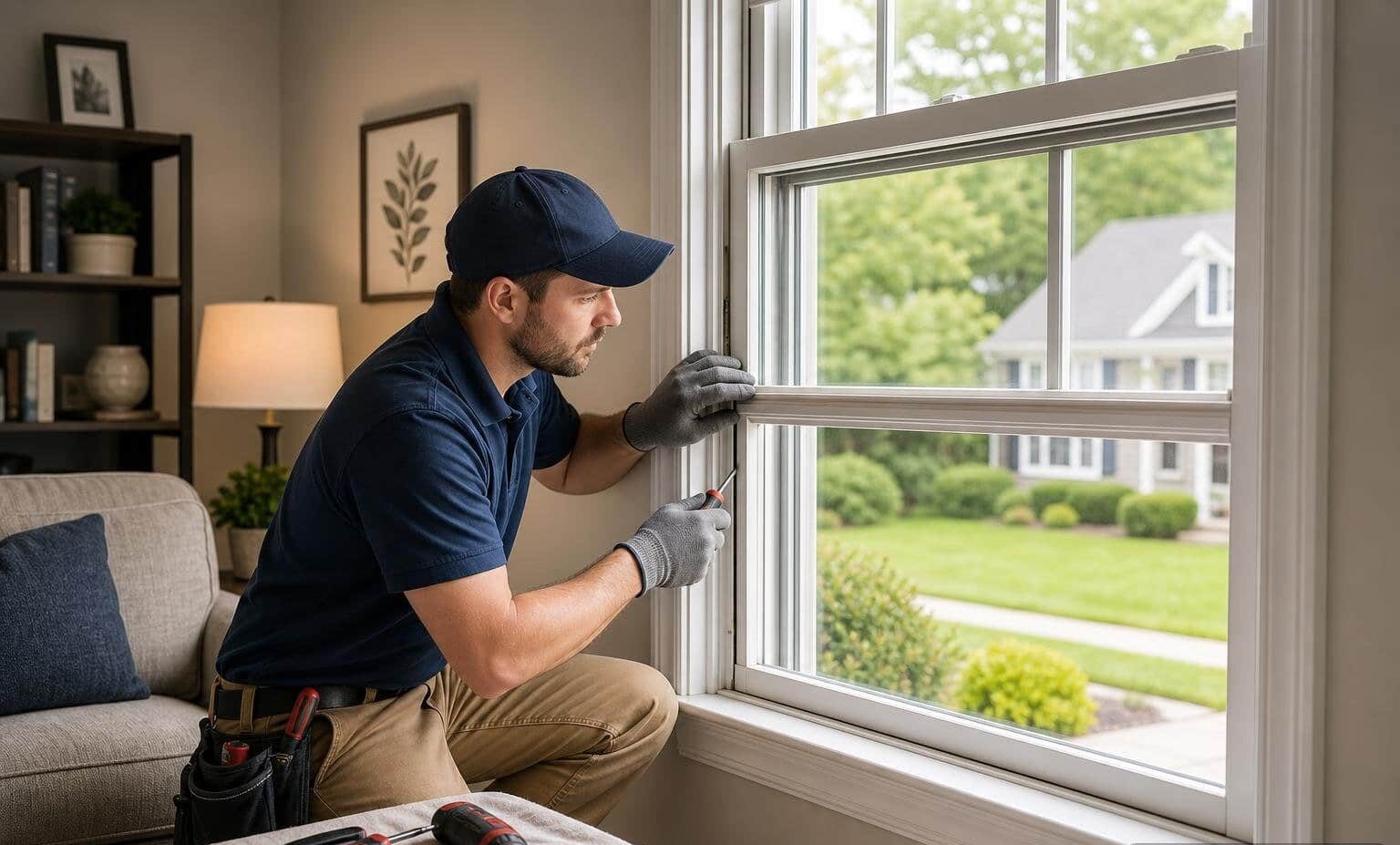
If your window hardware shows any of these symptoms, a House Window Repair Services inspection can help pinpoint whether you need a quick handle swap or a complete operator box replacement.
Diagnosing Free-Spinning Cranks and Stripped Splines in Cleveland
A crank handle that spins freely usually points to one of two mechanical problems. Either the teeth inside the handle socket have worn down, or the internal gears inside the operator box have stripped completely.
To figure out which component failed, back out the small set screw on the side of the handle using a flathead or Phillips screwdriver. Pull the handle off the splined shaft. Inspect the tiny ridges inside the handle stem and on the exposed metal spindle. If the teeth on the spindle look crisp and sharp while the inside of the handle looks completely smooth, you only need to replace the crank handle itself.
If the spindle ridges are flattened, or if the spindle turns freely while the internal arm stays perfectly still, the worm gear inside the operator casing has suffered gear fatigue. In that situation, replacing the handle alone will not fix the window, and you will need a full operator assembly.
Frame Distortion and Hardware Resistance in Akron
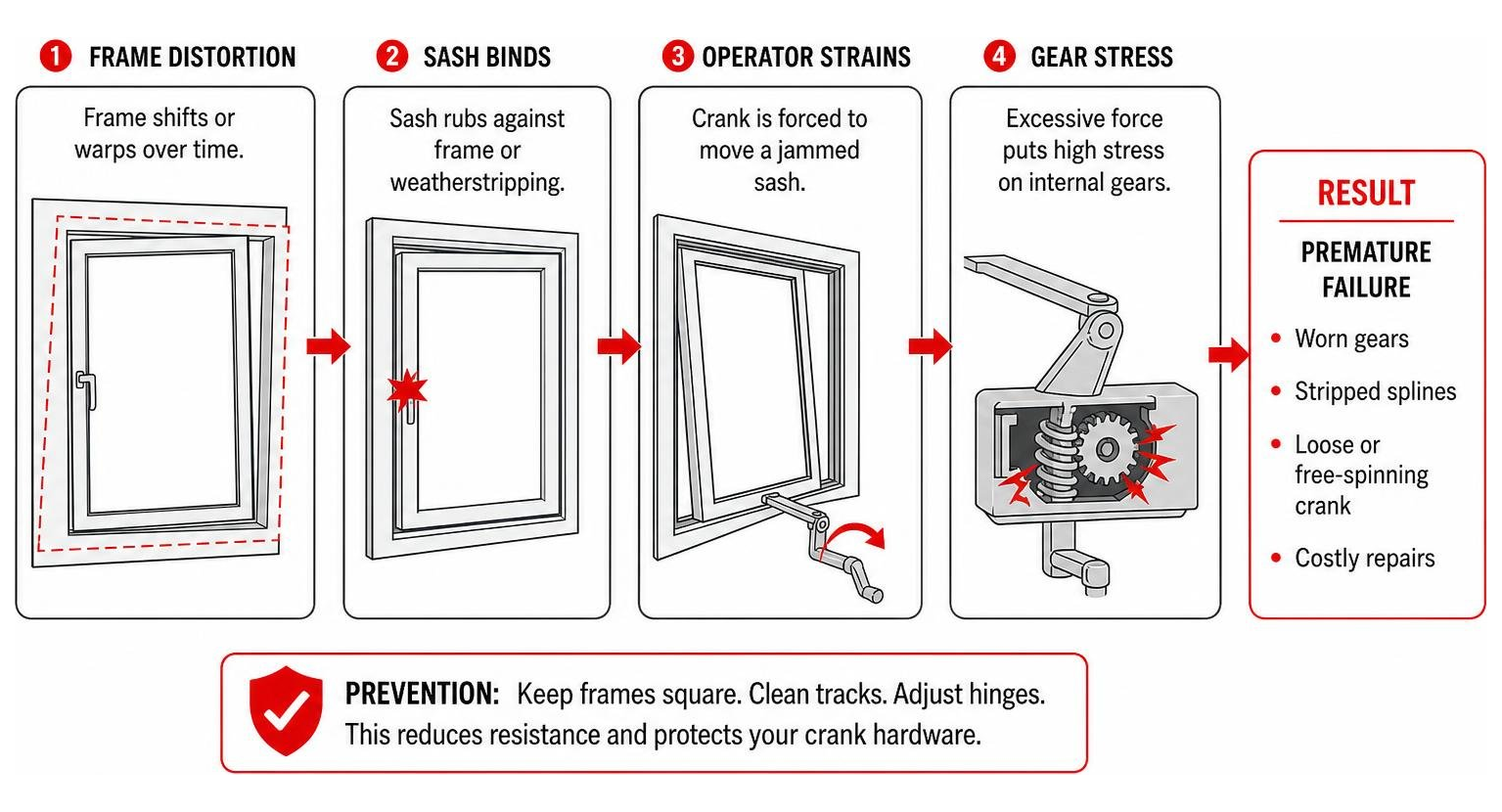
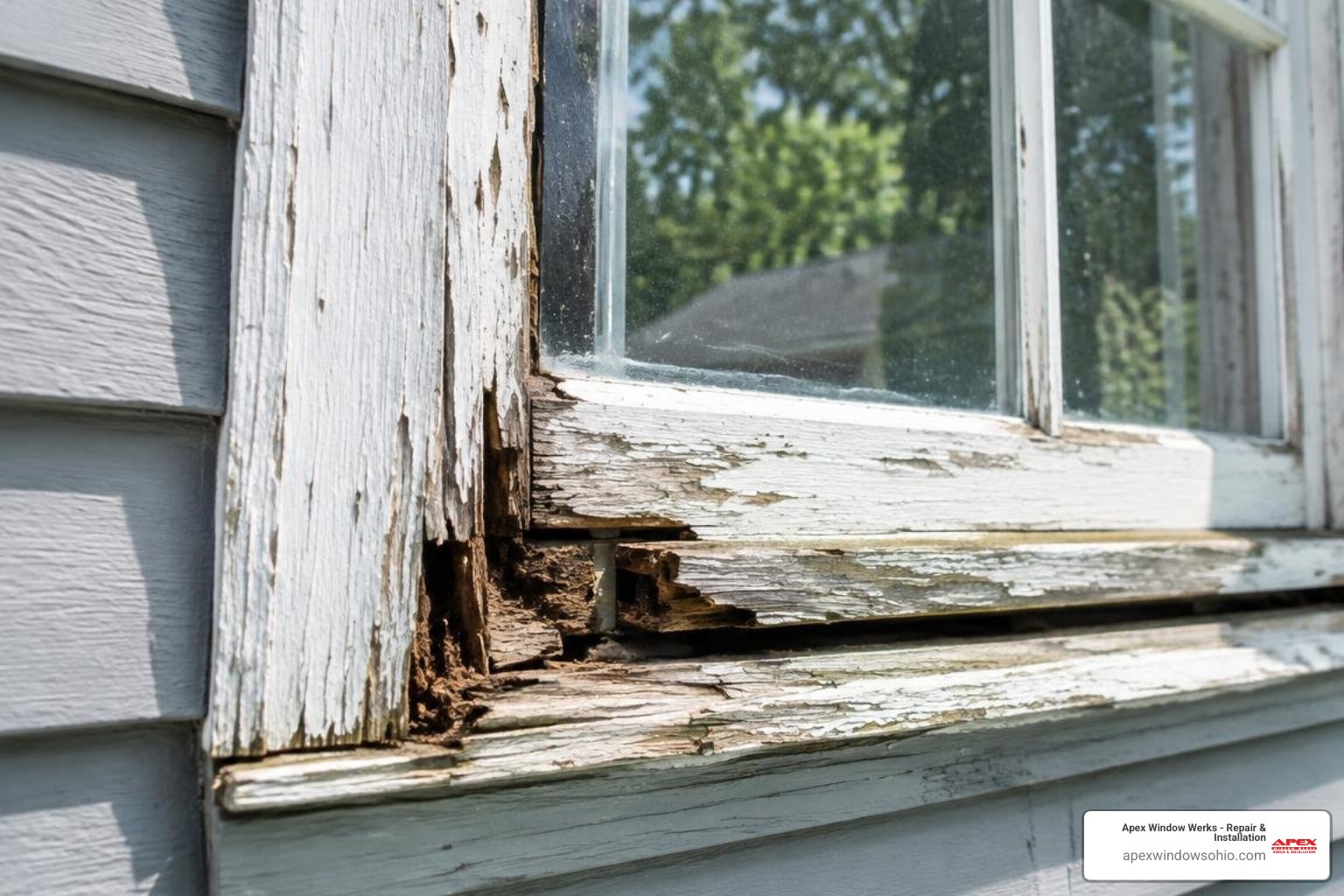
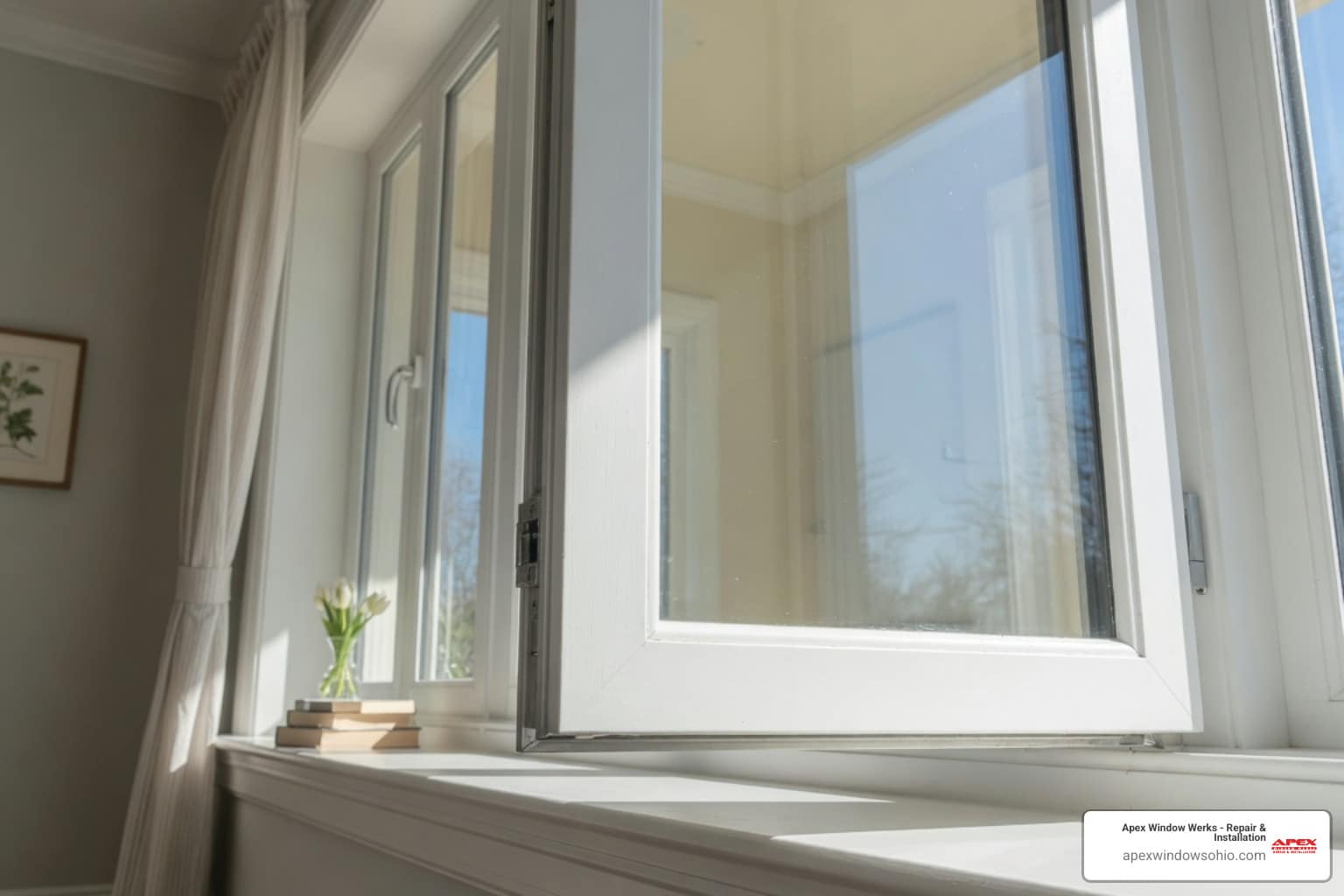
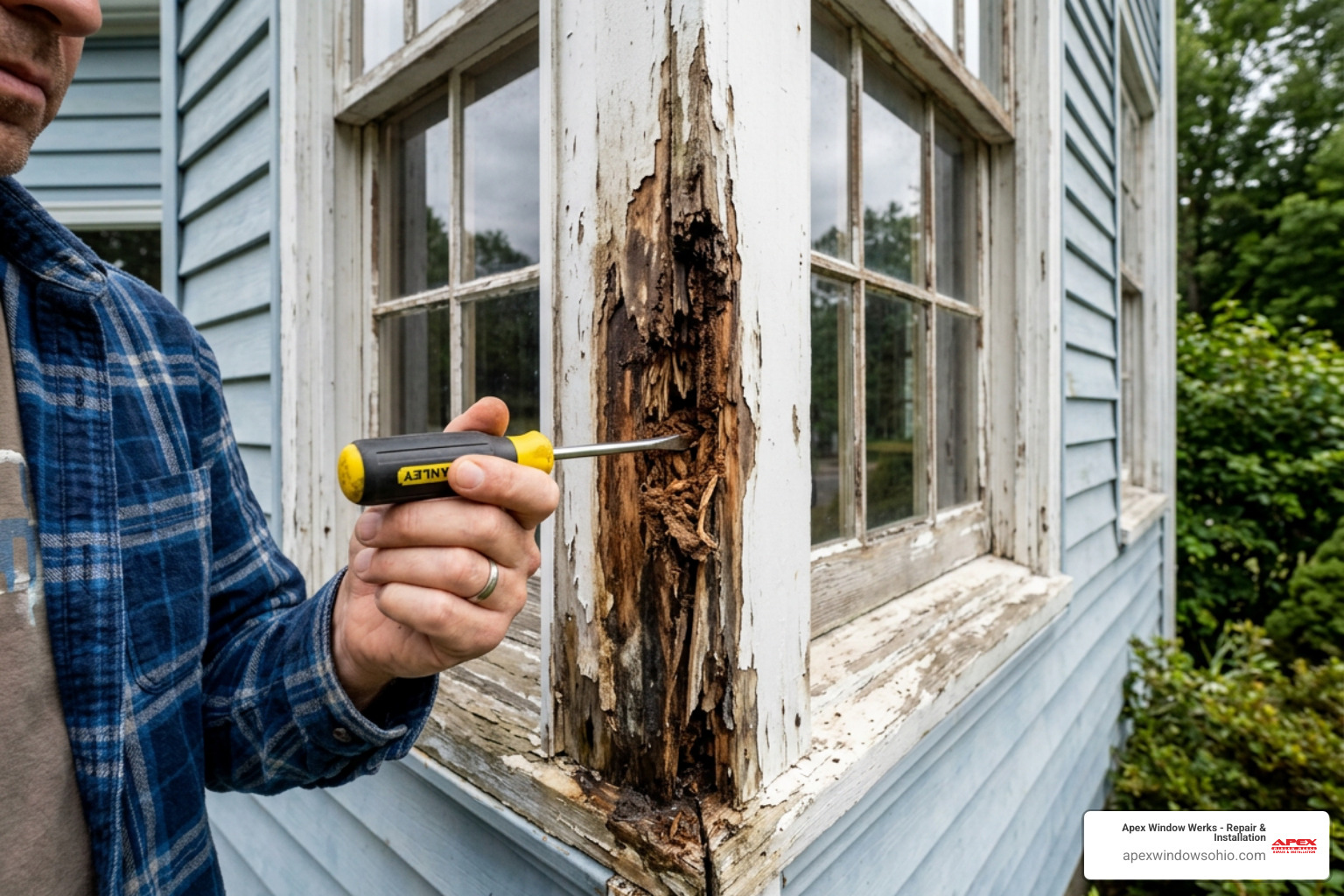
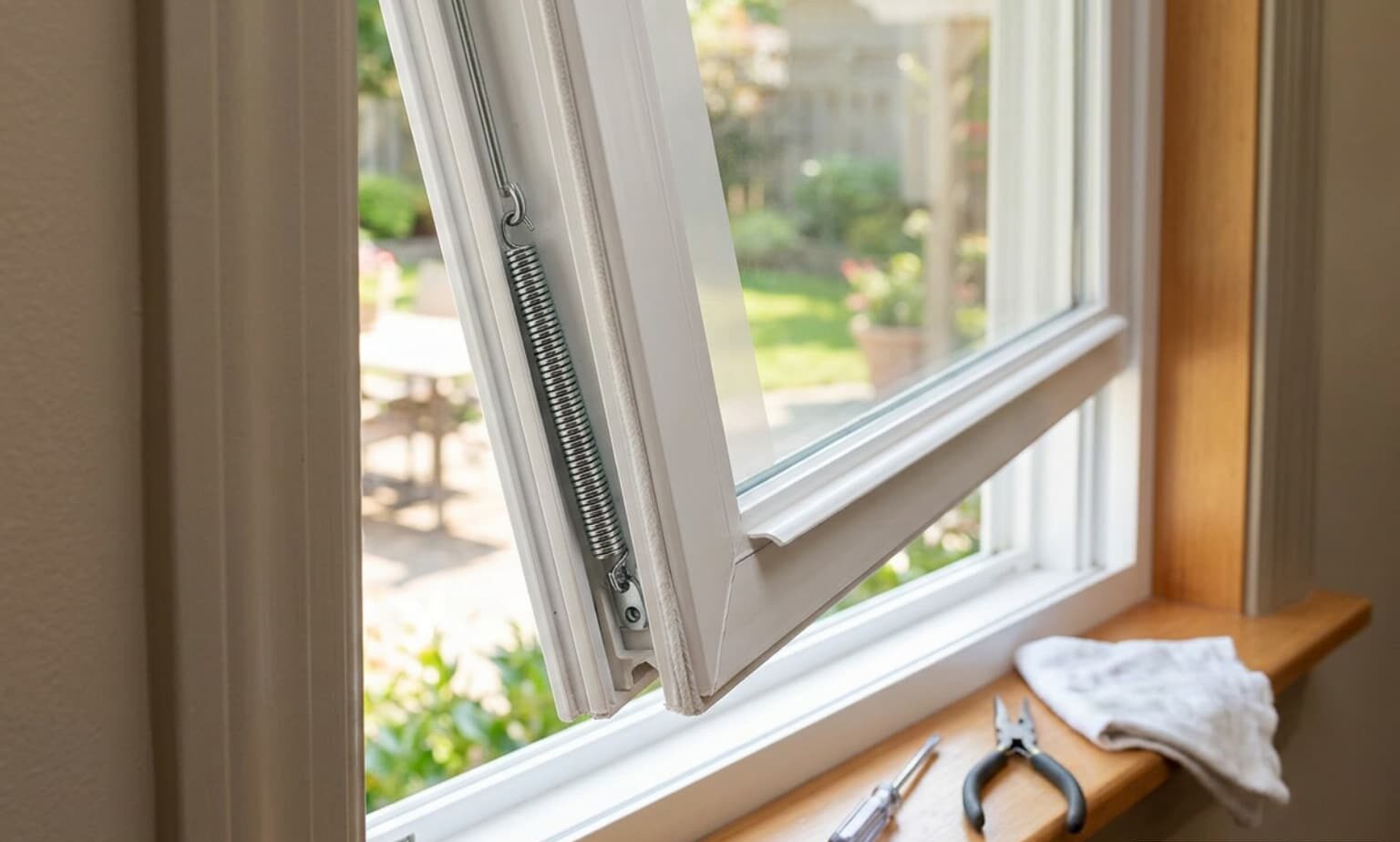
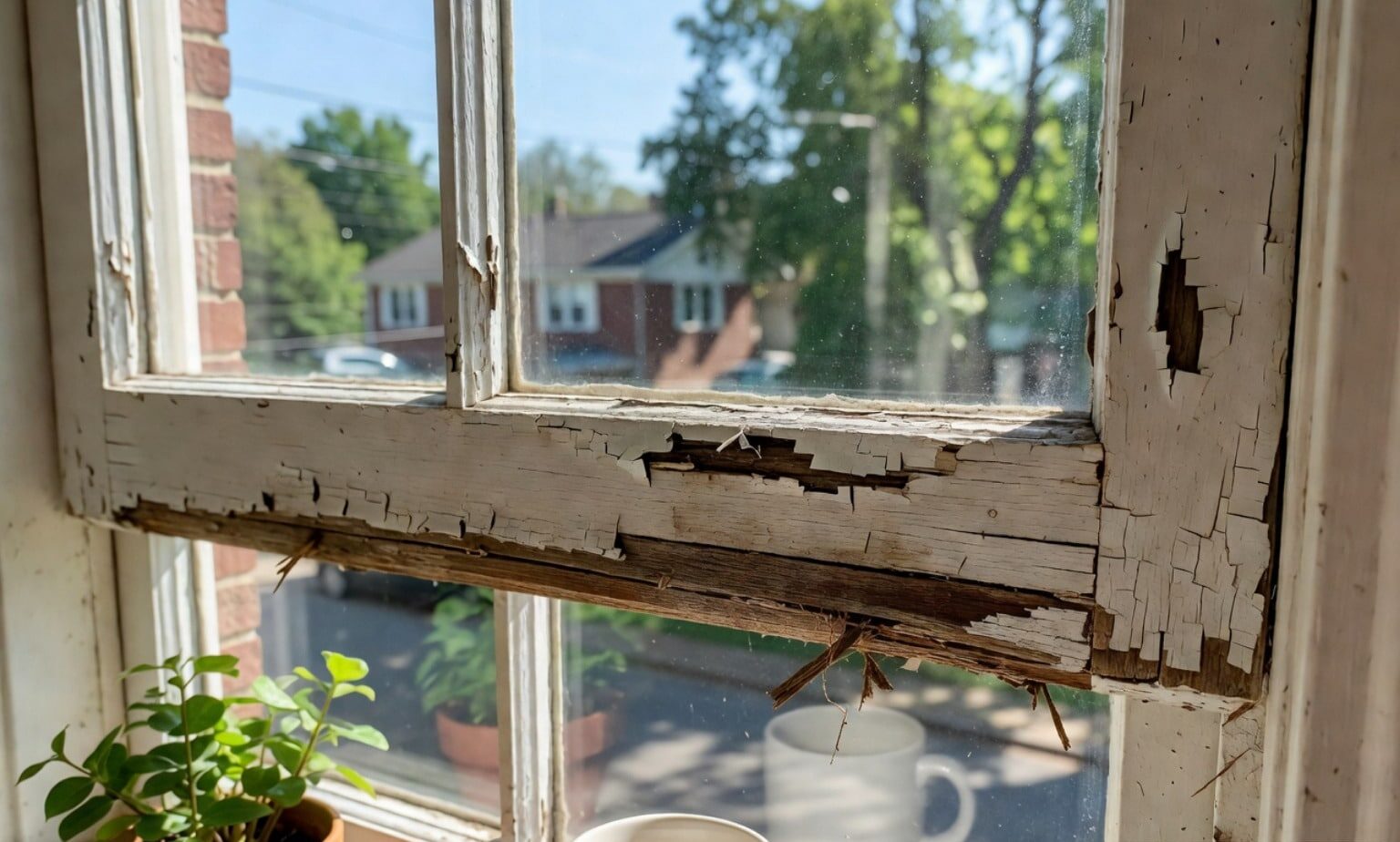
Sometimes a crank mechanism fails because the window frame itself has shifted or warped. Extreme weather in Cleveland and Akron can cause wood frames to expand or vinyl sills to sag over time. When the sash shifts out of square, it binds against the outer frame or weatherstripping.
Forcing a stuck window open by turning the crank puts immense stress on the internal gears. Operators are built to glide smoothly along a track, not to force a jammed sash through a warped frame. If you notice heavy resistance when cranking, check the hinge tracks for dirt, rust, or loose screws. Adjusting the hinges and clearing track debris reduces operating resistance and protects your new replacement crank from premature failure.
How to Identify the Right Replacement Operator and Handle
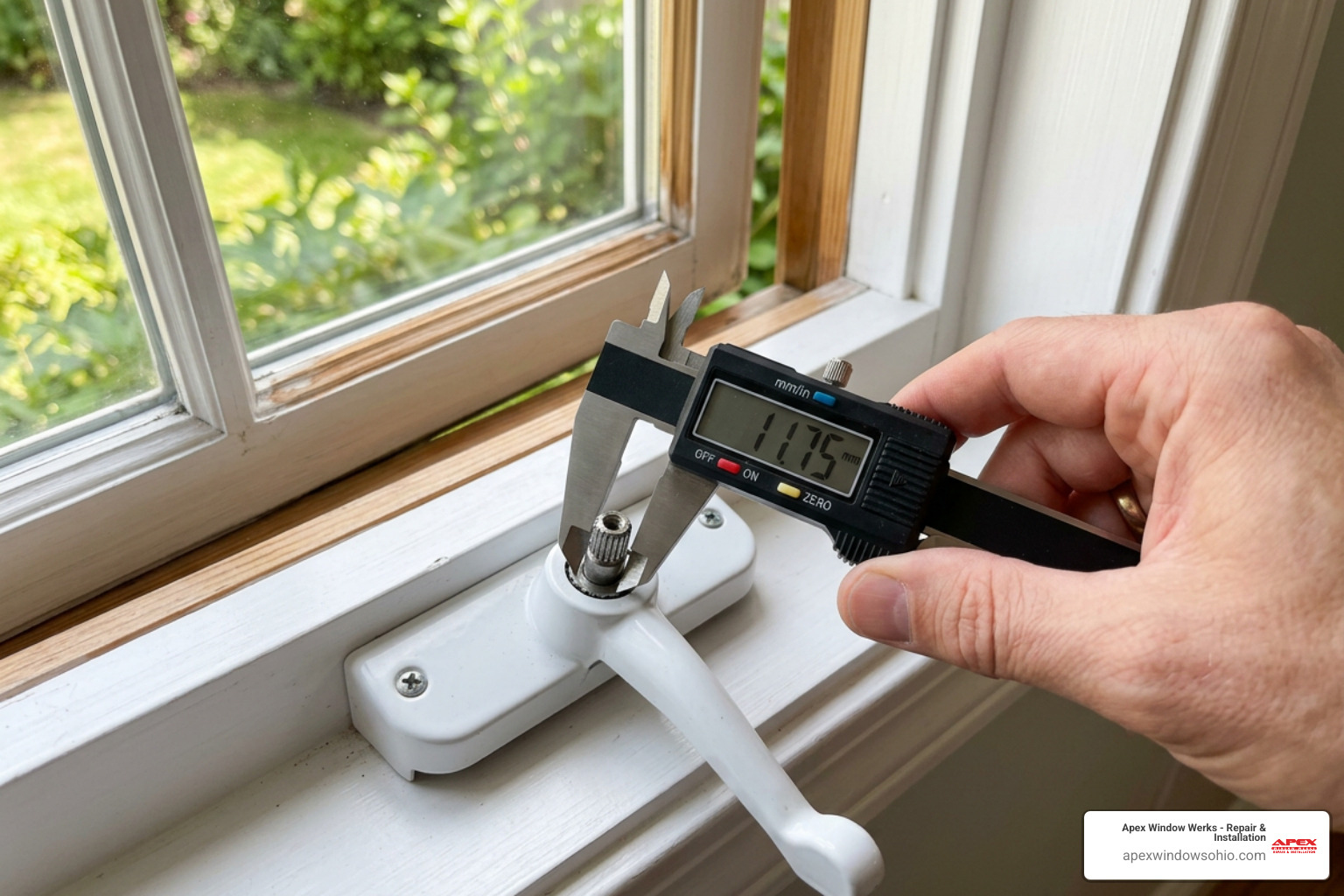
Finding the correct replacement hardware requires measuring a few key dimensions. Casement operators are not one-size-fits-all, and installing the wrong size can cause the window to jam or fail to lock securely.
When identifying replacement parts, check these four parameters:
- Spline Diameter: Measure the diameter of the tooth-covered spindle where the handle attaches. Common standard sizes are 5/16 inch, 11/32 inch, and 3/8 inch.
- Arm Length and Style: Measure the arm length from the center of the gear wheel to the center of the end roller. Common arm lengths include 9 inches, 10-3/4 inches, and 13-1/2 inches.
- Handedness: Look at the window from the inside looking out. If the hinge is on the right side and the window swings outward to the right, you have a right-hand window. If it hinges on the left, it is a left-hand window.
- Casting Numbers: Look closely at the metal housing on your old operator. Manufacturers like Amesbury Truth stamp numbers such as 40085, 45240, or 14D403 directly onto the die-cast metal body.
Comparing Brand Specifications Across Hardware Systems in Cleveland Heights
Different manufacturers utilize specific spline measurements and arm configurations. Understanding these brand differences simplifies the search for exact replacement hardware:
- Truth Hardware: Most standard Truth operators manufactured after 1978 use a standardized 11/32-inch spline diameter. Older models or specific awning operators may feature a 5/16-inch spline. If you own older Truth mechanisms, explore options for Truth Hardware Mechanism Repair and Replacement.
- Pella Windows: Pella operator handles commonly feature a 3/8-inch spline with 11 internal serrations. Their handles and covers fit a wide variety of model years.
- Roto Hardware: Roto window operators typically feature a 5/16-inch hex drive stem rather than a round splined spindle.
- Peachtree and Generic Options: Peachtree hardware often relies on specific white or driftwood operator handles, while generic replacement crank handles feature standard 3/8-inch spline designs.
If you are replacing window parts on wood windows in Cleveland Heights or Chagrin Falls, cross-referencing your old casting numbers with online product catalogs like SWISCO.com: Casement Window Operator, 13-1/2″ Arm ensures an accurate match.
Handle Styles, Covers, and Sill Extensions in Solon and Medina
Standard long-stem crank handles stick out several inches from the interior sill, which can catch on heavy curtains, blinds, or window shades. Upgrading your handle style during replacement is an easy way to improve overall functionality.
Popular handle and cover options include:
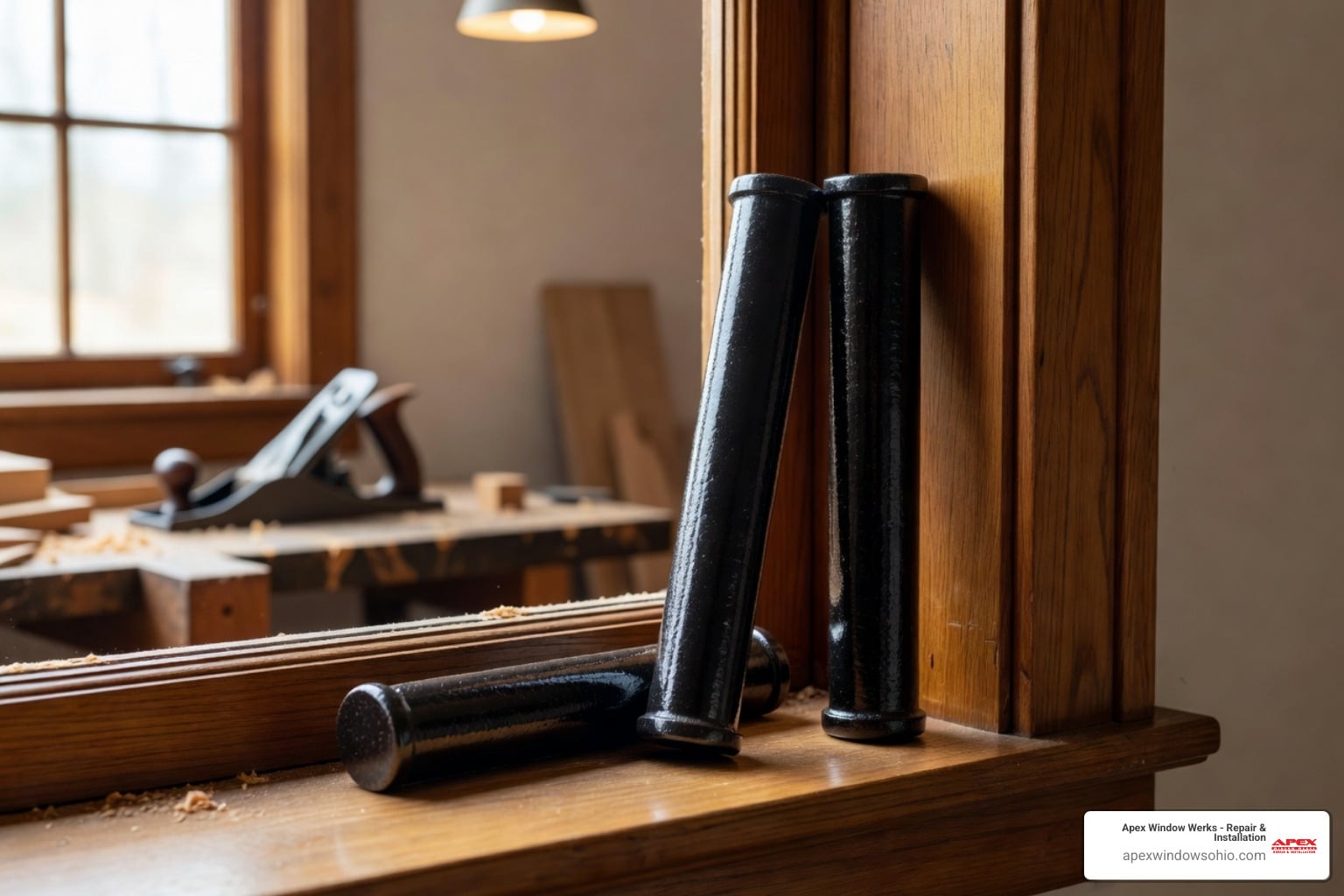
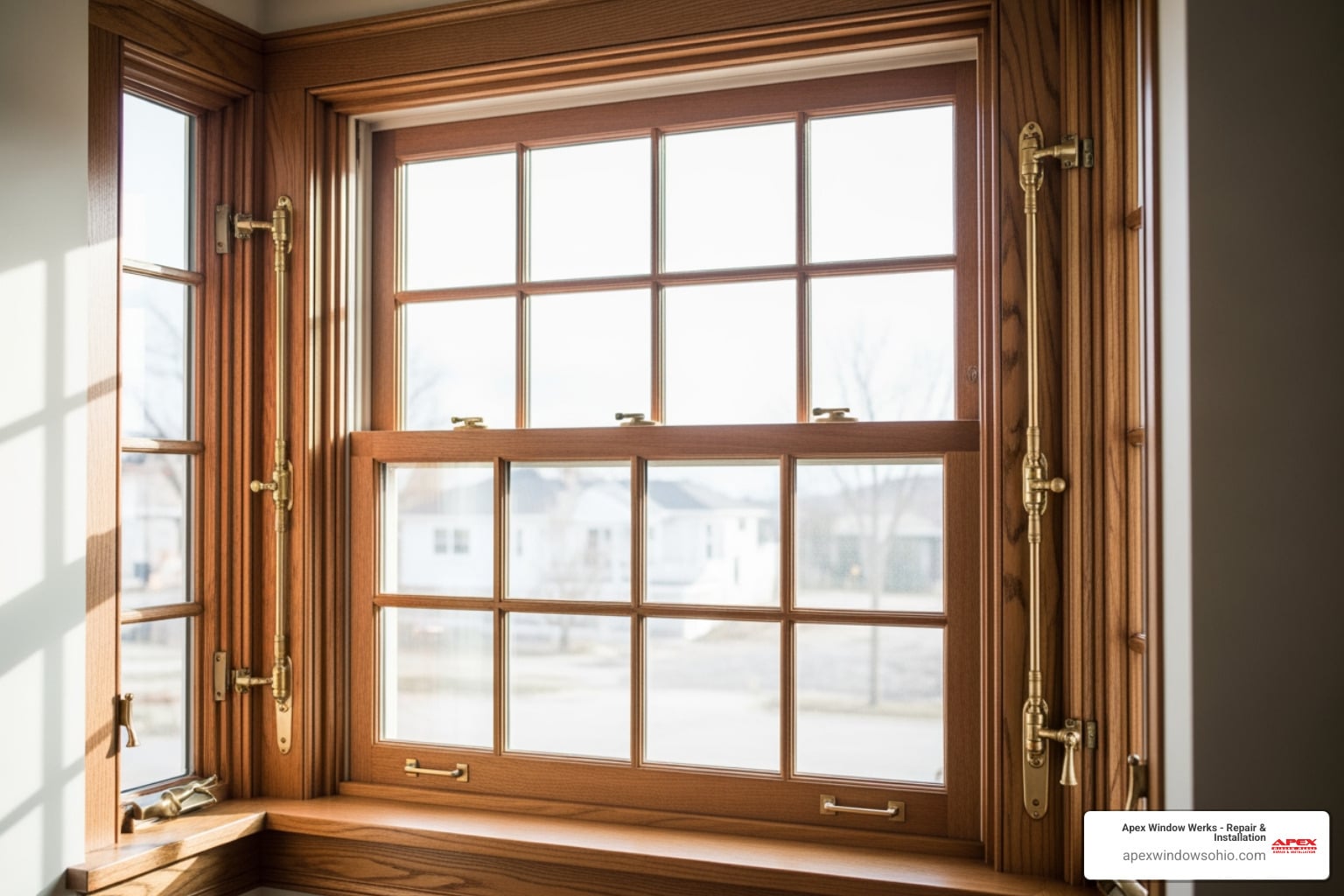
- Folding Crank Handles: These metal and plastic handles feature a hinged joint allowing the arm to fold down flush against the sill when not in use.
- T-Handles (Butterfly Handles): These low-profile handles are compact and easy to turn, making them an excellent choice for tight sill areas.
- Handle Extensions: Truth offers 2-inch and 4-inch extension pieces that push the crank handle out past deep wooden window trim or custom interior blinds.
- Snap-On Covers and Escutcheons: Decorative plastic and die-cast covers hide the raw mounting screws and give the window sill a finished look.
When ordering replacement sets, like the Truth Hardware Aluminum 5/16″ Spline Window Crank Handle or the Truth Window Hardware – Right Hand Encore Crank Set – Brown , verify that the cover color matches your interior wood stain or vinyl trim.
Step-by-Step Guide to Replacing Your Casement Window Operator in Cleveland
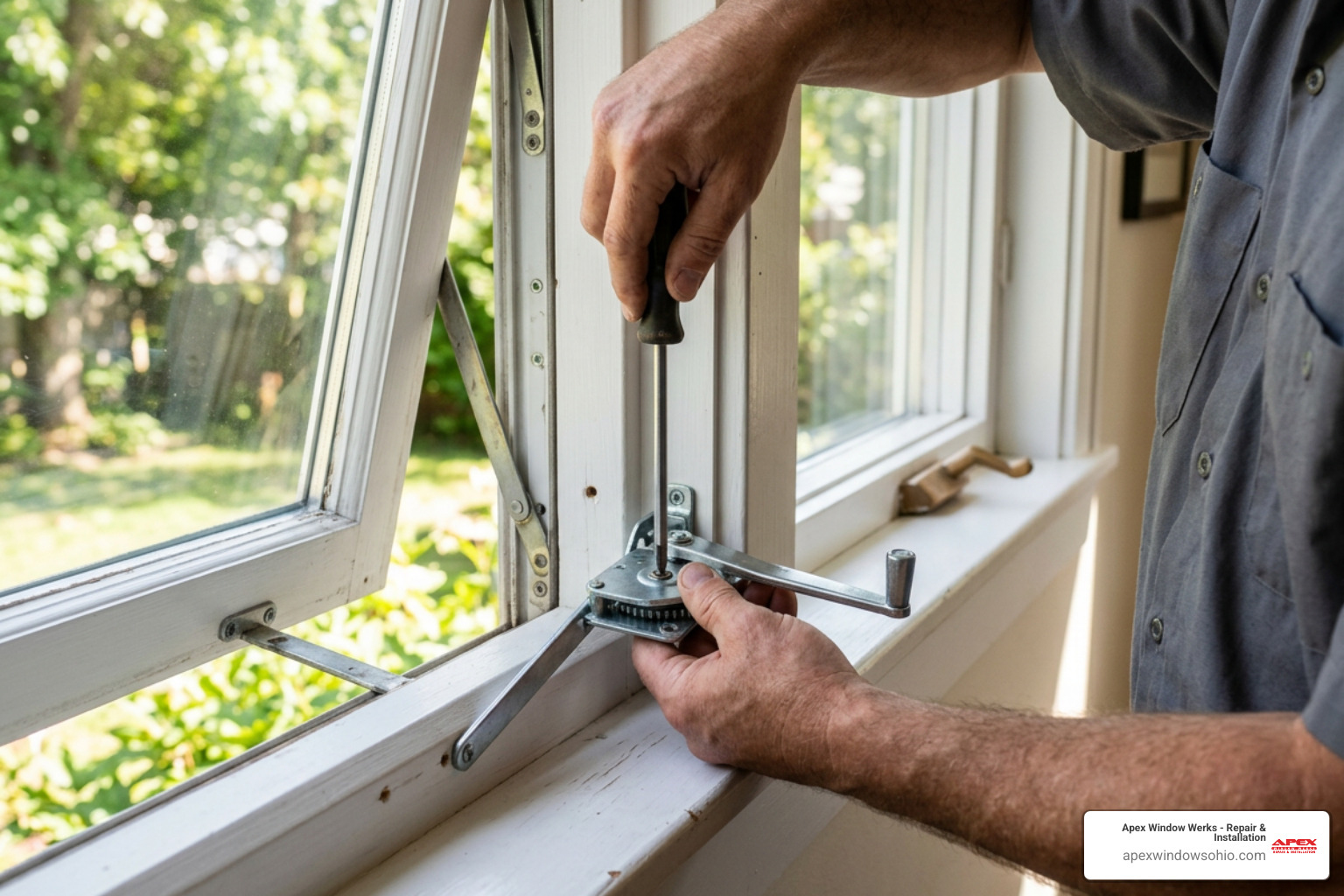
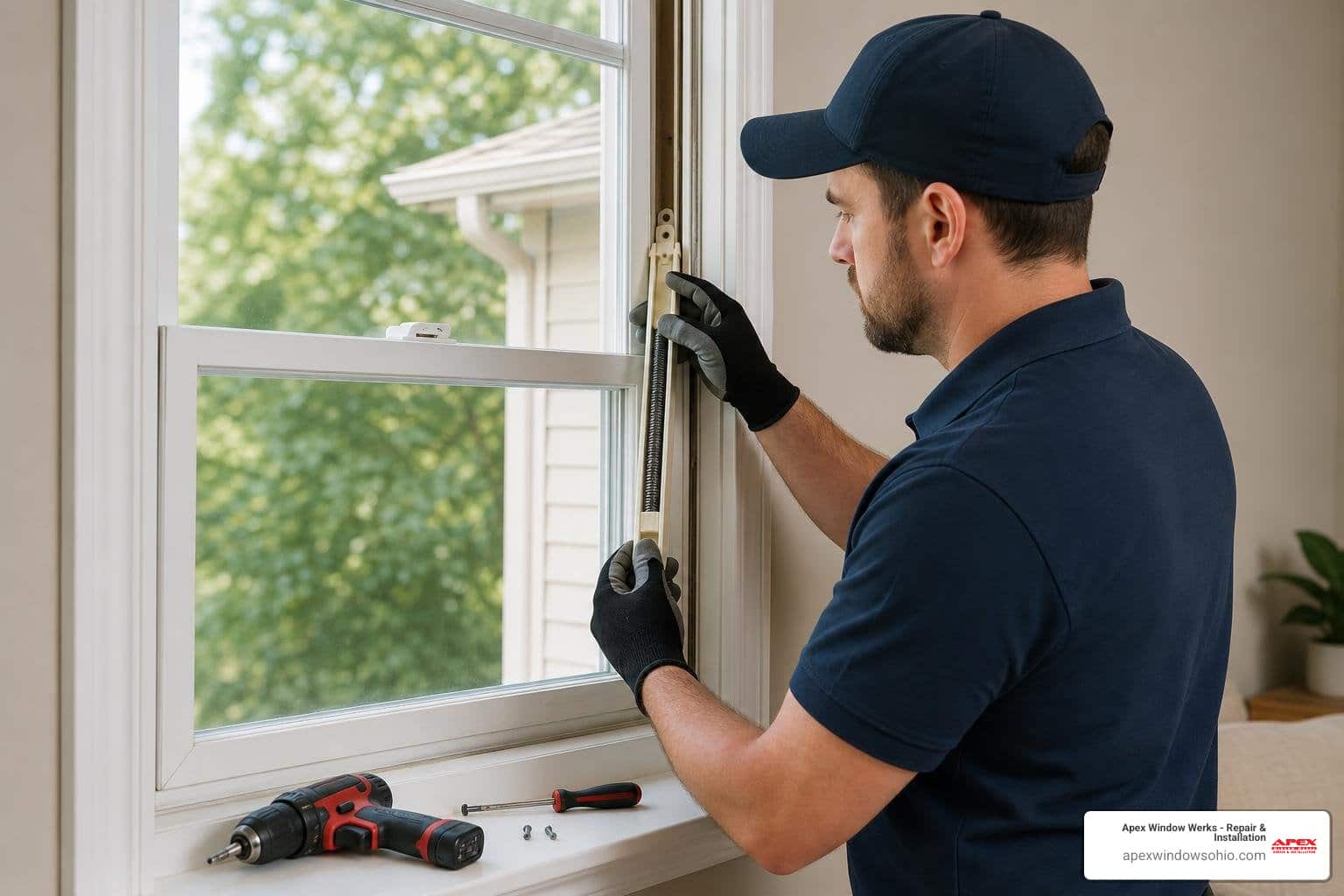
Replacing a worn operator gear mechanism is a practical DIY repair that takes about thirty to forty-five minutes per window. Follow these straightforward steps to safely complete the project.
Preparing Tools and Space for Casement Window Crank Replacement in Akron
Before starting work, gather all required tools and prepare your workspace:
- Flathead screwdriver
- Phillips screwdriver
- Small putty knife or trim lever
- Cordless drill driver with screwdriver bits
- Silicone-based lubricant
- Safety glasses
- Replacement operator kit and mounting screws
Clear decorative items off the window sill and open the sash partially so you can easily access the sash bracket and track underneath.
Removing the Old Mechanism and Aligning the Sash Bracket

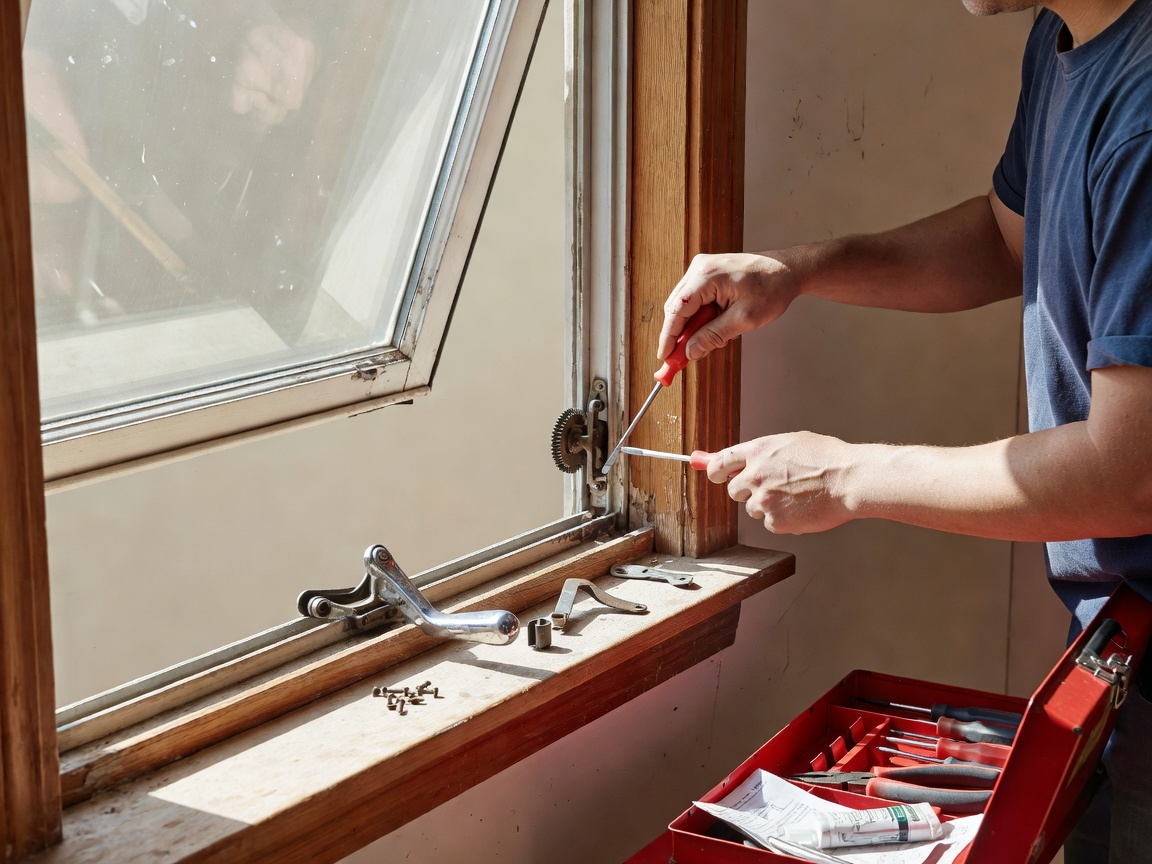
- Disconnect the Operator Arm: Push the window sash open slightly to relieve pressure on the mechanism. Slide the nylon roller or guide stud out of the track on the bottom of the sash. On some models, you must pop a metal retaining clip off the sash bracket stud using a flathead screwdriver.
- Remove the Crank Handle and Cover: Loosen the set screw on the base of the crank handle and slide the handle off the spindle. Carefully snap off the plastic operator cover or remove the wood trim screws holding the cover in place.
- Unfasten the Base Housing: Locate the mounting screws securing the operator gear housing to the window sill. Use a driver to back out all wood or sheet metal screws.
- Remove the Old Assembly: Lift the old operator body straight off the sill frame. Clean away built-up dust, wood shavings, and old grease from the mounting area using a stiff brush or rag.
For visual reference during teardown, watching helpful repair tutorials such as Watch How To Repair A Casement Window Crank Operator can walk you through tricky linkage clips.
Installing and Calibrating the New Operator Assembly
- Position the New Operator: Place the new operator base over the existing screw holes on the sill. Ensure the main linkage arm extends out toward the sash correctly.
- Secure the Mounting Screws: Thread the mounting screws into the frame by hand first to avoid cross-threading. Tighten them firmly using a screwdriver, applying approximately 20 to 25 inch-pounds of torque. Avoid over-tightening, which can strip screw holes in wood or vinyl frames.
- Attach the Linkage Arm: Guide the steel arm roller back into the sash track bracket. Re-attach any metal retaining clips securely.
- Attach Cover and Handle: Snap the protective housing cover over the base gear assembly. Slide your new crank handle onto the splined spindle and tighten the set screw firmly against the recessed flat edge of the spindle.
- Test Operation: Turn the handle slowly through its full motion. Ensure the sash glides smoothly from fully closed to a full 90-degree opening without binding.
If you are also working on top-hinged windows in your home, refer to our detailed guide on How to Handle an Awning Window Crank Replacement.
Preventive Maintenance and Lubrication Strategies in Lakewood and Solon
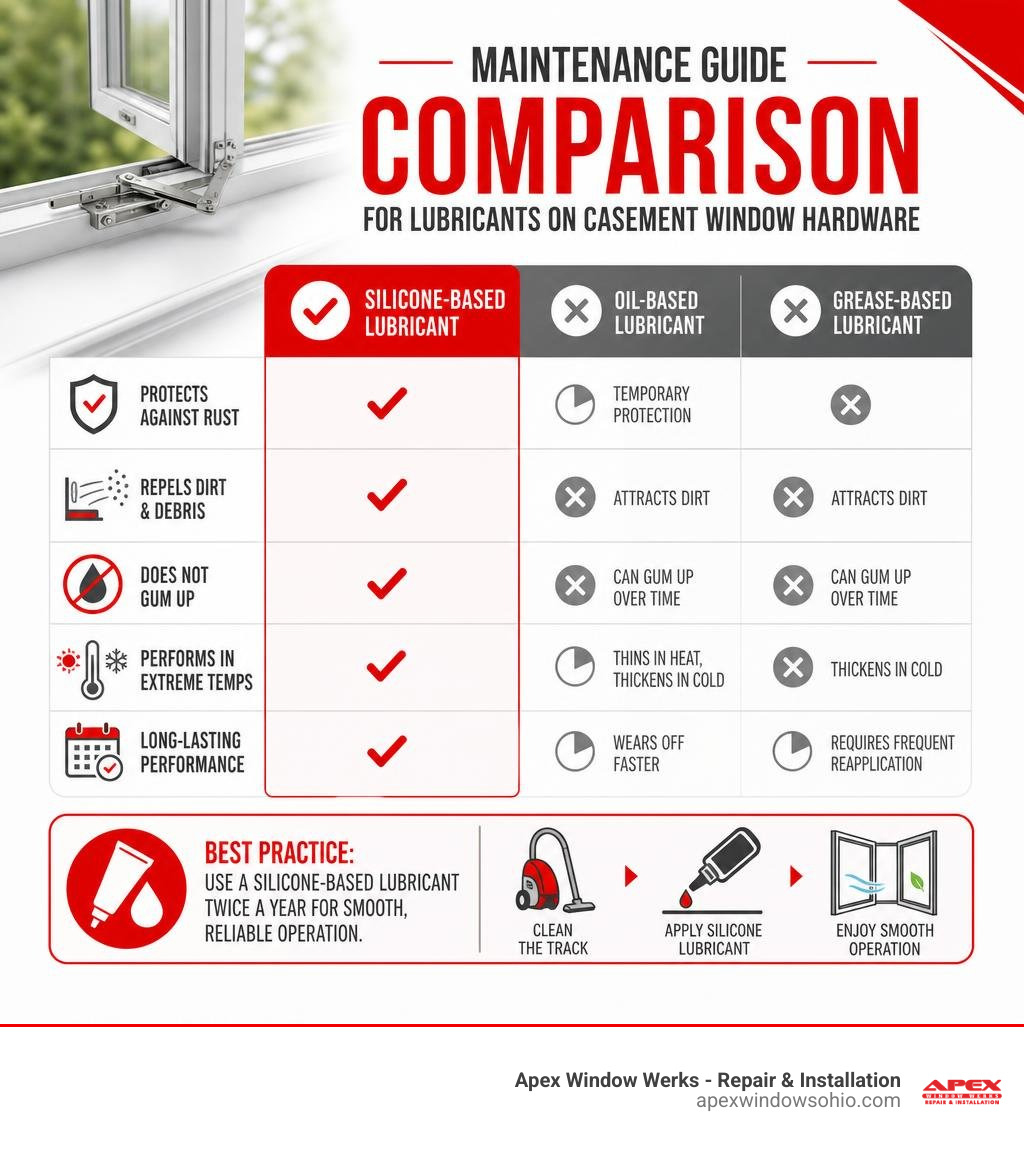
Routine care can extend the operational life of casement window cranks by up to ten additional years. Dust, outdoor grit, and dry hinges create friction that quickly strips metal gears inside the operator housing.
Follow these simple maintenance practices twice a year, especially in spring and autumn:
- Clean the Track Assembly: Vacuum dirt, leaves, and dead insects out of the lower hinge tracks using a narrow nozzle attachment. Wipe metal surfaces clean with a damp rag.
- Lubricate Moving Joints: Apply lithium grease or a dry silicone lubricant spray directly onto the worm gear, hinge rivets, and track arm rollers. Avoid petroleum jelly or heavy motor oil, which attract dust and create a sticky sludge.
- Check Hinge Screws: Tighten loose hinge fasteners using a manual screwdriver. Loose hinges allow the window sash to sag, placing extra weight on the crank arm.
- Inspect Weatherstripping Compression: Close and lock the window, then slide a thin piece of paper between the sash and outer frame. If the paper pulls out with zero resistance, adjust the hinge tension screws in small quarter-turn increments until the seal compresses evenly.
| Recommended Lubricants | Lubricants to Avoid |
|---|---|
| White Lithium Grease | WD-40 Solvent Spray |
| Dry Silicone Lubricant | Motor Oil or Axle Grease |
| PTFE Dry Film Spray | Petroleum Jelly |
Taking a few minutes to clean and lubricate window hardware in Lakewood, Solon, or Hudson prevents costly gear wear and keeps your windows operating smoothly for years.
Frequently Asked Questions About Window Crank Repair in Northeast Ohio
Why does my window crank spin without opening the sash in Cleveland homes?
When a casement window crank turns freely without moving the sash, the internal worm gear inside the operator casing is usually stripped, or the splines inside the handle socket have worn smooth. In some cases, the linkage arm roller has popped out of the lower sash track, or a metal retaining clip on the sash stud has snapped off. Inspect the handle socket first; if the handle teeth look intact, the operator housing assembly needs replacement.
How do I measure my window operator spline size?
To measure the operator spline size, remove the handle set screw and slide the handle off the drive shaft. Use a digital caliper or a fine ruler to measure the outer diameter of the tooth-covered spindle. Standard industry sizes include 5/16 inch, 11/32 inch, and 3/8 inch. You can also look for stamped casting numbers on the metal operator body to confirm manufacturer specs before purchasing replacement hardware like the 2-Pack Casement Window Crank Handle Replacement – Fits 3/8″ Spline Spindle, Aluminum, Easy Install .
Professional vs DIY Casement Window Crank Replacement in Twinsburg
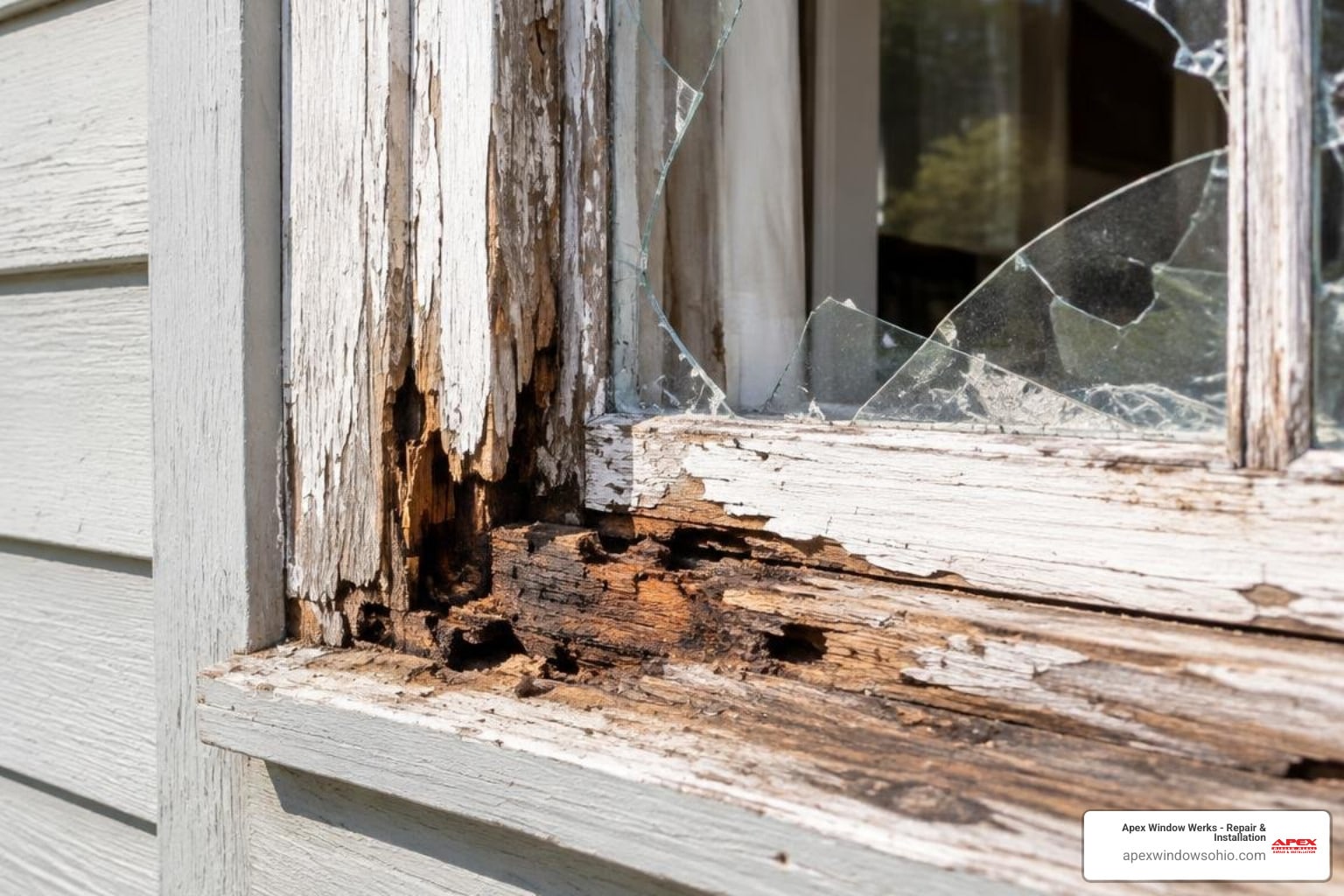
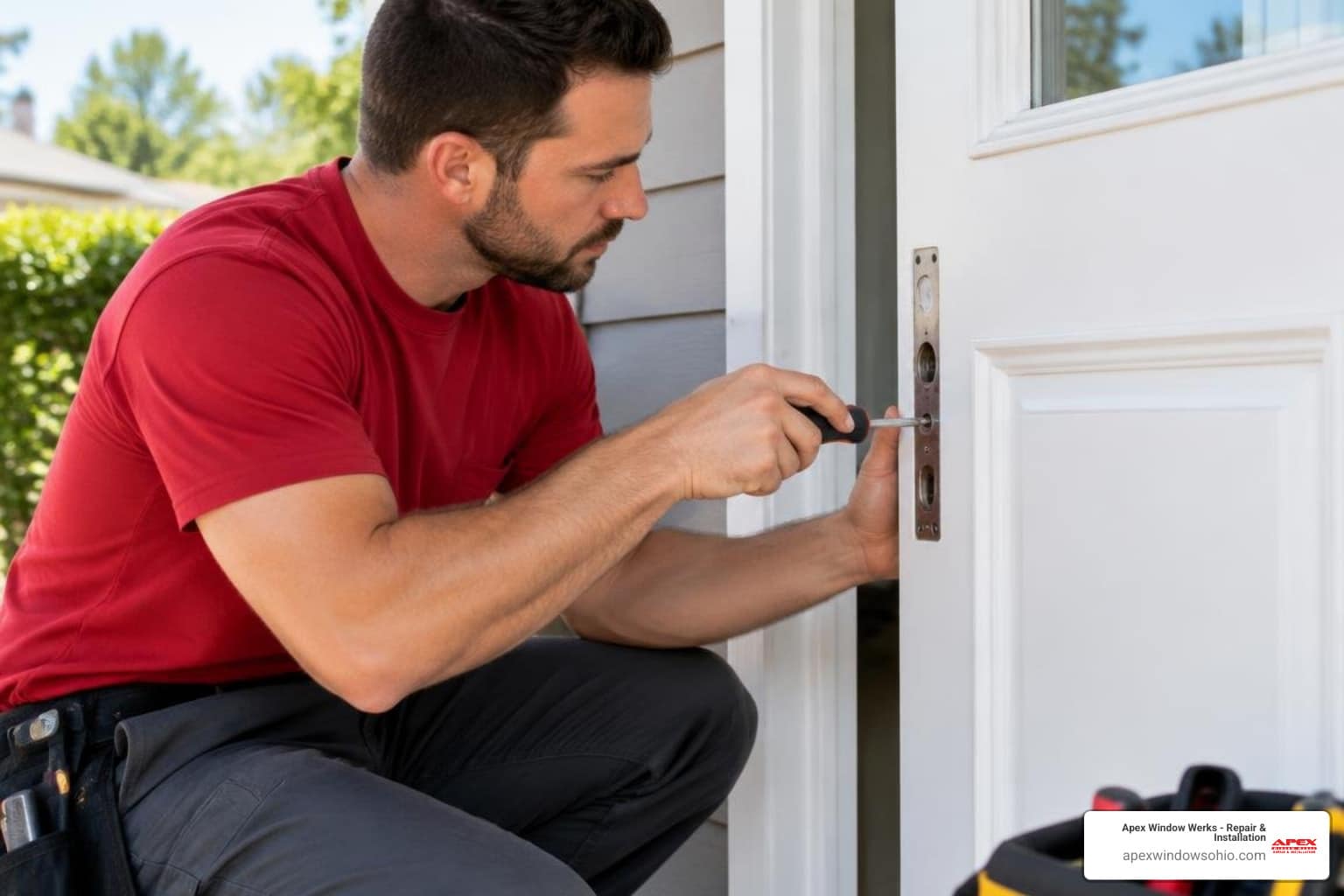
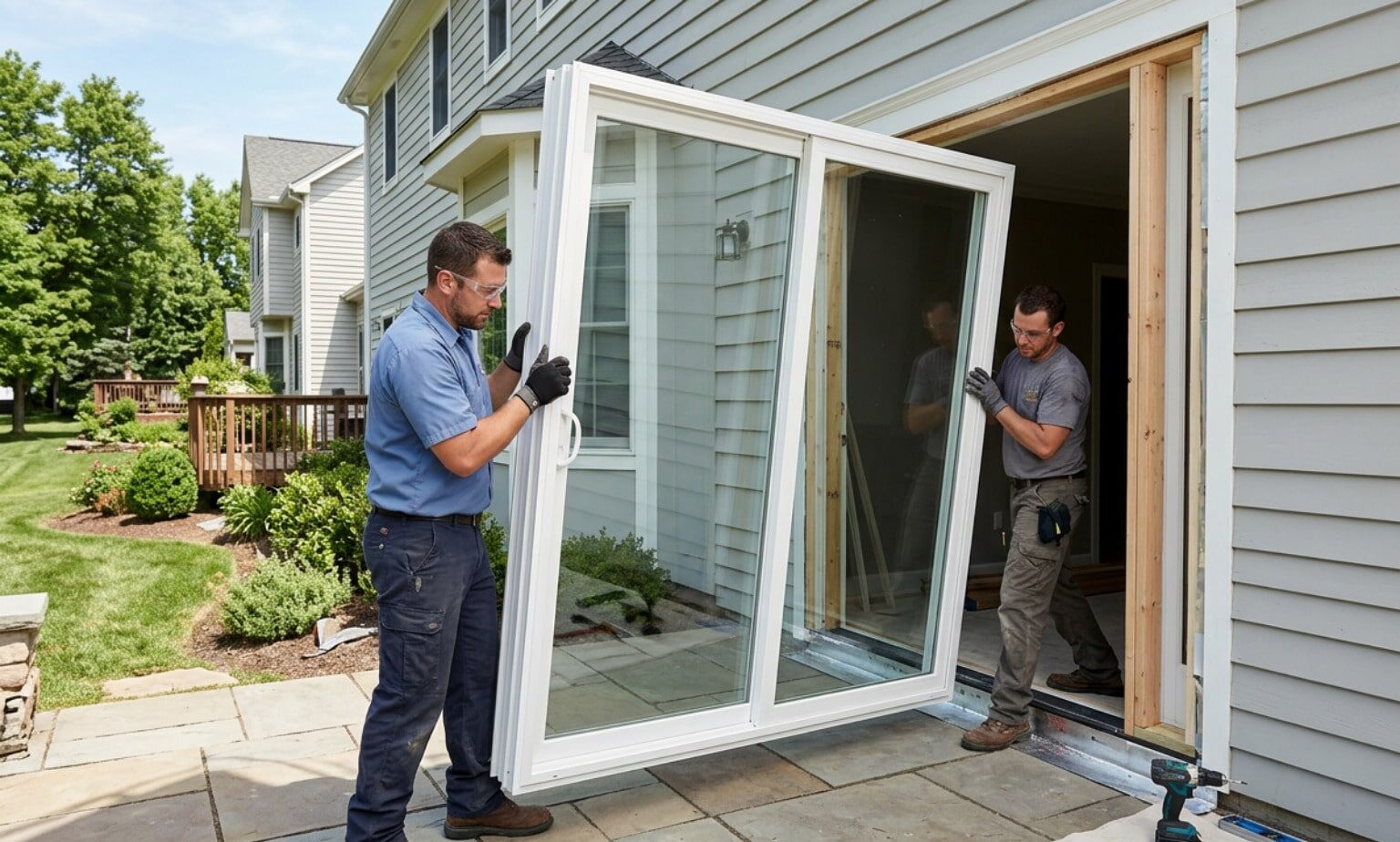
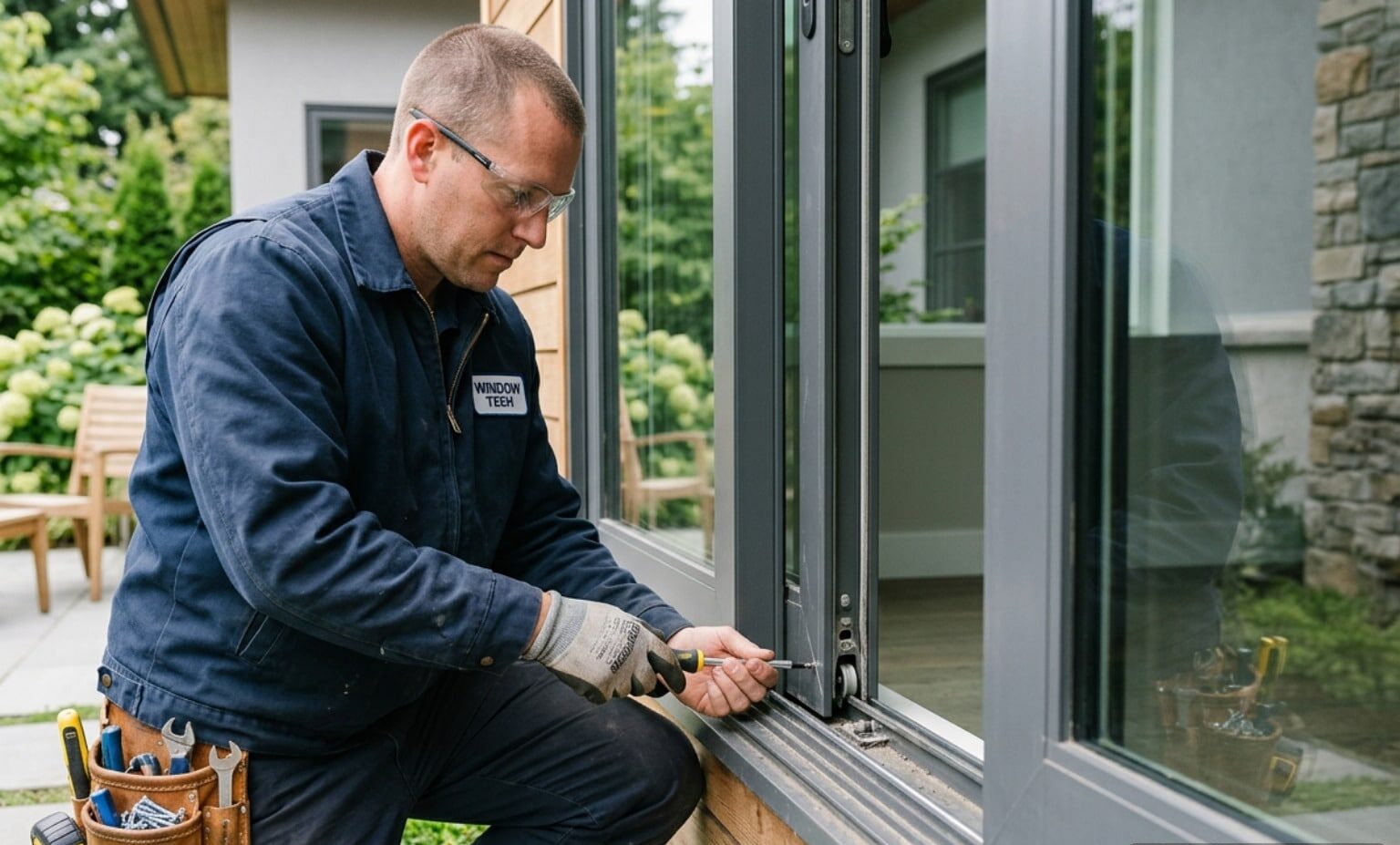
Homeowners in Twinsburg can easily complete standard handle or single-arm operator replacements using basic hand tools. However, complex multi-point locking systems, stripped mounting screw holes in rotted wood frames, or heavy double-pane sashes high on a second floor often require professional assistance. Choosing expert service ensures proper frame calibration, draft-free seal alignment, and correct hardware sizing without risk of damage to the window. Learn more about local service options by visiting Window Operator Replacement in Twinsburg.
How much does window sash repair or crank replacement cost in Akron, OH?
Costs for repairing window cranks or sashes vary depending on the window brand, the style of operator mechanism, and whether the surrounding wood frame requires repair. Standard handle upgrades are very affordable, while full dual-arm operator mechanisms with custom sill covers require a modest investment in hardware and labor. Choosing targeted hardware replacement over complete window replacement saves homeowners significant money while completely restoring smooth window function.
Conclusion: Reliable Window Repair Services in Northeast Ohio
A broken or sticking casement window crank does not mean you need to replace your entire window unit. By carefully measuring spindle sizes, identifying casting numbers, and selecting matching operator mechanisms, you can restore smooth ventilation and energy-efficient weather seals in your home.
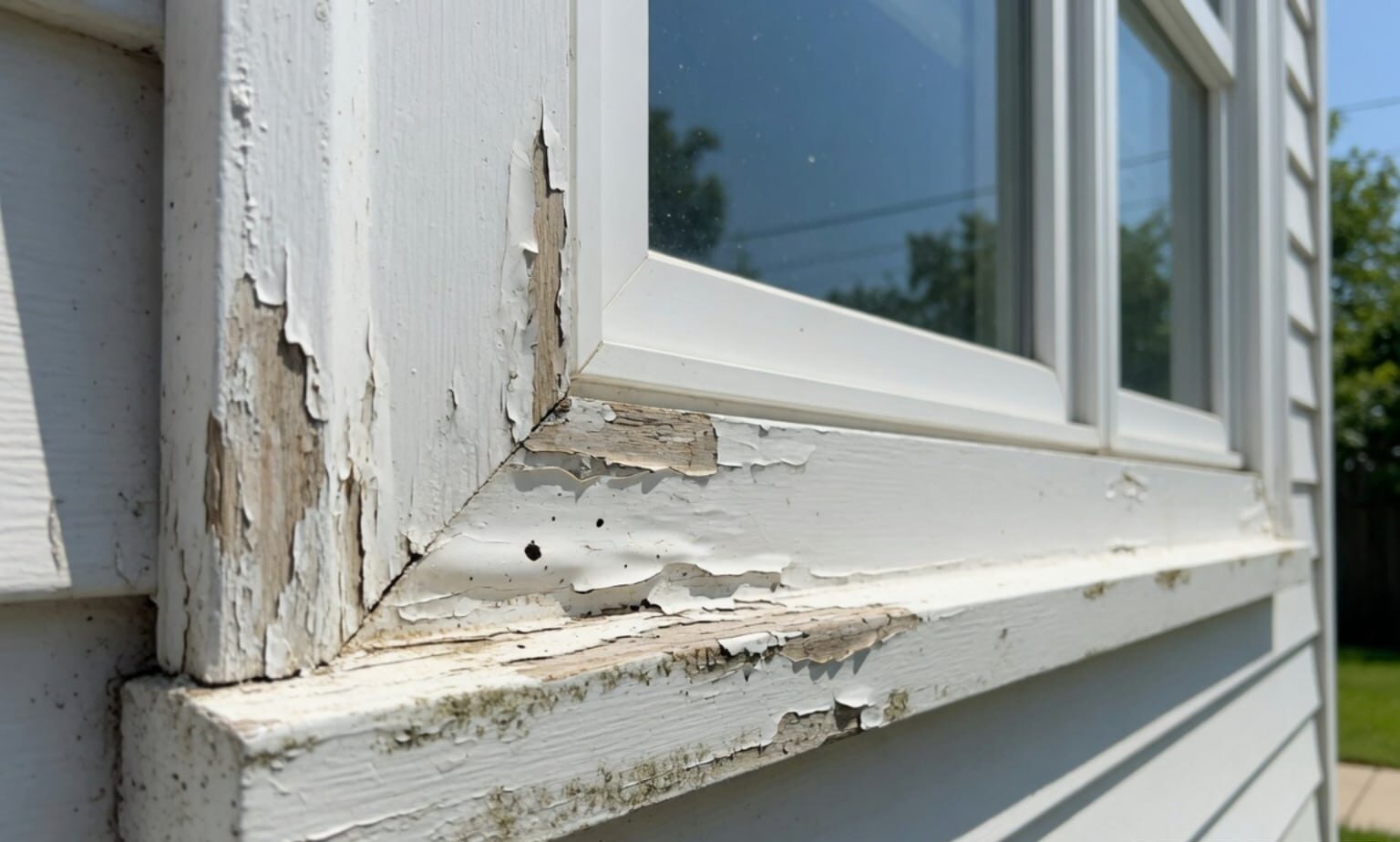
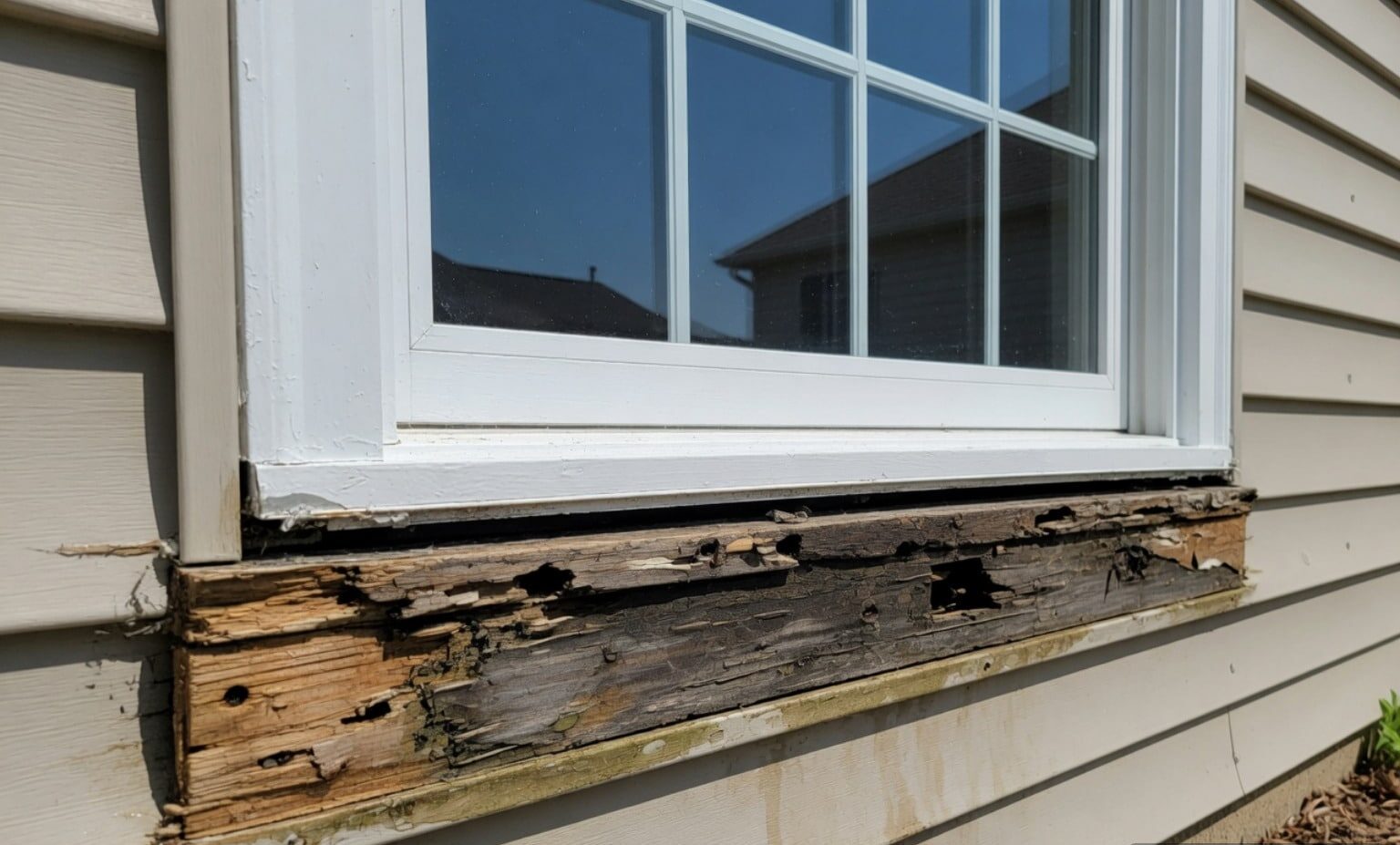
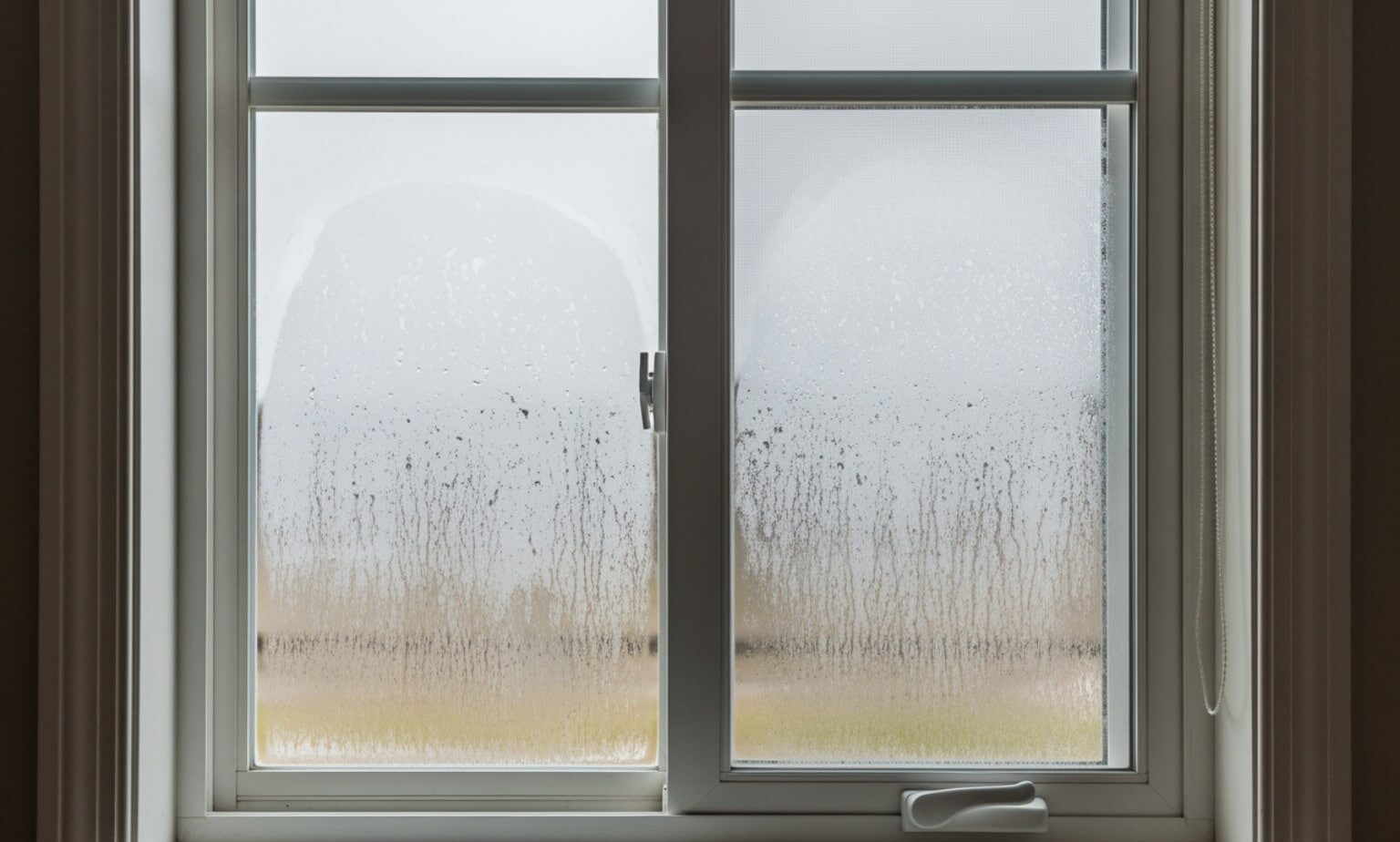
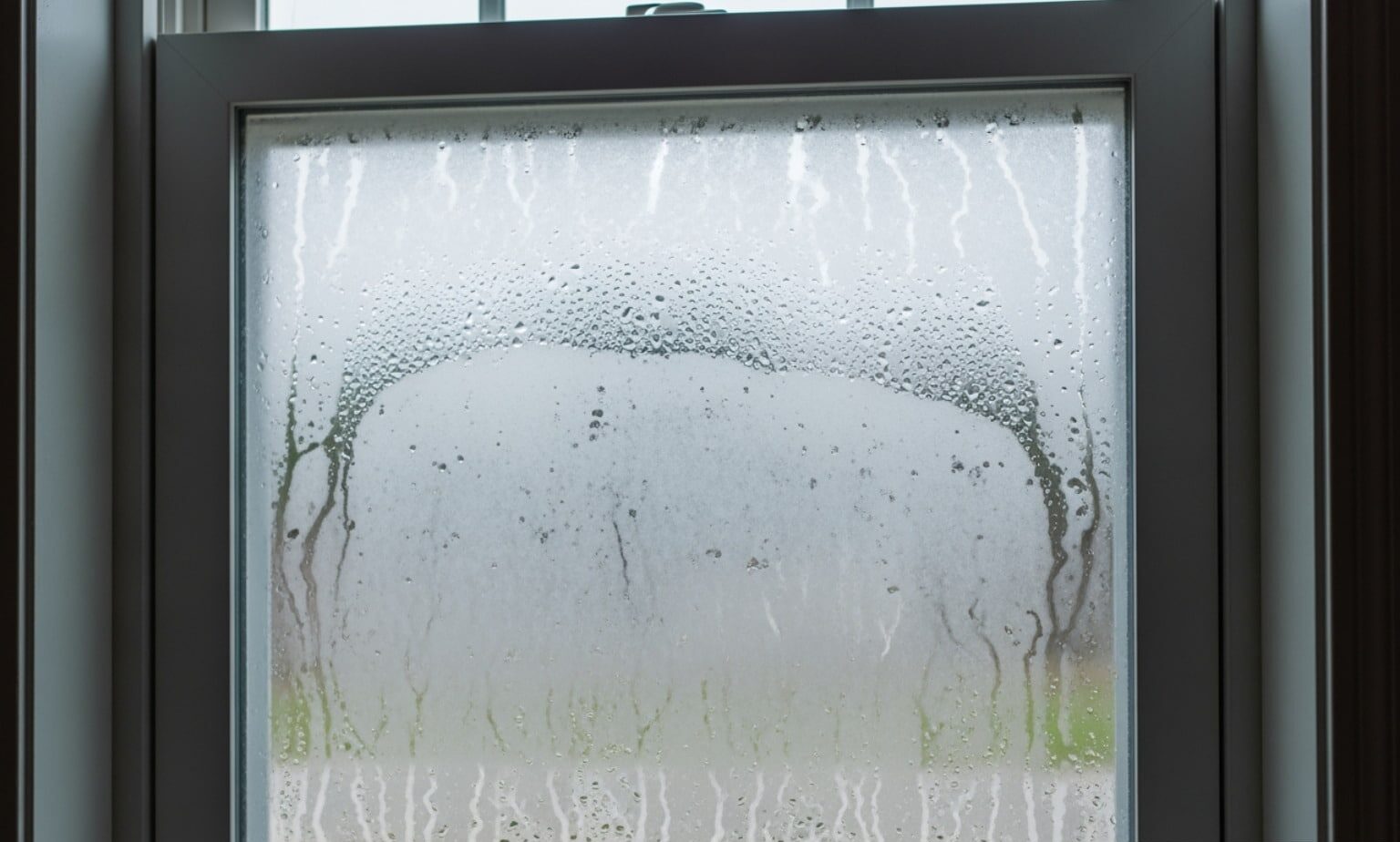
When hardware wear is combined with frame warping, rotted wood sills, or foggy double-pane glass, our experienced team at Apex Window Werks – Repair & Installation is ready to help. We deliver fast, reliable window hardware repairs, sash restorations, and replacement services across Cleveland, Akron, Medina, Strongsville, and surrounding Northeast Ohio communities.
Explore our full range of professional glass and hardware solutions through Apex Window Werks Replacement Services or contact us today to schedule your home service consultation!