

How to Fix Glass Scratches Without Losing Your Mind
What You Need to Know Before You Fix Glass Scratches in Cleveland and Akron
The good news if you want to fix glass scratches: many light surface scratches can be handled at home with simple tools and a little patience.
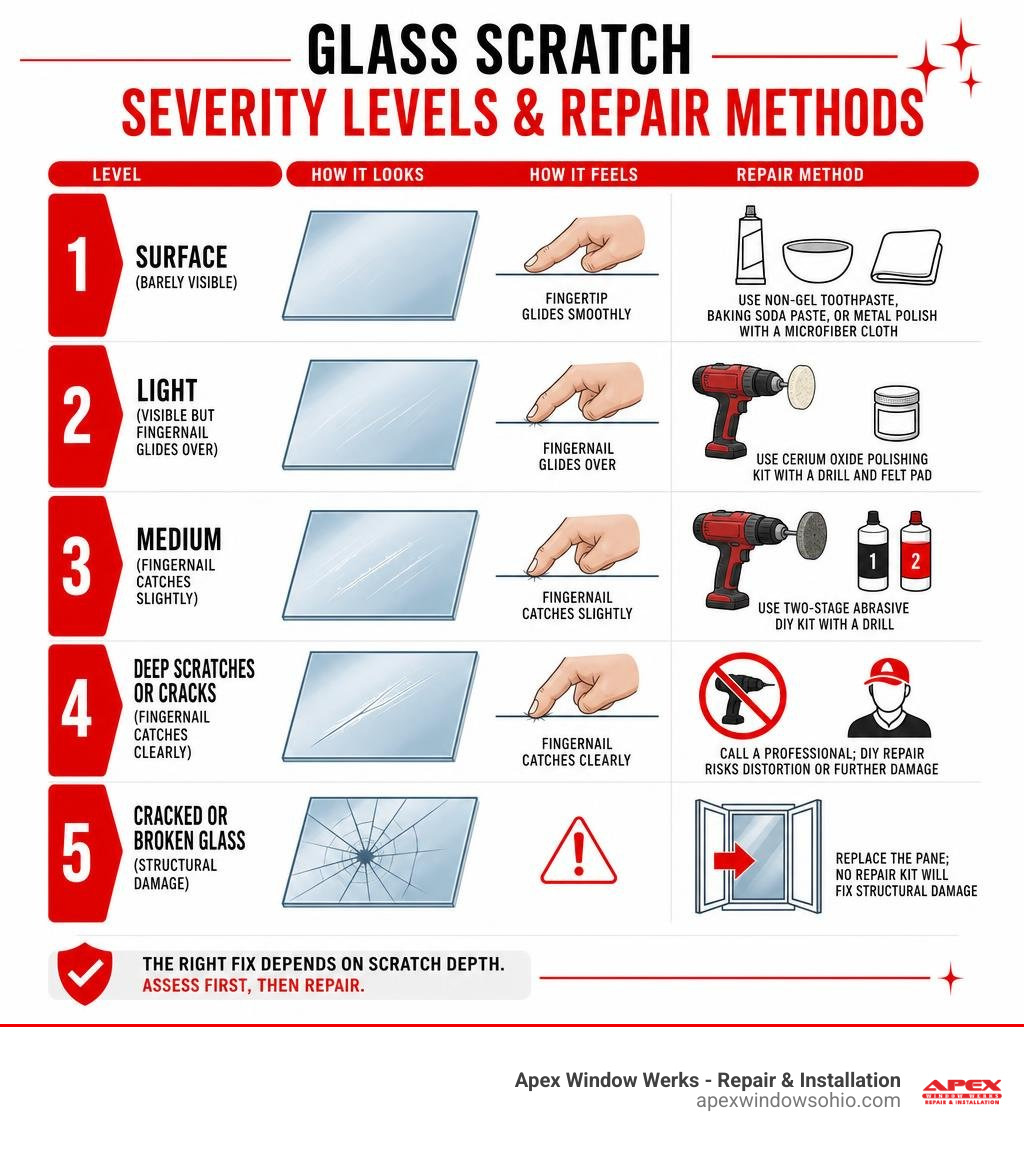
Here’s a quick overview of your options based on scratch depth:
- Surface scratches (barely visible) – Use non-gel toothpaste, baking soda paste, or Brasso with a microfiber cloth
- Light scratches (visible but fingernail glides over) – Use a cerium oxide polishing kit with a drill and felt pad
- Medium scratches (fingernail catches slightly) – Use a two-stage abrasive DIY kit with a drill
- Deep scratches or cracks (fingernail catches clearly) – Call a professional; DIY repair risks distortion or further damage
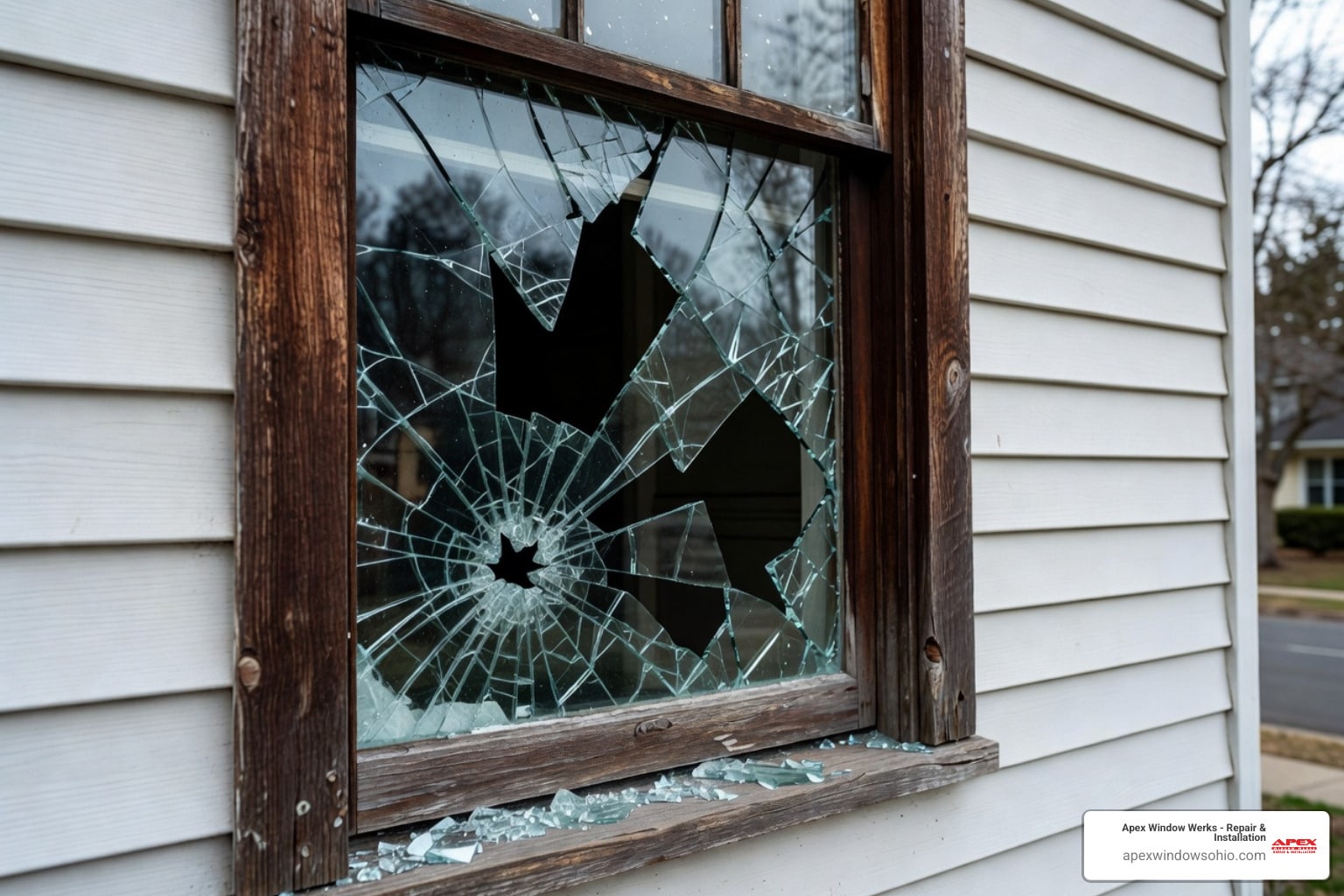
- Cracked or broken glass – Replace the pane; no repair kit will fix structural damage
Most homeowners in the Cleveland and Akron area deal with scratched windows from road debris, windshield wipers, or everyday wear. The right fix depends almost entirely on how deep the scratch is — and knowing that before you start saves you time, money, and frustration.
I’m Nataly Godes, General Manager at Apex Window Werks, and over the years I’ve helped countless Ohio homeowners figure out when a simple DIY fix is enough to fix glass scratches and when it’s time to call in a pro. In this guide, I’ll walk you through every option clearly so you can make the right call for your home.
How to Assess Damage Before You Fix Glass Scratches in Cleveland and Akron
Before you run to your pantry or order a professional polishing kit, you must determine exactly what kind of damage you are dealing with. Treating a deep structural crack as a simple surface blemish is a recipe for a shattered window pane.
To assess the damage, clean the glass surface thoroughly with a high-quality glass cleaner and a clean microfiber cloth. Removing all dirt, dust, and grime ensures you do not accidentally grind loose particles deeper into the glass during your assessment or subsequent repair.

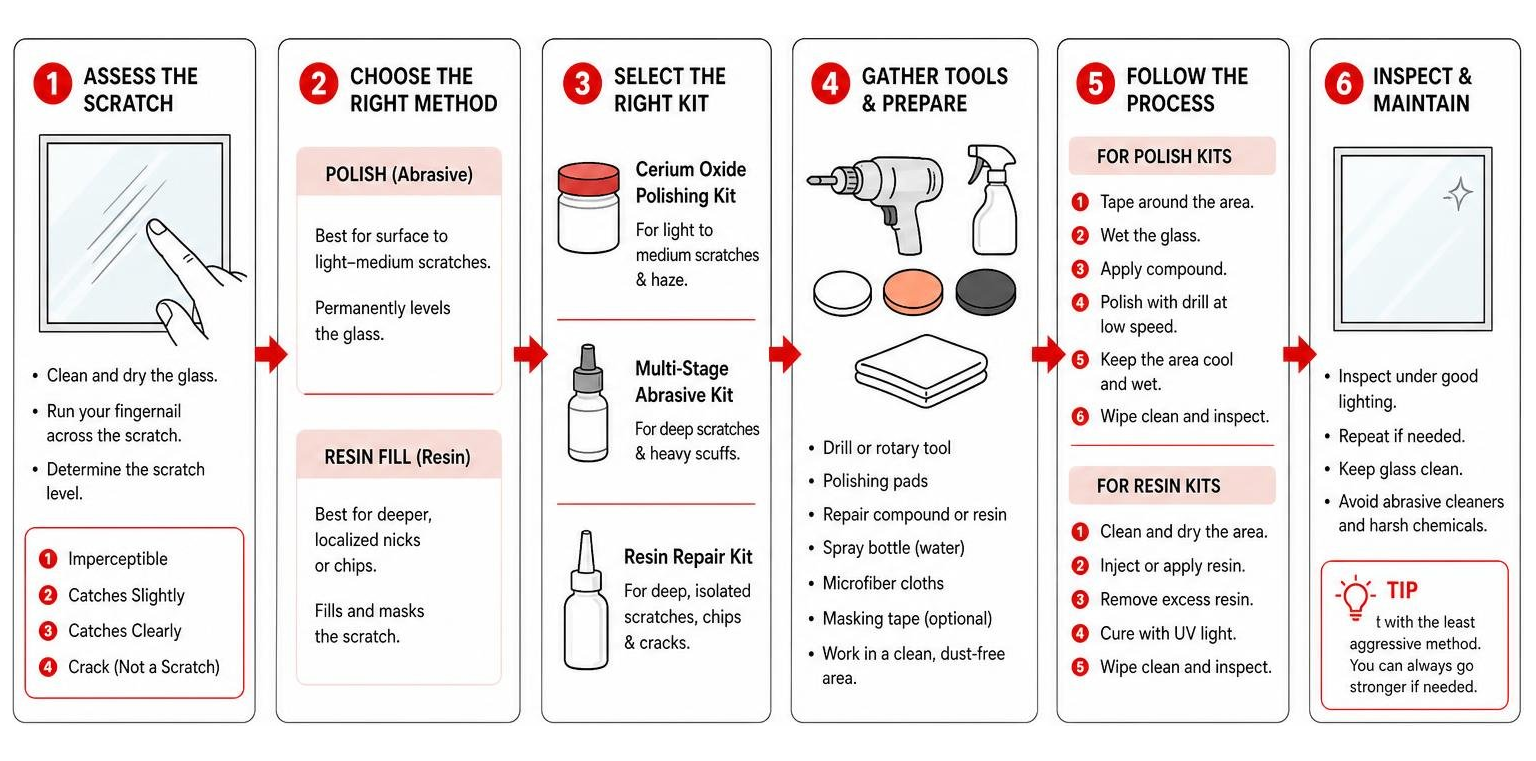
Once the glass is clean and dry, perform the fingernail test. Gently run your fingernail across the scratched area, keeping it perpendicular to the direction of the scratch.
- The scratch is imperceptible to your nail – If your fingernail glides smoothly over the mark without catching at all, you have a superficial surface scratch. These are the easiest to resolve and can usually be buffed out with household items.
- The scratch catches your nail slightly – If you feel a tiny bump or catch but your nail does not sink deep into a groove, you are dealing with a light to medium scratch. This level of damage requires dedicated abrasive polishing compounds, such as cerium oxide, to level the surrounding glass.
- The scratch clearly catches your nail or feels like a deep ridge – If your nail drops into a distinct groove, the scratch is deep. Attempting to buff this out at home with heavy abrasives will remove too much glass material, creating a noticeable optical distortion that acts like a lens, warping your view.
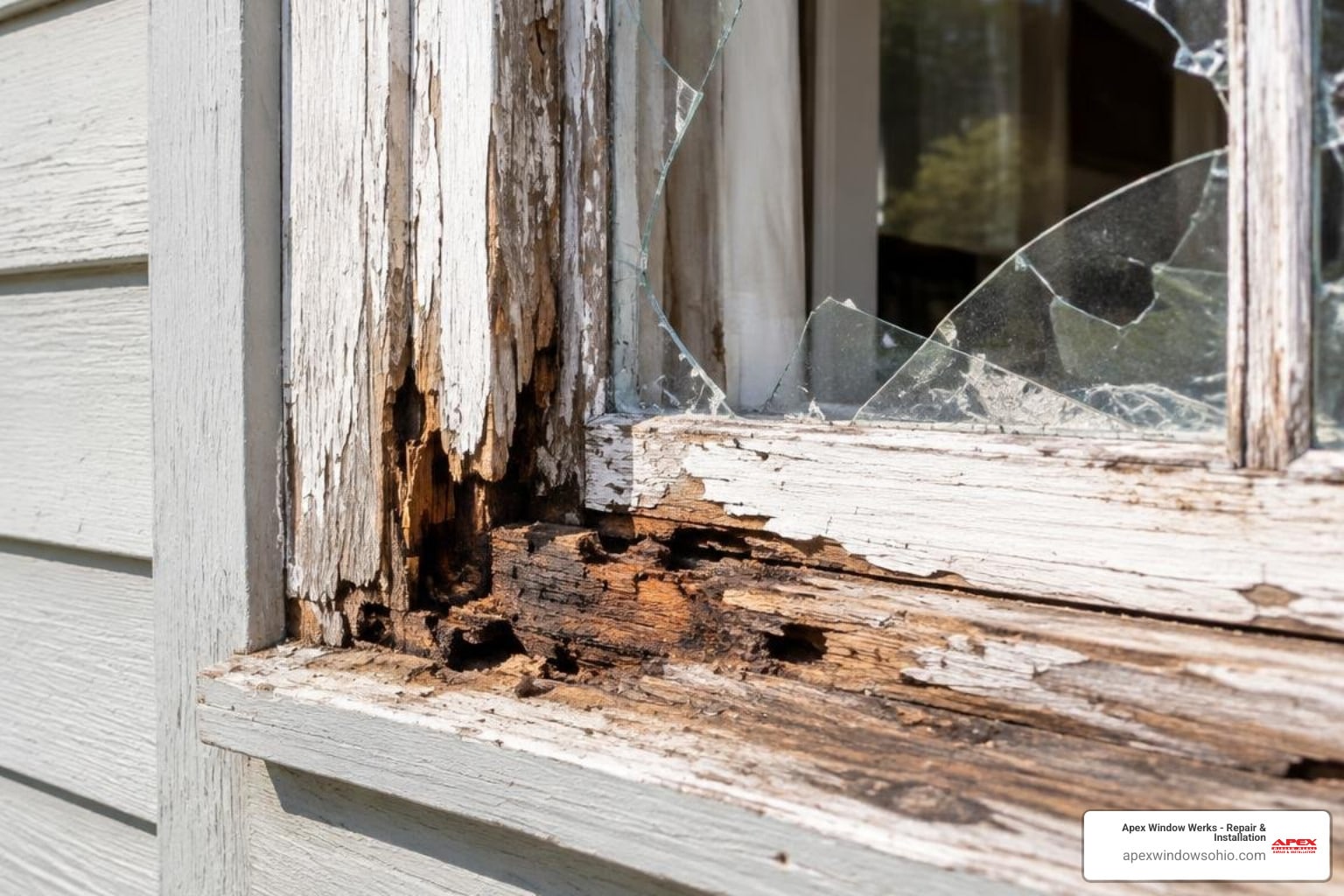
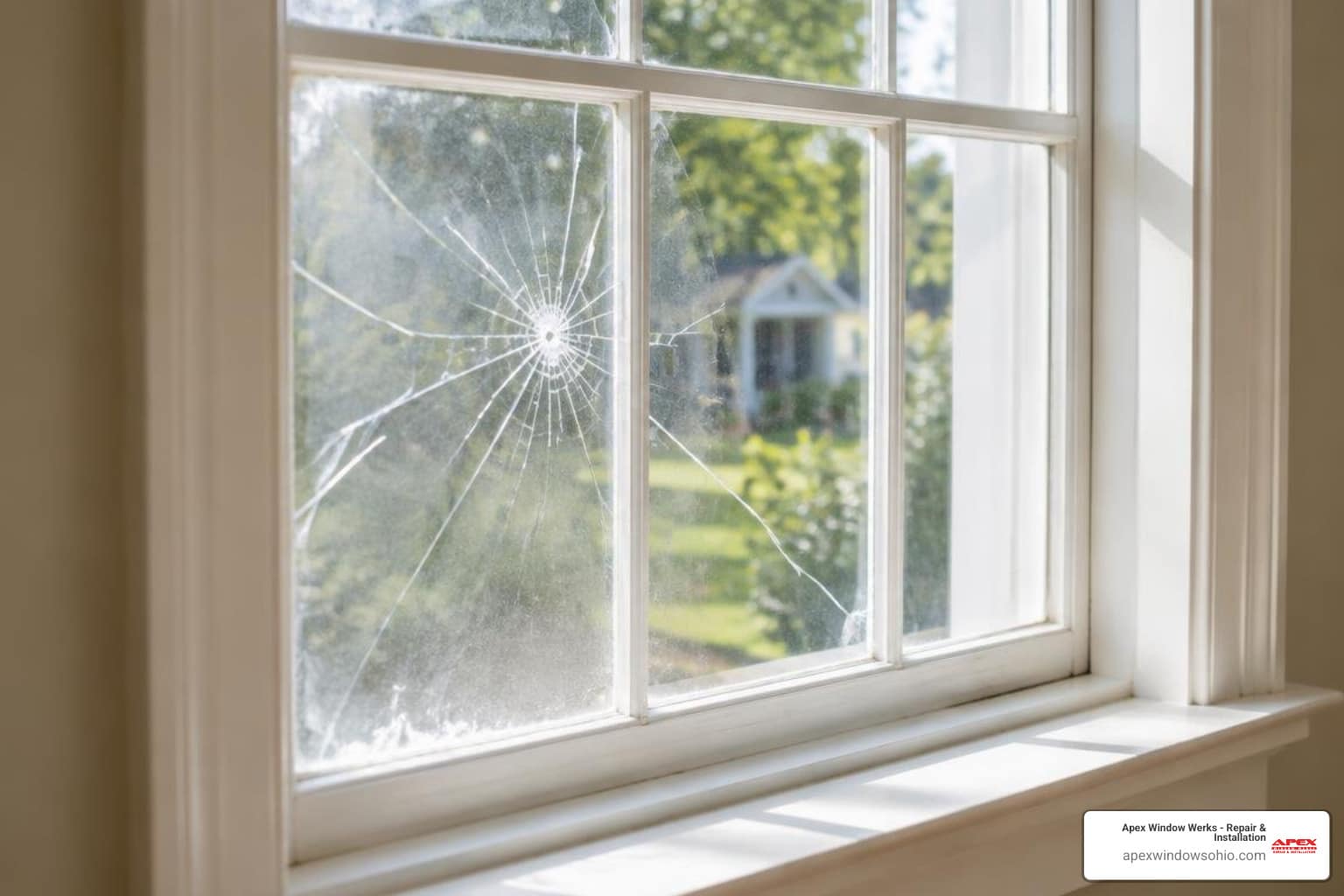
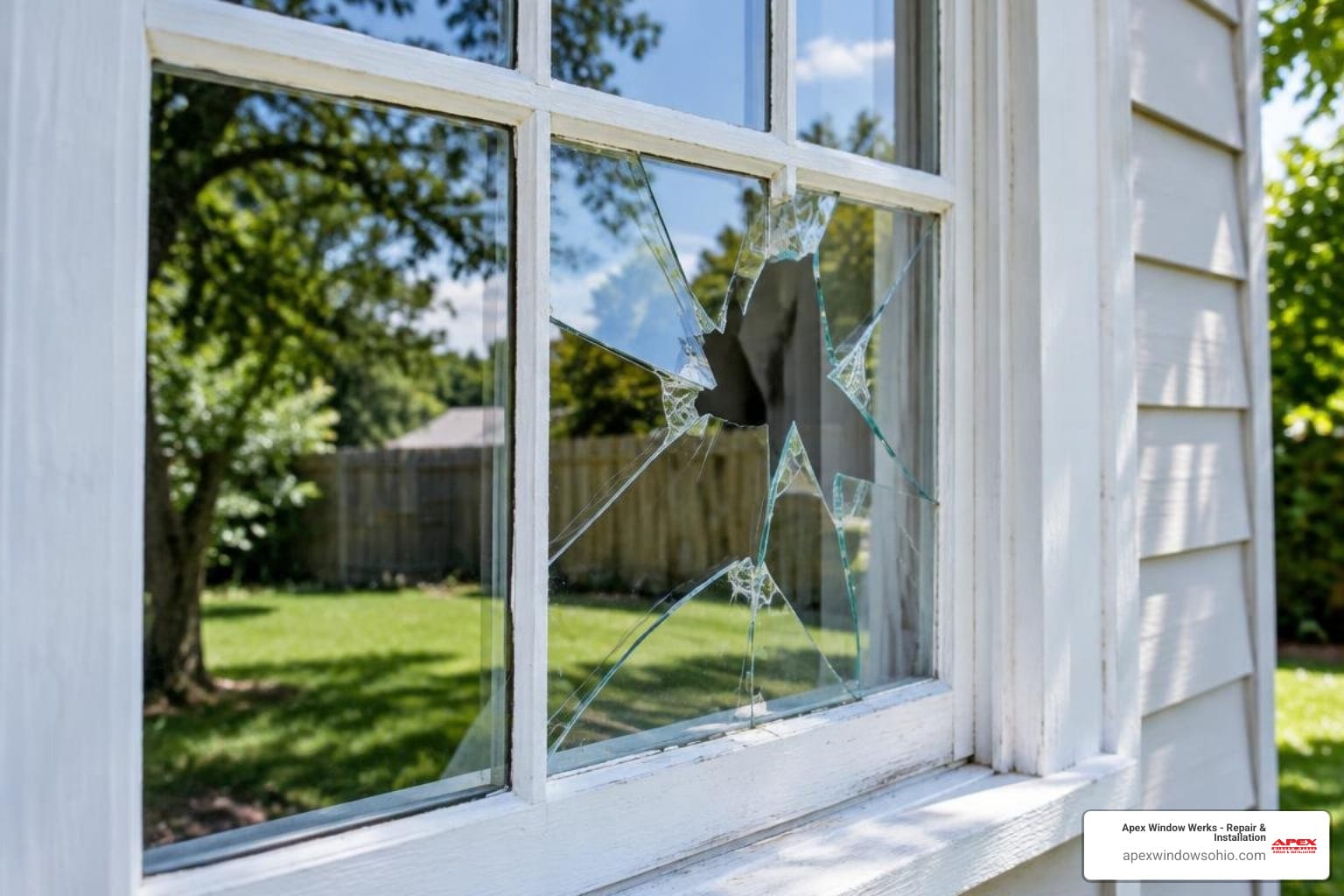
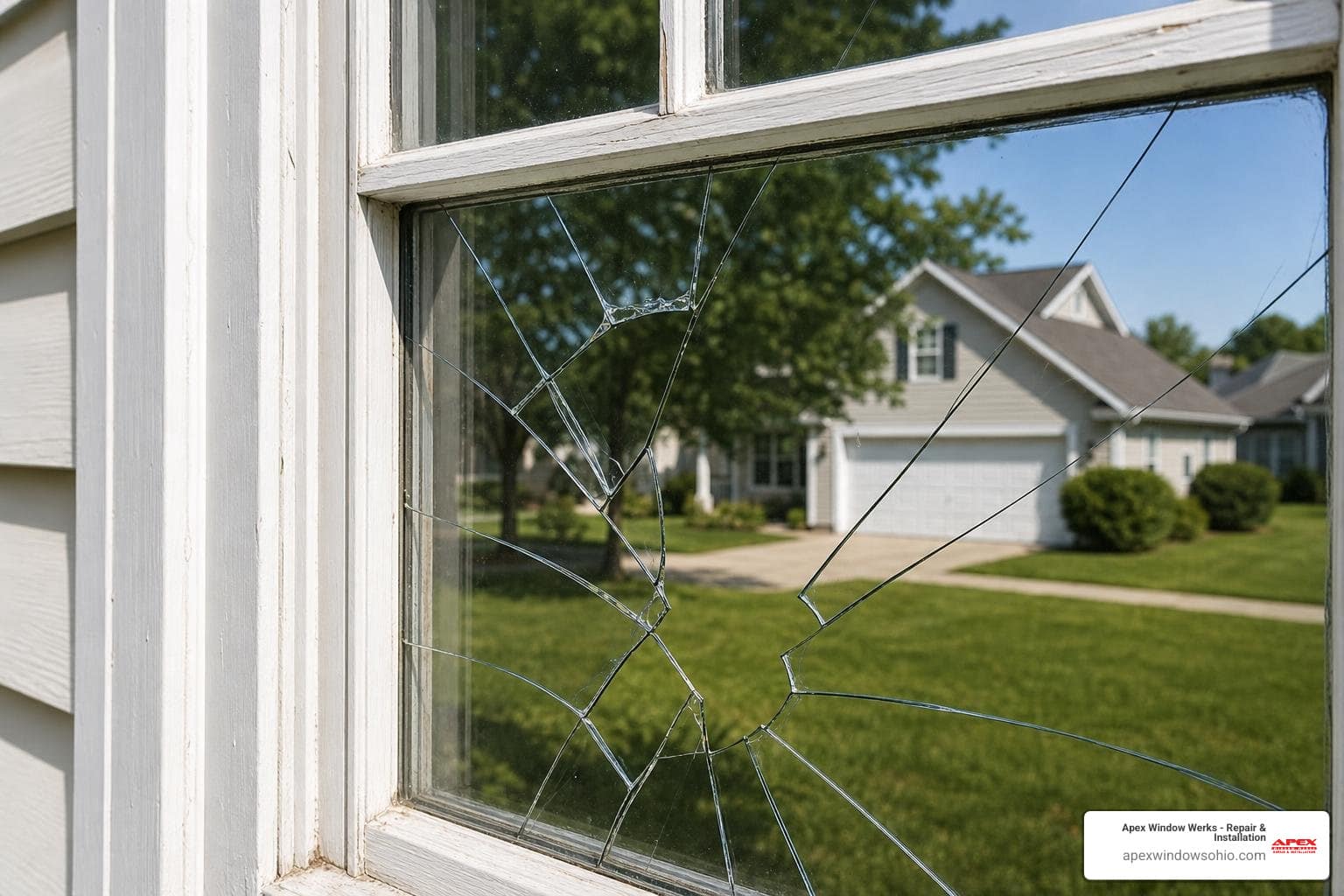
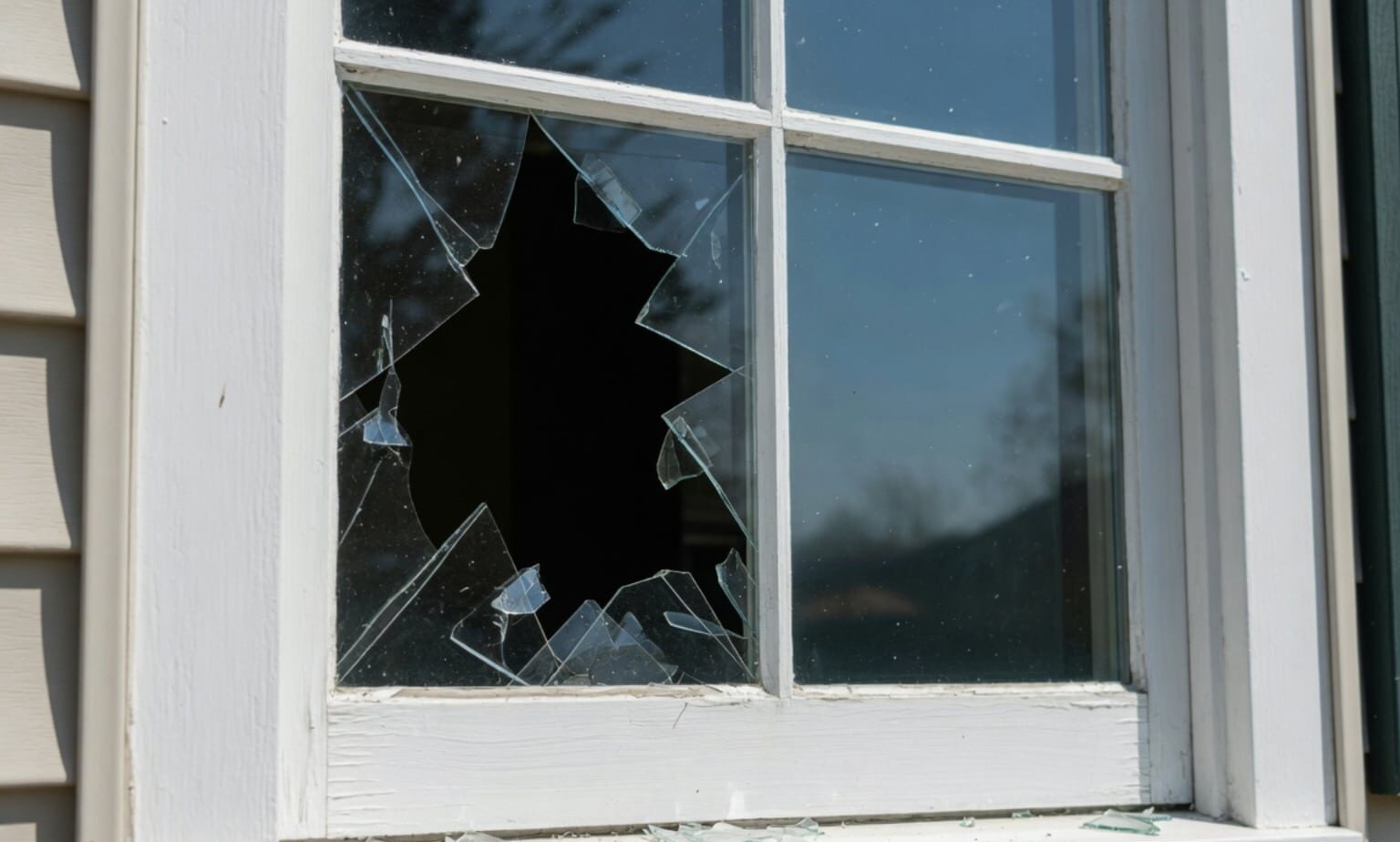
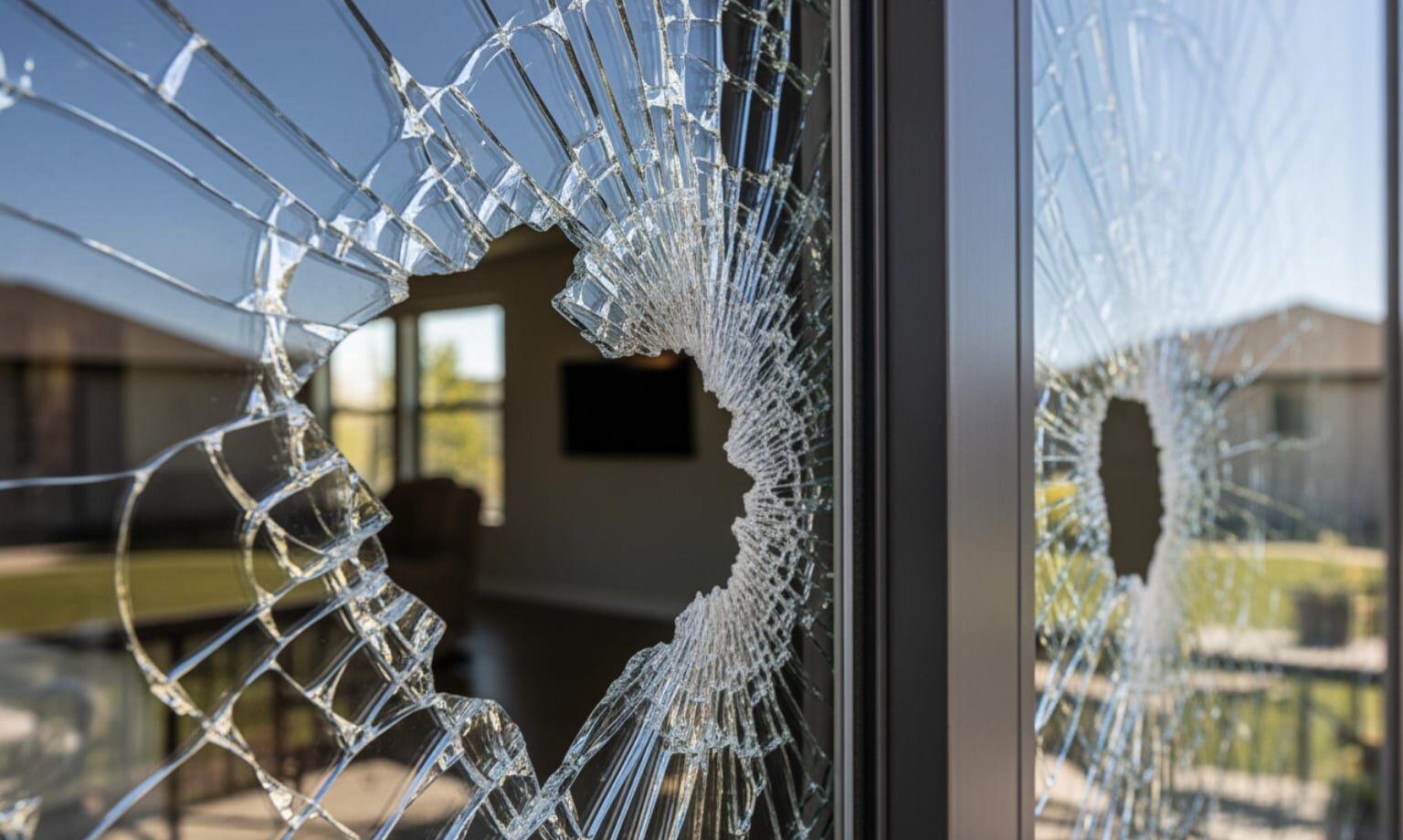
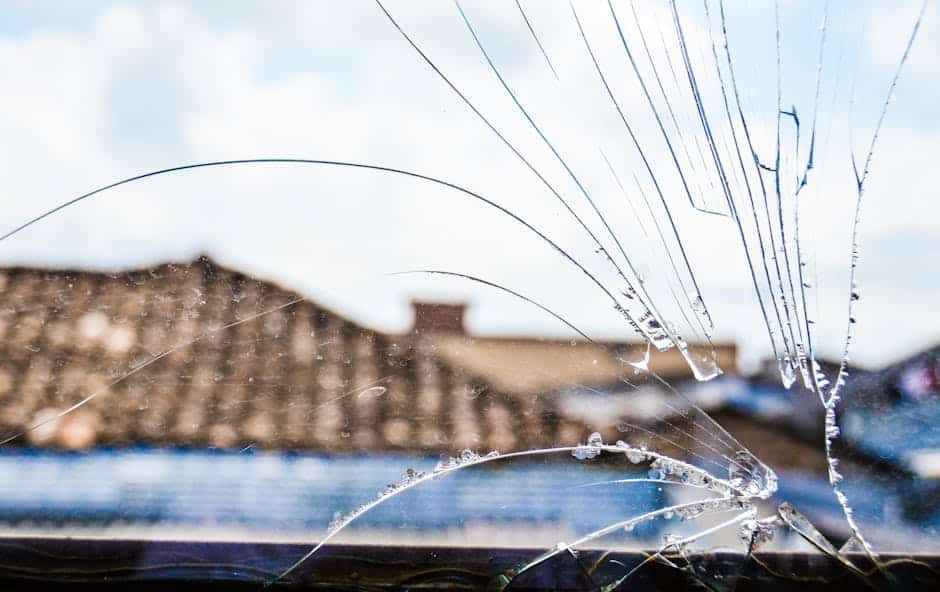
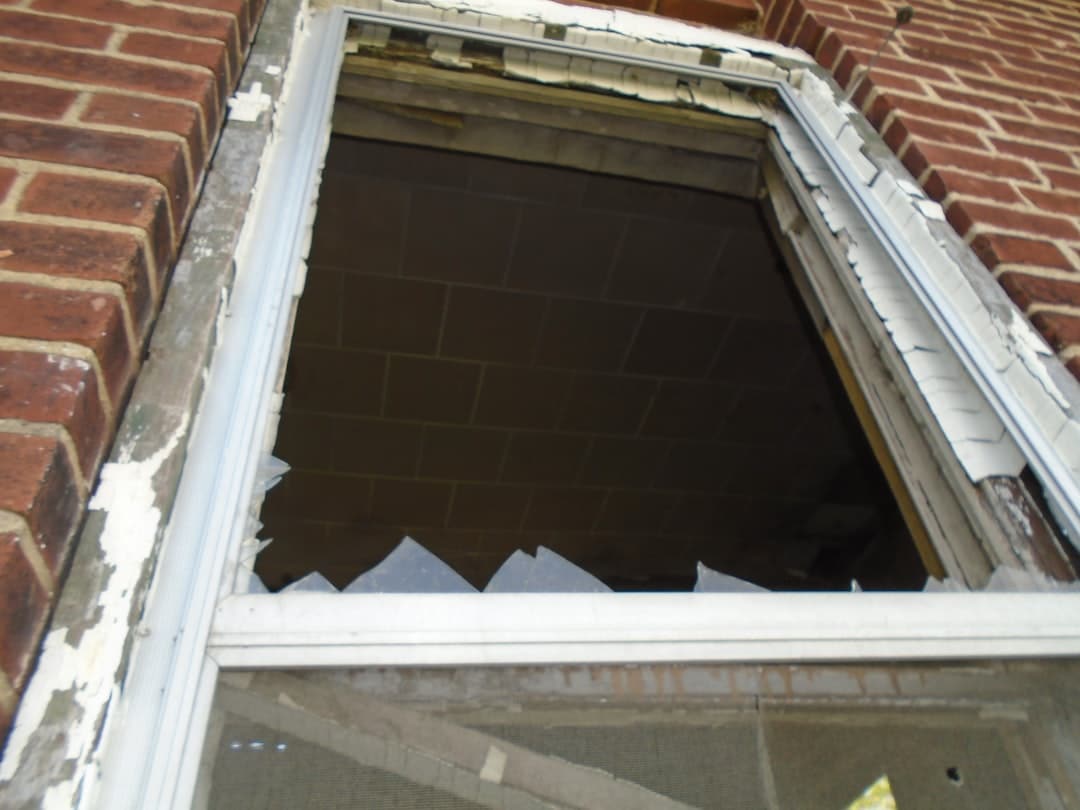
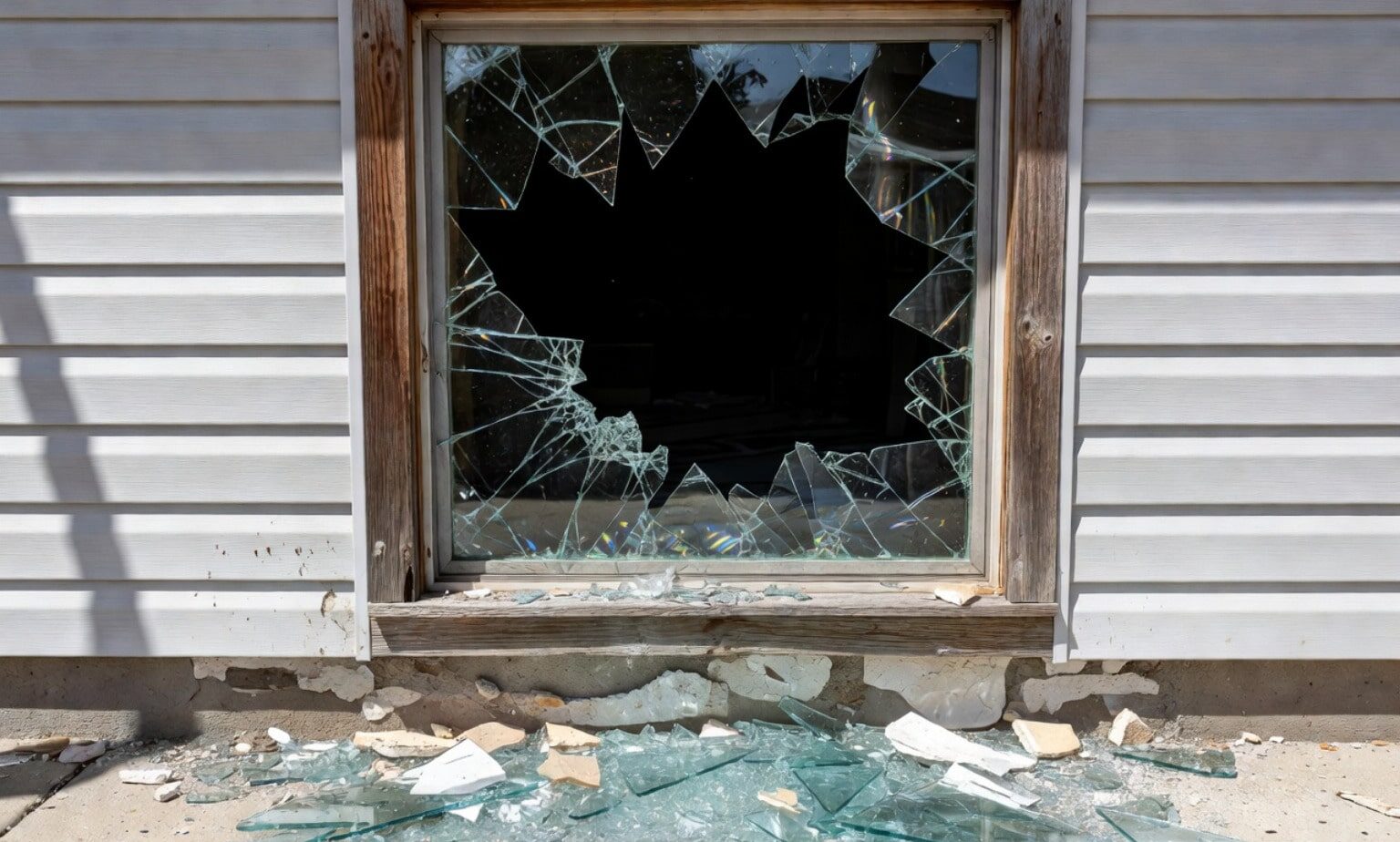
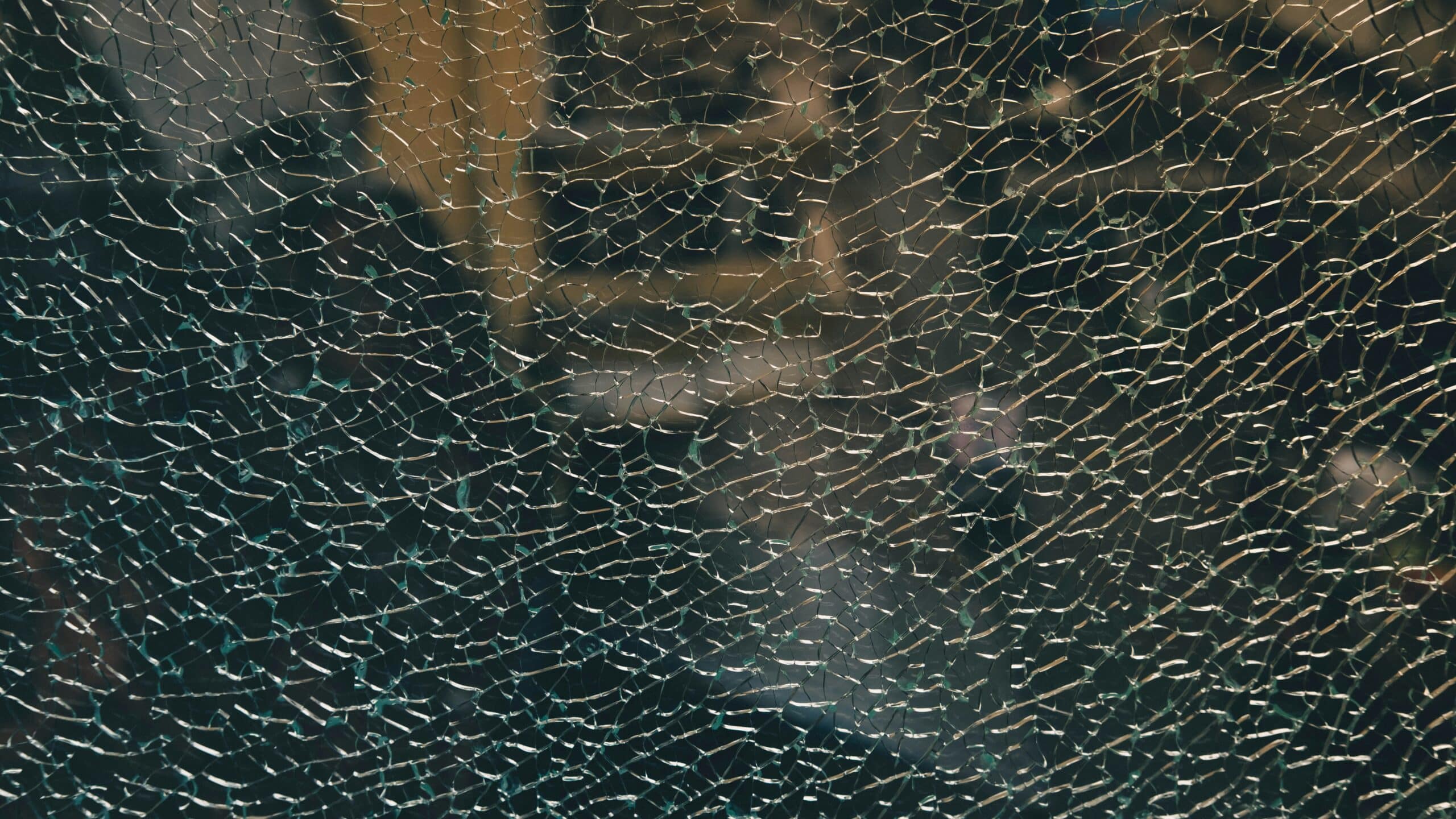
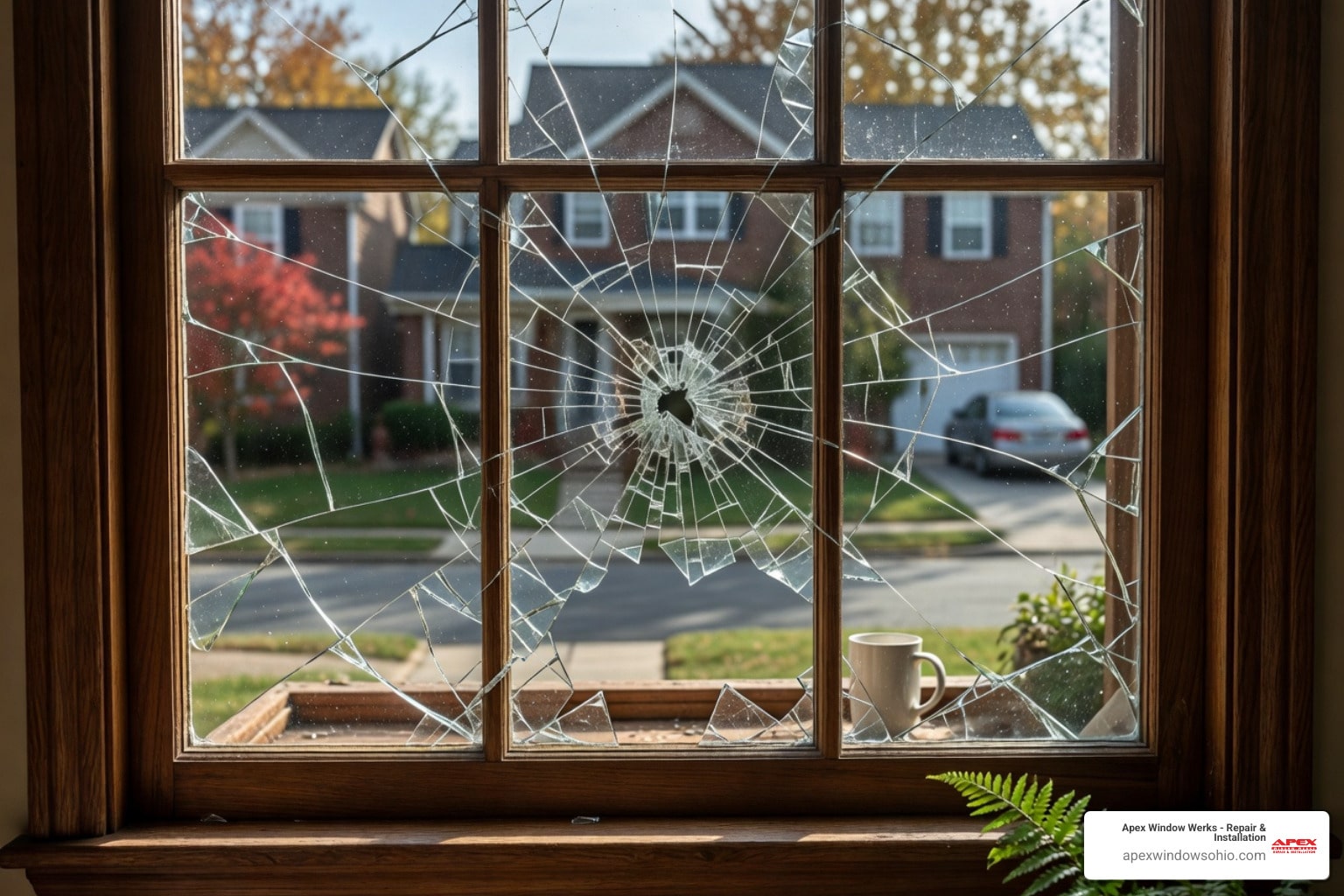
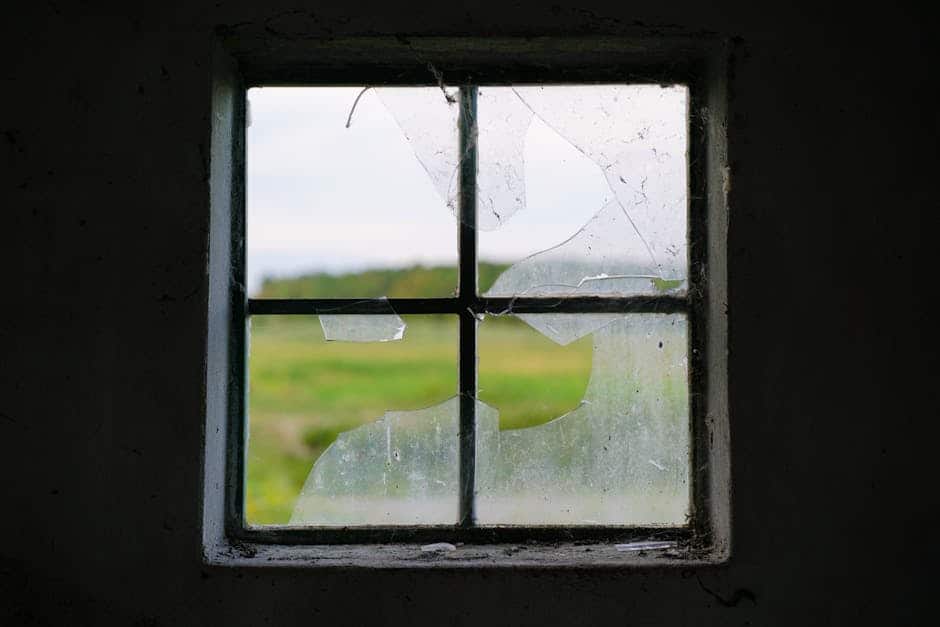
- The damage has spiderweb lines or visible separation – This is a crack, not a scratch. Cracks compromise the structural integrity of the entire pane, meaning no amount of polishing will save it. For safety and insulation reasons, you will need to review your options for a replacement.
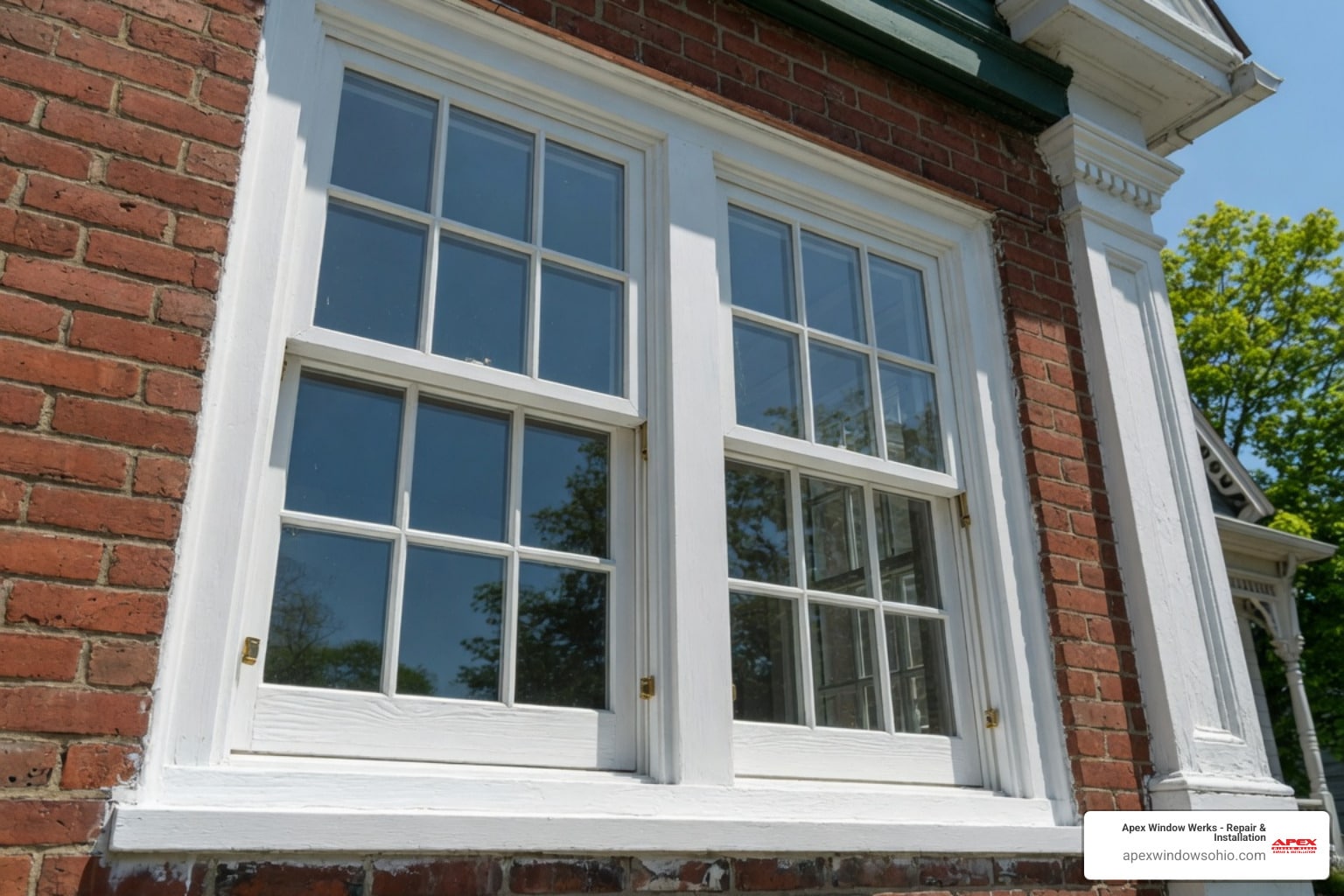
The type of glass also dictates your approach. Standard annealed glass, often found in older double-hung windows in classic homes throughout Lakewood or Cleveland Heights, is relatively forgiving but breaks into sharp shards if stressed. Tempered glass, which is common in patio doors, shower enclosures, and modern low-emissivity windows, is much harder to scratch but highly sensitive to localized heat. If you overheat tempered glass with a high-speed drill and polishing pad, you run the risk of causing the entire pane to shatter into thousands of tiny pebbles. Laminated glass, typically used in automotive windshields and high-security residential windows, consists of a plastic vinyl layer sandwiched between two sheets of glass. It can handle specialized resin-based repairs quite well because the plastic layer holds the structure together.
If you discover that your window pane is actually cracked or severely compromised rather than just scratched, you should read our guide on broken window pane repair: diy or call a pro to determine if a full replacement is required.
DIY Methods and Kits to Remove Scratches at Home in Cleveland and Akron
If your scratch passed the fingernail test and is determined to be a surface or light-to-medium scratch, you can attempt a DIY restoration. There are two primary schools of thought when it comes to at-home glass scratch removal: using abrasive polishing compounds to level the glass, or using resin fillers to mask the scratch.
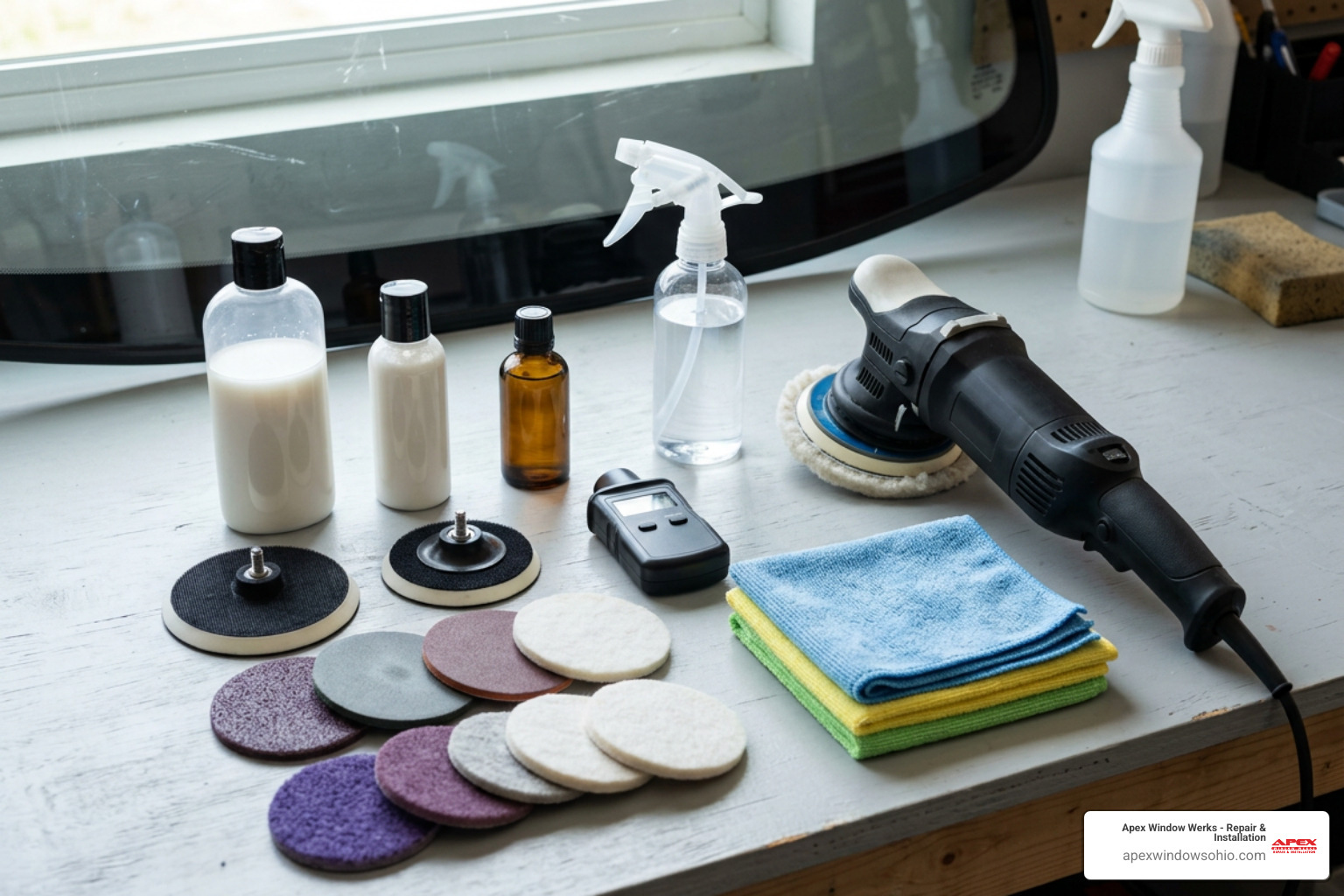
Polishing kits rely on micro-abrasives to physically wear down the surrounding glass until it is flush with the bottom of the scratch. This is the most permanent and optically clear solution for light scratches. Resin kits, on the other hand, do not remove any glass. Instead, they inject a clear, liquid acrylic resin into the scratch. Once cured under ultraviolet light, the resin hardens and mimics the refractive index of glass, making the scratch virtually invisible. Resin is excellent for deeper, localized nicks or windshield chips, but it will not work well for wide, sweeping wiper marks or fine haze.
| Repair Method | Best For | Pros | Cons |
|---|---|---|---|
| Household Abrasives (Toothpaste/Baking Soda) | Superficial, fine scratches and scuffs | Extremely cheap; uses items already in the home; very low risk of glass damage | Only works on the shallowest marks; requires significant manual labor |
| Clear Nail Polish (Resin Filler) | Deep, isolated scratches that catch a nail | Quick temporary cosmetic fix; prevents dirt from filling the scratch | Does not permanently restore the glass; can yellow over time under UV exposure |
| Cerium Oxide Polishing Kits | Light to medium scratches, water spots, and wiper marks | Professional-grade optical clarity; permanently removes the scratch | Requires a drill; risk of thermal shock if glass gets too hot |
| Multi-Stage Abrasive Kits | Deep scratches, acid etching, and heavy scuffs | Capable of restoring severely damaged glass surfaces | High learning curve; risk of creating optical distortion if not done evenly |
Choosing the right path depends on your patience, your tools, and the value of the glass surface you are treating. Let us look at how to execute these methods step-by-step.
Using Toothpaste and Baking Soda to Fix Glass Scratches
For very fine, superficial scratches, you do not need to buy specialized industrial chemicals. You can often achieve great results with items sitting in your bathroom cabinet or pantry.
The secret lies in mild abrasives. Traditional white, non-gel toothpaste contains microscopic polishing agents designed to clean teeth without eroding enamel. These same agents are just hard enough to gently polish glass. For an extra boost, you can mix in baking soda, which acts as a gentle booster.
To use this method:
- Clean the surface thoroughly – Use a clean microfiber cloth and warm water to ensure there is no lingering grit.
- Prepare your polishing paste – If using toothpaste alone, ensure it is a plain, white, non-gel variety. If you want to use baking soda, mix equal parts baking soda and warm water in a small bowl until it forms a thick, damp paste.
- Apply and buff – Dab a small, dime-sized amount of your chosen paste onto a clean, damp microfiber cloth. Do not use paper towels, as their wood fibers can actually introduce fine scratches to sensitive glass. Rub the paste onto the scratch using firm, circular motions for approximately thirty to sixty seconds.
- Wipe and inspect – Wipe the residue away with a clean, damp cloth and dry the area. Inspect the glass under direct light. If the scratch is still visible but starting to fade, repeat the process. It may take three or four rounds of buffing to completely erase the mark.
Applying Clear Nail Polish to Fix Glass Scratches
If you have a slightly deeper scratch on a decorative glass table or a window pane that you cannot polish out, clear nail polish can serve as an effective cosmetic filler. This method does not physically remove the scratch; instead, it fills the groove with a clear lacquer, preventing light from catching the edges of the scratch and making it stand out. For more details on this process, you can refer to the Home Depot guide on How to Remove Scratches from Glass.
To apply clear nail polish:
- Clean and dry the glass – Any oil or fingerprint residue will prevent the polish from adhering to the scratch.
- Paint the scratch – Using the applicator brush, apply a thin, even layer of clear nail polish directly over the scratch. Try to keep the application as narrow as possible, focusing on filling the groove.
- Let it cure – Allow the nail polish to dry completely for about an hour. It needs to harden fully inside the scratch.
- Scrape away the excess – Dampen a clean microfiber cloth with a small amount of acetone or nail polish remover. Gently wipe across the scratch to dissolve the excess polish sitting on the flat surface of the glass, leaving only the filled portion inside the groove. Alternatively, you can use a new, single-edge razor blade held at a forty-five-degree angle to carefully shave the excess dry polish flat with the glass surface.
Using Cerium Oxide Polishing Kits
When household remedies fall short, it is time to upgrade to the industry standard: cerium oxide. This rare-earth mineral compound is used by professional glass manufacturers and optical technicians to polish lenses, mirrors, and high-end glass. Unlike standard abrasives, cerium oxide chemically reacts with the glass surface at a microscopic level, smoothing out fine imperfections and restoring factory-grade clarity.
To achieve professional results, you can use a dedicated kit like the DIY Glass Scratch Removal Kit 2″ – Deep Scratch Repair with Drill – GLASS POLISH SHOP or purchase a high-quality pre-mixed formula like the Glass Polishing Compound 1.7oz | Optical-Grade 1.2 Microns – GP14003 – GLASS POLISH SHOP.
Here is how to use a cerium oxide kit safely and effectively:
- Protect the surrounding areas – Polishing with a drill-mounted felt pad will fling fine white splatters. Mask off your window frames, painted sills, or car body panels with painter’s tape and plastic sheeting.
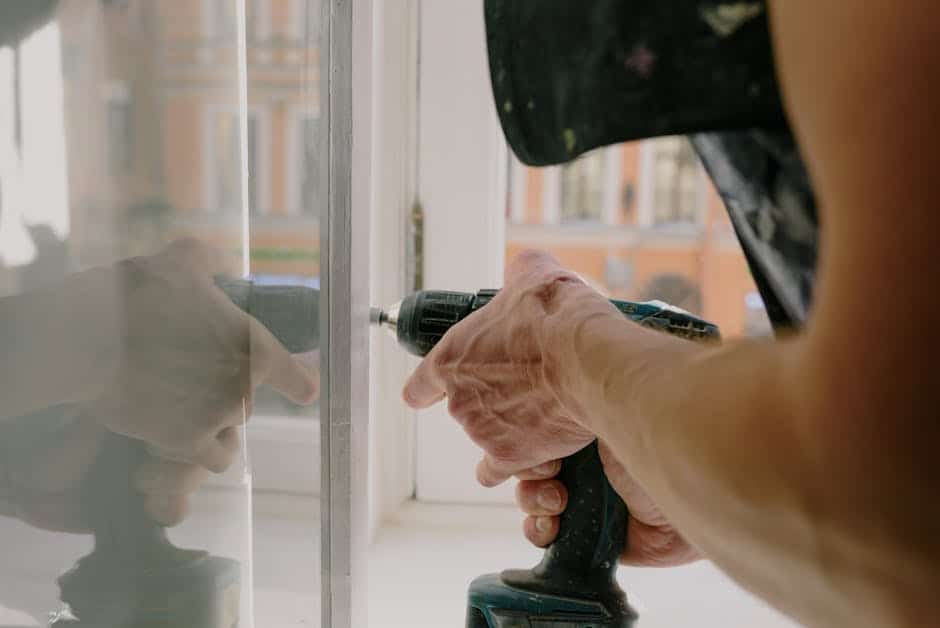
- Mount your polishing pad – Attach the backing pad to your electric drill using the universal drill adapter. Secure a felt polishing disc to the hook-and-loop backing pad.
- Prepare the compound – If using a dry powder, mix it with warm water to create a milky, paste-like consistency. If using a pre-mixed compound, shake the bottle thoroughly and apply a small amount directly to the felt pad.
- Polish with care – Place the pad flat against the glass before turning on the drill. Run your drill at a moderate speed, ideally between 1500 and 2000 RPM. Move the drill continuously in an overlapping, figure-eight pattern over the scratched area. Never hold the spinning pad in one spot for more than fifteen to twenty seconds.
- Manage the temperature – Friction creates heat. If the glass becomes hot to the touch, it can suffer thermal shock and crack. Keep a spray bottle of cool water nearby and mist the glass occasionally to keep the surface cool and maintain a wet, milky consistency for the polishing compound.
- Clean and evaluate – Wipe away the slurry with water and a microfiber cloth to check your progress. Repeat as necessary until the scratch is gone.
When to Skip DIY and Call a Professional in Cleveland and Akron
While taking a DIY approach to home repairs can be satisfying, glass is highly unforgiving. There are several scenarios where attempting a home remedy will likely ruin the window, leading to a much more expensive replacement down the road.
First, let us talk about structural integrity. If a scratch has developed into a tiny hairline crack, polishing it will apply localized heat and pressure, which will instantly cause the crack to run across the entire pane. If you see any signs of cracking, skip the polish entirely.
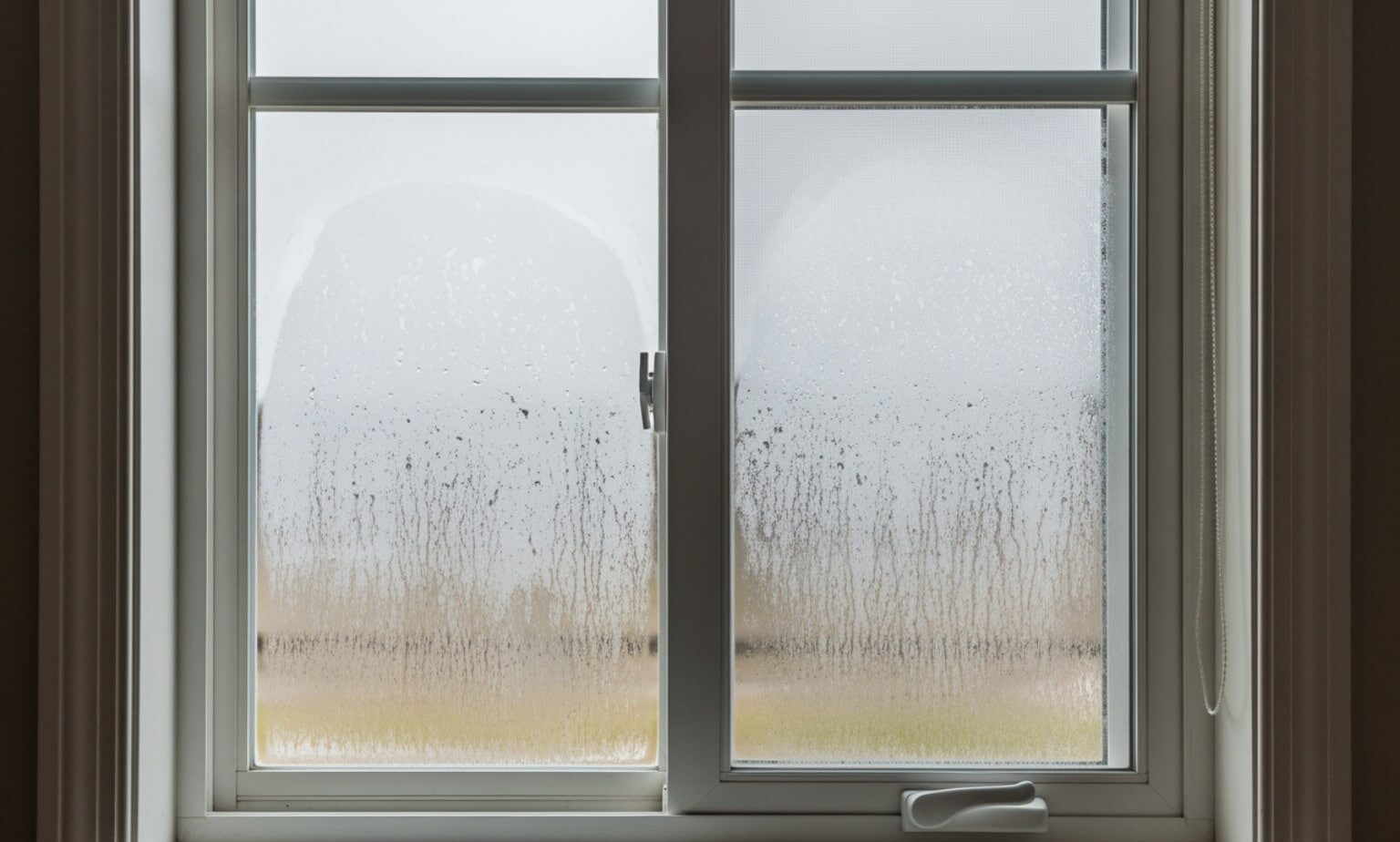
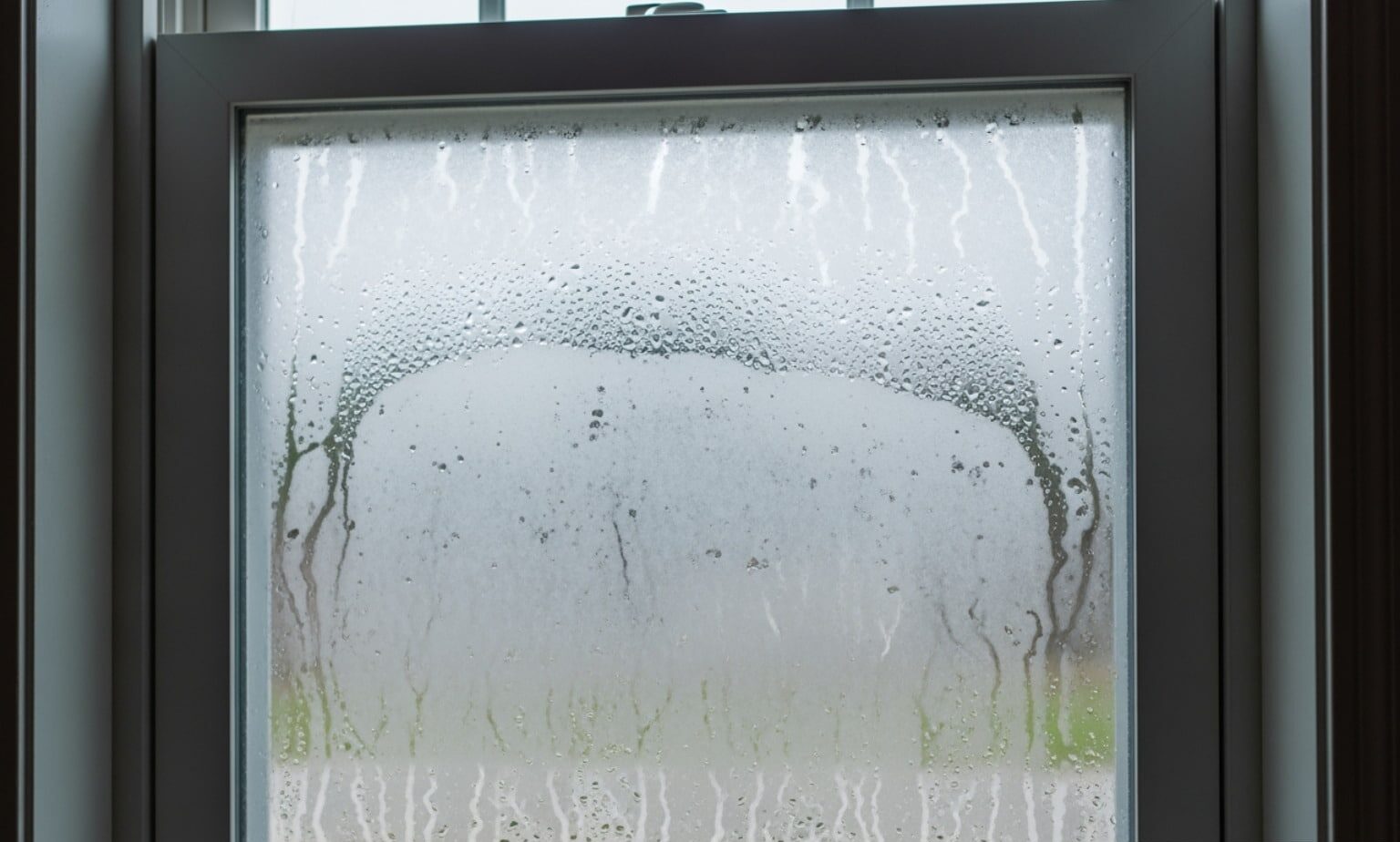
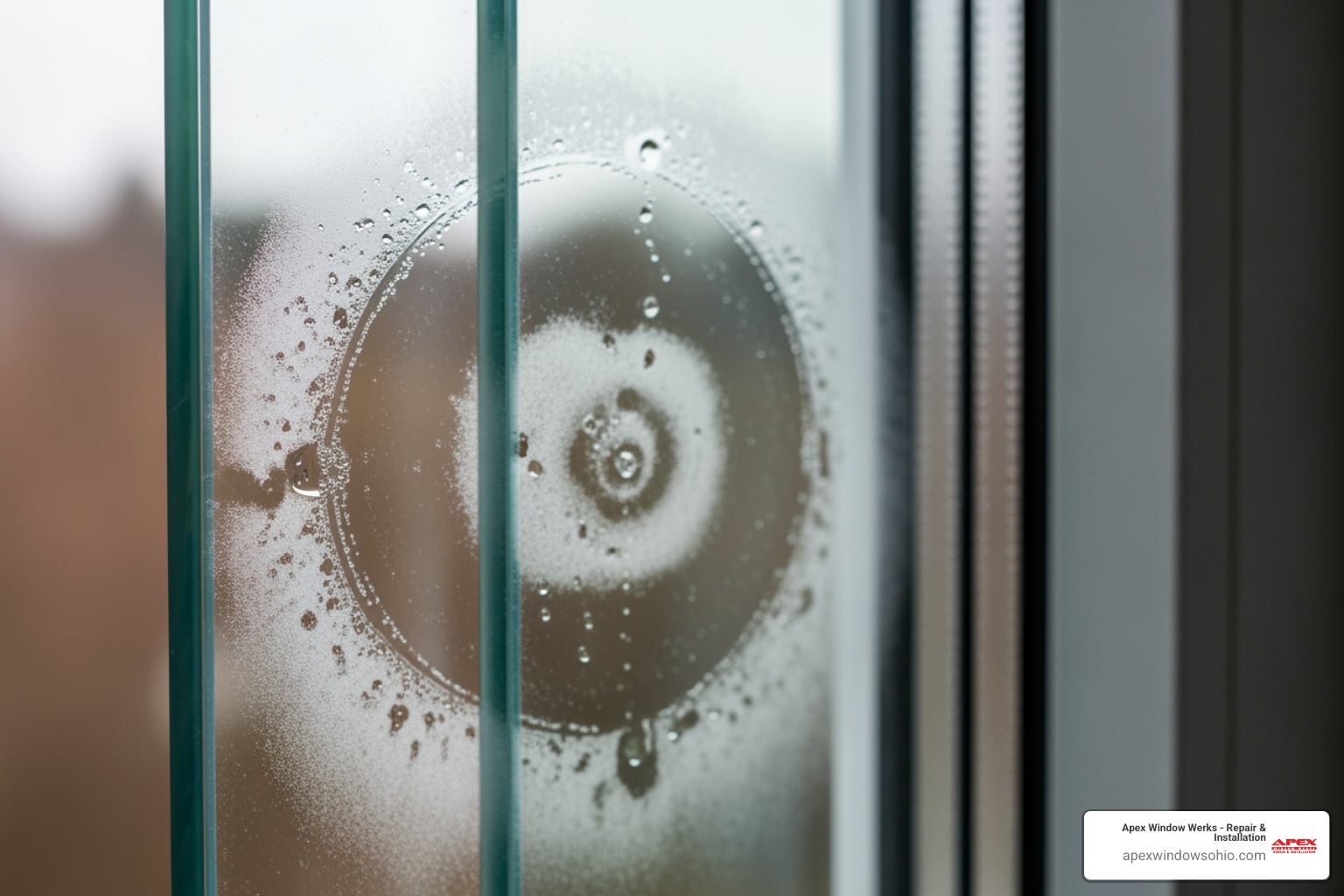
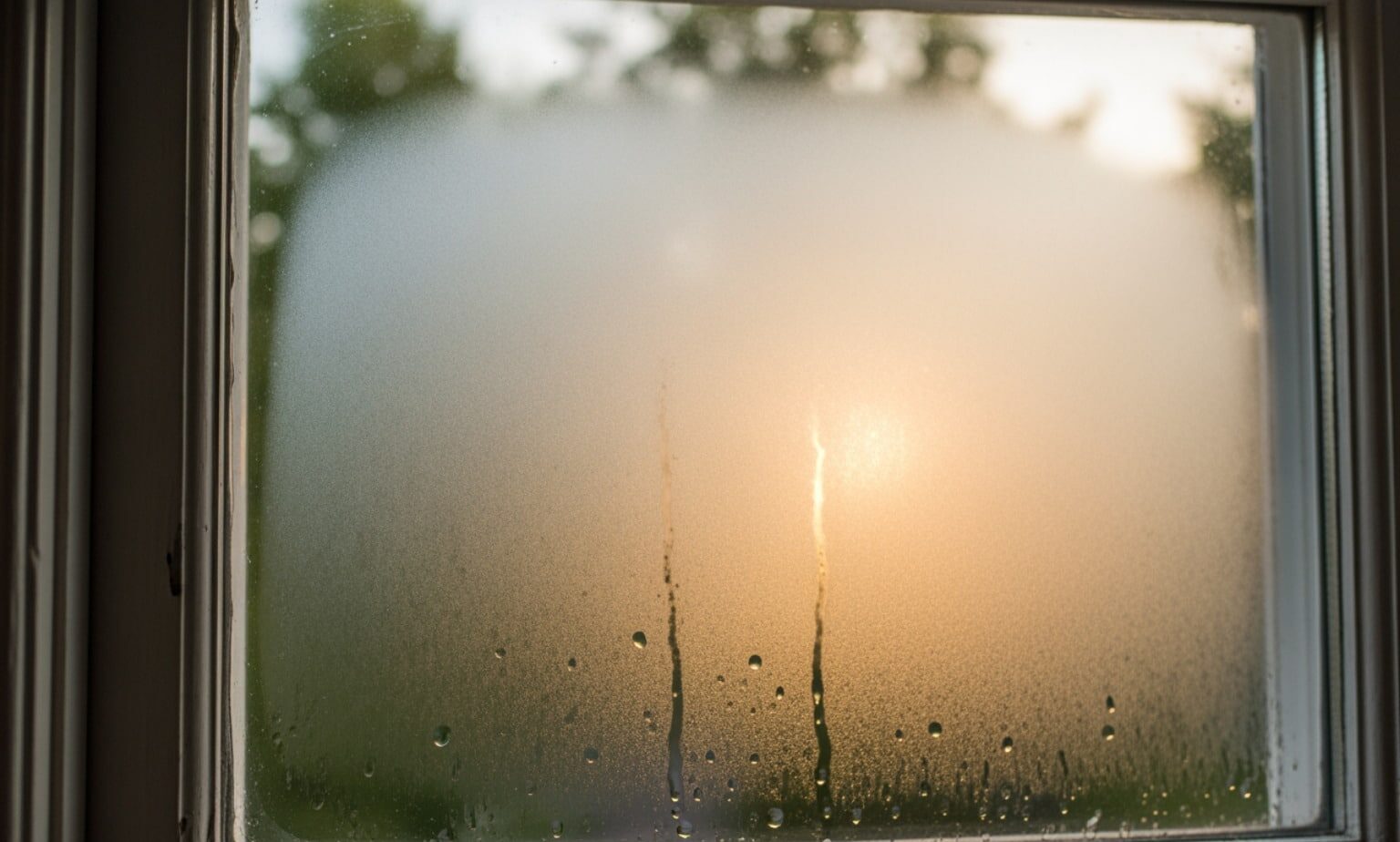
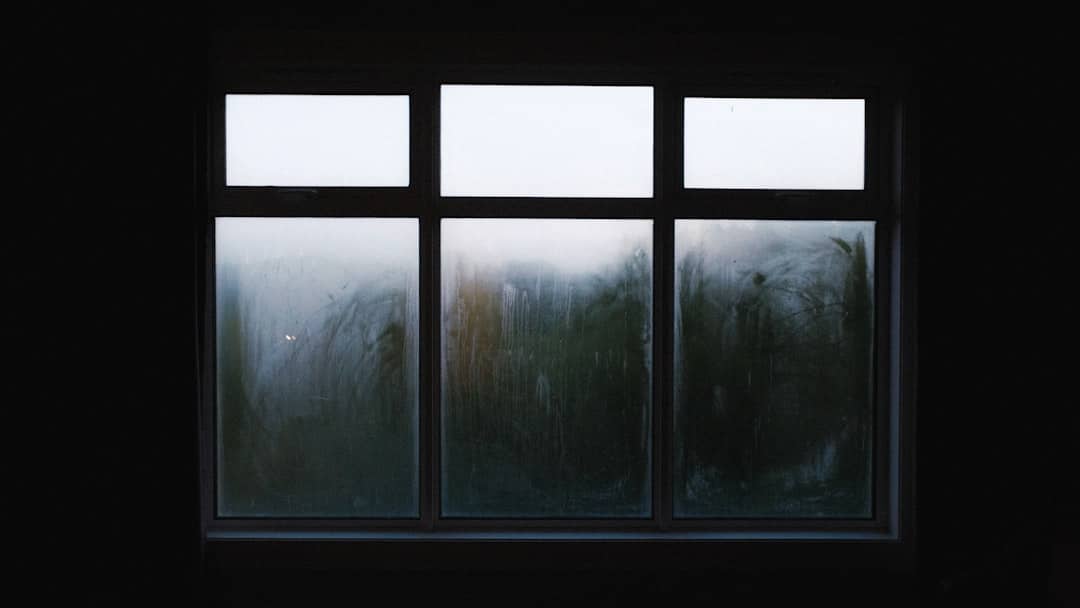
Second, consider double-pane or triple-pane insulated glass units. These windows rely on a hermetically sealed space filled with insulating gas to keep your home comfortable during Ohio’s freezing winters and humid summers. If a scratch is deep enough to weaken the structural integrity of one of these panes, the seal can fail. This leads to gas leakage and allows moist air to seep between the panes, resulting in permanent condensation and a hazy, ruined view. If you are dealing with foggy double-pane windows, DIY polishing kits will not help. You will need to address the underlying seal failure.
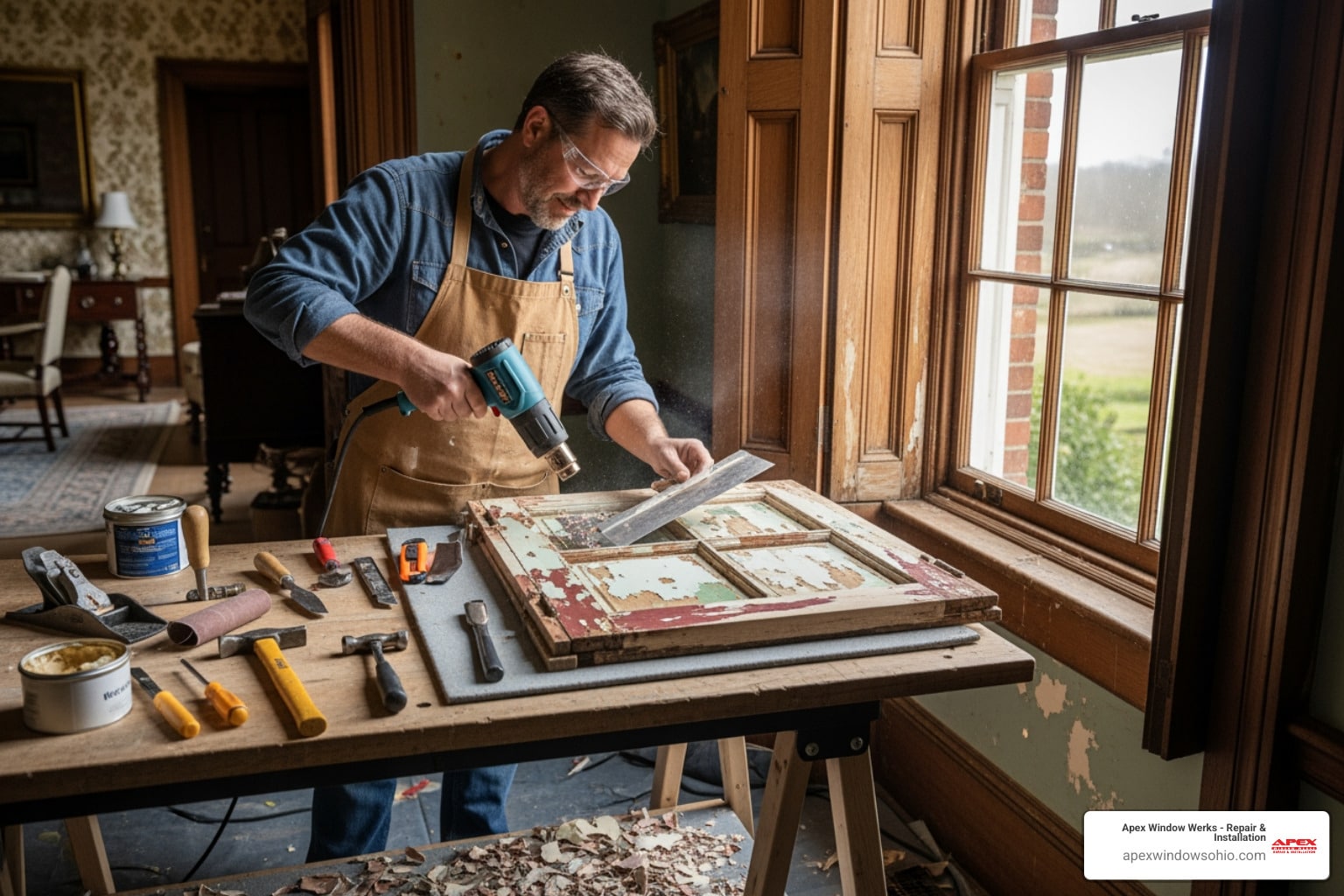
If you are unsure whether your window can be saved or if it requires a full replacement, we recommend reading our detailed guide on fixing a broken window to help you evaluate your options.
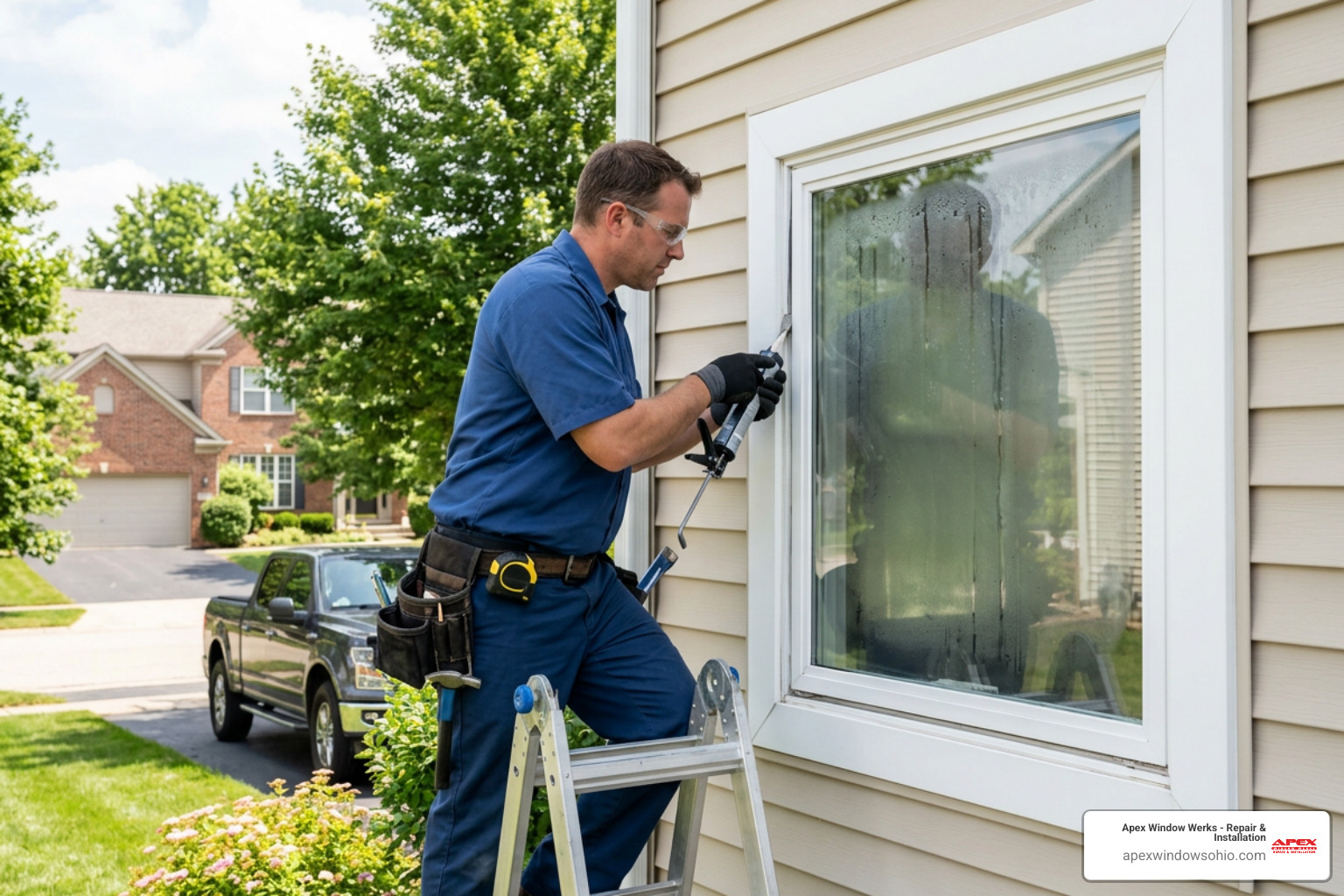
For homeowners in communities like Strongsville, Westlake, Hudson, or Cuyahoga Falls, our team at Apex Window Werks is always ready to assist. If your window glass is severely scratched, cracked, or showing signs of seal failure, our professional technicians can quickly assess the damage and provide efficient, high-quality repairs or replacements to restore your home’s comfort and appearance.
Frequently Asked Questions About Glass Repair in Akron, OH
How much does window sash repair cost in Akron, OH?
The cost of window sash repair in the Cleveland-Akron area depends on several factors, including the frame material, the type of glass, and the extent of the damage. For example, repairing a classic wood sash in older homes often requires more specialized labor than replacing a modern vinyl sash.
While we discuss pricing in general terms rather than specific figures, homeowners should know that opting for a professional sash repair is generally far more cost-effective than replacing the entire window frame. If you want to explore your local options, you can read our guide on glass window pane replacement to see how we handle these projects.
Can you remove deep scratches from tempered glass in Cleveland and Akron?
Removing deep scratches from tempered glass is incredibly difficult and highly risky. Because tempered glass is designed to be under constant internal tension, any deep scratches weaken its structure. If you attempt to grind down the glass to remove a deep scratch, the localized friction and heat from your polishing tool can trigger a sudden release of that tension, causing the entire pane to shatter instantly.
Light surface scratches can sometimes be polished out of tempered glass using a very fine cerium oxide compound and low-speed tools, but deep scratches generally require a complete glass replacement to ensure safety.
How do you prevent future scratches on household windows in Cleveland and Akron?
- Use high-quality microfiber cloths – Never use paper towels, rough rags, or steel wool to clean glass. Microfiber cloths are designed to trap dirt particles without dragging them across the surface.
- Apply a protective glass sealant – Specialized hydrophobic glass sealants create a microscopic barrier that repels water, dirt, and mineral deposits, reducing the need for aggressive scrubbing.
- Avoid abrasive cleaning powders – Never use harsh kitchen scouring powders or abrasive sponges on window glass. Stick to dedicated, non-abrasive liquid glass cleaners or a simple mixture of water and mild dish soap.
- Keep window tracks clean – Dirt and sand trapped in window tracks can grind against the glass whenever you slide the window open or closed. Vacuum and wipe your window tracks regularly to prevent this friction.
Conclusion
Scratched glass does not have to mean a ruined view or an immediate, expensive replacement. By learning how to properly assess the depth of the damage, you can easily tackle minor surface scuffs at home using simple household items like toothpaste or professional-grade cerium oxide polishing kits.
However, if you are dealing with deep scratches, structural cracks, or foggy double-pane windows, a DIY approach can easily lead to shattered glass or broken seals. When the job calls for professional expertise, our team at Apex Window Werks is here to help. We proudly serve homeowners across the greater Cleveland-Akron area, including Solon, Mentor, Westlake, and Medina, offering reliable, high-quality glass restoration and window repair services.
If you are dealing with foggy glass, drafty frames, or window seals that have failed over time, explore our specialized Foggy Window Repair Services to see how we can restore your home’s windows to pristine condition.