Is Your Sliding Window Off Track? Here Is How to Reset It Safely
How to Safely Reset a Sliding Window That Is Off Track in Northeast Ohio
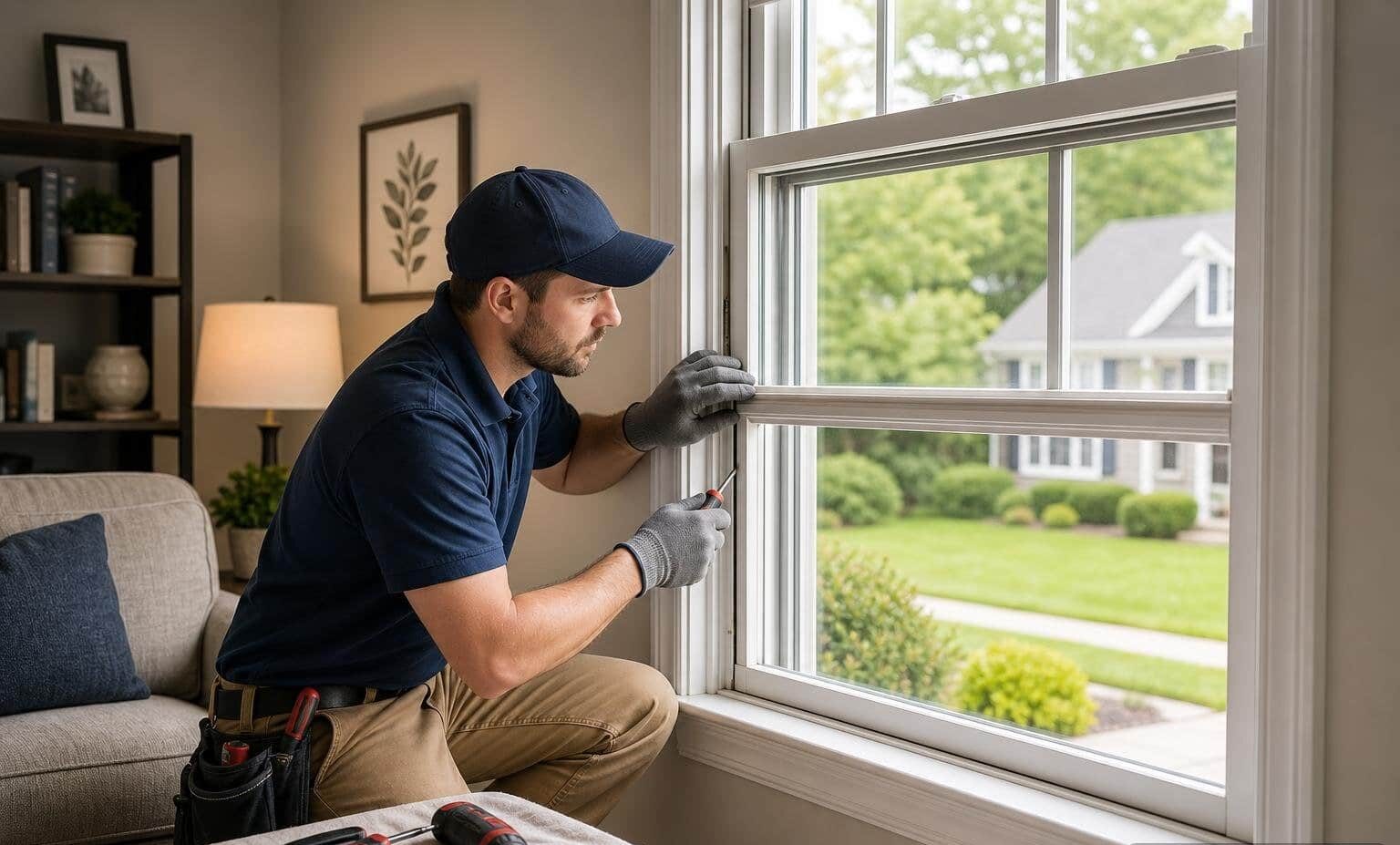
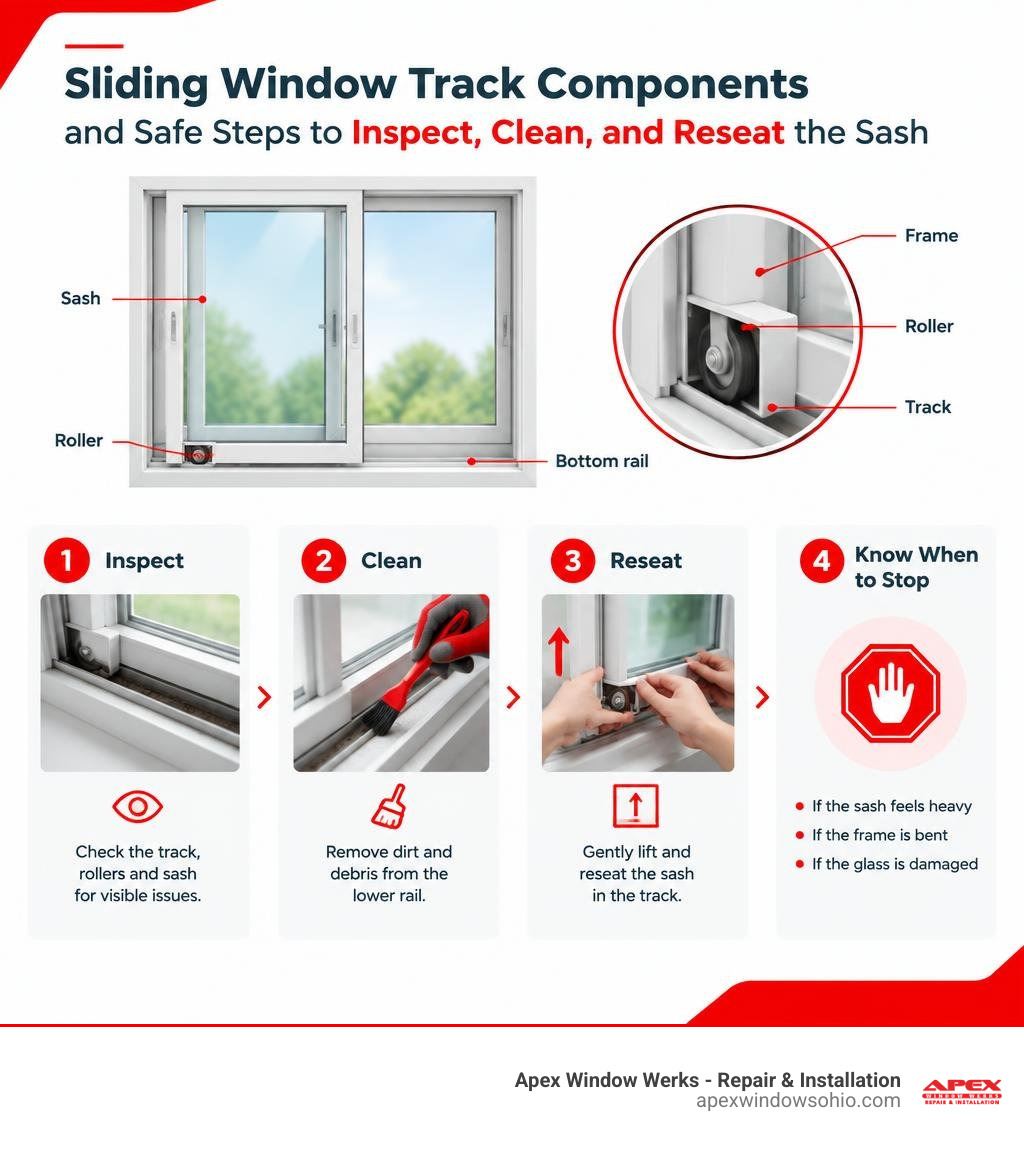
If your sliding window has come off its track, stop pushing it. Open it only if it moves freely, then clear dirt from the lower rail and check whether the rollers are still seated. If the sash is easy to handle and the glass is sound, gently lift and reseat it according to the window maker’s instructions. Stop if the sash feels heavy, the frame is bent, or the glass is damaged.
I’m Nataly Godes, General Manager at Apex Window Werks, where I lead window and door repair services across Northeast Ohio. That experience shapes this guide’s focus on diagnosing, resetting, and maintaining sliding-window sashes and rollers.
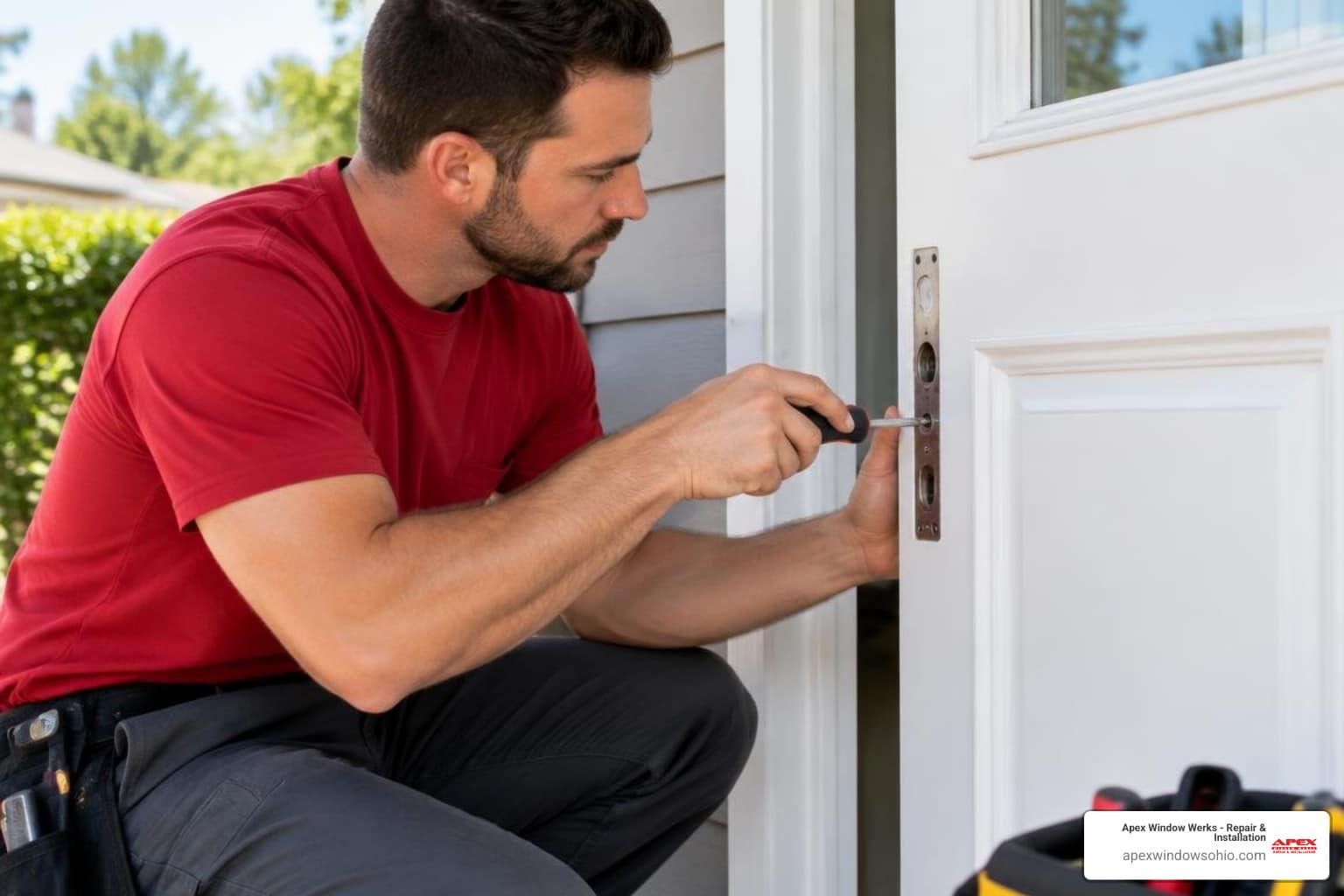
For related home issues, review Apex guidance on door repair and what to do when a pocket door is off track.
Common Signs and Causes of Misaligned Sliding Window Tracks in Cleveland–Akron Homes
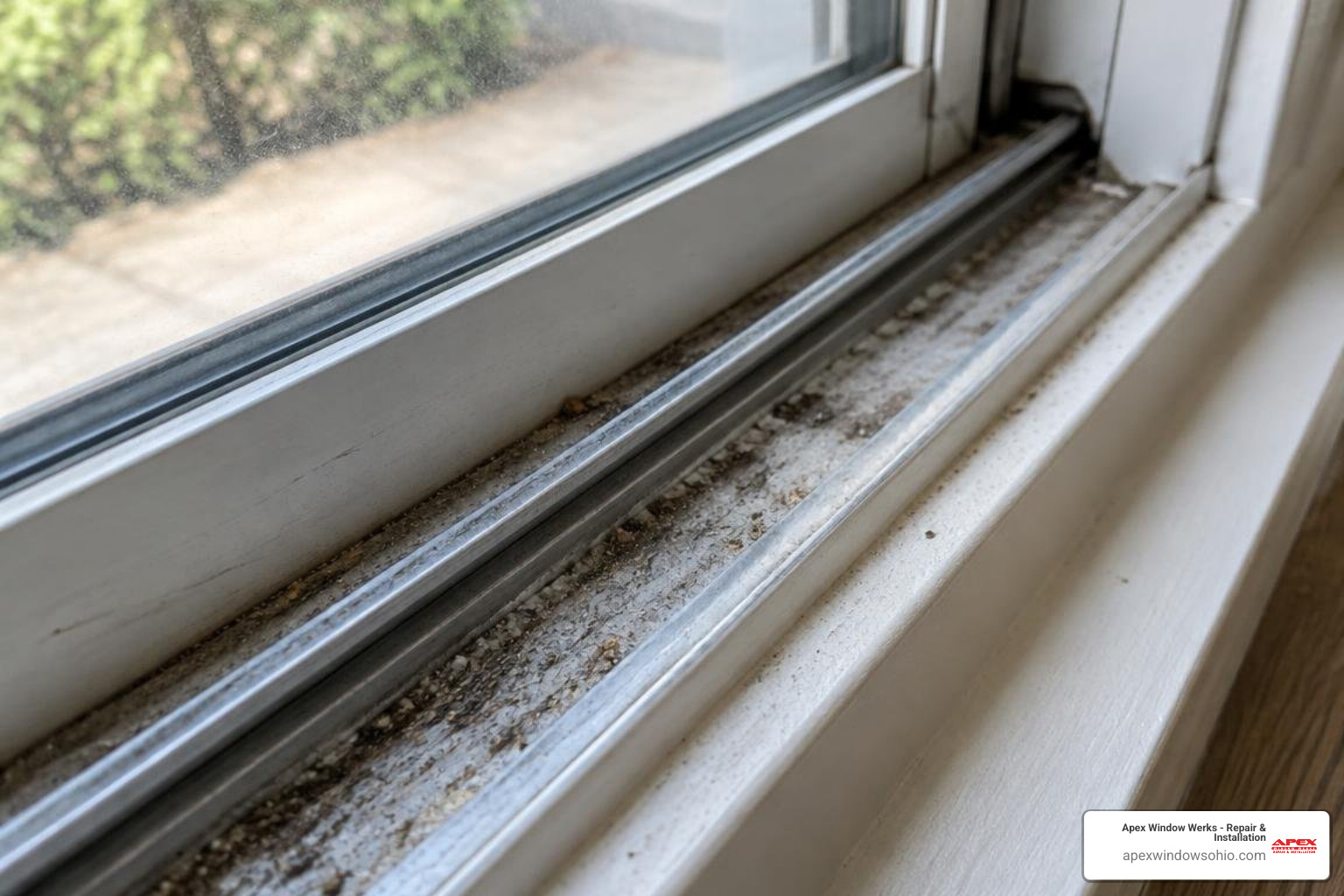
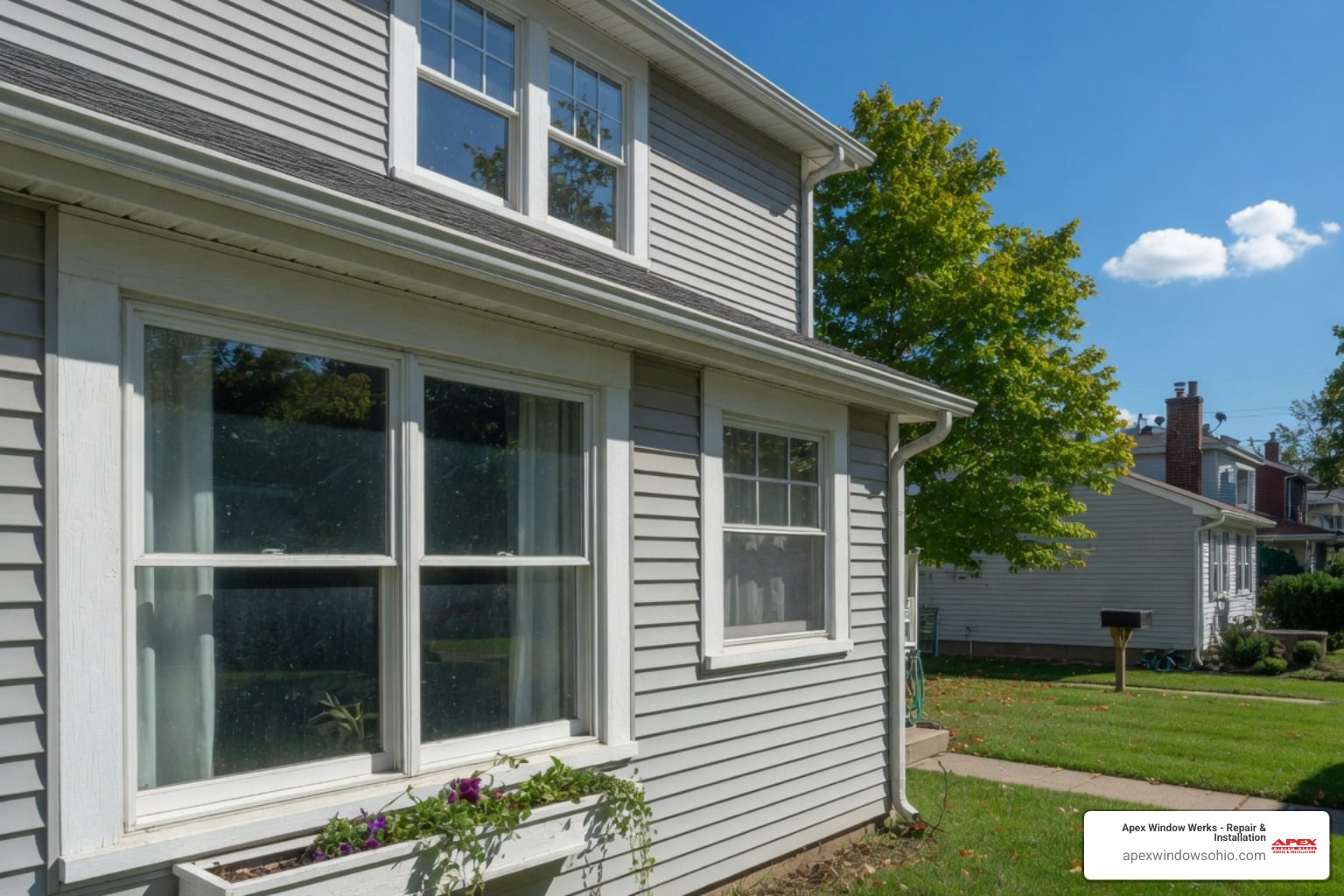
A horizontal sliding window relies on precise alignment between its bottom rollers and the lower sill track extrusion. When something interferes with that balance, operating the window becomes an uphill battle. Recognizing early warning signs helps you avoid cracked glass or warped frames.
Common symptoms of a derailed or misaligned slider include:
- A sash that sticks, drags, or requires heavy physical effort to open and close.
- Visible light or drafts slipping past the interlock stile because the sash sits crooked in the frame.
- Grinding, scraping, or clicking sounds when sliding the window.
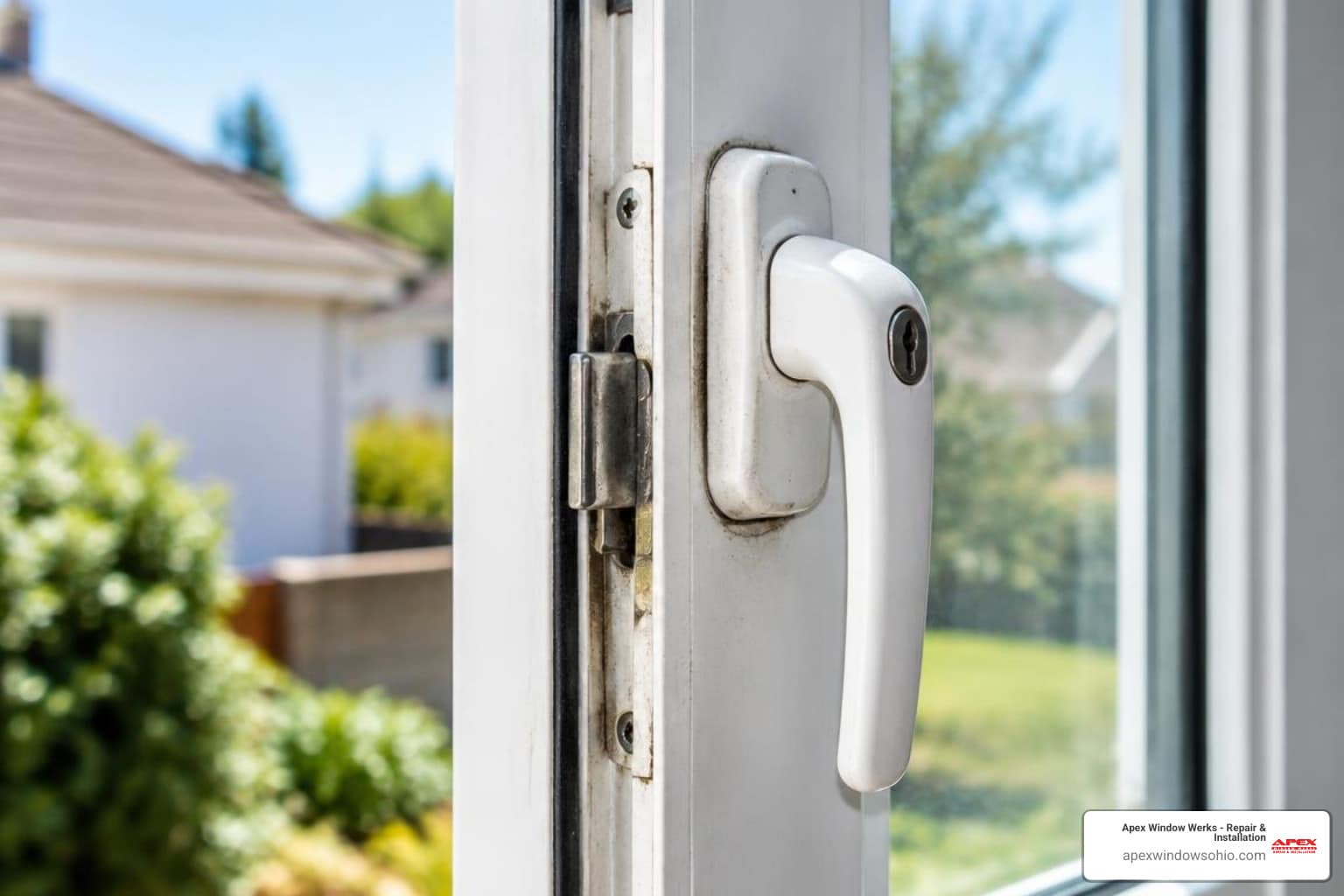
- The cam lock failing to engage smoothly with the keeper on the adjacent sash or frame.
- The bottom edge of the sash rubbing directly against the vinyl or aluminum sill track.
Understanding why these issues happen is the first step toward correcting them before small track flaws lead to broken hardware.
Identifying Debris, Bent Tracks, and Damaged Rollers in Northeast Ohio Sliders
Over time, everyday use and seasonal weather introduce several culprits that derail horizontal sliding sashes:
- Dirt and Debris Accumulation: Dust, pet hair, outdoor pollen, and gravel settle into the bottom sill channels. As rollers pass over this buildup, dirt compacts into dense obstacles that lift the roller wheels completely out of their guide rails.
- Bent or Pinched Track Rails: Accidental impacts, aggressive cleaning, or setting heavy items on the lower sill can bend thin aluminum or vinyl track guides inward or outward. A narrowed track binds the roller assembly instantly.
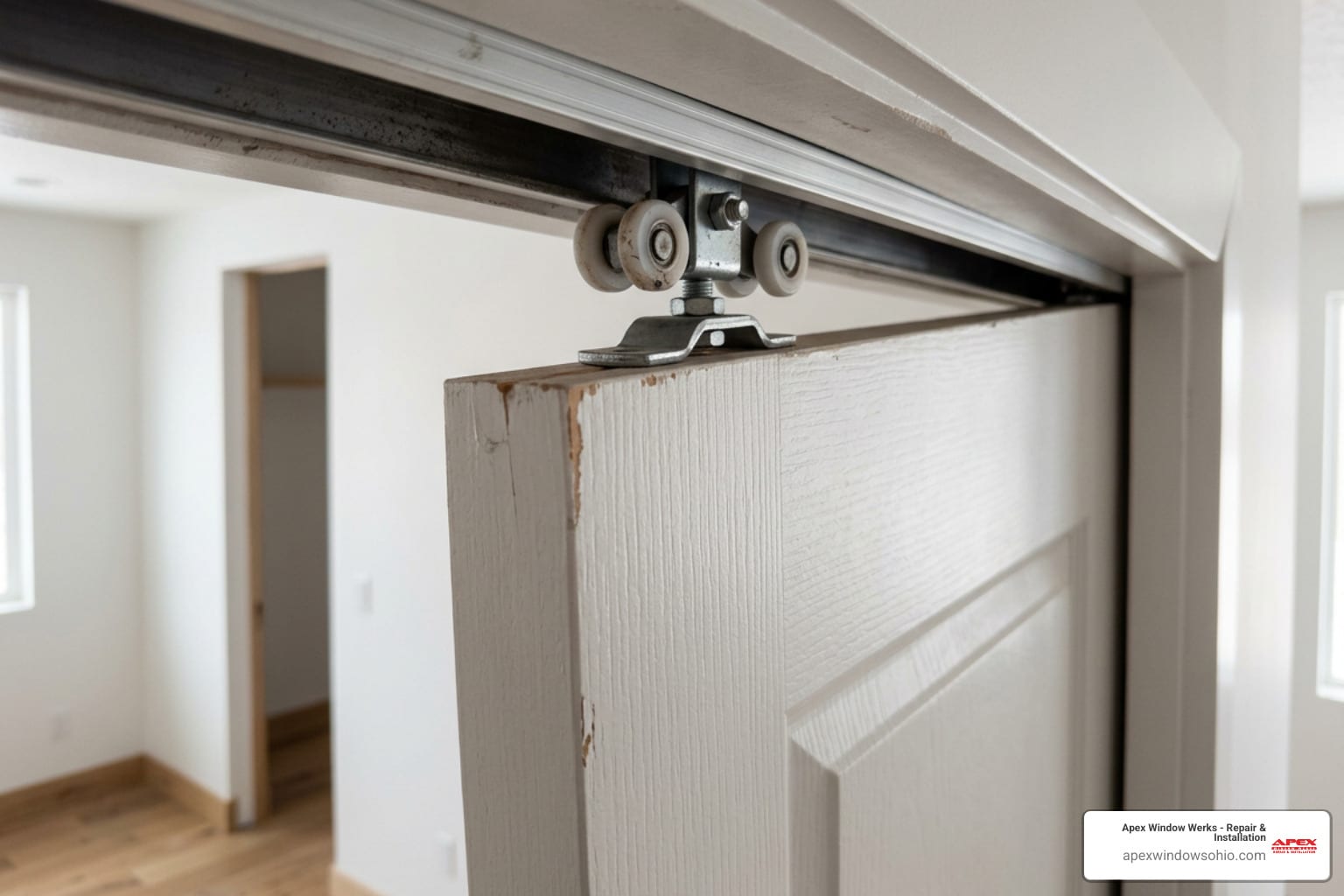
- Roller Wear and Flat Spots: The small nylon or brass wheels housed in the sash base degrade after years of cycling. Worn ball bearings or flat spots prevent smooth rolling, causing the wheel to skate and hop over the track edge.
- House Settling and Frame Movement: Temperature shifts and structural settling across Northeast Ohio homes can compress window frames slightly out of square, altering the critical spacing between the top header guide and the bottom roller track.
Whether your home features Andersen windows, Pella sashes, Marvin windows, or custom sliders, keeping track components clean and balanced is essential for long-term performance.
Why Sliding Window Track Realignment Requires Delicate Handling
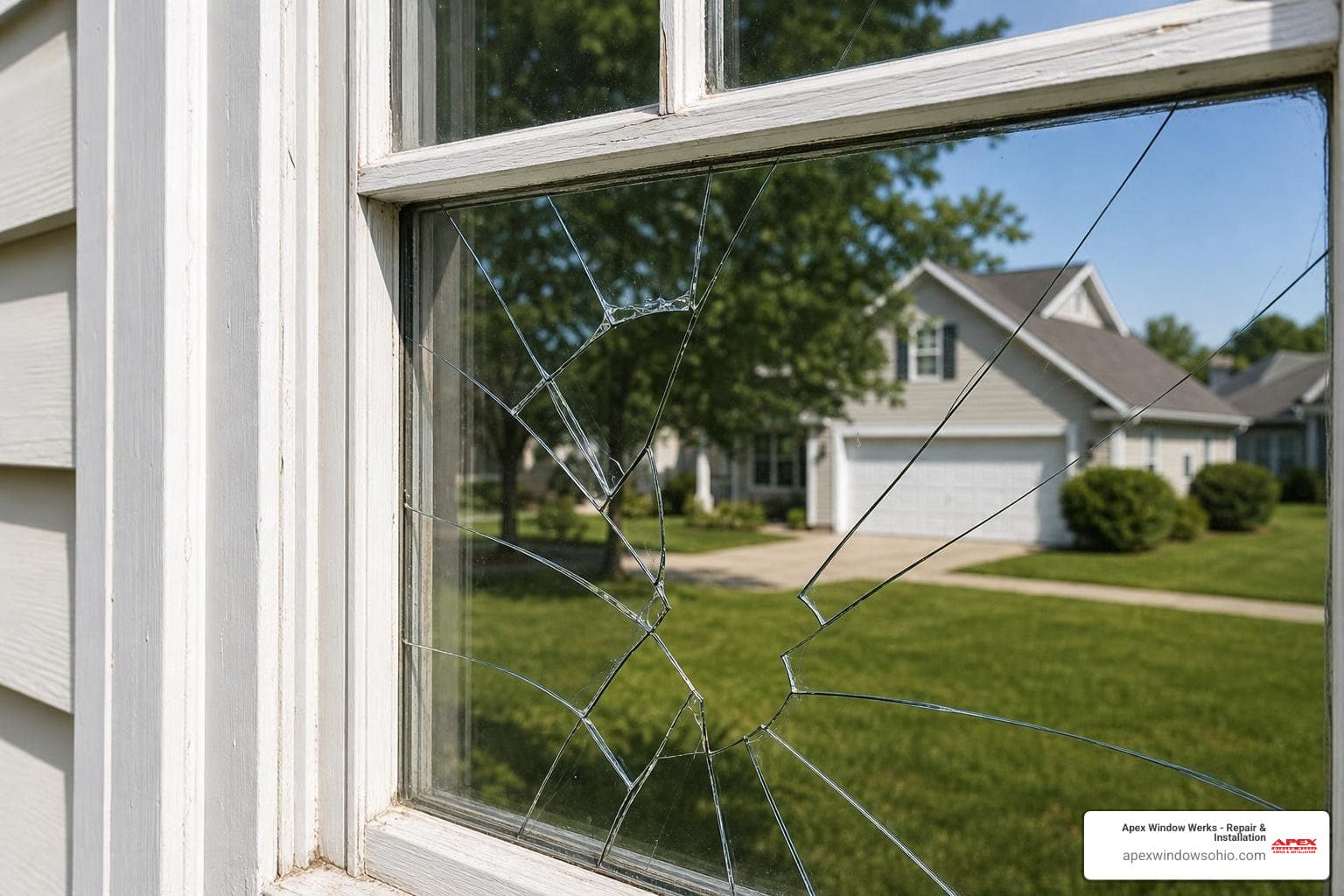
Residential sliding windows are lightweight, precision-engineered assemblies with horizontal roller carriages resting inside vinyl, aluminum, or wood sill extrusions. Because they rely on close tolerances and smooth guide channels, attempting heavy physical force on a jammed or derailed sash can shatter the insulated glass unit (IGU) or permanently crack the frame.
Proper window track care requires fine adjustments, careful roller height calibration, and methodical sash handling to prevent structural stress and preserve air seals.
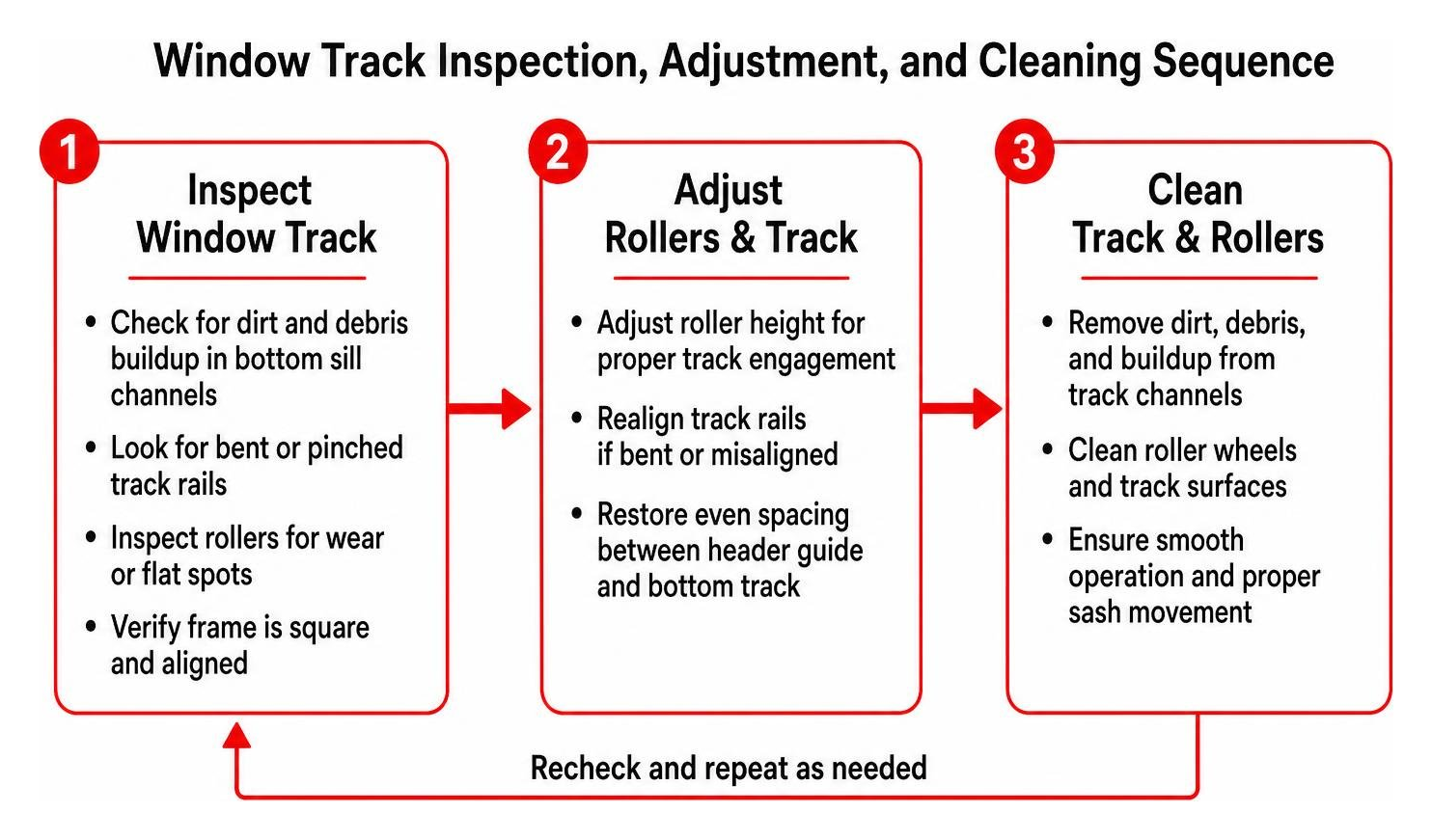
Step-by-Step Guide to Safely Resetting a Sliding Window on Its Track in Northeast Ohio
When an operable sash slips off its track, a methodical approach helps you restore smooth operation safely. If you encounter cracked frames or complex balance issues, our team at Apex Window Werks provides comprehensive house window repair services to restore your windows without full tear-outs.
Step 1: Inspecting the Track and Clearing Obstructions
Begin by thoroughly inspecting the entire length of the sill channel.
- Disengage the window lock and slide the sash as far open as it moves without binding.
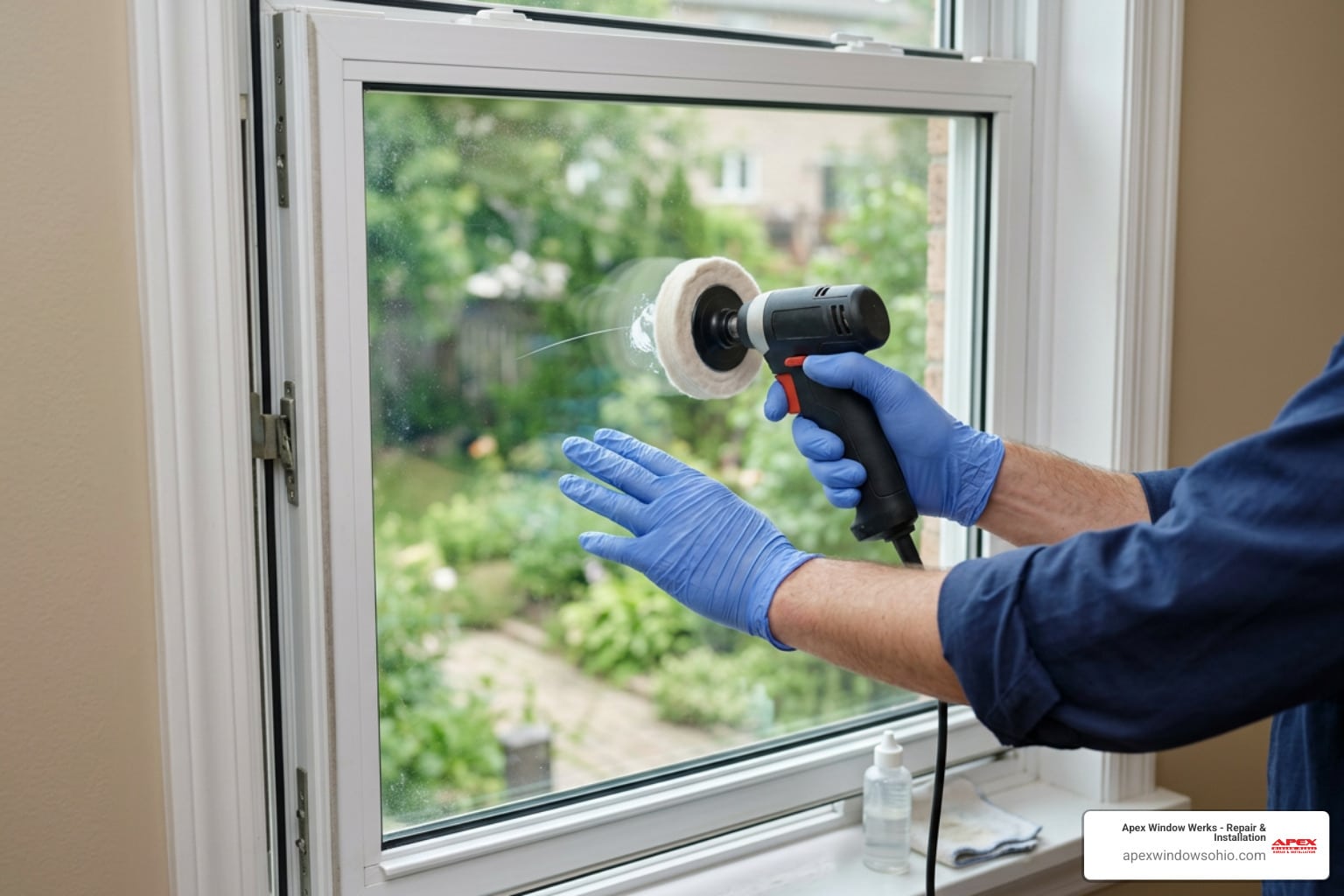
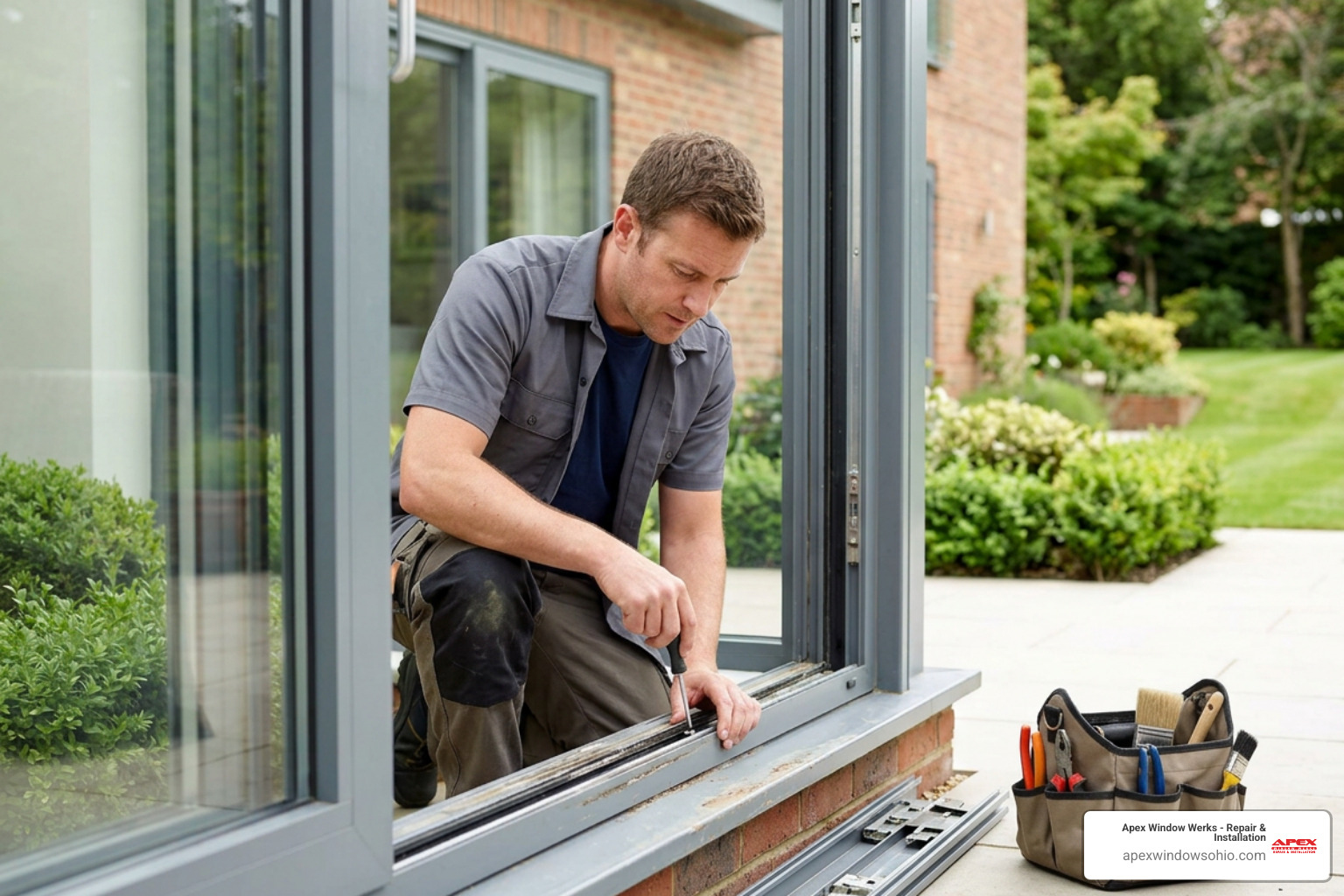
- Use a narrow vacuum attachment or a stiff nylon brush to pull all loose dirt, dead insects, and dried grit out of the roller channel and weep holes.
- Wipe the rail with a damp microfiber cloth to remove stubborn grease or residue.
- Look closely down the track line for physical bends. If you spot a small pinch in an aluminum track, place a smooth wooden block against the metal and gently tap it with a small mallet to restore the straight channel width. Avoid striking metal directly.
Step 2: Adjusting Roller Screws and Resetting the Sash
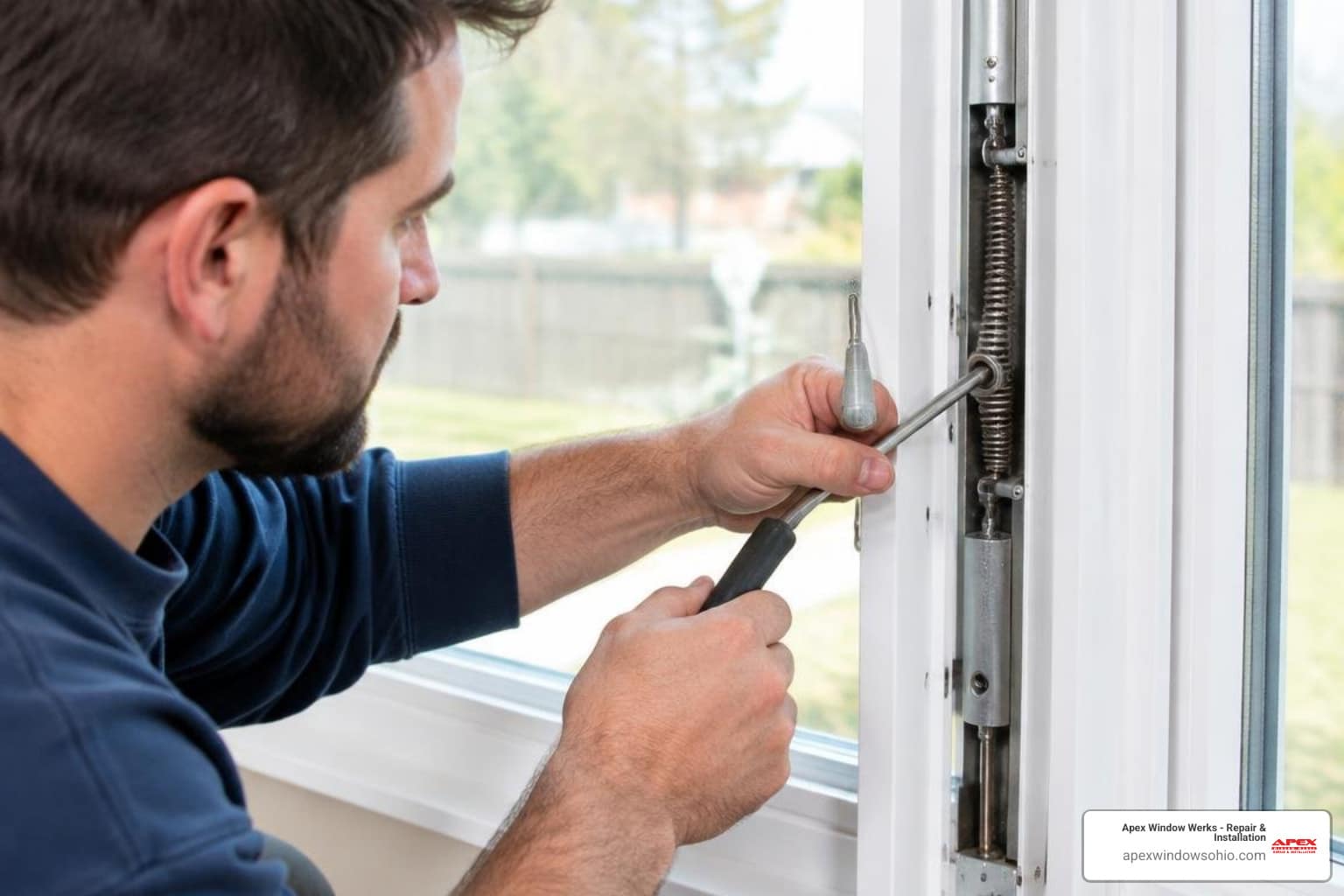
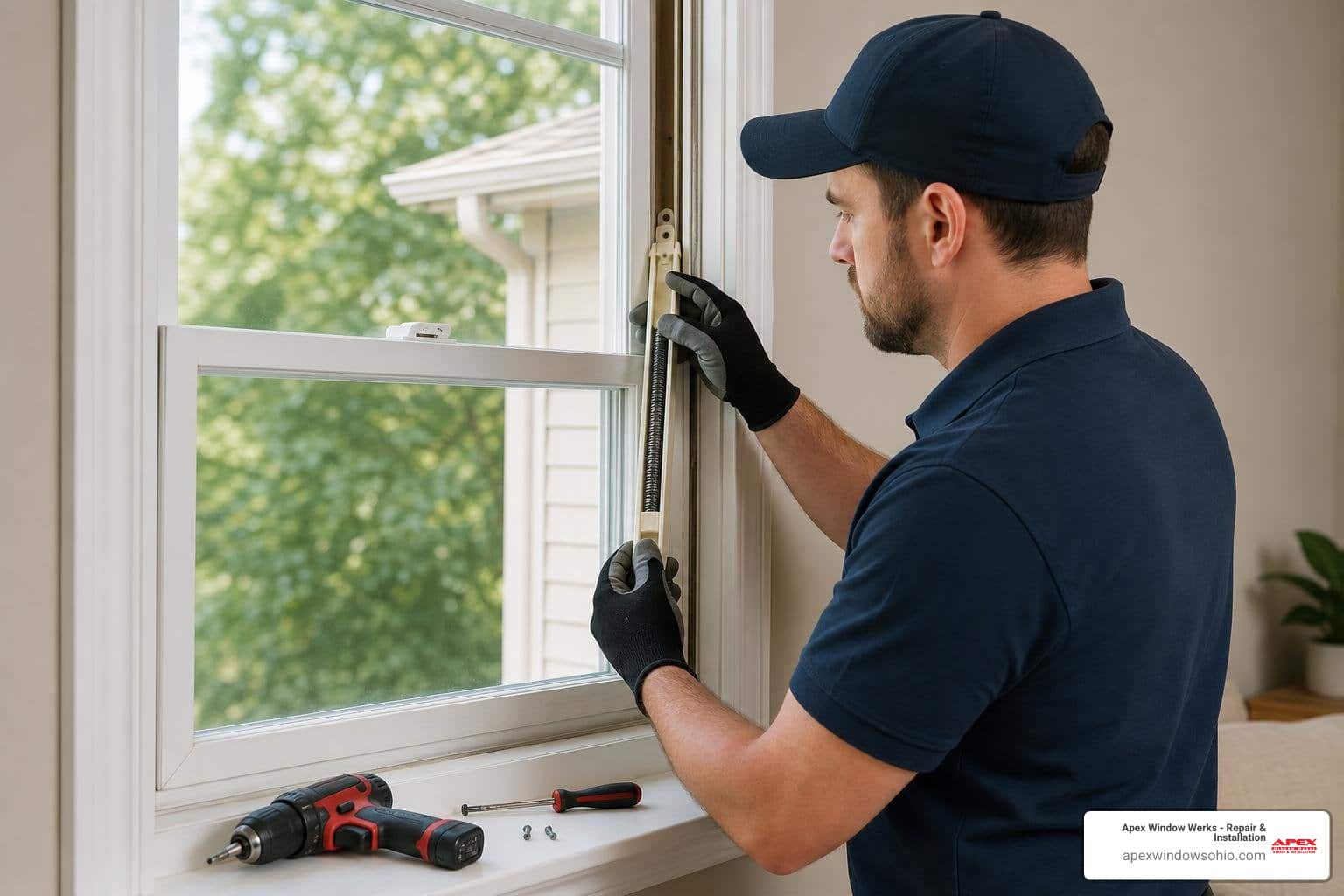
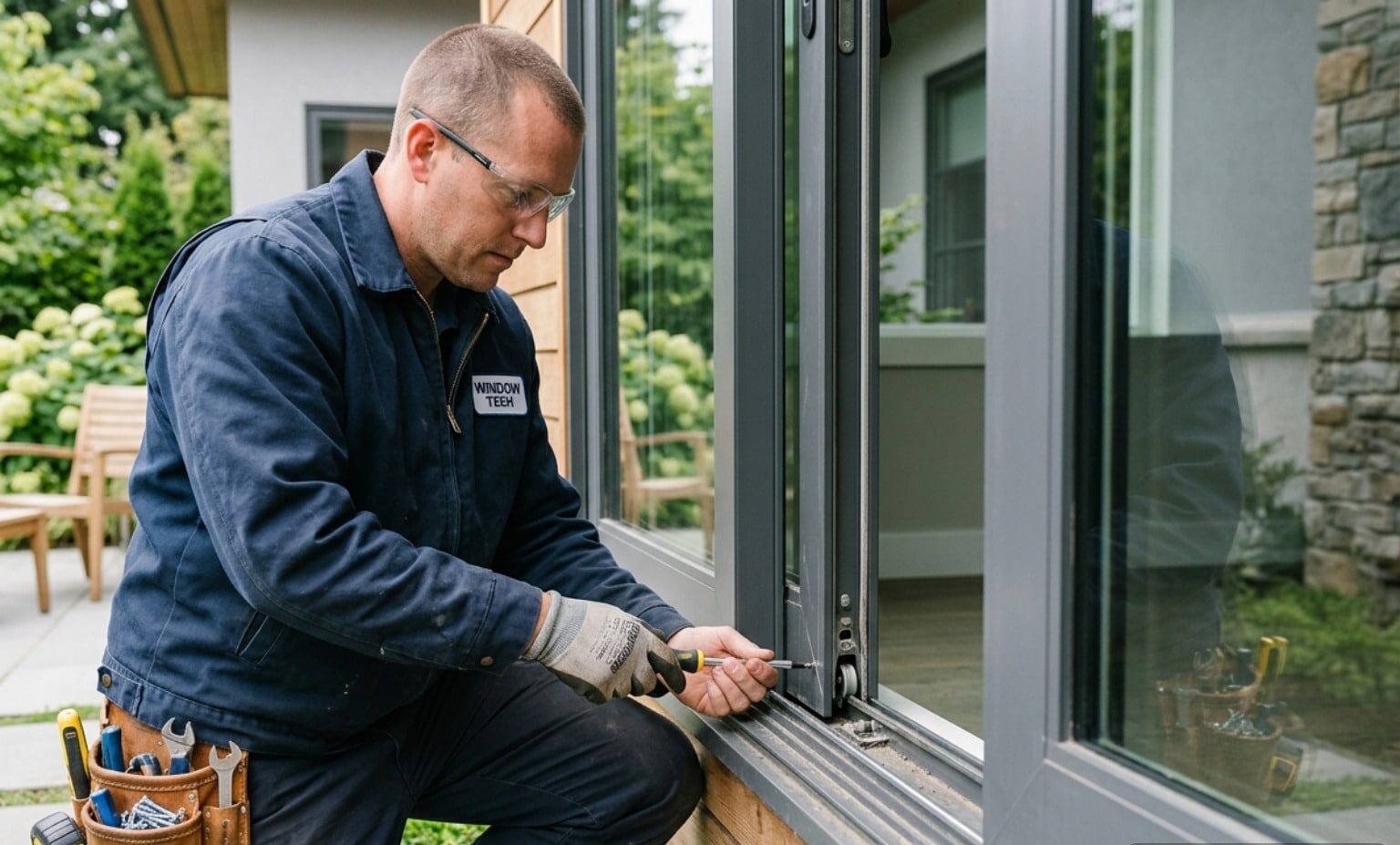
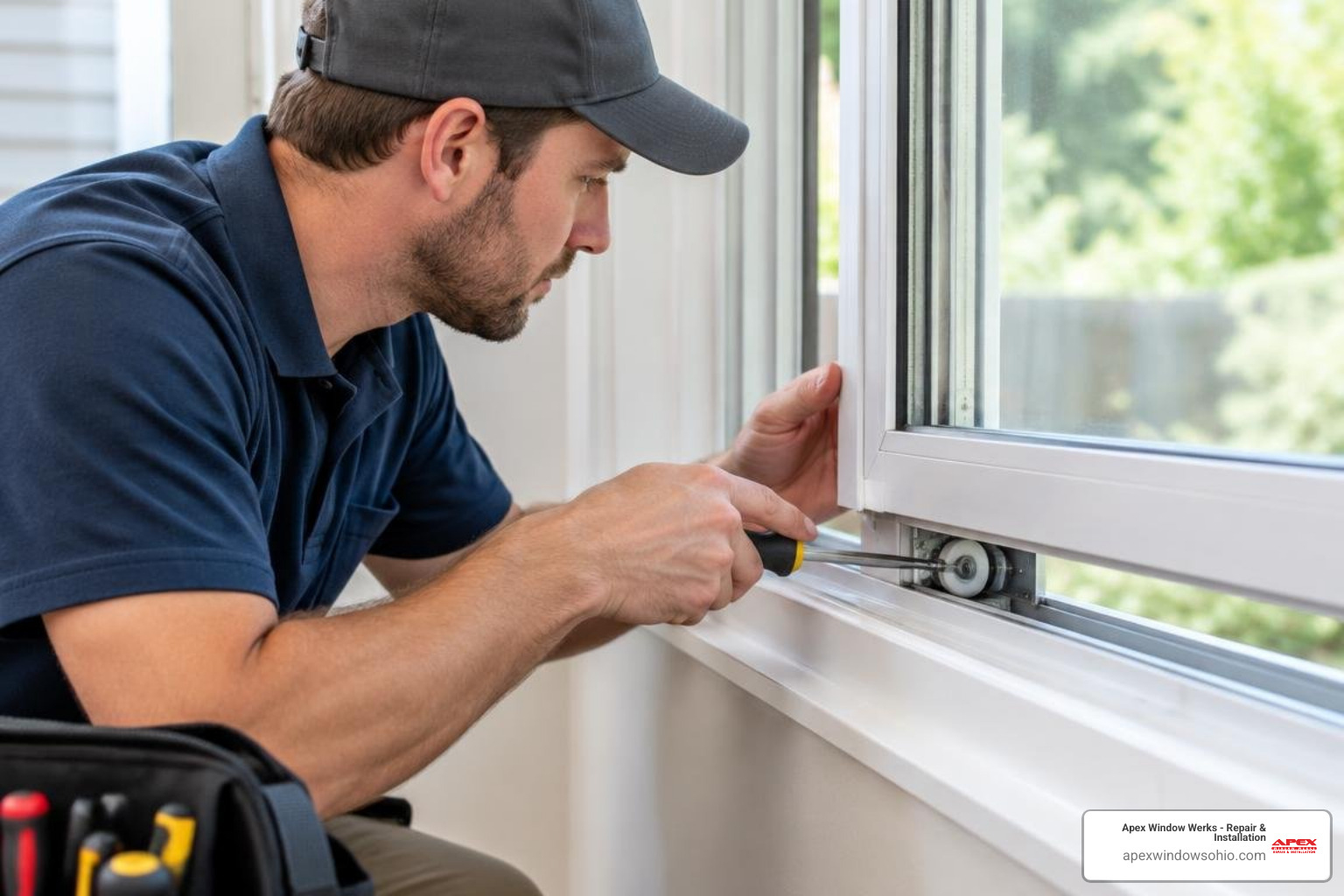
Most modern sliding window sashes incorporate adjustable bottom roller carriages accessible via adjustment screws on the lower side stiles or bottom rail face.
- Locate the adjustment access holes near the bottom corners of the sash frame.
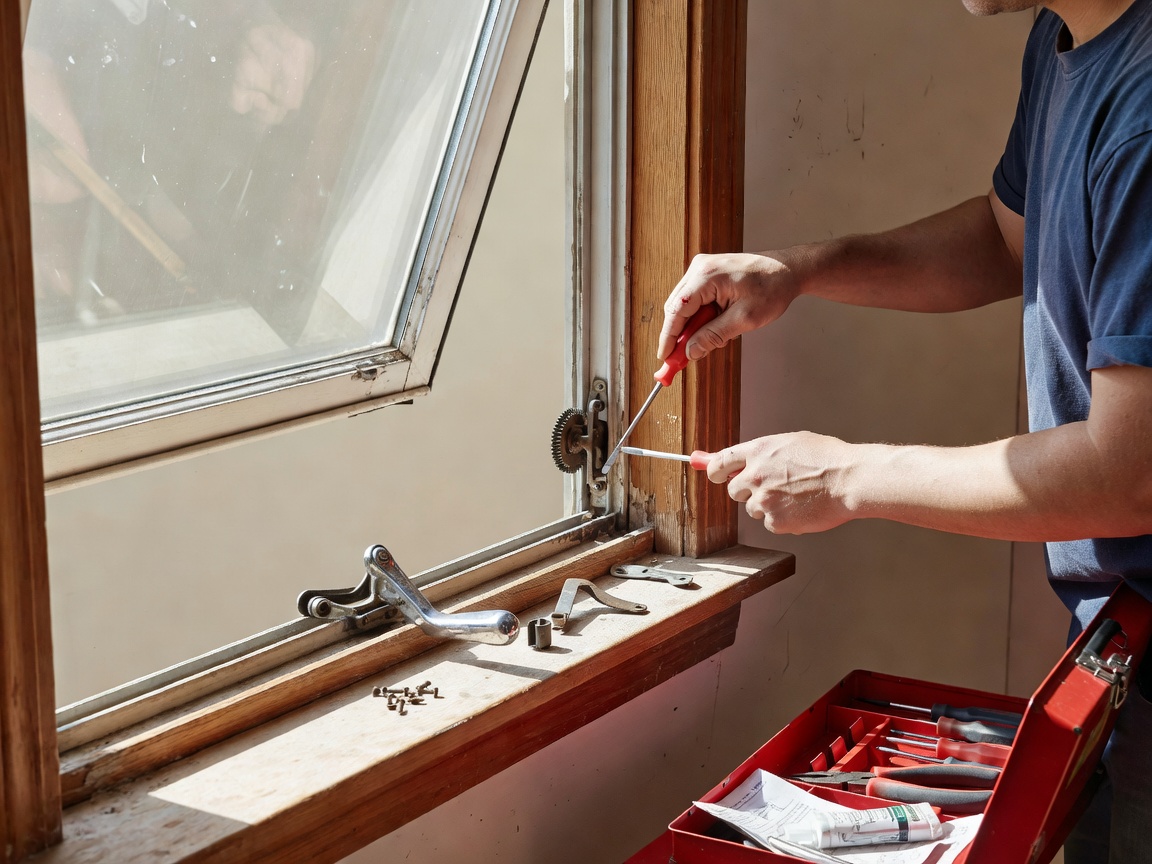
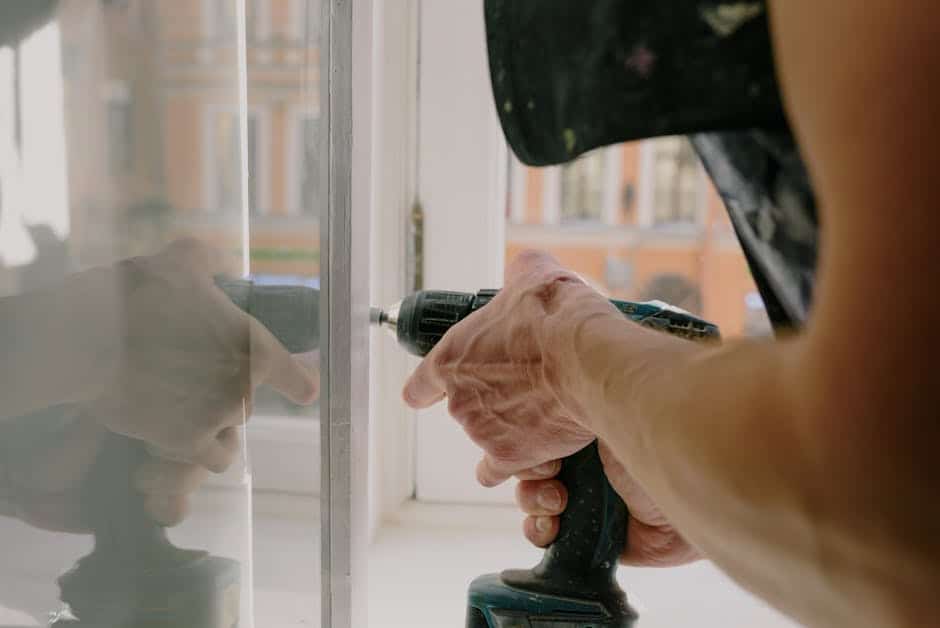
- Insert a flathead or Phillips screwdriver into the adjustment port. Turning the screw clockwise typically raises the sash, while counterclockwise lowers it.
- If you need to reseat the sash completely, retract the rollers fully by turning the screws counterclockwise.
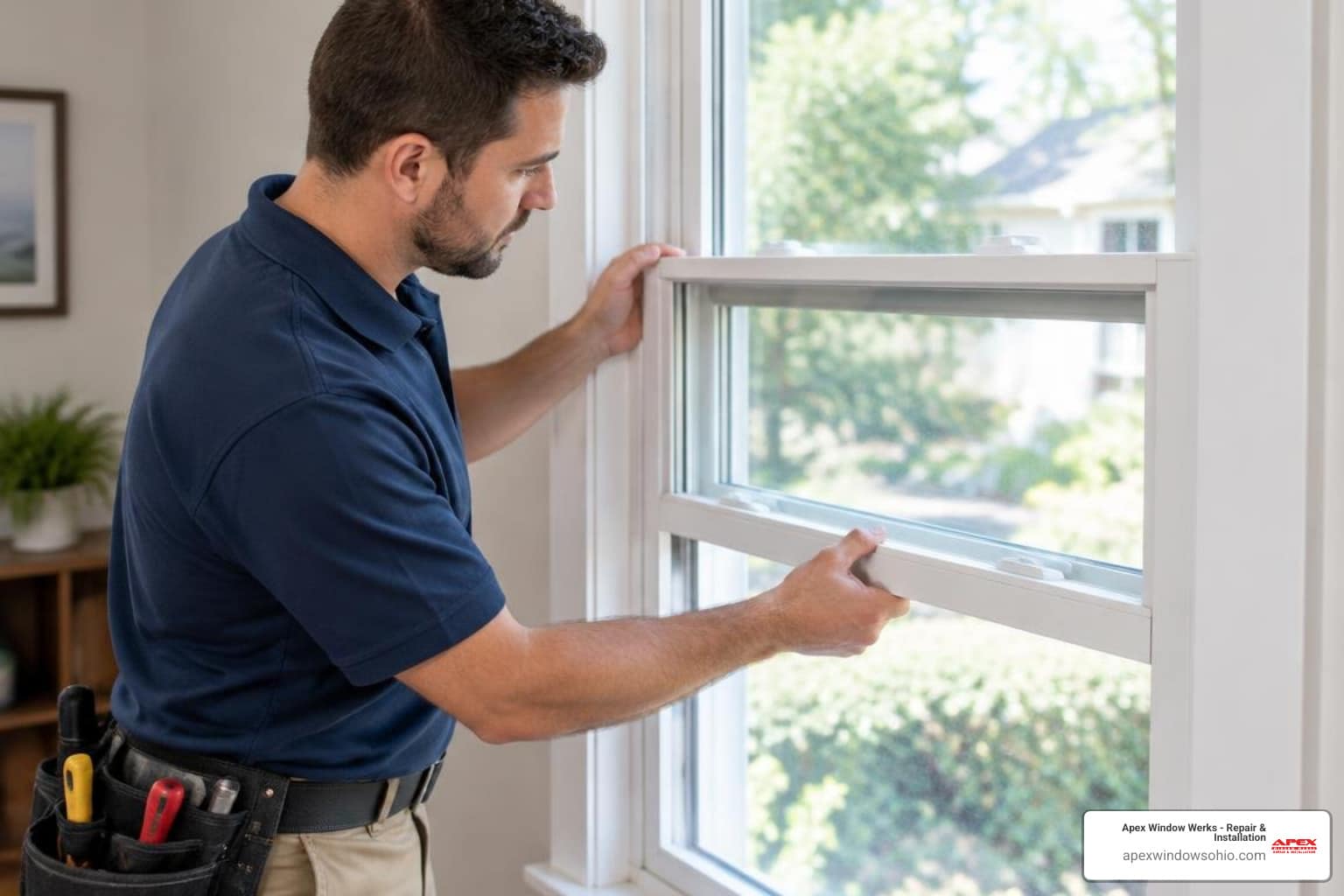
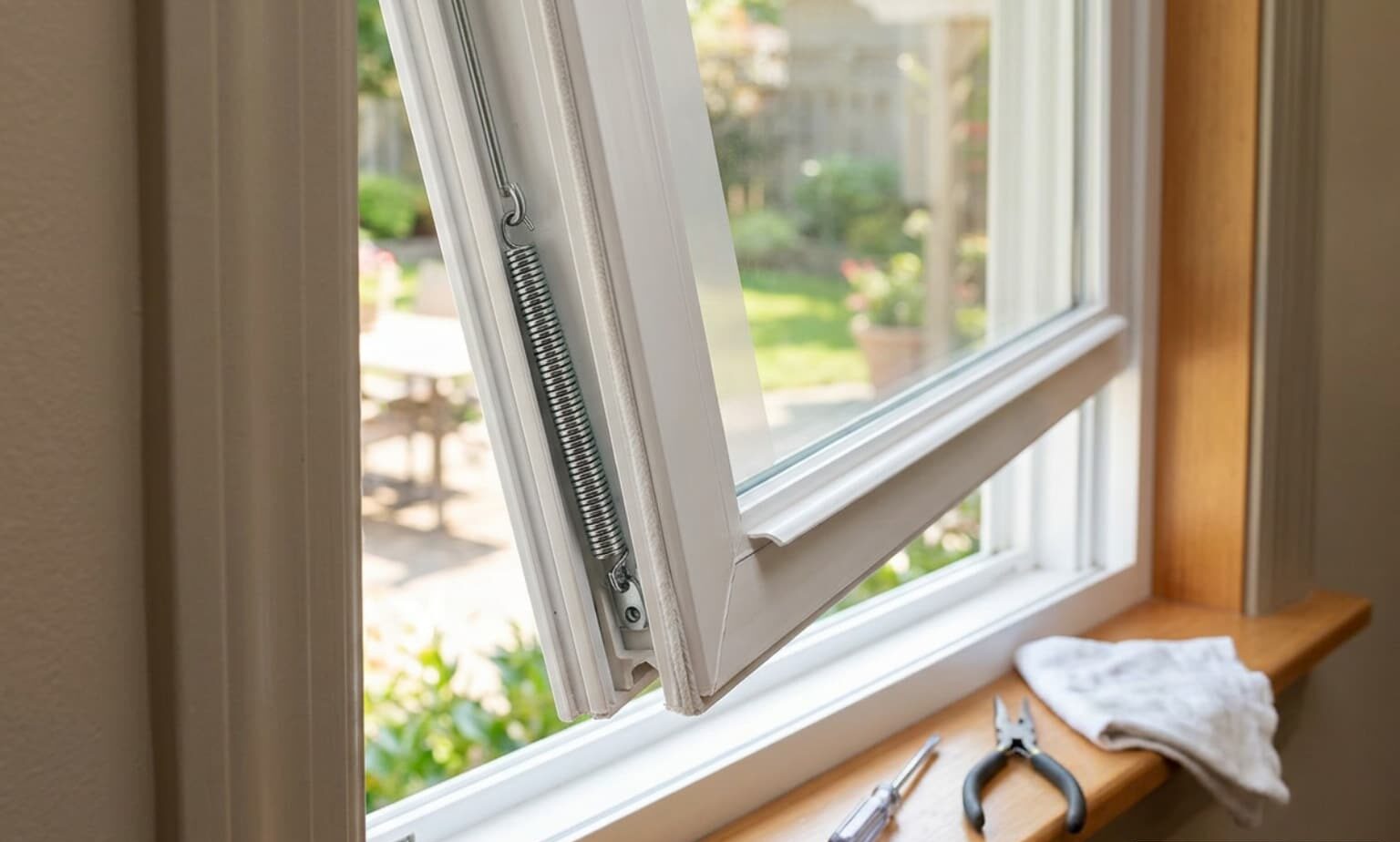
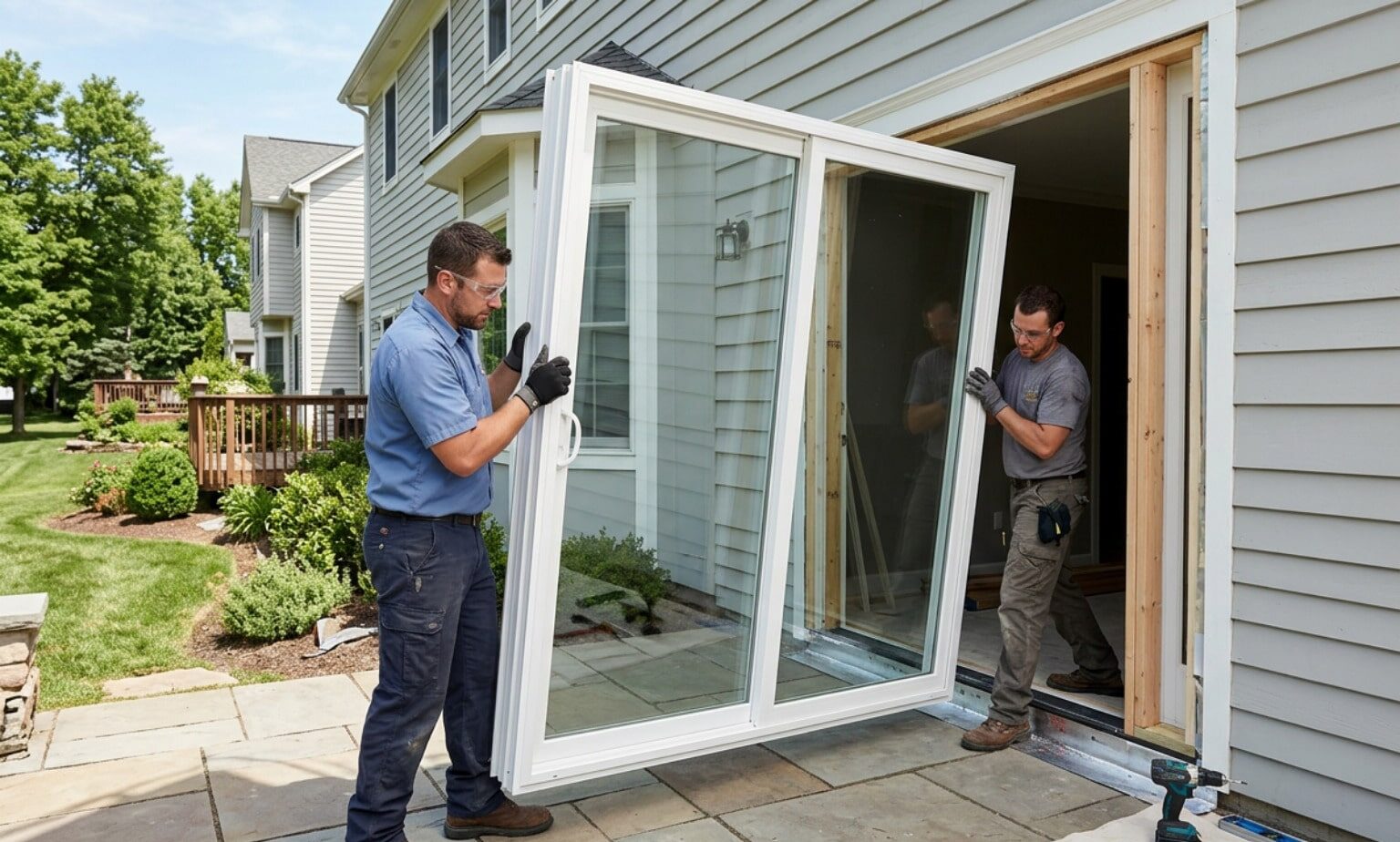
- Grip the sash firmly on both vertical sides, lift the sash straight up into the top frame channel (header pocket), tilt the bottom inward over the sill, and gently drop the bottom roller groove directly onto the raised sill rail.
- Turn the adjustment screws clockwise until the sash rises slightly above the sill, ensuring the weight rests squarely on the roller wheels rather than dragging against the frame.
- Use a level to ensure the sash is plumb and parallel to the jamb.
Step 3: Lubrication and Testing the Window Movement
Proper lubrication protects rollers and extrusions from friction wear:
- Apply a light coating of dry silicone spray lubricant along the bottom guide rail and into the roller housings.
- Never use heavy oil, automotive grease, or standard petroleum lubricants in window tracks, as these attract grit and create an abrasive paste that grinds down nylon wheels.
- Slide the sash back and forth across its full travel path several times to distribute the lubricant.
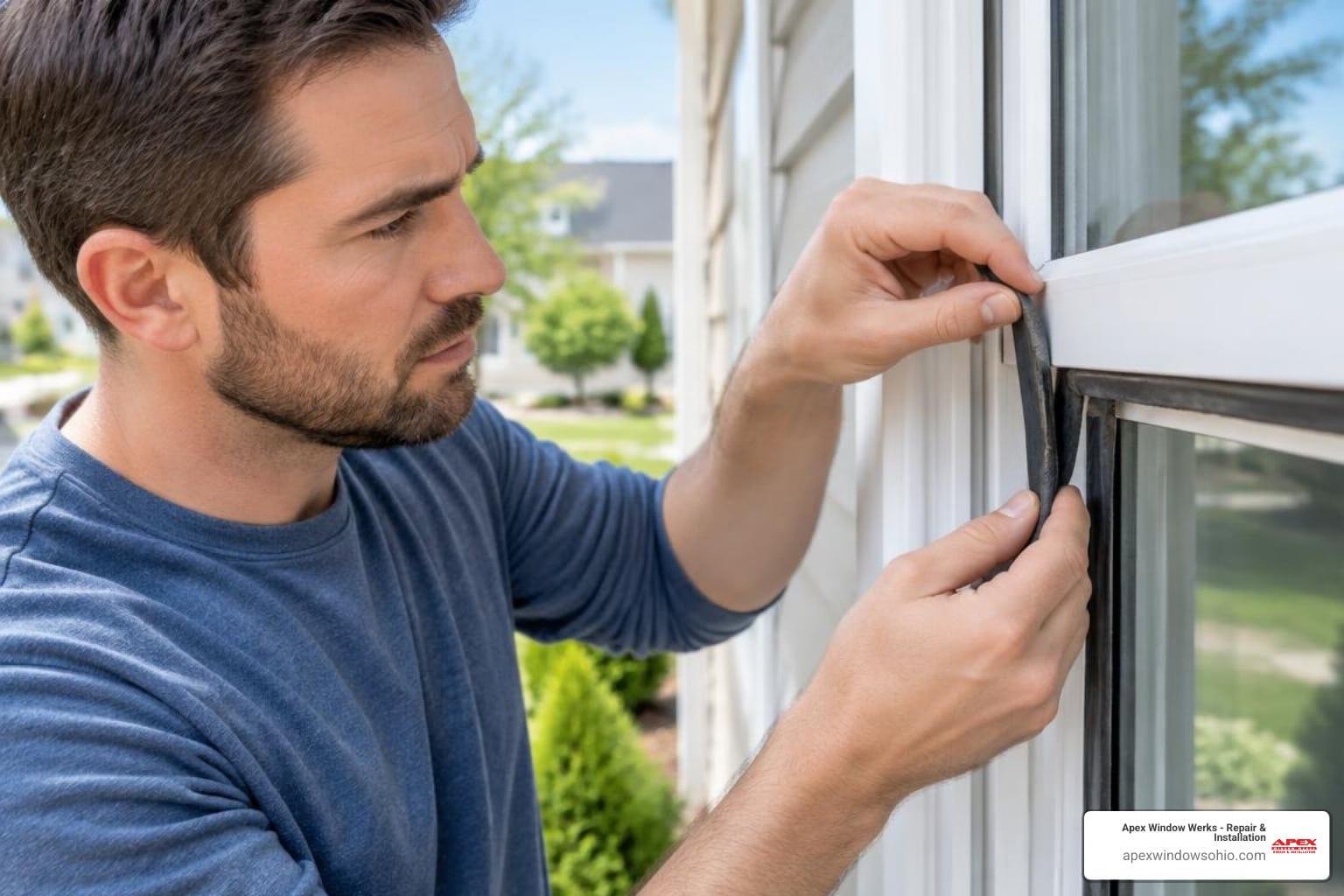
- Verify that the interlock weatherstripping engages smoothly and that the latch closes without forced lifting.
Knowing When Northeast Ohio Sliding Window Track Replacement Is Required
Many track issues can be solved with minor cleaning and roller adjustments, but severe structural damage calls for part replacement or frame restoration. Over time, mechanical window hardware components reach the end of their service life and require exact-fit replacements.
| Symptom / Condition | Recommended Action | Typical Scope of Work |
|---|---|---|
| Grit buildup, sticking roller | Minor DIY Adjustment | Deep cleaning, dry silicone lube, roller height tuning |
| Worn or cracked roller wheels | Hardware Replacement | Sash removal, bracket unfastening, new roller installation |
| Minor aluminum track crimp | Track Reshaping | Careful realignment using a wood block and mallet |
| Cracked vinyl sill or deep gouges | Track Cap / Extrusion Repair | Installing a stainless track cap or rebuilding rail section |
| Severe frame rot or structural warp | Professional Restoration | Sill rebuild, sash realignment, or complete unit replacement |
Signs of Irreparable Track and Frame Damage in Cleveland–Akron Homes
Certain window track conditions make simple resets impractical:
- Deep Metal Gouges or Split Vinyl Rails: When an off-track sash has been dragged forcefully over time, the wheel carriage can cut deep grooves into the track. This prevents replacement rollers from traveling smoothly.
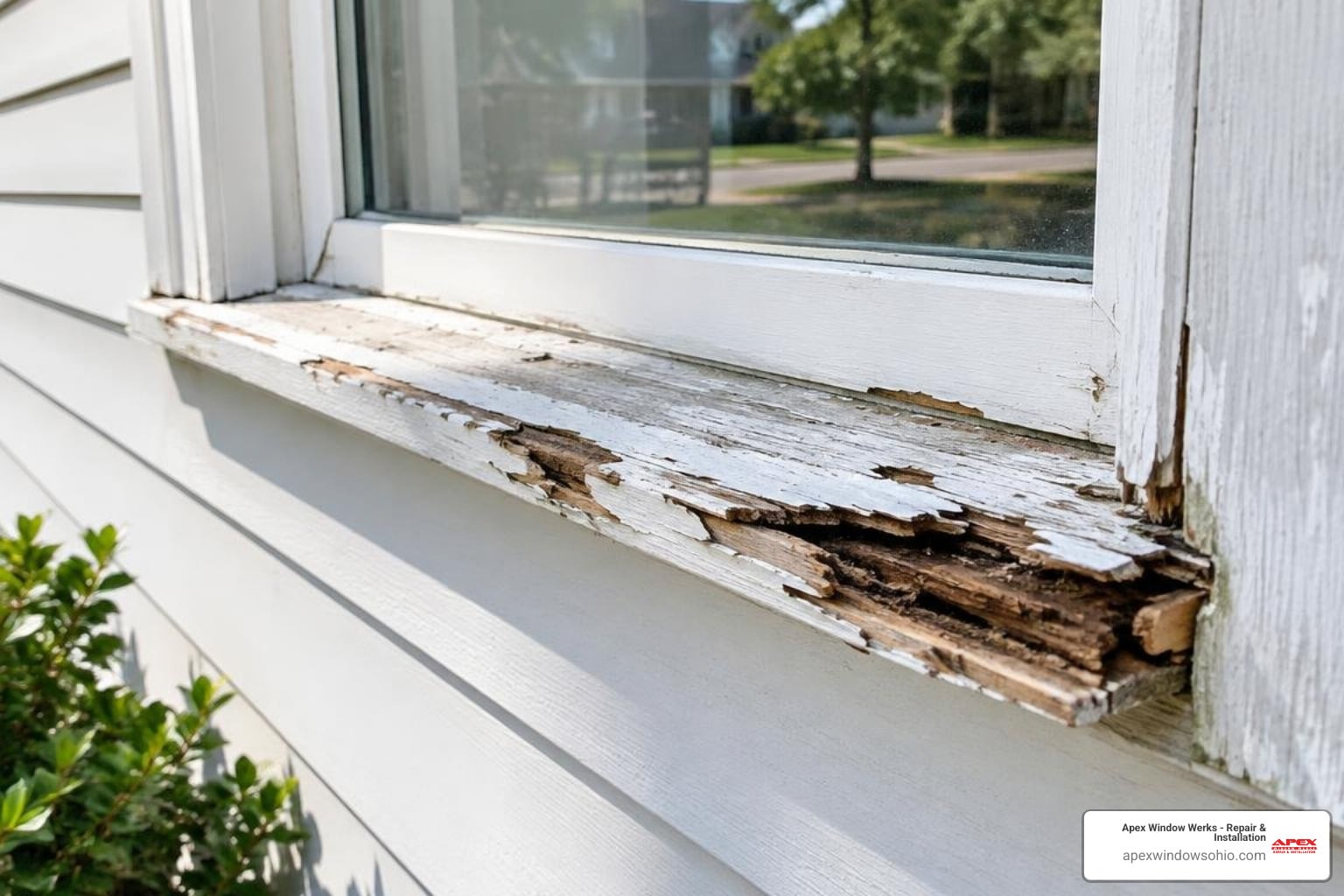
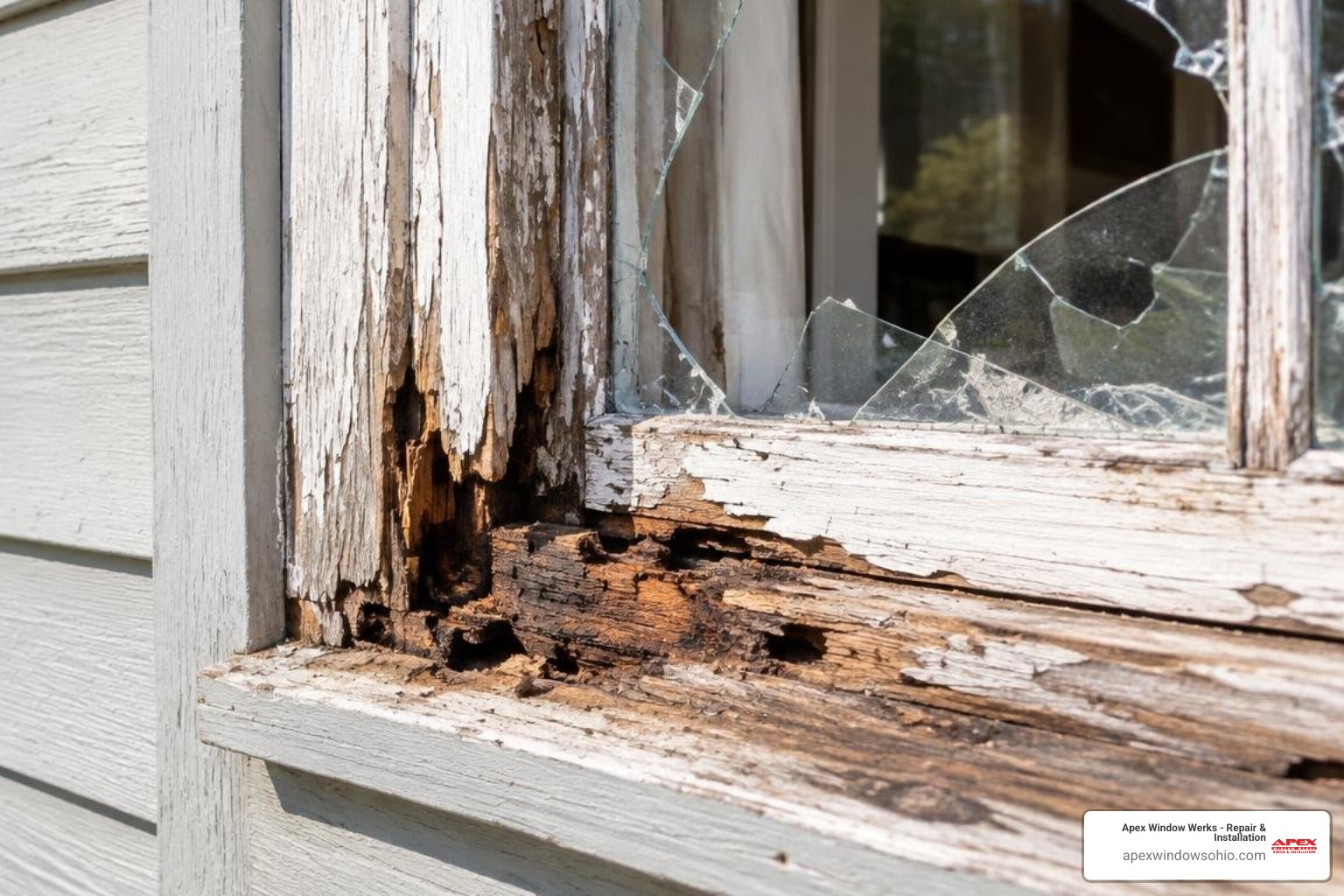
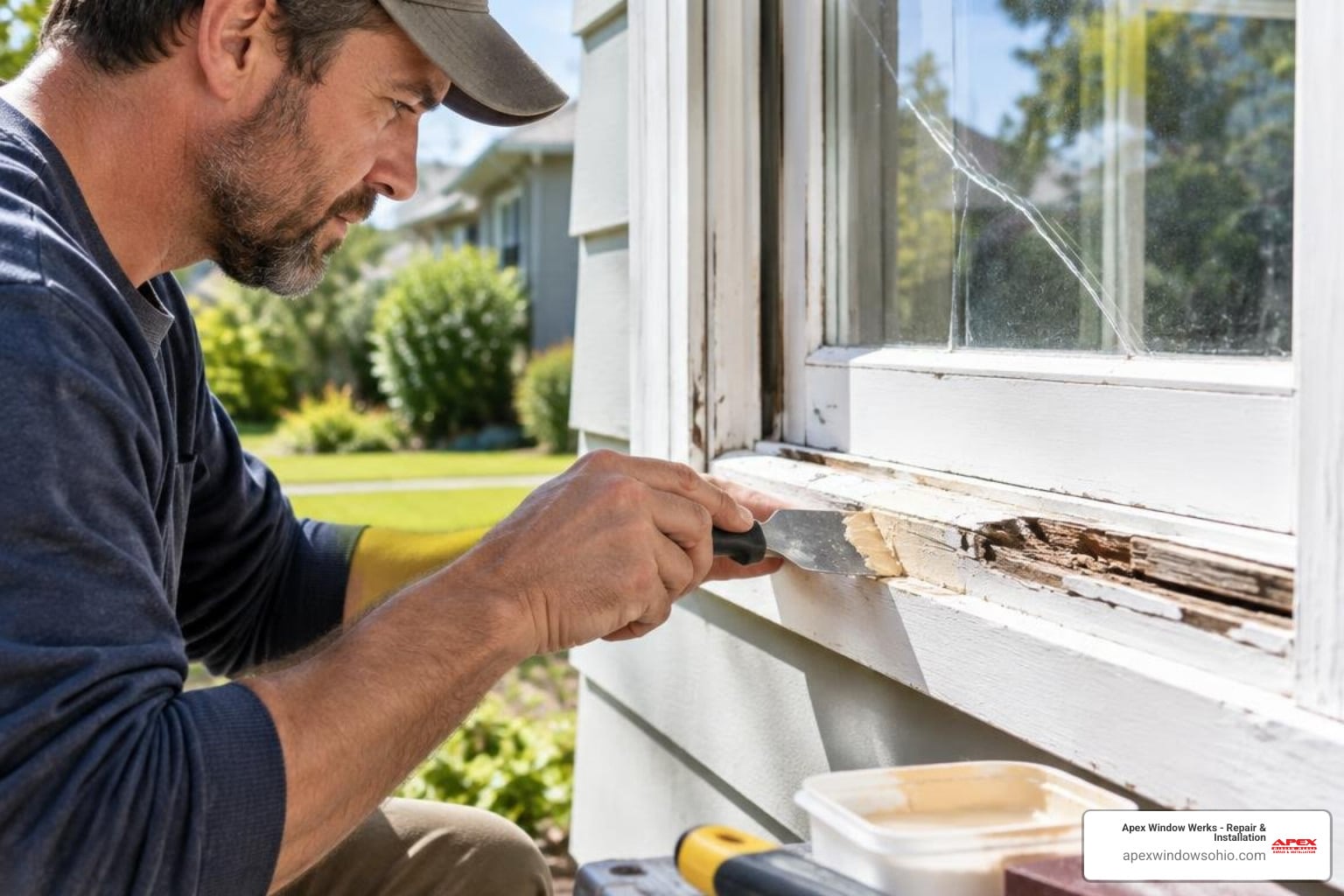
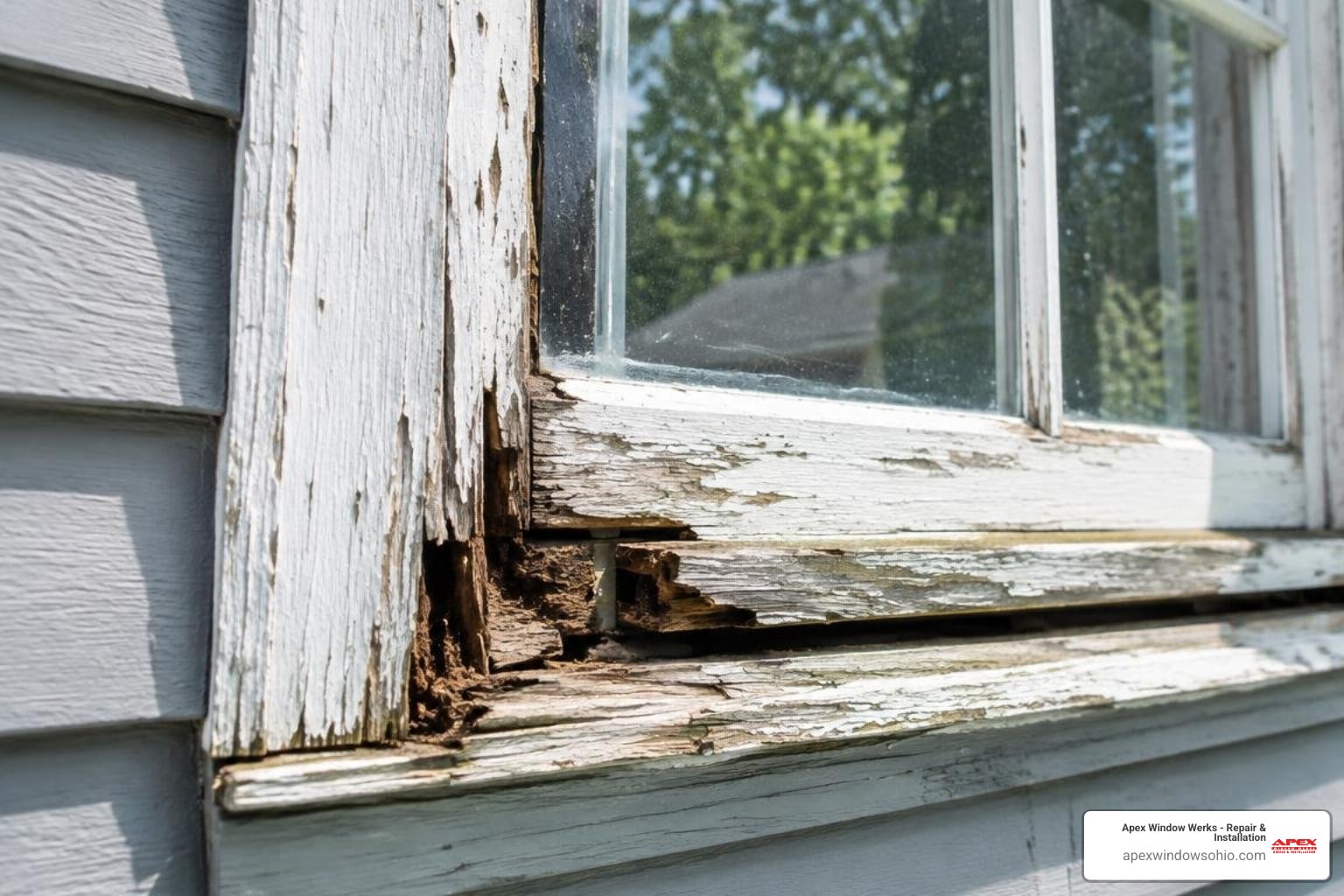
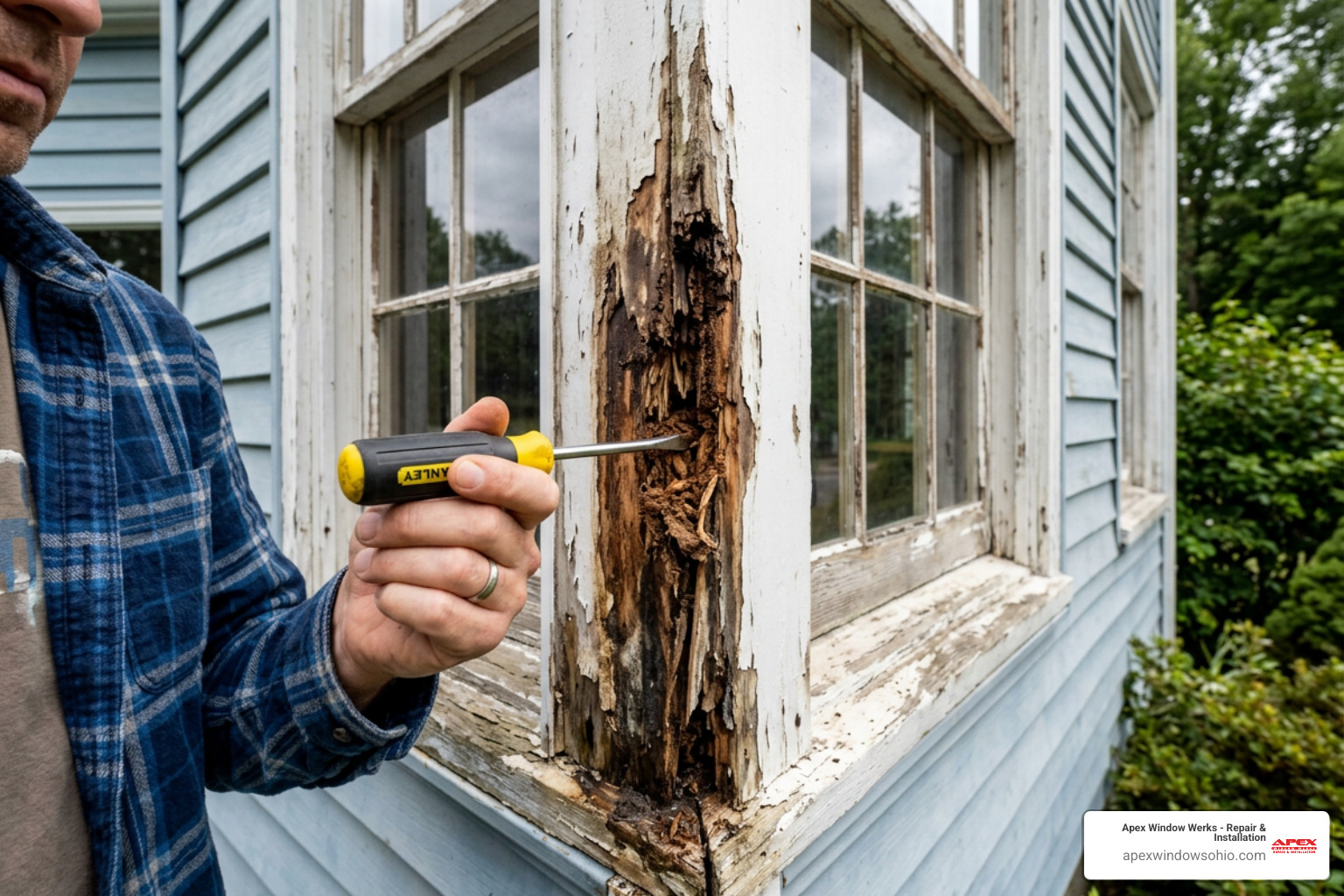
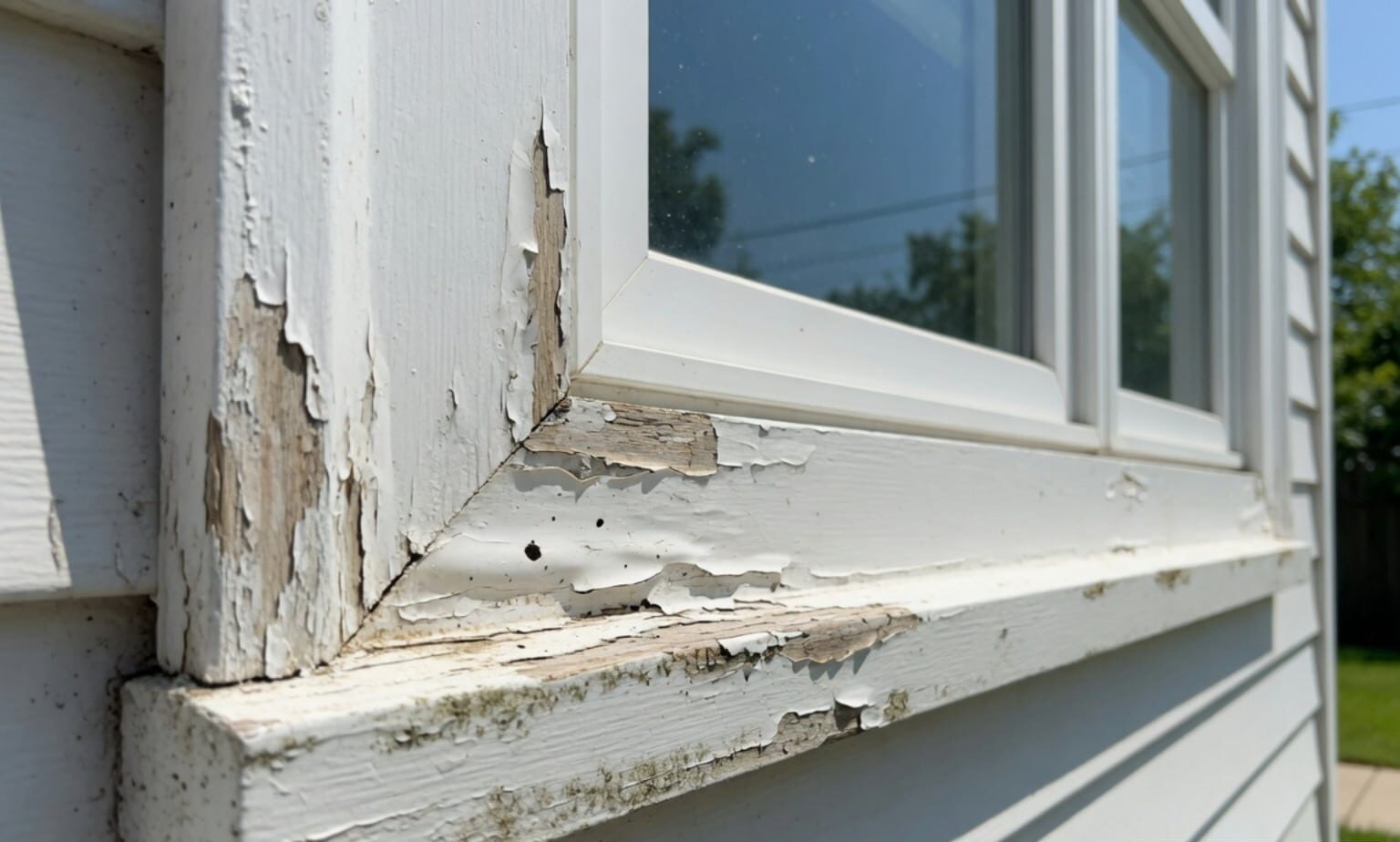
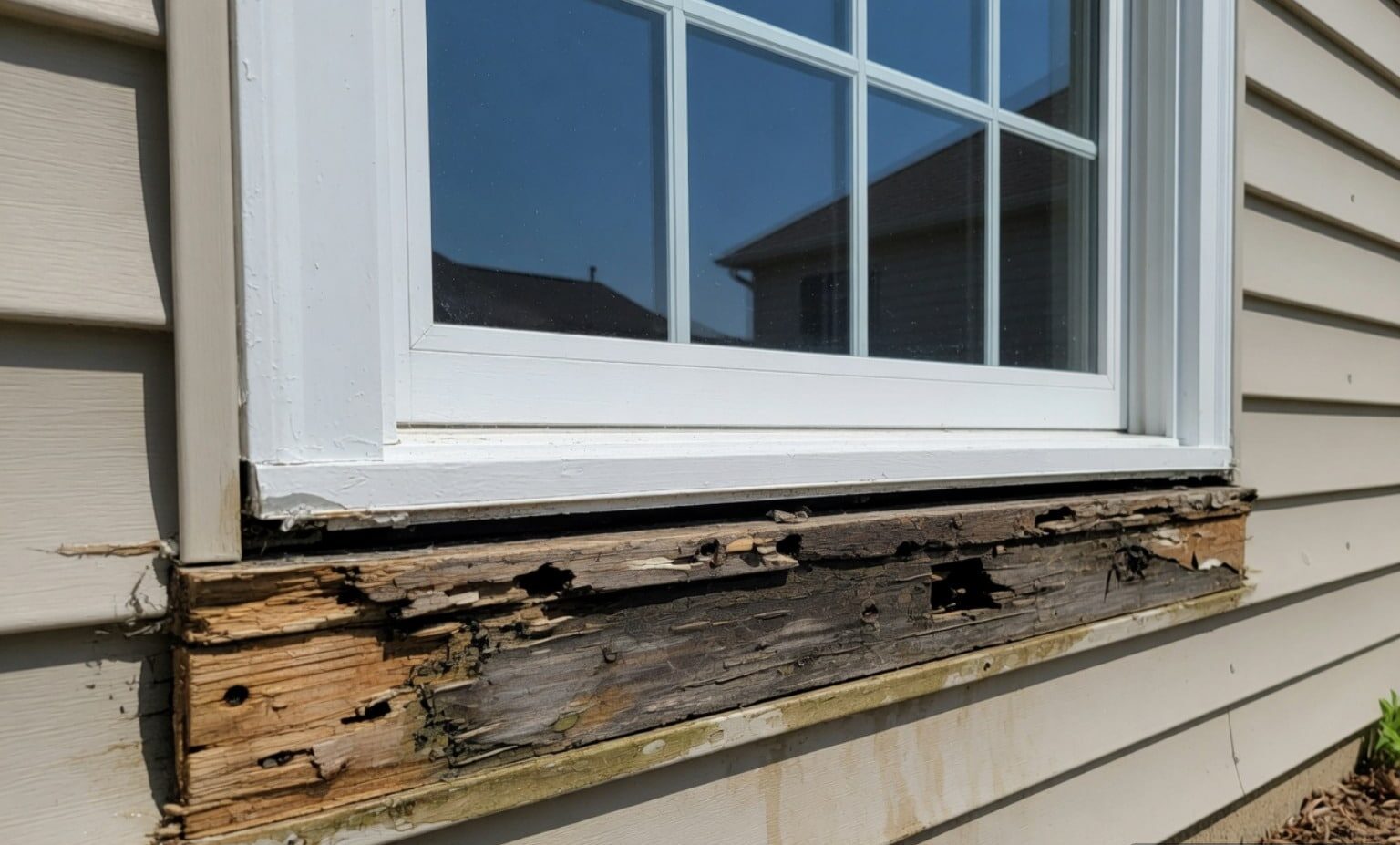
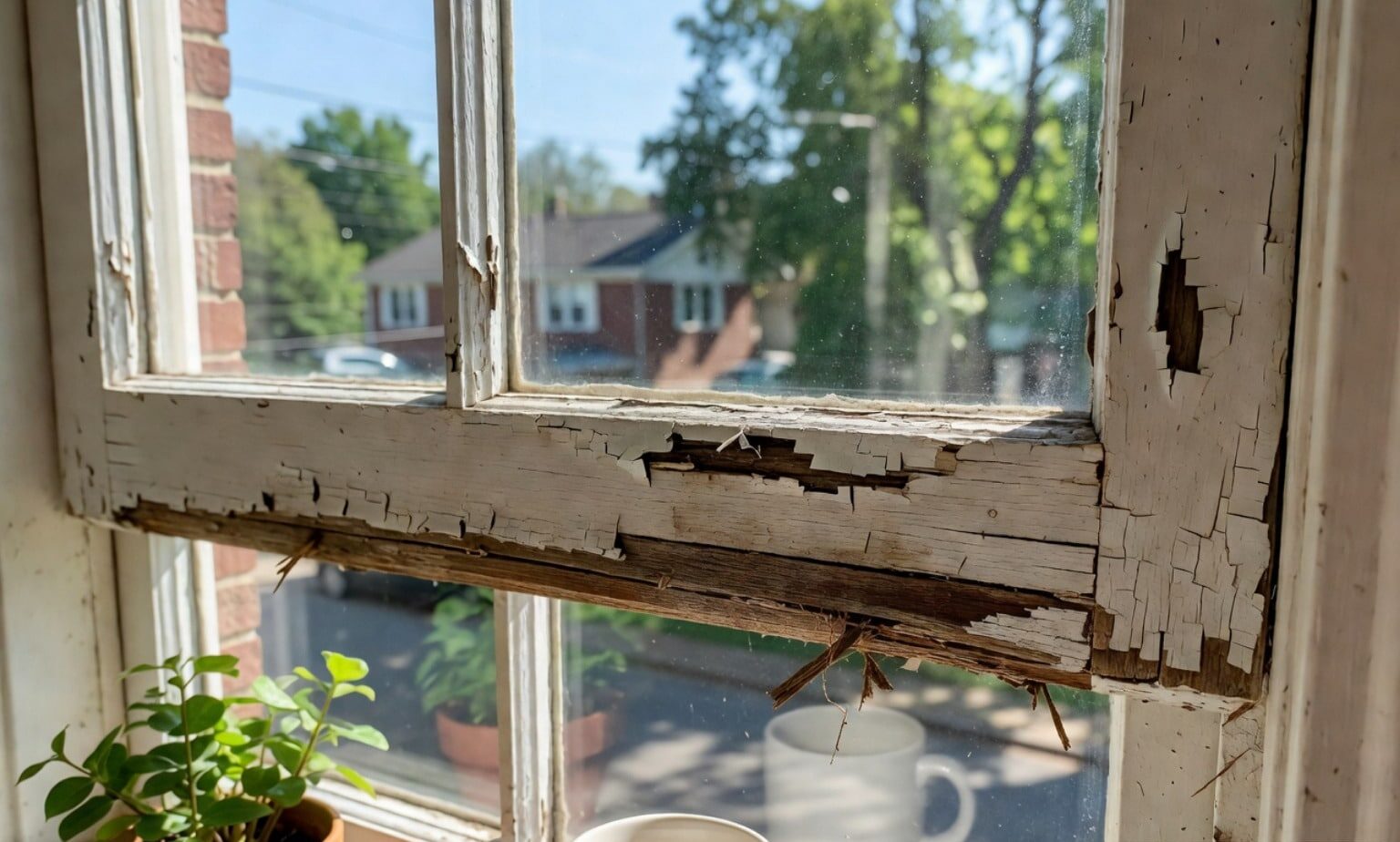
- Structural Wood Rot: On wood-framed sliders, hidden water penetration beneath the track can rot the underlying sill substrate, causing the track to sag and lose its level foundation.
- Warped Mainframe: If seasonal shifting or building settlement has warped the outer frame out of square, the sash will continually bind regardless of roller adjustments.
- Discontinued or Damaged Hardware: Older Pella or custom legacy hardware may feature damaged internal housings that require specialized component sourcing and professional installation.
When Professional Service Is Safer Than DIY Approaches
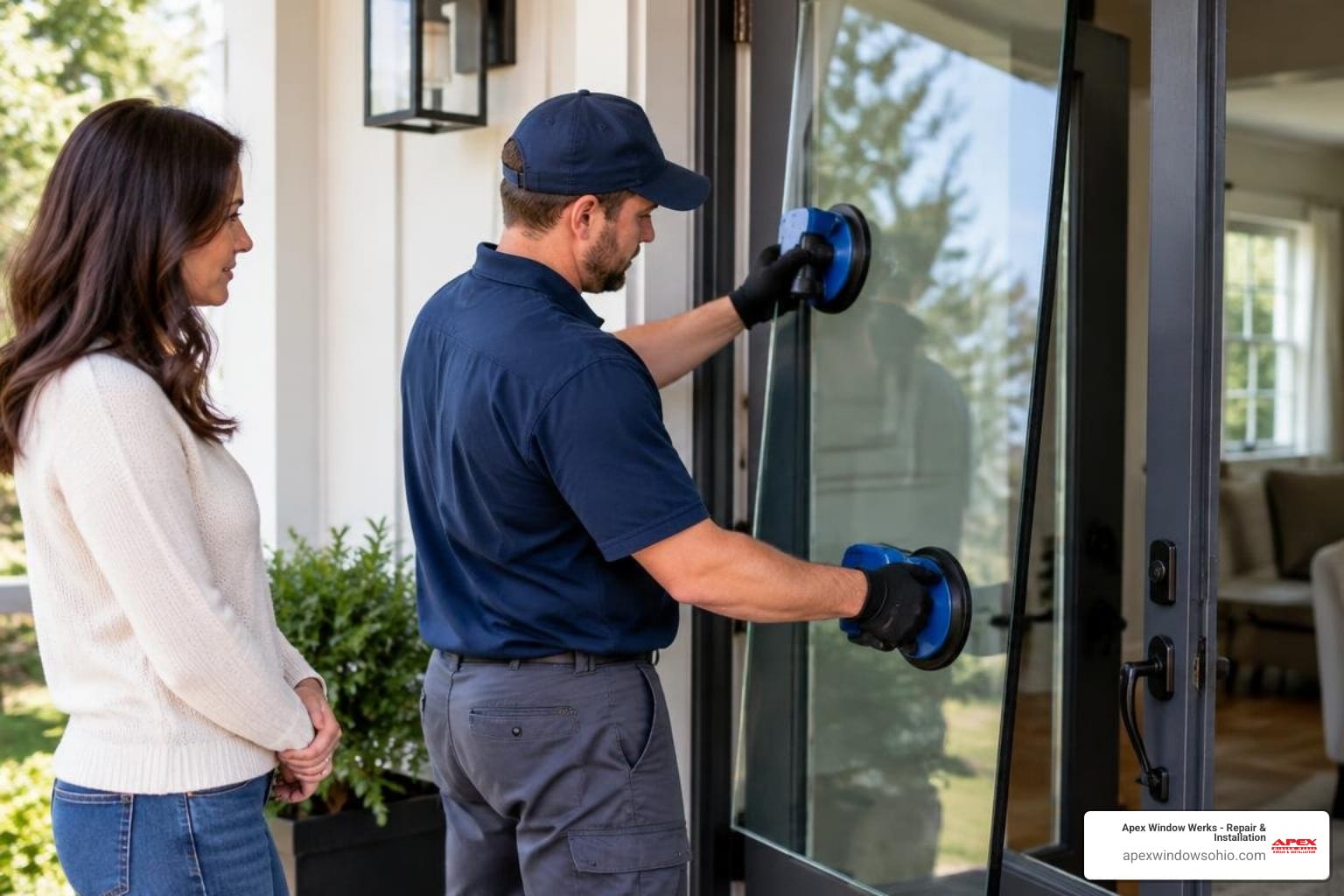
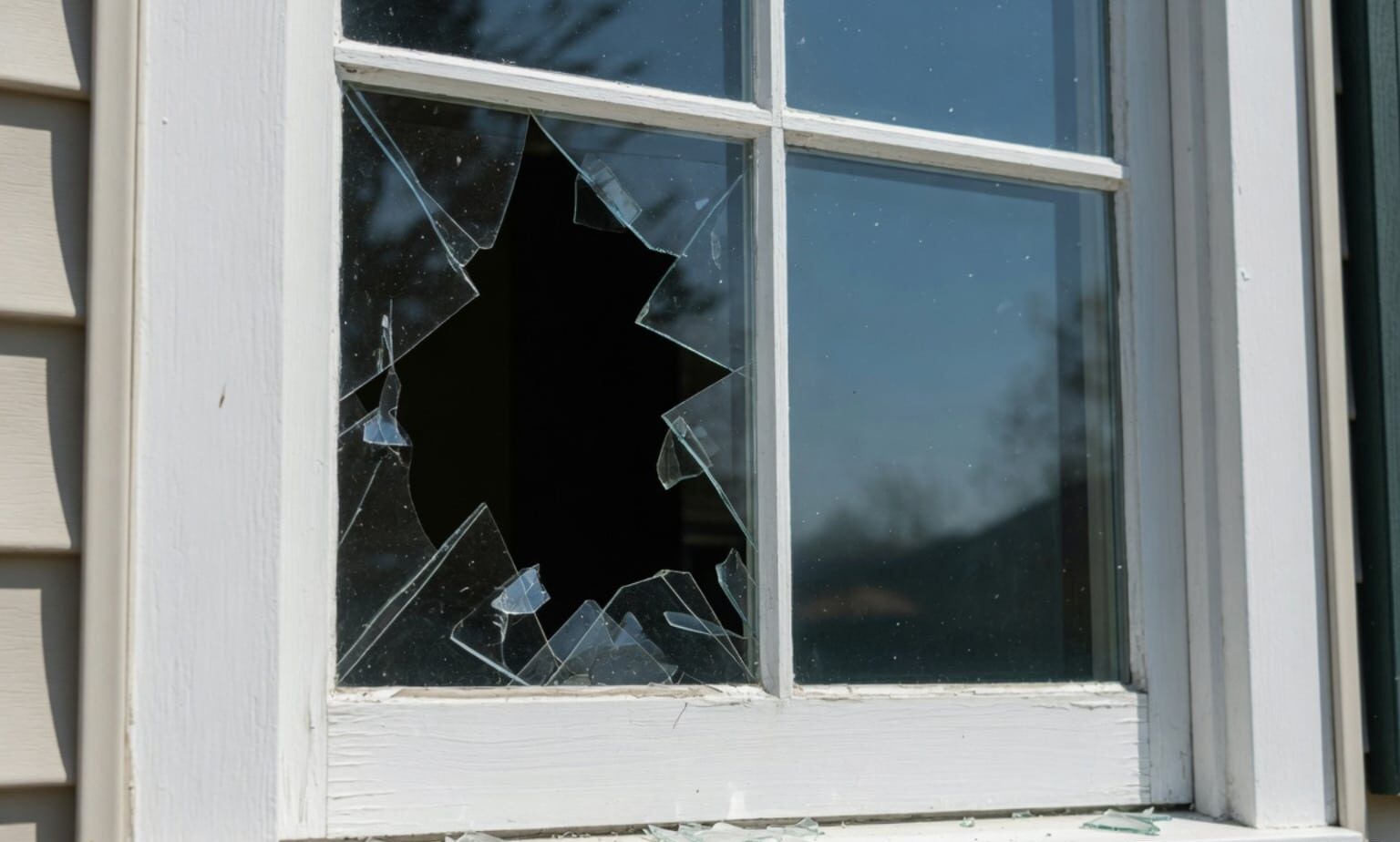
While minor cleaning is a great DIY task, handling large multi-pane sashes carries risks. Heavy insulated glass units can crack if twisted during removal, and deteriorated wood frames can splinter. If the sash is oversized, if internal balances are jammed, or if structural wood damage is present, professional care is the safest path forward.
When frame decay is extensive and repairs are no longer cost-effective, exploring home window replacement options ensures your home regains energy efficiency and seamless daily operation.
Professional Sliding Window and Track Solutions Across Northeast Ohio
Northeast Ohio experiences sharp seasonal weather swings, from humid summers to freezing winters with frequent freeze-thaw cycles. These conditions expand and contract window frames, stress perimeter seals, and trap moisture in exterior sills.
At Apex Window Werks in Oakwood Village, we follow a strict repair-first approach. Rather than pushing for complete, expensive tear-outs, we identify the exact mechanical failure – whether it is a failed insulated glass unit, deteriorated roller assembly, or damaged wood sill – and repair serviceable components.
We serve communities across Cuyahoga, Summit, Lake, Lorain, Medina, Geauga, and Portage counties, including:
- Cuyahoga County: Cleveland, Lakewood, Cleveland Heights, Parma, Rocky River, Westlake, Strongsville, Solon, North Olmsted, Bay Village, and Bedford.
- Summit County: Akron, Hudson, Cuyahoga Falls, and Twinsburg.
- Surrounding Communities: Medina, Brunswick, Mentor, Willoughby, Avon, Avon Lake, and Aurora.
Whether you need detailed Cleveland window repair or sash restoration in Akron, Lakewood, or Strongsville, our technicians bring Years of proven Expertise to restore your windows.
Understanding Track Maintenance for Northeast Ohio Window Care
Keeping sliding window tracks running smoothly requires a consistent, proactive routine. Residential window maintenance centers on cleanliness, gentle alignment, and moisture management to protect moving parts from premature wear.
Follow these best practices to prevent track failures:
- Clean Tracks Seasonally: Vacuum sill channels every spring and autumn to remove organic debris before it compacts beneath rollers.
- Keep Weep Holes Clear: Ensure the exterior drainage slots on the bottom sill remain free of dirt so rainwater flows outward instead of pooling inside the roller channel.
- Use Only Dry Lubricants: Apply dry silicone or PTFE spray twice a year. Avoid all thick greases and sticky penetrating oils.
- Check Hardware Fasteners: Periodically inspect sash locks and roller adjustment screws to ensure normal vibration has not loosened mounting hardware.
- Operate Sashes Smoothly: Avoid slamming sliding windows shut. If you feel resistance, inspect the track immediately rather than forcing the sash.
Frequently Asked Questions About Sliding Window Track Repair in Northeast Ohio
How much does sliding window track repair typically cost?
The cost of repairing a sliding window track depends on several project factors, including the specific component that failed, the size and weight of the window sash, whether specialized or vintage replacement rollers are needed, and whether the frame requires wood rot restoration or simple track realignment. Repairing existing components is generally far more cost-effective than replacing the entire window unit. Contacting a repair specialist for an evaluation provides an accurate estimate based on your window’s condition.
Can I reset an off-track sliding window without removing the entire sash?
Yes, minor derailments can often be corrected while the sash remains in place. If the roller wheel has simply hopped off the guide rail, you can lower the roller carriage using the corner adjustment screw, gently lift and guide the sash back onto the center of the track, and then raise the adjustment screw until the sash glides freely above the frame sill.
How often should sliding window tracks be cleaned and lubricated?
Sliding window tracks should be cleaned and lubricated at least twice a year, ideally during spring and fall home maintenance. Regular vacuuming and a light application of dry silicone spray prevent dirt from grinding down roller bearings and keep weatherstripping pliable throughout changing seasons.
Conclusion
A misaligned sliding window does not have to disrupt your home’s comfort or security. By identifying track blockages early, making careful roller adjustments, and avoiding forceful operation, you can keep your windows gliding smoothly for years to come.
When you encounter stubborn hardware, rotten wood sashes, or damaged track extrusions, Apex Window Werks is here to help. We provide residential and commercial window and door glass repair, sash restoration, and hardware replacement across the Cleveland – Akron region. Same day repairs available depending on damage, materials, technician availability, and scheduling. We provide Free Estimates and bring Years of proven Expertise to every project.
Call us today at 440-496-7415 or request a free window repair estimate by submitting photos, videos, measurements, or manufacturer markings through our convenient online estimate form.